REVIEW · FLORENCE
Florence by Foot : Discover the Heart of the Renaissance
Book on Viator →Operated by Star Florence · Bookable on Viator
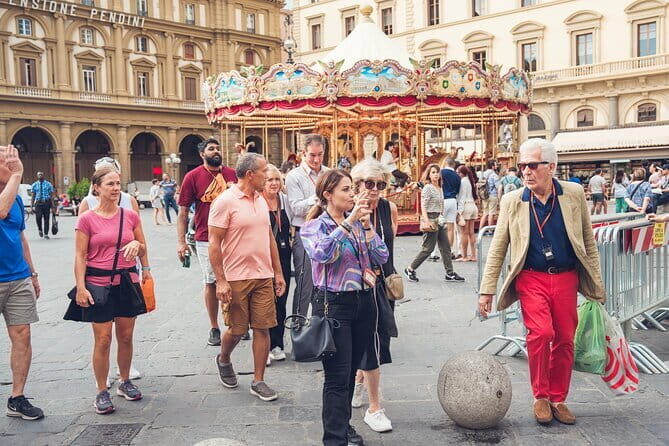
Florence in ninety minutes, on your feet. This walking intro strings together the Renaissance power moves behind Piazza della Repubblica and the Duomo area, with headsets so you can keep up even when Florence crowds press in.
What I like most is the “guided logic” of it. An officially certified guide keeps you moving through the big sights at a human pace, and guides such as Pam, Ana, and Claudia are praised for making the city make sense fast, including practical suggestions for museums and everyday basics like what to look for when you want a real gelato.
The main tradeoff is focus. The route leans heavily on church-and-Christian iconography, so if that’s not your thing, you may feel the balance is a bit off. Also, in hot or busy moments, hearing every detail can take effort even with the radio system.
Key things that make this tour worth your time
- Headsets included: a radio system helps you hear every word without craning your neck
- A tight Florence loop: you hit multiple UNESCO World Heritage areas in one shot
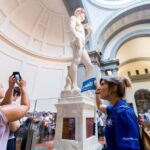
- Big-name art outside: Michelangelo’s David is featured as the outdoor symbol you’ll pass near Palazzo Vecchio
- Duomo architecture explained: you’ll get context around Brunelleschi, Giotto, Arnolfo, and Talenti
- Small-group feel: capped at 25 travelers, and it runs with a minimum of two
- Medici story threads: the tour connects Florence’s political art and power, not just scenery
In This Review
- Starting at Hard Rock Cafe and finding the story thread
- Piazza della Repubblica to Duomo Square: the Renaissance architects in plain language
- Palazzo Vecchio and the outdoor David: the Republic vs. the Medici angle
- Ponte Vecchio: the walk that turns the river into a landmark lesson
- Palazzo Pitti: what you’ll see and why it matters next
- Guides, headsets, and how to make the audio work
- Time, pace, and what fits a short Florence stay
- The value question: is $33.78 worth it?
- Should you book Florence by Foot?
- FAQ
- How long is Florence by Foot?
- Where does the tour start and end?
- What’s the price per person?
- Are entrance tickets included?
- What’s included in the tour?
- Is the tour offered in English?
- How big is the group?
- What happens if the weather is bad or the tour is canceled?
Starting at Hard Rock Cafe and finding the story thread
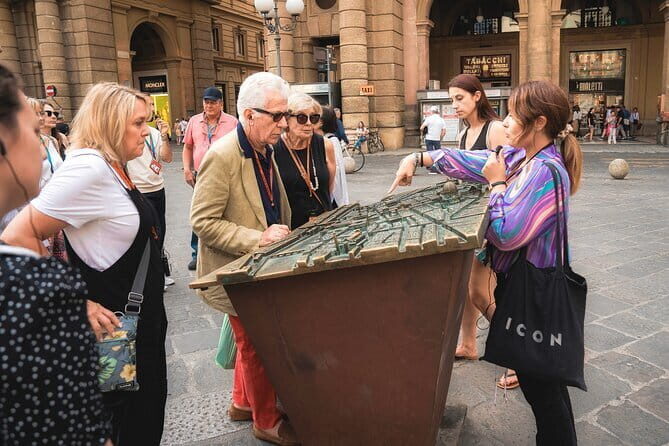
You meet at the Hard Rock Cafe on Via dei Brunelleschi, and the tour keeps you oriented from the start. The first stop is Piazza della Repubblica, the city’s central hub point, which is a smart way to begin: once you understand the square, the rest of the walk clicks into place.
Here’s why I think this opening works. Florence can feel like a pile of masterpieces. The guide’s job is to stitch those pieces into one narrative—how Renaissance ideas changed not only Florence but also spread across Europe. Even when you’ve seen photos, it’s the why that helps you remember what you’re looking at.
The tour then starts moving quickly, so you’ll want to arrive a few minutes early. If you come late, you won’t be able to join once it starts, and there’s no rebooking on the spot. Once you’re in, though, the pace is designed for a short visit: it’s built for first-timers and people who don’t want to plan a whole day.
Piazza della Repubblica to Duomo Square: the Renaissance architects in plain language
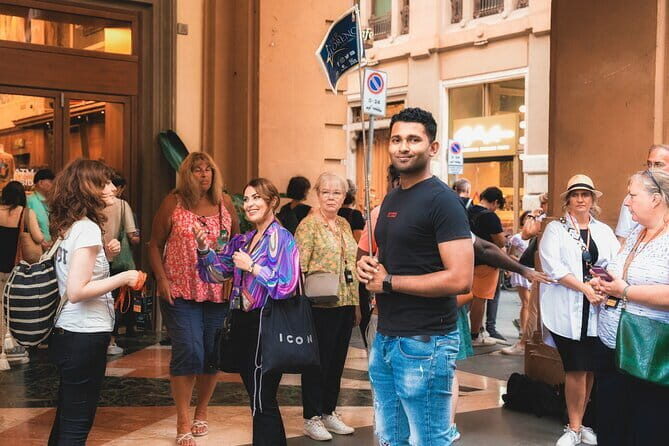
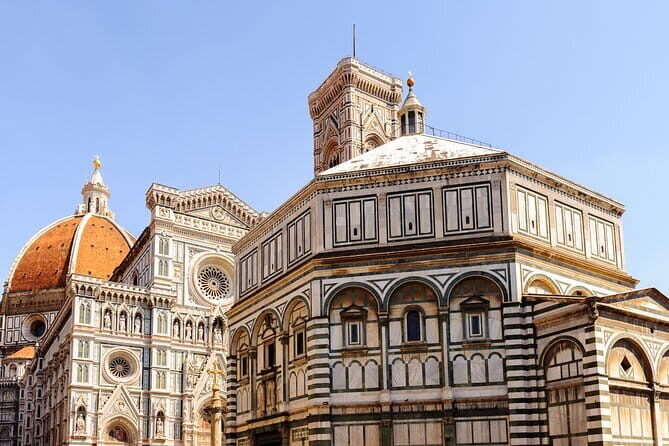
Your next stretch is the Duomo area, and the guide stops you near Piazza del Duomo long enough to make it land. This part is all about architecture and artists you’ve probably heard about—Filippo Brunelleschi, Giotto, Arnolfo, and Francesco Talenti.
You’re not just walking past famous names. You get the context of how the Duomo complex shaped Renaissance ambition—Florence going big, building boldly, and symbolizing a city that wanted to look beyond its medieval roots. It’s also a good place to learn how to “read” the setting: once you know what to watch for, the details stop feeling random.
Practical note: this is a high-traffic area. If the weather is rough, the tour is weather-dependent, and you’ll be offered an alternative date or a full refund if it’s canceled due to poor conditions. If it’s a clear day, it’s still crowded—so treat this as a walking-and-listening experience, not a slow museum moment.
You can also read our reviews of more tours and experiences in Florence.
- Tuscany Day Trip from Florence: Siena, San Gimignano, Pisa and Lunch at a Winery
★ 5.0 · 21,634 reviews
Palazzo Vecchio and the outdoor David: the Republic vs. the Medici angle
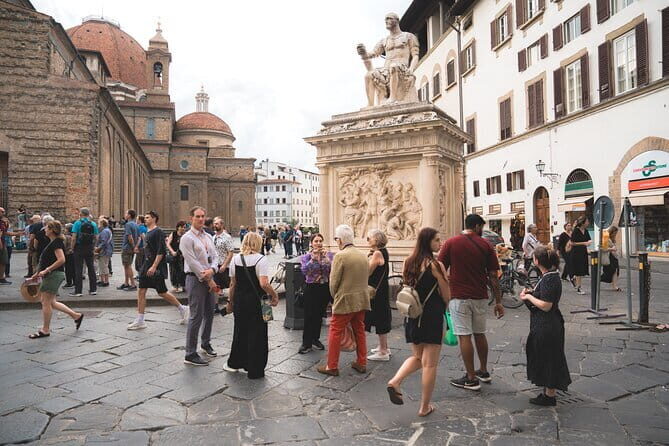
From the Duomo square area you move through older streets and historical landmarks toward Palazzo Vecchio. This is where the tour shifts from art as “pretty” to art as political messaging.
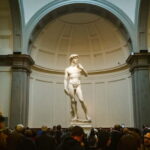
Palazzo Vecchio matters because it links Florence’s government identity to what people wanted to see and remember. The star marker for this segment is the outdoor David sculpture by Michelangelo—the original lives inside the Galleria dell’Accademia, but this outdoor David is placed as a symbol of the Republic’s defiance of tyrannical Medici rule.
What you gain here is a clearer sense of why Florence’s art is so loaded. These aren’t neutral monuments. They’re statements. A guide can make a big difference, and several guides have been specifically praised—like Martina and Elena—for answering questions and keeping explanations easy to follow. If you want Florence to feel less like a checklist, this stop is one of the reasons the tour earns such strong scores.
One consideration: if your personal interests lean more toward trade, daily life, or non-Christian art, you may find the messaging is still framed through religious and civic symbols. That’s not wrong—it’s just the tour’s chosen lens.
Ponte Vecchio: the walk that turns the river into a landmark lesson
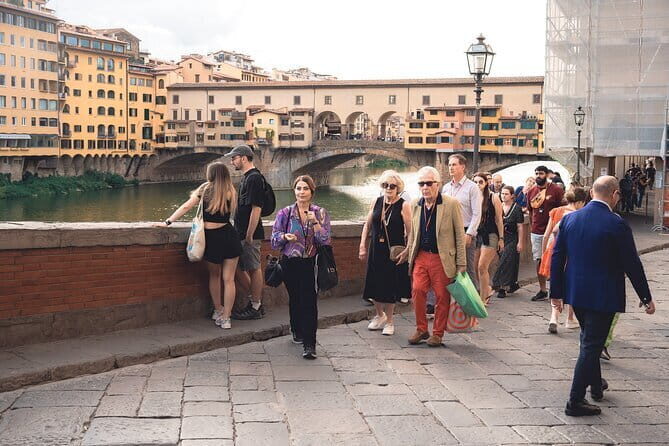
After Palazzo Vecchio, the tour introduces the Uffizi Gallery story as you head toward Ponte Vecchio, one of Florence’s most famous old bridges. This is a great segment for snapping your mental map into place: from civic power to commerce and the river, the city changes tone as you cross.
The guide explains the Uffizi Gallery, and that’s useful even if you don’t plan to go immediately. The Uffizi is one of the world’s major art stops, and hearing a basic framing while you’re on the street helps when you later decide what to see. You can match what you learned to what you’ll find inside—especially when you’re dealing with limited museum time.
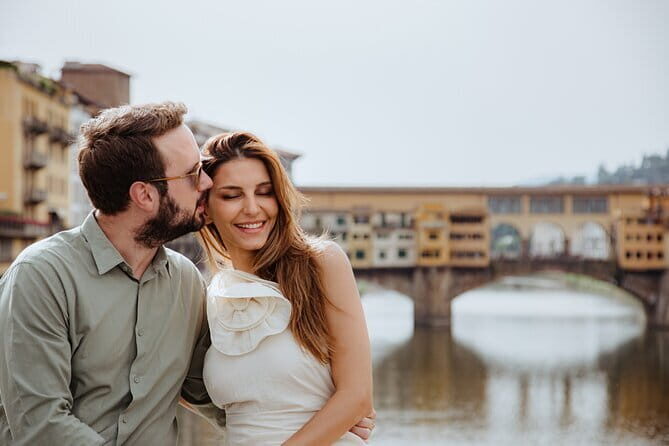
Also, Ponte Vecchio is one of those spots where you want to balance listening with looking. Florence has layered views here: the bridge itself, the flow of the Arno corridor, and the surrounding architecture. Headsets help, but you’ll still want a moment to just watch. If you’ve got limited time, this stop gives you something visually memorable that you can’t get from reading a guidebook alone.
Palazzo Pitti: what you’ll see and why it matters next
The final stop is Palazzo Pitti. This is a heavyweight name in Florence architecture—the huge palace connected with the Pitti family and later associated with the Medicis. If earlier stops feel like civic and religious messaging, Palazzo Pitti helps you track power as it moves and concentrates.
You spend about 30 minutes here. Importantly, admission tickets aren’t included. So think of this as a guided exterior-and-experience stop—enough time to connect the palace to the bigger Medici story, without expecting full museum access as part of the price.
This ending is still valuable for a reason many short tours miss: it gives you a direction for where to go next. Once you’ve heard the palace background, you’ll know what to look for when you decide whether to see interiors. And because Florence visitors often bounce between “I saw it” and “I understood it,” closing with Palazzo Pitti tends to push you more toward the second category.
Guides, headsets, and how to make the audio work
The tour includes a radio system, and this is one of the strongest reasons it performs well. Hearing matters in Florence. The streets are noisy, groups bunch up, and sound bounces off stone. The headset setup helps you catch the guide’s wording rather than relying on luck and proximity.
That said, it’s worth being practical. One person noted they didn’t hear most of the information because of a microphone/speaker issue. If audio cuts out on your device, don’t silently suffer—ask the guide if you can adjust or reposition. Another common issue in the feedback: headsets can go in and out, and guides may repeat themselves when reception drops.
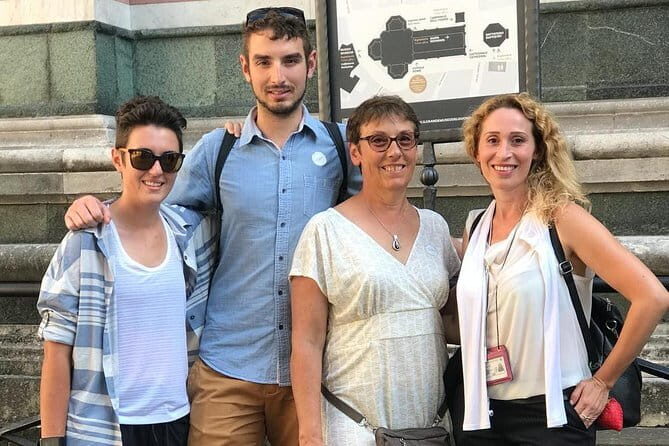
On the human side, guides show up as a major factor. People praised Pam for thoroughness and help with restaurant and food tips. Ana stood out for passionate explanations (especially around Medici decline). Claudia received compliments for kindness and strong Q&A. Francesco and Stephana also appear as favorites for making the tour feel like an intro with real storytelling energy.
If you want to get the most out of a 90-minute walk, go in with a simple goal: ask one question you truly care about. The guide’s best moments often come when you tie the architecture to your own curiosity—politics, art choices, family power, or what to see next.
- Tuscany Day Trip from Florence: Siena, San Gimignano, Pisa and Lunch at a Winery
★ 5.0 · 21,634 reviews

Time, pace, and what fits a short Florence stay
The listed duration is about 1 hour 30 minutes. In practice, some groups have run a bit longer—one review noted the tour exceeding its scheduled time and still feeling worthwhile. The safe way to think about it is this: you should plan for around 90 minutes to 2 hours, depending on pace, crowd flow, and how often the guide stops for questions.
You’ll be moving between major landmarks: Piazza della Repubblica, the Duomo square area, Palazzo Vecchio, Ponte Vecchio, and then Palazzo Pitti. Each stop is designed for an “overview hit,” not deep museum study. That’s ideal when you’re time-pressed, but it does mean you won’t leave with a full understanding of every detail of the Duomo complex or the museum interiors.
Still, for a first day, it’s a strong way to build momentum. You’ll identify which nearby areas you want to revisit. You’ll also pick up practical next steps—some guides even share museum suggestions, grocery tips, and ideas for what to buy as gifts.
A small reality check: Florence is crowded. One feedback note mentioned crowding affecting the experience and suggested something like clearer group visibility. Your best move is to stay close to your guide and keep an eye out so you don’t drift.
The value question: is $33.78 worth it?
At $33.78 per person, this is positioned as an affordable, high-structure intro. The value isn’t just the sights—it’s the combination of certified guidance and the headset audio system, which helps you actually absorb what you’re walking through.
You’re also getting something efficient: a multi-UNESCO World Heritage-style overview in one loop. If you tried to DIY it without a guide, you’d likely see the landmarks but miss the connecting threads—especially the political symbolism and the art-architect context around the Duomo and Medici-era power.
It’s also worth noting what’s not included: there are no entrance tickets, and the tour operates entirely outside attractions. That’s not a downside for a first-time orientation tour, but it does change expectations. You pay for context and orientation, not museum admission.
So my rule of thumb: book it if you want fast clarity and you like walking with a guide. Skip it if you already know exactly what you want and you’re comfortable mapping Florence with confidence on your own.
Should you book Florence by Foot?
Book it if you:
- want a quick first-day orientation to the Renaissance storyline in Florence
- appreciate outside viewing of major landmarks with a guide’s explanations
- like having built-in listening support with headsets
- are time-pressed and want a route that covers multiple UNESCO World Heritage areas
Consider another option if you:
- prefer deep museum time rather than exterior landmark stops
- want a wider slice of Florence beyond church-and-religious framing
- are very sensitive to audio quality issues in crowded spaces (just know you can ask for help if your headset cuts out)
If you’re deciding whether this tour belongs early in your trip, I’d put it near the top of your list. It helps you build the mental map that makes the rest of your Florence days feel more intentional—and it gives you a handful of next steps from the guide, not just photos.
FAQ
How long is Florence by Foot?
The tour is approximately 1 hour 30 minutes.
Where does the tour start and end?
It starts at the Hard Rock Cafe at Via dei Brunelleschi, 1, 50123 Firenze FI, Italy, and it ends back at the same meeting point.
What’s the price per person?
The price is $33.78 per person.
Are entrance tickets included?
No. The tour operates from outside the attractions, and entrance tickets are not included.
What’s included in the tour?
You get an officially certified guide and a radio system so you can hear the guide.
Is the tour offered in English?
Yes, it’s offered in English.
How big is the group?
There is a maximum of 25 travelers, and the tour requires a minimum number of two guests to run.
What happens if the weather is bad or the tour is canceled?
The tour is subject to favorable weather conditions. If it’s canceled due to poor weather, you’ll be offered an alternative date or a full refund.
You Might Also Enjoy

More Tour Reviews in Florence
- Tuscany Day Trip from Florence: Siena, San Gimignano, Pisa and Lunch at a Winery
★ 5.0 · 21,634 reviews - The Best tour in Florence: Renaissance & Medici Tales – guided by a STORYTELLER
★ 5.0 · 12,316 reviews