REVIEW · FLORENCE
Mindgames of a Mentalist and Strolling through Florence
Book on Viator →Operated by Mentalist's Mindgames: Strolling through Florence · Bookable on Viator
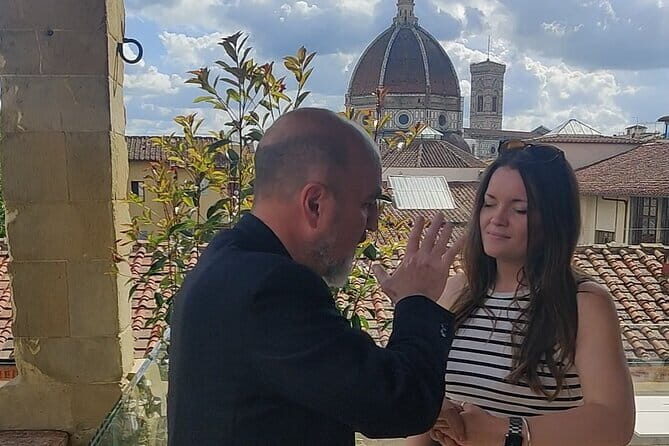
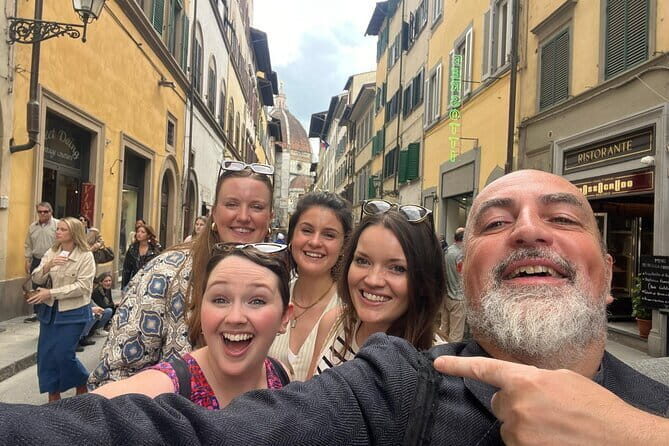
Florence gets weird in the best way. With mentalist Darus, you walk between famous spots and step into mind-bending experiments that try to connect what’s in your head with what’s around you. It’s part guided stroll, part show, and it moves fast enough that you stay engaged.
I really like the hands-on participation. You’re invited to contribute your energy and thoughts, so you’re not stuck watching from the sidelines. I also like the route through iconic Florence landmarks, which gives you a fresh way to experience the city instead of just collecting photos.
One thing to consider: the experience needs good weather, since it’s built around outdoor stops. If you’re visiting during unsettled days, you’ll want flexibility.
In This Review
- Key things I’d plan around
- Mindgames of a Mentalist: Turning Florence’s Landmarks Into a Game
- Price and Value for $64.53: A Short Show with Real Stops
- Route and Timing: Starting at Via della Ninna, Ending by Santissima Annunziata
- The Itinerary: Where the Mentalism Happens in Florence
- Stop 1: Piazza della Signoria (Begin the Inferno-to-Parisian-Mind-Paradise Mood)
- Stop 2: Duomo – Cattedrale di Santa Maria del Fiore (Thought-Reading at the Cathedral)
- Stop 3: Museo Casa di Dante (Experiments Built Around Dante’s House Energy)
- Stop 4: Battistero di San Giovanni (Create Something Incredible from the Features)
- Stop 5: Fontana del Porcellino (Legend and History Fuel the Mental Experiments)
- Stop 6: Piazza della Santissima Annunziata (Travel Back Through Memories)
- How Darus Runs the Mind Games (What You’re Really Paying For)
- Who This Tour Is Best For (And When to Skip It)
- Planning Tips That Matter for This Specific Walk
- Should You Book Mindgames of a Mentalist and Strolling Through Florence?
- FAQ
- How long is the Mindgames of a Mentalist and Strolling through Florence experience?
- How much does it cost, and what’s included?
- Are there admission tickets needed for the stops?
- Where do I meet, and where does the tour end?
- How do I get my ticket?
- What is the group size?
- What happens if the weather is bad or I need to cancel?
Key things I’d plan around
- Interactive mind games where you may be asked to take part, not just observe
- A tight route across major Florence landmarks in about 2 hours
- Dante-themed stops that shape the style of the experiments along the way
- Several outdoors city squares means you’ll feel the weather
- Small group cap (max 30) keeps the vibe more personal
- Admission tickets are listed as free for the stops on this route
Mindgames of a Mentalist: Turning Florence’s Landmarks Into a Game

This isn’t the usual Florence format where you stand, listen, and move on. Here, you’re part of it. Mentalist Darus builds the experience around attention, intuition, and audience participation, then anchors those mental exercises to recognizable places across Florence.
The fun part is how theatrical the stops feel without turning into something stiff. Darus frames each location like a “portal” to a mind game, so the landmarks stop being background and start acting like cues. In practical terms, that makes the walk easier to enjoy. Your brain stays active, and you don’t lose track just because the streets get busy or you’re tired.
What also helps is the energy Darus brings. The tone stays upbeat, and the games are meant to feel friendly, not intimidating. He also shares bits of trivia along the way, which gives the experience a guided edge even when you’re focused on the mental experiments.
You can also read our reviews of more tours and experiences in Florence.
- Tuscany Day Trip from Florence: Siena, San Gimignano, Pisa and Lunch at a Winery
★ 5.0 · 21,634 reviews

Price and Value for $64.53: A Short Show with Real Stops
At $64.53 per person for about 2 hours, this is priced like a performance. That’s not a bad thing, as long as you know what you’re buying: access to Darus’ interactive mind games plus a guided stroll through a set route of landmarks.
A big value point here is that each stop is listed as admission ticket free. So you’re not paying extra entry fees at the locations included in the itinerary. Bottled water is also included, which is a small detail, but it matters when you’re moving between several outdoor points.
This works best if you treat it as an experience, not a substitute for full sightseeing. You won’t spend hours at any single museum or monument. Instead, you get a fast, entertaining route that gives you both iconic views and a different kind of storytelling.
If you’re hoping to pick a specific date, plan ahead. The experience is commonly booked about 8 days in advance, which suggests demand stays steady.
Route and Timing: Starting at Via della Ninna, Ending by Santissima Annunziata
The tour runs for about 2 hours and uses a clear, timed structure: most stops are 15 minutes, and the final stop lasts 30 minutes. That makes the day easy to slot into a travel schedule, especially if you’re already juggling museums, churches, and long walks.
You start at Via della Ninna, 1R, 50122 Firenze FI, Italy and finish at Piazza della Santissima Annunziata, Firenze FI, Italy. The ending point is a few hundred meters from the Florence Cathedral area, and a little further from Piazza Signoria. That is useful because it means the tour doesn’t strand you far from the heart of the city.
Ticketing is simple: you get a mobile ticket. You also receive confirmation at booking. And because the group size tops out at 30, you should expect a lively but not chaotic experience.
The Itinerary: Where the Mentalism Happens in Florence

Below is how the mind games roll from stop to stop. I’ll keep it practical: what happens there, what it’s good for, and what you should mentally prepare for.
Stop 1: Piazza della Signoria (Begin the Inferno-to-Parisian-Mind-Paradise Mood)
You kick things off in Piazza della Signoria. This first segment sets the tone with a theme tied to Dante Alighieri’s Divine Comedy, moving from inferno energy into a mental paradise feeling. It also includes successful mentalism experiments and demonstrations meant to get participants involved right away.
Why this stop matters: it trains you to play along. If you tend to overthink during “interactive” activities, this opener helps you relax into the format.
- Tuscany Day Trip from Florence: Siena, San Gimignano, Pisa and Lunch at a Winery
★ 5.0 · 21,634 reviews



Stop 2: Duomo – Cattedrale di Santa Maria del Fiore (Thought-Reading at the Cathedral)
Next you head to the Duomo (Cattedrale di Santa Maria del Fiore). Here, Darus performs a mind reading style moment where he reads thoughts amidst the grandeur of the cathedral setting.
This is one of the stops that most people imagine when they think of mentalism: it’s dramatic, public, and tied to a major landmark. If you want the strongest sense of Florence as a stage, this is it.
Possible consideration: it’s still outdoors and centered in a busy sightseeing zone, so you’ll want to be comfortable with attention from a crowd.
Stop 3: Museo Casa di Dante (Experiments Built Around Dante’s House Energy)
At Museo Casa di Dante, the focus shifts. The mind experiments connect to the energy of Dante Alighieri’s house, keeping the theme consistent but changing the flavor of the games.
Why I like this stop idea: it turns Dante from a name on a brochure into a structure for the experience. Instead of learning facts only through explanation, you’re nudged into participating in something that feels conceptually linked to the place.
Stop 4: Battistero di San Giovanni (Create Something Incredible from the Features)
At the Battistero di San Giovanni, the tour leans into place-based creativity. You approach the baptistery and create something incredible based on its features.
The “based on features” wording matters. It suggests the experience is less about memorizing information and more about responding to what you notice in the environment. That’s a good match for a mentalist format, because your perception becomes part of the input.
Stop 5: Fontana del Porcellino (Legend and History Fuel the Mental Experiments)
Then it’s Fontana del Porcellino. Here, Darus uses the legend and history of the place to perform mental experiments.
This is a satisfying stop if you like stories that carry atmosphere. It’s also a smart reset in the middle of the loop: you’ve already had thought-reading and Dante-style framing, and now you get a different narrative engine.
Stop 6: Piazza della Santissima Annunziata (Travel Back Through Memories)
The final stop is Piazza della Santissima Annunziata. The tour draws on the history of the Ospedale degli Innocenti, then uses memory-focused games to feel like a time jump back into the past.
This ending segment lasts 30 minutes, which signals it’s designed to land harder than the earlier stops. It’s also where the experience can feel the most personal, because memory-style activities tend to make people reflect in the moment.
By the time you finish here, you’re also in a convenient location for continuing your Florence day on foot, since it’s near the cathedral area.
How Darus Runs the Mind Games (What You’re Really Paying For)

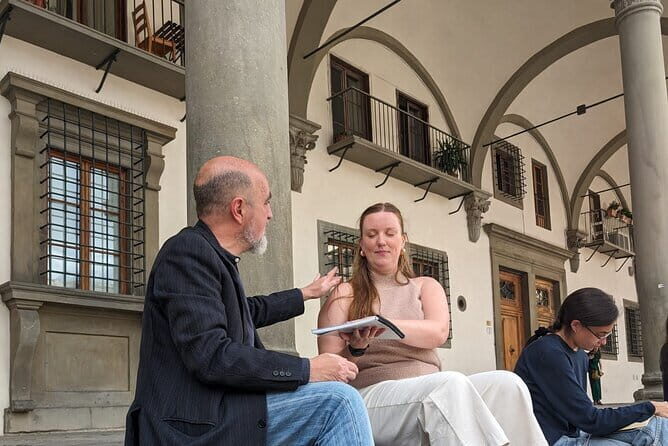
The core promise is simple: you’re an active participant. Darus invites people on stage to contribute energy and thoughts, and then runs experiments meant to make you feel connected to the world around you.
In practice, the best mindset to have is cooperative. If you treat it like a puzzle you’re supposed to solve perfectly, you might tense up. But if you treat it like a playful interaction, you’ll get more out of it even if you can’t explain how the effect happens.
One detail I like from how Darus delivers: the tone stays positive and encouraging. The experience includes multiple mind-bending moments, and the format keeps moving so you’re never stuck waiting around for too long.
Also, the tour is designed for different comfort levels. You may be chosen for participation, or you may simply take part in ways that don’t put you front and center. Still, the experience is built for “most travelers can participate,” which usually means there’s room for different types of engagement.
Finally, the way the games link to each landmark helps the experience feel less random. Instead of learning tricks in a generic setting, you get experiments tailored to each stop’s theme: Dante, cathedral atmosphere, baptistery features, Porcellino legend, and the Ospedale degli Innocenti memory tie-in.
Who This Tour Is Best For (And When to Skip It)
This is a great fit if you want a break from standard sightseeing formats. If you like Florence but you also like jokes, surprises, and audience involvement, you’ll probably have a strong time.
It’s also a good choice for mixed groups. The experience is described as working well across ages, including teens and adults with different levels of belief. That matters if you’re traveling with someone who normally doesn’t care about “guided tours.” This one is built around participation rather than lectures.
You might consider skipping it if you hate being put on the spot. Since Darus can invite people to contribute on stage, the experience isn’t built for total privacy. And if you only want quiet, museum-style wandering, this might feel too performative.
Planning Tips That Matter for This Specific Walk

Because the tour depends on good weather, check conditions before you commit your schedule. If rain or poor weather hits, the experience is designed to be handled by offering a different date or a full refund.
It’s also a short, timed route with multiple outdoors stops. So think “two hours of movement and attention,” not “two hours of sitting.”
And because you finish at Piazza della Santissima Annunziata, plan your next activity nearby. You’ll be in a convenient area to keep going rather than starting from scratch.
One more practical point: since the group cap is 30, try not to show up super late to the meeting point. You want a smooth start so you get into the mind game momentum early.
Should You Book Mindgames of a Mentalist and Strolling Through Florence?
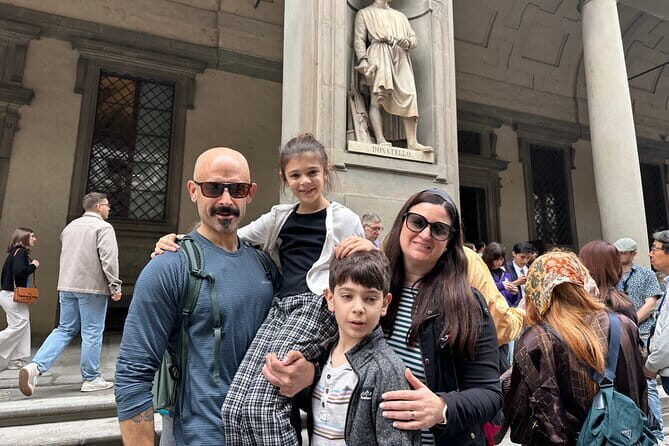
Yes, if you want Florence with a twist and you’re open to friendly audience participation. For $64.53 and about 2 hours, you get a guided loop through major landmarks plus multiple mind-bending moments anchored to each stop’s theme. The fact that admissions are listed as free for the route and bottled water is included makes the value feel straightforward.
Maybe not, if you dislike being singled out, or if your travel days are too tight to handle a weather-based change.
If you’re thinking about it, I’d book it sooner rather than later, since dates commonly sell out around a week-plus in advance. This is the kind of experience that tends to be talked about later because it’s not just another walk with facts. It’s a walk where your brain becomes part of the show.
FAQ
How long is the Mindgames of a Mentalist and Strolling through Florence experience?
It runs for about 2 hours.
How much does it cost, and what’s included?
The price is $64.53 per person, and bottled water is included.
Are there admission tickets needed for the stops?
The itinerary lists admission tickets as free for each stop included on the route.
Where do I meet, and where does the tour end?
You start at Via della Ninna, 1R, 50122 Firenze FI, Italy and end at Piazza della Santissima Annunziata, Firenze FI, Italy.
How do I get my ticket?
You receive a mobile ticket.
What is the group size?
The tour/activity has a maximum of 30 travelers.
What happens if the weather is bad or I need to cancel?
The experience requires good weather. If it’s canceled due to poor weather, you’ll be offered a different date or a full refund. You can also cancel for a full refund if you cancel at least 24 hours in advance of the start time.
You Might Also Enjoy



More Tour Reviews in Florence
- Tuscany Day Trip from Florence: Siena, San Gimignano, Pisa and Lunch at a Winery
★ 5.0 · 21,634 reviews - The Best tour in Florence: Renaissance & Medici Tales – guided by a STORYTELLER
★ 5.0 · 12,316 reviews