REVIEW · FLORENCE
The Best Tour in Florence: Renaissance and Medici Tales
Book on Viator →Operated by All Around Florence · Bookable on Viator
Medici power plays out in stone and street corners. This 2-hour walk connects Florence’s biggest landmarks with the people who shaped the Renaissance, using Medici tales that make the city feel logical. You start at San Lorenzo, then move through courtyards, churches, and squares in a route that’s easy to follow on foot.
Two things I really like: you get storytelling you can use, not just dates—guides explain how the Medici built influence through banking, buildings, and public art. And the tour is a fast way to get bearings: in one morning or afternoon you see the Duomo complex, Giotto’s bell tower, and the political heart around Piazza della Signoria.
One possible drawback: several stops are viewpoints or exterior-focused, and you may need to handle separate entry tickets for some of the sights along the way.
In This Review
- Key things to know before you go
- Meet Giovanni de’ Medici at San Lorenzo, the smart way to start
- San Lorenzo: where the Medici story becomes real
- Palazzo Medici Riccardi: banking power made visible
- Baptistery of St. John: Florence’s old soul across from the cathedral
- The Duomo complex: spotting the Gothic start and the Renaissance dome
- House of Dante and the shift from power to ideas
- Piazza della Signoria: where art and government collide
- Palazzo Vecchio and the Michelangelo David copy
- The Uffizi area finish: seeing how the Renaissance institutions connect
- Price and value: why it’s budget-friendly without feeling cheap
- What to expect on the ground: pacing, group size, and comfort
- Who this tour fits best (and who might want something else)
- Should you book The Best Tour in Florence: Renaissance and Medici Tales?
- FAQ
- Where does the walking tour start?
- How long is the tour?
- Is the tour offered in English?
- Is a mobile ticket included?
- What’s the tour maximum group size?
- Does the tour include admission tickets?
- Where does the tour end?
- Is the tour canceled if the weather is bad?
- What if the minimum number of travelers is not met?
- What’s the cancellation window for a full refund?
Key things to know before you go
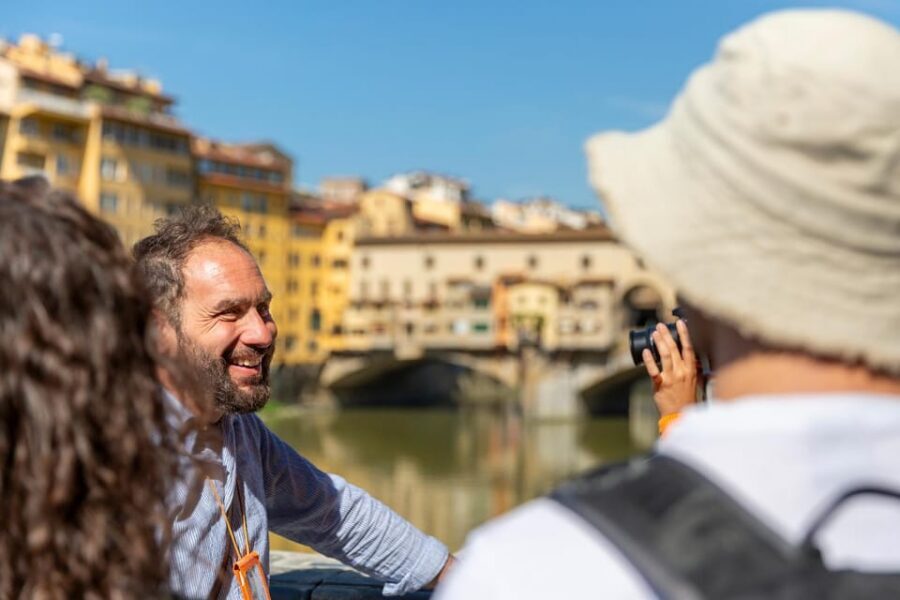
- A Medici-focused route that starts at San Lorenzo and keeps the storyline moving through major Renaissance sites
- Short, efficient stop times so you cover lots of ground in about 2 hours
- Duomo complex highlights paired with practical sight-by-sight context (Giotto’s Campanile, Brunelleschi’s dome)
- Culture beyond the usual squares, including Dante’s connection to Florence and the politics of Piazza della Signoria
- Small-group feel with a maximum of 30 travelers and a licensed guide leading the pace
- Pay what you think is fair: the base price is low because the guide is paid through your end-of-tour compensation
Meet Giovanni de’ Medici at San Lorenzo, the smart way to start
Florence can overwhelm you fast. That’s why I like this tour’s opening: you meet near San Lorenzo, at Piazza di San Lorenzo, 35R. The meeting spot is next to the statue of Giovanni de’ Medici sitting on a throne, right in the center of the market area, so you’re not hunting around at the edges of town.
From that first minute, the tour gives you a framework. You’re not just looking at pretty buildings. You’re learning how Florence’s leading family used art, architecture, and public reputation to keep power close to everyday life. It’s a great approach for first-time visitors, and it’s also useful if you’ve been to Florence before but want your mental map to snap into place.
The walk is designed to be manageable: you’re on foot, with enough time at each stop to learn what matters, then enough movement to keep the tour from turning into a lecture.
You can also read our reviews of more tours and experiences in Florence.
- Tuscany Day Trip from Florence: Siena, San Gimignano, Pisa and Lunch at a Winery
★ 5.0 · 21,634 reviews
San Lorenzo: where the Medici story becomes real
The Basilica di San Lorenzo is the first big stop, and it’s not a random choice. This church sits in the main market district of Florence, and it’s also the burial place of key Medici members—from Cosimo il Vecchio through Cosimo III. That detail changes how you look at it.
Instead of treating it like just another church stop, the guide’s commentary helps you see San Lorenzo as part of a larger strategy: control memory, control prestige, and keep the family’s name anchored to the city’s most important institutions. In practice, you’ll get a sense of why the Medici weren’t only bankers or patrons—they were shaping Florence’s identity.
Practical note: the stop time is about 10 minutes, so go in ready to observe and listen rather than plan for a full interior visit. Admission is not included for this stop, so if you want to go inside in depth, plan for tickets on your own.
Palazzo Medici Riccardi: banking power made visible

Right after San Lorenzo, you head to the Palazzo Medici Riccardi. This is one of the key sites for understanding how Renaissance Florence turned private wealth into public influence.
The palace was designed for Cosimo de’ Medici and built between 1444 and 1484. When you hear those facts while you’re standing in the area, the building stops feeling like a photo-op and starts feeling like a tool. That’s the tour’s real value here: it connects architectural presence to political strategy.
You’ll typically spend around 10 minutes at this stop, which is enough to grasp the basics and get the “why” behind what you’re seeing. Admission is not included, so don’t expect an included interior experience unless you arrange it separately.
Baptistery of St. John: Florence’s old soul across from the cathedral
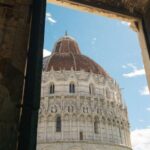
Next comes the Baptistero di San Giovanni, also known as the Florence Baptistery. This is one of the oldest structures in the city. Construction is dated between 1059 and 1128, in a Florentine Romanesque style.
What I like about placing this stop here is the contrast. You’re moving from Medici-era power into a much earlier layer of Florence’s timeline. Even if your eyes are drawn to the Duomo complex ahead, the Baptistery helps explain why the historic center feels layered, not “single period.”
The Baptistery is located in Piazza del Duomo and Piazza San Giovanni, across from Florence Cathedral and the Campanile di Giotto. Expect about 10 minutes of time here, focused on context and sight lines rather than a long visit. Admission tickets are not included for this stop.
The Duomo complex: spotting the Gothic start and the Renaissance dome
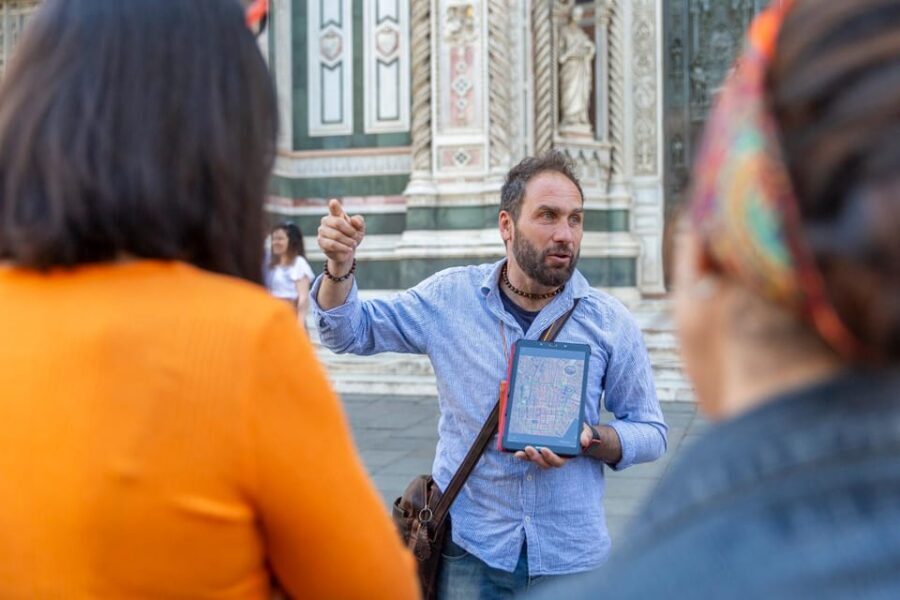
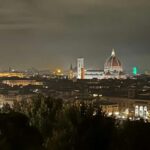
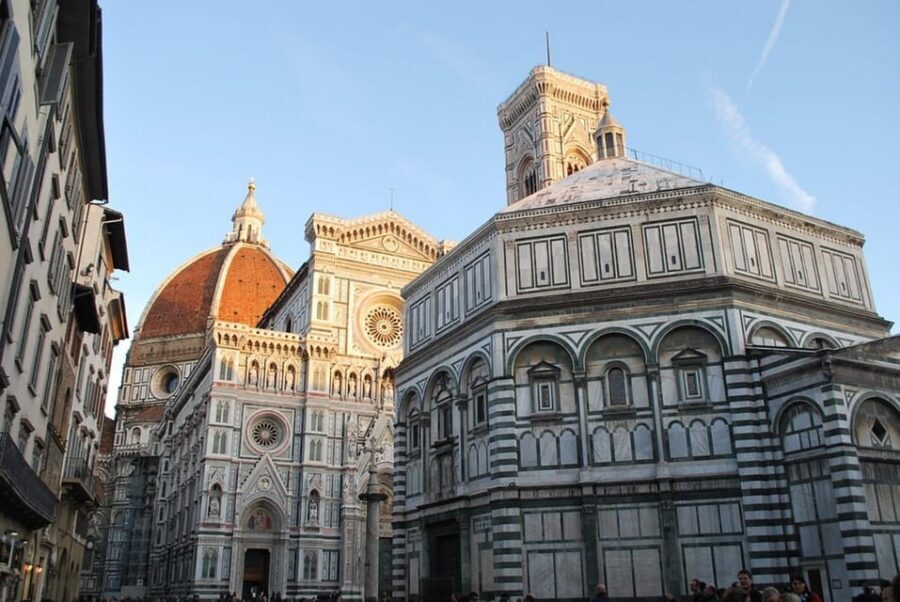
Then you reach the Duomo stop. Florence Cathedral is formally the Cattedrale di Santa Maria del Fiore. Work began in 1296 in the Gothic style, following a design by Arnolfo di Cambio. The cathedral complex is part of UNESCO’s historic center and includes the Baptistery and Giotto’s Campanile.
A key practical point: this tour keeps you moving along the complex rather than getting stuck. That works well because the Duomo area can feel chaotic if you’re trying to plan everything alone. You’ll learn what you’re looking at and why it’s important, then keep walking.
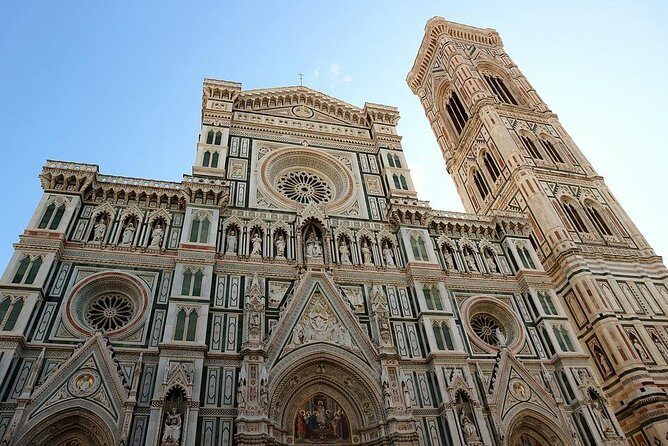
Giotto’s Campanile is the next highlight, adjacent to both the Basilica of Santa Maria del Fiore and the Baptistery. This tower is a showpiece of Florentine Gothic architecture, credited to Giotto with rich sculptural decoration and polychrome marble encrustations. The tour’s quick stop time (about 10 minutes) means you’ll focus on recognizable elements—so even a short look teaches you how to read the façade like a visual story.
Finally, you’ll get Cupola del Brunelleschi. This dome is described as one of the biggest mysteries in art and architecture, and it was the largest in the world at its time. It remains the largest brick dome ever constructed. Standing near it with the right context helps you understand why Brunelleschi’s solution became such a big deal, not just an engineering flex.
Admission varies by stop. The Duomo is listed as free for this part of the experience, while the Campanile and Brunelleschi-related viewing stops are not included for admissions in the tour’s plan.
Standing under the dome tends to plant one specific idea: climbing it. Slots sell out days ahead in season, so florenceexplorer.com tracks the current dome-climb tours and tickets with reviews, and the Opera del Duomo site is the official source for the Brunelleschi Pass.
- Tuscany Day Trip from Florence: Siena, San Gimignano, Pisa and Lunch at a Winery
★ 5.0 · 21,634 reviews

House of Dante and the shift from power to ideas
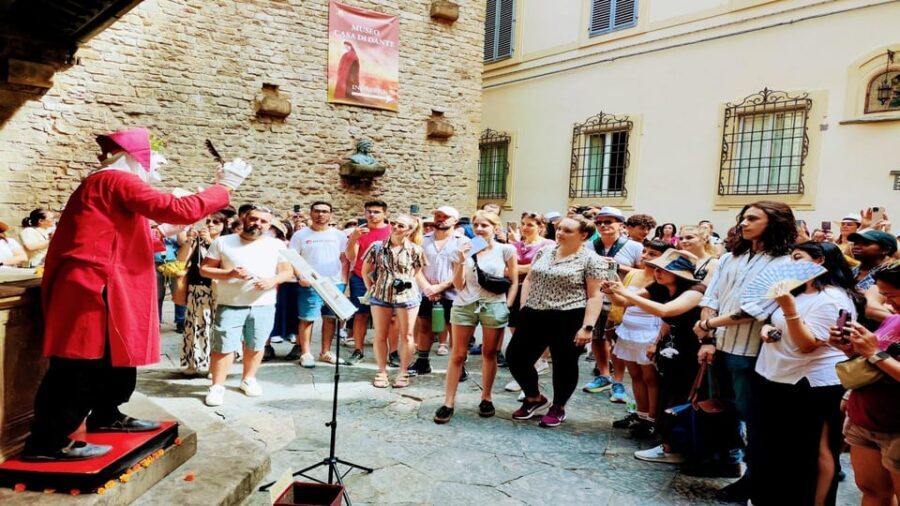
After the big stone icons, the route turns to literature: the Museo Casa di Dante. You’ll spend about 5 minutes here, and it’s a smart palate cleanser.
The core idea is simple and useful: Dante Alighieri wrote the Divine Comedy, which is widely considered the most important poem of the Middle Ages and the greatest literary work in the Italian language. When you learn that while you’re in the area connected to his life, you start to see Florence as a place that didn’t just fund art and buildings—it also generated ideas people carried for centuries.
Admission here is listed as free, which is a nice bonus if you want something light without paying extra. Since the tour time is short, think of this as a way to connect Dante to the city rather than a full museum day.
Piazza della Signoria: where art and government collide
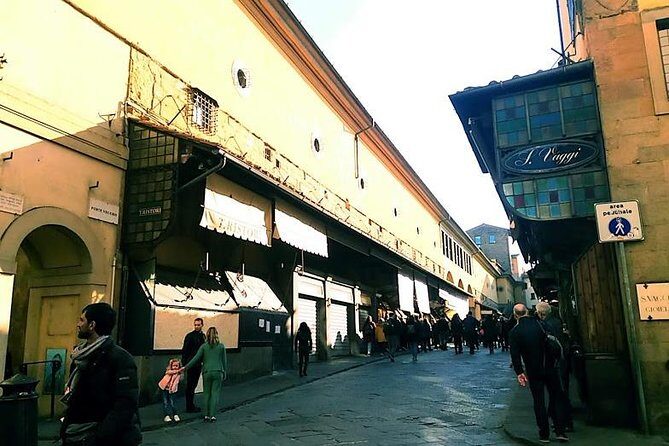
Next comes Piazza della Signoria. This is an L-shaped square in front of Palazzo Vecchio and a main meeting place for Florentines and tourists. It’s also near Piazza del Duomo and acts as a gateway to the Uffizi Gallery area.
Why this square matters in a Medici-and-Renaissance story: the Medici may have been bankers, but their influence needed a public stage. Piazza della Signoria is that stage. You’ll learn how the square functioned as a symbol of civic identity, and you’ll get context for the buildings around you.
Expect about 10 minutes here, with the guide pointing out how this space connects to nearby attractions. Admission is listed as free.
Palazzo Vecchio and the Michelangelo David copy
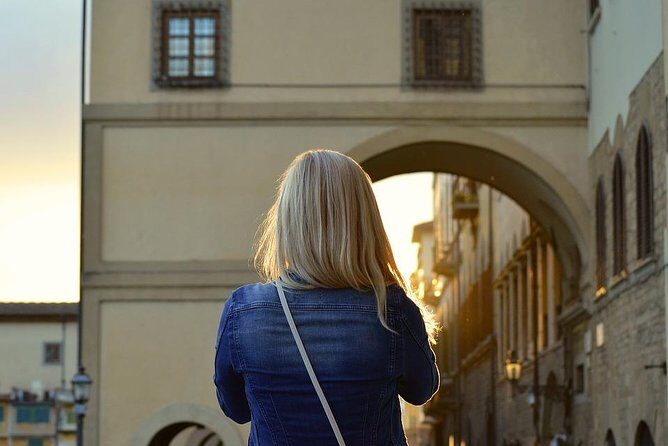
Palazzo Vecchio is next, the town hall of Florence—known as Old Palace. It’s massive, fortress-like, and one of the most impressive town halls in Tuscany.
This is the spot where the tour’s “you’ll understand the city faster” advantage shows up. You’re not only looking at stone architecture. You’re learning how power was staged through public buildings.
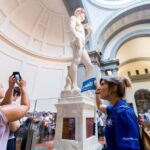
The square gives you a clear art cue: across from you is a copy of Michelangelo’s “David” as well as the gallery of statues in the adjacent Loggia dei Lanzi. The tour doesn’t promise a deep art lecture in these short windows, but it does help you recognize what you’re seeing and why it was placed where it is.
Palazzo Vecchio stop time is about 10 minutes, and admission is not included for this part.
The Uffizi area finish: seeing how the Renaissance institutions connect
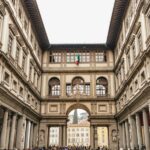
The tour ends near the Uffizi Gallery area, convenient if you want to keep exploring right away. The Uffizi is one of Italy’s most important art museums and is also one of the most visited in the world. It’s especially famous for Italian Renaissance works.
Even if you don’t step inside during the walking tour window, the guide’s commentary helps you understand what you’re approaching. The Uffizi complex was begun by Giorgio Vasari in 1560 for Cosimo I de’ Medici, meant to accommodate the offices of Florentine magistrates—hence the name uffizi, meaning offices.
That detail is quietly powerful. You start the tour learning how the Medici used influence through buildings and public image, and you end by walking into the neighborhood where that influence became an institution. It’s a smooth way to connect power, governance, and art without forcing you to do everything at once.
Admission is not included for this stop in the tour plan, so if you want to see major galleries in depth, you’ll want to buy your museum ticket separately.
Price and value: why it’s budget-friendly without feeling cheap
This tour is listed at $3.62 per person and is booked about 25 days in advance on average, which tells me two things: it’s attractive value, and it’s a practical first-stop experience.
But the real “value math” comes from how it’s structured. You’re not paying for a long museum day. You’re paying for a guided route that hits a lot of Florence’s key storytelling points in about 2 hours—San Lorenzo, Medici Riccardi, the Baptistery, the Duomo complex, Giotto’s tower, Brunelleschi’s dome area, Dante’s connection, and the civic core around Piazza della Signoria and Palazzo Vecchio.
Also, the experience is made possible thanks to your end-of-tour compensation. The idea is simple: you decide what’s fair based on the guide’s professionalism. If you want a practical benchmark people mention, some guests suggest tipping at least €20 per person when the guide does a standout job.
In reviews, the biggest praise always circles around one theme: guides who can turn Medici history into street-level storytelling. Names that come up include Aurora, Manuel, Alberto, Deborah, Camilla, Marco, Simona, Elizabeth, Elisabetta, and others. The consistent element isn’t the biography of the guide—it’s the way the guide keeps you oriented and makes the timeline feel like a lived story rather than a list of dates.
What to expect on the ground: pacing, group size, and comfort
The tour has a maximum group size of 30 travelers, which helps keep the experience from turning into a slow shuffle. It’s also licensed, and it’s offered in English.
Timing is built into the experience. Many stops are around 10 minutes, with a shorter 5-minute moment at the Dante site. That’s the right structure for travelers who want highlights without sacrificing the ability to wander later on your own.
One more practical note: the tour is made for good weather. Florence weather can switch fast, so plan layers and keep an eye on skies. It’s a walking tour, so comfortable shoes matter.
Who this tour fits best (and who might want something else)
I think this tour is ideal if you:
- Want a first-day orientation that explains what you’re looking at as you see it
- Like historical context, especially the Medici influence on Renaissance art and architecture
- Prefer walking and short stops rather than sitting in a museum for hours
- Want a route that reaches major sights and then sets you up to pick the next things to explore
It may be less ideal if you:
- Want long interior time in churches and museums
- Prefer an art-focused deep dive that spends most of the day inside galleries
- Expect every stop to include included admissions (some are free; many are not)
Should you book The Best Tour in Florence: Renaissance and Medici Tales?
Book it if your goal is simple: understand Florence fast, then wander with purpose. This is one of those tours where the main promise is clear—Medici and Renaissance stories tied directly to the buildings and squares you’ll see anyway. The pacing works, the guide commentary seems to be the core strength, and the ending near the Uffizi area helps you keep the momentum going.
If you’re budget-conscious, the low listed price is a bonus. Just remember the experience’s “fair compensation” model at the end. And if your timing is tight, you’ll like that the route hits the big signatures: San Lorenzo, Palazzo Medici Riccardi, the Baptistery, the Duomo complex, Giotto’s Campanile, Brunelleschi’s dome, Dante’s connection, and the civic stage at Piazza della Signoria and Palazzo Vecchio.
FAQ
Where does the walking tour start?
It starts at Piazza di San Lorenzo, 35R, 50123 Firenze FI, Italy. You meet your guide next to the statue of Giovanni de’ Medici sitting on a throne.
How long is the tour?
The tour is about 2 hours.
Is the tour offered in English?
Yes. The tour is offered in English.
Is a mobile ticket included?
Yes, the tour includes a mobile ticket.
What’s the tour maximum group size?
The maximum is 30 travelers.
Does the tour include admission tickets?
Some stops are free, but many are not included. The Basilica di San Lorenzo, Palazzo Medici Riccardi, Baptistery of St. John, Campanile di Giotto, Cupola del Brunelleschi, Palazzo Vecchio, and Gallerie Degli Uffizi are listed as not included. The Duomo stop is listed as free, and Museo Casa di Dante is listed as free.
Where does the tour end?
It ends near Piazza della Signoria (P.za della Signoria, 50122 Firenze FI, Italy). The exact endpoint can vary slightly within the area.
Is the tour canceled if the weather is bad?
The experience requires good weather. If it’s canceled due to poor weather, you’ll be offered a different date or a full refund.
What if the minimum number of travelers is not met?
If canceled because the minimum isn’t met, you’ll be offered a different date/experience or a full refund.
What’s the cancellation window for a full refund?
You can cancel up to 24 hours in advance for a full refund. If you cancel less than 24 hours before the start time, the amount paid will not be refunded.
You Might Also Enjoy

More Tours in Florence
- The Best tour in Florence: Renaissance & Medici Tales – guided by a STORYTELLER
★ 5.0 · 12,316 reviews
More Tour Reviews in Florence
- Tuscany Day Trip from Florence: Siena, San Gimignano, Pisa and Lunch at a Winery
★ 5.0 · 21,634 reviews - The Best tour in Florence: Renaissance & Medici Tales – guided by a STORYTELLER
★ 5.0 · 12,316 reviews