Pasta here tastes like Tuscan folklore. This Florence cooking class turns a morning into a hands-on lesson in old-school technique and Chianti wine pairings, all in a tower-house kitchen set up for real cooking, not watching.
What I like most is the focus on making pasta from scratch with your own hands, then learning how the flavors line up. You’ll work on three styles: Pici all’aglione, tagliatelle with mushrooms and sausage, and Tuscan tortelli with a potato filling.
One thing to consider: it’s a small-group, guided experience with several moving parts (multiple stops and a full meal), and it starts in the morning. If you have strong dietary limits, plan to flag them early, since the experience is built around wine and traditional fillings (though extra care has been mentioned for gluten and dairy-free needs).
In This Review
- Key highlights to know before you go
- Morning Pasta in Florence: old-school cooking, modern comfort
- Start at Santa Croce by Dante: getting oriented fast
- The cooking lesson: three pastas and why each one teaches something
- Pici (all’aglione) in a Siena style
- Tagliatelle with mushrooms and sausage
- Tuscan tortelli with a potato filling
- Chianti pairings that actually support the food
- Old-world technique in a modern kitchen (and what to expect while you cook)
- Dessert together: the sweet finish you helped earn
- Lunch at Via Torta: what’s included and how it feels after cooking
- Price and value: does $195.91 make sense?
- Who should book this Florence pasta class
- Should you book it? The honest answer
- FAQ
- Where do I meet for the Florence pasta class?
- What time does the class start?
- How long is the experience?
- What pasta will I learn to make?
- Is there wine included?
- What’s included in the lunch?
- How large is the group?
- Can I cancel for a full refund?
Key highlights to know before you go
- Old tower-house kitchen: a historical setting turned into a modern cooking space
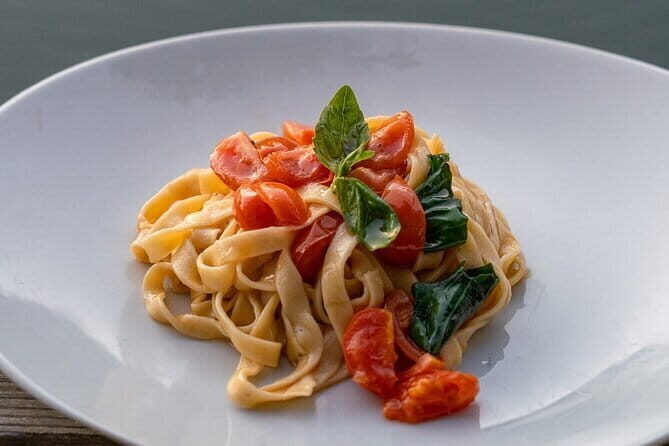
- Three pasta styles taught step-by-step: Pici, tagliatelle, and tortelli
- Chianti paired to each pasta: you taste what makes each combination click
- Hands-on dessert: you help make the sweet ending, not just eat it
- Small group limit (max 8): more time for questions and real interaction
- Lunch at a typical Florence spot (Via Torta): bruschetta, homemade pasta, wine, water, and coffee
Morning Pasta in Florence: old-school cooking, modern comfort
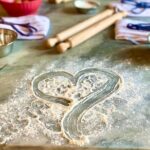
If your idea of a good Florence day is part market-life energy and part food education, this class nails it. You’re not just learning recipes. You’re learning a method—how dough behaves, how fillings get sealed, how shapes hold sauce. And you’re doing it somewhere with atmosphere: an old tower house transformed into a kitchen.
The class description emphasizes old-world technique over gadgets. That matters because it changes what you remember. Instead of thinking you followed steps on a screen, you start noticing things like dough texture, timing, and when sauce will cling versus slide. It’s the kind of learning that actually helps you cook later at home.
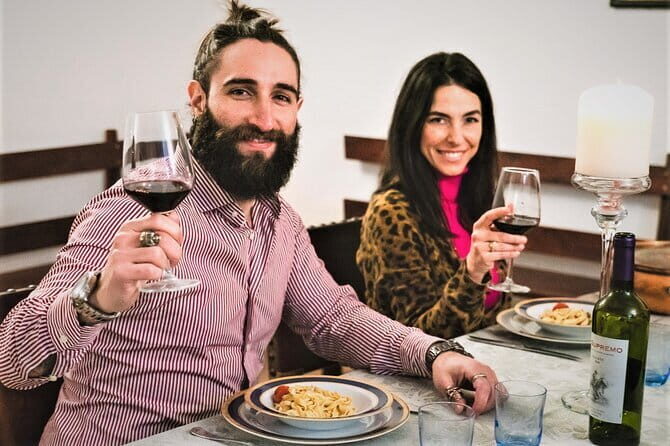
I also like that the experience isn’t only hands-on pasta. Wine pairing is built into the lesson. That turns lunch into more than a reward. You’re tasting while you understand what you made, so the pairings feel logical, not random.
You can also read our reviews of more cooking classes in Florence
Start at Santa Croce by Dante: getting oriented fast
Your morning begins at Santa Croce in front of the statue of Dante Alighieri. The meet-up point is close to public transportation, which is a relief in a city where walking in circles can be a sport.
This first stop is short—around 10 minutes—but it serves an important purpose. You get gathered, you connect with the group, and you’re ready to move on without wasting your cooking-class clock. If you’re arriving a few minutes early, take a quick look around Santa Croce, just to get your bearings. You’ll be glad you did once the rest of the day shifts into food mode.
From there, you head toward a local home base. The itinerary lists a second location at Chiesa dei Santi Apostoli, and the class begins after you arrive. In practice, that means you get a bit of “Florence strolling” time, but not so much that you show up frazzled with flour on your mind.
The cooking lesson: three pastas and why each one teaches something
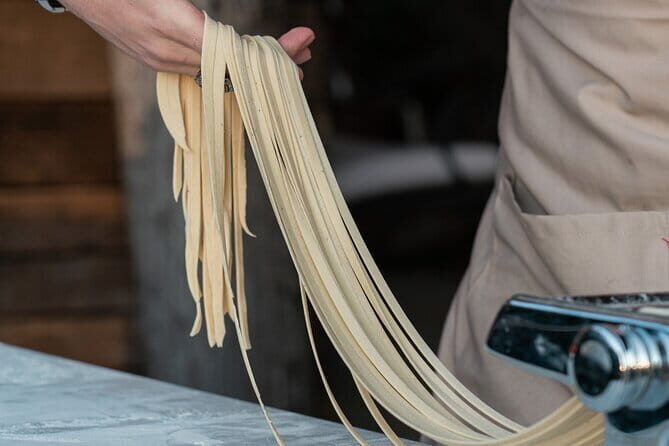
This is the core of the experience, and it’s built around three different pasta types that represent different corners of Tuscan flavor.
Pici (all’aglione) in a Siena style
Pici is thick, handmade pasta—chewy in a good way—and it tends to take sauce well. The version you’ll learn is Pici all’aglione, a dish known for its garlic-forward character. This is a smart first or second lesson because it trains your hands for stretch and shaping. If you’ve never made pasta before, starting with a shape that’s forgiving can build confidence quickly.
As you cook, the guide’s approach matters: you’ll learn how the pasta holds its structure when cooked. Then the pairing helps you connect garlic, oil, and pasta texture as one system.
Tagliatelle with mushrooms and sausage
Next comes tagliatelle with mushrooms and sausage. This isn’t just another pasta. It teaches a different lesson about dough thickness and how layered sauces behave. Tagliatelle is all about surface and holding onto sauce, especially when the filling is rich and savory.
If you like hearty Tuscan comfort food, this is the flavor lane the class leans into. The mushroom notes add depth, and the sausage brings a “weeknight but make it Italian” richness.
You can also read our reviews of more tours and experiences in Florence
- Cooking Class and Lunch at a Tuscan Farmhouse with Local Market Tour from Florence
★ 5.0 · 4,831 reviews
Tuscan tortelli with a potato filling
The final pasta type is classic Tuscan tortelli filled with potatoes. Tortelli is where technique becomes precision—filling goes in, pasta gets sealed, and you want a good edge so it doesn’t burst during cooking.
This part is great because you learn the tactile side of stuffed pasta. You feel the dough thickness, the right amount of filling, and how to shape so the filling stays put. The potato filling also keeps things accessible. Even if you’re not a die-hard pasta person, it’s easy to understand why this is a staple in Tuscan cooking.
Chianti pairings that actually support the food
Each pasta you make is paired with a different wine, and the experience is framed around Chianti. This is one of the best value adds because it gives you a reason to pay attention beyond taste.
Instead of sipping and guessing, you’ll have a running conversation in your mouth: sauce texture, pasta chew, and how wine acidity or fruit changes what you perceive. It’s a simple idea that makes the lesson stick.
Old-world technique in a modern kitchen (and what to expect while you cook)
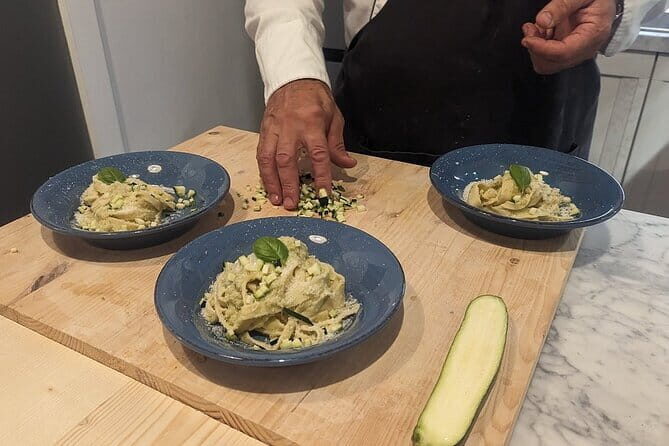
The class takes place in an old tower house kitchen that’s set up for modern comfort, but still leans on traditional methods. That combination is ideal. You get safety and tools where needed, without the experience feeling like a factory kitchen.
You should expect a steady rhythm:
- instructions that build your confidence
- hands-on time that keeps you from zoning out
- moments where you taste and adjust your thinking
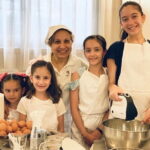
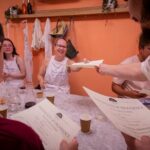
A key point: this isn’t a rushed demo. It’s structured around you participating in the dough work, shaping, and cooking steps. The experience also caps the group size at maximum 8 travelers, which is a quiet advantage. More hands, more questions, and less waiting.
If your group is small, you’ll likely get more personal coaching—especially helpful if it’s your first time making pasta. And if you’ve cooked before, it’s still worth it because pasta shapes can behave differently than you expect.
Dessert together: the sweet finish you helped earn
After the pasta lessons and tastings, the lunch portion isn’t the only endpoint. The itinerary specifies that the session ends with a homemade dessert prepared together.
This matters more than it sounds. Pasta classes sometimes end with a plate of food and a polite thank-you. Here, the sweet is part of the learning arc. It keeps the energy up and gives you something you can replicate at home, or at least carry forward as a style of finishing.
Dessert also helps balance the meal. Between homemade pasta and wine pairings, you can easily tip into heavy comfort-food territory. The dessert step gives a clean close to the morning so you’re ready to continue your Florence day without feeling like a food coma is already on the way.
Lunch at Via Torta: what’s included and how it feels after cooking
The final stage lands at Via Torta, 16r, 50122 Firenze FI. The lunch spot is described as one of the most typical restaurants in Florence, and you’re served a meal that’s clearly designed to cap the class, not replace it.
Here’s what the lunch includes:
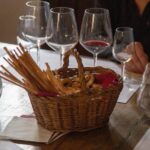
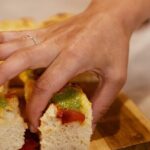
- an entry of traditional bruschettas
- homemade pasta
- two glasses of wine per person
- water and coffee
That’s a meaningful bundle for the price. You’re paying for an organized experience, yes—but you’re also getting a real meal with drinks. And because you already cooked earlier, you’re eating as a participant, not as a spectator. It changes how the food tastes. You notice the sauce consistency and dough quality faster than you would at a typical restaurant.
Also, getting lunch after cooking gives you a useful reset. You can stay in “food mode” a bit longer, then switch back to sightseeing when your energy is right.
Price and value: does $195.91 make sense?
At $195.91 per person, this isn’t the cheapest thing you’ll do in Florence. But it is priced like a guided, hands-on class with wine and a full meal.
Here’s why it can still be good value:
- 3 pasta types taught, not one simple recipe
- wine pairings tied directly to what you’re making
- dessert you make with the group
- lunch with bruschetta, homemade pasta, coffee, and two glasses of wine
That combination is rare. Many cooking experiences skip the “you’re involved” part for at least one stage, or they exclude the wine/meals. This one stacks the experience—teaching, tasting, and eating—into roughly 4 hours 11 minutes.
The small group limit (max 8) helps justify the cost too. It means the chef isn’t speaking over a crowd, and you’re more likely to get feedback.
Still, be honest with yourself: if you’d rather sample food than cook it, you might prefer a food-walking tasting tour instead. But if you want to leave with skills, and you like wine pairings with intention, this has a strong cost-to-experience ratio.
Who should book this Florence pasta class
This class is best for you if:
- you want to learn to make multiple pasta styles in one morning
- you like structured instruction and hands-on practice
- you enjoy Chianti wine pairings with food
- you prefer small groups over big bus tours
It’s also a good fit if you value cultural food technique over showy theatrics. The class leans into Tuscany through pasta shapes and sauce logic, not museum talk.
One more plus: chefs named Mario and Gonzalo have been associated with this experience in the past. That’s useful because it hints at a personal, approachable teaching style rather than a rigid “follow this script” vibe. And there’s at least one mention of extra care taken for a guest with gluten and dairy restrictions. If you have dietary needs, it’s worth sending them in advance so the team can plan.
Should you book it? The honest answer
Book this Florence pasta class if you want more than a meal. You’re paying for a guided morning where you actually make pasta, taste with purpose, and finish with dessert and lunch. The old tower-house setting, the three pasta varieties, and the Chianti pairings are exactly the kind of combination that turns a vacation into something you can replay later at home.
Skip it if your schedule is too tight for a full morning, or if you know you won’t enjoy cooking or alcohol pairings at all. This isn’t only a tasting. It’s a do-it-yourself class with wine as part of the experience.
If you’re on the fence, my advice is simple: if you can spare half a day and you’re excited to get your hands on the dough, this is one of the better ways to spend money in Florence.
FAQ
Where do I meet for the Florence pasta class?
You meet at Santa Croce, Florence, in front of the statue of Dante Alighieri.
What time does the class start?
The start time is 9:30 am.
How long is the experience?
It runs about 4 hours 11 minutes.
What pasta will I learn to make?
You’ll learn to make three types of pasta: Pici (all’aglione), tagliatelle with mushrooms and sausage, and classic Tuscan tortelli filled with potatoes.
Is there wine included?
Yes. Each pasta type is paired with a different wine during the class, and lunch includes two glasses of wine per person.
What’s included in the lunch?
Lunch includes traditional bruschettas, homemade pasta, water, coffee, and two glasses of wine per person.
How large is the group?
The tour/activity has a maximum of 8 travelers.
Can I cancel for a full refund?
Yes. You can cancel up to 24 hours in advance for a full refund.
You Might Also Enjoy

More Workshops & Classes in Florence
- Cooking Class and Lunch at a Tuscan Farmhouse with Local Market Tour from Florence
★ 5.0 · 4,831 reviews
More Cooking Classes in Florence
- Cooking Class and Lunch at a Tuscan Farmhouse with Local Market Tour from Florence
★ 5.0 · 4,831 reviews
More Tour Reviews in Florence
- Tuscany Day Trip from Florence: Siena, San Gimignano, Pisa and Lunch at a Winery
★ 5.0 · 21,634 reviews - The Best tour in Florence: Renaissance & Medici Tales – guided by a STORYTELLER
★ 5.0 · 12,316 reviews