REVIEW · FLORENCE
Florence Time Travel Quest: Michelangelo’s Secret Trail
Book on Viator →Bookable on Viator
Florence turns into a puzzle board. This self-guided time-travel quest guides you around Renaissance landmarks with phone-led clues tied to a Michelangelo storyline. You’re not just stopping for photos; you’re solving steps that make the streets feel like part of the plot.
I love the way the format stays playful but still grounded. 12 interactive puzzle challenges turn big sights like Ponte Vecchio and Piazza della Signoria into real “go here, look there, figure it out” moments. I also like the flexibility: you can start, pause, and resume whenever you need a breather.
One possible drawback: because it’s self-guided, you’ll be relying on your phone throughout. If you prefer a chatty guide or you’re worried about screen time, this may feel like work instead of fun—especially if your battery is low.
In This Review
- Key things to know before you start Michelangelo’s Secret Trail
- What Michelangelo’s Secret Trail is like on the ground
- Start in Piazza Santo Spirito: your first clue, your first orientation
- Fontana dello Sprone and Ponte Vecchio: puzzles in classic photo territory
- Piazzale degli Uffizi and Piazza della Signoria: where the city’s theater shows up
- Piazza del Duomo and Piazza di San Lorenzo: building your own pace
- Galleria dell’Accademia viewpoint and Opera del Duomo Museum zone: city views without ticket stress
- Piazzale Michelangelo and Casa Buonarroti: the Michelangelo connection tightens
- Finish in Piazza Santa Croce: where the game and the city exploration meet
- How long it really takes: 40 minutes to 1 hour 10 minutes, with room to breathe
- Price and value: why $8.93 can make sense in Florence
- Who will enjoy Michelangelo’s Secret Trail the most
- Practical tips so your day goes smoothly
- Should you book Michelangelo’s Secret Trail?
- FAQ
- Where does Michelangelo’s Secret Trail start?
- Where does the quest end?
- How long does the experience take?
- How much is the tour per person?
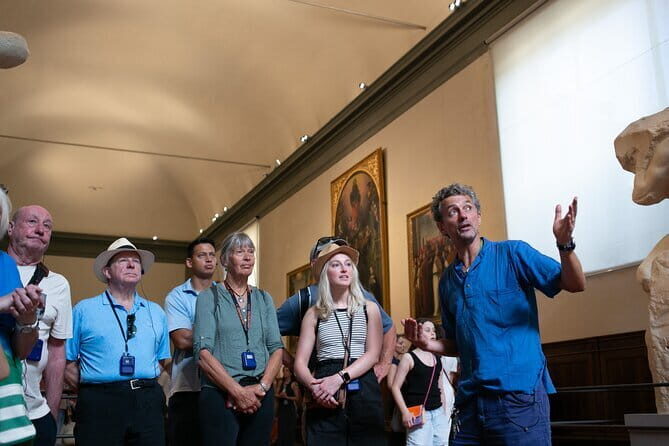
- Is there a guide included?
- What do I get with the mobile ticket?
- Do I need admission tickets to museums or attractions?
- What are the opening hours for the experience?
- What is the cancellation policy?
Key things to know before you start Michelangelo’s Secret Trail
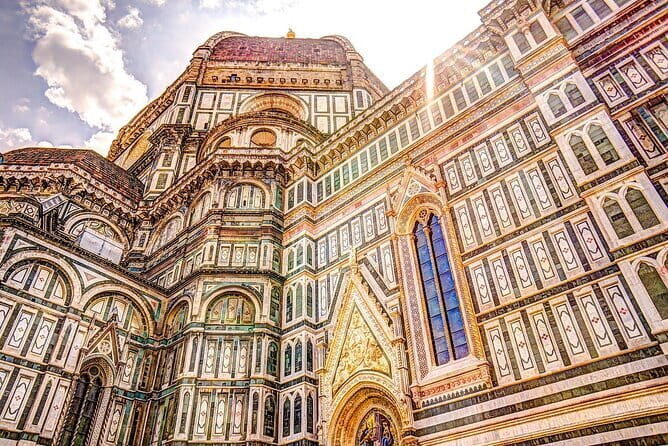
- Phone-based directions and puzzle steps connect Florence’s landmarks into one route.
- 12 puzzle challenges keep you moving in short, manageable chunks.
- Museum entry isn’t required to finish the quest, even if some stops are ticketed.
- Flexible pacing lets you linger at certain squares and viewpoints.
- Built for couples and families who like problem-solving (and a bit of friendly competition).
- Private activity means it’s just your group following the same story steps.
What Michelangelo’s Secret Trail is like on the ground

This experience is a self-guided walking quest in Florence built around a simple idea: use your phone as the storyteller, and let the city act as the set. You’ll follow cryptic prompts from place to place, and each completed puzzle feeds the next direction. It’s part sightseeing route, part puzzle hunt, and it’s designed so you don’t need a guide to get value out of your time.
The main strength is pacing. Instead of one long “tour lecture,” you get short stops that encourage you to look closely. You’ll study details on bridges and in squares, then move on before your feet (or your attention) start to drag. For visitors who only have a couple days in Florence, that matters.
The other strength is how it ties Michelangelo to the exact places you’re already curious about. You’ll be pointed toward the idea of where ideas and carving craft took shape, and you’ll end the route at Piazza Santa Croce. If you like art history but don’t want it delivered as pure facts-only, this format can make the city stick.
You can also read our reviews of more tours and experiences in Florence.
- Tuscany Day Trip from Florence: Siena, San Gimignano, Pisa and Lunch at a Winery
★ 5.0 · 21,634 reviews


Start in Piazza Santo Spirito: your first clue, your first orientation
You begin at Via Santo Spirito, 1, with the starting point at Piazza Santo Spirito. Right at the first stop, you’ll get your initial clue. The goal is straightforward: solve it to move the story forward and receive directions to the next checkpoint.
This opening matters because it sets expectations. Florence has a way of making streets blur together fast. Starting in a square gives you breathing room to get oriented before you head into the more famous bottlenecks.
Also, your first clue is a quick “warm-up.” You’re not expected to know Florence’s secrets already. You just need to follow the prompts closely and be willing to look up and around, not just walk straight through.
Fontana dello Sprone and Ponte Vecchio: puzzles in classic photo territory
Next you’ll head to Via dello Sprone, 20, where the story point connects to the Fontana dello Sprone. Like the first stop, you’ll find a clue there and solve it to get the next step. This part works well because it breaks the rhythm: you’re not only hitting the headline locations; you’re also moving through quieter streets that feel more local.
Then comes Ponte Vecchio, where you’ll study your next clue on the bridge itself. This is one of the most iconic moments in the whole route. The advantage of turning Ponte Vecchio into a puzzle checkpoint is that it slows you down. Instead of rushing to the railing for a view, you’re encouraged to notice what the clue is asking for, and that makes the bridge feel more personal.
Practical note: Ponte Vecchio can get crowded. A puzzle helps because you have a reason to stay focused even if you’re surrounded by people. It’s easier to “arrive” when you’re actively looking.
Piazzale degli Uffizi and Piazza della Signoria: where the city’s theater shows up
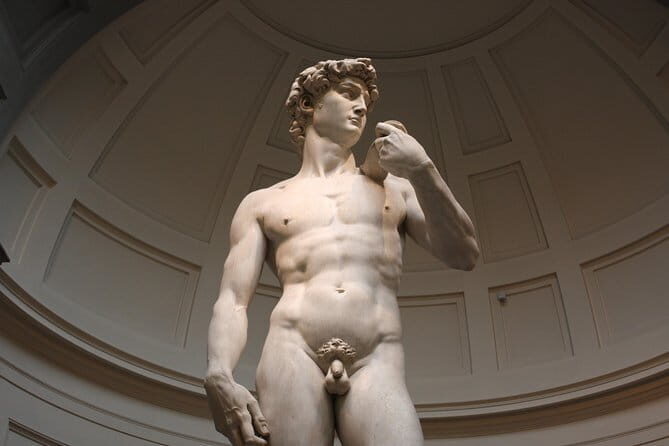
After Ponte Vecchio, you’ll move to Piazzale degli Uffizi. Here you’ll receive the next clue to guide the story. This is a good transition between bridge views and the larger civic spaces Florence is famous for.
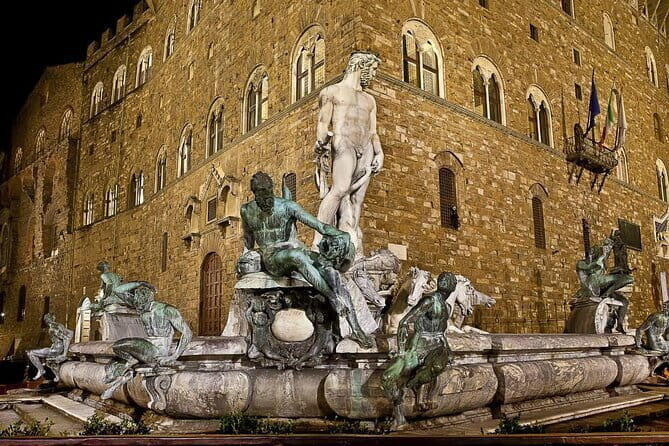
Then you’ll arrive at Piazza della Signoria, one of the city’s most dramatic squares. You’ll look up your next clue and follow directions from there. The big benefit of this stop is that you’re in the kind of space where art and symbolism feel unavoidable. Even if you’re not studying the details like a museum student, the puzzle structure gives you a reason to engage.
One small consideration: if you’re traveling with people who don’t like thinking while walking, this is where you may need teamwork. The setting is so compelling that it’s still enjoyable, but the activity asks you to do a little mental work in a high-energy space.
Piazza del Duomo and Piazza di San Lorenzo: building your own pace
The route continues to Piazza del Duomo, where you’ll get a new clue. The nice part is that you can take your time here. The format explicitly allows you to stop for as long as you like and then continue at your own pace.
That’s helpful because this area can be a time sink on its own. You’re already near major architecture, and the puzzle lets you decide how much energy to spend on extra wandering versus staying focused on the next step. If you want a quick pass, you can do it. If you want to linger, you can.
From there, you head to Piazza di San Lorenzo for the next clue. Again, you can stop as long as you like and continue when you’re ready. This flexibility is one of the things I’d call most practical about the whole experience. Florence’s best moments often happen when you slow down, not when you rush from one landmark to the next.
- Tuscany Day Trip from Florence: Siena, San Gimignano, Pisa and Lunch at a Winery
★ 5.0 · 21,634 reviews



Galleria dell’Accademia viewpoint and Opera del Duomo Museum zone: city views without ticket stress

Next on the path is the Galleria dell’Accademia area, where you’ll enjoy the view and continue exploring at your own pace. The ticket for attractions there is not included. The good news is that the quest is structured so you don’t need entry to complete the experience.
The same idea applies around the Opera del Duomo Museum zone. You can explore at your own pace while admiring what’s around you, but admission tickets aren’t part of the deal. Think of these stops as “look-and-aim” checkpoints. You get the energy of the area without committing to a museum visit if you’re trying to keep the day moving.
If you’re the type who loves to step into museums, you might choose to add extra time. But if you’re traveling light on time and money, these locations still work for the quest.
Piazzale Michelangelo and Casa Buonarroti: the Michelangelo connection tightens

The route pushes uphill toward Piazzale Michelangelo. To solve the next challenge near Michelangelo’s Street, you’ll receive the clue that moves the story forward. This stop is where the quest theme starts to feel more direct. The viewpoint adds an emotional layer: you’re not just solving puzzles about Michelangelo; you’re seeing Florence spread out in a way that makes his influence easier to imagine.
Then you reach Casa Buonarroti, where you’ll see the gallery and get your next clue. Here the story-to-place connection becomes stronger. The quest keeps nudging you toward the idea of Michelangelo’s legacy as something rooted in real sites, not just textbook pages.
Because these stops are tied to viewpoints and a specific museum home, you’ll want decent shoes. Even if the quest is only around 40 minutes to 1 hour 10 minutes, the walk can feel longer once you add pauses for solving and looking.
Finish in Piazza Santa Croce: where the game and the city exploration meet
The quest ends at Piazza di Santa Croce. You’ll finish there, with both the story and the city exploration games wrapped up at the square. This is a smart ending point because Piazza Santa Croce is a place you naturally want to linger in anyway.
If you want to extend the day, this is where you can shift from puzzle mode into “pure wandering.” You’re set up near a major Florence landmark area, and you can choose your next step based on what you still want to see: more architecture, more coffee breaks, or a final stroll through nearby streets.
Endpoints matter. Finishing in a strong square gives you a clear “we’re done” moment, which is great if you have dinner plans.
How long it really takes: 40 minutes to 1 hour 10 minutes, with room to breathe
The experience is listed at 40 minutes to 1 hour 10 minutes. That range makes sense because your pace depends on how quickly you read clues, solve puzzles, and move between points. The route also includes moments where you can linger as long as you like.
Several stops are designed as short encounters. Others explicitly allow more time, especially around Piazza del Duomo and Piazza di San Lorenzo, plus the viewpoint and museum-zone areas. If you’re traveling with children or you want fewer mental puzzles, you can take your time at the flexible stops and keep the rest quick.
Tip: if you want the experience to feel like a win, not a rush, plan a little buffer. You’ll have your phone out, you’ll stop to look up and around, and Florence streets can slow you down at corners and near landmarks.
Price and value: why $8.93 can make sense in Florence
At $8.93 per person, this is priced like a small add-on that can change the quality of your day. In Florence, a lot of “value” comes from how you manage time. If a standard walk can blur together, a structured quest gives you a framework to remember what you saw.
What you’re really paying for is not just the route. You’re paying for the 12 puzzle challenges, the storyline inspired by Michelangelo, and a mobile access code that functions like your ticket. You also get the flexibility to start when you want and pause if you need a bathroom or a snack.
Group discounts can also help if you’re traveling with more people. And because it’s a private activity that only includes your group, you’re not squeezed into someone else’s pace.
The value angle: if you enjoy light problem-solving and you want your sightseeing to feel purposeful, this price is easy to justify. If you only want passive sightseeing with minimal thinking, you might feel like you could spend the same money on a guided museum visit instead.
Who will enjoy Michelangelo’s Secret Trail the most
This works especially well for people who like mixing art, walking, and hands-on learning. The “time travel agent” framing turns Michelangelo’s world into something you experience step by step rather than read about once and forget.
It can also be a good fit for families. The game format is built for short attention cycles because each stop is small and solvable. If you’re traveling with a curious kid who wants to compete, the puzzle structure gives them something concrete to do while you enjoy the sights.
Couples often like it too because it gives you shared activities instead of one person trailing behind for photos. You’re both looking at the same clues and deciding the next move.
If you hate puzzles or you’d rather be told what to look at, consider whether this format matches your style. You don’t get a guide, so the experience depends on your willingness to take the lead.
Practical tips so your day goes smoothly
- Charge your phone first. You’ll need it as your guide for directions and clues.
- Use good walking shoes. Even with a short time window, Florence involves uneven pavement and hills, especially near viewpoints.
- Treat each clue as a mini mission. If you get stuck, pause, look again, then move on to the next step when you’re ready.
- Plan a snack or gelato break near one of the flexible stops. You’ll feel better when you return to the puzzle.
- Go at a comfortable rhythm. The ability to pause and resume matters more than speed.
Should you book Michelangelo’s Secret Trail?
Book it if you want Florence to feel like an interactive story, not a checklist. The phone-guided puzzles, the short stop structure, and the Michelangelo-inspired theme give you a way to connect sights like Ponte Vecchio and Piazza della Signoria to something you can actually remember.
Skip it if you want a traditional guided tour with someone explaining everything as you go. Since there’s no tour guide included, you’ll be doing more of the thinking yourself. And if you dislike game mechanics, you may find the format harder to enjoy.
If you’re on a time-tight trip and you want a low-cost way to make your walking day more meaningful, this is the kind of “yes” that can turn into a repeatable Florence experience later.
FAQ
Where does Michelangelo’s Secret Trail start?
It starts at Piazza Santo Spirito, 1, 50125 Firenze FI, Italy (Via Santo Spirito, 1).
Where does the quest end?
You finish at Piazza di Santa Croce, at the Basilica di Santa Croce address shown as Piazza di Santa Croce, 16, 50122 Firenze FI, Italy.
How long does the experience take?
The duration is listed as about 40 minutes to 1 hour 10 minutes.
How much is the tour per person?
The price is $8.93 per person.
Is there a guide included?
No. This is a self-guided experience and does not include a tour guide.
What do I get with the mobile ticket?
You receive a mobile access code, access to 12 interactive puzzle challenges, and an immersive storyline inspired by Michelangelo. You can also start, pause, and resume.
Do I need admission tickets to museums or attractions?
Entry tickets are not included. The experience says no admission tickets are needed to complete the tour, even though some stops are associated with ticketed attractions.
What are the opening hours for the experience?
The listed opening hours run Monday through Sunday from 12:00 AM to 11:30 PM.
What is the cancellation policy?
Free cancellation is available up to 24 hours in advance for a full refund. If you cancel less than 24 hours before the start time, the amount paid is not refunded.
You Might Also Enjoy


More Tour Reviews in Florence
- Tuscany Day Trip from Florence: Siena, San Gimignano, Pisa and Lunch at a Winery
★ 5.0 · 21,634 reviews - The Best tour in Florence: Renaissance & Medici Tales – guided by a STORYTELLER
★ 5.0 · 12,316 reviews