REVIEW · FLORENCE
Private Tour from Florence: Venice Full Day Tour by Train
Book on Viator →Operated by Rental and Tour · Bookable on Viator
Venice in one day, with a train ticket included. I like the high-speed train round-trip and the personal guide who keeps the story going from canal to square. The main drawback is that this is a long day with lots of walking and short stops, so you’ll want stamina and patience for crowds.
You meet at Santa Maria Novella in Florence at 8:30am, then you’re in Venice for a guided loop at a pace you can steer a bit. Expect an about 11-hour commitment total, with no food included, so plan your timing for gelato breaks and quick bites between sights.
In This Review
- Key things to know before you go
- Getting to Venice: the Florence train day setup
- Meeting your guide and steering the pace
- Canal Grande: where Venetian Gothic meets daily life
- San Giorgio dei Greci and the leaning clocktower story
- Strada Nova: why Venice got wider streets
- Rialto Bridge: the oldest canal crossing and old money
- Piazza San Marco: St Mark’s square and the gold mosaic idea
- Ponte dei Sospiri: why prisoners sighed here
- San Zaccaria and the Accademia area bridges
- Squero di San Trovaso: seeing gondola repair up close
- Campo San Pantalon and Santa Margherita: art and local rhythm
- Piazzale Roma: the city’s edge and your train exit
- Price and value: what you’re really paying for
- Who should book this private Venice-from-Florence tour
- Should you book this private Venice day trip by train?
- FAQ
- How long is the Florence to Venice train tour?
- Where do I meet the tour in Florence?
- What time does the tour start?
- Is the Venice visitor fee included?
- Are train tickets included for the round trip?
- Is the tour private or shared?
- Can the tour be customized?
- Are food and drink included?
- When will I receive the train ticket details?
- What is the cancellation situation close to departure?
Key things to know before you go
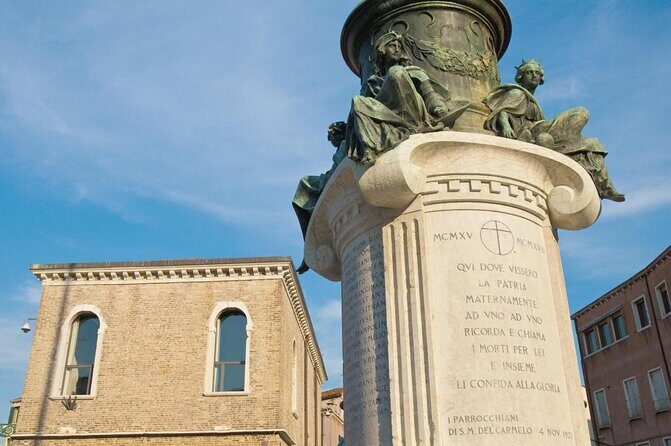
- Private guide for your group only, with room to adjust your focus as you go.
- Round-trip train from Florence included, with the tour covering travel time in the day total.
- Grand Canal landmarks in a single loop, from Rialto to the bridges near the southern end.
- Piazza San Marco time built in, so you’re not just passing through.
- Mostly walk-and-look stops, with optional add-ons likely needed for experiences like a gondola ride.
- Second-class train and limited comfort extras, so it helps to pack smart (especially for long hours).
Getting to Venice: the Florence train day setup
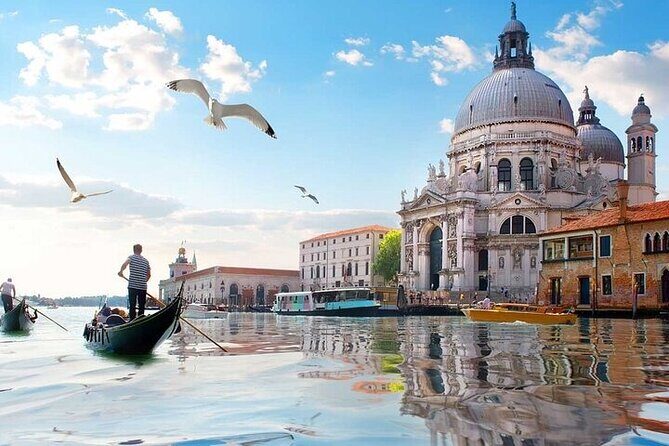
The best part of this trip is also the biggest reason it works: you’re not negotiating buses, transfers, or multiple tickets. You start at Santa Maria Novella in Florence and take the train to Venice (about 2.5 hours), then return the same way (again about 2.5 hours).
That timing matters. Venice runs on walking and bridges, and most day-trips burn half the day in transit. Here, the schedule is built to get you into the sights by morning and back out in time for the return train. Also, because it’s a private setup, you’re not stuck waiting for a big herd to move between photo stops.
One thing to know up front: you’re paying for organization and guidance, not luxury comfort. The transport is 2nd class, and there’s no mention of extras like provided earphones. If you’re sensitive to noise or need audio support, bring your own solution (like using your phone speakers only if reception or volume works for your needs).
You can also read our reviews of more private tours in Florence

Meeting your guide and steering the pace
Once you arrive, you meet your guide and move through Venice by foot, focusing on key places along the water and in the central neighborhoods. This is billed as a private tour, meaning only your group participates, and that can change the tone of the day. With a smaller group, your guide can slow down for a detail, speed up when the crowd crush is too much, and answer the kinds of questions that don’t happen on large bus tours.
The guidance style is a major part of the value. In the feedback for this experience, guides such as Droğan and Su Aydin are highlighted for keeping the pacing calm and packed with real information, not just names on signs. You’ll still be doing plenty of walking, but the narration is what helps those streets and stone corners feel meaningful instead of random.
If you hate the idea of brief stops—think: arrive, look, move on—this is still workable, but you’ll want to commit to the “Venice by layers” approach. Short segments can actually be great if you use them well: arrive curious, leave with direction for what to explore later (or what to skip).
Canal Grande: where Venetian Gothic meets daily life
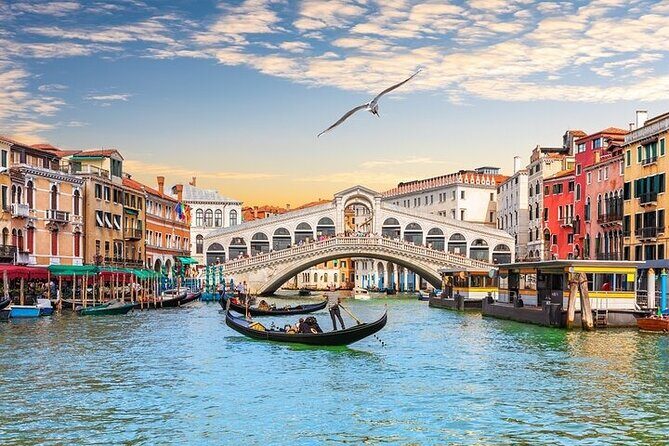
Your Venice loop begins at the Grand Canal, the city’s defining waterway. It’s about four kilometers long and divides the city into two main sections. The guide points out the Venetian-Gothic architecture along the canal—an easy way to understand why Venice looks like it’s made of storybook stone and painted detail.
You also get a window into the idea that Venice’s canals function like streets. It’s not just scenery. The canal system historically shaped how people moved, traded, and built power. That theme returns throughout the day: bridges as checkpoints, squares as meeting points, and churches as community anchors.
Even if you don’t buy any ticketed add-ons, this stop gives you a strong foundation. If you want photos, aim for a moment when your group has time to find a good angle rather than sprinting for the next corner.
San Giorgio dei Greci and the leaning clocktower story
Next comes Chiesa di San Giorgio dei Greci, tied closely to Venice’s Greek community. The star is the campanile—often called the leaning clocktower. It was completed in 1592 and the tilt reportedly began early.
The detail that makes this stop click is the human one: this bell tower and adjoining church were built for the Greek community in Venice, largely sailors and merchants. You see Venice isn’t just one culture “forever.” It’s a port city that kept absorbing people and building institutions for them.
This is the kind of stop where the guide can make the architecture feel personal. You’ll likely be viewing from street level with time for photos, and because admission is listed as free for this stop, it’s a relatively low-pressure way to add depth without extra ticket planning.
Strada Nova: why Venice got wider streets
After that, you pass through Strada Nova, described as the widest street in Venice. This isn’t old medieval Venice frozen in amber—it’s 19th-century thinking. The street was created to make pedestrian movement faster between Rialto and the railway station, replacing a complicated path of narrower lanes.
This stop is useful because it changes your mental map. If you only see Venice as canals and old stone, you can miss how the city modernized to handle movement and crowds. Even if you don’t fully love the “newer” parts of Venice, this street gives you context for how people actually get around today.
You can also read our reviews of more tours and experiences in Florence




Rialto Bridge: the oldest canal crossing and old money
At Ponte di Rialto, you’re at one of the historic anchors of the city. It’s the oldest of the four bridges that span the Grand Canal. For years, Rialto was Venice’s economic center—so this is less about one postcard view and more about where commerce shaped daily life.
Your time here is set as a stop long enough to look and absorb. Because it’s a central, high-traffic area, the main practical trick is to stand where your group can regroup after photos. Bridges can become bottlenecks. If you and your guide plan a meeting point on either side, the day stays smooth.
Piazza San Marco: St Mark’s square and the gold mosaic idea
Your next big anchor is Piazza San Marco. This is the principal public square in Venice, and yes, it’s famous for a reason. Napoleon Bonaparte called it the most beautiful hall in Europe, which tells you this place has been marketed as extraordinary for centuries.
Your guide will likely connect the square to St Mark’s Basilica nearby. Even if you don’t go inside during your visit window, you’ll get pointed out what makes the basilica special: the domes and vaults covered with gold-ground mosaics depicting saints, prophets, and biblical scenes.
Because your time here is about making the square feel real (not trying to do everything), it’s smart to decide what matters most before you arrive at the open space:
- Do you want architecture angles?
- People-watching?
- Or a quick orientation before you move on to the next canal landmark?
Either way, the point is that Piazza San Marco works as a Venice “center of gravity.” It helps you understand why visitors cluster here—then your guide pushes you outward to less obvious corners.
Ponte dei Sospiri: why prisoners sighed here
The Bridge of Sighs—Ponte dei Sospiri—is one of those Venice moments that feels both dramatic and strangely intimate. Built in the 1600s, it connects the Doge’s Palace to the historic prison across the canal.
The story behind the name is tradition: prisoners crossing it sighed at the prospect of seeing the outside world for the last time. It’s a haunting image, but it also gives you a useful lens. Venice was built on power structures, trade contracts, and laws tied to the city’s wealth. Even if you’re not thinking about prisons on vacation, the bridge connects the romance of Venice to the reality that empires enforce rules.
This is another stop where the guide’s tone matters. You’ll get the history without it turning into a lecture. Your time stays short, but the meaning sticks.
San Zaccaria and the Accademia area bridges
Then you shift from iconic “everyone stops here” Venice to a more layered church-and-bridge combination.
Chiesa di San Zaccaria is a former monastic church with a present structure built between 1458 and 1515. The facade is a harmonious mix of late-Gothic and Renaissance styles. It’s not just a pretty building; it’s a time marker. You see how Venice’s religious architecture evolved across centuries while still keeping a consistent aesthetic language.
Afterward, you’ll reach Ponte dell’Accademia, one of only four bridges spanning the Grand Canal. It crosses near the southern end and is named for the Accademia di Belle Arti di Venezia.
This bridge gives you perspective along the canal. Rialto is the economic symbol. Accademia can feel like the art-and-studies counterpart. Even if you don’t visit any school-related spaces, you’re getting a map of what kind of Venice lives in different zones.
Squero di San Trovaso: seeing gondola repair up close
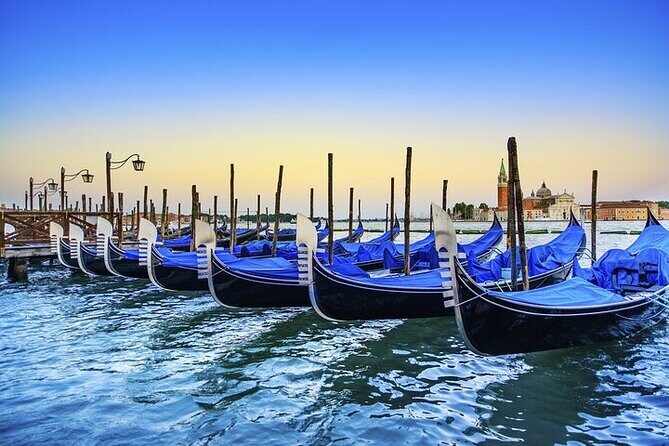
If you want a Venice moment that feels practical and real, Squero di San Trovaso delivers. A squero is a classic Venetian shipyard where boats like gondolas are repaired.
You get a chance to peek at how gondolas are made or repaired. That’s important because gondolas can feel like a floating costume for visitors. Here, you see that there’s craft behind the spectacle. Even without buying a gondola ride, this is the kind of stop that grounds the day.
Also, because time is relatively short, keep your expectations accurate: you’re not spending hours inside a workshop. You’re getting the useful visual plus the story. If you love boat culture, you can build on it later with extra time on your own.
Campo San Pantalon and Santa Margherita: art and local rhythm
Next come the square stops, which are a nice change of pace from constant canal angles.
Campo San Pantalon features a Banksy painting commonly referred to as the shipwrecked/migrant child. If street art is part of your Venice brain, this is a quick hit that makes the city feel current rather than museum-only.
Then you move to Campo Santa Margherita, in the Dorsoduro area near university buildings. It’s a local gathering spot, especially at the end of the day when students regroup. Even if your visit window doesn’t perfectly match peak student energy, the guide’s pointing out the neighborhood pattern is what helps. Venice isn’t all monuments. It’s also everyday hangouts where people repeat routines.
If you start feeling tourist-fatigued (it happens), these campos can give you air. Small squares are also where you can decide if you want to linger after the guided portion ends.
Piazzale Roma: the city’s edge and your train exit
The final stop brings you to Piazzale Roma, the square at the entrance of Venice at the end of Ponte della Libertà. This is one of the big practical facts about Venice: it’s an island city, and only limited parts of it allow ground motor vehicles.
Piazzale Roma and nearby Tronchetto are the only places in the insular core accessible to cars and buses. That detail helps you understand why Venice feels so “removed” while still being connected. You’re literally walking to the place where modern road traffic touches an island that otherwise runs on water routes.
Once you’re done with the city portion, you head back to Florence by train, about 2.5 hours.
Price and value: what you’re really paying for
At $388.13 per person for a full-day private train day, this isn’t a budget excursion. The value is in three things you can’t easily replicate on your own without planning:
1) Round-trip train tickets are included (and you’re not left figuring out schedules alone).
2) A private guide gives structure and context across multiple neighborhoods and landmarks.
3) A Venice visitor fee is included, which matters because it’s one more thing you’d otherwise have to manage.
That said, you should match expectations to what’s included. Ticketed add-ons aren’t part of the deal. For example, a gondola ride and bell tower tickets aren’t included, and there’s no claim that every major interior is covered. The experience is built for seeing the city through key exteriors and streets plus guided interpretation.
Also, the long day has a cost: fatigue. Since you’re mostly walking and stopping briefly, you’ll get the best value if you treat this as orientation plus highlights, not as a one-day replacement for a multi-day Venice stay.
Who should book this private Venice-from-Florence tour
This works well for:
- Couples or small groups who want a guided pace but still want private space.
- First-timers who want major landmarks plus context without planning a tight self-guided route.
- People who like learning how Venice works: commerce, community, architecture, and how streets and canals connect.
It might feel frustrating if:
- You want lots of long interior visits or ticketed attractions included automatically.
- You prefer slow, lingering exploration with minimal marching.
- You need audio aids like provided earphones and rely on them.
A helpful rule: if you’re the type who can handle 8 hours of sightseeing with breaks, you’ll likely enjoy it more. If not, consider a slower Venice plan.
Should you book this private Venice day trip by train?
My take: book it if you want a structured Venice day with a guide and you value not wrestling with transport. The included train rides, private group format, and multi-stop focus make it a practical way to get the city’s big ideas in one go.
But don’t book it hoping for a relaxing, fully ticketed greatest-hits tour. This is a walk-and-look day with key exteriors and neighborhood storytelling. If you’re okay with that and you like the idea of customizing your pace on the fly, it’s a strong way to spend one day in Venice from Florence.
If you want, tell me your travel month and how much walking you usually tolerate. I can suggest what to prioritize in Venice on this kind of tight schedule.
FAQ
How long is the Florence to Venice train tour?
The total duration is about 11 hours, including travel time.
Where do I meet the tour in Florence?
You meet at Santa Maria Novella, Firenze FI, Italy.
What time does the tour start?
The start time is 8:30am.
Is the Venice visitor fee included?
Yes, the Venice visitor fee is included.
Are train tickets included for the round trip?
Yes. Round-trip train tickets between Florence and Venice are included, using 2nd class transport.
Is the tour private or shared?
It’s private. Only your group participates.
Can the tour be customized?
Yes. You can customize the tour according to your interests.
Are food and drink included?
No. Food and drink are not included.
When will I receive the train ticket details?
The day before the tour, you’ll receive an email with the train ticket and all information.
What is the cancellation situation close to departure?
You can cancel for a full refund if you cancel at least 24 hours in advance. The train ticket is purchased 48 hours in advance, so cancellations near that window can be affected by ticket timing.
You Might Also Enjoy
More Private Tours in Florence

More Tours in Florence
- The Best tour in Florence: Renaissance & Medici Tales – guided by a STORYTELLER
★ 5.0 · 12,316 reviews
More Tour Reviews in Florence
- Tuscany Day Trip from Florence: Siena, San Gimignano, Pisa and Lunch at a Winery
★ 5.0 · 21,634 reviews - The Best tour in Florence: Renaissance & Medici Tales – guided by a STORYTELLER
★ 5.0 · 12,316 reviews