REVIEW · FLORENCE
Florence: Hop-on Hop-off Bus Tour: 24, 48 or 72-Hour Ticket
Book on GetYourGuide →Operated by Sightseeing Experience · Bookable on GetYourGuide
Florence rewards slow wandering, but this bus gets you oriented fast. I like the open-top double-decker setup for big views, plus the multilingual audio commentary (Spanish, English, French, German, Italian, Japanese, Russian, Portuguese) that helps you place what you’re seeing. The trade-off is that the audio doesn’t always line up perfectly with the exact view at every moment.
If you want an easy way to cover more ground without planning every turn, the hop-on hop-off format for 24, 48, or 72 hours is the best part. I also find the route choices smart: Line A keeps you in central Florence, while Line B adds the Fiesole outlooks. The main drawback I’d watch for is the occasional audio timing mismatch, which can make it harder to connect the narration to a specific photo spot.
In This Review
- Key points before you get on
- First Look From the Open-Top Deck: What This Bus Really Delivers
- How the 24, 48, or 72-Hour Ticket Fits Real Travel Days
- Line A: City Center Loop From Santa Maria Novella to Piazza Michelangelo
- Line B: Florence and the Fiesole Side Trip for Big Views
- Photo Stops That Matter: Piazzale Michelangelo and the Fiesole Outlook
- Audio Commentary, Wi‑Fi, and the Sightseeing Experience App
- Price and Value: Why $24 Can Be More Than a Bargain
- Seasonality and Route Gaps: Timing Matters in 2025–2026
- Where You Might Want to Skip the Bus (and Keep Walking)
- Should I Book This Florence Hop-On Hop-Off Bus?
Key points before you get on
- Two loops, different moods: Line A is city-focused (about 1 hour), Line B runs out toward Fiesole (about 2 hours).
- Unlimited rides inside your window: Your ticket works for 24, 48, or 72 hours, not just one round trip.
- Do the top-view stops on purpose: The best angles come at Piazzale Michelangelo and the Fiesole hillside viewpoint.
- The app helps with real-time positioning: The Sightseeing Experience mobile app shows where the bus is.
- Free Wi‑Fi is handy on longer days: It’s a nice perk when you’re juggling maps, tickets, and chat.
- Audio is helpful, not perfect: Plan to glance at surroundings too, especially for photo stops.
First Look From the Open-Top Deck: What This Bus Really Delivers
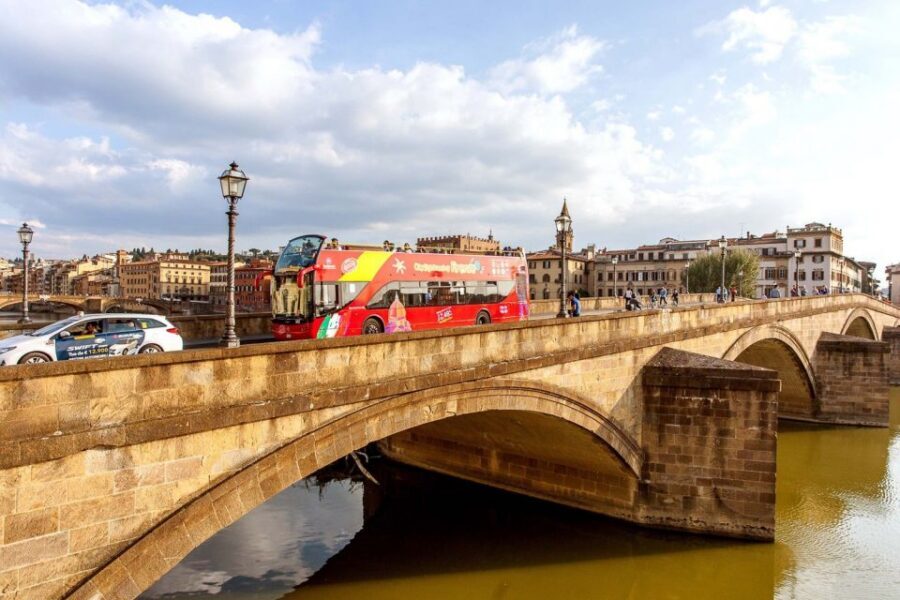
The best way to start Florence is knowing what neighborhood you’re in. This tour makes that easier because you’re always moving, always above street level, and you can hop off exactly when something catches your eye. On a clear day, the open-top deck does what it promises: it turns the Arno river corridor and main squares into instant sightseeing.
I particularly like the audio layer. The multilingual track means you’re not stuck reading signs while everyone else enjoys the view. And the experience feels guided even though you’re in charge of your schedule, which is exactly how a good hop-on hop-off should feel.
Now the honest caution: audio timing can be a little off. In practice, that means you shouldn’t treat the headphones as the only way to understand what’s in front of you. I’d keep one hand on your camera and one eye on the skyline.
You can also read our reviews of more tours and experiences in Florence


How the 24, 48, or 72-Hour Ticket Fits Real Travel Days
This is a time-window ticket. Once you activate your ride period, you can use the bus as a flexible transport option across both tour lines. That matters in Florence because you’ll often want to do one or two big clusters (riverfront + viewpoints, or historic core + countryside outlook) without committing to a long, on-foot day.
Here’s how I’d match the ticket length to your pace:
- 24 hours: Best for first-timers who want the highlights, photo stops, and a low-stress way to choose what to explore later.
- 48 hours: Best for people who can spread hop-off time across a morning and an afternoon, and still recover from jet lag.
- 72 hours: Best if you like repeating viewpoints, strolling between stops, or returning at different times of day.
Also, you don’t have to choose between sightseeing and logistics. The bus functions like a moving “checkpoint system.” You can jump back on to reposition quickly when you realize a museum or church takes longer than planned.
Line A: City Center Loop From Santa Maria Novella to Piazza Michelangelo
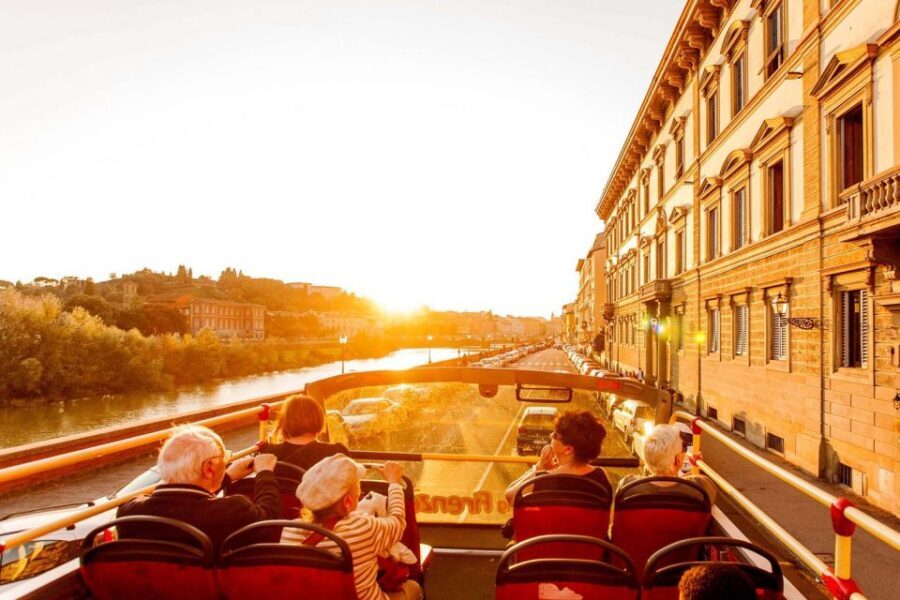
Line A is the one you’ll use to build your Florence map in your head. The ride lasts about 1 hour, so it works well as a morning orientation loop or a quick reset between walking bursts.
A smart move is to start near Santa Maria Novella Train Station since the visitor center and assistance are located in the ticketing area there. From there, the loop touches key central stops, including:
- Stop 7 Santa Maria Novella Train Station – Largo Alinari: Convenient if you’re arriving by train or want an easy starting point.
- Stop 6 Piazza Indipendenza: A strong anchor for exploring central streets.
- Stop 11 Lungarno Serristori: This is your river-adjacent feel-good stop, especially if you want that Arno panorama without walking nonstop.
- Stop 10 Santa Croce: Good for connecting to the wider historic district around that area.
- Stop 4 Piazza Tasso and Stop 5 Leopolda – Parco della Musica: Handy for breaking up the day, especially if you’re pairing a stroll with a break from the heat.
- Stop 3 Porta Romana: A city-gate stop that’s useful for understanding Florence’s layout and planning where you’ll walk next.
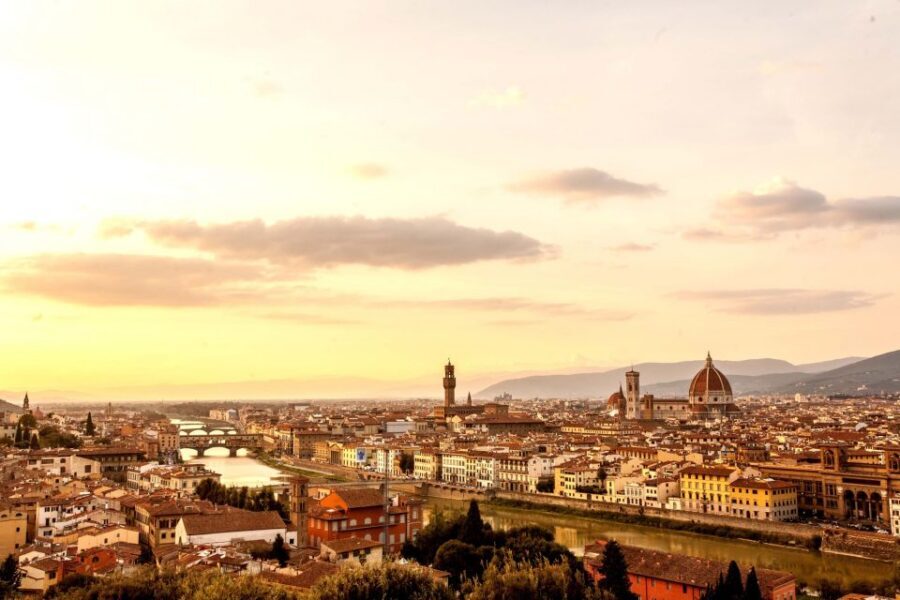
- Stop 13 Piazzale Michelangelo: The big “pause and look” stop.
Line A’s sequence also includes Piazzale Michelangelo, which is the kind of viewpoint you only do once if you rush. If your plan includes a “top of Florence” photo moment, make sure you get off long enough to let the scene sink in.
A practical timing tip: Line A frequency is listed as 40 minutes on weekends and 75 minutes on weekdays. That means on a busy weekday you may want to plan your hop-off so you don’t get stuck waiting too long.
Line B: Florence and the Fiesole Side Trip for Big Views
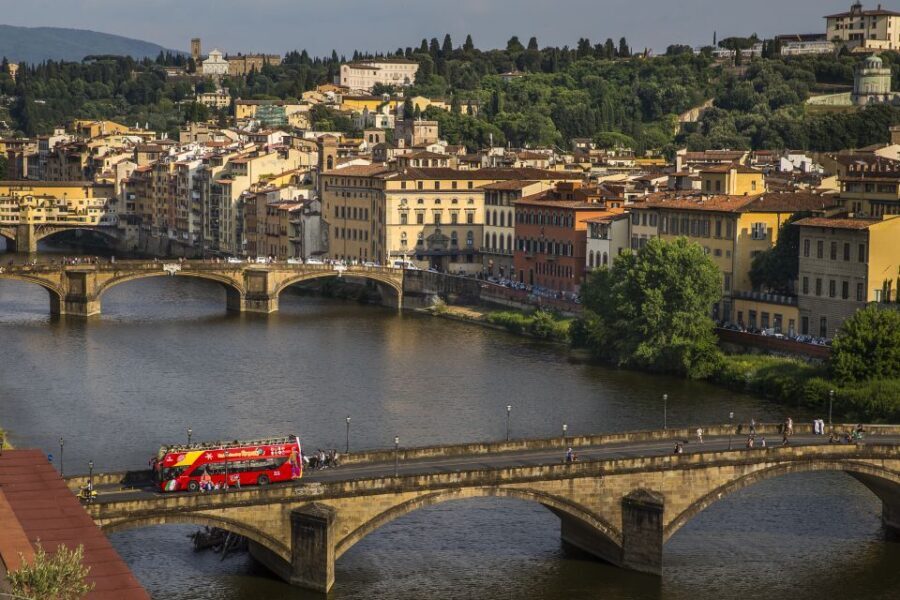
Line B is your contrast to the flat city center. It runs for about 2 hours and focuses on Florence plus Fiesole, a famous Etruscan hillside city with standout views over the city.
Your ride hits stops that transition from central streets toward the viewpoint zone, including:
- Stop 1 Galileo and Stop 2 Piazzale Michelangelo: Line B starts with viewpoint proximity, which is useful if you want the angle twice (once mid-day, once later).
- Stop 3 Lungarno Serristori and Stop 5 Lungo l’Affrico: You’ll get more of the river and hillside approach feel.
- Stop 4 Grazie and Stop 7 San Domenico: These stops help you understand how Florence edges into the surrounding terrain.
- Stop 8 Fiesole: This is the star. Get off, walk a bit, and soak in the panorama from the hillside.
- Stops 10–12 (including Viale Fll. Rosselli – Porta al Prato, Viale Vasco Pratolini, and Piazzale di Porta Romana): They reinforce the route loop back toward the city.
One thing to know: Line B can overlap with parts of Line A, so you’re not getting totally brand-new neighborhoods at every stop. The value comes from the extra time out toward Fiesole and the chance to change your perspective.
Frequency is also different. Line B runs about every 120 minutes, and the schedule has seasonal changes (more on that later). If you’re the type who hates waiting, you’ll want to time your hop-offs carefully.
Photo Stops That Matter: Piazzale Michelangelo and the Fiesole Outlook
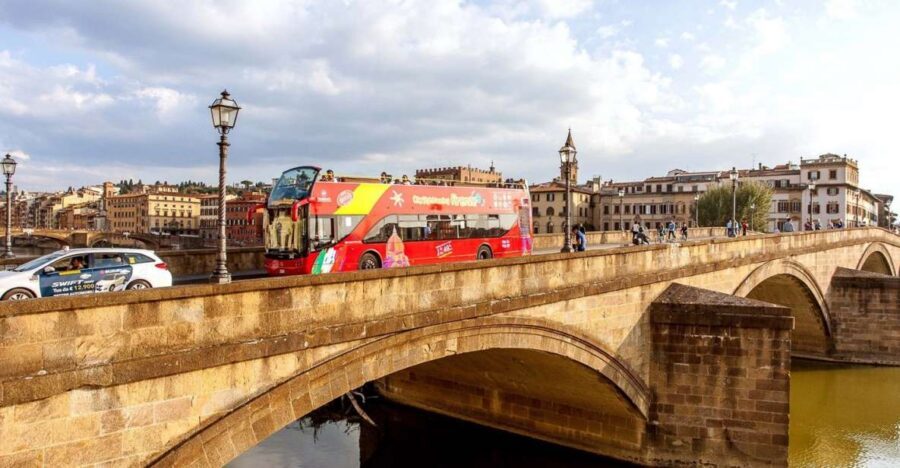
Some bus stops are just names on a map. Others are the reason you bought the ticket. In Florence, Piazzale Michelangelo and Fiesole belong in the second category.
At Piazzale Michelangelo, your main job is simple: get off, find a safe spot, and let your eyes adjust. It’s also one of those stops where a headphone track can be less helpful than your own view, so don’t wait for the audio to finish to start taking photos.
For Fiesole, the goal is the opposite: you want to slow down. The bus gets you there, but the view is the point, and the hillside setting makes it feel different from the city streets. I’d plan a short window to walk around after getting off, even if you’re only doing 30–45 minutes. The scenic payoff is tied to being there, not just passing through.
There’s another practical photo note from real-world experience: the second the bus slows near viewpoint stops, people start moving. If you’re hoping for a specific photo angle, decide where you’ll stand while you’re still seated.
- Tuscany Day Trip from Florence: Siena, San Gimignano, Pisa and Lunch at a Winery
★ 5.0 · 21,634 reviews

Audio Commentary, Wi‑Fi, and the Sightseeing Experience App
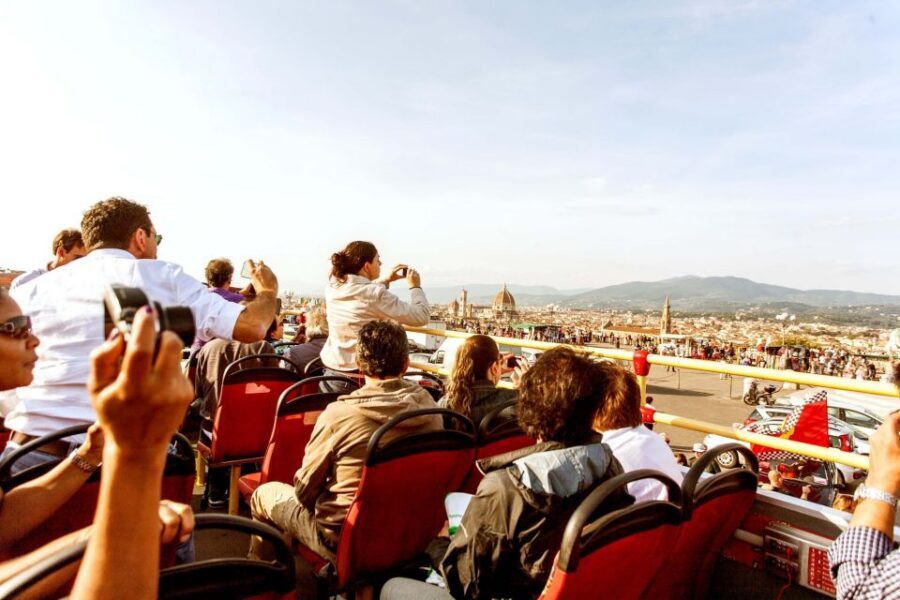
This tour includes multilingual audio commentary and it also offers free Wi‑Fi on the bus plus a free mobile app called Sightseeing Experience. That app is more than a nice-to-have. It helps you confirm stop locations and track the bus in real time, which reduces that stressful feeling of standing at the curb wondering if you missed it.
Audio quality is generally a strong point, but it’s not flawless. Some audio tracks may not feel perfectly aligned with the exact viewpoint outside your window. On other days, you might hear more music than story, or the audio might feel like it goes quiet for stretches. When that happens, you still have two reliable tools: the stop name on the route and the map in the app.
Small headphone reality check: if headphone jacks don’t work smoothly, you’ll waste time troubleshooting when you want your attention outside. I’d keep your phone volume accessible and be ready to switch to the app’s map if you’re unsure what’s coming next.
Also, the operation itself seems to take care with the ride. You’ll find staff support at the Santa Maria Novella area, and there’s credit in the feedback for staff who keep things informative and the driving smooth (including names like Roberto and Antonio).
Price and Value: Why $24 Can Be More Than a Bargain
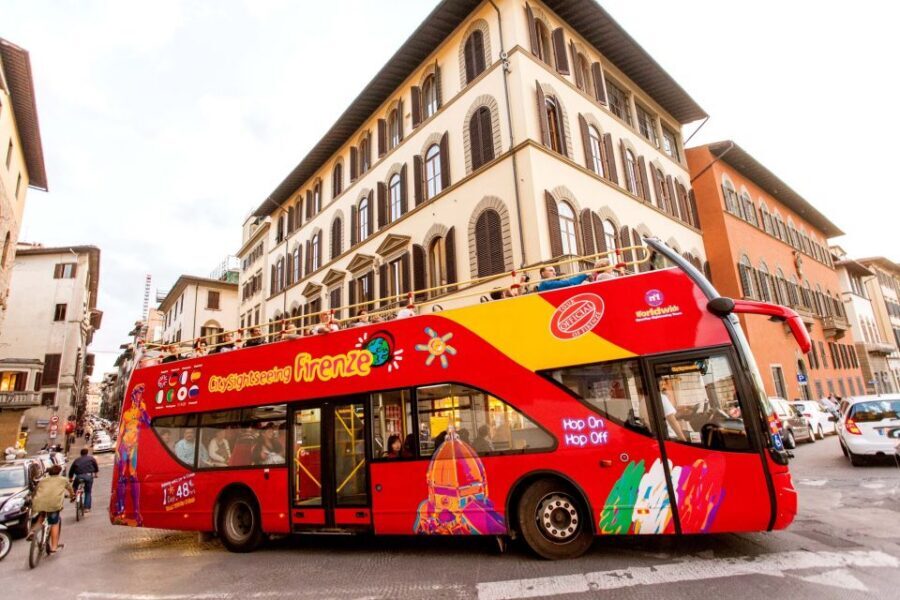
The headline price is $24 per person, and the big value question is what you get for that money. Here’s the honest math: Florence is a walking city, and taxis add up quickly. This ticket trades money for time and energy.
What makes it worthwhile for most people:
- You get views without constant backtracking.
- You reduce decision fatigue. Your “what should we do next” problem gets replaced by “what stop do we hop to next.”
- You can repeat highlights when the light changes. With a 24–72 hour window, you’re not forced into a single viewing moment.
What makes it less perfect:
- If you only ride one loop and never use the hop-off flexibility, it stops being a bargain fast.
- If audio timing feels off for you, you might feel less of the guided benefit.
My practical advice: buy it if you’re using it as transport, not as a single scenic cruise. If you plan a couple of hop-offs (riverfront, Santa Croce area, viewpoints, or Fiesole), it starts paying you back immediately.
Seasonality and Route Gaps: Timing Matters in 2025–2026
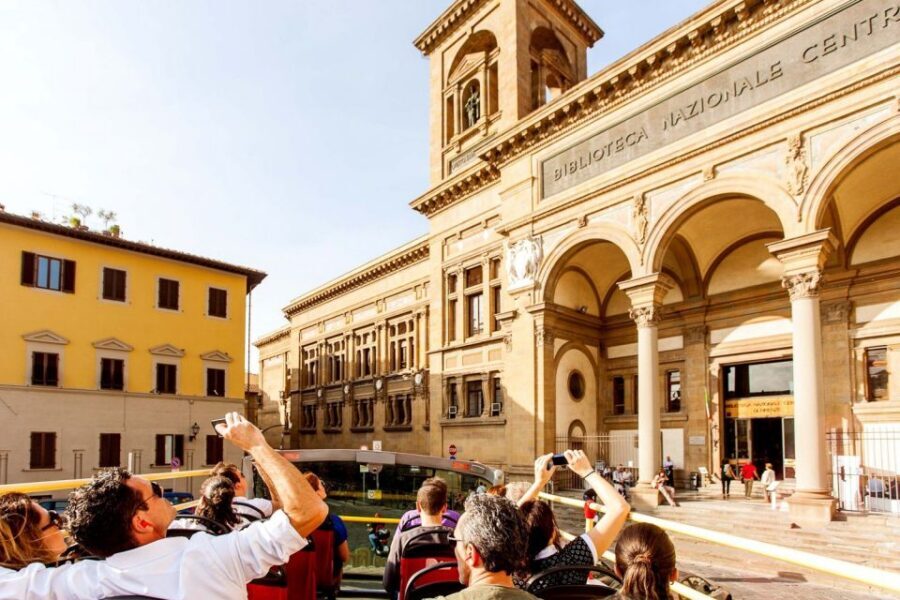
This is the kind of detail that can change your whole plan. From 3 November 2025 to 31 March 2026, Line B of the Firenze City Sightseeing service will be suspended Monday to Friday. It becomes active again every day with limited service from 20 December to 6 January.
That means if you’re visiting in winter, your “must-do” Fiesole timing depends on the day of the week. If your trip lands on weekdays in that window, expect to lean harder on Line A and consider alternative ways to reach viewpoints beyond the city center.
Departure timing is also important if you hate waiting:
- Line A: first departure from Stop 6 at 9:20 am, last departure 4:40 pm, with listed frequency by weekend/weekday.
- Line B: first departure from Stop 1 at 11:15 am, last departure 3:15 pm, with roughly 120-minute frequency.
If you’re trying to do both lines in the same day, I’d build in extra slack. You’re in a city where plans shift. Your schedule shouldn’t crumble because a bus comes a little later than expected.
Where You Might Want to Skip the Bus (and Keep Walking)
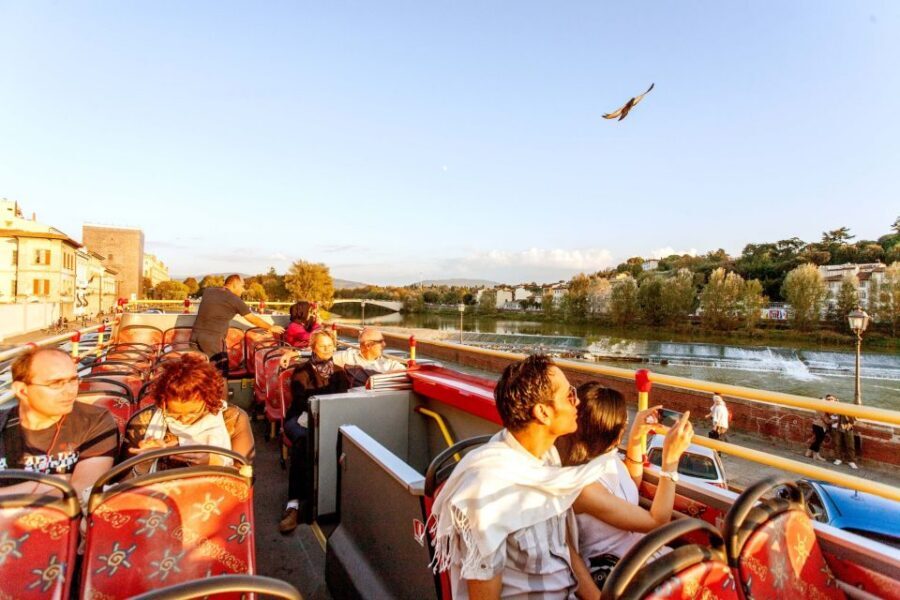
This bus is excellent for getting your bearings and saving your legs. But it isn’t meant to replace everything.
Skip the bus for:
- Short hops where walking is easy and you can handle the streets.
- Moments where you want a deep, quiet, museum-style experience and you’re already in the right neighborhood.
Use the bus for:
- Crossing between clusters without tiring out.
- Scenic lookouts where you don’t want to climb on foot.
- Days when weather changes fast, because it gives you a protected upper-deck option when you need it.
If you’re traveling with mobility limits, the buses are listed as wheelchair accessible, and that can make the difference between seeing Florence and only hearing about it from your hotel.
Should I Book This Florence Hop-On Hop-Off Bus?
Yes, if your goal is to cover Florence efficiently and still keep choices open. This is one of those tickets that works best when you treat it like a flexible tool: ride, hop off for a viewpoint, hop back on to reposition, and repeat.
I’d especially recommend it if:
- It’s your first time in Florence and you want a fast orientation.
- You want the Piazzale Michelangelo moment without committing to a long climb.
- You’re interested in the extra perspective from Fiesole (and you’re visiting on days when Line B is running).
I’d think twice if:
- You plan to do only one loop with no hop-offs.
- You rely heavily on audio matching perfectly to every passing sight, since the timing can be inconsistent.
If you want Florence without the constant navigation stress, this bus gets you out on the streets, up above traffic, and into the views—right away.
You Might Also Enjoy

More Tickets in Florence
More Tours in Florence
- The Best tour in Florence: Renaissance & Medici Tales – guided by a STORYTELLER
★ 5.0 · 12,316 reviews
More Tour Reviews in Florence
- Tuscany Day Trip from Florence: Siena, San Gimignano, Pisa and Lunch at a Winery
★ 5.0 · 21,634 reviews - The Best tour in Florence: Renaissance & Medici Tales – guided by a STORYTELLER
★ 5.0 · 12,316 reviews