REVIEW · FLORENCE
Dan Brown’s INFERNO Walk with a Local
Book on Viator →Operated by LocalBini - The go-to platform for Experiences by Locals in Europe · Bookable on Viator
Follow Inferno clues through Florence’s most famous corners. I like the small group pace and the way the story lens connects to real stops like the New Sacristy and Ponte Vecchio. One thing to watch: the Dan Brown focus can feel uneven depending on your guide, and you’ll want to confirm how much time you get around Boboli Gardens.
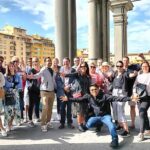
This is a 1 hour 30 minute walk (morning or afternoon) that starts at Fontana del Porcellino in Piazza del Mercato Nuovo and finishes at Boboli Gardens. You’ll get a mobile ticket, and the tour keeps the group small (max 8), which makes questions and course-corrections actually possible.
In This Review
- Key points that make this walk worth your time
- Dan Brown’s Inferno lens: why this tour feels different
- Small-group pacing from Fontana del Porcellino
- San Lorenzo and the Medici tombs: Michelangelo’s New Sacristy area
- The Baptistery stop: an octagonal landmark that hits you visually
- A 13th-century palace art stop: quiet contrast in the middle
- Loggia dei Lanzi and Renaissance sculpture: where the city opens up
- Ponte Vecchio: walking the medieval arch with Roman roots
- Palazzo Pitti: the royal palace angle and power themes
- Finishing at Boboli Gardens: the reward (and the expectation check)
- Price and logistics: is $161.44 good value?
- Who should book this walk?
- Should you book Dan Brown’s Inferno Walk with a Local?
- FAQ
- Where does the tour start?
- Where does the tour end?
- How long is the experience?
- How large is the group?
- Are there morning and afternoon tour times?
- What is included in the price?
- How do I receive my ticket?
- What is the cancellation policy?
Key points that make this walk worth your time
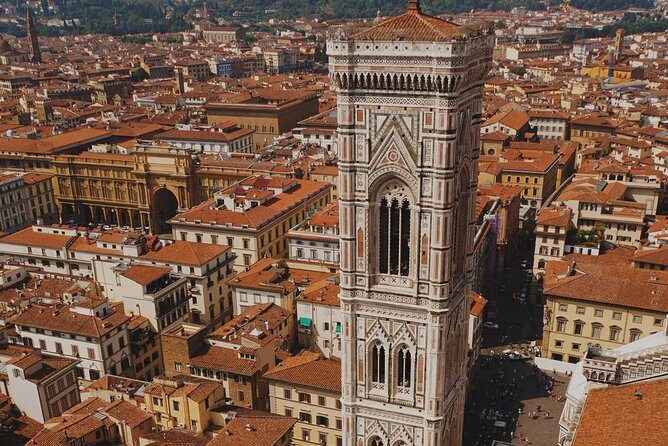
- Inferno-style Florence: you’ll look at famous landmarks through the themes of Dan Brown’s Inferno setting
- Medici stops with a big art payoff: the tour targets Medici sites tied to Michelangelo’s New Sacristy
- Ponte Vecchio and sculpture views: you get both the bridge crossing and an open-air Renaissance sculpture stop
- Small-group comfort: limited to a handful of people, not a busload
- Ends in the gardens: you finish at Boboli, so the last stretch feels like a reward, not an early exit
Dan Brown’s Inferno lens: why this tour feels different
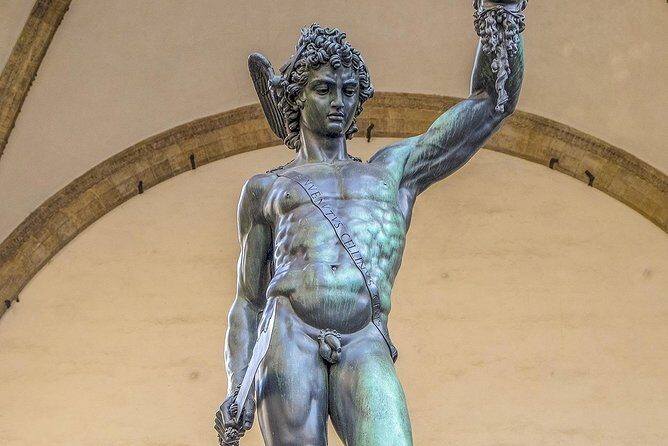
If you’re a Dan Brown fan, this walk gives you a fun way to see Florence instead of just sightseeing it. The idea is simple: use Inferno as a filter for the city’s most iconic places, especially those tied to power, art, and secrets. In practical terms, that means you’re not just standing in front of a view—your guide is nudging you to notice details you’d otherwise ignore.
I also like that the approach isn’t only about the novel. The stops are anchored in real Florence: Medici-era symbolism, Renaissance art, and the way major sites connect to each other in the city map. Even if the book references are only part of what you hear, the core value remains the same: you’re walking a tight route that hits major landmarks without turning it into a speed-run.
That said, the Inferno emphasis can be hit-or-miss. Some guides focus more on the story thread than others, so if you want heavy book tie-ins, I’d go in with a clear expectation and ask early on what the guide will prioritize.
You can also read our reviews of more walking tours in Florence


Small-group pacing from Fontana del Porcellino
You start at the Fontana del Porcellino in Piazza del Mercato Nuovo. It’s a great kickoff point because it’s instantly recognizable, and it comes with that classic Florence tradition: rub the boar’s snout and hope you’ll return. It’s touristy in the best way, and it also works as a reset moment—everyone gathers, listens, and then you’re off.
Because the group is small (max 8, and described as intimate), the pace is easier to manage. You’re not constantly checking over shoulders or getting swept along by a crowd. For you, that means you can pause when something catches your eye—like a façade detail, a view angle on the river, or the reason a landmark looks the way it does.
A practical note: you’ll be walking for about 1.5 hours. Florence covers ground, so wear shoes you can trust on uneven pavement. If you’re sensitive to noise, position yourself so you can hear your guide clearly—this is one of those tours where staying near the front matters.
San Lorenzo and the Medici tombs: Michelangelo’s New Sacristy area
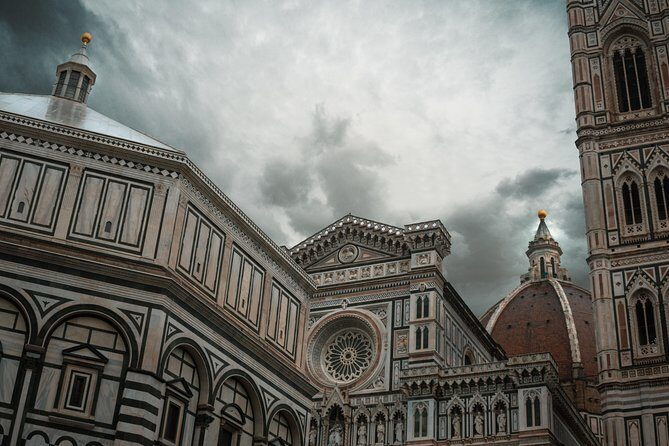
One major stop focuses on the domed landmark associated with Medici tombs, including the New Sacristy designed by Michelangelo. This is the kind of place where art meets politics. Florence’s Medici family used art to signal wealth, legitimacy, and control—so when your guide ties what you’re seeing back to Inferno themes, it often lands because the subject matter already has the drama baked in.
What I’d look for (even if you’re not an art expert): the sense of theatrical design around tomb space. Michelangelo’s influence tends to feel emotional, not just decorative. If your guide mentions how the Medici story shaped Florence, this is the stop where you’ll feel it most.
Potential drawback: places in this area can have crowds on top of crowds. Small-group pacing helps, but you still might spend some time near entrances or in tight spaces depending on where the group gathers.
The Baptistery stop: an octagonal landmark that hits you visually
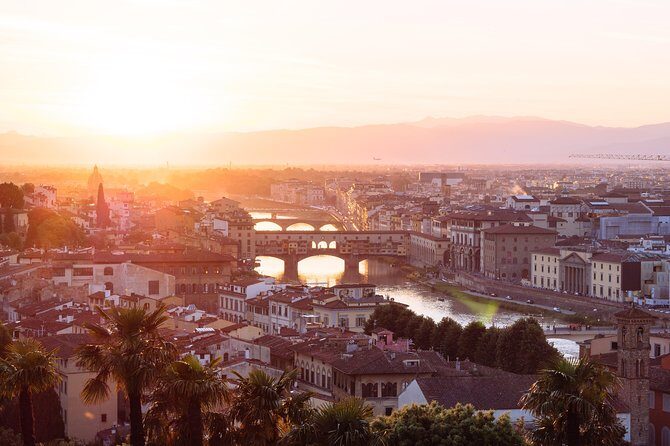
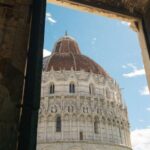
Next up is the octagonal basilica landmark with the striking marble façade. This kind of stop is valuable because it changes the rhythm of the walk. After domes and tomb narratives, you get something more visual and geometric, and it’s easier to follow even if you miss a few lines of explanation.
This is also a smart place for a story-based tour. Inferno-style connections often work because Florence’s religious and civic architecture is so distinctive. The octagonal shape and marble exterior aren’t just pretty—they’re part of how the city announces identity.
If you care about the theme: ask your guide how this stop connects to the book’s mood or symbols. If your guide doesn’t naturally make that link, you can steer the conversation here without derailing the whole walk.
A 13th-century palace art stop: quiet contrast in the middle
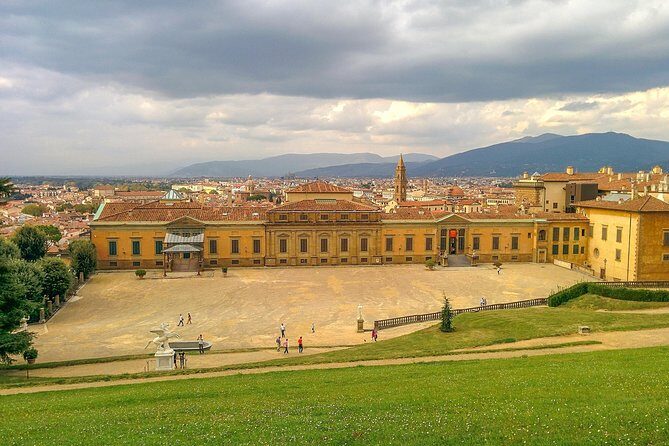
You’ll then visit a 13th-century palace that’s now an art museum. I like this mid-tour pivot because it breaks up the outdoors-only sightseeing. Even if you mostly care about the Inferno angle, a palace museum stop gives you a calmer moment to digest what you’ve seen and connect the dots.
This is the sort of stop where what you get depends on the guide’s pacing and what the group can access. Expect an atmosphere that feels more interior and shaded, which can be a relief in warmer months.
What to keep in mind: if you’re hoping for constant book references, this is the part where the guide may focus more on architecture and art context. That’s not a bad thing—it just means you may need to ask questions to keep the Inferno thread alive for you.
- Tuscany Day Trip from Florence: Siena, San Gimignano, Pisa and Lunch at a Winery
★ 5.0 · 21,634 reviews


Loggia dei Lanzi and Renaissance sculpture: where the city opens up
Then comes the open-air gallery of Renaissance sculptures in a 14th-century ceremonial building. This stop is one of the best “wow” moments because it’s outdoors, but still highly curated in feel. You can see the scale of the sculptures and get a sense of how public art functioned in Renaissance Florence.
Your guide can tie this to Inferno themes in a natural way, since statues and symbolic design are exactly the language Renaissance artists used for meaning. If your guide is strong on story connections, you’ll often hear interpretations here that make the sculptures feel like more than decorations.
Practical tip: open-air stops are more exposed. Bring water, and plan for wind or sun depending on the season. Also, if the group has to move quickly, don’t be afraid to slow down for a second to look closely at faces and posture—this is where sculpture details reward patience.
Ponte Vecchio: walking the medieval arch with Roman roots
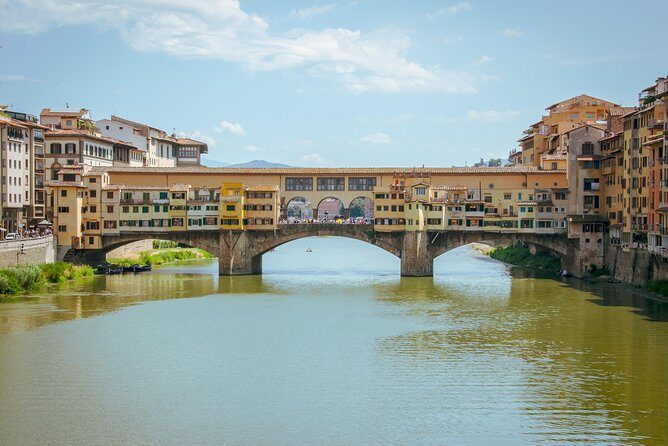
Next, you walk down the legendary medieval arched river bridge with Roman origins—Ponte Vecchio. This is one of those Florence landmarks that works for almost everyone. The bridge itself is the draw, but the best part of this stop is the viewpoint and the sense of history layered in one place.
If you’re an Inferno fan, this is a perfect location for “how Florence became a symbol” conversations. Bridges are about passage. They connect places and ideas. And in a story-driven tour, that meaning often shows up in your guide’s explanation.
Watch for the one simple drawback: this is a popular area. Even on a small group tour, you may feel the city’s bustle. If you want photos without constant interruptions, move a bit with the group but keep your own photo pauses tucked in during brief stops.
Palazzo Pitti: the royal palace angle and power themes
After the bridge, you’ll discover the history behind a magnificent Renaissance royal palace. This is where the tour’s power-and-legacy theme makes sense. Renaissance Florence wasn’t just art for art’s sake. It was art as messaging, and palaces were built to project authority.
If your guide links this to Medici influence and Florence’s political story, you’ll likely feel the tour tighten up. The walking route is doing its job: it’s showing you how major sites connect, not just throwing landmarks at you.
If you’re hoping for heavier Inferno tie-ins at this point, you can prompt the guide with a simple question like how this palace’s history fits the book’s idea of legacy or hidden motive. This is also a good moment to ask for one or two key details you can remember later when you’re reading or watching Inferno again.
Finishing at Boboli Gardens: the reward (and the expectation check)
The walk concludes in the 15th–16th century gardens with Renaissance statues and ornate fountains—Boboli Gardens. Ending here makes sense because it’s a change of pace: you move from city density into a designed landscape. It also gives you a natural “wrap” to the tour: after Florence’s big buildings and major art stops, you land somewhere made for wandering and looking.
Here’s the key consideration for you: the gardens are the kind of place where time matters. Some people expect a full experience; others get only a shorter look depending on how the group moves and how the guide structures the wrap-up. Since you’re finishing at Boboli Gardens, I’d plan to treat it as an important final stop—but also be ready for a more “walk-through and point out” style rather than a long, slow stroll unless you confirm how much time is actually planned.
If you can, take advantage of the ending by staying a bit longer after the tour if you still want atmosphere. Boboli is the kind of place where your mind slows down and the city stops feeling like a checklist.
Price and logistics: is $161.44 good value?
At $161.44 per person for about 90 minutes, this isn’t a bargain. You’re paying for three things: a themed guide, a small group (max 8), and a route that hits major Florence highlights in a tight window.
So the value depends on your priorities:
- If you want Florence through the lens of Inferno, you’ll likely see the appeal fast. The route is built for story-minded looking.
- If you want classic Florence with minimal story talk, you might feel the theme is a smaller part of the experience than you expected.
- If you care most about hearing every connection to the book, your best move is to ask your guide early to explain how they plan to tie landmarks to Inferno as you go.
Logistics are fairly straightforward. You start at Fontana del Porcellino and finish at Boboli Gardens, with morning or afternoon time options. You get a mobile ticket and confirmation at booking, and it’s near public transportation. Service animals are allowed, and most people can participate.
One more practical angle: booking about 18 days in advance is common for this kind of small-group tour, so if you’re traveling in peak season or have exact dates, don’t wait until the last minute.
Who should book this walk?
Book it if:
- You’re a Dan Brown / Inferno fan and want Florence tied to the story setting in a walking format
- You like small-group tours where you can ask questions
- You want a route that hits Medici-related art spaces, major landmarks like Ponte Vecchio, and ends with a garden payoff
Skip or reconsider if:
- You mainly want a straightforward, fast list of facts and don’t care about the book connection
- You strongly dislike hearing experiences through a literary lens and only want factual art history
- You’re picky about getting a long sit-down visit inside each site, since this is built as a walking tour with limited time
Should you book Dan Brown’s Inferno Walk with a Local?
I think you should book it if you want a themed Florence route with breathing room. The small group size (max 8) is the biggest reason this can feel relaxed instead of frantic. The stop selection also makes sense: Medici ties, major Florence icons, and a finish at Boboli Gardens.
The only real caution is expectation-setting around the Inferno thread and the final gardens time. If that matters to you, message or ask your guide early what the emphasis will be and how long the Boboli Gardens ending will feel. Do that, wear good shoes, and you’re set for a guided walk where Florence has a plot.
FAQ
Where does the tour start?
It starts at Fontana del Porcellino in Piazza del Mercato Nuovo, 50123 Firenze FI, Italy.
Where does the tour end?
The tour ends at Boboli Gardens, 50125 Florence, Metropolitan City of Florence, Italy.
How long is the experience?
It lasts about 1 hour 30 minutes.
How large is the group?
The tour has a maximum of 8 travelers.
Are there morning and afternoon tour times?
Yes, you can choose between morning or afternoon tour times.
What is included in the price?
A local guide is included.
How do I receive my ticket?
You’ll use a mobile ticket.
What is the cancellation policy?
You can cancel for a full refund up to 24 hours before the experience starts. Cancellation within 24 hours isn’t refunded.
You Might Also Enjoy

More Walking Tours in Florence


More Tour Reviews in Florence
- Tuscany Day Trip from Florence: Siena, San Gimignano, Pisa and Lunch at a Winery
★ 5.0 · 21,634 reviews - The Best tour in Florence: Renaissance & Medici Tales – guided by a STORYTELLER
★ 5.0 · 12,316 reviews