REVIEW · FLORENCE
Florence Unveiled: The Rivalry of Leonardo and Michelangelo
Book on GetYourGuide →Operated by Senza Meta/Out & About · Bookable on GetYourGuide
Florence has a rivalry problem. This 3-hour walk through central Florence turns the streets around Michelangelo and Leonardo da Vinci into a story you can actually follow, with a final stop that makes the Renaissance feel personal at Santo Spirito. The guide, Antonio, connects Medici power, famous art, and a couple of real-life quirks of the city so you leave with a clearer map of what matters.
I especially like the way Antonio tells stories: it feels like Florence is speaking, not like you’re being marched through facts. I also like the focus on the wooden crucifix, Crocifisso ligneo, and how the tour links it to Michelangelo’s early training and anatomy studies.
One thing to consider: it’s still a walking tour with photo stops and short visits, so if you want long, deep museum time, you’ll need to plan a second visit after this.
In This Review
- Quick hits
- What you’re really buying for $53
- Piazza della Signoria: the Renaissance’s power scoreboard
- Ponte Vecchio: jewelry history with a real river view
- Piazza della Repubblica to the Duomo complex: seeing architecture like a plot
- Oltrarno and the route to Santo Spirito: where Michelangelo gets human
- Basilica di Santo Spirito: the stop that changes the way you look at Michelangelo
- Crocifisso ligneo: why a wooden cross hits harder than you expect
- Antonio’s secret diary, plus breaks that actually help
- Optional add-ons: Medici Chapel and Leonardo’s interactive museum
- Price and value: where the money goes
- Who this tour is best for
- Should you book Florence Unveiled?
- FAQ
- How long is Florence Unveiled: The Rivalry of Leonardo and Michelangelo?
- Where does the tour start and where does it finish?
- How much does the tour cost?
- Is the tour offered in English?
- What’s included in the price?
- What add-ons are available if I want more?
- What should I bring for the walking tour?
- Who is the tour not suitable for?
Quick hits
- Small-group feel and an easy pace, guided by Antonio’s storytelling style
- Piazza della Signoria to Ponte Vecchio gives you instant Renaissance context without the tourist shuffle
- Duomo area stops help you understand why Brunelleschi’s dome changed the rules of architecture
- Oltrarno walk to Santo Spirito puts you in the neighborhood where Michelangelo’s early life becomes part of the plot
- Crocifisso ligneo is the tour’s emotional payoff, not just another church stop
- A photo of Antonio’s secret diary gives you next-step ideas for food, music, museums, gardens, and wine tasting
What you’re really buying for $53
You’re paying for a tight, 3-hour guided route that links Florence’s biggest names to the specific corners where their influence shows up. At $53 per person, the value is strongest if you like narrative tours and you want guidance on where to spend your own time afterward.
You’ll also get food & drinks, plus breaks built in for photos. That matters in Florence, where heat and crowding can turn a sightseeing checklist into a slog fast.
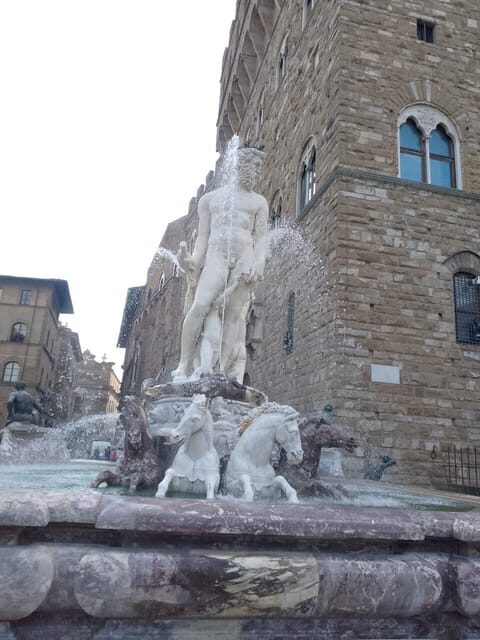
The tour is in English, led by a professional guide (Antonio). You meet at the Neptune fountain beside Palazzo Vecchio in Piazza della Signoria, then finish back in the city near Mercato Centrale, which is handy if you want to keep eating afterward.
You can also read our reviews of more tours and experiences in Florence.
- Tuscany Day Trip from Florence: Siena, San Gimignano, Pisa and Lunch at a Winery
★ 5.0 · 21,634 reviews
Piazza della Signoria: the Renaissance’s power scoreboard
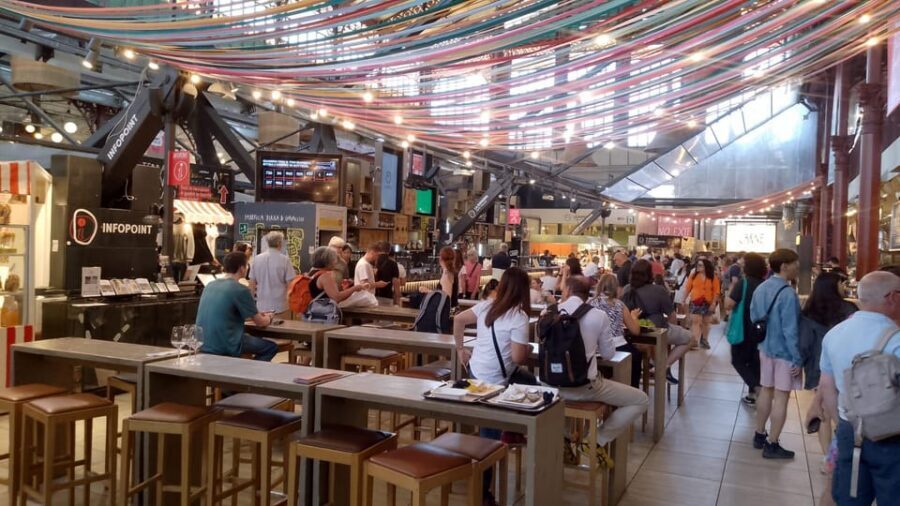
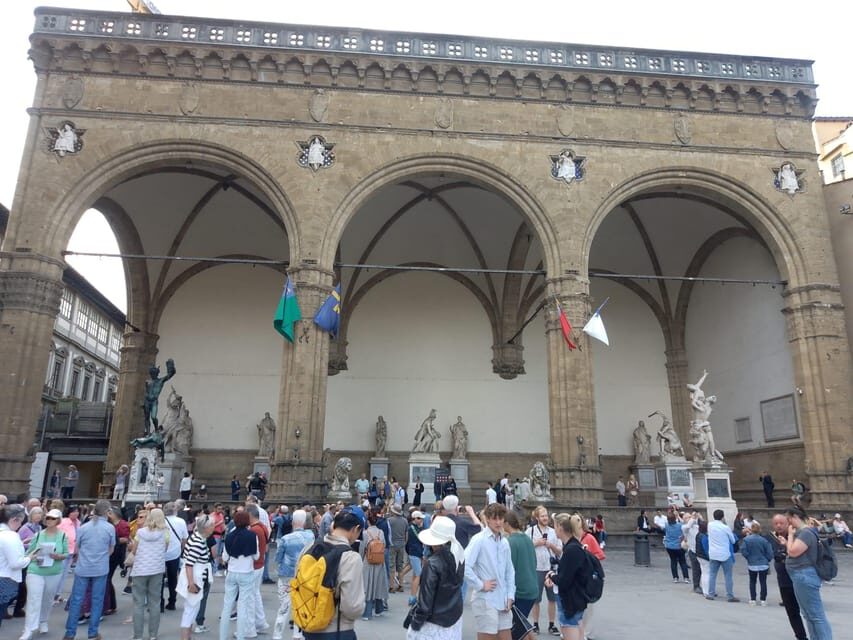
You start right where Florentines still think about politics and culture: the Neptune fountain by Palazzo Vecchio. It’s a strong opener because Palazzo Vecchio is the old center of civic power, and the square is packed with symbols that help explain why art mattered so much.
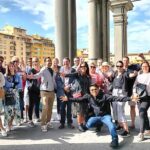
From there, you spend time in Piazza della Signoria with a guided tour and photo stop. Antonio’s angle is about rivalry and patronage—how the city’s leaders made artists fight for commissions, and how that competition shaped what you can see in Florence today.
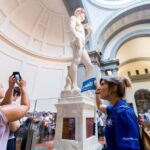
One highlight here is how the square connects to Michelangelo’s presence, including a replica of Michelangelo’s David. Even if you’ve seen David in other contexts, seeing how it’s displayed here helps you understand Florence’s idea of public art: it’s not only for museums.
Practical note: this part of the day can be busy. I’d come with comfy shoes and a plan to pause often, because the guide moves you through key visual moments, not just straight lines.
Ponte Vecchio: jewelry history with a real river view
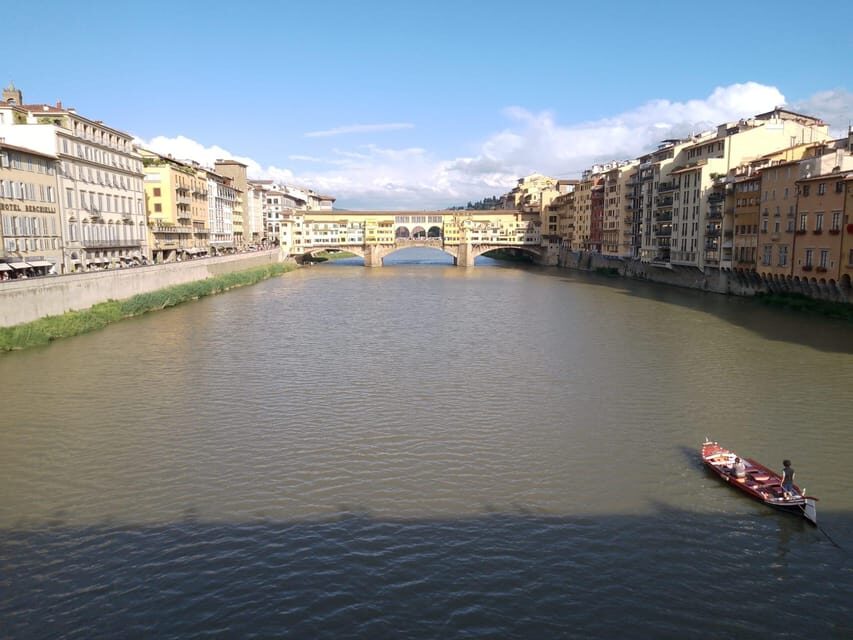
Next you head to Ponte Vecchio, Florence’s oldest bridge. The big idea the guide brings is continuity: the bridge is lined with jewelry shops dating back to Medici times, so it’s not just scenic—it’s historical commerce.
You’ll have a photo stop and guided tour here (short, but focused). If you care about how wealth and taste shaped Florence, this is a great place to connect the dots between Medici influence and what people still buy and display along the river.
This is also one of the stops where you get visual “breathing space.” The Arno view helps you reset your brain after the dense civic center near Palazzo Vecchio.
Piazza della Repubblica to the Duomo complex: seeing architecture like a plot
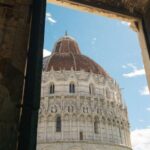
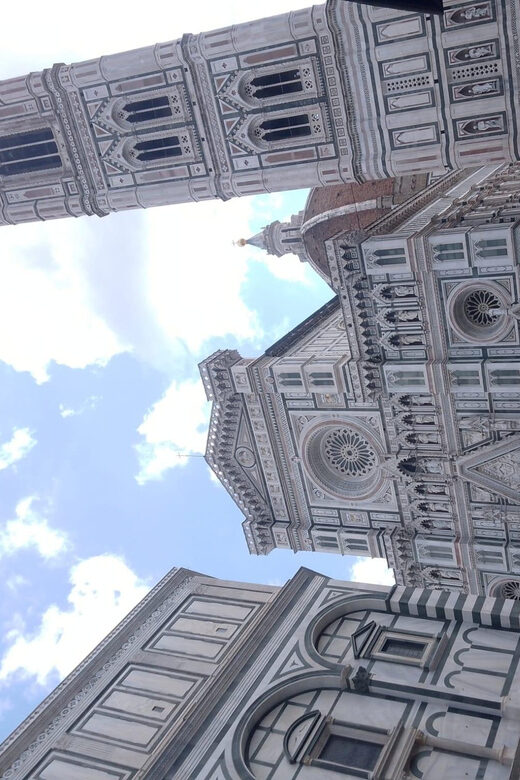
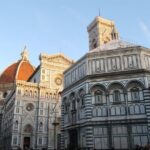
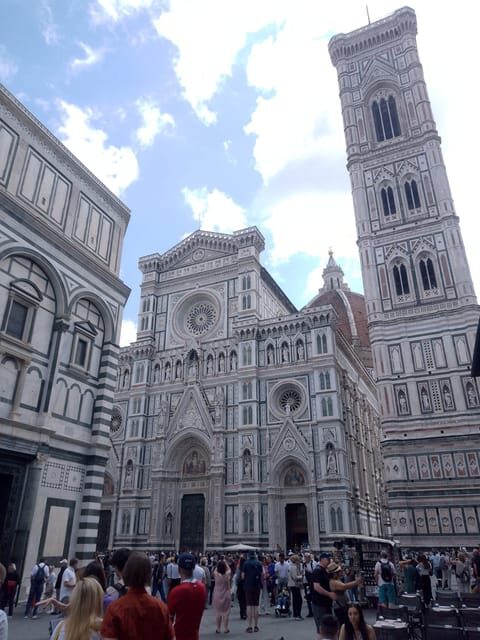
After the river, you move toward Piazza della Repubblica, then into the Cathedral area: Santa Maria del Fiore, Brunelleschi’s Dome, and Giotto’s Bell Tower. The itinerary keeps each stop relatively short, but the guide’s goal is clarity—why these structures mattered when they were new.
At the Cathedral stop, you get the essentials to understand what you’re looking at: the Duomo sits at the heart of Florence’s Renaissance confidence. Antonio then brings you to the dome so you can grasp why Brunelleschi’s design felt like a breakthrough, not just a pretty roof.
Then comes Giotto’s Bell Tower, which is a nice contrast to the dome. The tower gives you a sense of vertical ambition and helps you read the skyline the way locals do—without needing a technical history degree.
Heat tip: Florence summer can be brutal. The tour recommends a hat and at least 500 ml of water, and I agree—bring both so the final church stop doesn’t turn into a dehydration headache.
Oltrarno and the route to Santo Spirito: where Michelangelo gets human
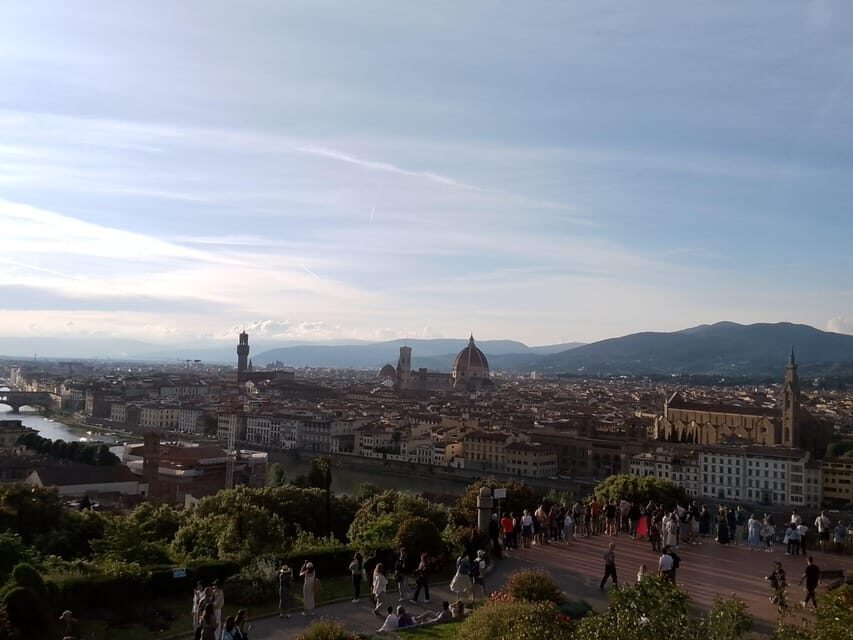
From the central core you cross into the Oltrarno side, which feels slower and more “local” than the main tourist corridors. Antonio uses the shift in neighborhood energy to explain why Michelangelo’s story belongs here, not only in art books.
You’ll also hear about the Medici presence around this area, including Pitti Palace, a former Medici residence. Even if you’re not spending hours inside, seeing the scale and location helps you understand how Medici power extended beyond politics into art, collections, and daily life.
The route then leads toward Piazza Santa Trinita and Santo Spirito. The pacing stays doable for a 3-hour total tour, but the emotional payoff starts building as the guide moves from famous public masterpieces to a more intimate origin story.
- Tuscany Day Trip from Florence: Siena, San Gimignano, Pisa and Lunch at a Winery
★ 5.0 · 21,634 reviews

Basilica di Santo Spirito: the stop that changes the way you look at Michelangelo
The real anchor of the tour is Basilica di Santo Spirito, with a longer guided visit (about 30 minutes). This is where Antonio turns Michelangelo from a legend into a teenager with a learning problem.
The key context is tied to his early years: after the death of his patron Lorenzo de’ Medici, Michelangelo lived at the monastery around 1492. The monks allowed him to study corpses from the hospital, giving him rare insight into human anatomy.
That matters because Michelangelo’s later sculptures don’t just look lifelike—they feel emotionally charged and physically convincing. Here, the guide helps you connect the dots between anatomy study and proportion, so you’re not only admiring craftsmanship. You’re understanding why it had to be that exact.
Inside the church, the tour points you to a specific work: the wooden crucifix known as Crocifisso ligneo. This is a favorite moment because it’s not big, loud, and museum-like. It’s personal, and that changes your focus from fame to growth.
Crocifisso ligneo: why a wooden cross hits harder than you expect
The Crocifisso ligneo is carved by Michelangelo at just 17, and the guide uses that fact to frame what you’re seeing. You learn to spot three ideas the tour emphasizes: his early grasp of anatomy and proportion, his spiritual sensitivity, and the way the work bridges medieval and Renaissance approaches.
This is a “small object, big meaning” moment. If you only know Michelangelo for marble and massive public commissions, this wooden piece helps you see how his style and empathy formed early.
It’s also a nice contrast to the louder sights earlier in the tour, like Palazzo Vecchio and Ponte Vecchio. By the time you reach Santo Spirito, you’re walking with context in your head—and that makes the final stop feel earned instead of rushed.
Practical consideration: churches can have varied lighting and sometimes you’ll want to position yourself for a better view. Wear comfortable clothes and keep your camera ready, but don’t block other people while trying to get the perfect angle.
Antonio’s secret diary, plus breaks that actually help
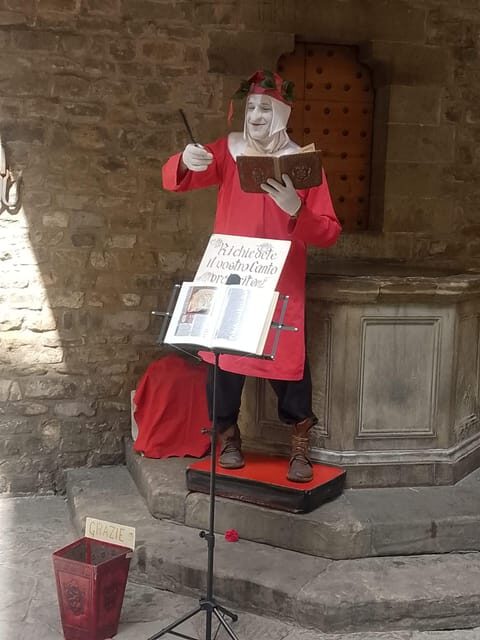
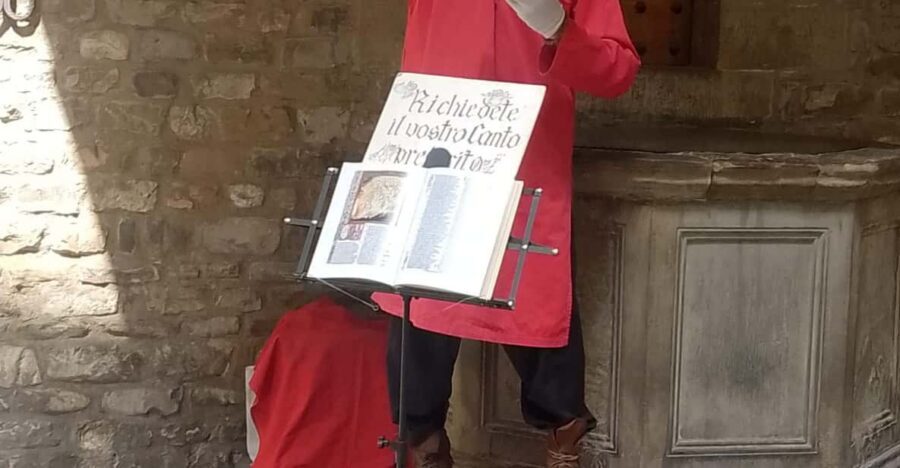
One of the most useful elements is that you get a photo of Antonio’s secret diary. It’s essentially a shortcut to where he thinks you’ll get the best next experiences in Florence—food, music, museums, gardens, and even wine tasting suggestions.
I like this because it turns a 3-hour tour into planning support for the rest of your trip. You’re not just learning; you’re getting a practical list for how to spend your time after you leave the group.
The tour also builds in breaks for photos, and that seems small until you’re doing it in a city where every street corner looks photo-worthy. Those pauses help you slow down, notice details, and avoid the “constant motion” problem that ruins outdoor tours.
And yes, there’s food & drinks included. Even if it’s a small amount, it’s a smart touch because Florence days usually involve lots of walking and not much sitting.
Optional add-ons: Medici Chapel and Leonardo’s interactive museum
If you want to keep the Renaissance storyline going after the core walk, there are two add-ons you can book online: a Medici Chapel visit and Leonardo’s interactive museum.
The Medici Chapel option costs 19.00 euros, and Leonardo’s interactive museum is 9.00 euros. If your main interest is the Leonardo thread of the rivalry, the Leonardo museum add-on can help you connect the person to the ideas the guide mentions in the story.
If you’re short on time, I’d treat the main 3-hour walk as your foundation, then decide on the add-ons based on what you found most exciting—Michelangelo at Santo Spirito, or Leonardo’s inventions and creative world.
Price and value: where the money goes
For $53, you get a guided walking route that covers major visual landmarks and one highly specific Michelangelo focus you’re unlikely to find on your own. You also get food & drinks, plus breaks and a guide who does more than recite dates.
Value depends on your style. If you enjoy art history in story form and you like being shown where to look, this price makes sense. If you only want museum-quality time in the biggest indoor spaces, you may end up spending extra on tickets later and feel like the tour is more orientation than deep dive.
Group size can matter too. Based on the feel of the experience, Antonio leads in a way that doesn’t feel like a crowded line. That relaxed pace helps the stories land, especially when you reach the emotional ending at Santo Spirito.
Who this tour is best for
This tour is a strong match if you:
- Want a starter experience for Florence that gives you a mental map of the Renaissance rivalry
- Prefer walking with a guide who connects art to everyday places
- Like Michelangelo’s story and want to see how it starts, not just how it ends
- Value practical extras like food and drink stops and Antonio’s diary of recommendations
It’s less ideal if you’re traveling with a child under the minimum age. The tour is not suitable for children under 2 and babies under 1.
Should you book Florence Unveiled?
I’d book it if you want Florence in 3 hours that feels like a story, not a checklist. The combination of the Medici civic center, the bridge, the Duomo landmarks, and the Santo Spirito finale gives you a clean arc: power → rivalry → craft → early genius.
Skip it or plan differently if you hate walking or you’re looking for long museum time. This is designed to move at a human pace, but it’s still a walking route with short guided stops.
If you book, do one simple thing: bring water and comfy shoes. Then let Antonio guide you through the Leonardo and Michelangelo rivalry in the places where it actually made sense.
FAQ
How long is Florence Unveiled: The Rivalry of Leonardo and Michelangelo?
The tour lasts 3 hours.
Where does the tour start and where does it finish?
You meet at the Fountain of Neptune, beside Palazzo Vecchio in Piazza della Signoria. The tour finishes at Mercato Centrale.
How much does the tour cost?
The price is $53 per person.
Is the tour offered in English?
Yes, the live tour guide speaks English.
What’s included in the price?
The tour includes a professional guide, breaks for photos, a picture of Antonio’s secret diary with recommendations, food & drinks, and the option to add certain visits with online booking.
What add-ons are available if I want more?
You can add the Medici Chapel visit for 19.00 euros and Leonardo’s interactive museum for 9.00 euros, with online booking.
What should I bring for the walking tour?
Bring comfortable shoes and comfortable clothes. In hot Florence summer weather, you’re recommended to wear a hat and carry at least 500 ml of water.
Who is the tour not suitable for?
The tour is not suitable for children under 2 years and babies under 1 year.
You Might Also Enjoy

More Tour Reviews in Florence
- Tuscany Day Trip from Florence: Siena, San Gimignano, Pisa and Lunch at a Winery
★ 5.0 · 21,634 reviews - The Best tour in Florence: Renaissance & Medici Tales – guided by a STORYTELLER
★ 5.0 · 12,316 reviews