REVIEW · FLORENCE
Medici Tour in Florence
Book on Viator →Operated by MAGELLINE · Bookable on Viator
Medici power lives in these walls. This 2-hour Florence tour ties Palazzo Medici Riccardi to the Medici story and even flags locations used for The Medici TV show. I love how the pace is tight and you leave with a clearer sense of who held power, and how they spent it.
I’m also a fan of the way the visit connects the family to art patronage, with stops that include the chapel of the Magi and names tied to major artists like Michelangelo. You get context for why these buildings mattered, not just what they look like.
One thing to watch: if you’re picky about English narration, choose this only if clear, story-focused guidance matters to you. One English-language experience wasn’t as Medici-centered as expected, and the guide’s phrasing can make the difference.
In This Review
- Quick hits before you go
- Palazzo Medici Riccardi: where Renaissance Florence starts (and why that matters)
- Medici family lives: Cosimo to Lorenzo, plus who actually worked here
- Michelangelo’s project on site: the kind of detail you can point out later
- The Chapel of the Magi: fitting a sacred space into the Medici story
- The Medici TV show filming spots: what to look for without getting lost
- 2 hours, max 15 people: pace, meeting point, and what to prepare
- Price and value: is about $162.57 per person worth it?
- Should you book the Medici Tour in Florence?
- FAQ
- What’s the duration of the Medici Tour in Florence?
- Where does the tour start and end?
- Is the tour offered in English?
- How big is the group?
- Is admission included?
- What will I see during the tour?
- Do I need a print ticket?
- What’s the cancellation policy?
- Is the tour suitable for most people?
Quick hits before you go
- Palazzo Medici Riccardi inside track: A first Renaissance palace experience close to San Lorenzo.
- Medici family line you can follow: From Cosimo the Elder to Lorenzo the Magnificent.
- Building details with names attached: Michelozzo, then later changes linked to Michelangelo.
- Art history made practical: You’ll hear how the Medici pulled artists into Florence’s orbit.
- Small-group feel: Maximum 15 travelers, plus a mobile ticket for easy entry.
Palazzo Medici Riccardi: where Renaissance Florence starts (and why that matters)
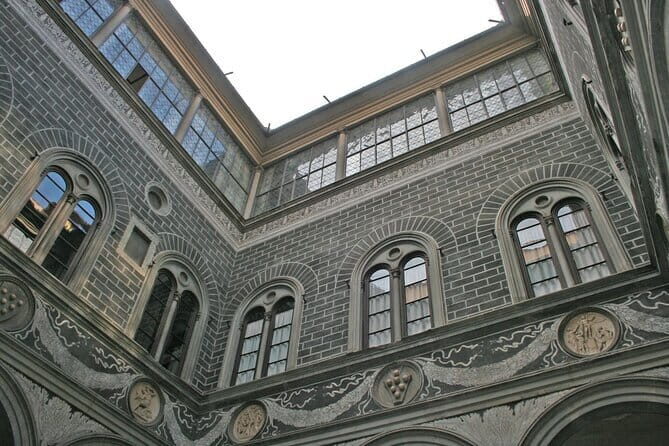
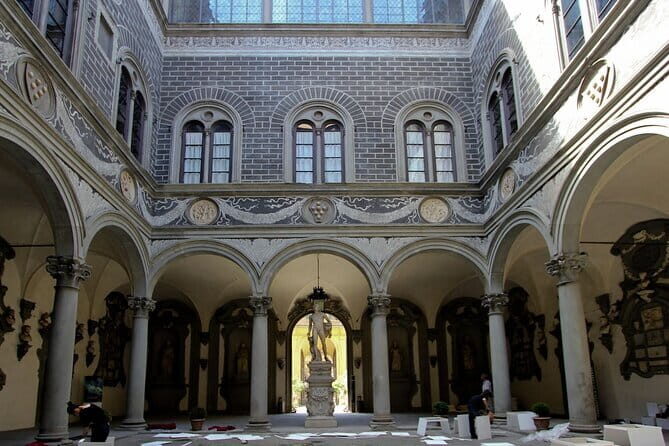
The tour’s backbone is the Palazzo Medici Riccardi, often described as the first Renaissance building erected in Florence. That alone makes it worth your time, but what’s more useful is how the guide helps you read the building like a document—stone choices, layout, and later alterations all tied back to Medici ambitions.
You’ll hear how, around 1444, Cosimo the Elder commissioned Michelozzo to build the palace in via Larga (now via Cavour) near the church of San Lorenzo. This is the kind of detail that turns an address into a story: the Medici weren’t building randomly. They were placing themselves in the middle of Florence’s cultural and religious gravity.
The architecture notes are the kind you can actually remember. The palace is described with clearly delineated rusticated floors, a huge cornice crowning the roofline, arched windows across the front, and a partially closed loggia on the corner. Those features aren’t just style—they’re visual power. They signal rank, permanence, and control.
And then comes the twist that I like best: in 1517 the original building was altered by closing the loggia and adding two “kneeling” windows according to Michelangelo’s project. Even if you’re not an architecture nerd, that’s the moment when you realize Florence’s art scene wasn’t separate from politics. It was built into the city’s walls.
You can also read our reviews of more tours and experiences in Florence.
- Tuscany Day Trip from Florence: Siena, San Gimignano, Pisa and Lunch at a Winery
★ 5.0 · 21,634 reviews
Medici family lives: Cosimo to Lorenzo, plus who actually worked here
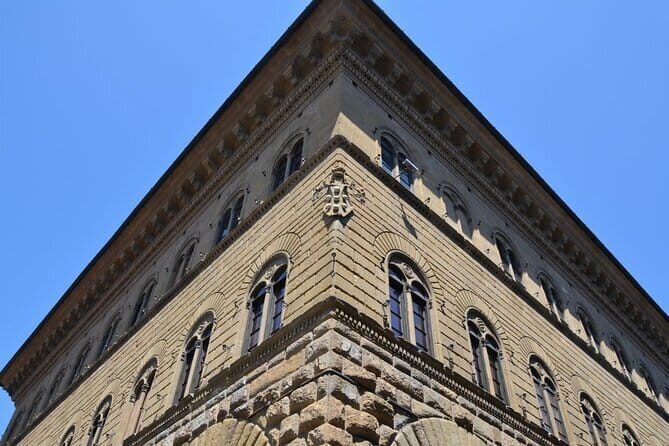
A Medici tour is only fun if you can connect names to real people and real choices. This one aims to do that by walking you through the Medici members who lived and worked around this palace.
Cosimo the Elder and Lorenzo the Magnificent get center stage early, and the guide also ties the palace to a working artistic environment. The information you’re given isn’t vague. It names artists connected to the palace world, including Donatello, Michelangelo, Paolo Uccello, Benozzo Gozzoli, and Botticelli. When you hear those names in the context of a household and a workplace, they stop being museum labels and start being Florence’s human network.
This is also where the palace’s timeline gives you extra value. The palace wasn’t only a showpiece for the top of the family tree. It stayed inhabited by lesser Medici members until 1659, when Ferdinando II sold it to the Riccardi marquises. So even though the Medici story dominates, you also get a sense of how Florence’s families reshuffled power over time.
One practical takeaway for you: if you’re the type who wants more than bullet-point facts, pay attention to how the guide describes daily “life” inside a palace—who commissioned, who influenced, and how artists fit into that system. That’s what makes this tour feel like a story, not a slideshow.
Michelangelo’s project on site: the kind of detail you can point out later
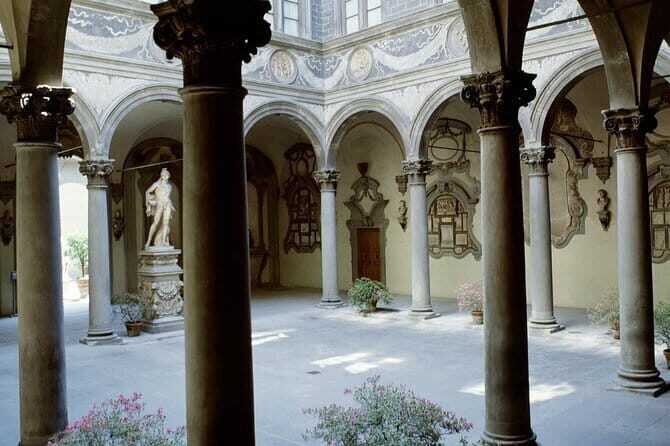
If you like walking away with a couple of “I saw that” moments, this stop delivers. The tour highlights specific building changes made in 1517, tied to Michelangelo’s design. You’re told that the loggia was closed and two “kneeling” windows were added.
The value here is not just the name-drop. It’s the ability to connect a famous artist to a physical alteration you can actually locate in your head. Instead of Michelangelo being a distant ceiling painter, he becomes part of a living building history—almost like he helped revise the palace’s public face.
You also get a clearer picture of the palace’s original design language: rusticated floors and arched windows arranged along the front, plus that corner loggia detail. Even without “expert mode,” you can learn to scan the facade. The guide’s job is to point out what’s important and why it might have been changed.
That’s also a good test for you when choosing a guide. In the better experiences, the explanation sticks to the Medici and the art-patron connection, with the architecture serving the story. In weaker versions, the tour can drift into things like stone types and present-day use at the expense of the Medici family thread.
The Chapel of the Magi: fitting a sacred space into the Medici story
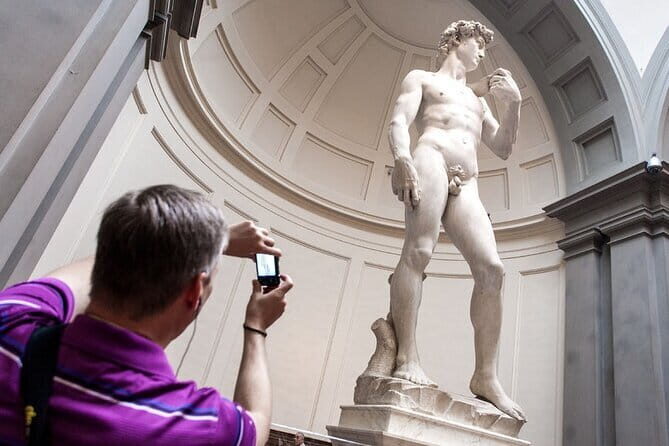
The tour also includes the chapel of the Magi connected to the Riccardi-Medici setting. Even with limited time, this stop works because it gives the Medici story a spiritual and ceremonial angle. If you only focus on politics and patronage, you miss the “why” behind the public display of wealth.
What I like about pairing the palazzo with the chapel is that you see a fuller picture of how influential families presented themselves. The palace speaks to governance and cultural power. A chapel signals values, devotion, and the role religion played in legitimacy and status.
Because the tour time is short, expect the guide to prioritize key connections rather than turning it into an hour-long lecture. That’s fine. In two hours, the real win is leaving with a map in your brain: Medici leadership leads to artistic patronage, and the family’s world shows up in both civic buildings and sacred ones.
If you’re booking because you want the chapel to be a major focus, manage expectations. Based on the structure of the tour, the palazzo is the deeper architectural stop, while the chapel supports the family narrative.
The Medici TV show filming spots: what to look for without getting lost
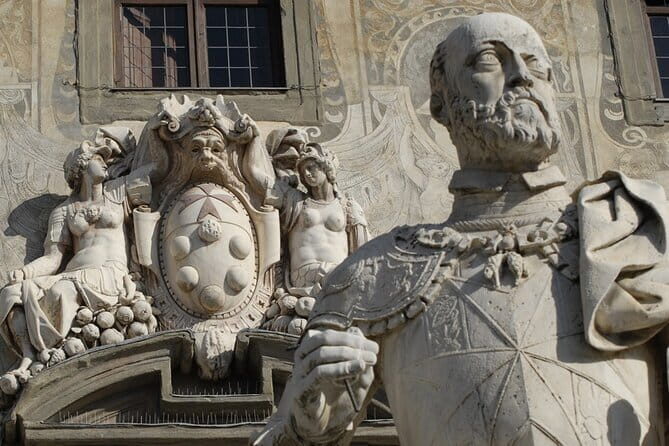
One of the tour highlights is that you’ll see filming locations from The Medici TV series. This is a fun hook, especially if you watched the show and remember recognizing places.
Here’s how to get the most value: treat the TV references as a pointer back to the real history. Ask yourself what changes you notice in the building’s purpose or presentation. Even when the show focuses on characters, the locations are still Renaissance-era spaces with their own timeline.
When the guide hits this well, it feels like you’re decoding a memory. You’ll recognize the place first, then the guide layers in why the Medici mattered here. That’s also where guide quality really shows up. In one less satisfying experience, the show reference reportedly got sidelined.
So if The Medici is a big reason you booked, bring that preference into your mental checklist. In a strong English explanation, you’ll clearly connect the filming reference to the larger Medici story rather than just naming it and moving on.
- Tuscany Day Trip from Florence: Siena, San Gimignano, Pisa and Lunch at a Winery
★ 5.0 · 21,634 reviews

2 hours, max 15 people: pace, meeting point, and what to prepare
At about 2 hours total and capped at 15 travelers, this is designed to be efficient. You won’t have time to wander independently, so the tour is most valuable when you show up ready to listen.
The start point is Via Camillo Cavour, 3, 50122 Firenze FI, Italy. The tour ends at Magi Chapel Riccardi-Medici Palace, Via Camillo Cavour, 1, 50122 Firenze FI, Italy. That end address matters: the route is set up so you exit near the chapel, rather than backtracking. Give yourself a little extra time to navigate Florence streets and find the right corner.
A mobile ticket is included, so have your phone ready at check-in. Also, with a small group, question-time can matter. If English clarity is important to you, this is where it helps to be attentive early. If the guide is hard to follow, don’t waste the middle of the tour waiting for it to improve—adjust your expectations and focus on the visible architecture cues.
Finally, consider pairing this with a self-guided moment afterward. If you want the tour to “stick,” spend 10–15 minutes right after the tour reading the facade details the guide pointed out (rustication lines, cornice, window shapes) while the explanation is still fresh.
Price and value: is about $162.57 per person worth it?
At $162.57 per person for an approximately 2-hour tour, you’re paying for two things: access and interpretation. You’re not just looking from outside. The palace stop includes an admission ticket, which can make a difference when you’re trying to keep the experience compact.
Is it a bargain? It depends on what you want. If you mainly want casual sightseeing, you can likely do a cheaper route. But if you want a guided thread that links the Medici family, major artists, and specific architectural changes, this price starts to make sense—especially in a group that stays small.
Booking timing also hints at demand: on average it’s reserved about 64 days in advance. That usually means popular slots fill, and you may have fewer time choices. If your dates are fixed, I’d book early to avoid settling for an awkward start time.
The other value factor is guide match. The highest-rated experiences you’re aiming for include guides like Giacomo, praised as extremely knowledgeable and courteous, plus Deanna, described as passionate and insightful about Florence and the Medici. In other words: this tour can be great or merely okay depending on how the explanation lands.
Should you book the Medici Tour in Florence?
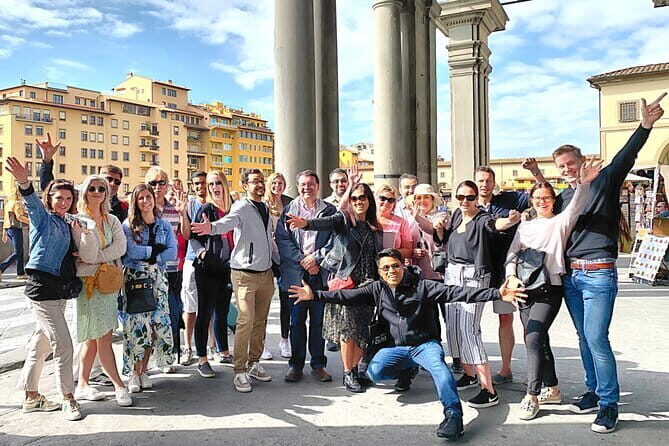
Book this if you want a compact, story-driven look at the Medici world tied directly to Palazzo Medici Riccardi, the chapel of the Magi, and the artistic names attached to Michelangelo and other major figures. It’s especially good if you like walking away with specific building details you can point out later.
Skip or reconsider if you’re counting on the TV-show angle to be a major part of the narration, or if you know you get frustrated when the guide’s English is hard to follow. With a two-hour format, there’s little room to “wait for clarity.”
My final advice: treat it as a high-focus stop rather than a long museum day. If you’re ready to listen for the Medici-family thread and the architecture cues—Cosimo and Lorenzo, Michelozzo, and the 1517 Michelangelo-linked changes—you’ll likely feel like you got your money’s worth.
FAQ
What’s the duration of the Medici Tour in Florence?
It’s listed at about 2 hours.
Where does the tour start and end?
It starts at Via Camillo Cavour, 3, 50122 Firenze FI, Italy and ends at Magi Chapel Riccardi-Medici Palace, Via Camillo Cavour, 1, 50122 Firenze FI, Italy.
Is the tour offered in English?
Yes, it’s offered in English.
How big is the group?
The tour has a maximum of 15 travelers.
Is admission included?
An admission ticket is included for the Palazzo Medici Riccardi stop.
What will I see during the tour?
You’ll visit Palazzo Medici Riccardi and the chapel of the Magi, learn about the Medici family’s impact on artists, and see filming locations from The Medici TV show.
Do I need a print ticket?
No. The tour uses a mobile ticket.
What’s the cancellation policy?
You can cancel for a full refund up to 24 hours before the experience starts.
Is the tour suitable for most people?
The listing says most travelers can participate. If you have mobility concerns, it’s smart to check with the provider before booking.
You Might Also Enjoy

More Tours in Florence
- The Best tour in Florence: Renaissance & Medici Tales – guided by a STORYTELLER
★ 5.0 · 12,316 reviews
More Tour Reviews in Florence
- Tuscany Day Trip from Florence: Siena, San Gimignano, Pisa and Lunch at a Winery
★ 5.0 · 21,634 reviews - The Best tour in Florence: Renaissance & Medici Tales – guided by a STORYTELLER
★ 5.0 · 12,316 reviews