REVIEW · FLORENCE
Michelangelo Sculpture Tour in Florence with Skip the Line Ticket
Book on Viator →Operated by Walkabout Florence Tours · Bookable on Viator
Michelangelo in Florence can feel like standing in an art textbook. This tour turns it into a smart walking route with skip-the-line entry timed through several top stops. You’ll track Michelangelo from his early life to the places that shaped his art, then end at the Accademia for maximum time with his most famous sculpture.
What I like most is the mix of close-up masterpieces indoors plus key landmarks like Piazza della Signoria and the Loggia dei Lanzi, so the city explains the art as much as the museums do. Second, the route is tight: about 3 hours, small group size (up to 20), and museum admissions are included for the big sites like Bargello, Opera del Duomo, Medici Chapels, and Accademia.
One possible drawback: it’s best suited to people who can handle steady walking and a museum schedule that moves at a guided pace. If you want long, slow hangs in each room, you may find the time per stop a bit short.
In This Review
- Key highlights worth packing your day for
- A 3-hour Michelangelo route that makes the city do the teaching
- Start point at Via Vinegia (9:00 am) and where you finish
- Santa Croce: a major Florence church where artists keep showing up
- Bargello Museum: Michelangelo’s work, plus the story of finishing and not finishing
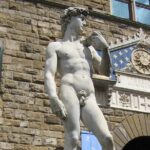
- Piazza della Signoria and the Loggia dei Lanzi: Michelangelo in stone, not glass
- Palazzo Vecchio and Orsanmichele: power and guilds, both in the middle of town
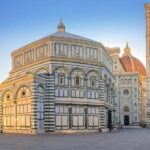
- Santa Maria del Fiore (the Cathedral): big scale, big symbolism
- Opera del Duomo Museum: the Palestrina Pietà and the original Gates of Paradise
- Cappelle Medicee (Medici Chapels): where patronage becomes sculpture
- Accademia Gallery finale: David and the Prisoners
- Skip-the-line, small group size, and included admissions: how the price pencils out
- Who should book this Michelangelo sculpture tour?
- A note on guide quality (and what the best days feel like)
- Should you book this Michelangelo Sculpture Tour in Florence?
- FAQ
- What time does the tour start?
- How long is the Michelangelo sculpture tour?
- Where do I meet the guide?
- Where does the tour end?
- Is it a skip-the-line ticket?
- What museums and major sites are included?
- Are admission tickets included?
- How big is the group?
- What happens if weather is bad or the minimum group size isn’t met?
Key highlights worth packing your day for
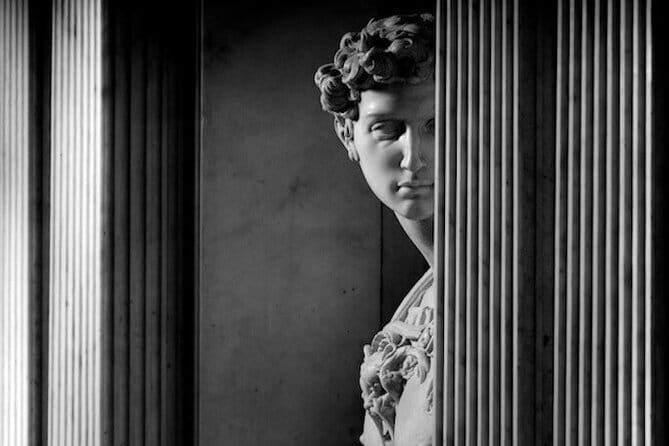
- Bargello Museum (with Michelangelo sculptures): you’ll focus on major works including Tondo Pitti and the famous David-Apollo.
- Michelangelo’s non-finito made understandable: the tour points to what you can’t miss—unfinished surfaces and why they matter.
- Florence’s power square in the open air: Piazza della Signoria, plus the Loggia dei Lanzi for the sculpture setting.
- Opera del Duomo Museum signatures: the Palestrina Pietà and the original Gates of Paradise by Lorenzo Ghiberti.
- Medici Chapels New Sacristy: a strong link between patronage and Michelangelo’s output.
- Accademia finale inside the gallery: time set aside for David and the Prisoners sculpture group.
A 3-hour Michelangelo route that makes the city do the teaching
This is a guided Michelangelo sculpture tour designed like a walking lesson. You start in central Florence and move through museum rooms where Michelangelo’s work changes from “famous name” to “you can actually see the choices.” Then the tour reconnects those choices to the city around you—politics, guild life, and patronage.
With an end point inside the Accademia Gallery, it’s built for real viewing time, not just a quick photo stop. The tour runs about 3 hours, and the group size is capped at 20, which keeps things from feeling like a school bus full of art critics.
Also, there’s a skip-the-line ticket approach, and that matters in Florence. When you’re doing several museums back-to-back, saving time on entry is the difference between seeing the art and just waiting in line.
You can also read our reviews of more tours and experiences in Florence

Start point at Via Vinegia (9:00 am) and where you finish
Your day begins at Via Vinegia, 23R, 50122 Firenze FI, and the tour starts at 9:00 am. That early start helps you dodge some of the worst midday crowds and gives you a strong first stop before Florence fills in around you.
The tour ends inside the Accademia Gallery at Via Ricasoli, 58/60, 50129 Firenze FI. That ending location is practical: once you’re inside, you can keep exploring without the awkward timing scramble of leaving and re-entering.
You’ll use a mobile ticket, and the meeting area is described as near public transportation. Translation: it’s easier to get to this tour than to some “hide-and-seek” meeting points.
Santa Croce: a major Florence church where artists keep showing up
One of the first stops is Basilica of Santa Croce. This is a huge Franciscan church and a standout example of Gothic architecture in Italy. But the tour doesn’t treat it like a random big church on a checklist. It frames Santa Croce as part of the city’s identity: a meeting place for artists, theologians, religious figures, men of letters, humanists, and politicians.
Santa Croce also gives you a sense of why Michelangelo’s world was so interconnected. The church has hosted major church figures over time, and it holds the tombs of some of Italy’s greatest artists. That matters for your understanding of Michelangelo because it shows how Florence honored creative genius in a very public, civic way.
Possible drawback here: if you’re not into church interiors, the value is still there, but you may feel Santa Croce is more “context” than “Michelangelo objects.” It’s an appetizer for the sculptures to come.
Bargello Museum: Michelangelo’s work, plus the story of finishing and not finishing
Next up is the Museo Nazionale del Bargello, one of the best places in Florence for Renaissance sculpture. Here the tour focuses on four Michelangelo sculptures that connect directly to his artistic range.
You’ll see:
- Tondo Pitti, a striking example of Michelangelo’s approach sometimes described as non finito (unfinished elements that still feel complete in power and intention)
- Bacchus
- Brutus
- David-Apollo
What I like about this portion is the way it helps you look. You’re not just identifying names. You’re noticing how Michelangelo modeled forms and how the museum’s collection supports comparisons—especially with bronze David sculptures by artists like Donatello and Verrocchio.
That “compare as you go” method is one of the best ways to understand why Michelangelo became Michelangelo. You start seeing his decisions as part of a larger competition and workshop culture.
Time note: you’re given about 40 minutes here, which is enough to see the main works without rushing your brain too hard.
Piazza della Signoria and the Loggia dei Lanzi: Michelangelo in stone, not glass
After the Bargello, the tour shifts to the heart of Florence’s public life: Piazza della Signoria. This square is the seat of civil power and a central stage for social and political action.
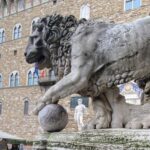
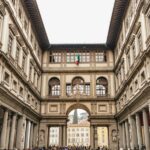
The tour then brings you to the Loggia dei Lanzi, also known as the Loggia della Signoria. It’s a loggia next to the Uffizi with large arches supported by pilasters and Corinthian capitals. The important part for your experience is how the space works for sculpture in public: the patrons loved the wide arches, and Michelangelo even suggested encircling the Piazza with them.
From a practical view, this is a smart break from indoor galleries. From an art-viewing view, it’s a lesson in how Florence displayed sculptural art to the public—where everyday people could see it, argue about it, and absorb it.
You can also read our reviews of more tours and experiences in Florence
Palazzo Vecchio and Orsanmichele: power and guilds, both in the middle of town
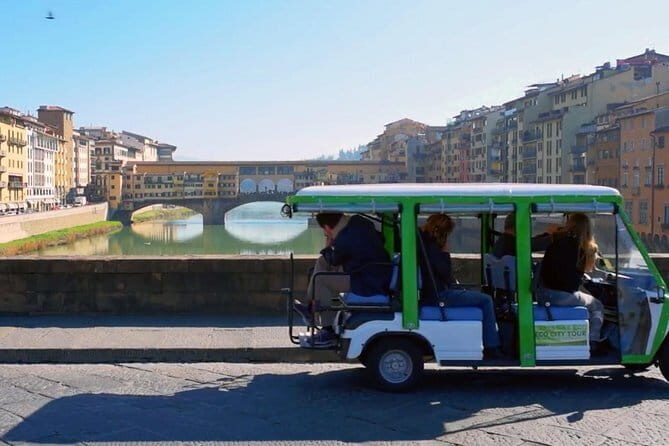
The route includes Palazzo Vecchio, Florence’s town hall. It overlooks Piazza della Signoria and the statue gallery connected to the square. The building’s name changed over time as its roles changed, and the tour uses those shifts to show you how politics and culture braided together in Florence.
Then you move to Orsanmichele, a historic building in central Florence. It started as a loggia for storing and marketing grain, then shifted into a church for the Arts and the ancient Florentine guilds. Today, the upper floors house a museum with originals connected to the sculptural cycle on the exterior niches, including statues by Donatello and Ghiberti.
Orsanmichele is one of those places where you get value even if you’re not a hardcore sculpture nerd. It explains why so much art in Florence feels like it belongs to everyday civic life.
One note for planning: these are outdoor-to-semi-outdoor segments. If you’re sensitive to weather, keep a light layer handy.
Santa Maria del Fiore (the Cathedral): big scale, big symbolism
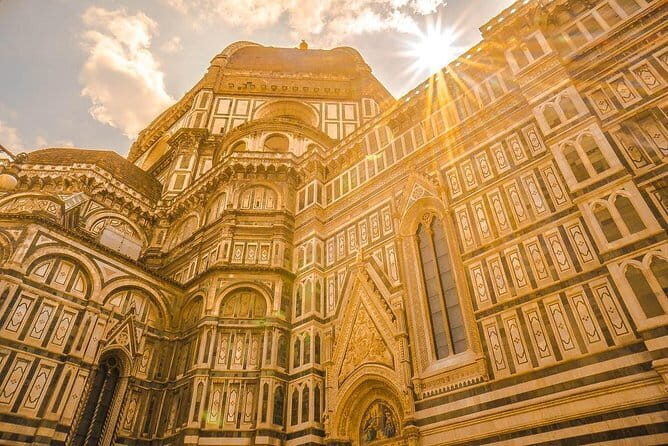
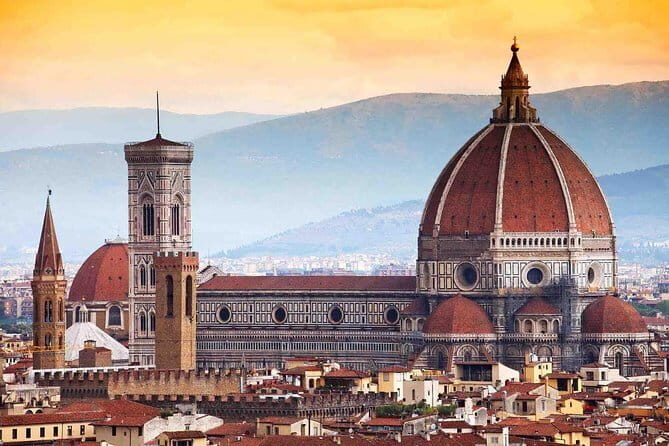
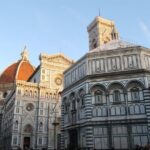
You also stop at Santa Maria del Fiore, the cathedral dominated by the massive octagon of the dome. You get a structured overview: it’s planned as a triple-nave basilica with a presbytery area, plus three radial apses, each made up of five chapels.
The tour frames the symbolism too. The name “Santa Maria del Fiore” connects to Florentia, the city of flowers, and its emblem— the Florentine lily.
This part is less about “Michelangelo’s sculpture” and more about understanding why Michelangelo’s generation worked in a city that built at enormous scale and used art as civic identity. It helps you feel the setting behind the masterpieces.
Opera del Duomo Museum: the Palestrina Pietà and the original Gates of Paradise
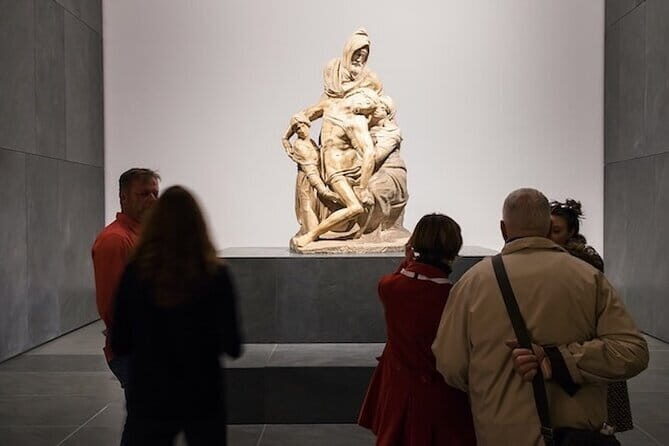
One of the most satisfying segments is the Opera del Duomo Museum stop. You’ll see the Palestrina Pietà, described as a final Michelangelo creation carved for his own tomb. The tour emphasizes it as something you have to experience in person, not just read about.
You’ll also see the original Gates of Paradise, the main gate of the Baptistero di San Giovanni located in front of the cathedral. These doors were created by Lorenzo Ghiberti between 1425 and 1452, and the tour places them in context as part of Florence’s artistic prestige.
I like this museum stop because it ties Michelangelo’s work to the larger Florentine story. It’s not isolated genius in a vacuum. It’s genius operating in a city with huge artistic ambitions and major commissions.
Time note: you get about 40 minutes here, which is enough for the big highlights without turning it into a sprint.
Cappelle Medicee (Medici Chapels): where patronage becomes sculpture
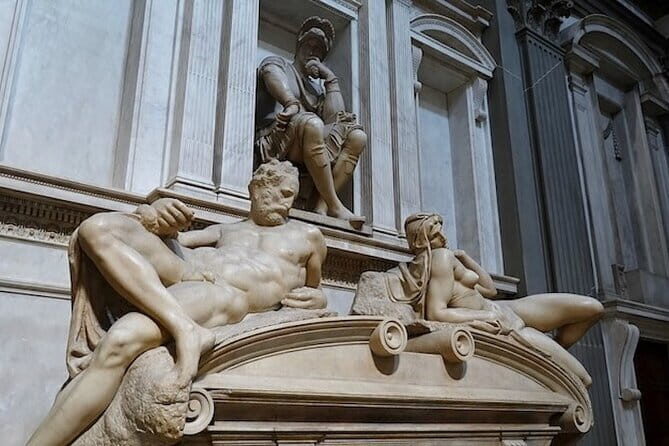
Then comes Cappelle Medicee, focused on the New Sacristy at the Medici Chapels. This is a must on a Michelangelo-focused tour because the Medici influence is direct and visible in the tombs and design choices.
The tour highlights how much Michelangelo and his work were influenced by the Medici family. Even if you only know Michelangelo by name, this stop helps you understand the machinery behind the art: patrons, political power, and public memory.
Time note: about 40 minutes is allocated here. It’s a good length for absorbing the major tombs without getting worn out before the final museum.
Accademia Gallery finale: David and the Prisoners
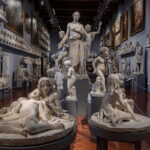
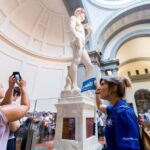
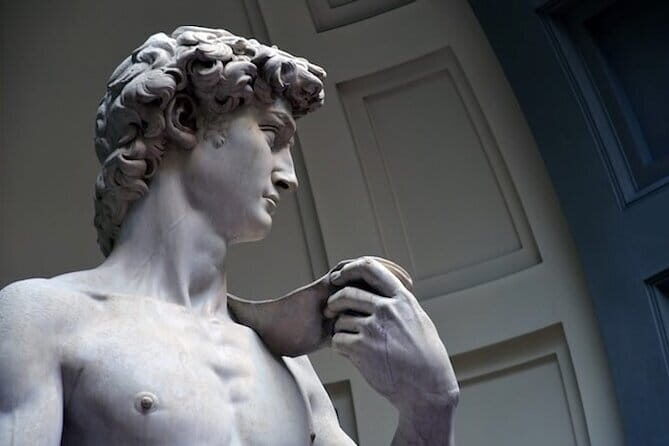
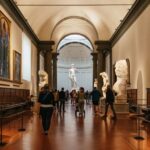
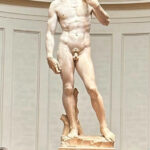
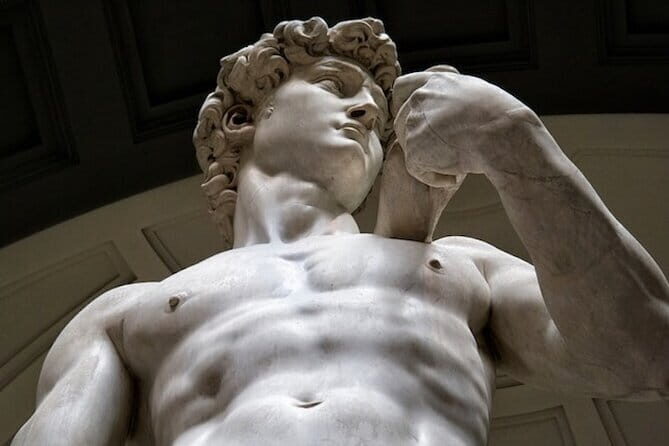
The tour ends inside the Galleria dell’Accademia. This is where the day pays off in a big, loud way—literally one of the most famous sculptures in the world: Michelangelo’s David.
The tour sets aside time for you to comprehend the sculpture. That’s important, because David looks different depending on how long you look. You notice proportions, surface modeling, and the intensity that makes it feel like the figure is holding its breath.
You’ll also see Michelangelo’s Prisoners, which were begun but never completed when they were commissioned for Pope Julius II’s tomb.
The tour ends here, but you can keep exploring. From a planning perspective, this is great: you get the guided interpretation first, then you can re-enter the gallery at your own pace.
Skip-the-line, small group size, and included admissions: how the price pencils out
The price is $172.86 per person for a tour that runs about 3 hours. At first glance, it’s not cheap. But here’s why it can work as good value.
You’re paying for:
- Skip-the-line style access through multiple major stops
- A small group cap (20), which usually keeps the experience more controlled than mass tours
- Museum time with admission included for key sculpture-heavy sites: Bargello, Opera del Duomo, Medici Chapels, and Accademia
If you plan to visit these museums anyway, the math often improves because you’re stacking entrances, guide time, and interpretation into one package rather than coordinating everything solo.
My practical advice: if you’re short on time in Florence, this kind of structured route often wins. If you have several extra days and enjoy roaming without schedules, you might prefer a self-guided plan and spend your money on a single long museum day.
Who should book this Michelangelo sculpture tour?
This fits best if you:
- Want a Michelangelo-themed day that doesn’t ignore the city around him
- Prefer guided context over reading labels for hours
- Like seeing major sculptures and also understanding how Florence displayed art in public spaces
It’s also a good pick if you’re visiting for a limited time, since the pacing hits the big points without feeling like a marathon.
If you dislike structured itineraries or need long stretches to sit with each artwork, you may feel the time per museum segment is a bit tight.
A note on guide quality (and what the best days feel like)
The biggest quality signal in the tour’s feedback is the guide’s ability to communicate art clearly. One person specifically named a guide named Becky, praising her level of knowledge and her skill at explaining it in a way that stuck.
That matters, because Michelangelo can be intimidating if you only know the headline works. A strong guide helps you look for the right details—especially with ideas like non finito, public sculpture, and the patronage forces behind major commissions.
Should you book this Michelangelo Sculpture Tour in Florence?
If you want the efficient, interpretation-rich version of a Michelangelo day, I think this tour is worth serious consideration. The route connects sculptures to the places that shaped them—Bargello for core works, Opera del Duomo for the Pietà and Gates of Paradise, Medici Chapels for patronage, then the Accademia for the finale.
I’d especially recommend it if you’re visiting Florence for the first time or you only have one morning to focus on Michelangelo. You’ll see the essentials, get help understanding what you’re seeing, and still have the chance to keep exploring inside the Accademia after the tour ends.
FAQ
What time does the tour start?
The tour starts at 9:00 am.
How long is the Michelangelo sculpture tour?
It lasts about 3 hours.
Where do I meet the guide?
The meeting point is Via Vinegia, 23R, 50122 Firenze FI, Italy.
Where does the tour end?
The tour ends inside the Galleria dell’Accademia di Firenze at Via Ricasoli, 58/60, 50129 Firenze FI, Italy.
Is it a skip-the-line ticket?
Yes, it includes skip-the-line entry.
What museums and major sites are included?
The tour includes stops at the Museo Nazionale del Bargello, the Opera del Duomo Museum, the Medici Chapels (New Sacristy), and the Galleria dell’Accademia, along with major Florence landmarks along the route.
Are admission tickets included?
Admission tickets are included for the Bargello, Opera del Duomo Museum, Medici Chapels, and the Accademia Gallery stops.
How big is the group?
There is a maximum of 20 travelers.
What happens if weather is bad or the minimum group size isn’t met?
The experience requires good weather. If it’s canceled due to poor weather, you’ll be offered a different date or a full refund. If the minimum number of travelers isn’t met, you’ll be offered a different date/experience or a full refund.
You Might Also Enjoy
More Tickets in Florence
More Tours in Florence
- The Best tour in Florence: Renaissance & Medici Tales – guided by a STORYTELLER
★ 5.0 · 12,316 reviews
More Tour Reviews in Florence
- Tuscany Day Trip from Florence: Siena, San Gimignano, Pisa and Lunch at a Winery
★ 5.0 · 21,634 reviews - The Best tour in Florence: Renaissance & Medici Tales – guided by a STORYTELLER
★ 5.0 · 12,316 reviews