REVIEW · FLORENCE
Royal Paths of Florence: Explore the Boboli Gardens
Book on Viator →Operated by Star Florence · Bookable on Viator
Florence has a secret that feels like an open-air museum. This tour covers the garden highlights at a leisurely pace, and I especially like the included Boboli Gardens ticket plus the radio system so you can actually hear the guide. One thing to consider: Boboli means hills, slopes, and some steps, so bring shoes you trust.
What you’re really paying for isn’t just access—it’s a guided path through the garden’s sculptures and fountains, with context that makes the “why” click fast. On past departures, guides like Matteo, Iliria, and Francesca have been singled out for friendly, patient storytelling, which helps the garden feel coherent instead of random.
If you want a quick, high-impact walk through Boboli without fuss, this is a very solid way to do it.
In This Review
- Key Moments You’ll Care About
- Meeting at Piazza de’ Pitti: Where Your Boboli Loop Starts
- Entering Giardino di Boboli: The Route Built Around Famous Works
- The hill climb: why it’s part of the point
- Downhill into the Viottolone: a classic “processional” view
- What you’ll likely appreciate if you’re photo-minded
- The Second Half: Cavaliere, Kaffeehaus, and the Buontalenti Grotto
- Giardino del Cavaliere (built by Michelangelo)
- Kaffeehaus: a change of pace
- Buontalenti Grotto: limestone, shells, and water effects
- Radio Headsets: Small Detail, Big Difference
- How the Price Works for Value (and When It Might Not)
- Group Size and the Real Pace You Should Expect
- Weather Reality: When Boboli Doesn’t Run
- Who Should Book This Boboli Gardens Tour
- Should You Book It? My Take
- FAQ
- How long is the Boboli Gardens tour?
- Where does the tour start and where does it end?
- Is Boboli Garden admission included?
- Is there a way to hear the guide clearly?
- Is the tour offered in English?
- What’s the group size limit?
- What happens if the weather is bad?
- What if I arrive after the tour start time?
Key Moments You’ll Care About
- Radio system for clear commentary: You won’t have to strain to hear over footsteps and other groups.
- A curated Boboli route in ~1 hour: Enough time for top sights without turning it into a half-day march.
- Giambologna and Michelangelo in the same garden walk: You’ll connect names you may recognize to specific works.
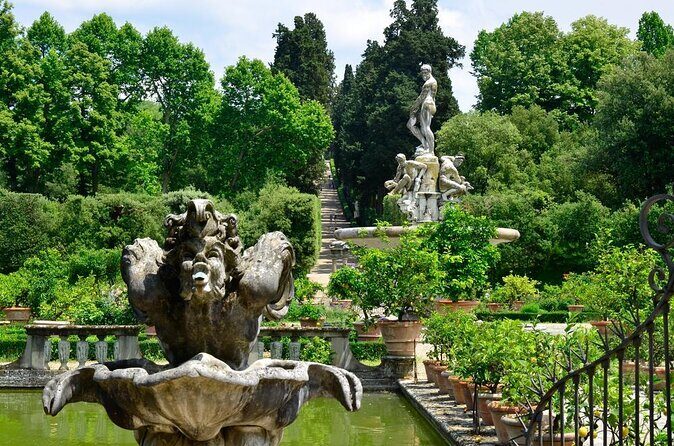
- Fountains with built-in stories: Artichoke, Neptune’s, and the Ocean all come with guidance, not just sightseeing.
- Small group cap (max 15): It stays manageable for listening and regrouping.
Meeting at Piazza de’ Pitti: Where Your Boboli Loop Starts
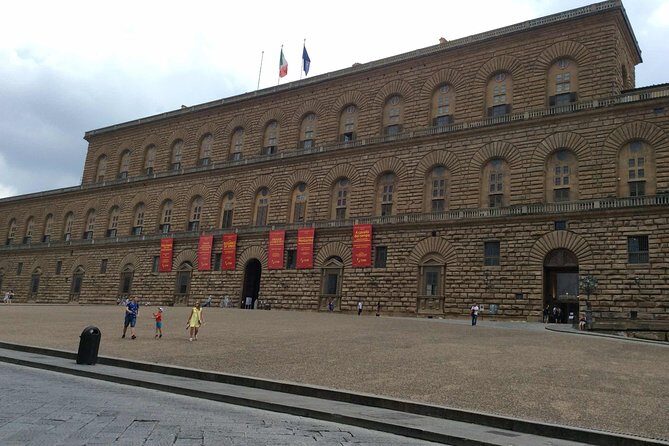
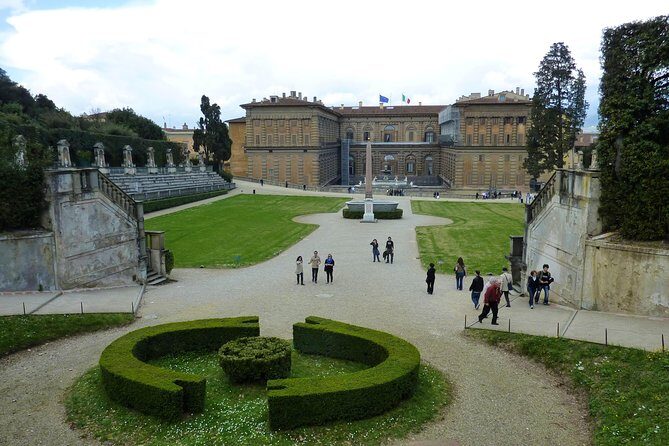
The tour starts at Piazza de’ Pitti, right by the Pitti Palace area. You’ll meet there and then follow the guide into the garden sequence from the start point near the palace courtyard. What I like about this setup is that you’re beginning where the flow of Boboli actually makes sense—rather than trying to figure out the garden from the outside maps.
You’ll also end back at the same meeting point area. That matters if you’re building the rest of your Florence day: you can usually pivot to another museum, a café break, or a slow wander along the river without needing extra logistics.
Timing is tight enough that it’s smart to arrive early. The tour has a rule that if you arrive after the start time, you can’t join and won’t get a refund or reschedule. So if you’re juggling train timing, museum entry windows, or a bus delay, give yourself margin.
You can also read our reviews of more tours and experiences in Florence.
- Tuscany Day Trip from Florence: Siena, San Gimignano, Pisa and Lunch at a Winery
★ 5.0 · 21,634 reviews

Entering Giardino di Boboli: The Route Built Around Famous Works
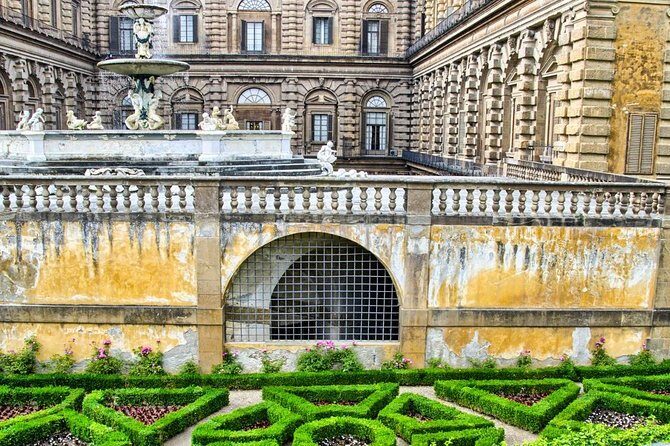
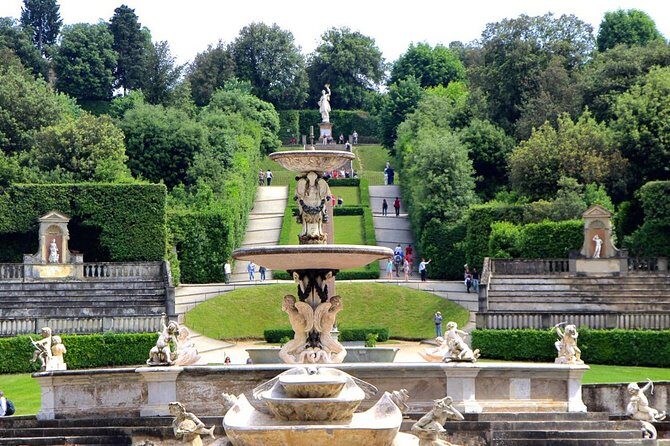
The main block of the experience is a guided walk through Giardino di Boboli, and it’s designed like a climb-and-reveal story. You start after crossing through the Pitti Palace courtyard and moving toward a signature focal point—the artichoke fountain. It’s the kind of thing you might snap a photo of quickly on your own, but with a guide you also learn what you’re looking at: the octagonal basin, the statues surrounding it, and the bronze lily at the top.
From there, the garden keeps stepping upward. The guide leads you toward the Amphitheatre area on the hill behind the palace. What makes this part worth your time is that you can see how the garden’s structure was planned to shape views. Even if you don’t care about landscape design as a hobby, the experience makes the architecture of the garden easier to “read.”
The hill climb: why it’s part of the point
As you go up, you’ll reach Neptune’s fountain. Then near the top, the walk culminates with the large statue Abundance by Giambologna. This is where the garden starts to feel like a curated stage. You’re moving from one spectacle to another, and you’re also gaining height, so your photos and sightlines improve.
One caution: this segment includes gentle slopes and steps, and it can feel like real exercise, especially on hot or humid days. The tour is short—about an hour—but it’s not flat. Wear grippy shoes, and plan a slow pace even if the route feels straightforward.
Downhill into the Viottolone: a classic “processional” view
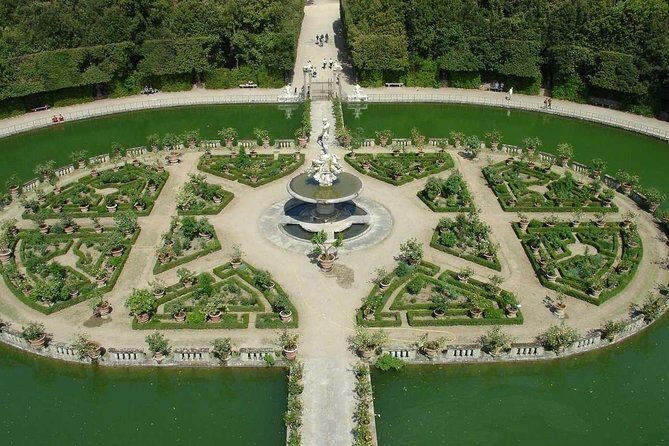
After the top stops, the guide takes you through a steeper sloping avenue back down to Viottolone—a large avenue lined with cypress trees and statuettes. This is a strong mid-tour moment because it’s visually organized. Instead of bouncing between random features, you’re walking along a designed corridor that guides your eye and your direction.
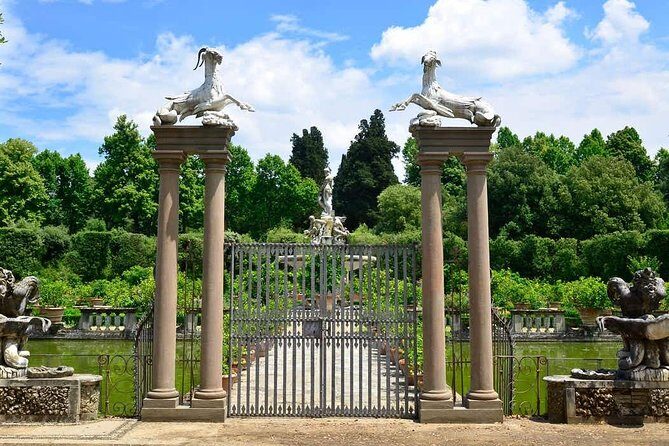
The avenue leads you all the way toward the Isolotto, a large pond. The centerpiece here is the fountain known as The Ocean, created by Giambologna. If you like seeing an artist’s style repeat in different garden elements, this is a nice payoff: you meet Giambologna’s work once near the top and then again later at the pond.
What you’ll likely appreciate if you’re photo-minded
Boboli is photo-friendly, but it can also be frustrating if you don’t understand what you’re photographing. The guidance helps you aim your camera at “design intent,” not just pretty objects. That’s especially true with the sculptures and fountain names, because you’ll know which one you’re standing in front of and what role it plays in the overall layout.
- Tuscany Day Trip from Florence: Siena, San Gimignano, Pisa and Lunch at a Winery
★ 5.0 · 21,634 reviews



The Second Half: Cavaliere, Kaffeehaus, and the Buontalenti Grotto
After spending time on fountains and sculptures, the tour continues with final stops that add texture beyond the big-name pieces.
Giardino del Cavaliere (built by Michelangelo)
One of the standouts is Giardino del Cavaliere, built by Michelangelo. Even if you don’t go heavy on Renaissance art theory, having Michelangelo linked to a specific space makes the garden feel more anchored. You’re not just wandering; you’re seeing how creative genius shows up in a planned outdoor environment.
Kaffeehaus: a change of pace
Next comes the Kaffeehaus. This stop shifts the mood. Instead of only focusing on water and statuary, you get a sense of how people historically used these spaces for leisure and social life—because garden design wasn’t only about art; it was also about human comfort and gathering.
Buontalenti Grotto: limestone, shells, and water effects
The final major visual stop is the Buontalenti Grotto, created by Buontalenti with limestone-concrete stalactites, shells, and terracotta reliefs. The guide also points out water running down the walls, which brings the grotto to life. This is the moment where Boboli stops being a “walk through sculptures” and starts feeling like theater.
Why this matters for your experience: caves and grottoes can seem like background features on your own, but guided attention helps you notice the materials and textures, and you understand why the water effect is part of the design.
Radio Headsets: Small Detail, Big Difference
This tour includes a radio system to hear the guide clearly. For Boboli, that’s more than convenience. The garden has foot traffic, uneven sound, and moments where the group naturally spreads out while taking photos. Headsets help you keep up with the commentary without falling behind.
I also like that this supports the idea of a “leisurely pace.” When people can actually hear, there’s less frustration, and you’re more likely to feel like you’re on a real tour rather than a slow walk following someone’s shoulder.
Tip: If you’re sensitive to heat or you plan to stop often, still keep the headset in. You’ll get more from each stop when you’re not constantly asking, what did they say?
How the Price Works for Value (and When It Might Not)
At $54.19 per person for about 1 hour, the value depends on what you want out of Boboli.
Here’s the practical equation:
- You get a guide and official admission included.
- You also get a radio system, which is a quality-of-life upgrade.
- The route focuses on highlights rather than making you spend hours navigating.
So if you’re short on time in Florence or you want the “best of Boboli” without doing the figuring-out yourself, this is fairly priced for the convenience.
Where you might question it:
- If you love wandering with zero structure, you might prefer to DIY with a map and spend longer at individual spots.
- If you know you struggle with hills and steps, the walk segments could feel like effort for a one-hour schedule.
But if you can handle some climbing and you want clearer context fast, the money buys a smoother experience.
Group Size and the Real Pace You Should Expect
This tour caps at 15 travelers, which keeps things from feeling chaotic. A smaller group matters because Boboli features are spread out in a way that can force bunching up on your own. With a small cap, you’re more likely to regroup efficiently and keep listening to the guide.
The pacing is described as leisurely and suitable for most people, but the route includes a climb and downhill sections. Plan your body like this is a short walk with a workout moment at the start.
On hot days, you’ll still want to:
- carry water (not included),
- take breaks when the guide allows a pause,
- and pace yourself on the uphill segments.
Weather Reality: When Boboli Doesn’t Run
Boboli gardens don’t operate on days with heavy rain. If weather cancels the tour, you’ll be offered an alternative date or a full refund. That’s good news, because gardens can turn miserable fast when the ground is slippery.
For your planning: aim for a morning or late-afternoon slot when possible, especially if you’re sensitive to heat. This tour is short, so the weather impact can still be intense if you hit the wrong hour.
Who Should Book This Boboli Gardens Tour
I’d put this on your shortlist if you:
- want a high-contrast highlights route in about an hour,
- care about understanding fountains and sculptures beyond the photo,
- like small-group tours where you can hear the guide without shouting,
- and you’re comfortable with hills, slopes, and some steps.
It’s less ideal if you:
- need fully flat ground walking,
- expect a slow, long hangout at every spot,
- or you’re arriving late in the day with tight timing and no buffer.
Should You Book It? My Take
Yes, book it if you want a structured, efficient introduction to Boboli’s best-known sights with clear guide commentary and the entry included. The hour-long format is the sweet spot for travelers who want the garden’s major moments—artichoke fountain, Neptune’s, Giambologna’s works, Michelangelo’s connection, and the Buontalenti Grotto’s water-and-texture effect—without turning it into an all-day project.
Just don’t treat it like a gentle stroll on flat sidewalks. Put on good shoes, go early enough to avoid the hottest slice of the day, and you’ll come away feeling like you actually understood what you saw—not just that you walked through it.
FAQ
How long is the Boboli Gardens tour?
It runs for about 1 hour.
Where does the tour start and where does it end?
You meet at Piazza de’ Pitti, 50125 Firenze FI, Italy, and the tour ends back at the same meeting point.
Is Boboli Garden admission included?
Yes. The tour includes an admission ticket with reservation for Boboli Garden.
Is there a way to hear the guide clearly?
Yes. The tour provides a radio system so you can hear the guide clearly.
Is the tour offered in English?
Yes, it is offered in English.
What’s the group size limit?
The tour has a maximum of 15 travelers.
What happens if the weather is bad?
The gardens do not operate on days with heavy rain. If canceled due to poor weather, you can choose an alternative date or receive a full refund.
What if I arrive after the tour start time?
If you arrive after the tour start time, you won’t be able to join and you won’t receive a refund or a reschedule.
You Might Also Enjoy



More Tour Reviews in Florence
- Tuscany Day Trip from Florence: Siena, San Gimignano, Pisa and Lunch at a Winery
★ 5.0 · 21,634 reviews - The Best tour in Florence: Renaissance & Medici Tales – guided by a STORYTELLER
★ 5.0 · 12,316 reviews