REVIEW · FLORENCE
The not-touristy Florence with Camilla, local art historian
Book on Viator →Operated by Flora's Walk · Bookable on Viator
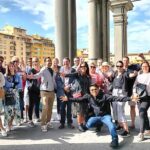
If you only see Florence from postcards, you miss the point. This private walk with art historian Camilla steers you off the main crush and into working corners of the city. I love that the focus stays on Florence’s art + religion, not just famous names. I also like the pace and attention you get with a small group. One thing to consider: this experience needs good weather, and it’s designed for a fair bit of walking.
Camilla’s background matters here. She connects churches and squares to the way Florentines thought, prayed, and made art, so the city feels understandable instead of overwhelming.
The main drawback is the obvious one: you’re paying for a private, curated route. If you’re mainly after the top “must-sees” with minimal talking, you may feel like you wanted a different kind of tour.
In This Review
- Key things I’d bookmark about this tour
- Not-touristy Florence: why this walk feels different
- Camilla, the local art historian who guides with purpose
- A 2-hour route with medieval squares and real church silence
- Piazza Santa Croce: starting with art, beauty, and flowers
- Piazza San Firenze: quiet space for the unmissable
- Piazza della Repubblica: crossing Dante’s district and talking Beatrice
- Basilica di Santa Trinita: concluding in a holy, quieter room
- The meaning behind the highlights (not just the stops)
- Price and value: $610 for 2 hours with included tickets
- How the small group pace changes what you notice
- Practical tips to make this walk smoother
- Who should book this tour (and who should skip it)
- Should you book this not-touristy Florence walk?
- FAQ
- How long is the tour?
- What is the price?
- Where does the tour start and end?
- Is this a private tour or a group tour?
- Who is the guide?
- Are admission tickets included?
- Is the ticket mobile?
- Is the meeting point near public transportation?
- What’s the cancellation policy?
Key things I’d bookmark about this tour
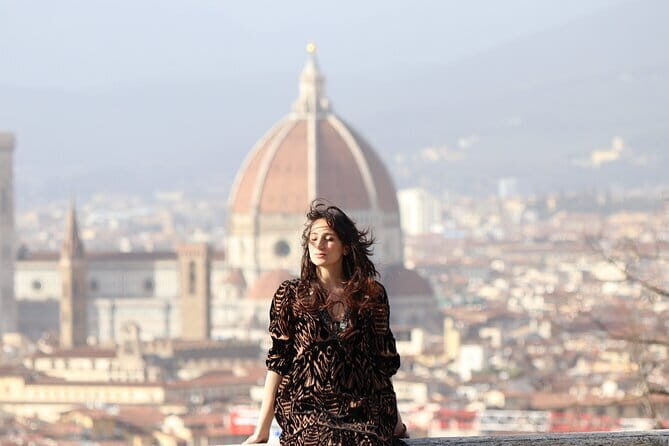
- Camilla’s art-historian lens makes churches and plazas feel connected, not random
- A route built to avoid the biggest crowds, with medieval squares and religious stops
- Small group size (max 15) keeps the tone personal and the questions flowing
- Four focused stops: Piazza Santa Croce, Piazza San Firenze, Piazza della Repubblica, Basilica di Santa Trinita
- Admission tickets included at each stop, plus a mobile ticket for easier entry
- Dante and Beatrice connections woven into the medieval-city walk, not tacked on at the end
Not-touristy Florence: why this walk feels different
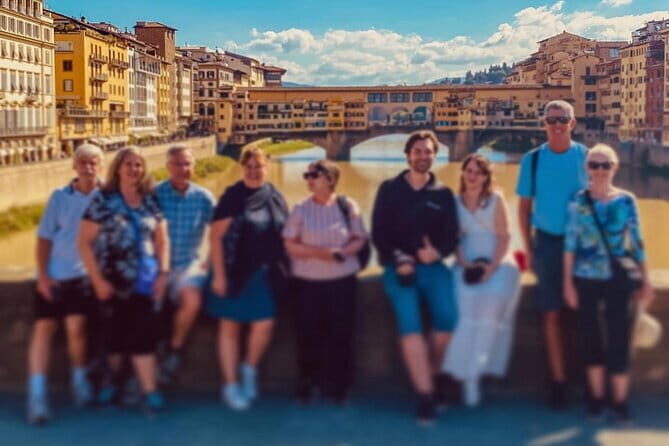
Florence can turn into a waiting line with good signage. This tour is built to fix that. You still get the serious sights, but you approach them from the quieter angles—medieval squares, churches, and streets you’d likely pass without a guide.
What I like most is the intent. The route isn’t just “here are landmarks,” it’s more like “here’s how this city thought and worshiped,” using art and religion as your map. If you enjoy understanding what you’re seeing, this style tends to click fast.
The other smart part is time. With only about two hours, you’re not stuck in a slow-moving marathon. It’s enough time to learn, pause, and absorb, without turning the day into a full-time job.
You can also read our reviews of more tours and experiences in Florence.
- Tuscany Day Trip from Florence: Siena, San Gimignano, Pisa and Lunch at a Winery
★ 5.0 · 21,634 reviews
Camilla, the local art historian who guides with purpose
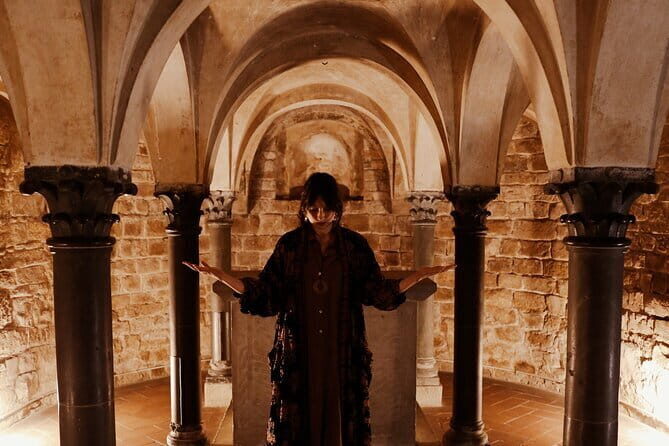
The standout of this experience is the guide. Camilla is described as someone who clearly loves what she does, and you can feel that energy in the way the tour is structured. Instead of treating Florence like a museum label, she talks in a way that helps you see patterns—how art, beauty, devotion, and civic life share the same DNA.
You also get a guide who doesn’t just recite names. She connects people and ideas to places. That’s especially useful in Florence, where the city’s most important buildings often sit in plain view, but the meaning isn’t obvious unless someone puts it into context.
If you care about art history but don’t want a lecture that lasts all day, this is a good match. The tour stays human, with short stops and guided moments that keep you moving.
A 2-hour route with medieval squares and real church silence
This walk runs from Piazza di Santa Croce to the Basilica di Santa Trinita. It’s a straightforward start-to-finish plan, but the content changes the vibe at each stop. Expect short introductions, then a guided walk through the historic fabric of central Florence.
The best part of the timing is how the stops are spaced. You get an “anchor point” for learning, then you move on before your attention fades. It keeps the story flowing, which matters when you’re walking through a city full of distractions.
Here’s what the route gives you at each stop.
Piazza Santa Croce: starting with art, beauty, and flowers
You begin at Piazza di Santa Croce, where you get a short intro about Florence and its connection to art, beauty, and flowers. That might sound poetic, but it’s actually a useful way to set the tone.
Santa Croce sits in one of the city’s best-known public spaces, yet the tour uses it as an opening lens. You’re not starting with a single “famous facade.” You’re starting with why Florentines cared so much about visual beauty—then the rest of the walk makes more sense.
Practical note: this is a quick stop (about 10 minutes), so if you’re the type who likes questions, save them for when you’re moving or right after the intro.
Piazza San Firenze: quiet space for the unmissable
Next comes Piazza San Firenze. This area is presented as a place to explore hidden and unmissable gems, away from the typical spotlight. The point isn’t secrecy for its own sake. It’s about discovering corners that still feel lived-in.
This stop also helps you shift from “big square energy” to “neighborhood feeling.” Florence’s major sights are impressive, but the city becomes real when you’re standing somewhere that locals would recognize instantly.
What to watch for: look at the way religious and artistic details share the street-level world. Even without a long stop, this kind of guidance trains your eyes.
- Tuscany Day Trip from Florence: Siena, San Gimignano, Pisa and Lunch at a Winery
★ 5.0 · 21,634 reviews

Piazza della Repubblica: crossing Dante’s district and talking Beatrice
Piazza della Repubblica is where the tour adds a stronger narrative thread. You reach the square after crossing the medieval city, including Dante’s district, and you’ll see his house. From there, the conversation moves into the ideas of platonic love with Beatrice and the rule of women in the Middle Ages.
This stop stands out because it adds more than scenery. It turns the walk into a story about how culture and thought shaped daily life. Florence is full of art and religion, yes, but Dante and Beatrice bring in the intellectual energy that made the city famous in the first place.
Consideration: if you’re expecting a long explanation of literature, this stop is still paced for a walking tour. It’s more like a focused storyline that deepens what you’ll notice next.
Basilica di Santa Trinita: concluding in a holy, quieter room
Your final stop is the Basilica di Santa Trinita at Piazza di Santa Trinita. The tour ends inside this church, where the guide builds toward a calmer finish—inside a holy place in the silence of a medieval setting.
This ending matters. You’ve been moving through squares and public spaces, then you slow down into a religious interior. That contrast is one reason this tour avoids feeling like a generic “walk past famous things” experience.
If you’re sensitive to noise and crowds, you’ll likely appreciate the tour’s pacing. It’s designed so your last moments don’t feel rushed or swallowed by the city’s busiest hours.
The meaning behind the highlights (not just the stops)
The highlights list sells this as a not-touristy Florence walk, but the real value is in how the tour links topics.
You’ll notice three threads running through the whole experience:
- Art as a way of thinking, not just decoration.
- Religion as a public force, shaping what people built and revered.
- Medieval ideas as local context, not distant textbook material.
That’s why the guide’s role as a local art historian matters so much. You’re not simply collecting sights. You’re learning how Florence made meaning through visual culture and faith.
And it’s why the tour’s small-group size is more than a comfort perk. A group of up to 15 makes it easier for the guide to keep explanations at a human pace, not a rush.
Price and value: $610 for 2 hours with included tickets

At $610 for about 2 hours, this isn’t a budget walking tour. It’s priced like a private, guided experience with professional interpretation and a route that’s intentionally curated.
Where the value comes from:
- You’re not just paying for time with a guide. You’re paying for an art-historian’s framework that changes how you read the city.
- Admission tickets are included at each stop, so you’re not adding surprise costs mid-walk.
- The mobile ticket setup reduces friction.
- The group limit (max 15) gives you a better chance at an actual conversation, even though it’s still a group setting.
If you’re traveling with a small group and you want more than “look, photo, move on,” it can feel worth it. If you’re trying to maximize quantity of sights over quality of interpretation, a less guided option may serve you better.
The smart way to decide is to ask yourself one question: do you want Florence explained, or do you just want to see it?
How the small group pace changes what you notice
This tour caps at 15 travelers, which directly affects your experience.
With smaller groups, you can hear the guide without competing with a stadium. You’re also more likely to get moments where the guide adjusts to what you’re curious about—especially when the talk shifts from art to religion to medieval life.
You’ll also feel the difference in timing. Each stop is short, with just enough structure to keep you moving while still leaving time to look around and take in details.
Also, the tour is designed for most travelers to participate. That doesn’t mean it’s a “sit down” tour. It’s still a walking experience, so bring comfortable shoes.
Practical tips to make this walk smoother

A few small choices can make a big difference.
- Wear shoes you trust. You’re walking across historic streets and stopping frequently.
- Keep your phone charged. You’ll have a mobile ticket.
- Plan for good weather. This experience requires it, and if weather cancels it, you’ll be offered a different date or a full refund.
- Arrive a few minutes early for a clean start at Piazza di Santa Croce.
- Go in with one goal: pick one theme—art, religion, or medieval life—and let the guide connect the dots.
If you’re the type who gets overwhelmed in big cities, this tour’s pacing is a plus. You’re guided through a compact story, not thrown into a self-guided scavenger hunt.
Who should book this tour (and who should skip it)
This tour is a strong fit if you:
- enjoy art history and want it explained through real places
- want a more peaceful, less crowded Florence route
- like guided storytelling that connects Dante, Beatrice, and medieval life to what you see
- value an ending inside a church where the atmosphere changes from the street
It’s less ideal if you:
- mainly want the broadest list of “top attractions” with minimal interpretation
- prefer to browse independently with no structured stops
- are sensitive to walking time in old-city streets
Should you book this not-touristy Florence walk?
If you want Florence with context, I think this is a yes. Camilla’s approach—art-historian explanations, short focused stops, and a route that avoids the heaviest tourist pressure—fits travelers who want to understand what they’re looking at.
If your travel style is purely checklist-based, you might find the pace and talking style less fun. But for people who enjoy meaning over volume, this walk is exactly the kind of guide-led experience that helps a place feel personal.
FAQ
How long is the tour?
The tour lasts about 2 hours.
What is the price?
The price is $610.
Where does the tour start and end?
It starts at Piazza di Santa Croce, 13, 50122 Firenze FI, Italy and ends at Basilica di Santa Trinita, Piazza di Santa Trinita, 50123 Firenze FI, Italy.
Is this a private tour or a group tour?
It’s a small-group tour with a maximum of 15 travelers.
Who is the guide?
The guide is Camilla, a local art historian.
Are admission tickets included?
Yes. Admission tickets are included for the stops listed on the tour.
Is the ticket mobile?
Yes, the tour uses a mobile ticket.
Is the meeting point near public transportation?
Yes, the meeting point is near public transportation.
What’s the cancellation policy?
You can cancel for a full refund up to 24 hours before the experience start time. The experience also requires good weather, and if it’s canceled due to poor weather, you’ll be offered a different date or a full refund.
You Might Also Enjoy

More Tour Reviews in Florence
- Tuscany Day Trip from Florence: Siena, San Gimignano, Pisa and Lunch at a Winery
★ 5.0 · 21,634 reviews - The Best tour in Florence: Renaissance & Medici Tales – guided by a STORYTELLER
★ 5.0 · 12,316 reviews