REVIEW · FLORENCE
Sex, Drugs & the Renaissance in Florence
Book on Viator →Operated by Artviva The Original & Best Walking Tour · Bookable on Viator
Florence has a scandal streak you can walk. This 2-hour-15-minute, 18+ tour takes you through central alleys and major squares with a guide who links Renaissance landmarks to the city’s murkier side. You’ll cover stops around the Duomo area, Medici power sites, and the Bargello—then the story goes places most guidebooks won’t.
I love two things most: the way the guide turns street-level details into real class-and-crime clues, and the charged contrast of the Bargello, which you see as a jail before it becomes an art museum. You’re not just looking at monuments—you’re learning how people actually lived, lied, and survived.
The main drawback is the tone. This is adult content (minimum age 18), and if graphic sexual or drug-related history makes you squirm, you may want a different tour. Add in comfortable-shoe walking time, and you’ll want to be ready for a solid, story-heavy stroll.
In This Review
- Key Things You’ll Notice on This Tour
- Sex, Drugs, and the Renaissance: Why Florence Works Here
- Price and Logistics for a 2-Hour 15-Minute Adult Walk
- Starting Near Piazza Davanzati and Finding the Real Florence
- Piazza della Repubblica: Where Power Looks Polished
- Museo Nazionale del Bargello: From Jail Walls to Art Rooms
- Duomo, Baptistery, and the Bell Tower: Beauty With a Backstory
- Palazzo Medici Riccardi: The Medici Power Theater
- Museo di Palazzo Davanzati and the Street Memory Trick
- Via Cavour and the Odd Corners: Da Vinci Markers and a Not-So-Pretty Well
- Guides, Storytelling, and What You Can Expect
- Who This Tour Suits Best (and Who Should Skip It)
- Should You Book This Tour?
- FAQ
- How long is the Sex, Drugs & the Renaissance walking tour?
- Where does the tour start?
- What is the minimum age?
- How many people are in the group?
- What’s included in the tour price?
- Is there a refund if I cancel?
Key Things You’ll Notice on This Tour
- 18+ Renaissance scandal focus: the walk leans R-rated on purpose, with stories about courtesans, power, and danger.
- Bargello’s jail past: you’ll see the building through its dark history, not just its museum collections.
- Duomo-area icons: the stops include the cathedral zone plus the Baptistery and bell tower for big visuals.
- Street-name and address clues: you’ll connect odd street names to social ranking and everyday life.
- Helpful audio in tight alleys: headsets help you hear clearly when streets get narrow.
- Central Florence, small group: capped small (listed up to 14, also described as no more than 18) for more back-and-forth.
Sex, Drugs, and the Renaissance: Why Florence Works Here
Florence is famous for perfection—marble, math, saints, and masterminds. What’s easy to forget is that the same city also ran on gossip, bargaining, and survival tricks. This tour leans into that tension.
You’ll walk between places most visitors treat like postcard backdrops and hear what was happening behind the scenes. It’s not random shock. The guide connects power (Medici rule), status (who could sit where and why), and shame (what people hid in plain sight). That’s why the tour feels different from the usual Florence circuit.
Also, you’re not stuck with a single topic. Yes, the adult themes are front and center. But you’ll also hear about how people thought medicine worked, how addresses signaled rank, and why certain street names don’t match what you’d expect.
You can also read our reviews of more tours and experiences in Florence.
- Tuscany Day Trip from Florence: Siena, San Gimignano, Pisa and Lunch at a Winery
★ 5.0 · 21,634 reviews

Price and Logistics for a 2-Hour 15-Minute Adult Walk
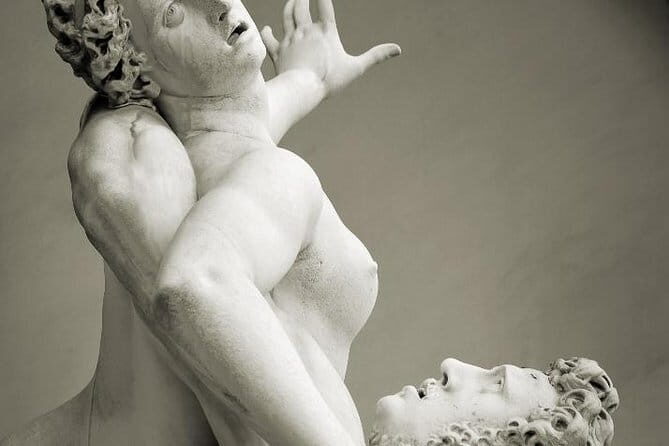
At $484.01 per person, this isn’t the budget choice. But you are buying a specific kind of value: a guided, story-led tour through prime central sites with adult content, delivered in a small group.
What helps the value make sense:
- You get a local guide and headsets (so you’re not guessing what the guide is saying while everyone squeezes into narrow lanes).
- You get a welcome drink at the start.
- The planned stops are marked as free admission on the schedule, so you’re not paying extra “surprise tickets” just to see the key buildings.
Duration matters too. Around 2 hours 15 minutes is long enough for the story to build, but short enough to keep your evening flexible. If you’re only in Florence for a few days, this kind of tour is efficient: it covers major sights and adds context you usually only get by reading—and getting less fun than a live storyteller.
Starting Near Piazza Davanzati and Finding the Real Florence

The tour begins in Florence’s historic center, near Piazza Davanzati. The meeting point is listed as Via Roma, 1r, 50123 Firenze, and then you’ll head into the back-and-forth of central streets.
This matters, because the tour’s magic is the contrast between squares and side streets. A big plaza gives you the official Florence view. Then a few turns later, you’re in alley space where the guide can talk about street-level life—status, shame, and everyday scheming.
It also helps that the group stays small. The experience is described as capped at no more than 18, and a maximum of 14 travelers is also listed. Either way, you’ll feel it: fewer people blocking you, more time for your guide to point things out without shouting over a crowd.
Piazza della Repubblica: Where Power Looks Polished

Your first stop is Piazza della Repubblica, the center-of-gravity kind of square in Florence. It’s the sort of place where you can easily assume history is all elegance and uniforms.
On this walk, the square works as a setup. The guide uses it to frame the Renaissance city as a system—one where reputation and economics were intertwined. You’ll hear how the city’s scandalous reality wasn’t hiding in remote corners; it was connected to real social life and real money.
Even if you just want photos, this stop has good “orientation value.” You’ll get your bearings in central Florence, then move from the open space into the tighter lanes where the stories get sharper.
Museo Nazionale del Bargello: From Jail Walls to Art Rooms
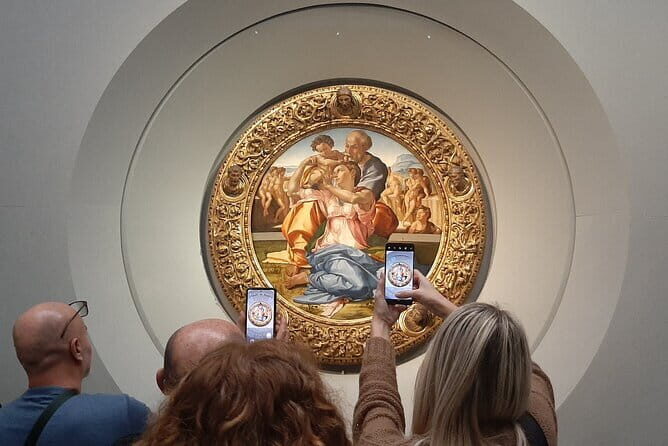
Next up: the Bargello—the Museo Nazionale del Bargello. Today, it’s an art museum. But the reason this stop hits harder is that the building was once a jail.
That single fact changes how you look at everything. You’re standing in a place where confinement was real, and punishment wasn’t theoretical. The guide uses that atmosphere to talk about the darker edges of Renaissance life—scandal, consequence, and how quickly the powerful could fall or use the system.
This is one of the most praised parts of the experience because it gives meaning. You’re not just ticking off a museum name. You’re watching the city’s narrative flip: from threat to beauty, from control to culture.
Practical tip: if you’ve never been to the Bargello before, bring a “slow down” mindset. The building deserves attention, and the tour gives you a reason to look closely rather than rush through.
- Tuscany Day Trip from Florence: Siena, San Gimignano, Pisa and Lunch at a Winery
★ 5.0 · 21,634 reviews

Duomo, Baptistery, and the Bell Tower: Beauty With a Backstory
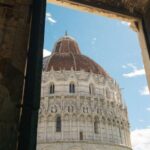
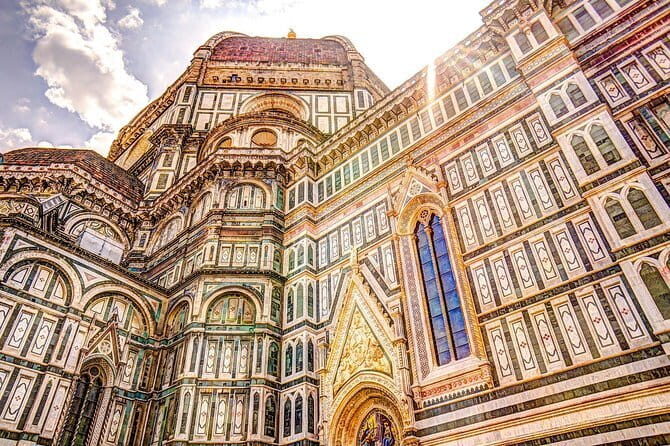
You’ll then reach the Duomo area—Cattedrale di Santa Maria del Fiore—plus the Battistero di San Giovanni and the bell tower. These are the heavy hitters of Florence, and even if you’ve seen them from outside, this stop helps you connect the shapes and scale to what the city valued.
What makes this tour’s approach stand out is how the guide weaves sacred space into human reality. Renaissance Florence wasn’t only holy. It was political, economic, and deeply social—so the religious architecture becomes part of a larger story about status, authority, and public image.
The stops here are short (about 15 minutes each on the plan), so think of it as a guided “see it properly” segment. You’ll get the key visuals plus the framing you can’t easily find on your own.
If you’re photographing: expect the usual Florence crowds around the Duomo zone, but your small-group size helps. Stay close to your guide for the best angles, then step back for a minute or two on your own once you know where to stand.
Palazzo Medici Riccardi: The Medici Power Theater
One of the tour’s headline stops is Palazzo Medici Riccardi, home to the Medici family. You don’t have to be a Renaissance expert to feel why this matters. The Medici weren’t just patrons; they were the kind of force that shaped what people did and what people pretended not to do.
On this tour, the palace is more than a fine façade. It becomes a lens for understanding how power works: alliances, leverage, and the way reputations were managed. The adult content makes this section feel less like trivia and more like motive.
This is also where you’ll hear about how respected citizens were tied to messy, scandal-laced events. That contrast is the point. Florence looked refined from street level, but underneath, people were always negotiating.
Museo di Palazzo Davanzati and the Street Memory Trick
You’ll also stop at Museo di Palazzo Davanzati, one of the reasons this tour feels “Florence-specific.” It’s tied to the city’s domestic life and social structure—exactly what you want when the theme is class, status, and public behavior.
The guide’s approach often uses street-level details as a memory tool. You’ll hear about how certain street addresses once signaled lower-class versus upper-class courtesans, and why odd street names make more sense when you know how people organized society.
This part is less about one building and more about a new way to look at Florence. After this stop, street signage and naming start to feel like clues, not decoration.
If you’re a history nerd, you’ll love it. If you’re not, you’ll still appreciate how it makes the city easier to read while you walk.
Via Cavour and the Odd Corners: Da Vinci Markers and a Not-So-Pretty Well
One of the most interesting segments happens during the side-street roaming—especially around Via Cavour Firenze, where the tour leans into the idea that secrets hide in everyday places.
On the walk, the guide also points out historical markers connected to big art names—like places tied to Da Vinci’s atelier and where Michelangelo grew up. You may not know these spots without a guide, and even if you’ve studied Florence, it’s the human connection that makes it stick.
Then there are the darker story details. You’ll hear about the strange concoctions Renaissance people believed had healing properties. And yes—you’ll learn about a well where people once dumped the deceased, a place locals still avoid.
That’s the tour’s real tone: Florence is beautiful, but it was never gentle. The guide uses those facts to keep the story grounded. This isn’t just a list of myths; it’s a portrait of a city that had to deal with bodies, sickness, desire, and power—often all at once.
If you’re sensitive, treat this as a heads-up: the tour isn’t coy about adult themes, and the darker details are part of the storytelling style.
Guides, Storytelling, and What You Can Expect
This tour is led by a local guide, and it clearly depends on the person telling the story. Past guides named in the experience include Angelo, Klas, Corinna, and Antonia, and they’re praised for being sharp storytellers rather than lecture types.
What matters for you: you’re listening with your feet moving. Expect short 15-minute-style stop blocks, then quick transitions through lanes. Headsets help a lot here, especially when you’re moving between open squares and narrow corridors.
You’ll also likely get humor and pacing. The topic is heavy—sex, drugs, scandal—but the best guides keep it human rather than preachy.
Who This Tour Suits Best (and Who Should Skip It)
This is for you if:
- You want Florence that feels real, not sanitized.
- You enjoy adult history and can handle R-rated content with context.
- You like small-group walking tours and don’t mind a bit of tiring walking.
- You want your Duomo and Medici stops to come with actual social and political meaning.
This is not for you if:
- Adult themes make you uncomfortable, even when framed as historical fact.
- You prefer only art and official narratives, with no sexual or drug-related discussion.
- You need a slow pace with minimal walking and low-intensity content.
Also: you’ll appreciate the requirement that the minimum age is 18. That means you can relax knowing the group is geared toward adult conversation.
Should You Book This Tour?
If you’re the type of traveler who likes Florence as a living story—and you’re okay with adult, scandal-heavy history—I think this is a strong pick. The small-group size, headsets, and included welcome drink make it feel designed for real listening, not just sightseeing.
I’d only hesitate if you’re planning a mixed-age group, you’re easily shocked, or you want a clean, family-friendly “greatest hits” tour. Otherwise, you’ll leave with Florence looking different in your mind: not less beautiful, just more honest.
If you book, wear comfortable shoes, and go in ready to talk history the way it actually happened.
FAQ
How long is the Sex, Drugs & the Renaissance walking tour?
It runs for about 2 hours 15 minutes.
Where does the tour start?
You meet at Via Roma, 1r, 50123 Firenze FI, Italy. The tour ends in the Florence, Metropolitan City of Florence, Italy area.
What is the minimum age?
The minimum age is 18.
How many people are in the group?
This is a small-group tour with a maximum listed of 14 travelers, and it is also described as no more than 18 people.
What’s included in the tour price?
Included are a local guide, headsets so you can hear clearly, and a welcome drink. A mobile ticket is also mentioned.
Is there a refund if I cancel?
The experience is non-refundable and cannot be changed for any reason.
You Might Also Enjoy



More Tour Reviews in Florence
- Tuscany Day Trip from Florence: Siena, San Gimignano, Pisa and Lunch at a Winery
★ 5.0 · 21,634 reviews - The Best tour in Florence: Renaissance & Medici Tales – guided by a STORYTELLER
★ 5.0 · 12,316 reviews