REVIEW · FLORENCE
Florence: Old Town Golf Cart Excursion
Book on GetYourGuide →Operated by ACCORD Italy Smart Tours · Bookable on GetYourGuide
Florence can be a lot of steps, fast. This Old Town electric golf cart excursion is a smart way to cover major Renaissance sights in a short window, with a driver and multilanguage audio as you glide through the center. I love that you get both a relaxed ride and quick photo/stop time at big-name landmarks. I also like the way the route stitches together Florence’s “big picture” geography—Duomo area, bridges, the Arno, and the Medici world. The one thing to factor in is that the cart can’t go everywhere, so you’ll hop off for brief walks and short visits.
Practical downside: you’re not buying museum entry with this tour, and some stops are more about seeing/exterior views than going inside. That said, as an orientation tool, it’s hard to beat.
Key things I’d plan around
- Silent electric driving keeps it comfortable and lets you actually hear the audio
- Short, timed stops (often around 10 minutes each) are ideal for an “intro to Florence” day
- You see the bridges + Arno instead of spending your energy only on churches and squares
- Vasari Corridor photo stop gives you a clue to how the city’s power + art networks connect
- Cart limits mean some walking—bring shoes that handle uneven old-stone streets
- Entry isn’t included, so think of this as the map-and-context pass, not a ticket bundle
In This Review
- A Fast, Foot-Friendly Orientation From Florence’s Squares
- Price vs. What You’re Really Paying For
- How the Electric Cart Experience Works in Real Life
- The Stop Pattern: Brief Visits That Still Mean Something
- Medici Chapel: Power at the Start
- Santa Maria Novella and Ognissanti: Two Church Stops, Different Flavors
- Ponte Santa Trinita and the Arno Walk-Like Timing
- Piazza Santo Spirito and Pitti Palace: The City Beyond the Postcard Core
- Ponte Vecchio: The Bridge That Always Wins
- Vasari Corridor Photo Stop: A Clever “How It Connects” Moment
- Basilica of Santa Croce Area and Medici-Linked Stops
- Guide Styles: What You Might Get From the Human Touch
- Meeting Points That Can Confuse First-Time Florence Visitors
- What’s Not Included (And Why It Matters for Your Planning)
- Who Should Book This Cart Excursion?
- Should You Book It? My Verdict
- FAQ
- How long is the Florence Old Town Golf Cart Excursion?
- What major sights will I see during the tour?
- Is entry to the sites included?
- Will I need to walk?
- Are luggage or large bags allowed?
- What languages are available for the audio guide?
A Fast, Foot-Friendly Orientation From Florence’s Squares
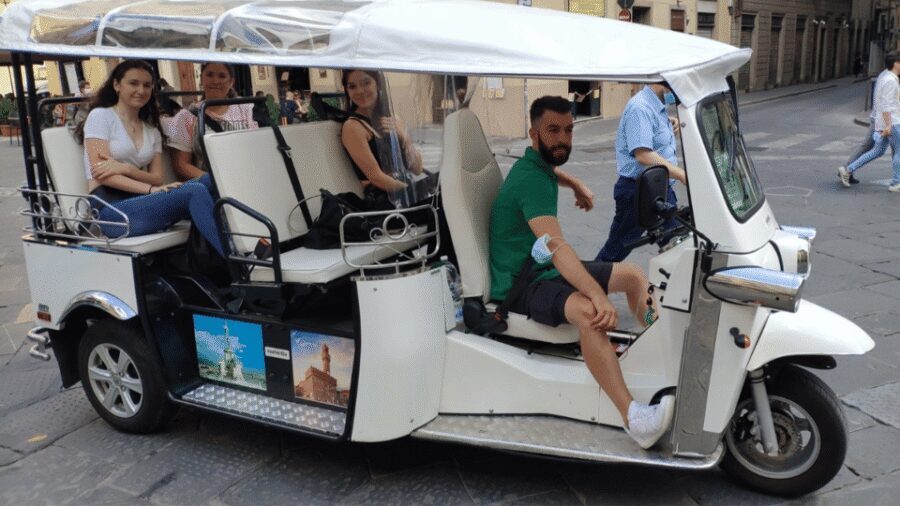
The best part of riding an electric golf cart in Florence is not speed. It’s effort-saving. You still get the drama of streets, facades, domes, and river views—but you’re not spending your entire first day grinding uphill or weaving through crowds on foot.
The tour has a simple rhythm: drive, listen, stop briefly, take photos, then roll onward. That makes it a great fit if you’re arriving with luggage fatigue, sore calves, or you just want to get your bearings quickly before committing to longer church or museum visits.
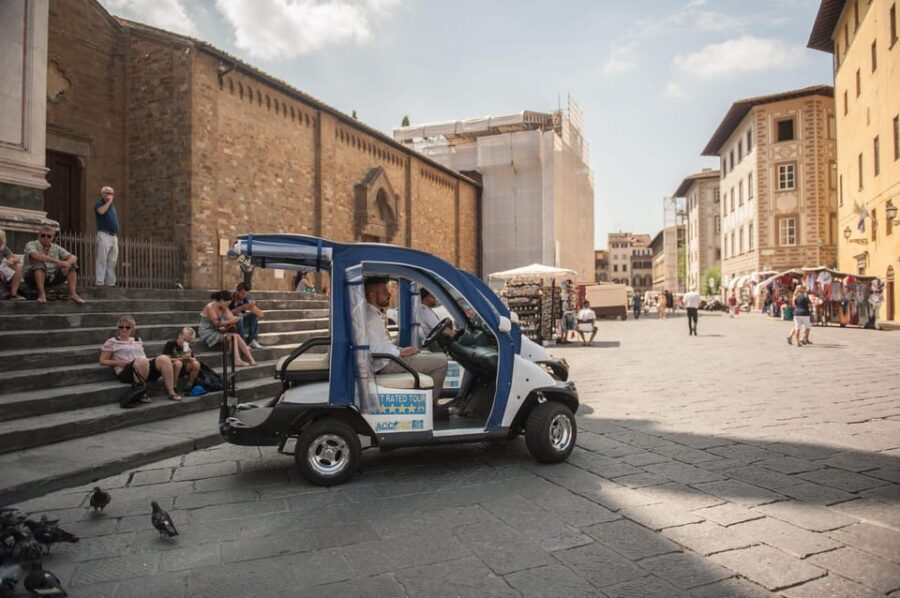
You’ll typically board near the historical core (Piazza San Firenze is mentioned as the cart start point), and then head through key squares and thoroughfares that define the city. The driver steers you past major anchors like Piazza Signoria and landmarks on the way toward the Duomo zone and the Arno.
Price vs. What You’re Really Paying For
At $63.54 per person for 1 to 1.5 hours, you’re not paying for skip-the-line museum access. You’re paying for three things:
1) Transport in the city center
Florence’s historical streets can be tough for large vehicles. The smaller electric carts can get you closer to the areas that matter.
2) Guided interpretation (audio + driver)
An MP3-style commentary is provided, with multilanguage audio options (English, Italian, Spanish, German, French, Portuguese, Russian). Even if you only catch parts while moving, it helps you place what you’re seeing.
3) A curated route that hits “most important” in minimal time
This is the value piece. In about an hour or so, you can see the geographic arc from Medici sites to the Duomo area, then across bridges over the Arno, and onward to other Medici-linked stops.
If you’re the type who likes to build a short list—churches to return to, viewpoints to plan, neighborhoods to explore later—this is a cost-effective starter. If you’re hoping for deep, inside-the-building visits to all the famous sites, you’ll want to pair it with separate tickets afterward.
You can also read our reviews of more tours and experiences in Florence.
- Tuscany Day Trip from Florence: Siena, San Gimignano, Pisa and Lunch at a Winery
★ 5.0 · 21,634 reviews
How the Electric Cart Experience Works in Real Life
This tour is designed for comfort with constraints.
- The cart is electric and quiet, which makes the ride feel relaxed rather than jostly.
- You’ll spend time riding between stops, with commentary during the drive.
- Some areas in the historic center are off-limits to the cart, so you’ll need to get off and walk to see certain attractions.
That “get off and walk briefly” part is important. The tour is still far easier than a full walking day, but it isn’t a pure sit-and-glide experience.
Also note the weather rule: it runs rain, hail, or shine. If you book, plan to dress for sudden change. Florence can flip conditions quickly, especially in shoulder seasons.
The Stop Pattern: Brief Visits That Still Mean Something
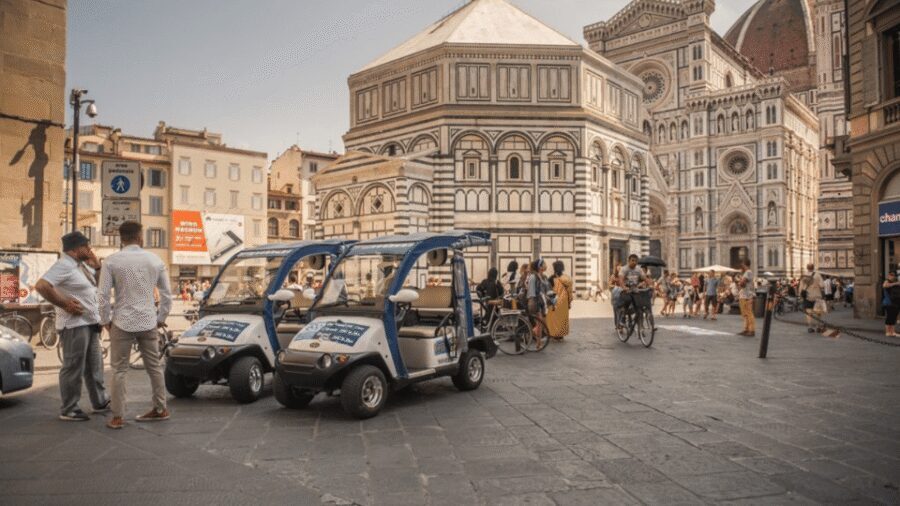
The itinerary uses short stops—often around 10 minutes per location—so you’re not stuck waiting, and you’re not forced to rush through everything alone. You’ll treat each stop like a quick “chapter,” then connect the chapters later.
One detail I appreciate: the route isn’t only churches. It also builds in squares, bridges, and river viewpoints, so you understand how Florence’s art and politics played out in public space.
In practice, I’d use those short stops like this:
- Look first: facade details, dome angles, the way the square is framed.
- Then listen: let the audio give you the story behind what your eyes are catching.
- Take photos quickly, but don’t obsess—this tour is about orientation, not a one-and-done photo shoot.
Medici Chapel: Power at the Start
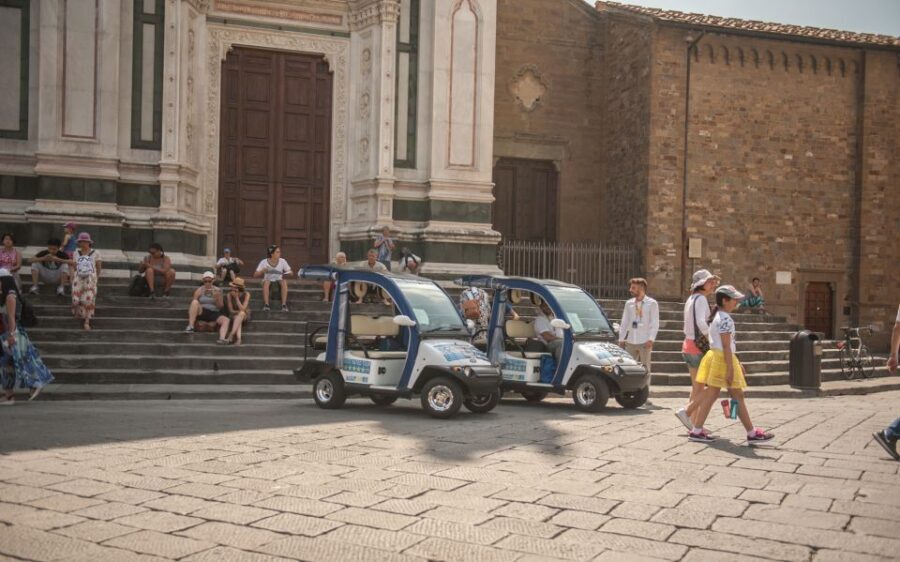
You’ll begin with the Medici Chapel, where the focus is Florence’s most famous ruling family and the way religion, prestige, and art got braided together.
With only about 10 minutes here, you won’t get a full museum-style walkthrough. But you will get enough context to recognize the Medici influence when you later see other names in Florence’s church and palace network.
A quick tip: if a stop is inside (or partly inside) and lighting is dim, don’t fight your camera settings. Spend your time reading what you can and letting the audio do the heavy explaining.
Santa Maria Novella and Ognissanti: Two Church Stops, Different Flavors
Next comes Santa Maria Novella. This is a major stop for the Duomo-and-beyond crowd because it reinforces how Florence’s Renaissance look isn’t only one building—it’s a whole language of facades, domes, and sacred architecture.
Then you reach Chiesa di Ognissanti, tied to the stop near Piazza Ognissanti. The route logic is good here: you’re moving from the core church zone toward the Arno corridor, so the city feels like it’s flowing rather than jumping.
Again, expect the short-visit format. These are great moments to decide: Will you come back here for a deeper look, or are you better off using this time to cover more territory?
- Tuscany Day Trip from Florence: Siena, San Gimignano, Pisa and Lunch at a Winery
★ 5.0 · 21,634 reviews

Ponte Santa Trinita and the Arno Walk-Like Timing
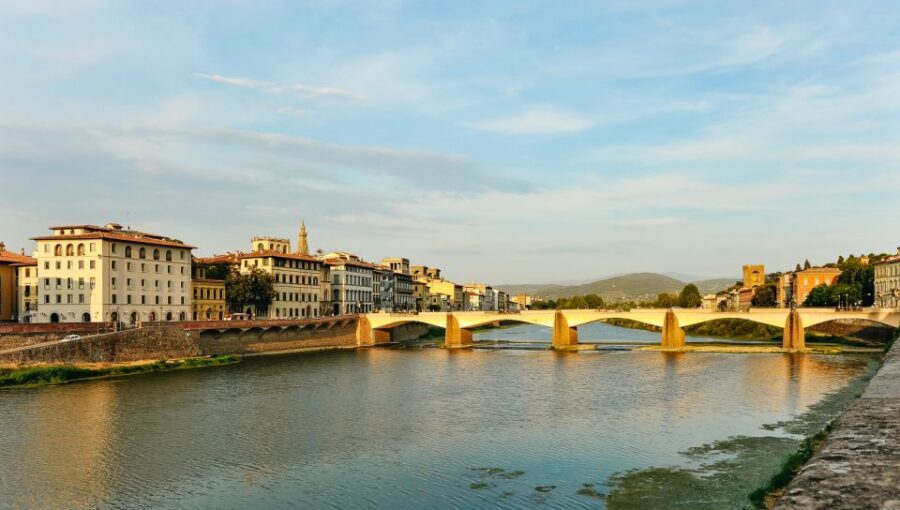
Crossing in Florence often feels like the city’s secret feature. You can’t fully understand the layout until you’ve felt the bridges connect neighborhoods.
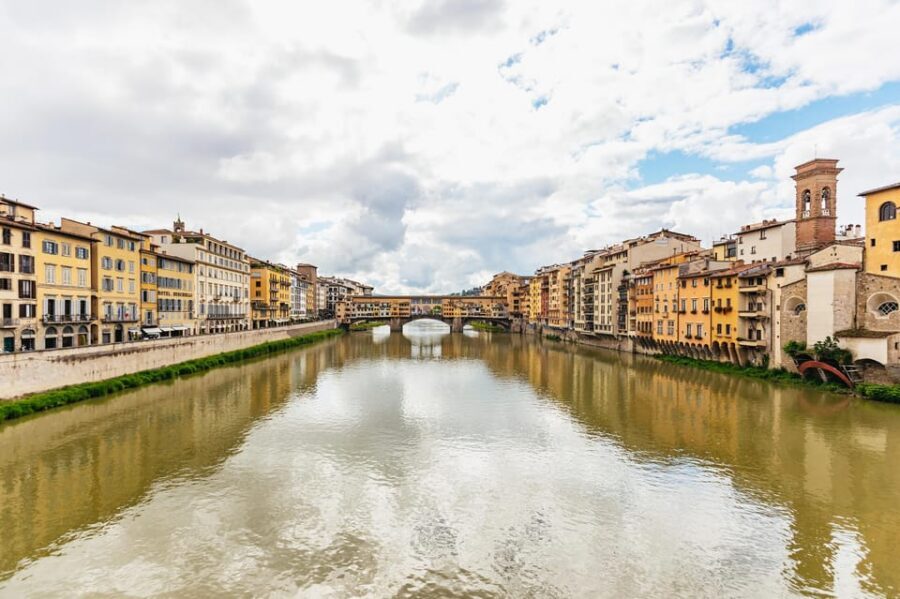
You’ll stop at Ponte Santa Trinita for a brief visit, then you ride along the banks of the River Arno to the area of Piazza Ognissanti. The cart makes this easier because you’re not fighting long distances while trying to take in the skyline reflected in the river.
This part is also why the tour works as a first-day option. After you’ve seen the Arno line and the bridge rhythm, deciding where to stay or where to return for sunset becomes way simpler.
Piazza Santo Spirito and Pitti Palace: The City Beyond the Postcard Core
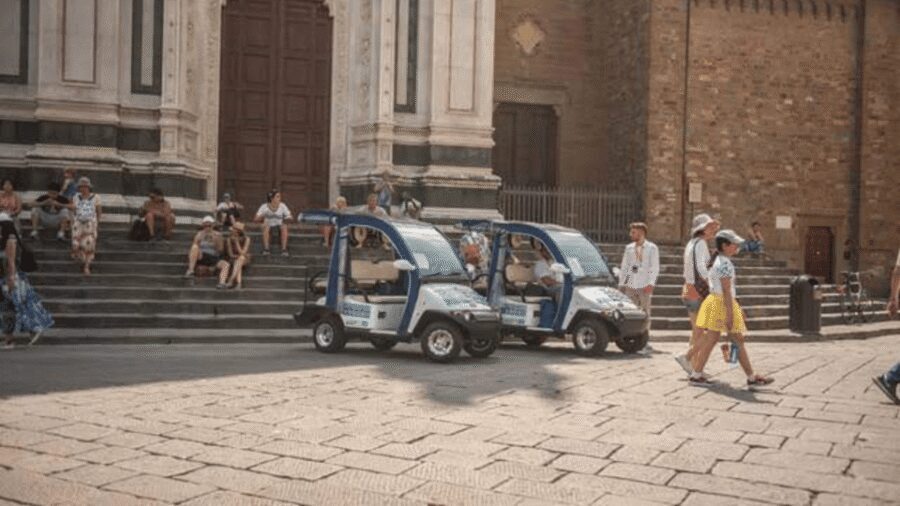
From the Duomo-and-bridge zone, you roll toward Piazza Santo Spirito and then Pitti Palace.
Piazza Santo Spirito is a useful stop because it changes the vibe. You move from the tightly packed must-see center into a more lived-in square atmosphere.
Then you hit Pitti Palace for about 10 minutes. This matters because Pitti isn’t just another facade—it’s a key anchor for understanding how elite power shaped Florence’s art world.
In a few guided moments I’ve seen referenced with this tour, drivers like Claudio or Simon often add extra color on the Medici network, which helps you feel less like you’re just collecting stops and more like you’re following the storyline.
Ponte Vecchio: The Bridge That Always Wins
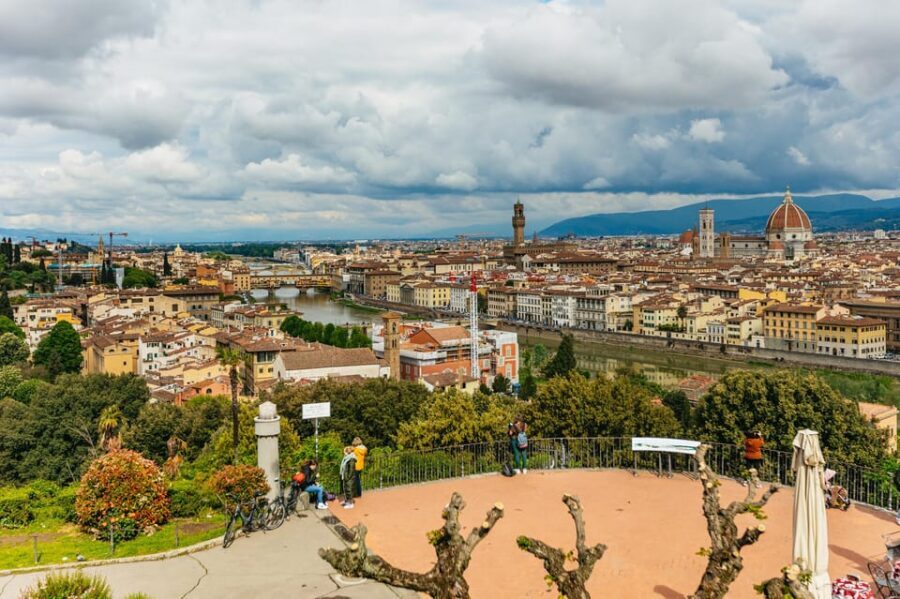
No Florence orientation tour feels complete without Ponte Vecchio. Here you get a quick stop, and it works because the bridge is so visually specific: the layered architecture, the river setting, and the way the space compresses people into a single flow.
You’ll also get closer views than you’d likely manage with only walking after a long day. Even with just a short window, it’s enough to decide whether you want a longer visit later (especially around golden hour).
Vasari Corridor Photo Stop: A Clever “How It Connects” Moment
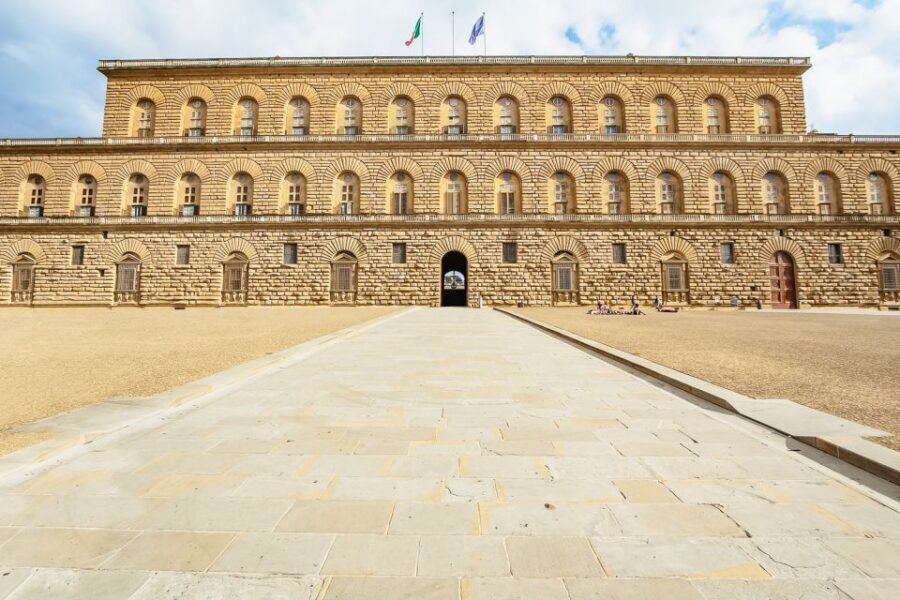
One of the more intriguing stops on this cart route is the Vasari Corridor photo stop.
The Vasari Corridor is famous for its function—an elevated passage connecting Pitti Palace to Uffizi Gallery—and this is a practical way to grasp the concept. You’re not expected to tour the corridor itself; instead, you get the chance to take photos and connect the dots about how Florence’s elite moved between power centers.
I like this because it’s the kind of detail you’d miss on your own until you’re already deep into planning. Even a brief photo stop can turn into a mental map you reuse for the rest of your trip.
Basilica of Santa Croce Area and Medici-Linked Stops
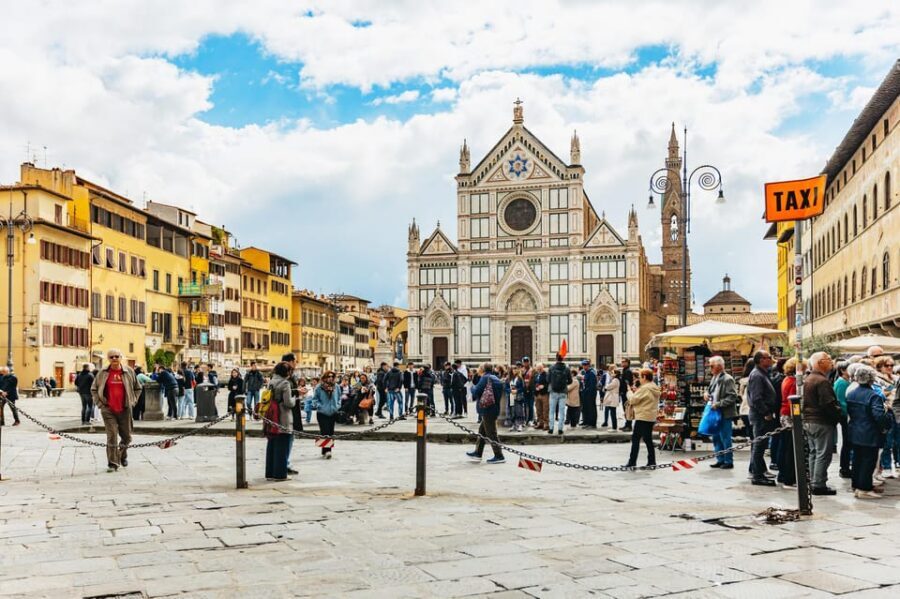
Toward the later part of the route, you’ll get Basilica of Santa Croce for about 10 minutes, plus other Medici-linked stops such as Palazzo Medici Riccardi and Basilica of San Lorenzo.
Santa Croce is especially useful because it’s a square-and-church anchor that feels like it belongs to the “whole city” perspective, not just the most famous dome-and-bridge lineup.
There’s also a detail worth knowing: the route description mentions Biblioteca Nazionale Centrale on Piazza Santa Croce, described as the largest library in Italy. Even if you’re not going inside, the area placement helps you understand why this part of town carries cultural weight beyond its churches.
For Palazzo Medici Riccardi and San Lorenzo, the value is context. These stops reinforce the Medici presence as more than a name in textbooks—you start recognizing the pattern of where influence shows up in Florence’s architecture.
Guide Styles: What You Might Get From the Human Touch
This tour may include a guide (depending on the option you pick), but you’ll always have the driver and audio.
In the past, I’ve heard from people about guides and drivers by name—Jasmine, Laura, Norberto, Claudio, and Simon—and the common theme is that they make the route feel like more than a checklist. People specifically highlight being given time for photos and getting explanations you can actually follow while riding.
There can be occasional practical hiccups, like audio volume or battery timing, since you rely on an audio device while moving. If that happens, it’s not the end of the world—just compensate by focusing your eyes on the landmark facades while the cart is in motion.
Meeting Points That Can Confuse First-Time Florence Visitors
Meeting points can vary. Some starting options use landmarks like Tutto 99 Cent and ACCORD Italy Smart Tours & Experiences.
If the directions feel vague on the day, I’d use the simplest strategy: look for your driver/host near the named store in the piazza listed for your start. One helpful clue mentioned is that you should expect to meet your guide beside the 99 Cent store at that specific piazza, rather than tracking across the city for an office.
Once you’re aboard, the tour itself usually clicks quickly. The cart route is the easy part; it’s the “find the cart” moment that takes your attention.
What’s Not Included (And Why It Matters for Your Planning)
No entry tickets are included for the sites you see. That means:
- You’ll be able to see and get context, but you may not be going deep inside each stop.
- If you want the interior highlights—major church spaces, museum collections, or rooftop views—you’ll likely need separate tickets.
This is why I think this tour is best early in your trip. Use it to decide where your paid time should go next.
Also, you can’t bring luggage or large bags. Pack light for the cart size limits.
Who Should Book This Cart Excursion?
This tour fits best if you:
- want a first-day orientation to understand Florence’s layout fast
- have limited time and want to see a lot without walking the whole time
- want a gentle introduction to the Renaissance storyline without committing to multiple ticketed museum hours
It’s also smart for anyone who likes to return later with a plan. After this, you can pick the neighborhoods, churches, or viewpoints that truly grabbed you.
It may not fit well if you:
- need a fully no-walking experience (you’ll get off the cart for parts of the route)
- are pregnant (not suitable is stated)
- travel with bulky luggage (not allowed)
Should You Book It? My Verdict
I’d book this if you want a high-value orientation with minimal fatigue. The cart makes the route realistic: you see the Duomo area landmarks, cross key bridges, ride along the Arno, and connect the Medici-to-art story across major stops like Pitti Palace, Ponte Vecchio, and the Vasari Corridor photo point.
I wouldn’t book it alone if your priority is deep museum time. Treat it like the opening act. It’s the kind of experience that helps you choose what to do on day two, three, and four.
If you’re worried about logistics or walking, the good news is the stops are short and the ride is easy. Just dress for rain and be ready for brief on-foot moments.
FAQ
How long is the Florence Old Town Golf Cart Excursion?
It runs for about 1 to 1.5 hours, depending on the starting time you choose.
What major sights will I see during the tour?
You’ll pass and/or stop near major Florence landmarks such as Piazza Signoria and the Porcellino Market area, the Duomo area (including Santa Maria Novella), the River Arno along the way, Ponte Santa Trinita, Piazza Santo Spirito, Pitti Palace, Ponte Vecchio, a Vasari Corridor photo stop, and stops that include Basilica of Santa Croce, Palazzo Medici Riccardi, and Basilica of San Lorenzo.
Is entry to the sites included?
No. Entry to the sites mentioned is not included, so you’ll mainly be viewing the areas during short visits.
Will I need to walk?
Yes. Golf carts can’t travel through some parts of Florence’s historical center, so you’ll get off the cart and walk briefly to see some attractions.
Are luggage or large bags allowed?
No. Luggage or large bags are not allowed.
What languages are available for the audio guide?
The audio guide is available in English, Italian, Spanish, German, French, Portuguese, and Russian. The driver is listed as English and Italian.
You Might Also Enjoy

More Tours in Florence
- The Best tour in Florence: Renaissance & Medici Tales – guided by a STORYTELLER
★ 5.0 · 12,316 reviews

More Tour Reviews in Florence
- Tuscany Day Trip from Florence: Siena, San Gimignano, Pisa and Lunch at a Winery
★ 5.0 · 21,634 reviews - The Best tour in Florence: Renaissance & Medici Tales – guided by a STORYTELLER
★ 5.0 · 12,316 reviews