REVIEW · FLORENCE
Small Group Medici and Michelangelo Tour in Florence
Book on Viator →Operated by La Bussola Tours · Bookable on Viator
Florence gets personal on this Medici-Michelangelo route. This small-group tour takes you into church interiors and side streets most people miss, then balances it with big-photo moments like Ponte Vecchio. The guide stitches everything into one clear story, so the city feels less like a checklist and more like a timeline.
I love the storytelling that connects Medici power to Michelangelo’s early start, because it makes the art and locations easier to place. I also like the relaxed pace for a tour this central, with photo stops where the guide plays photographer instead of rushing you through.
One possible consideration: not every stop is fully free. You may pay a chapel entrance fee (cash only), and the coffee break is not included in the tour price.
In This Review
- Key things to know before you go
- Why this Medici and Michelangelo walk feels different
- Pace, timing, and what the 2.5 hours covers
- Starting at Piazza degli Strozzi: getting oriented fast
- Santa Trinita: fresco storytelling inside the basilica
- Ferragamo today vs 600 years ago: a quick history comparison
- Ponte Vecchio: crossing with a historic script and photo stops
- Santa Felicita: where Cosimo Medici and his wife sat
- Casa di Niccolò Machiavelli: the ceramic shop on his old spot
- The specialty coffee break at Ditta Artigianale Via dello Sprone
- Pitti Palace from the outside: Medici scale without the ticket line
- Santo Spirito: Michelangelo’s early start in Basilica di Santo Spirito
- Piazza Santo Spirito: how to end well with real food options
- Value check: is € or dollars-per-minute a fair deal?
- Who this tour is best for (and who should pass)
- Book it or skip it? My straight answer
- FAQ
- How long is the Medici and Michelangelo small group tour?
- Where does the tour start and end?
- Is the tour offered in English?
- How large is the group?
- Is there a coffee break during the tour?
- Are the museum and church visits included in the price?
- Does the tour use mobile tickets?
- What is the cancellation policy?
- Is the tour accessible for most people?
Key things to know before you go
- Max 10 people means you can ask questions and actually hear the guide.
- Church interiors included give context you won’t get from looking at façades only.
- Ponte Vecchio photo time is built in, with the guide helping you get good shots.
- Coffee break costs extra at Ditta Artigianale Via dello Sprone.
- A small cash payment may come up for the chapel entrance (€2 per person, cash only).
- Mobile ticket and a clear end point at Piazza Santo Spirito make it easy to fit into your day.
Why this Medici and Michelangelo walk feels different
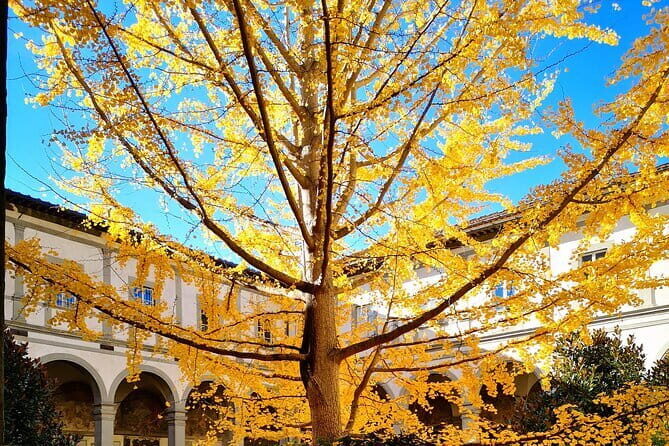
Most Florence tours spend their energy on big-name views and quick photo stops. This one does the opposite: it uses small, specific places—especially churches and exact seating locations—to explain how power, art, and ambition moved through Florence.
What makes it work is the way the route is organized. You’re not just walking from landmark to landmark. You’re moving through a story: the Medici family’s reach, the politics around worship and patronage, and then the early spark that helps lead toward Michelangelo. If you like Florence when it’s explained like a real place with real people, you’ll enjoy the rhythm.
The guide factor matters too. In past groups, guides such as Adria and Aida earned praise for fun, engaging delivery and strong artistic perspective. That combination—history plus art insight—keeps the tour from turning into a lecture.
You can also read our reviews of more tours and experiences in Florence.
- Tuscany Day Trip from Florence: Siena, San Gimignano, Pisa and Lunch at a Winery
★ 5.0 · 21,634 reviews
Pace, timing, and what the 2.5 hours covers
The tour runs about 2 hours 30 minutes, which is a sweet spot. Long enough to get inside several sites and still feel like a proper walk, short enough that you won’t dread it when your feet start talking back.
The route is mostly on foot and starts at Piazza degli Strozzi (near the restaurant Tamerò Pasta Bar) and ends at Piazza Santo Spirito. That matters, because it keeps you from zig-zagging across the center for the rest of your day.
Group size is capped at 10 travelers, so it stays manageable. You’ll also have WC and rest breaks built in, plus photo stops where the guide takes the lead so you’re not battling your camera while everyone behind you hovers.
Starting at Piazza degli Strozzi: getting oriented fast
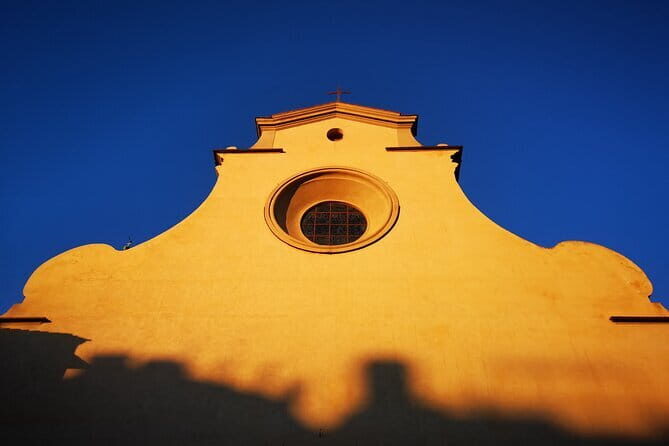
Meeting at Piazza degli Strozzi is smart. It’s central, easy to find, and you can use it as a springboard for your Florence day. If you’re arriving from a museum or a hotel, you’ll likely have an easier time getting there than with tours that start deeper inside crowded zones.
Also, this start point makes the tour feel like it’s peeling back layers. You begin in a lively area, then you slowly work your way into corners that feel more local and less staged. Even the first stop sets the tone: you’re not just looking at buildings, you’re learning who mattered and why.
Santa Trinita: fresco storytelling inside the basilica

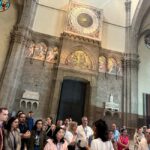
Stop 1 is Basilica di Santa Trinita, with an internal visit. The key detail here is that you’re guided through a reading tied to a fresco painting, and it introduces main characters in the tour’s story.
This is the kind of stop that pays off later. Once you understand who’s being represented and what the artwork is doing, later sights start clicking. You’ll also get a feel for how Florence worship and patronage overlap—religion wasn’t separate from politics and influence.
Time is about 20 minutes, and since it’s an interior, it usually feels efficient rather than rushed. It also helps you beat the midday crowds, depending on when you book.
Practical note: this is a church. Expect quiet behavior and follow the guide’s lead for where to stand and when to move.
Ferragamo today vs 600 years ago: a quick history comparison
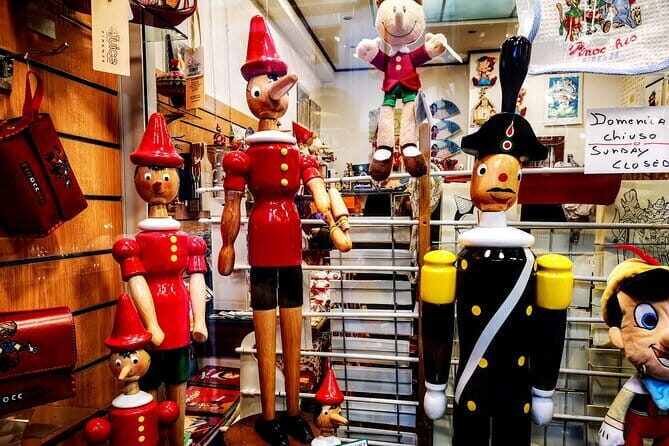
Next comes an outdoor stop at the Museo Salvatore Ferragamo area. You’ll compare the palace today with what it was like around 600 years ago.
That small time window—around 5 minutes—isn’t meant to be a full museum visit. It’s meant to train your eye. You’ll learn how buildings get repurposed, how wealth changes hands, and how the same spot can carry different meanings across centuries.
For me, this is one of those “small stops that actually matter,” because it teaches you to read Florence’s architecture as a living record, not a static postcard.
- Tuscany Day Trip from Florence: Siena, San Gimignano, Pisa and Lunch at a Winery
★ 5.0 · 21,634 reviews

Ponte Vecchio: crossing with a historic script and photo stops
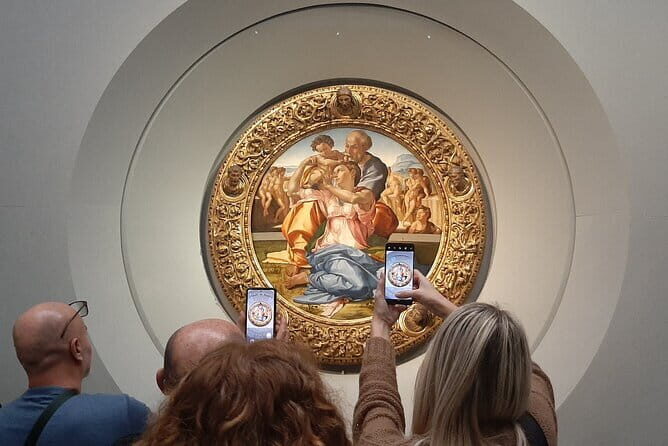
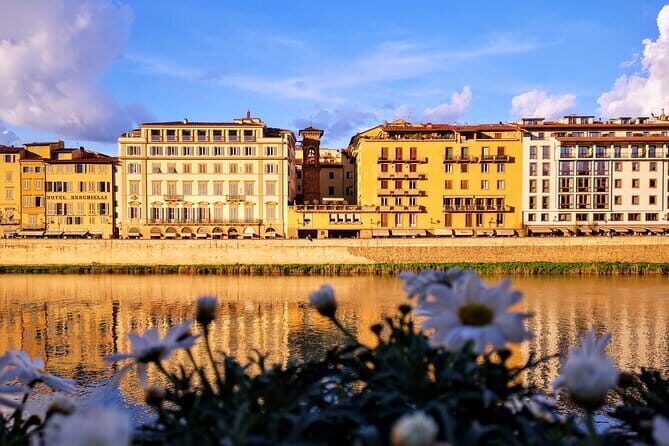
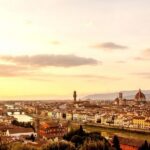
Then you head toward Ponte Vecchio and cross it. The tour includes a historic overview as you move along the bridge, plus a dedicated photo moment.
Time is around 15 minutes, which is usually enough to get both: the story and the photos. The guide also helps you frame shots during the stop, so you’re not stuck taking pictures one-handed while trying to hear explanations.
Ponte Vecchio is famous, but the value here is that you’re not treating it like a backdrop. You’re using the bridge as a way to talk about Florence’s continuity—how a place can remain central while the details around it shift.
Santa Felicita: where Cosimo Medici and his wife sat
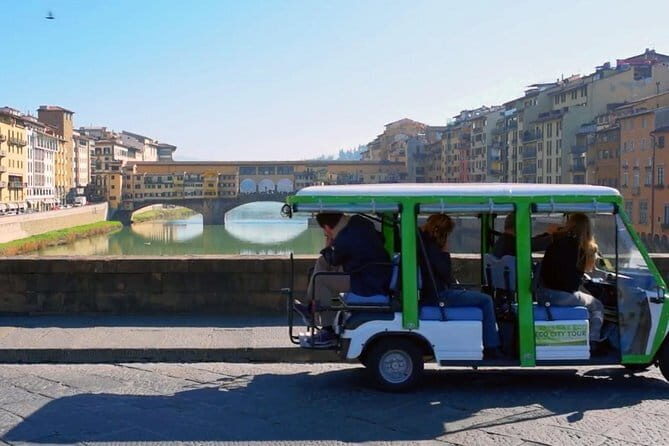
Stop 4 is Church of Santa Felicita, with an internal visit. Here’s the standout detail: you’ll see where Cosimo Medici and his wife used to sit while attending mass.
That one fact changes the whole experience. You stop thinking of the Medici as distant names and start imagining daily ritual tied to power. It’s not just “a powerful family funded art.” It’s “a powerful family had a visible seat in the life of the city.”
Time is short—about 5 minutes—but it’s a concentrated hit. When you only have a few minutes, it’s extra important that the guide focuses on the meaningful points, and that’s exactly what this stop seems designed to do.
Casa di Niccolò Machiavelli: the ceramic shop on his old spot
Next is Casa di Niccolò Machiavelli, but you won’t get a grand palace interior. Instead, you’ll visit a ceramic shop located where Machiavelli used to live.
That mix is why the stop works for modern visitors. You get the historical marker, but you also see the present-day city using the same space. It’s a reminder that Florence isn’t only museum-style. It still functions, shops still operate, and history sits inside normal routines.
The stop is about 5 minutes, so it’s best if you come ready to look for clues: small details, the feel of the space, and how the guide ties the location to the broader Medici-to-Michelangelo storyline.
The specialty coffee break at Ditta Artigianale Via dello Sprone
You’ll then pause for coffee at Ditta Artigianale Via dello Sprone. This lasts about 20 minutes, and it’s the one part of the tour that costs extra. Admission here is not included, so budget for your drink.
This break does two practical things. First, it gives your feet a reset. Second, it’s a chance to slow down and talk with the group while the guide isn’t moving you along.
Also, the tour frames the coffee as a global comparison point. Even if you keep it simple and order something you already like, it helps make the break feel intentional rather than tacked-on.
If you’re doing this early in your trip, use the coffee stop to ask where the guide suggests you go next. The tour includes local insights on museums and shopping, and the guide is in “answer mode” during this downtime.
Pitti Palace from the outside: Medici scale without the ticket line
After coffee, you’ll do an outdoor look at Pitti Palace, described as the biggest of the Medici palaces. You’ll walk past it and get context, but you’re not trying to do a full palace interior within this time block.
That’s a smart approach for a short tour. Palace interiors can eat hours. Here, you learn the “why it mattered” scale and importance without losing your whole afternoon to ticket lines and crowd flow.
The outdoor placement also helps you remember what you already saw. By the time you reach Pitti Palace, the Medici story has had time to form in your head, so the palace isn’t just a big wall. It’s the physical proof of ambition and influence.
Santo Spirito: Michelangelo’s early start in Basilica di Santo Spirito
The tour’s biggest art anchor is Basilica di Santo Spirito. You’ll have an internal visit of the church, and this is where the guide connects Michelangelo’s early life in Florence to the site, including seeing what’s described as his first work of art.
Time for this stop is about 25 minutes, making it the longest interior segment after Santa Trinita. Admission for this part is not included, which is why it’s important to factor in possible extra costs.
There’s also a chapel entrance fee noted as €2 per person, cash only. If you want zero surprises, bring a few euros in small bills just in case the guide asks for it during the stop.
This is the kind of moment that rewards patience. When a guide has a clear story and a real sense of art context, you don’t just “see a church.” You understand what you’re looking at and why it mattered for Michelangelo’s path.
Piazza Santo Spirito: how to end well with real food options
To finish, the tour lands at Piazza Santo Spirito. You’ll get about 10 minutes there, and the tour points you toward a selection of authentic Florentine restaurants.
This ending is practical. You’re not left stranded back at the start or dropped in the middle of nowhere. You finish in a square where it’s natural to keep your day going—especially if you want to eat near where the tour ends instead of hopping across town.
If you’re deciding between staying for dinner or continuing sightseeing, this is a good pivot point. The story ends, then your stomach gets the final word.
Value check: is € or dollars-per-minute a fair deal?
The price is $67.28 per person, and for Florence, that’s not a random number—it fits a small-group, English-led, multi-stop route with several interior visits and guided photo help.
Here’s where the value really comes from:
- Small group (max 10) reduces the “herding cats” factor and makes the guide’s explanations audible.
- Multiple interiors (Santa Trinita, Santa Felicita, Santo Spirito) add real depth compared with exterior-only walks.
- Photo stops with the guide as photographer saves time and improves your results.
- WC and rest breaks make a 2.5-hour walk actually comfortable.
The trade-offs are also clear. The coffee break costs extra, and you may need a cash payment for the chapel entrance. Still, most core sites are described as free, so you’re not getting hit with constant ticket fees.
If you’re comparing options, this is best for people who want context and story. If you just want to check off famous places with quick photos, you might feel it’s slower than a self-guided route.
Who this tour is best for (and who should pass)
This tour fits you best if:
- You like history tied to art, not just dates.
- You enjoy walking on foot and noticing details.
- You want Florence explained in a way that helps you connect Medici influence to Michelangelo’s beginning.
It’s also a good choice if you’ve visited Florence before and want a different angle. The route aims for a side of Florence that’s usually more local, and it avoids staying stuck only on the most obvious sightseeing loop.
You might pass if:
- You want a fully free, no-extra-fees experience.
- You’re the type who prefers fast exterior photo stops over church interiors and storytelling.
Book it or skip it? My straight answer
I’d book this tour if you want Florence to make sense. The Medici-to-Michelangelo thread is clear, and the stops chosen give you a strong “cause and effect” feeling: power shows up in worship, worship shows up in places, and art shows up in the places that sheltered it.
I’d skip it if you’re mainly chasing famous scenery with minimal guided context, or if you hate the idea of a possible €2 cash-only chapel entrance fee and a paid coffee stop.
If your goal is understanding—more than just seeing—this is one of those small-group walks that’s worth the slot.
FAQ
How long is the Medici and Michelangelo small group tour?
It runs for approximately 2 hours 30 minutes.
Where does the tour start and end?
The meeting point is Piazza degli Strozzi, next to the restaurant Tamerò Pasta Bar. The tour ends at Piazza Santo Spirito.
Is the tour offered in English?
Yes, it’s offered in English.
How large is the group?
The tour has a maximum of 10 travelers.
Is there a coffee break during the tour?
Yes. There is a coffee break at Ditta Artigianale Via dello Sprone, and admission for the coffee is not included.
Are the museum and church visits included in the price?
Many stops are listed as free, but some internal visits have admission not included. A chapel entrance fee of €2 per person is cash only.
Does the tour use mobile tickets?
Yes, mobile tickets are provided.
What is the cancellation policy?
Free cancellation is available up to 24 hours in advance for a full refund.
Is the tour accessible for most people?
The tour description says most people can participate.
You Might Also Enjoy
More Tours in Florence
- The Best tour in Florence: Renaissance & Medici Tales – guided by a STORYTELLER
★ 5.0 · 12,316 reviews
More Tour Reviews in Florence
- Tuscany Day Trip from Florence: Siena, San Gimignano, Pisa and Lunch at a Winery
★ 5.0 · 21,634 reviews - The Best tour in Florence: Renaissance & Medici Tales – guided by a STORYTELLER
★ 5.0 · 12,316 reviews