REVIEW · FLORENCE
Florence City Tour & David
Book on Viator →Operated by Tuscan Tour Guide - Tours · Bookable on Viator
Florence rewards the early start. This small-group tour links Michelangelo’s David with Medici rule and ends at the Ponte Vecchio with real stories behind why these places mattered.
I especially like the tight focus on the Renaissance and the Medici family, not just a checklist of stops. I also like the small group size, plus skip-the-line entry for the most in-demand site.
One thing to keep in mind: this is a 3-hour, see-and-learn walk, so if you want long museum time or unhurried wandering, you may feel slightly rushed.
In This Review
- Key things to know
- Skip-the-line David at Galleria dell’Accademia (and why timing matters)
- David’s room context: seeing art through Renaissance eyes
- Palazzo Medici Riccardi courtyard: the Renaissance built with politics
- Duomo dome and the Baptistery: Florence’s spiritual engineering in the 1300s–1400s
- Piazza della Signoria: Michelangelo’s David’s original placement
- Vasari’s corridor: crossing Florence without going outside
- Ponte Vecchio: the bridge that survived 1333 to today
- Price and value: $464.43 for a focused, ticketed small-group route
- Who this Florence City Tour & David fits best
- Practical tips before you go
- Should you book this tour?
- FAQ
- How long is the Florence City Tour & David?
- Where does the tour start and end?
- What time does the tour begin?
- How many people are in the group?
- Is skip-the-line admission included?
- Is there a mobile ticket?
- Is confirmation guaranteed right away?
- What happens if I cancel?
- Who can participate?
Key things to know
- Skip-the-line entry to the Galleria dell’Accademia so you can spend time looking instead of waiting
- A small group (max 12), which makes questions and pacing feel human
- Medici power meets art and architecture at the Palazzo Medici Riccardi courtyard
- Duomo dome + Baptistery basics in one arc, with the famous Doors of Paradise in the mix
- Piazza della Signoria to Ponte Vecchio ties Renaissance art and even WWII survival to the same route
Skip-the-line David at Galleria dell’Accademia (and why timing matters)
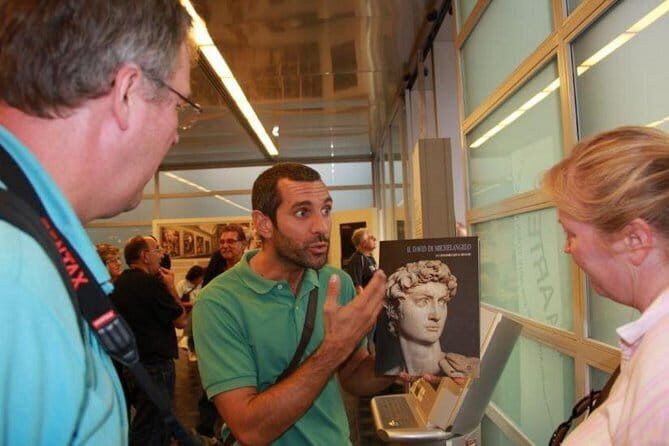
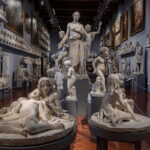
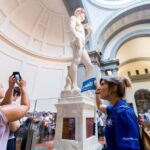
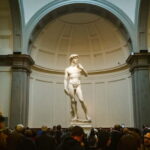
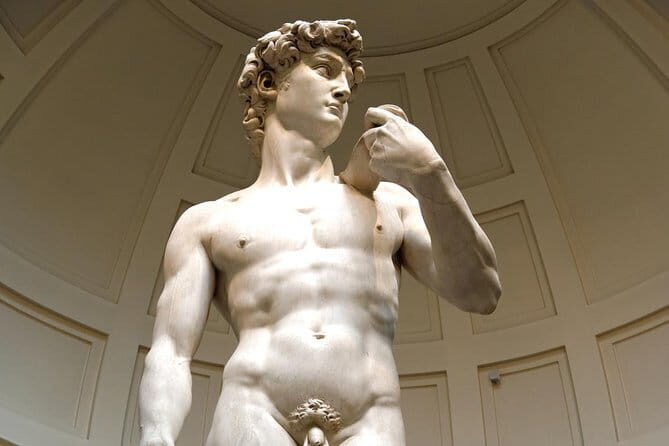
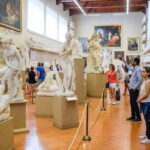
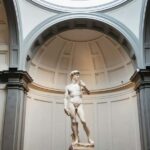
You begin at Via Ricasoli, 58 in Florence, with a start time of 9:10 am, and you start strong. The first stop is the Galleria dell’Accademia, where the statue of David usually pulls a crowd the size of a small parade. The practical win here is the skip-the-line admission, which protects your time for looking closely rather than standing around.
In about 1 hour, you’re not only seeing David. You’re also learning how the statue and the nearby artworks were interpreted by the public when they were new—over 500 years ago. That historical framing matters. David can feel like a famous object you already know, until someone explains how viewers then would have read it in their own moment: the power, the ideals, and the message wrapped up in art.
A big bonus: because the group stays small, your guide can keep the pace lively and answer the kinds of questions that usually pop up only once you’re standing in front of the real thing. If the guide style is anything like the teacher-and-storytelling approach that gets praised for Florence tours, you’ll find it easier to focus instead of getting overwhelmed.
You can also read our reviews of more city tours in Florence
David’s room context: seeing art through Renaissance eyes
The Galleria isn’t just a photo stop. The tour approach gives you context so the museum feels like a living story instead of a warehouse of masterpieces.
You’ll spend time with David, then also with how the surrounding works were understood in their original setting. That means you’re not just memorizing names; you’re learning how people responded—what they thought, what they valued, and why certain artistic choices landed the way they did.
This is one of the best ways to get value from a short visit. Florence is big on art, but it’s also big on meaning. A guide who connects the visual details to the period helps you walk away with more than good pictures. You’ll be able to look at the sculpture and think, I know what it was meant to communicate.
Palazzo Medici Riccardi courtyard: the Renaissance built with politics
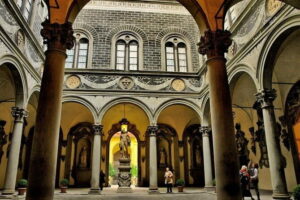
After the museum, the tour shifts from national-level fame to one of Florence’s most targeted forms of power: the Medici. Next is Palazzo Medici Riccardi, where you visit the inner courtyard of the richest family in Florence.
You only spend about 15 minutes here, but it’s set up to be memorable. The courtyard is where you can see Roman, Greek, and Renaissance architecture and art collide. The tour’s framing is playful but sharp: it’s for one big reason—the Medici’s ego. In other words, this isn’t just style for style’s sake. It’s status, branding, and dominance made visible in stone.
The short time slot can be a drawback if you love architectural details and want to linger. Still, the courtyard visit works well in this overall route because it gives you a clear theme: the Renaissance wasn’t only about beauty. It was also about control, influence, and display.
Duomo dome and the Baptistery: Florence’s spiritual engineering in the 1300s–1400s
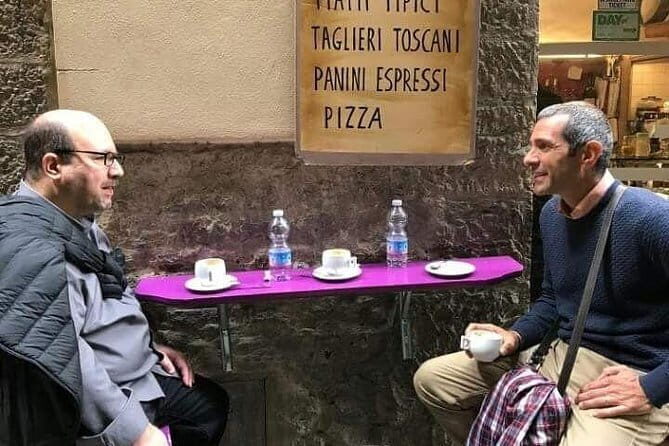
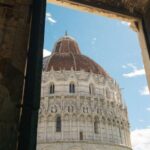
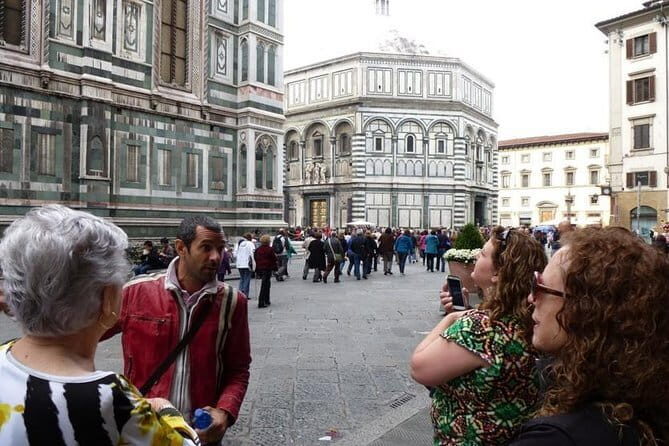
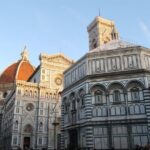
The tour then walks into a key stretch of Florence’s religious heart. You’ll learn about the largest church and dome in the world as it was built in Florence during the 1300s and 1400s. That’s your signal that the dome isn’t treated like a background landmark. It’s explained as a project with ambition, technique, and civic pride behind it.
Next comes the Baptistery, described as the most important building for Florentine Christians. Here you’re guided through what it meant and why it mattered in daily religious life.
You’ll cover:
- Who was baptized there
- Why baptism changed in the 1300s
- The shape of the building and why it matters
- The Doors of Paradise, treated as a major focal point
That mix—faith, policy change, design, and sculpture—makes the area feel more personal. Instead of just seeing the architecture, you understand what people believed and why the building was built to express it.
One consideration: the tour gives you learning time, not a long, sit-down religious visit. If you want to go inside for extended viewing, plan some extra time before or after your guided session.
Piazza della Signoria: Michelangelo’s David’s original placement
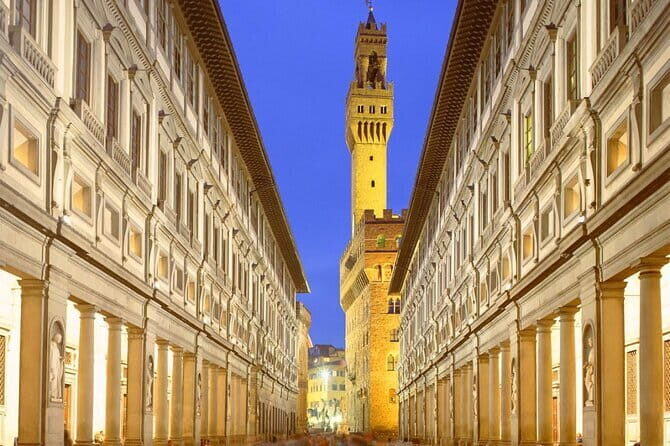
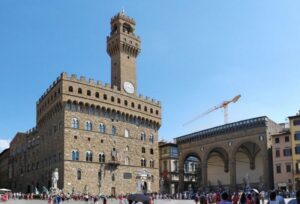
Now you step into the outdoor gallery where Renaissance art and civic life overlap: Piazza della Signoria. This is where the tour connects David with Florence’s public space history.
You’ll see where the original David was placed by Michelangelo. That detail is more than trivia—it changes how you think about the statue. David wasn’t only meant for a museum. It was placed in the city’s political and cultural center, where it could speak to citizens in a very public way.
The plaza also connects to Medici influence through the statues that were added over time. And the anchor building here is Palazzo Vecchio, which has been part of the city since 1299 and still functions as a political building today (City Hall). The tour also points out that it works as a museum, which helps you understand why this spot has always been both symbolic and practical.
You’ll spend about 15 minutes in the area, which is enough time to get oriented and grasp the big picture, but not enough time to read every statue like a textbook. The goal is momentum: you learn enough here to enjoy what you see next.
- Tuscany Day Trip from Florence: Siena, San Gimignano, Pisa and Lunch at a Winery
★ 5.0 · 21,634 reviews

Vasari’s corridor: crossing Florence without going outside
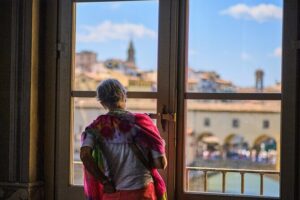
From the plaza, you get a fascinating bridge between power and engineering: the private hallway built by Vasari for Cosimo de’ Medici. The tour explains that it was built so Cosimo could walk across the city of Florence without going outside.
This is the kind of story that makes Renaissance Florence feel real. It reminds you that rulers didn’t only commission art. They also built systems—movement systems—so their lives and authority stayed protected, controlled, and separate from ordinary street-level chaos.
Even if you don’t spend long here, it’s a strong thematic stop. It ties together the Medici story you’ve already started with at Palazzo Medici Riccardi and the civic stage of Piazza della Signoria.
Ponte Vecchio: the bridge that survived 1333 to today
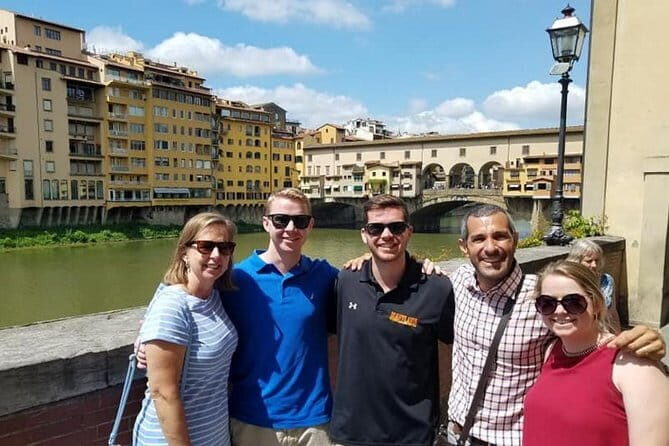
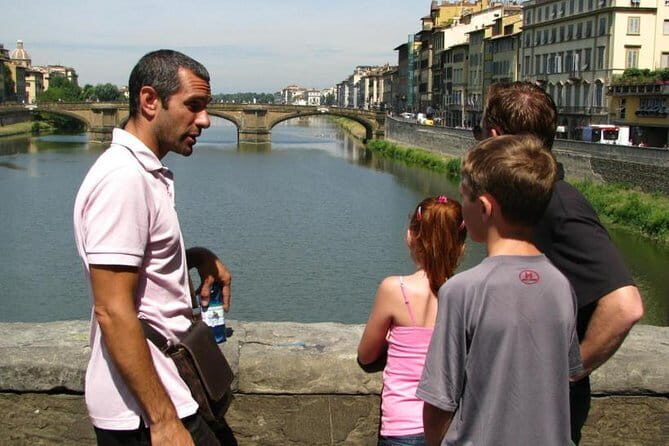
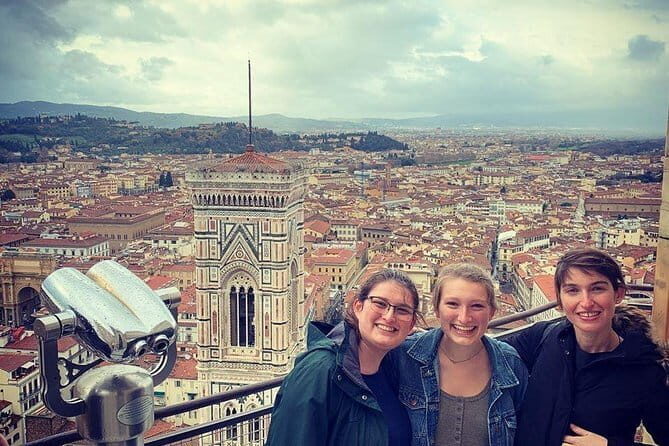
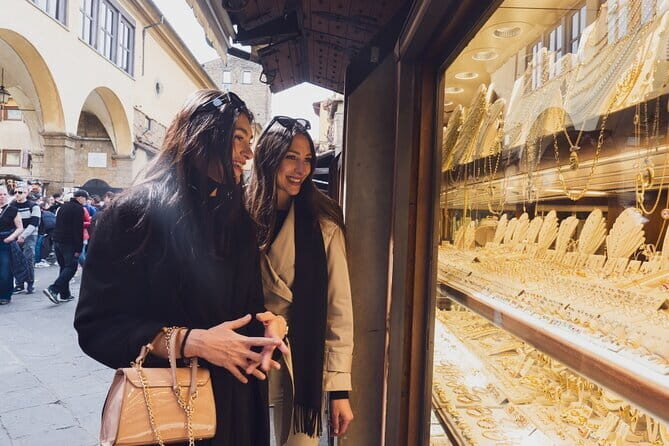
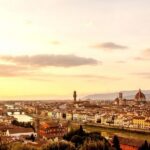
The final stop is Ponte Vecchio, ending the tour near the most famous bridge in Florence. You’ll spend about 10 minutes, and that’s plenty time to understand why this bridge has lasted so long.
The tour focuses on why Ponte Vecchio stood the test of time from 1333 to today, and then it adds the most human part: its WWII history. You’ll hear how Renaissance art and how the Axis and Allies (in the broader wartime context) helped the bridge survive.
That kind of story does something important. It turns a postcard bridge into a landmark with consequences. Bridges don’t just exist; they survive because people decide they should—whether for culture, strategy, or pure preservation instincts.
Price and value: $464.43 for a focused, ticketed small-group route
At $464.43 per person, this tour isn’t the cheapest way to see Florence. But it’s not a random splurge either. The value comes from three things you actually feel on the ground:
- Small group size (max 12)
With fewer people, the guide can keep explanations clear and interactive, which is especially helpful for art and symbolism.
- Skip-the-line admission at the Galleria dell’Accademia
That one included ticket is a major time-saver. More time looking means you get more out of the David experience, and you’re less at the mercy of crowd surges.
- A tight thematic route
You’re walking a sequence that builds one idea: Renaissance art connected to Medici power, then civic life, then the bridge’s survival story. You’re not spending the day bouncing between unrelated stops.
You do need to match your expectations to the format. This tour is about guidance and context over long stays. If your priority is slow museum time, you might want to add free time on your own after the tour. If your priority is a smart overview with meaningful storytelling, the price starts to make sense.
Who this Florence City Tour & David fits best
This works especially well if you:
- Want a Renaissance-and-Medici-focused Florence walk without spending hours figuring out connections yourself
- Like seeing the big name art (David) with context that explains how it was understood when it was new
- Are traveling with a mixed group, because the pace and storytelling approach are built to keep attention moving
- Prefer a smaller group over a large bus-style tour
It may be less ideal if you:
- Plan to spend most of your day reading every plaque and going in-depth at only one museum
- Have zero interest in the Medici political angle and would rather skip the historical framing
The best mindset is: go in ready to listen, then let the city’s symbols click into place as you walk.
Practical tips before you go
Here are a few things that will make your morning smoother:
- Arrive a bit early at Via Ricasoli. Starting on time helps you get the best value from that first Galleria dell’Accademia hour.
- Wear comfortable walking shoes. The route ends at Ponte Vecchio, and the tour format is designed for steady movement.
- If you like to take photos, do it with a plan. David and the key plaza moments are where your best shots happen—then focus on the explanation as you move.
- Bring water. You won’t be out for all day, but 3 hours still adds up with museum time.
Also, your ticket is a mobile ticket, which is a convenience you’ll appreciate in a city where paper tickets can get lost.
Should you book this tour?
If you want an efficient Florence experience that connects David, the Medici, major civic-religious landmarks, and Ponte Vecchio with a story that actually hangs together, I’d say yes. This tour is built for first-timers and short stays, and the guide approach—energetic, teacher-like, and able to keep attention—seems to be the biggest reason people feel it was worth doing.
I’d skip it only if your ideal day is long unbroken time in one museum or you’d rather wander with no historical thread.
FAQ
How long is the Florence City Tour & David?
It runs for approximately 3 hours.
Where does the tour start and end?
The tour starts at Via Ricasoli, 58, 50122 Firenze FI, Italy, and ends at Ponte Vecchio, 50125 Firenze FI, Italy.
What time does the tour begin?
The start time listed is 9:10 am.
How many people are in the group?
It’s a small-group experience with a maximum of 12 travelers.
Is skip-the-line admission included?
Yes. Skip-the-line admission to the Galleria dell’Accademia is included.
Is there a mobile ticket?
Yes, it uses a mobile ticket.
Is confirmation guaranteed right away?
Confirmation is received within 48 hours of booking, subject to availability.
What happens if I cancel?
This experience is non-refundable and cannot be changed for any reason. If it’s canceled due to not meeting the minimum number of travelers, you’ll be offered a different date/experience or a full refund.
Who can participate?
Most travelers can participate.
You Might Also Enjoy
More City Tours in Florence
More Tours in Florence
- The Best tour in Florence: Renaissance & Medici Tales – guided by a STORYTELLER
★ 5.0 · 12,316 reviews
More Tour Reviews in Florence
- Tuscany Day Trip from Florence: Siena, San Gimignano, Pisa and Lunch at a Winery
★ 5.0 · 21,634 reviews - The Best tour in Florence: Renaissance & Medici Tales – guided by a STORYTELLER
★ 5.0 · 12,316 reviews