REVIEW · FLORENCE
Accademia & Michelangelo’s David Private Tour
Book on GetYourGuide →Operated by Florence with Locals Group Tours · Bookable on GetYourGuide
David hits different in person. This private 1.5-hour visit to Florence’s Accademia Gallery puts you face-to-face with Michelangelo’s most famous work and the rooms that shaped Renaissance art.
I like that you get a true local expert guiding you through what matters in the collection, not just where to stand for photos. I also love the special add-ons inside the museum, like the world’s first piano and Stradivari violins—rare details that turn this from a one-statue stop into a full art lesson.
One heads-up: at 1.5 hours, it can feel short if you’re the type who likes to linger. Even with express security, you might still wait a few minutes because of metal-detector controls.
In This Review
- Key things I’d zero in on
- David in the Tribuna: your first real Florence wow
- Michelangelo up close: what to notice beyond the headline statue
- The Hall of Plaster Casts and the Music Room: learning how art training worked
- Lorenzo Monaco and Giotto upstairs: the Renaissance story keeps going
- Tour timing, skip-the-line security, and how to avoid stress
- Price and value: why $110 can make sense here
- Guide quality: the part you’ll feel immediately
- Who should book this Accademia tour
- Should you book? My practical take
- FAQ
- How long is the Accademia & Michelangelo’s David private tour?
- Is this tour private?
- Where do we meet the guide?
- What languages are the live tour guides?
- Is admission to the Accademia Gallery included?
- What is not included in the price?
- Do I need ID?
- Is skip-the-line entry guaranteed?
Key things I’d zero in on
- Michelangelo’s David in the Tribuna: you see it exactly where it’s meant to command your attention
- More than David: Prisoners, St. Matthew, La Pietà, and other major sculptures
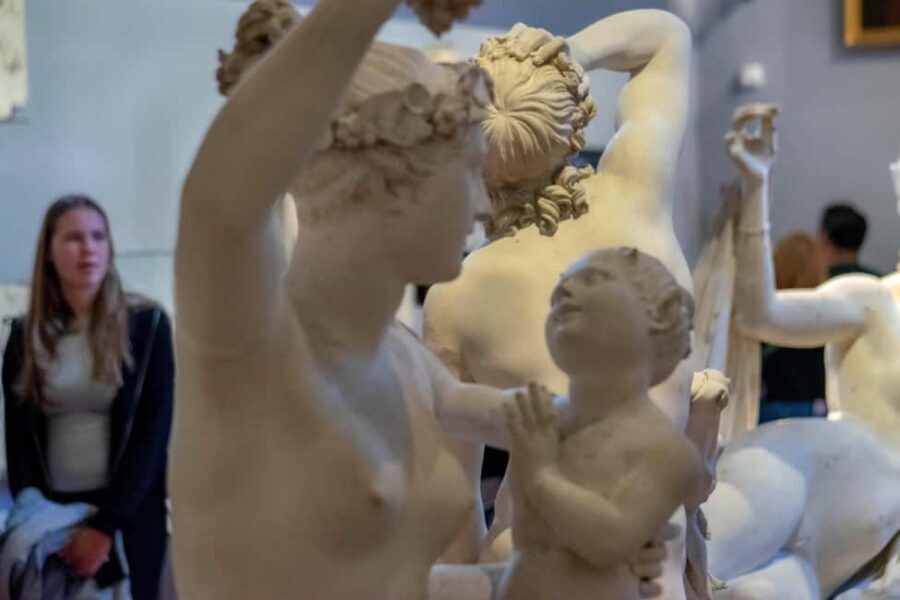
- The Hall of Plaster Casts: 18th-century study pieces that explain how artists learned
- Music Instruments Collection: three Stradivari violins and the world’s first piano
- Lorenzo Monaco details: gold leaf and lapis lazuli in medieval-style masterpieces
- Giotto frescoes upstairs: early perspective pioneers you might not expect here
David in the Tribuna: your first real Florence wow
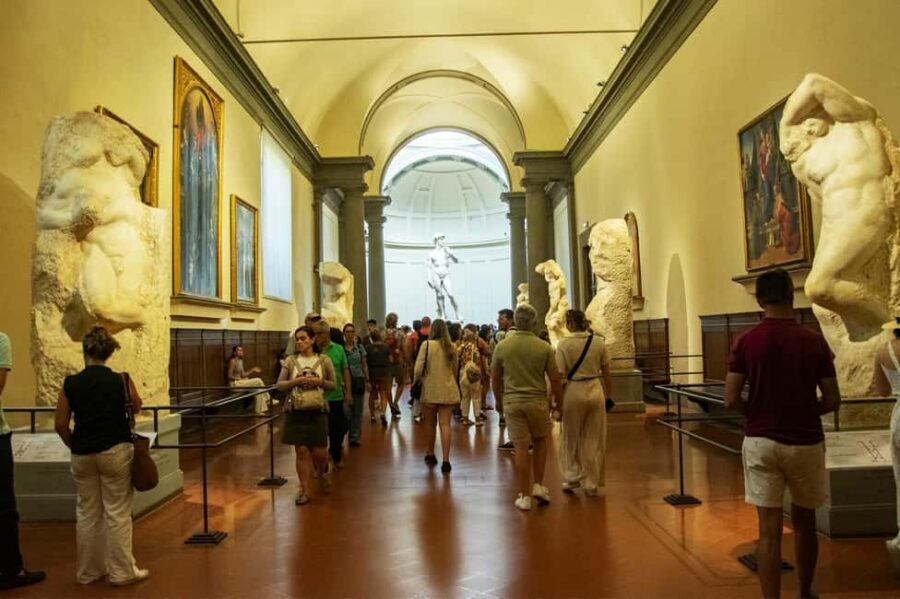
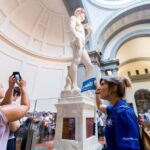
The Accademia Gallery works like a friendly sneak attack on your expectations. You walk in thinking you’ll see David. Then you see David—Michelangelo’s genius in a room designed to make the figure impossible to ignore.
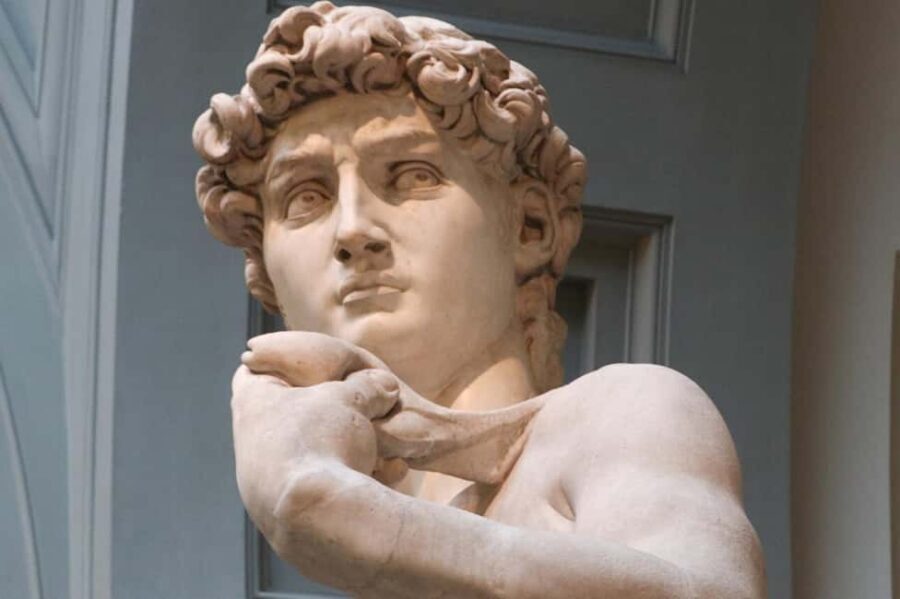
In this tour, your guide points out what’s happening with the sculpture’s presence and proportions once you’re actually there, not just in textbooks. And yes, David is the headline. But the smartest part is what the tour does right after: it helps you understand why the Renaissance treated sculpture as something close to science—shape, anatomy, movement, and meaning all tied together.
If you’re a first-timer in Florence, this is one of the most efficient places to get your bearings fast. You’ll leave with a clearer sense of what people were celebrating during the Renaissance, and why Michelangelo mattered so much.
You can also read our reviews of more private tours in Florence



Michelangelo up close: what to notice beyond the headline statue
Your guide doesn’t treat David like a sightseeing checkbox. They connect it to the wider Michelangelo material in the museum, which is where the experience becomes worth your time.
Here’s what you can expect to focus on during the visit:
- Michelangelo’s sculptures such as La Pietà, the Prisoners, and St. Matthew, in addition to David
- The overall Michelangelo-focused collection, including sculptures and paintings that round out his range
What I like about this approach is that it protects you from the common mistake: thinking Michelangelo is only David. Seeing the Prisoners alongside the other major works helps you spot how he worked with ideas of motion and tension. St. Matthew adds a different kind of intensity—less about the spectacle of youth and more about expression and presence.
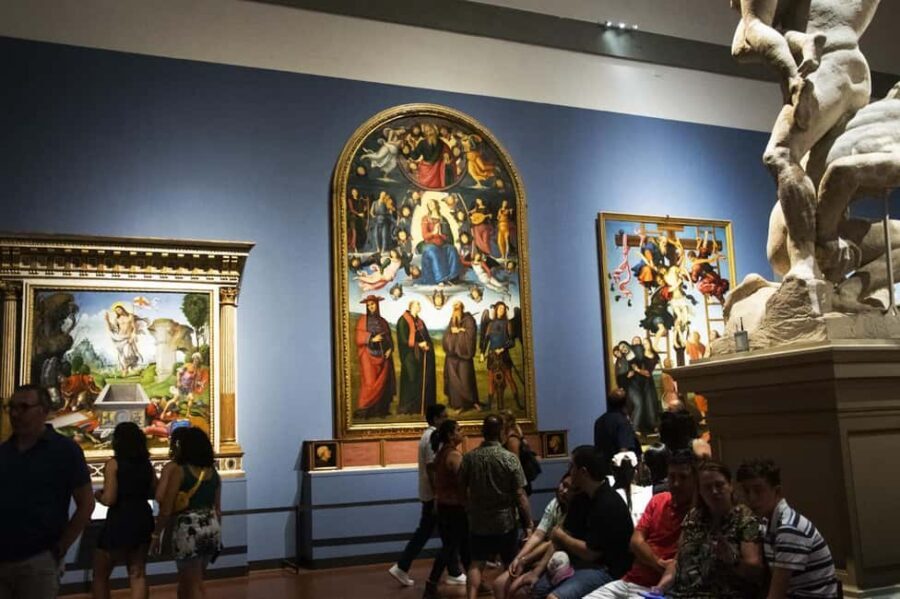
Also, the guide helps you place these works in context. You’ll learn the history and art of the Renaissance period in a way that supports what you’re seeing in front of you. That matters because the museum is full of names you’ll recognize—Sandro Botticelli, Domenico Ghirlandaio, Pontormo, Andrea del Sarto, and Giambologna—plus Medici family connections that show how influential patrons shaped what artists made.
Even if you only know one or two artists, the guide’s job is to connect the dots quickly. The result is that you walk out understanding the museum’s logic, not just staring at objects.
The Hall of Plaster Casts and the Music Room: learning how art training worked
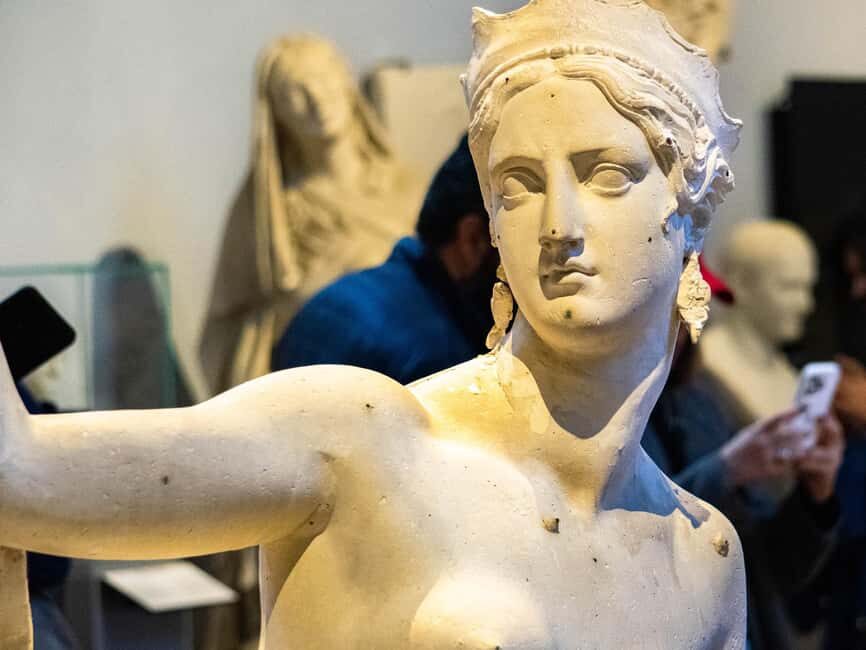
If David is the punchline, the Hall of Plaster Casts is the explanation.
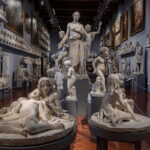
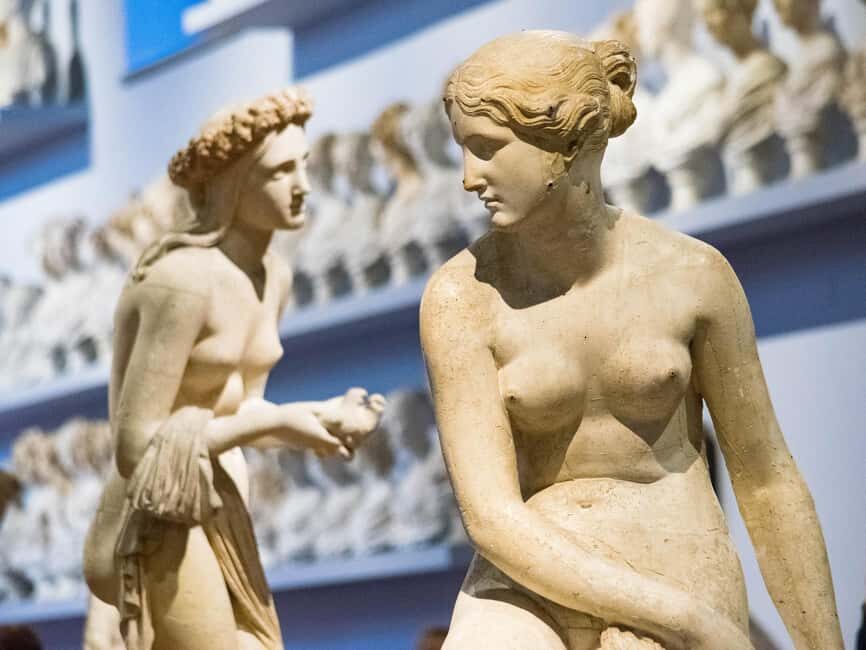
This section features 18th-century works by Lorenzo Bartolini. These are plaster casts—study pieces—built to preserve and teach forms. Standing there, you start to see that Renaissance and later art didn’t appear from nowhere. People copied, studied, measured, and compared. It was part craftsmanship, part education.
Then the tour moves into the Music Instruments Collection, and this is where the Accademia gets delightfully surprising.
You’ll see:
- Three Stradivari violins
- The world’s first piano
That combination is not random. It reinforces a broader Renaissance and post-Renaissance idea: perfection and invention show up in many crafts, not only painting and sculpture. If you’re the kind of person who likes museums that cross over into culture and technology, you’ll probably enjoy this section a lot.
Practical tip: when you reach these rooms, don’t rush through just because they’re “special features.” Spend a few minutes letting your guide describe what you’re looking at. These are the details that tend to stick.
Lorenzo Monaco and Giotto upstairs: the Renaissance story keeps going
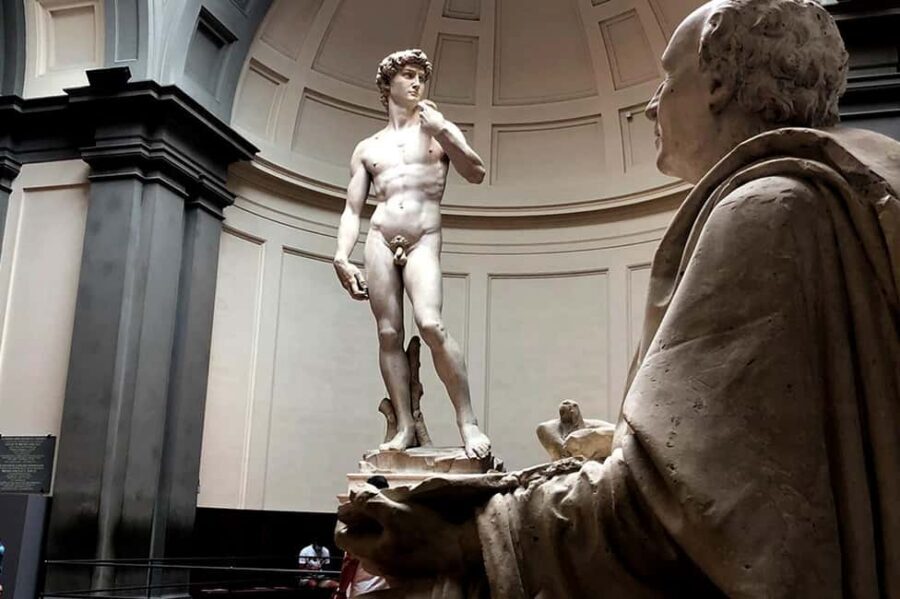
Most people picture Accademia as Michelangelo-only. The upper level quietly argues otherwise.
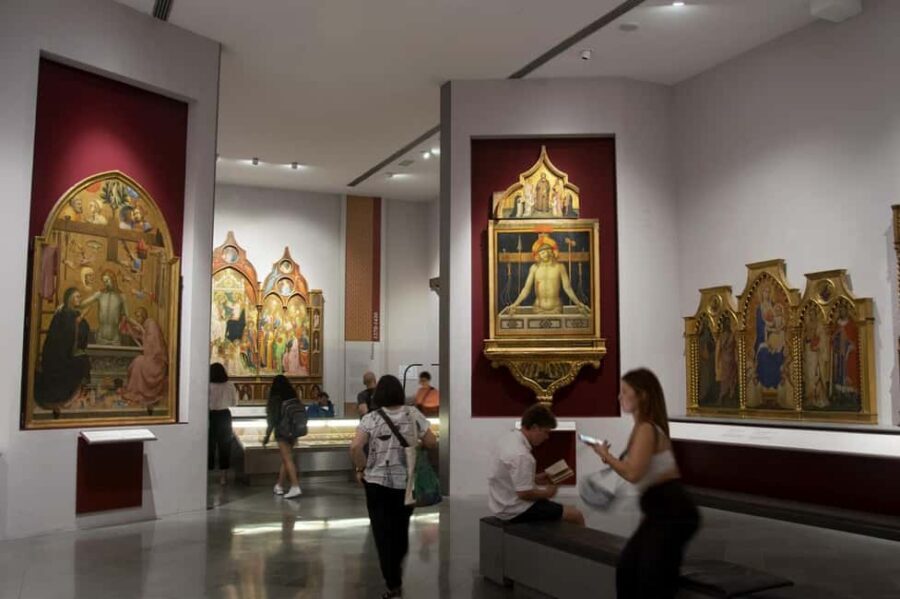
One of the standout points is the museum’s extensive collection of paintings by Lorenzo Monaco. You’ll have a chance to see works known for luxury materials and decoration—specifically pieces adorned with gold leaf and lapis lazuli. That’s a big deal. Those materials help you understand how medieval Florentine tastes and wealth showed up in art long before Renaissance styles took over.
Then, as you go upstairs, you reach the frescoes by Giotto. Giotto is a key name in art history because he pushed forward ideas of perspective painting. It’s the kind of context that makes your Renaissance understanding feel more complete. You’re not just seeing masterpieces—you’re seeing how techniques evolved.
If you like “why does this look like that?” questions, this is where the tour earns its keep. The guide helps you link visual clues to historical change.
Tour timing, skip-the-line security, and how to avoid stress
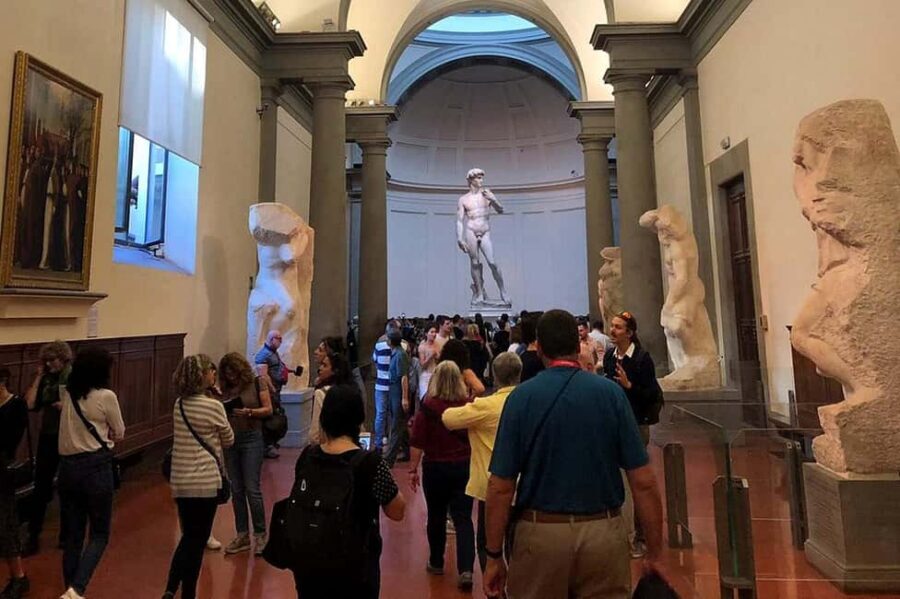
This is a private group tour that lasts about 1.5 hours. That timing is built for people who want meaningful access without losing half a day. You get guided time inside, plus admission included.
But here’s how to set expectations: even with express security (skip-the-line through a security check), you could still wait a few minutes before entering. The museum’s metal-detector controls can add delays even when you’ve got the right lane.
Your meeting point is also very specific, so plan your walk like it matters (because it does). You meet outside the Carrefour Supermarket at Via Ricasoli, 115 RED NO, 50121 Firenze FI. A representative from Florence with Locals Tours will be standing in front holding a purple sign with Florence with Locals written on it. Arrive 15 minutes early.
A quick “don’t make my mistake” note: if you’re late, you’ll likely miss the smoother entry flow that makes this worth booking. Florence is easy to navigate, but the doors into major museums aren’t forgiving.
- Tuscany Day Trip from Florence: Siena, San Gimignano, Pisa and Lunch at a Winery
★ 5.0 · 21,634 reviews




Price and value: why $110 can make sense here
The price is $110 per person, and for Florence, that lands in the “pay for convenience and quality” category.
What you’re paying for:
- A guided tour with a local expert
- Admission included
- Access to David and other masterpieces
- Express security through the security check
- A private group experience, which typically means less wasted time and more chance to ask questions
The real value comes from how the guide shapes your viewing. If you just walked in on your own, you’d still see David. But you might miss why the Plaster Casts, the music instruments, Monaco’s gold-leaf technique, and Giotto’s fresco approach all belong in the same art story.
Is it a long tour? No. One shortcoming that shows up is that the visit may feel brief—some people find it runs under the full schedule. That’s not a bad sign, but it means you should go in ready to prioritize what you want most.
If you’re mainly David-focused and you like to move briskly, this works. If you want to spend a long time with every sculpture at eye level, you may want extra time on your own after the tour.
Guide quality: the part you’ll feel immediately
The tour’s impact depends on the guide, and the experience has strong signals on that front.
One guide name that comes up is Elaine, who’s described as friendly and informative. That matters because Accademia can feel like a lot of art in a short time. A good guide keeps the story moving and helps you look smarter without making it feel like homework.
If your Italian is limited, you’re fine. The guide can operate in Italian, Spanish, or English, so you can match your comfort level.
Who should book this Accademia tour
This private Accademia Gallery experience is a strong fit if:
- You want to see David with context, not just a quick statue stop
- You like art museums that also include unexpected cultural items (like the music instruments)
- You prefer a planned visit with a guide to cut through confusion and save time
- You’re visiting Florence for a shorter stay and want a concentrated “big hits” experience
It’s probably not the best match if you hate guided structure or if you require long, slow viewing sessions. The 1.5-hour format is efficient by design.
Should you book? My practical take
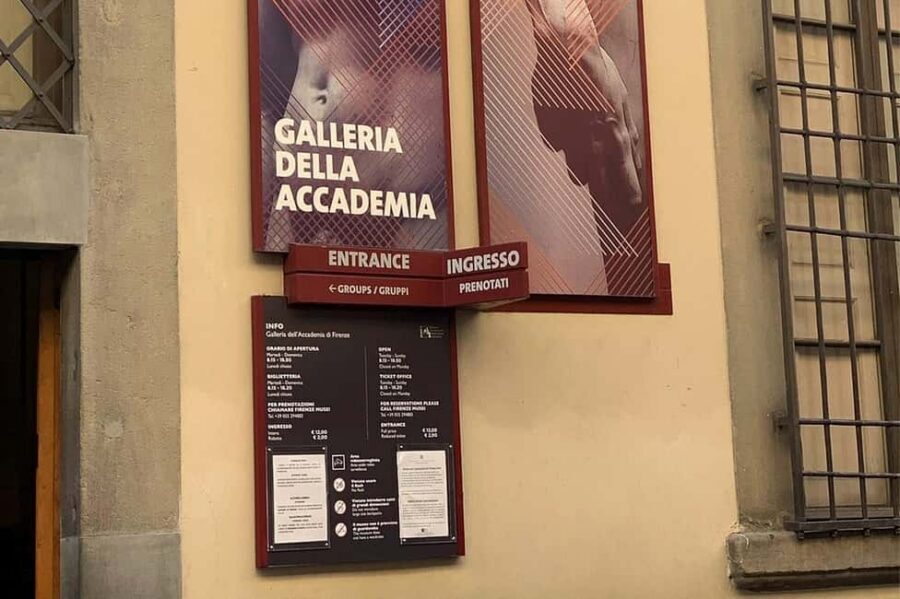
Book it if your goal is a high-quality, guided Accademia visit where David is the centerpiece and the rest of the museum isn’t an afterthought. For $110, the value is strongest when you’ll actually use the guide to understand what you’re seeing—especially in rooms like the Plaster Casts and the Music Instruments Collection.
Skip it (or pair it with extra self-guided time) if you’re the type who needs 2–3 hours minimum to feel satisfied, because this one is intentionally brief. And remember: even with express security, expect a little waiting due to metal-detector controls.
FAQ
How long is the Accademia & Michelangelo’s David private tour?
The tour lasts 1.5 hours.
Is this tour private?
Yes. It’s a private group tour.
Where do we meet the guide?
You meet in front of the Carrefour Supermarket at Via Ricasoli, 115 RED NO, 50121 Firenze FI. The representative will be holding a purple sign with Florence with Locals written on it.
What languages are the live tour guides?
Live guides are available in Italian, Spanish, and English.
Is admission to the Accademia Gallery included?
Yes. Admission to the Accademia Gallery is included, along with access to Michelangelo’s David and other masterpieces.
What is not included in the price?
Hotel pickup and drop-off are not included, and food and drinks are not included.
Do I need ID?
You should bring a passport or ID card for children.
Is skip-the-line entry guaranteed?
Even with express security, you could still wait a few minutes due to metal detector controls for security reasons.
You Might Also Enjoy



More Private Tours in Florence

More Tours in Florence
- The Best tour in Florence: Renaissance & Medici Tales – guided by a STORYTELLER
★ 5.0 · 12,316 reviews


More Tour Reviews in Florence
- Tuscany Day Trip from Florence: Siena, San Gimignano, Pisa and Lunch at a Winery
★ 5.0 · 21,634 reviews - The Best tour in Florence: Renaissance & Medici Tales – guided by a STORYTELLER
★ 5.0 · 12,316 reviews