REVIEW · FLORENCE
Architectural Florence: Private Tour with a Local Expert
Book on Viator →Operated by LocalBini - The go-to platform for Experiences by Locals in Europe · Bookable on Viator
Florence reads like stone when a local explains it. This private architecture-focused walk helps you spot the city’s Renaissance and Gothic ideas as you move from square to square. You get a tailored route, adjusted to your pace, with stops built around major landmarks.
I love how the tour keeps the big names close together: Brunelleschi’s Renaissance vision at Santo Spirito and the Duomo dome on the skyline. I also like the practical payoff of pairing architecture with famous sights like the Uffizi Gallery and the arched Ponte Vecchio bridge.
One thing to consider: it is a lot of walking in about two hours, and it is not recommended for guests with impaired mobility. Also, museum/monument entry tickets are not included, so you’ll still need to budget for timed entry where required.
In This Review
- Quick hits you’ll feel fast
- A private architecture walk with a tailored pace
- Starting at Santo Spirito: Brunelleschi’s calm Renaissance
- Santa Maria Novella: Gothic lines with Renaissance power
- Cathedral Square: the dome moment you’ll remember
- The bell tower and panoramic Florence
- Piazza della Signoria: civic power in stone
- Santa Croce and its Franciscan art treasures
- Uffizi Gallery with an architecture-minded approach
- Ponte Vecchio: the medieval bridge that still lives
- Pitti Palace and Renaissance gardens above Florence
- Price and logistics: is $786 worth it?
- Who should book this private architecture tour
- Should you book Architectural Florence: Private Tour with a Local Expert?
- FAQ
- How long is the Architectural Florence private tour?
- How much does the tour cost?
- Is the tour private?
- What language is the tour offered in?
- What’s included, and what’s not included?
- Where does the tour start and end?
Quick hits you’ll feel fast
- Private, up to 2 people: you’re not squeezed into a crowd rhythm.
- Architecture-first route: Renaissance and Florentine Gothic mixed with major art stops.
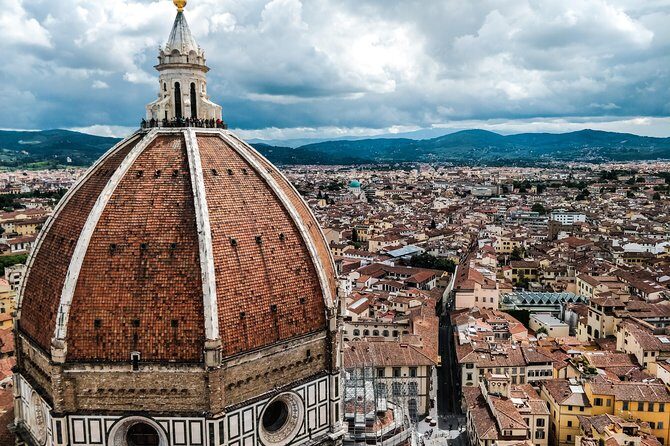
- Duomo + Campanile views: the skyline moments are built in.
- Uffizi access with ease: the stop is designed to fit an architectural itinerary.
- Ponte Vecchio on your route: you see the bridge as a living historic strip with shops.
- Tailored pacing: your walking pace and interests can shift what you spend time on.
A private architecture walk with a tailored pace
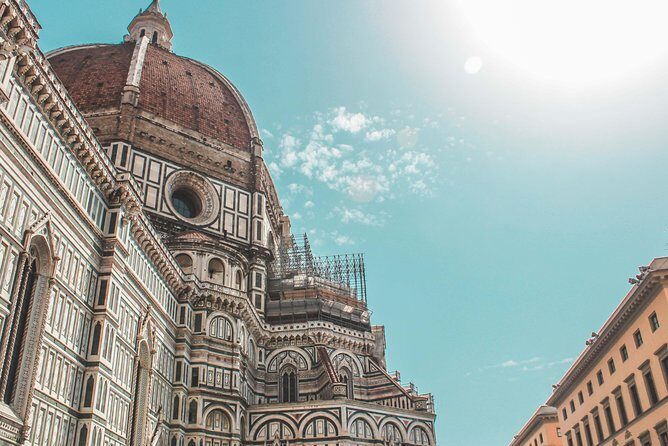
If Florence can feel like an endless list of churches, palaces, and statues, this tour is a way to turn it into a story. The focus stays on design choices: proportions, façades, domes, campaniles, and how different styles overlap in the same city blocks. That makes the city feel less like a highlight reel and more like a connected lesson.
Because it’s exclusive private time for your group (up to two people), the route can adapt. If you linger at a façade detail or want more context around a specific square, you can usually get it without the “we’re running late” pressure. The guide is local, and that matters for what you notice—like what to look at from street level versus what only makes sense when you step back.
The tour runs about two hours and is offered in English, starting at Basilica di Santo Spirito (Piazza Santo Spirito, 30) and ending near Costa S. Giorgio, 2. You’ll also want to know that museum and monument entry tickets aren’t included, so factor in those costs and any ticket timing rules when you plan your day.
You can also read our reviews of more private tours in Florence

Starting at Santo Spirito: Brunelleschi’s calm Renaissance
You begin at Basilica di Santo Spirito, a key example of Renaissance design attributed to Filippo Brunelleschi. Even if you’re not a full-on architecture nerd, this stop is a smart warm-up because it shows Renaissance thinking in a way that reads clearly at human scale.
The description that stands out is the church’s elegant simplicity paired with strong artistic interiors. That combination is useful on a tour like this: it teaches your eye what to look for. Instead of only chasing decoration, you start noticing structure—how the space is shaped, how light and form guide you, and how Renaissance restraint can still feel emotional.
A small practical tip: early in the tour, let your guide point out a couple of specific elements before you start taking photos. You’ll get more out of the later stops because you’ll already know what the guide is training your attention toward.
Santa Maria Novella: Gothic lines with Renaissance power
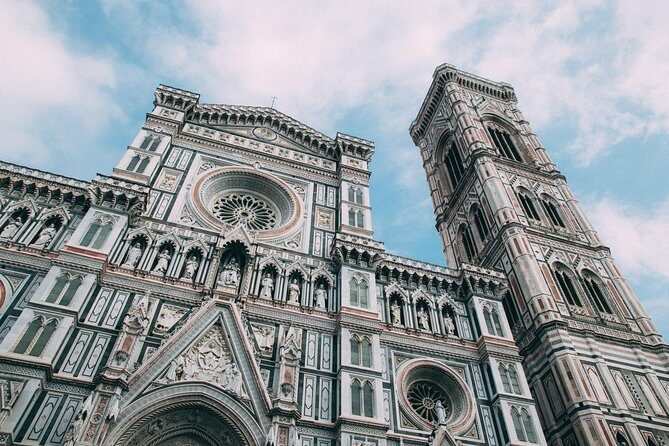
Next you head to Piazza di Santa Maria Novella, where this basilica brings together Gothic and Renaissance elements. This is where Florence gets extra interesting, because the city didn’t convert styles overnight. You can literally watch taste change as you compare shapes, proportions, and façade character.
The standout here is the striking façade and the idea of the building as both a major religious landmark and an art showpiece. This stop works well after Santo Spirito because it resets your eye: now you’re looking at the tension between soaring Gothic style cues and Renaissance clarity.
If you’re short on time in Florence, this kind of style comparison is a win. It’s not just seeing another church; it’s using that church to understand how Florence built its identity in layers. The downside is that if you hate walking and standing still, churches can feel slower than you expect—so treat this as a “slow looking” moment, not a quick photo stop.
Cathedral Square: the dome moment you’ll remember
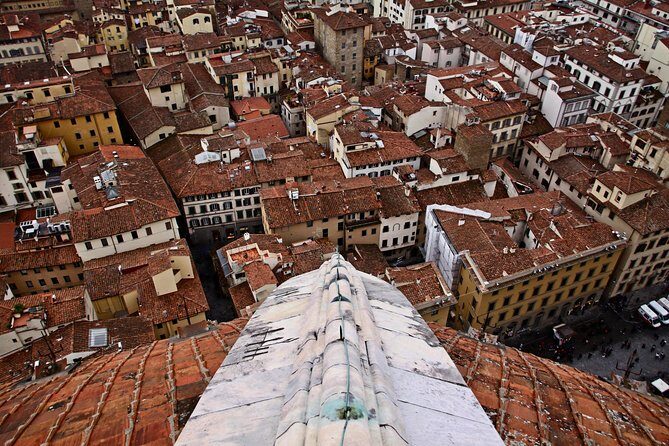
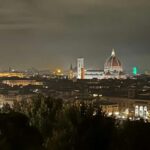
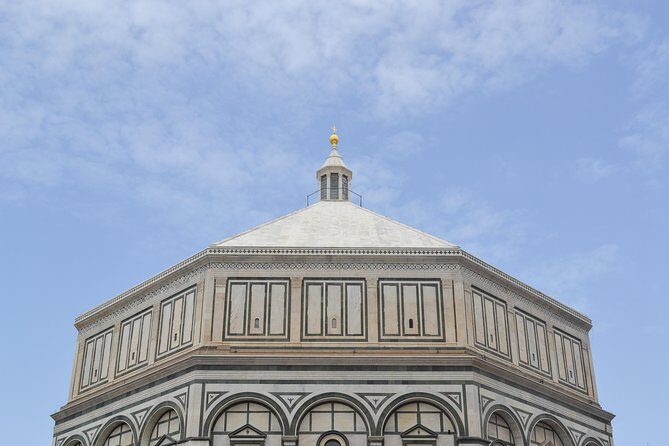
Then comes the part most people picture when they imagine Florence: the cathedral dominating the skyline, with its renowned dome by Brunelleschi. Even when you don’t go inside, this stop is valuable because the guide can explain why the dome matters beyond fame. It’s a signature of Renaissance confidence, and it anchors the whole Cathedral Square visual experience.
The tour also includes the cathedral complex approach, which helps you see the buildings as a coordinated statement rather than separate attractions. That matters because Renaissance Florence often feels best when you understand how the city planned sightlines and grouped symbolic structures together.
The drawback to keep in mind is simple: Cathedral Square areas can be busy, and the dome and surrounding structures tempt people into the same photo angles. A private guide won’t make crowds disappear, but they can help you find better timing and viewpoint choices within that reality.
The bell tower and panoramic Florence
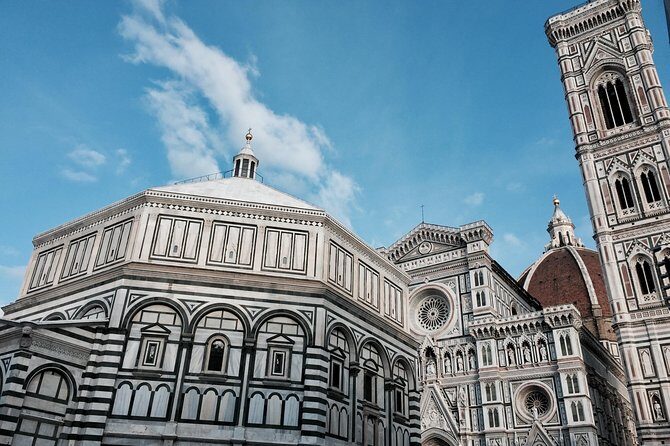
From the cathedral complex, you move to the bell tower, described as a strong example of Florentine Gothic architecture. This stop is a big deal because you get a different style contrast right next to the Renaissance dome story. The guide can help you see how Gothic expression and Florentine adaptation show up in the way the tower is shaped and detailed.
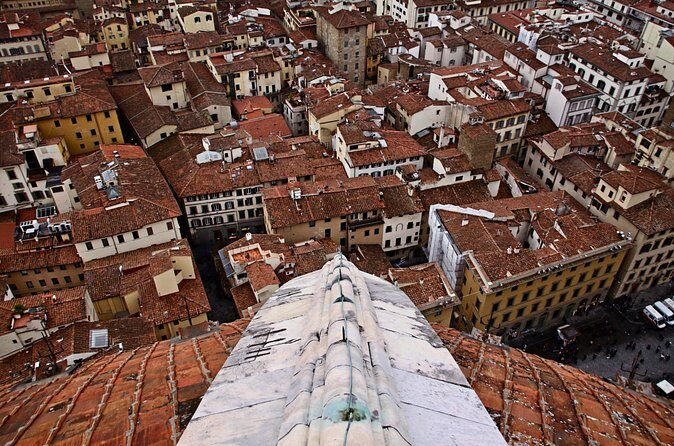
The practical win is the panoramic views of Florence. Views are never just about pretty pictures here; they’re about spatial understanding. From up high, you can connect what you’ve been walking through with how Florence is laid out—bridges, squares, and the way the city wraps around the river.
If you’re planning other timed entries the same day, keep your energy steady here. A bell tower view often turns into a longer stop than you think, because you naturally want to scan the whole skyline.
- Tuscany Day Trip from Florence: Siena, San Gimignano, Pisa and Lunch at a Winery
★ 5.0 · 21,634 reviews



Piazza della Signoria: civic power in stone
Overlooking Piazza della Signoria, the tour moves to a medieval palace with a crenellated tower, described as a symbol of civic power. This is a great shift in tone: you’re no longer only in the religious-and-art world. You’re seeing how Florence used architecture to project authority.
What I like about this stop is that it gives context for why certain parts of Florence feel “serious.” Civic buildings are built to communicate stability and public strength. Even the medieval defensive-looking edges (like crenellations) can feel like a visual reminder: this city didn’t just create beauty, it defended status and control.
You’ll also have the chance to connect it to art and historic chambers housed within, which helps explain why this square is a constant magnet for attention. If you’re the type who likes to understand what a building was for, this stop will satisfy you.
Santa Croce and its Franciscan art treasures
Next is Santa Croce, the principal Franciscan church in Florence at Piazza di Santa Croce. This stop is described as a blend of Gothic and Renaissance styles, with major art treasures and tombs of illustrious Italians.
I like pairing Santa Croce with the rest of the route because it turns the architecture lesson into something more human. Tombs and religious spaces change the way you read a façade and interior. Even if you don’t spend ages on every artwork, the guide’s framing helps you understand why people mattered enough to be remembered in stone here.
One consideration: if your focus is strictly on exteriors, Santa Croce might feel like it asks for more attention than you planned. On the flip side, if you enjoy symbolism and what buildings say about identity, this is one of the stops that can deepen the whole trip.
Uffizi Gallery with an architecture-minded approach
After Santa Croce, you move toward the Uffizi Gallery near Piazza degli Uffizi. This is where the tour’s value becomes obvious: you don’t treat the Uffizi as a separate “museum day.” You treat it as part of the same architectural thread.
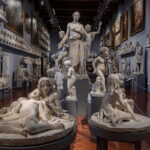
The description emphasizes that the museum holds a vast collection of Renaissance art in a historic building with unique design. That’s exactly why this stop fits the theme. Architecture shapes how museum collections are felt. When the guide helps you connect Renaissance art to the building around it, you often get better context for what you’re seeing.
A practical note: entry tickets for museums are not included. So you’ll want to plan ahead for your Uffizi entry needs. If you’re doing more than one major museum in Florence, this architecture-first framing can help you choose what you’ll prioritize once inside.
Ponte Vecchio: the medieval bridge that still lives
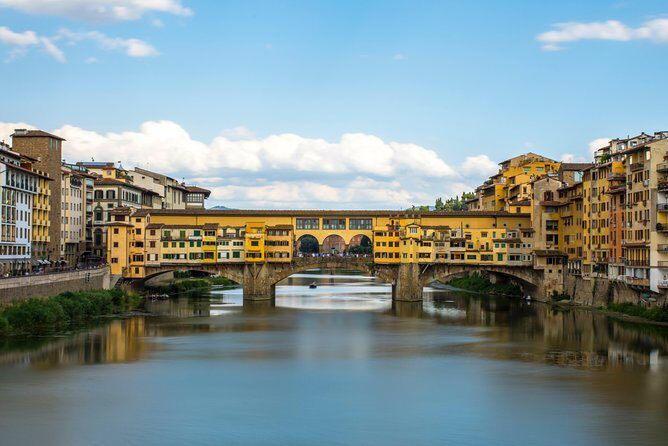
Then you reach the Ponte Vecchio, the medieval stone bridge spanning the Arno River. It’s famous for its shops built along it, and that detail is not just trivia—it’s why Ponte Vecchio feels alive compared to many “photo perfect” bridges.
This stop works because it’s architecture in everyday use. You’re not only looking at a form; you’re seeing how historic design supports commerce. The guide’s framing helps you notice how the shops relate to the bridge structure, how the river setting changes your perspective, and why the bridge became an iconic symbol of Florence’s charm and resilience.
One small downside: Ponte Vecchio areas can be crowded, especially during peak hours. With private time, you can usually slow down and look from slightly different angles, but the setting still comes with real-world foot traffic.
Pitti Palace and Renaissance gardens above Florence
From the river crossing, the tour shifts to Pitti, a Renaissance palace at Piazza de’ Pitti that houses several important museums. If you’ve been tracking Renaissance power and culture, Pitti makes sense as the next step. It’s Medici-era grandeur in architectural form, and it helps explain how Florence’s art life connected to elite patrons and palaces.
Then you end with a hilltop villa and beautiful gardens described as representing Renaissance culture and the integration of art, architecture, and nature. This is a smart final move. After churches and museums, gardens give you visual breathing room and a different kind of architectural rhythm—paths, viewpoints, and the way landscape design supports perspective.
If you’re sensitive to stairs or uneven ground, do pay attention here. Garden routes can be more variable than you expect, and the tour overall isn’t designed for impaired mobility.
Price and logistics: is $786 worth it?
This tour costs $786.04 per group, up to 2 people, for about two hours. That sounds high until you price what you’re actually buying: private time with an architecture-focused local expert, a route built around major landmarks, and a guide who can adapt the pace to your interests.
For a couple, the value can look strong because you split the group cost. For solo travelers, it can feel pricey, but the private format still matters if you want a tight, focused itinerary without crowd stress. One sign this is positioned as a premium experience: it’s typically booked around 30 days in advance, which often happens when people want specific timing during busy Florence weeks.
Also remember the money that’s not included: transportation, museum/monument entry tickets, and other personal expenses. That means the headline price is the guiding and planning component, not the full sightseeing bill.
Finally, you get a mobile ticket, and the tour is hosted by an independent local. It’s offered in English and allows service animals. Meeting starts at Santo Spirito and ends near Costa S. Giorgio, so plan your next stop nearby or keep a little buffer in your schedule.
Who should book this private architecture tour
I think this tour is a strong match if:
- You want Renaissance and Florentine Gothic explained in context, not just photographed.
- You’re short on time and want a tight route with big names: Santo Spirito, Santa Maria Novella, the Duomo dome area, the bell tower views, the civic square, Santa Croce, the Uffizi, Ponte Vecchio, Pitti, and the gardens.
- You prefer private pacing and would rather slow down for details than keep moving on a bus schedule.
I’d skip it (or at least think twice) if:
- Your mobility is limited; it is not recommended for impaired mobility.
- You want a slow, long museum day. This is about architecture connections, not an all-day gallery marathon.
Should you book Architectural Florence: Private Tour with a Local Expert?
Book it if you want Florence to make sense quickly. The tour is built around architectural thinking, and the included promise of a local expert plus tailoring to your walking pace is exactly what helps you see more than just the headline sights. The strongest praise centers on the guide’s detailed architecture explanations, and that kind of framing is what turns famous buildings into memorable understanding.
Don’t book it if you need fully accessible routes, or if you’re hoping the price includes all museum entries. If you plan around ticketed stops and you’re comfortable with a concentrated walking loop, this is a high-value way to experience Florence’s Renaissance and Gothic architecture in one organized, private session.
FAQ
How long is the Architectural Florence private tour?
It runs for about 2 hours.
How much does the tour cost?
It costs $786.04 per group, for up to 2 people.
Is the tour private?
Yes. It’s an exclusive private tour and only your group participates.
What language is the tour offered in?
The tour is offered in English.
What’s included, and what’s not included?
Included are the local expert guide, the exclusive private tour, and a tailored itinerary. Personal expenses and entry tickets for transportation, museums, and monuments are not included.
Where does the tour start and end?
It starts at Basilica di Santo Spirito (Piazza Santo Spirito, 30, 50125 Firenze FI, Italy) and ends near Costa S. Giorgio, 2, 50125 Firenze FI, Italy.
You Might Also Enjoy


More Private Tours in Florence

More Tours in Florence
- The Best tour in Florence: Renaissance & Medici Tales – guided by a STORYTELLER
★ 5.0 · 12,316 reviews
More Tour Reviews in Florence
- Tuscany Day Trip from Florence: Siena, San Gimignano, Pisa and Lunch at a Winery
★ 5.0 · 21,634 reviews - The Best tour in Florence: Renaissance & Medici Tales – guided by a STORYTELLER
★ 5.0 · 12,316 reviews