REVIEW · FLORENCE
Basilica Santa Croce: Walking Among the Masters of Florence
Book on Viator →Operated by Star Florence · Bookable on Viator
Santa Croce feels like a museum of legends. This guided visit helps you read the church like a storybook, from the frescoes to the famous tombs you might otherwise rush past. I especially like how the guide connects each artwork to the people and beliefs that shaped Florence, and I love that you get a guided look at the places tied to major Renaissance names. One possible drawback: the dress code is strict, so plan your outfit before you leave your hotel.
A big part of the value here is focus. In about an hour, you’re not just “seeing a church,” you’re getting a route through the basilica, crypt, and cemetery, with a radio system so you can actually hear the details. With a maximum group size of 20, it still feels like a real walk, not a herd.
My other take: the experience quality depends on the guide. Most people praise the depth and clarity, and a few notes point out that English clarity can vary, so the radio system matters. If you’re picky about understanding every word, show up on time and keep close at the front.
In This Review
- Key Highlights You’ll Care About
- Piazza di Santa Croce First: Set the Scene Before You Enter
- Cappella Maggiore and the Fresco Story You Can Actually Follow
- Giotto in the Bardi and Peruzzi Chapels: Small Rooms, Big Scenes
- Donatello and Brunelleschi: Renaissance Masterpieces Up Close
- The Niccolini Memorial and the Statue of Liberty Link
- Tombs and the Cemetery: Why Santa Croce Became a Chosen Resting Place
- Crypt, Bell Tower, and the 16 Chapels: Your Second Look Starts Here
- Exterior Clues: Polychrome Marble and Why It’s Not Just Pretty
- Price, Timing, and Value: What $58.05 Buys You
- Practical Tips So the Tour Feels Effortless
- Who This Santa Croce Tour Fits Best
- Should You Book This Santa Croce Tour?
- FAQ
- How long is the Basilica Santa Croce tour?
- Is the tour offered in English?
- What’s included in the ticket price?
- Where do we meet for the tour?
- What should I wear since this is a church?
- Does the tour run in bad weather?
- What happens if I arrive late?
Key Highlights You’ll Care About
- Start at Piazza di Santa Croce and learn what happens here each June during Calcio Storico Florentino
- Cappella Maggiore frescoes help you understand the “Santa Croce” story told in paint
- Giotto frescoes in the Bardi and Peruzzi Chapels give you standout scenes from saints’ lives
- Donatello’s crucifix and Brunelleschi’s Chapel of Fools turn big names into real objects you can see
- The 1966 flood damage and restoration adds a human layer to the art’s survival
- Monumental cemetery visit so you leave understanding why this place became a chosen resting ground
Piazza di Santa Croce First: Set the Scene Before You Enter
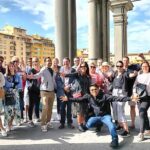
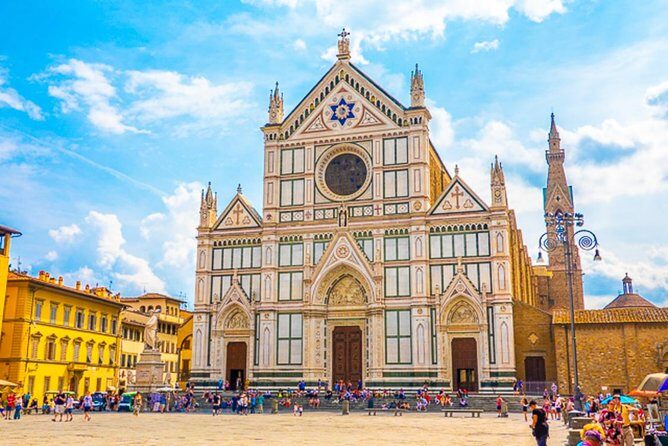
Your tour starts at the Monument to Dante Alighieri in Piazza di Santa Croce. Even before you reach the doors, the square gives you context: this is the setting for Calcio Storico Florentino, the medieval-costume soccer event held every June. It’s a fun mental image, because it reminds you Santa Croce isn’t stuck in the past. Florence still performs its traditions in public spaces.
What I like about starting here is that you get “why” before you get “what.” As the guide points out the basilica’s role in the city, the church stops feeling like an isolated monument. Instead, it becomes part of everyday Florence—politics, religion, and civic pride all braided together.
Also, you’ll likely get your first practical orientation for the buildings you’re about to enter. Once you’re inside, it’s easier to know where to look, where to pause, and what you’re seeing in the bigger composition.
You can also read our reviews of more walking tours in Florence

Cappella Maggiore and the Fresco Story You Can Actually Follow
Inside the basilica, you’ll be guided toward the Cappella Maggiore and its frescoes attributed to Gaddi, dated to 1380. Instead of treating the walls as decoration, the guide explains the narrative that’s painted there—specifically the story of Santa Croce. That detail matters, because frescoes can look busy if you don’t know what thread you’re supposed to follow.
This is one of the best “learn something fast” parts of the tour. In a short time, you’ll understand that Florentine church art isn’t random. It’s designed to teach, persuade, and reinforce identity.
And even if you’re not a formal art nerd, you’ll feel the difference. With a simple roadmap—what scene you’re looking at and what it means—you can stand in front of a wall and see it clearly instead of just taking photos.
Giotto in the Bardi and Peruzzi Chapels: Small Rooms, Big Scenes
Next come the Giotto frescoes in the Bardi and Peruzzi Chapels. These spaces are compact, but the painting work is intense. The tour frames them by walking you through what you’re seeing—scenes from the life of St. Francis and St. John the Evangelist.
The payoff here is that you start noticing a “method.” You begin to recognize how visual storytelling works in this church: one chapel focuses on one set of spiritual figures, and the imagery supports the broader message of Santa Croce.
If you’re the kind of person who likes to leave with fewer photos but better understanding, this portion is for you. You’ll come out of the chapels looking at the rest of the basilica with sharper eyes.
Donatello and Brunelleschi: Renaissance Masterpieces Up Close
This tour doesn’t just name-drop famous artists. It shows you objects tied to them, and that makes the Renaissance feel tangible.
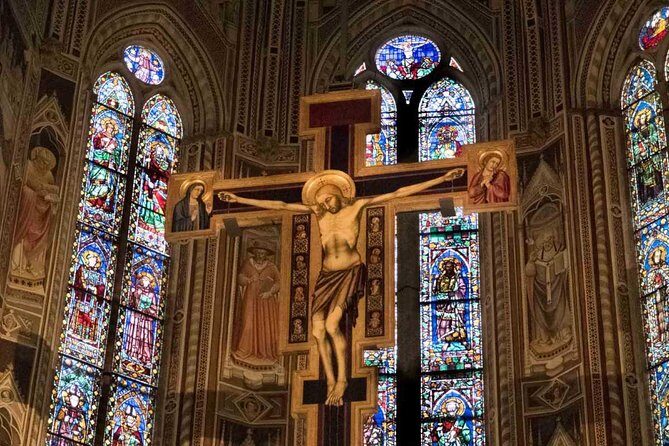
You’ll hear about Donatello and his crucifix, described as one of the Renaissance jewels you shouldn’t miss. Then there’s Brunelleschi’s Chapel of Fools, where the guide highlights the architectural harmony. In other words, you get both the art and the structure that frames it.
Why this matters for you: churches like Santa Croce can become a blur if you’re only “collecting stops.” Here, the guide slows you down at the works that are most likely to change how you see everything else afterward.
One practical benefit: the radio system helps here. When you’re standing close to artworks, you can keep your eyes on the object while still catching the explanation.
The Niccolini Memorial and the Statue of Liberty Link
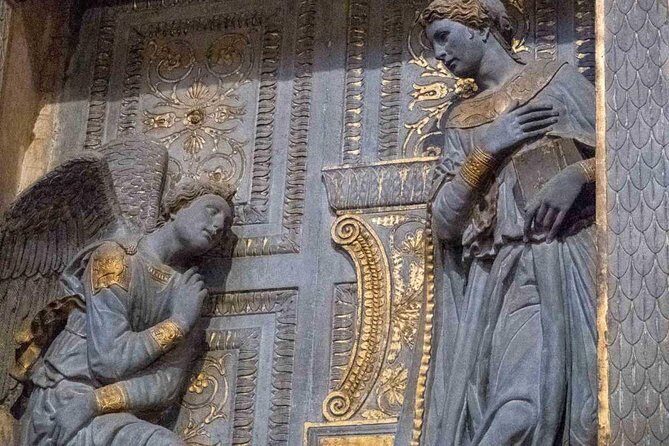
Before you fully settle into the main chapel areas, the route includes a moment that feels unexpectedly modern. To the left of the entrance, you’ll see the memorial of the 19th-century playwright Giovanni Battista Niccolini, built as an inspiration for the Statue of Liberty.
This is the kind of detail that makes the tour feel more than just religious sightseeing. It also gives you a “Florence in the world” connection—how ideas and symbols traveled beyond Italy.
Even if you only remember one side story, this is a strong one. It’s short, it’s specific, and it makes the city feel larger than the immediate streets.
- Tuscany Day Trip from Florence: Siena, San Gimignano, Pisa and Lunch at a Winery
★ 5.0 · 21,634 reviews

Tombs and the Cemetery: Why Santa Croce Became a Chosen Resting Place
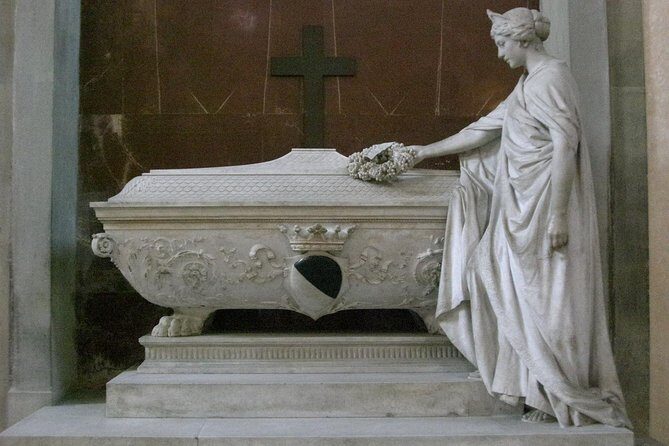
One of Santa Croce’s main draws is the monumental cemetery and the idea of remembrance. After seeing the interior, you’ll also explore the cemetery area and learn about the historical context of why this church complex became a home for major figures.
You’ll also hear about damaged paintings destroyed in the tragic 1966 flood and how they were subsequently restored. That detail adds weight to everything you’re looking at. You start to appreciate the art not only as beauty, but as something that survived a real disaster.
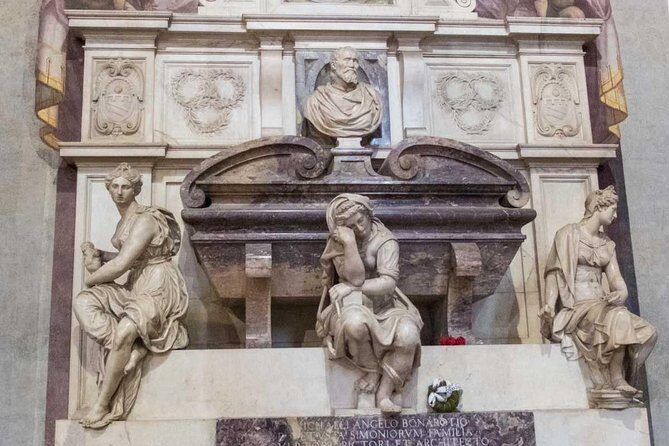
Inside, the basilica’s tombs make this place feel personal. Names tied to big chapters of Italian culture appear here, and the guide helps explain the meaning of being buried in a religious and civic landmark like this. It’s the difference between reading a list and understanding what a burial at Santa Croce signaled.
If your plan includes more churches, I’ll be honest: Santa Croce can outmuscle them because the story is compressed. Art, devotion, and identity sit in the same footprint.
Crypt, Bell Tower, and the 16 Chapels: Your Second Look Starts Here
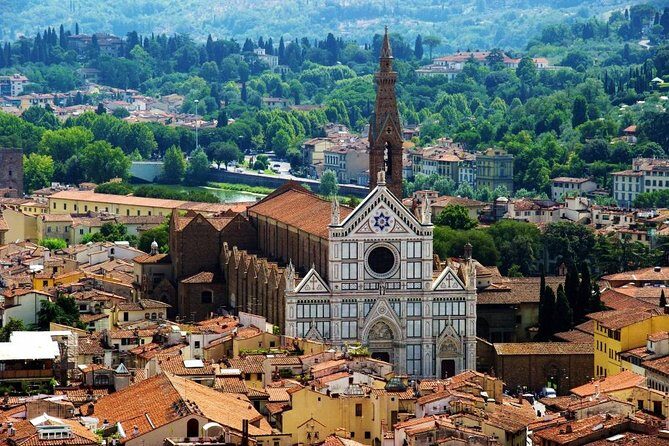
The tour wraps its in-depth portion with the Bell Tower, Crypt, and the 16 chapels. This is where you feel the structure of the tour doing its job. You don’t just go from one highlight to another. You’re guided through the layers that make Santa Croce feel like a whole complex, not a single room.
The crypt especially changes the mood. It brings a quieter, more grounded feeling, and you’ll get direction on what to notice so you’re not just walking through shadow and stone. The bell tower area gives you architectural scale, too, which can be hard to sense on your first glance at the exterior.
Plan to stay attentive through the whole hour. Some visitors feel the pace is close to the limit of what you can comfortably take in, especially if you stop to read every small detail on your own afterward. The good news: the tour structure is meant to let you return to anything you want to revisit once it ends.
Exterior Clues: Polychrome Marble and Why It’s Not Just Pretty
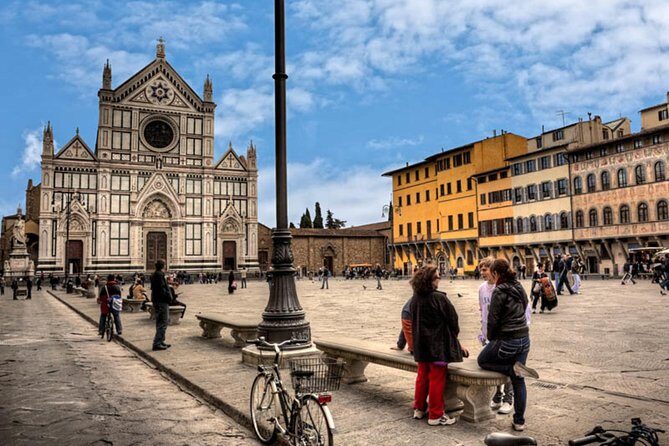
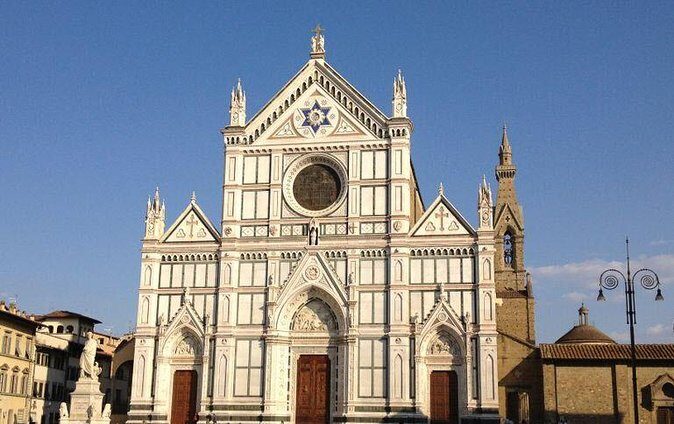
After the interior portion, you’ll also learn about the exterior features—especially the polychrome marble façade that wraps the church. Exterior details are often ignored when people rush between ticket booths and other landmarks. Here, the guide gives you a reason to look closely before you move on.
You’ll likely notice patterns and materials more clearly once you’ve connected them to the building’s identity and the church’s long-term importance. It’s a small shift, but it can change how you experience the whole square afterward.
If you plan to see other major churches that day, take this as a tip: Santa Croce rewards slow looking. A guided explanation gives you permission to linger in the right places.
Price, Timing, and Value: What $58.05 Buys You
At about $58.05 per person for roughly an hour, this isn’t the cheapest thing on a Florence list. But the value is pretty practical.
You’re paying for:
- an official certified guide
- a radio system so you can hear explanations clearly inside
- entrance tickets with reservations (which usually reduces the headache of long waiting)
Also, the tour has a maximum of 20 people, so you’re not fighting for listening space.
When you compare this against a self-guided visit, the math is simple: self-guided can work if you love reading everything and you know exactly what you’re hunting. If you want the highlights explained while you’re standing in front of them—especially fresco stories, tomb meaning, and the flood restoration angle—this price starts to look fair.
One more value point: the tour returns you to the meeting point at the end. So you keep your day flexible for more walking, aperitivo stops, and other Florence surprises.
Practical Tips So the Tour Feels Effortless
This part can make or break your experience.
Wear the right outfit. A dress code is required for places of worship and selected museums: no shorts, no sleeveless tops. Knees and shoulders must be covered for both men and women. If you don’t meet the standard, entry refusal is a real risk.
Arrive on time. If you reach the meeting point after the tour start time, you won’t be able to join and you won’t be refunded or rescheduled. If your day is chaotic (taxis, crowds, late trains), build in buffer.
Use the radio system. It’s included, and it’s there for a reason: the explanations happen while you’re standing. Keep close enough to hear, and you’ll get more from every stop.
Expect weather. The tour operates in all weather conditions, so bring rain protection or sun protection. That’s not extra comfort; it’s part of how you’ll keep your pace.
Have a plan for what you want to revisit. Since the tour lasts about an hour and you can return afterward to anything you want to see again, decide in your head what matters most: a tomb, a chapel, or a specific artwork.
Who This Santa Croce Tour Fits Best
I think this fits best if you want a high-impact introduction to Santa Croce without turning your visit into a scavenger hunt. If you care about art but also want the human stories—saints, civic identity, and the 1966 flood recovery—this route gives you a clear spine.
It’s also a good pick for people who like small-group walking. With a cap of 20 and a radio system, you should be able to hear the guide and ask questions when prompted.
If you’re the type who reads every wall label for an hour and enjoys solitude, you might not need a guide. Santa Croce is stunning on its own. But if you want to understand it in one structured pass, this tour is a smart use of time.
One final thought about guide quality: many guides are praised by name in the experience feedback, including Chiara Conti, Elena, Raphael, Matteo, Sarah, Guido, Hilary, Jenny, Marcello, and Mateo. That variety is encouraging, but it also reinforces the idea that communication quality is guide-dependent. Your best move is showing up ready to listen, right at the start.
Should You Book This Santa Croce Tour?
Book it if you want the biggest Santa Croce experience in one focused hour: fresco stories you can follow, major artworks tied to the Renaissance, tomb meaning, and the cemetery plus restoration context after the 1966 flood. For $58.05, the guide + radio + reserved entry combo is a practical deal if you’d rather learn while standing in the places that matter.
Skip it or consider a lighter self-guided approach if you plan to spend hours reading at your own pace, or if you’re not prepared for the strict worship-site dress code. Santa Croce is worth your time either way, but the guided route is what turns a quick visit into something you actually understand.
If you do book, aim to arrive early, wear covered shoulders and knees, and be ready to look at the church like a story—not a stop.
FAQ
How long is the Basilica Santa Croce tour?
The tour is listed at about 1 hour.
Is the tour offered in English?
Yes, it’s offered in English.
What’s included in the ticket price?
It includes an official certified guide, a radio system so you can hear the guide, and entrance tickets with reservations.
Where do we meet for the tour?
The meeting point is at the Monument to Dante Alighieri, Piazza di Santa Croce, 50122 Firenze FI, Italy.
What should I wear since this is a church?
You need to cover your knees and shoulders. No shorts or sleeveless tops are allowed for both men and women.
Does the tour run in bad weather?
Yes. The tour operates in all weather conditions, so dress appropriately.
What happens if I arrive late?
If you arrive after the tour start time, you will not be able to join and the experience will not be refunded or rescheduled.
You Might Also Enjoy

More Walking Tours in Florence
More Tour Reviews in Florence
- Tuscany Day Trip from Florence: Siena, San Gimignano, Pisa and Lunch at a Winery
★ 5.0 · 21,634 reviews - The Best tour in Florence: Renaissance & Medici Tales – guided by a STORYTELLER
★ 5.0 · 12,316 reviews