REVIEW · FLORENCE
Florence: Occult & Esotericism Walking Tour For The Curious
Book on GetYourGuide →Operated by Florence Tours by Made of Tuscany · Bookable on GetYourGuide
Florence gets spooky when you read its symbols. This 3-hour guided walk strings together church facades, city squares, and one very specific museum visit, all tied to Florence’s darker side: executions, poisoning theories, and esoteric imagery you’re meant to spot in plain sight. Expect to hunt for secret markers and learn why some people saw magic, science, and religion as the same conversation.
I especially liked how the tour pays attention to specific places you can actually find on your own, like Piazza della Signoria and the basilica facades connected to Santa Croce and Santa Maria Novella. You also get a real payoff at the end with the Museum of Masonic Symbols, where you’ll see ritual-style objects covered in engraved and printed symbols, not just vague talk.
One possible drawback: the tour moves at a walking pace, so if you’re hoping for ultra-close, nerdy inspection of every tiny code on stonework, you might wish you had more time staring at facades and details.
In This Review
- Key things you’ll notice on this tour
- Florence’s occult side in a 3-hour walking tour
- Where you meet: San Marco Square to start reading the city
- Piazza San Marco and the logic of the symbol hunt
- Santa Croce, Santa Maria Novella, and the “science meets esotericism” angle
- Duomo complex and the Florence Baptistery clue
- Piazza della Signoria: Savonarola’s execution and the city’s fear
- Ponte Vecchio, Oltrarno, and the shift from spectacle to secrets
- The Medici circle: Pico, Poliziano, and the arsenic story
- Neoplatonic Academy, the Florentine Studio, and Cosimo de’ Medici
- Piazza Santissima Annunziata: the Ferdinand I bees detail
- Hard stories: Ties to rejected babies and secret killings
- Museum of Masonic Symbols: what you see and why it matters
- Price, timing, and logistics that actually affect your comfort
- Should you book this Florence occult tour?
- FAQ
- How long is the Florence Occult & Esotericism Walking Tour?
- What is the price per person?
- Where does the tour start?
- Where does the tour end?
- What’s included in the ticket?
- Is it wheelchair accessible?
- What languages are available?
- What should I bring?
- Does the tour run in bad weather?
- Is this a group tour?
Key things you’ll notice on this tour
- A symbol-hunting approach across multiple neighborhoods, not one stop and done
- Savonarola in Piazza della Signoria, explained in the context of Florence’s fear and politics
- Church facades as evidence, mixing art, Latin clues, and esoteric interpretation
- Poison and power stories tied to Pico della Mirandola and Agnolo Poliziano
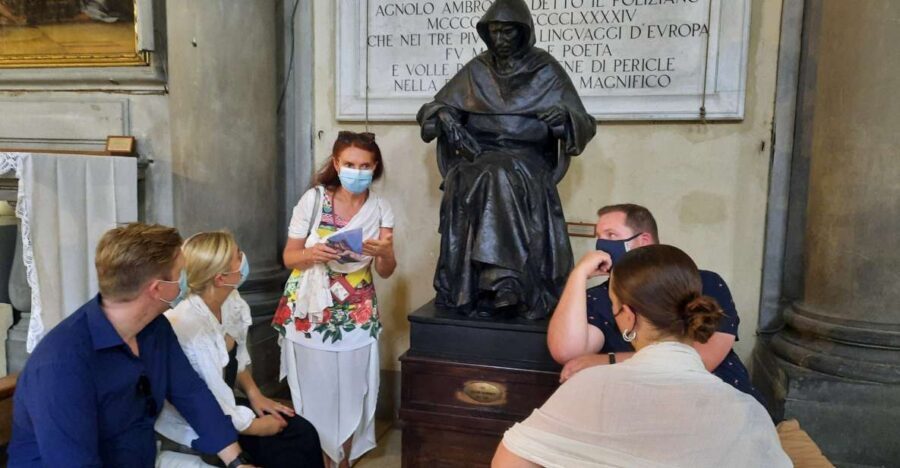
- Museum of Masonic Symbols with guided viewing of ritual objects and etched marks
- Short, frequent guided segments so you’re always turning your focus back to what to look for
Florence’s occult side in a 3-hour walking tour
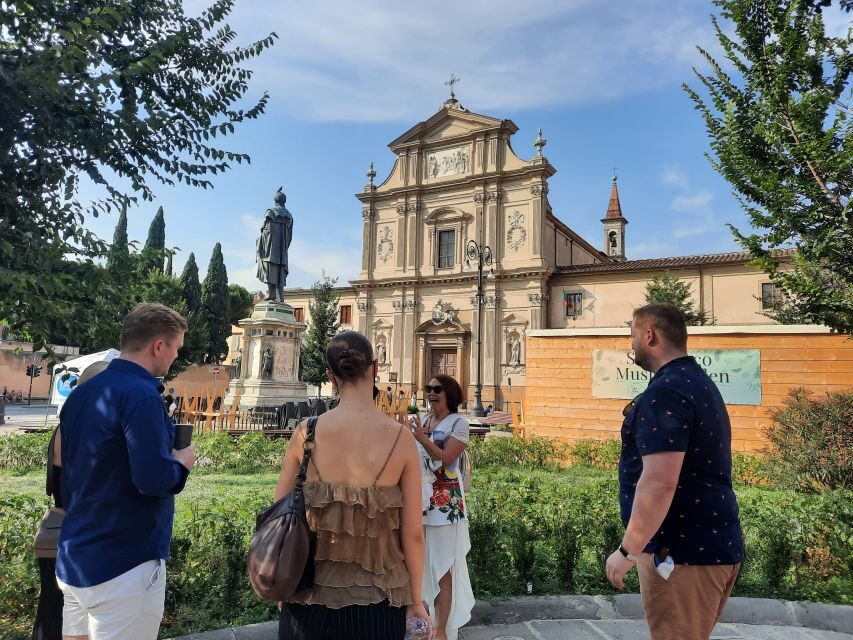
This isn’t the usual “look at the dome, admire the view” Florence. You’re out for a focused 3-hour route that blends crime, punishment, and belief systems—then asks you to read the city like a puzzle. The guide points out esoteric symbols on churches, civic spaces, and street-facing architecture, so you’re not just hearing stories. You’re training your eyes.
The structure helps: short guided chunks happen as you walk, with a longer museum visit at the end. That matters because Florence is big, and symbolism gets confusing fast if you’re trying to DIY it. Here, you have someone steering your attention to the right buildings and the right “wait, what is that?” details.
Because it runs rain or shine, wear shoes you trust. You’ll be on foot through multiple areas, and the point is to keep moving while the guide keeps connecting clues.
You can also read our reviews of more walking tours in Florence
Where you meet: San Marco Square to start reading the city
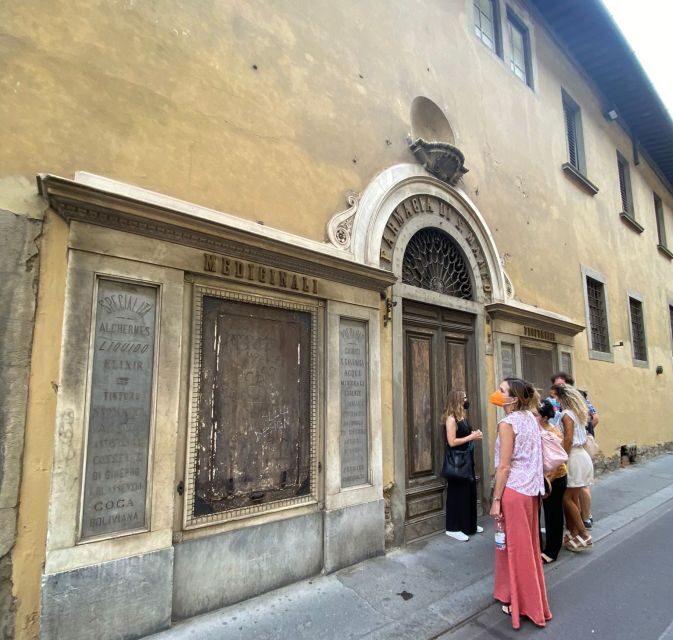
You start at the Monument to General Manfredo Fanti, right in the middle of San Marco Square. That’s a smart kickoff because you begin near the church-and-square rhythm of the city, where the tour can quickly move from “scene-setting” into looking closely at religious buildings and public spaces.
From there, the route uses familiar landmarks as cues. Piazza San Marco is one of your earliest guided stops, and it helps set the tone: Florence isn’t just art; it’s also rumor, ideology, and public spectacle. Your guide doesn’t keep everything in the abstract, either. You’re nudged toward concrete things to notice on stonework and across facades.
It’s also worth noting the tour is a private group. That usually means fewer distractions and more time to ask questions when something doesn’t make sense or feels too wild to accept at face value.
Piazza San Marco and the logic of the symbol hunt
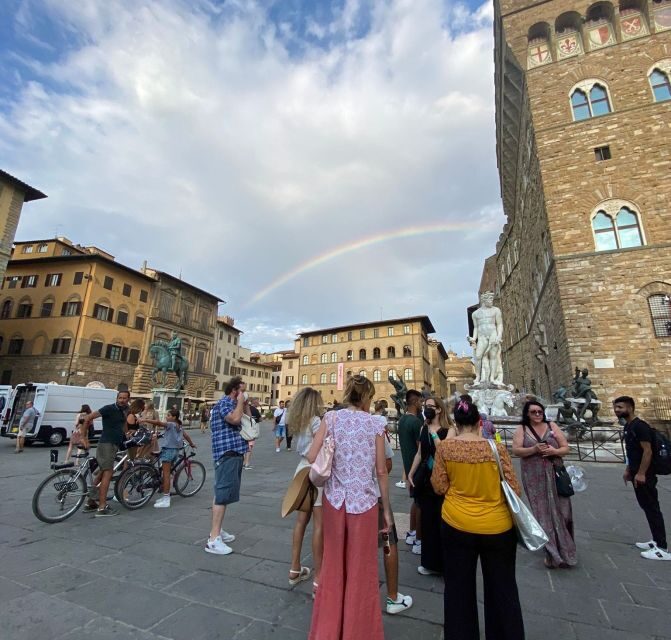
At Piazza San Marco, the tour’s real “method” kicks in. You’ll get quick guided orientation—then you’ll be pushed to watch for symbols rather than just impressions. This is the kind of tour that works best when you commit to the game: stop, look, and listen for what the guide wants you to find.
The guide also connects places to people and events, so symbolism isn’t treated like random graffiti. The stories are used as context for why an image, inscription, or motif might have mattered to Florentines who lived in a world where religion, philosophy, and fear were tightly braided.
If you’re the type who likes Florence for its details (inscriptions, architectural quirks, small marks you’d miss), this format fits. If you’re expecting constant panoramic viewpoints, you’ll spend less time photographing scenery and more time scanning facades.
Santa Croce, Santa Maria Novella, and the “science meets esotericism” angle
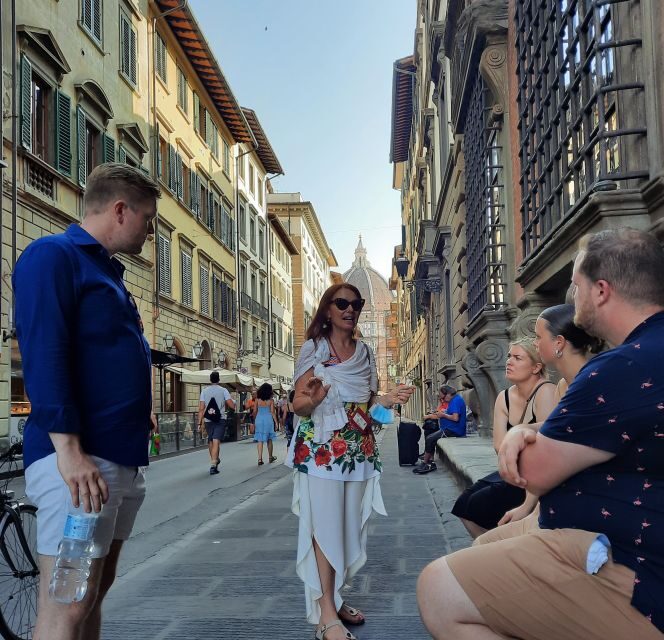
Two of the most important stops are the basilica facades of Santa Croce and Santa Maria Novella. The tour focuses on what you can see from outside: signs of art and devotion mixed with interpretation that leans esoteric. The guide treats the stone as a kind of message board.
This is where the experience becomes more than spooky theater. You’re being taught to notice how people encoded ideas—through Latin phrases, symbolic patterns, and architectural choices—then how later readers tried to decode those choices.
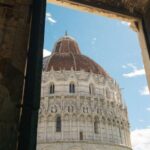
A major highlight here is the Latin palindrome engraved in the Florence Baptistery. It’s described as a lasting mystery, and the tour’s job is to show you where it fits into the broader theme: Florence loves puzzles, and so did the people who believed symbols had consequences.
You’ll also hear the tour’s ongoing theme of “why would someone put this here?” That question is the engine. The guide doesn’t just point; they connect symbols to the city’s anxieties.
Duomo complex and the Florence Baptistery clue
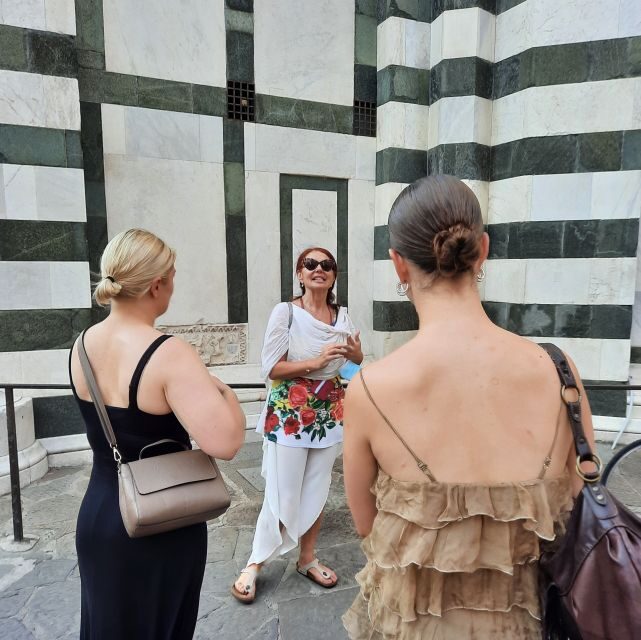
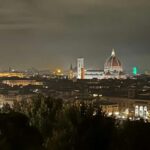
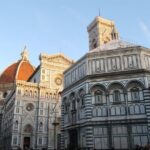
The Florence Duomo complex and nearby area give the tour an architectural backbone. Even when the tour is focused on esotericism, it still benefits from the city’s built-in drama. You’re in the heart of Florence’s religious geography, which makes the later stories feel less like a detour and more like the city’s core.
The Baptistery clue gets you into wordplay territory with the Latin palindrome. Palindromes are already odd enough as language artifacts, but the tour frames it as a symbol that keeps inviting interpretation. The mystery angle matters because it gives you permission to notice an oddity without needing a neat answer on the spot.
If you like clues that stay slightly unresolved, this part will click. If you only want firm historical proof, you may find the interpretive tone a bit more “story-led” than “document-led.”
- Tuscany Day Trip from Florence: Siena, San Gimignano, Pisa and Lunch at a Winery
★ 5.0 · 21,634 reviews

Piazza della Signoria: Savonarola’s execution and the city’s fear
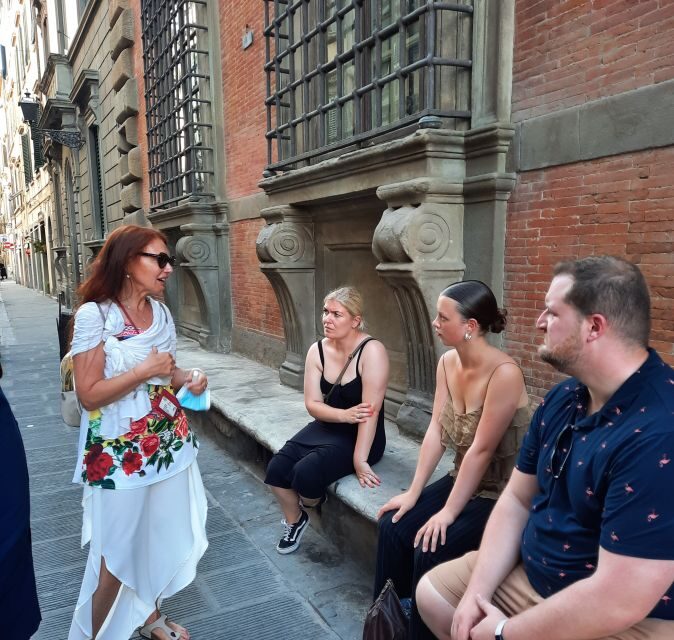
Piazza della Signoria is one of the most intense stops on the route. Here, you hear about the 1498 execution of Girolamo Savonarola—a Dominican preacher whose punishment turned into public theater. This isn’t presented as a footnote; it’s treated as a key piece of Florence’s dark atmosphere.
The tour uses Savonarola to connect belief to consequence. In this city, ideas didn’t stay in libraries. They moved into streets and squares, and they ended in punishment. That framing helps you understand why symbolism and esotericism could become dangerous or politically charged.
It also explains why certain symbols might be interpreted as threats. If people believed spiritual messages could influence reality, then reading stone as coded warning becomes easier to believe. Even if you don’t buy every interpretation, the logic of fear is believable.
Ponte Vecchio, Oltrarno, and the shift from spectacle to secrets
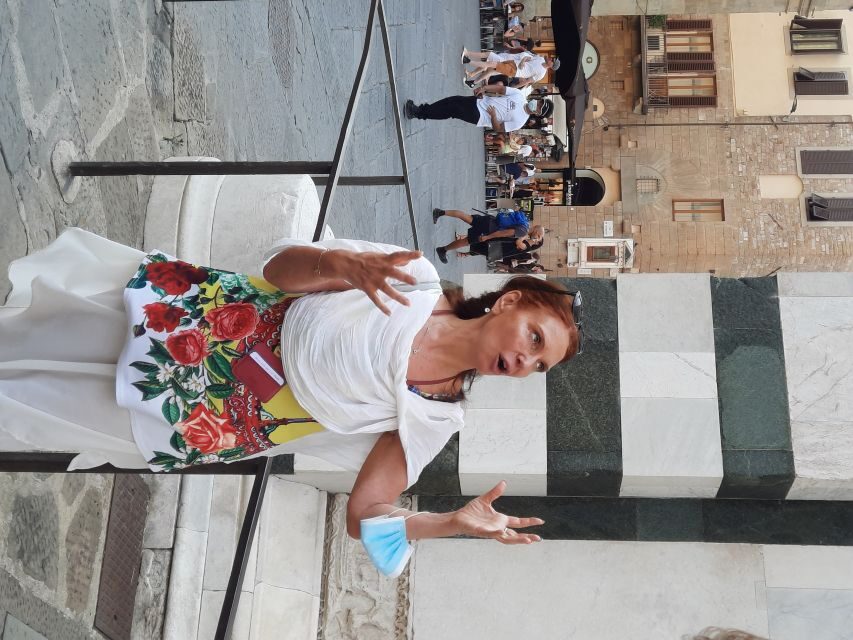
After Piazza della Signoria, the route heads toward Ponte Vecchio and then into Oltrarno. This part of the tour helps you feel the geography of Florence: you move from major civic and religious energy toward a more residential, crafts-and-history feel.
The guide keeps returning to “where would secrets live?” That question shapes the stories you hear here, including talk of the Templars and Cathars in Florence and Florence’s first Masonic lodge. The tour treats these topics as part of the city’s recurring interest in hidden knowledge and alternative belief systems.
Oltrarno also helps you slow down in your head. Florence’s center can feel like a pageant. When you push into nearby areas, you can imagine the quieter conversations happening between the larger public events.
The Medici circle: Pico, Poliziano, and the arsenic story
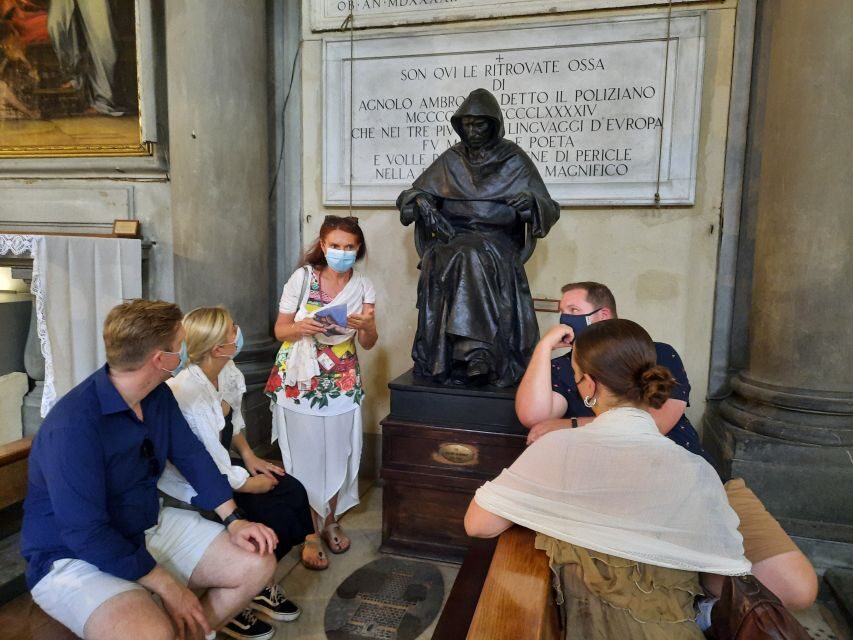
One of the most talked-about historical threads on this tour concerns arsenic poisoning. You’ll hear that arsenic poisoning killed Pico della Mirandola and Agnolo Poliziano in 1494. They’re linked to an intellectual circle around Lorenzo the Magnificent, and the tour connects their story to where they rest, in the Church of San Marco in Florence.
This part works for two reasons. First, it gives you identifiable names, so you’re not collecting folklore only. Second, it ties intellectual life to the risk of obsession—when ideas mattered, the wrong attention could be lethal.
At the same time, you should expect the tour to present these claims in the interpretive style of an esotericism-focused guide. You’ll get the story as the guide frames it, with emphasis on meaning rather than strict forensic certainty.
Neoplatonic Academy, the Florentine Studio, and Cosimo de’ Medici
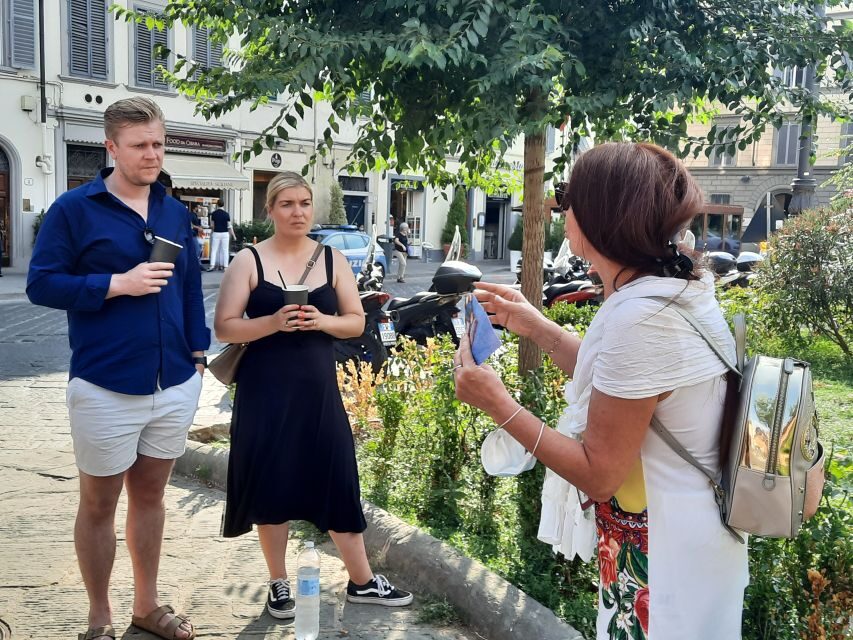
The tour then moves into philosophical territory, with the Neoplatonic Florentine Academy founded by Cosimo de’ Medici. You’ll hear about its impact on Florence’s literary and artistic culture, plus references to the Florentine Studio, a place described as once teeming with philosophers, theologians, and magicians.
Whether you’re a philosophy fan or not, this section helps explain why symbols could thrive. If people believed ideas changed the world, then decoding symbols wasn’t just a hobby. It was treated as a way to reach deeper truth.
It also ties back to the practical symbol hunt you’ve been doing outdoors. The point is that Florence wasn’t only building cathedrals; it was also building systems of thought—some accepted, some feared.
Piazza Santissima Annunziata: the Ferdinand I bees detail
At Piazza Santissima Annunziata, the tour adds a hands-on challenge that’s fun even if you’re not a symbolism maximalist. You’ll be asked to try to count the bees on the statue of Ferdinand I.
This is one of those moments that breaks up the heavier stories without turning the tour light. It reminds you that symbols weren’t always about death and danger. Sometimes they were about power, family, and identity—things you’d see every day, not just hear about after the fact.
If you like that mix of grim history and playful observation, you’ll probably end this segment smiling and scanning details as you walk away.
Hard stories: Ties to rejected babies and secret killings
The tour also covers a darker social belief: babies born crippled were rejected by families and killed in secret, with the belief that they were children of the devil. The guide presents this as a grim part of a dark period in Florence.
This isn’t “look at a symbol, move on.” It’s meant to confront what fear can do to vulnerable people. If you’re sensitive to tragic content, keep that in mind before you book.
On the bright side, placing this story within the tour’s broader focus on how people interpreted signs and fate makes the experience feel less random. The guide ties it to the theme: when belief is intense, life becomes a battlefield.
Museum of Masonic Symbols: what you see and why it matters
The final stop is the Museum of Masonic Symbols, with a guided visit lasting about an hour. This is the part that turns speculation into objects you can actually stand in front of.
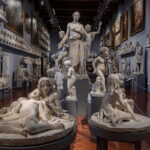
You’ll explore the museum as the first Italian museum devoted to Masonic ideology, and the guide shows displays of ritual-style objects with etched, embroidered, printed, and engraved symbols. In other words, you’re not only hearing about symbols. You’re seeing how symbols were physically used, repeated, and designed.
For me, the museum is where the tour’s value becomes clearest. Outdoors, symbolism can be easy to romanticize. Indoors, you get the more grounded feel of symbols as tools—patterns meant to represent ideas, steps, or affiliations.
Tip for your visit: take a slower rhythm with the displays. You won’t remember every mark, but if you pause long enough to spot the same motifs appearing across different objects, the whole theme clicks.
Price, timing, and logistics that actually affect your comfort
The price is $215.24 per person for a 3-hour experience. For Florence, that’s not cheap, but it does come with practical value: a licensed guide, a guided museum entrance, and skip-the-ticket-line convenience for the museum component. You’re paying for a guided “read the city” approach rather than just entry tickets.
The route includes multiple church and civic stops, plus the museum. That means time matters. If you only have a day in Florence and you want something different from the standard sightseeing loop, this can give you a concentrated alternative lens.
A couple of practical notes:
- Bring comfortable shoes and plan for standing time at facades and in the museum.
- You’ll be out in rain or shine, so plan for weather.
- The tour is wheelchair accessible and is a private group, which helps when you want smoother pacing.
Also, do yourself a favor and don’t schedule a museum-heavy day right before or after. This one already includes one indoor component, and the rest is scanning stone and listening.
Should you book this Florence occult tour?
Book it if you like Florence as a puzzle city. You enjoy stories tied to real locations, and you’re curious about how symbolic imagery can shape how people lived, feared, and organized their beliefs. The museum stop at the end is also a strong reason to go, especially if you want more than generic esotericism talk.
Skip it if you mainly want famous viewpoints and art highlights with minimal controversy. This tour spends a lot of time on executions, poison-linked deaths, and belief-driven violence, and it treats symbolism as the main event.
If your ideal tour includes close observation with a guide, plus names like Girolamo Savonarola, Pico della Mirandola, and Cosimo de’ Medici, you’ll likely feel satisfied. If you’re expecting lots of long, technical close-ups of every facade detail, you may wish for more time than the 3-hour window allows.
FAQ
How long is the Florence Occult & Esotericism Walking Tour?
The tour lasts about 3 hours.
What is the price per person?
The listed price is $215.24 per person.
Where does the tour start?
Meet your guide in the middle of San Marco Square at the Monument to General Manfredo Fanti.
Where does the tour end?
It ends back at the meeting point, with the final visit at the Museum of Masonic Symbols.
What’s included in the ticket?
You get a licensed guide, entrance to the Museum of Masonic Symbols, and skipping the ticket line for the museum.
Is it wheelchair accessible?
Yes, the tour is wheelchair accessible.
What languages are available?
The live guide is available in English, Italian, French, and Spanish.
What should I bring?
Wear comfortable shoes and comfortable clothes. You may also need passport or ID for children, and a passport or ID copy is accepted.
Does the tour run in bad weather?
Yes, it runs rain or shine.
Is this a group tour?
It’s a private group.
You Might Also Enjoy

More Walking Tours in Florence
More Tours in Florence
- The Best tour in Florence: Renaissance & Medici Tales – guided by a STORYTELLER
★ 5.0 · 12,316 reviews
More Tour Reviews in Florence
- Tuscany Day Trip from Florence: Siena, San Gimignano, Pisa and Lunch at a Winery
★ 5.0 · 21,634 reviews - The Best tour in Florence: Renaissance & Medici Tales – guided by a STORYTELLER
★ 5.0 · 12,316 reviews