REVIEW · FLORENCE
Create your original cuttlefish bone cast jewelry.
Book on Viator →Operated by Microfficina Gioielli · Bookable on Viator
Silver, poured from a carved bone mold. This Florence class is hands-on cuttlebone casting, taught step by step in a small workshop about a 10-minute walk from Santa Maria Novella. I like that it starts simple: you carve the mold first, then you see the silver turn into your jewel right away.
What really makes it click is the personal attention: the group max is 3 travelers, and Federico guides you while still letting you shape the design yourself. One thing to consider is that the base silver is included, but gems and shipping cost extra, so your final total may rise if you want stones or delivery.
In This Review
- Key highlights you can bank on
- Cuttlebone casting in Florence: why this class feels genuinely different
- Where you start: a tiny studio near Santa Maria Novella
- The 4-hour flow: what happens from first meeting to pickup
- Step 1: learn the technique at the workshop
- Step 2: choose your pendant or ring model
- Step 3: carve the cuttlefish bone mold
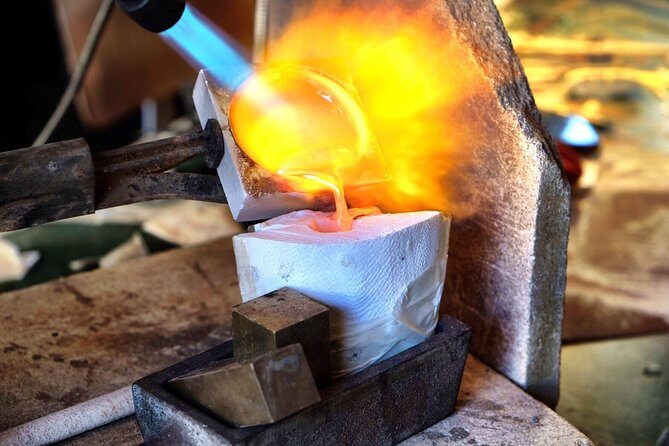
- Step 4: cast melted silver and see the rough jewel
- Step 5: aperitif in a garden-like spot near the lab
- Step 6: pickup the same evening
- Price and value: what the $337.15 really covers
- What you’ll likely love most (and why it matters)
- Teaching that stays patient, clear, and encouraging
- Independence with guidance
- The small-group setup changes the pace
- A wearable result, not just a photo moment
- Practical considerations before you book
- Who should take this cuttlebone class?
- Should you book? My honest take
- FAQ
- FAQ
- How long is the cuttlefish bone jewelry class in Florence?
- Where do we meet for the workshop?
- Is the class offered in English?
- What can I make: a ring, a pendant, or both?
- Do I need any special skills or prior experience?
- What’s included in the price?
- What is not included?
- When do I pick up my jewelry?
- How big is the group?
- Is free cancellation available?
Key highlights you can bank on
- Ancient technique, explained simply: the method is tied to cuttlebone casting known since ancient times, including by the Egyptians more than 2000 years ago
- You do the carving: you project, carve, cast, and walk away with a wearable reminder of Florence
- Small group size: maximum of 3 travelers means more time for coaching and questions
- Instant result after casting: you’ll see a rough version of your jewel right after the silver pour
- Aperitif in a garden-like spot: after the work, you head to a nearby bar’s hidden garden for an aperitivo and talk art and finishing
Cuttlebone casting in Florence: why this class feels genuinely different
Florence has no shortage of workshops. But this one gives you something better than shopping: a skill you can picture later, when you’re wearing the piece.
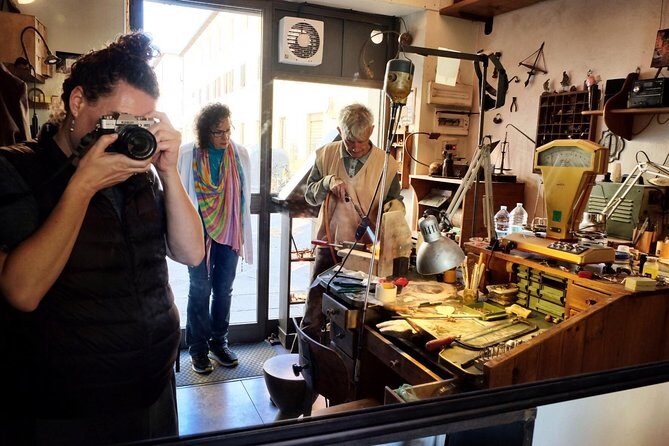
The center of the experience is an old process. You carve a cuttlefish bone to create a mold. Then that mold gets filled with melted silver. It is straightforward in concept and oddly satisfying in practice. You are not just watching metalwork; you are making the shape that the metal will follow.
I also like the teaching style. The workshop format is informal, and the instruction is step by step, with help given individually so you can reach a good result. You do not need special skills. If you can follow directions and be patient for a few hours, you’re in the right place.
You can also read our reviews of more tours and experiences in Florence.
- Tuscany Day Trip from Florence: Siena, San Gimignano, Pisa and Lunch at a Winery
★ 5.0 · 21,634 reviews
Where you start: a tiny studio near Santa Maria Novella
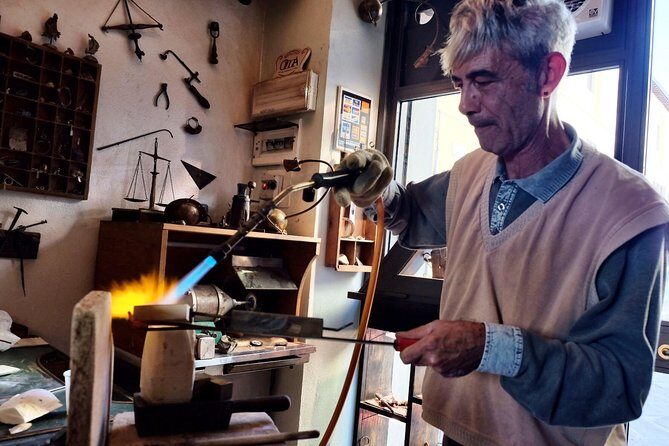
You meet at Microfficina Gioielli Artigianali Firenze di F. Vianello in Florence Jewelry on Via S. Zanobi, 94 R (50129). The location is convenient: it’s about a 10-minute walk from the Santa Maria Novella railway station. That matters because you can arrive, get settled, and still have time to enjoy the rest of your day.
This is not a big tourist complex. Expect a small creative workshop atmosphere, close to public transportation. That makes it easy to pair with a museum morning or a late-afternoon stroll.
A practical tip: wear comfortable, informal clothes. You’ll be handling and carving the cuttlefish bone mold, so you want to feel free to move your hands and not worry about your outfit.
Also, the class is offered in English, and the session is capped at 3 travelers. With a setup like that, you’ll get explanations without feeling rushed, and you won’t spend the whole time waiting your turn.
The 4-hour flow: what happens from first meeting to pickup
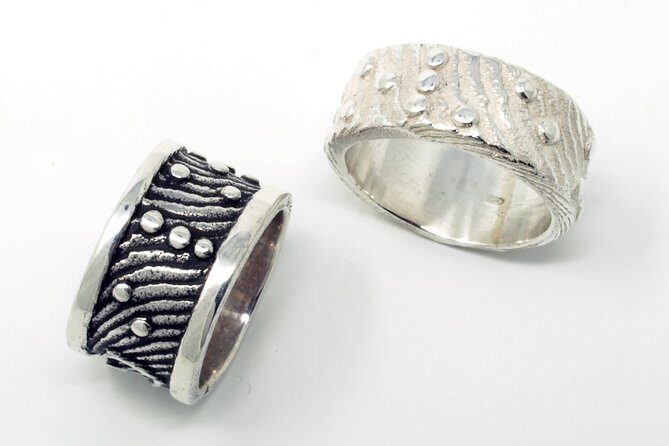
This activity runs about 4 hours, and it ends back at the meeting point. The workshop portion and your post-class time are part of the same arc: learn → make → cast → talk about finishing.
Step 1: learn the technique at the workshop
You’ll start in Federico’s own small workshop. The first chunk is instruction. He’ll walk you through how the cuttlefish bone works as a mold. Think of it as a material that responds well to carving, which is what makes the technique so learnable for first-timers.
You’ll also learn what decisions affect your final pendant or ring. Even if you pick from the proposed models, your carving and choices still shape the end result.
One detail I really appreciate: you don’t just get a lecture. You’re taught, step by step, and then you begin carving. That keeps the time from feeling theoretical.
Step 2: choose your pendant or ring model
Before your hands really take over, you’ll choose from the proposed designs. You can create a personalized pendant or ring. The wording is clear: you’ll pick a model, then refine it through your own work.
From a practical standpoint, this is a helpful constraint. You don’t have to invent a design from scratch. And if you freeze at the idea of design work, you’re not alone—this is the kind of class where thinking of the details can be a little challenging, but the instructor’s there to help you reach the best result.
- Tuscany Day Trip from Florence: Siena, San Gimignano, Pisa and Lunch at a Winery
★ 5.0 · 21,634 reviews


Step 3: carve the cuttlefish bone mold
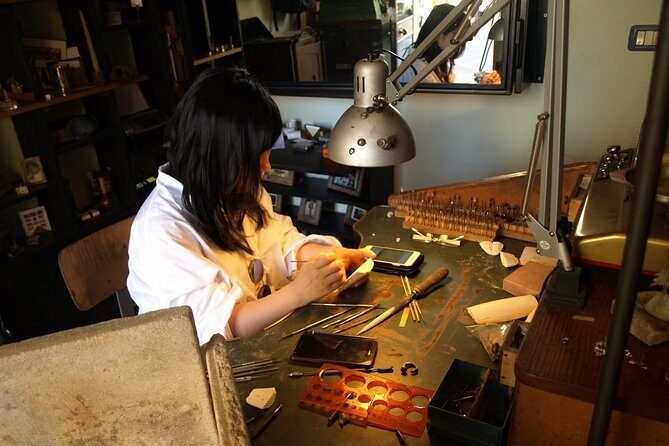
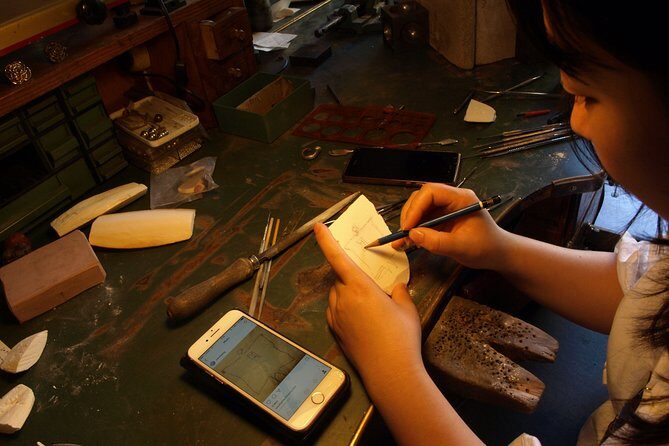
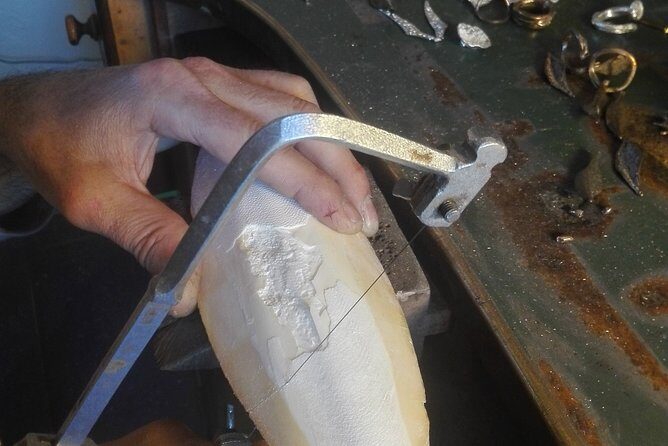
This is the main activity: carving the bone to form your mold. It is the moment where the “ancient technique” turns into real, tactile work.
You’ll carve the bone into the shape of your jewel. Then, once your mold is ready, you move into casting. You’ll be guided enough to avoid common mistakes, but you still get ownership of the process.
I like this part because it’s interactive. You are not just selecting a finished product. You’re making the product.
Step 4: cast melted silver and see the rough jewel
After you carve, you’ll see the casting step happen in your mold. Melted silver gets poured into the carved bone form, and the rough jewel appears immediately—at least in rough form—so you can understand how your carving translated into metal.
This is also where the technique’s “easy to learn” claim becomes believable. If you followed the steps and got a decent mold, the result comes to life quickly. It feels like watching a sketch turn into a physical object.
The experience includes the silver for your jewel: Gr 20 (about 20 grams). That’s a big value piece, because materials and casting time are exactly what you’d normally pay for separately in a workshop setting.
Step 5: aperitif in a garden-like spot near the lab
After the “hard” work, you head to a small bar near the laboratory. There’s an aperitif included, and the vibe is relaxed.
This is not a mandatory lecture. The conversation is part of the package: you’ll discuss how to finish your jewel, and you can also talk art and Florence. Reviews highlight that Federico is patient and encouraging, and that the timing works well—several hours to make your piece, then time to slow down with a drink.
It’s a nice contrast to the earlier hands-on focus. Instead of feeling like a rushed production line, you get a moment to reflect and ask finishing questions.
Step 6: pickup the same evening
Here’s the practical win: the same evening, you can pick up your jewel at the laboratory. That means you don’t need to plan your trip around returning later, and you can wear or gift your piece quickly.
Price and value: what the $337.15 really covers
At $337.15 per person, this isn’t a bargain-basement craft. But it also isn’t just a “hands-on souvenir.” The value is in the materials and in your personal time.
Included in the price:
- The silver for your jewel (Gr 20)
- Finishing and extra work to complete the piece
- The final aperitif
Not included:
- Gems (if you want stones)
- Shipping of the jewel, with costs listed as about €10 Italy, €20 Europe, €50 other countries
So what are you paying for? You’re paying for:
1) access to a trained craftsperson who can teach in English, step by step
2) workshop time with a very small group (max 3)
3) actual silver and the casting/finishing that makes a wearable result
And because you leave with a pendant or ring you created, the experience doubles as a memory you can touch. You’ll likely wear it more than you expect, because you helped make it.
The only real budget warning is about customization beyond the base design. If you add gems or ship, your final total can climb.
What you’ll likely love most (and why it matters)
From the reviews and what the format promises, a few strengths show up again and again.
Teaching that stays patient, clear, and encouraging
The instruction style is a major part of why this works for beginners. Federico’s approach is described as patient and clear, and he helps you individually to reach the best result. In a craft class, that’s not a small thing—it’s the difference between leaving with something charming and leaving with something you’re proud to wear every day.
Independence with guidance
You get to choose and create within the proposed models, and then you carve and cast. That mix is ideal. You are not trapped in a strict step-by-step mold with zero choices. At the same time, you are not thrown into freeform design with no safety net.
The small-group setup changes the pace
With only up to 3 travelers, you’re not competing for attention. You can ask questions, slow down when carving takes time, and get feedback when something needs adjustment. That keeps the experience fun instead of stressful.
A wearable result, not just a photo moment
Several reviews emphasize that the outcome is a ring or pendant you can actually wear. That matches the structure: casting silver, then finishing by the instructor, plus pickup the same evening.
Practical considerations before you book
This class is designed to be doable. Still, a few things can affect your comfort.
- If you hate making creative choices, you might find the design step slightly stressful at first. You’ll choose from proposed models, but you still need to decide what to carve and how.
- Comfortable clothes help. Carving and workshop work can get a little messy or dusty, even when everything is handled carefully.
- Expect extra costs if you want stones or shipping. The silver is included, and finishing work is included, but gems and delivery are separate.
The good news: the instructor supports you through the hard parts, and the timeline is built for first-timers. About 4 hours is enough time to learn the steps, create the mold, cast, and still have that aperitif conversation.
Who should take this cuttlebone class?
I’d point you here if you want:
- a genuinely hands-on Florence experience that isn’t a cookie-cutter tour
- a skill you can tell people about on the rest of your trip
- a small-group workshop with English instruction
- a wearable souvenir made from silver you helped create
It also works well if you’re traveling with teens or someone who likes making things. One review mentions a teen and a shared, memorable experience.
You might skip it if you’re looking for a high-energy sightseeing route where you’re constantly moving between landmarks. This is slower and craft-focused. You’ll be in the studio for a good chunk of time.
Should you book? My honest take
If you’re deciding between this class and another Florence activity that costs roughly similar money, I’d lean toward booking—especially if you like the idea of leaving with a piece you made with your own hands.
The big reasons:
- You get real instruction and individual help in a small group
- The silver (Gr 20) and finishing are included
- You pick up the jewel the same evening
- The aperitif and conversation add a human, local touch
If your budget is tight, just factor in that gems and shipping cost extra. And if you hate creative decision-making, pick a model quickly and let the instructor guide the carving details.
FAQ
FAQ
How long is the cuttlefish bone jewelry class in Florence?
It runs about 4 hours.
Where do we meet for the workshop?
You meet at Microfficina Gioielli Artigianali Firenze di F. Vianello, Florence Jewelry, Via S. Zanobi, 94 R, 50129 Firenze FI, Italy.
Is the class offered in English?
Yes, it’s offered in English.
What can I make: a ring, a pendant, or both?
You’ll make either a personalized pendant or ring, choosing from the proposed models.
Do I need any special skills or prior experience?
No special knowledge or skills are required.
What’s included in the price?
The price includes the silver for your jewel (Gr 20), finishing and extra work to complete it, and a final aperitif.
What is not included?
Gems and shipping costs are paid separately.
When do I pick up my jewelry?
You can pick up your jewel the same evening at the laboratory.
How big is the group?
The maximum group size is 3 travelers.
Is free cancellation available?
Yes. You can cancel up to 24 hours in advance for a full refund.
If you want, tell me your travel dates and whether you’d rather make a ring or pendant, and I’ll help you plan what else to do with the rest of your Florence day around this class.
You Might Also Enjoy

More Tour Reviews in Florence
- Tuscany Day Trip from Florence: Siena, San Gimignano, Pisa and Lunch at a Winery
★ 5.0 · 21,634 reviews - The Best tour in Florence: Renaissance & Medici Tales – guided by a STORYTELLER
★ 5.0 · 12,316 reviews