REVIEW · FLORENCE
Florence: Accademia Gallery & Statue of David with Uffizi Gallery
Book on Viator →Operated by The Tour Guy · Bookable on Viator
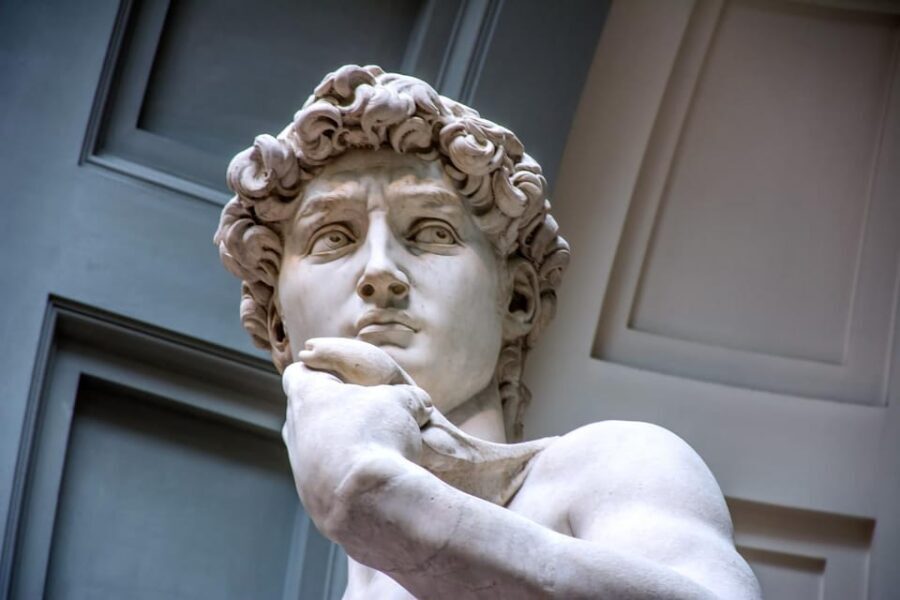
David without the queue. This half-day Florence art outing strings together the big two museums with skip-the-line entry, so you spend less time corralled and more time staring at masterworks like Michelangelo’s David. I also love the small-group pacing (max 15) and the way guides such as Marco, Guido, and Claudia use real stories, jokes, and symbolism to make the art feel human.
One thing to keep in mind: this is a highlights tour with set time blocks, so you won’t see every room or every painting at a slow museum-stroll pace.
In This Review
- Key highlights at a glance
- The real value of combining Accademia and Uffizi in one outing
- Meeting in the right Florence neighborhood (and ending inside the Uffizi)
- Galleria dell’Accademia: David, the Prisoners, and why time here feels special
- The walking stretch: Brunelleschi’s dome, Medici power, and street-level Florence
- Uffizi Gallery: how skip-the-line helps, and what you’ll actually see
- Guides make or break the experience—here’s what you’ll benefit from
- Price and value: what about $46.45 per person feels like a fair deal
- Who this tour suits best (and who might want a different plan)
- Practical tips so you get the most out of the day
- Should you book this Florence Accademia and Uffizi tour?
- FAQ
- How long is this Florence tour?
- Is the tour offered in English?
- Does the tour include skip-the-line entry?
- How large is the group?
- Where do we meet, and where does it end?
- What ID do I need for Uffizi entry?
- Is food included in the tour price?
- Is hotel pickup or drop-off included?
- Does the tour include the Duomo interior?
- Can I cancel for free?
Key highlights at a glance
- Accademia first, then Uffizi: David up front, then the biggest Uffizi hits while your attention is still sharp.
- Skip-the-line for both museums: less waiting at entrances, more time inside where it counts.
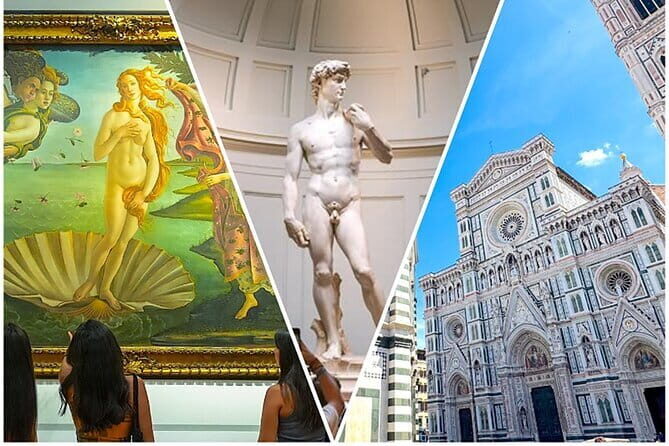
- Michelangelo’s David plus the Prisoners: not just the famous figure, but the unfinished works around it.
- A guided walk through Florence’s power centers: Brunelleschi’s dome on the outside, Medici intrigue, and classic street-level landmarks.
- Uffizi guided highlights, then free time: you get the guided context, then you can keep wandering.
- Small group energy: easy to hear, easy to ask a question, and no long single-file shuffle.
The real value of combining Accademia and Uffizi in one outing
Florence can eat your whole day if you let it. Two of the biggest time-sinks are the Accademia and the Uffizi—both are hugely popular, and both are where the “I can’t believe I’m seeing this” moments happen. Doing them back-to-back is smart, because it keeps your day focused on the art instead of transit and hunting for tickets.
I like that the format is built for flow. You start with the Accademia, then you break the museum rhythm with a walking stretch through the historic center before landing at the Uffizi. The group stays together, and the guide gives you enough context to understand what you’re looking at without turning it into a lecture you can’t escape.
As for physical effort, plan for moderate walking, including museum floors and some stairs at the Uffizi. If you’re comfortable with that, you’ll be fine.
You can also read our reviews of more museum experiences in Florence
Meeting in the right Florence neighborhood (and ending inside the Uffizi)
The meeting point is Piazza della Santissima Annunziata, Firenze. That matters because it’s close to the center of things, so you’re not spending your “museum time” crossing the city before you even start.
The tour ends inside the Uffizi Gallery at Piazzale degli Uffizi, 6. That’s practical: once your guided portion finishes, you’re already where you want to be. I’d think of it like a guided entry plus a head start—not a situation where you’re dismissed back on the street.
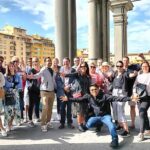
Also, this is an English-speaking experience, and the group size stays small (maximum 15). In high-demand museums, that usually means you’ll hear the guide and you won’t feel like you’re in a human bottleneck.
Galleria dell’Accademia: David, the Prisoners, and why time here feels special
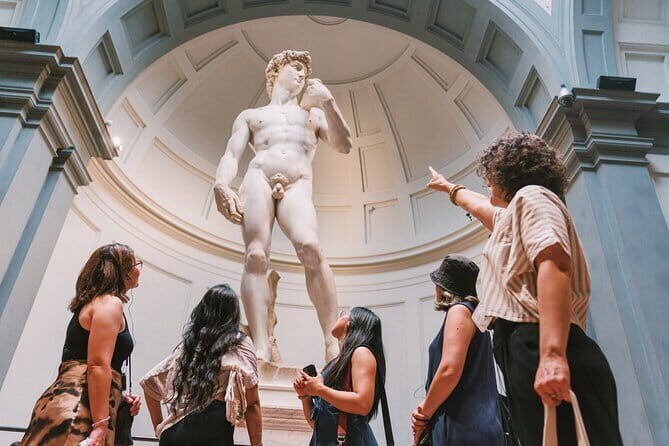
Accademia works because it’s focused. You get a guided slot of about 30 minutes, and the whole point is to drop you right into Michelangelo’s world.
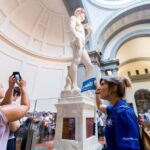
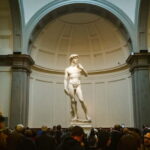
Yes, it’s the towering David. But the best part is what the guide does around it. The guide shares the story behind its creation and points out details that many visitors walk past because they’re looking only for the iconic silhouette. When you’re guided, you notice things like proportions, the emotional stance, and the way the sculpture communicates tension—even if you’ve seen photos a hundred times.
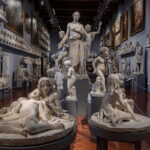
Then comes the Prisoners series—unfinished figures that show Michelangelo working through form and intention. This is where you often get a real shift in perspective. Instead of only admiring the finished masterpiece, you see process. It’s a reminder that greatness is built through revision, doubt, and constant adjustment.
One practical note: with only about half an hour, you’ll need to accept that you’re not “doing the entire museum.” You’re doing the David moment properly, with enough context that it sticks, and then moving on.
The walking stretch: Brunelleschi’s dome, Medici power, and street-level Florence

Between the museums, you don’t just move from point A to B—you get a short walk that puts Renaissance Florence on your feet.
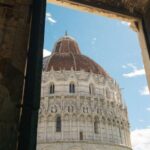
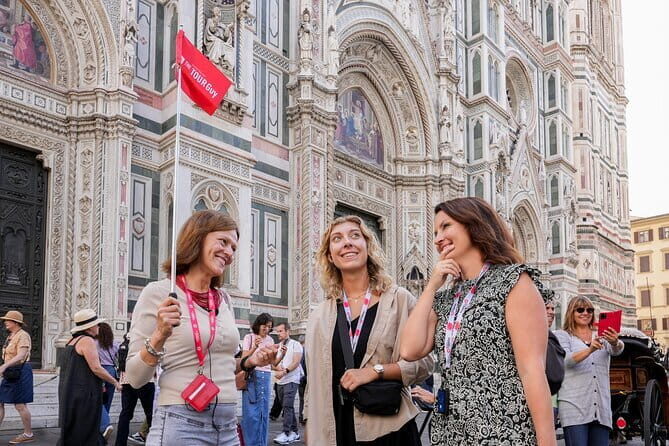
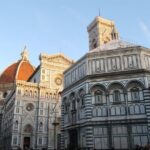
You’ll stroll past the cathedral area with Brunelleschi’s massive terracotta dome dominating the skyline. The guide explains why this dome mattered—how it became a symbol of Florence’s wealth and ambition during the Renaissance. Even outside the walls, the building tells you the story. You start seeing Florence as a city that could fund audacity.
Next up is the main public square, where Palazzo Vecchio still towers over everything. This is where the Medici story lands in a real place, not a textbook. The guide connects architecture and art to political control, and you hear how power played out in public spaces.
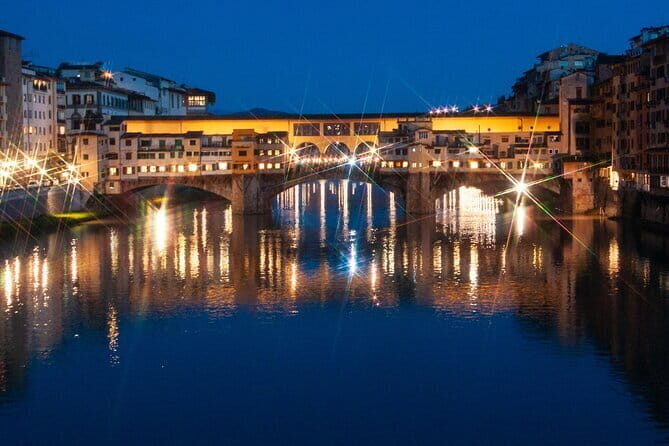
The tour also fits classic postcard stops into the route, including Ponte Vecchio and Porcellino Market. Those aren’t just for photos. They’re useful wayfinding anchors, so when you later roam on your own, you’re not lost—you’re oriented.
If you’re someone who gets restless during long museum hours, this walking leg is a good reset. You get fresh air, street noise, and a feel for the city’s scale.
Uffizi Gallery: how skip-the-line helps, and what you’ll actually see

Uffizi is the big one. It’s massive, it’s crowded, and it can tempt you into aimless wandering. The tour approach helps because it gives you a guided route through the highlights, then stops long enough for you to continue at your own pace.
The Uffizi guided portion lasts about 1.5 hours. With skip-the-line entry, you step inside without spending ages in line. That matters here because the queues can be the difference between enjoying art and feeling like you’re just enduring a day-long system.
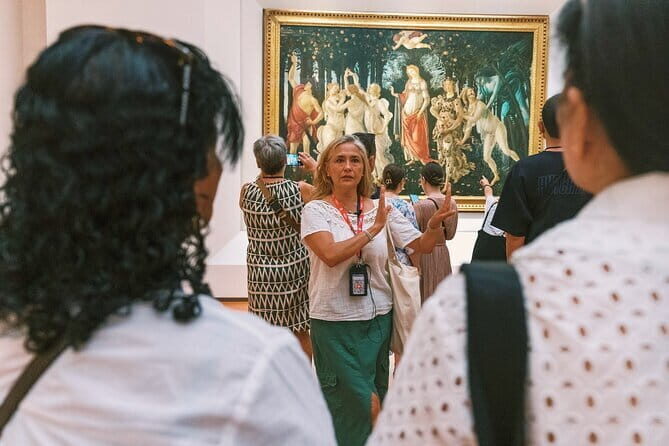
During the guided part, you’ll see works like Botticelli’s Birth of Venus and Primavera. You’ll also get a tour through key painters such as Raphael, Caravaggio, and Leonardo da Vinci. The guide ties it back to why Florence is considered the birthplace of the Renaissance, so the museum feels less like a random collection and more like a timeline.
After the guided section, you’re free to linger and explore other galleries. This is the smartest part of the format. You get the best explanation up front, then you can choose what grabs you—whether that’s another Botticelli room, a new room entirely, or just slower looking time in the places that land hardest.
Crowds are real at the Uffizi. Even with priority entry, you may still feel the museum’s density once you’re inside. If you’re sensitive to crowds, focus on small goals: pick a handful of works you care about most, and then let the rest be a bonus.
- Tuscany Day Trip from Florence: Siena, San Gimignano, Pisa and Lunch at a Winery
★ 5.0 · 21,634 reviews

Guides make or break the experience—here’s what you’ll benefit from
The guide is a central part of this tour’s value. The strongest experiences revolve around guides who can explain art without making it feel unreachable.
In particular, I’m encouraged by the pattern of guide praise for people like Marco and Guido—guides who connect symbolism to real choices Michelangelo and other masters made. Claudia has also been praised for city-and-art clarity. When that works, you start to see patterns: how artists used emotion, technique, and patronage to shape what ended up in the galleries.
Small-group size helps too. Maximum 15 travelers means there’s less shouting, less back-and-forth, and more chances to ask questions. If you enjoy interaction—wanting a detail explained because it puzzles you—this format is set up for that.
The only “watch out” is pacing. When time is tight, some people want more room to roam the galleries on their own. In a highlights tour, the guide will prioritize selected stops. You’re paying for structure plus context, not for a slow museum crawl where you see every nook.
Price and value: what about $46.45 per person feels like a fair deal
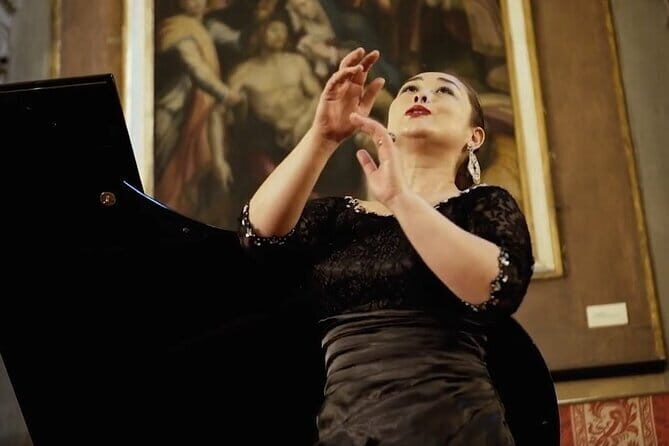
At $46.45 per person, you’re paying for three big things: (1) skip-the-line entry, (2) a guided explanation in two major museums, and (3) a walking tour through central Florence with a live guide.
If you priced this out separately as guided time plus museum access, it’s not just about the ticket cost—it’s about avoiding hours of waiting and getting the key context to appreciate what you see. For most visitors, that’s where the money goes. You’re buying momentum.
Two details matter for value. First, the tour includes guided access to both Accademia and the Uffizi with small group limits. Second, the half-day structure means you can still fit other Florence plans the same day without feeling like you’re trapped in museum time.
You’ll also want to budget for what’s not included. Food and beverages are at your own expense, and there’s no hotel pickup or drop-off. That’s normal, but it affects your planning: eat before or after, and be ready to meet in the city center.
Who this tour suits best (and who might want a different plan)
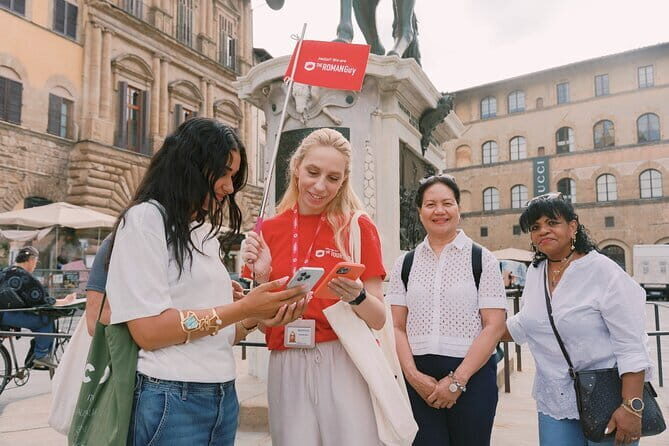
This tour is a great fit if you want the biggest Renaissance hits in a short window. It’s especially good for first-timers who feel overwhelmed by Florence’s museum lineup and want a guide to sort the highlights fast.
You’ll also likely enjoy it if you like the idea of process, not only finished masterpieces. The emphasis on Michelangelo’s David plus the Prisoners series gives you that “how it was made” angle.
It may be less satisfying if you’re the type who needs to absorb every painting slowly, in any order. This is not designed as a full museum day. The guided portion focuses on major works and key stories, and the rest is on your time once you’re inside—at least during the Uffizi free-linger window.
Practical tips so you get the most out of the day
A few things will help your experience feel smooth.
- Bring a valid passport or ID that matches the name on your booking for Uffizi entry. You may need to show documents at the ticket stage.
- Make sure you enter full names correctly when booking. The voucher with all travelers’ full names can be required before entry.
- Wear shoes for walking and stairs. The tour notes moderate physical fitness, and the Uffizi has some stairy areas.
- Use the Uffizi free time strategically. After the guide, don’t just drift—pick a couple works you still want to see and slow down there.
Should you book this Florence Accademia and Uffizi tour?
I’d book it if you’re in Florence for a limited time and you want a smart, time-saving way to see Michelangelo’s David and Uffizi masterpieces without getting stuck in queues. The small-group size, skip-the-line access, and guided context are a strong combo for the price.
I’d reconsider if your priority is total museum coverage at a slow pace. In that case, you might prefer a longer self-guided plan or separate museum visits with more time per room. For most people, though, this is an efficient way to get both the emotional punch of David and the cultural weight of the Uffizi, plus a real sense of Florence’s Renaissance setting as you walk between them.
FAQ
How long is this Florence tour?
It runs for about 3 hours 30 minutes approximately. In the half-day format, you spend about 30 minutes at the Accademia Gallery and about 1.5 hours at the Uffizi Gallery.
Is the tour offered in English?
Yes. The tour is offered in English.
Does the tour include skip-the-line entry?
Yes. It includes skip-the-line entry for both the Accademia Gallery and the Uffizi Gallery.
How large is the group?
The tour has a maximum group size of 15 travelers.
Where do we meet, and where does it end?
You start at Piazza della Santissima Annunziata, Firenze FI, Italy. The tour ends inside the Uffizi Gallery at Piazzale degli Uffizi, 6, 50122 Firenze FI, Italy.
What ID do I need for Uffizi entry?
You must present a valid passport or ID document that matches the name provided at the time of booking for successful entry to the Uffizi Gallery.
Is food included in the tour price?
No. Food and beverages are not included, so you’ll be eating on your own.
Is hotel pickup or drop-off included?
No. Hotel pickup or drop-off is not included.
Does the tour include the Duomo interior?
The tour includes stops for views as you pass by the cathedral area, with emphasis on Brunelleschi’s dome. The provided details do not describe Duomo interior entry.
Can I cancel for free?
Yes. You can cancel for a full refund up to 24 hours in advance of the experience’s start time. If you cancel less than 24 hours before, the amount you paid will not be refunded.
You Might Also Enjoy
More Museum Experiences in Florence

More Tour Reviews in Florence
- Tuscany Day Trip from Florence: Siena, San Gimignano, Pisa and Lunch at a Winery
★ 5.0 · 21,634 reviews - The Best tour in Florence: Renaissance & Medici Tales – guided by a STORYTELLER
★ 5.0 · 12,316 reviews