REVIEW · FLORENCE
Florence: Artisanal Crafts and Workshops Guided Tour
Book on GetYourGuide →Operated by Martina Cappello · Bookable on GetYourGuide
Florence’s crafts feel personal, not museum-made. This 3-hour guided tour threads together historic workshops where you can watch artisans at work, from gem-setting goldsmithing to leather craftsmanship. Two stops I really liked were Santa Maria Novella, Florence’s legendary pharmacy and perfume roots, and the workshop visits tied to the Florentine gold and stone tradition. The main drawback: you’ll walk a moderate amount through older, uneven workshop spaces, so it’s not a good fit for wheelchair users or anyone with mobility limits.
The tour I’d recommend this for is the one where you want Florence to feel hands-on. I like that the guide—Martina Cappello—keeps the pace comfortable and adjusts based on what you care about, whether that’s perfume, bookbinding, or carving details. It’s also practical: hotel pickup and drop-off are included, photos are usually allowed, and the guide lines up the right spots so you don’t spend your time hunting for small, hard-to-find workshops on your own.
In This Review
- Key things to know before you go
- Florence still makes things the old way
- Getting set up: Piazza Repubblica to workshop time
- Goldsmithing and semi-precious stones in Florence
- Leather working at Scuola del Cuoio inside Santa Croce
- Santa Maria Novella pharmacy: perfume roots since 1221
- Bookbinding and carving: frames, craftsmanship, and line work
- What the pace feels like (and how guides make it better)
- Price and value: $116 for three craft-heavy hours
- Who should book this Florence artisans tour
- Should you book the Florence Artisanal Crafts and Workshops tour?
- FAQ
- How long is the Florence Artisanal Crafts and Workshops guided tour?
- Where do you meet for the tour?
- Is hotel pickup and drop-off included?
- What languages is the live guide available in?
- What kinds of workshops and crafts does the tour include?
- Is food included during the tour?
- Can I take photos during the tour?
- Is this tour suitable for wheelchair users or mobility impairments?
- What is the tour price and what’s included in it?
Key things to know before you go
- Piazza Repubblica start point makes meeting easy: it’s at Piazza Repubblica, next to the obelisk
- A concentrated 3 hours with multiple disciplines: goldsmithing, leather, bookbinding, perfumery, and carving
- Old-world craft settings like the Scuola del Cuoio within Santa Croce and gem work linked to the commesso technique
- Santa Maria Novella gives real context, from its 1221 founding to Florence perfume lore
- No food inside workshops means you’ll want to time snacks before/after the tour
Florence still makes things the old way
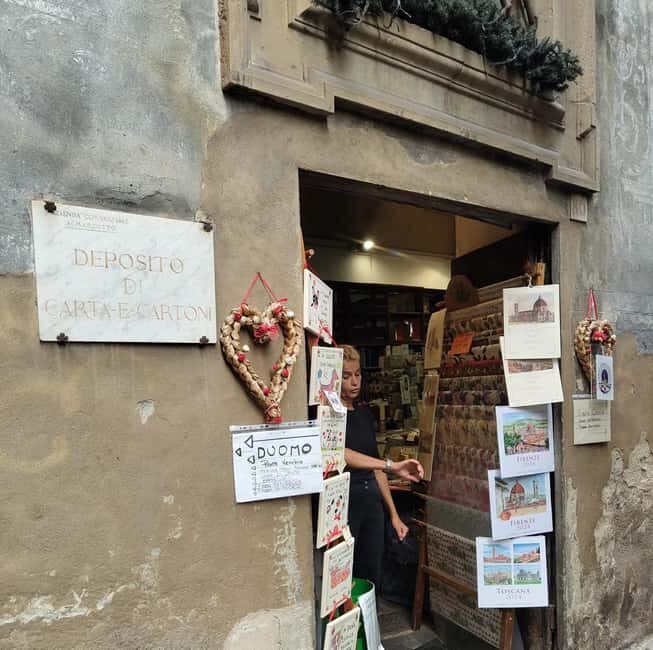
Florence has always been more than paintings and marble. It’s also a city of makers—people who learned a trade at the bench, then passed it along through families and workshops that kept improving technique over centuries. That’s why this kind of craft tour hits differently than a standard “see the sights” outing.
You’ll notice how the tour builds connections between crafts that might seem separate at first. Jewelry isn’t just jewelry—it needs refined metalwork and stone-setting. Leather isn’t just leather—it’s skilled cutting, tooling, and finishing. And perfume in Florence isn’t only about a scent in a bottle; it’s tied to the pharmacy tradition and the careful making of fragrances.
I also like that the tour doesn’t treat these crafts like static artifacts. You’re guided into places where the work is still central to the identity of the shop, and you get a chance to ask questions while seeing artisans at work. You come away with a better sense of how Renaissance elegance and modern workshop life share the same DNA.
You can also read our reviews of more guided tours in Florence
- The Best tour in Florence: Renaissance & Medici Tales – guided by a STORYTELLER
★ 5.0 · 12,316 reviews
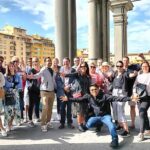
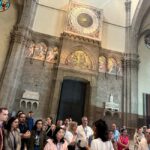
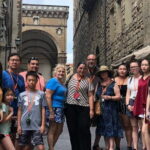
Getting set up: Piazza Repubblica to workshop time
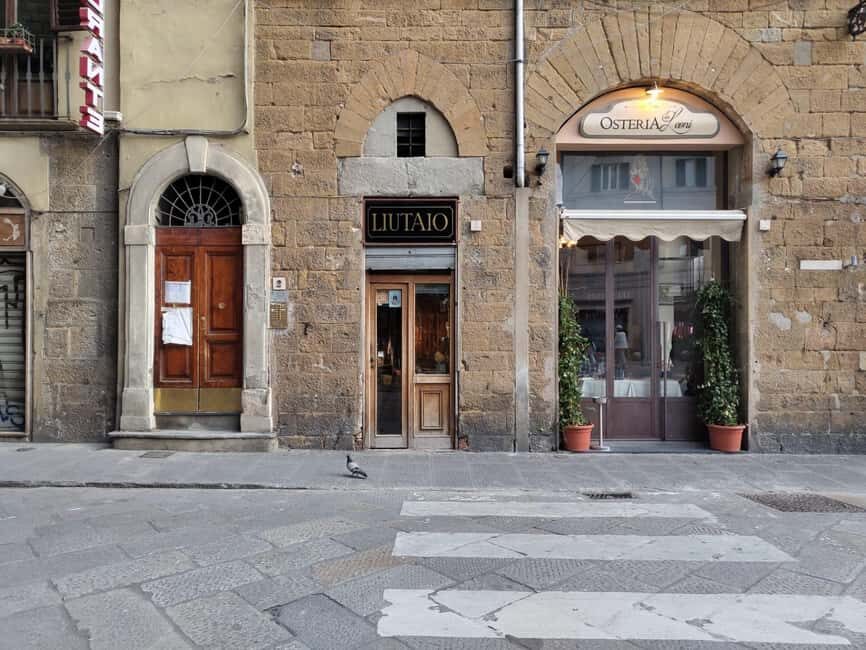
The meeting point is Piazza Repubblica, next to the obelisk. From there, you’ll be handled with hotel pickup and drop-off, which is a big deal in Florence. It saves you the hassle of matching the exact timing of tiny workshop entrances and short streets, especially if you’re staying a bit outside the core.
This is a 3-hour tour with a private group feel, and the guide is live, offering Spanish and English. That private setup matters for the experience: it’s easier for the guide to ask what you’re most curious about and then steer you toward the details that will land for you. One of the best moments in these tours is when you realize you’re looking at the right thing—not just watching a process, but understanding what makes it hard or special.
Practical note: plan for comfortable walking shoes. The tour includes a moderate amount of walking, and workshop spaces tend to be older buildings. If you have mobility issues, you should skip this one, since it’s not suited to wheelchair users.
Goldsmithing and semi-precious stones in Florence
Gold and stones are where Florence’s reputation gets real fast. This part of the tour focuses on how artisans work with metal and gems in ways that connect to the city’s long tradition of craft.
A standout visit is tied to the Lastrucci family workshop in the ancient Spedale di San Francesco, one of the very few places using the Florentine commesso technique. In plain terms, commesso is a precision craft where materials are fitted together with careful design and tight control over shape and color. It’s the kind of technique you can only appreciate when you’re close enough to see how the work lines up.
You may also see gem and gold work in a smaller workshop setting, including the shop of Arlo Haisek. The value here isn’t only the final objects. It’s the chance to understand the workflow: the layout thinking, the attention to stone choices, and how artisans treat small imperfections as part of the process they manage—not just something to hide.
If you love detail work, this stop is a win. If you’re not sure what you’re looking at, don’t worry—your guide can help you spot the elements that make the craft distinct, and you’ll get a clearer mental picture of why Florentine craftsmanship earned international admiration over time.
Leather working at Scuola del Cuoio inside Santa Croce
Leather is one of those crafts that looks simple until you watch it being done. The tour takes you to Scuola del Cuoio, located within the Santa Croce complex, and you’ll see how the craft is tied to the broader ecosystem of Florentine leather making.
This isn’t the kind of stop where you only see finished belts or bags. You’re there to see the process and to understand what leather work requires: skill with tools, careful handling of material, and technique that affects the surface, edges, and final look. Leather work in Florence has a specific reputation, and seeing it in the Scuola del Cuoio setting helps you understand why the city became known for these goods.
If you’re the type who likes “how it’s made” experiences, I think you’ll appreciate the stop for what it teaches about labor and patience. You’re not just sightseeing. You’re observing a craft that depends on steady hands and repeated mastery—exactly the kind of tradition that survives because workshops kept it alive through generations.
There’s also an added bonus: the tour ties leather work to well-known retail spaces connected to the craft world, such as Il Bisonte and the refined environment of Stefano Bemer (as context for how the craft shows up in Florence shopping culture).
Santa Maria Novella pharmacy: perfume roots since 1221
Then comes a stop that’s equal parts craft lesson and cultural anchor: Santa Maria Novella, the oldest pharmacy in the world, founded in 1221 by Dominican friars. You’re walking into a space where medicine-making and fragrance-making grew from the same careful logic: ingredients, process, and knowledge.
What I like about this visit is that it gives you a story you can remember. You’ll hear how apothecaries helped shape the early foundation of perfumery, and how it connects to Florentine influence abroad. One of the most interesting details is the link to Renato Bianco, a master perfumer associated with the era of Catherine de’ Medici, and the fragrance Aqua della Regina that he carried to the French court.
After that, you’ll have time around fragrance at Aquaflor, where you can purchase excellent room fragrances. This is a practical, low-pressure shopping moment because it’s tied to the theme of the day. If you’ve ever bought perfume in a hurry and regretted it later, this gives you a smarter way to choose: you’re focused on the craft and the tradition, not just the label.
Just remember one thing for your day plan: food and drinks aren’t allowed inside the workshops, so keep your timing in mind. You’ll want water breaks outside, and you’ll likely do best with a snack before or after the tour.
You can also read our reviews of more tours and experiences in Florence
- Cooking Class and Lunch at a Tuscan Farmhouse with Local Market Tour from Florence
★ 5.0 · 4,831 reviews



Bookbinding and carving: frames, craftsmanship, and line work
Florence has a big soft spot for objects that combine function and beauty. This tour leans into that idea with bookbinding and a separate stop for carving work, including famous framing craftsmanship.
For carving and framing, you’ll go to Bottega d’Arte Maselli, known for frames and for work that has included framing famous paintings attributed to Da Vinci and Rosso Fiorentino. Even if you’re not a framing expert, you can still appreciate why this matters. A frame is not just decoration—it’s part of the way you experience the artwork. It has to match the painting’s character, and it has to be made with fine control over materials and design.
Bookbinding fits into the same theme. It’s another craft where precision and patience are the whole game. When a guide explains what goes into bindings—structure, durability, and how the final object is meant to be handled—you start seeing paper and covers as engineered products, not just things that hold pages.
I also like that this section balances the “hard craft” feel of leather and metal with a more delicate, detail-forward craft approach. If you came into the day thinking you’d only care about one discipline, this is the part that helps you broaden your interest.
What the pace feels like (and how guides make it better)
A lot of workshop tours fail because they run too fast or too broad. This one works because the timing stays readable: you’re not stuck in long lines, and you aren’t rushed between stops so hard that you miss the point of the craft.
The best element I noticed is the guide approach. Martina Cappello is the kind of leader who starts by getting a sense of what you care about, then adjusts the emphasis at each place. That means you might spend extra time on gem-setting details if that’s your focus, or you might linger around perfume craft history if you’re more interested in the story side.
The tour also has a useful “don’t stress” structure. You have a set start location, hotel pickup and drop-off, and built-in admission where it matters—like Scuola del Cuoio and the Lastrucci family workshop. That removes the most annoying part of self-guided crafts days: the uncertainty.
Still, the walking is real. You’ll be moving between stops inside older spaces, and the tour is not suitable for wheelchair users or mobility impairments due to historic locations. If you have any doubt about distances or uneven floors, it’s worth thinking twice before booking.
Price and value: $116 for three craft-heavy hours
At $116 per person for 3 hours, this isn’t the cheapest way to spend half a day in Florence. But it also isn’t overpriced for what you get.
Here’s why the value can make sense:
- You’re paying for a guided route through multiple craft disciplines instead of one workshop visit.
- You’re getting admission for key stops, including Scuola del Cuoio and the Lastrucci workshop.
- Hotel pickup and drop-off are included, which reduces both time and hassle.
- The guide can point out what matters—materials, techniques, and the “why” behind each object—so you don’t just look at things without context.
Where the math might not work for you is if you’re not very craft-focused. If you came to Florence mainly for big museum hits or long cathedral time, this may feel too specialized. Also, shopping isn’t included, and the tour notes personal shopping expenses aren’t part of the price—though the stop at Aquaflor gives an obvious, themed option.
If your ideal day includes hands-on process viewing and you like learning how objects are made, $116 can feel like a fair trade for a compact, guided craft day.
Who should book this Florence artisans tour
You’ll likely enjoy this tour if:
- You love small workshops and watching people work at a bench
- You want Florence beyond art galleries, with crafts tied to real city traditions
- You’re curious about how materials become jewelry, leather goods, books, and frames
- You like a guide who shapes the experience around your interests
You might skip it if:
- You need a low-walking plan with fully accessible surfaces
- You’re only interested in major landmarks and don’t care about crafts
- You want a long, unstructured day rather than a timed route
If you’re going with a partner or friend who has slightly different interests—say one loves perfume and the other loves carving—this tour can still work because the guide can help balance the day.
Should you book the Florence Artisanal Crafts and Workshops tour?
If you want Florence to feel real, not just photographed, I’d say yes—with one key condition: you should actually care about how things are made. The Santa Maria Novella stop alone gives the tour a strong cultural anchor, and the workshop sequence turns that anchor into a full craft day.
Book it if you’re comfortable walking some older streets and you’re open to multiple crafts in one morning/afternoon. Don’t book it if mobility is an issue, since historic workshop locations make it unsuitable for wheelchairs.
If you do book, come ready to look closely. Ask questions. Pick one or two crafts you care about most, then let the rest surprise you.
FAQ
How long is the Florence Artisanal Crafts and Workshops guided tour?
It lasts 3 hours.
Where do you meet for the tour?
The meeting point is Piazza Repubblica, next to the obelisk.
Is hotel pickup and drop-off included?
Yes, hotel pickup and drop-off are included.
What languages is the live guide available in?
The live tour guide speaks Spanish and English.
What kinds of workshops and crafts does the tour include?
You’ll see goldsmithing and semi-precious stones, leather work at Scuola del Cuoio, bookbinding, perfumery, and carving at Bottega d’Arte Maselli.
Is food included during the tour?
No. Food and drinks are not included, and food and drinks aren’t allowed inside the workshops.
Can I take photos during the tour?
Photography is usually allowed.
Is this tour suitable for wheelchair users or mobility impairments?
No. It is not suitable for wheelchair users or those with mobility impairments due to the historic nature of the workshop locations.
What is the tour price and what’s included in it?
The price is $116 per person. Included items are the guided tour of historic Florentine workshops, admission to Scuola del Cuoio and the Lastrucci family workshop, the visit to Santa Maria Novella, and hotel pickup and drop-off.
You Might Also Enjoy



More Guided Tours in Florence
- The Best tour in Florence: Renaissance & Medici Tales – guided by a STORYTELLER
★ 5.0 · 12,316 reviews
More Tours in Florence
- The Best tour in Florence: Renaissance & Medici Tales – guided by a STORYTELLER
★ 5.0 · 12,316 reviews

More Tour Reviews in Florence
- Tuscany Day Trip from Florence: Siena, San Gimignano, Pisa and Lunch at a Winery
★ 5.0 · 21,634 reviews - The Best tour in Florence: Renaissance & Medici Tales – guided by a STORYTELLER
★ 5.0 · 12,316 reviews