REVIEW · FLORENCE
Florence: Highlights and Small-Group Accademia Tour
Book on GetYourGuide →Operated by ItalianVista · Bookable on GetYourGuide
One walk through Florence can feel like ten days. This small-group highlights tour strings together the city’s biggest landmarks, then finishes at the Accademia for Michelangelo’s David. I especially love how you get a clear orientation fast, and how the guide turns famous facades into real stories you can remember. The trade-off: you’ll be on your feet the whole time, and if your group gets a bit spread out, you may need to work to stay close to the guide.
You’ll start in the center and move through Florence like a living map: Roman remains near Piazza della Repubblica, political power at Piazza della Signoria, the jewelry-and-legend drama of Ponte Vecchio, and finally the art-packed Accademia. I also like that the tour uses preferential entrance for the Accademia, which matters because lines there can crush your time. The main consideration is that priority entrance can fail if queues are unusually long, so build in a little flexibility.
In This Review
- Key points to know before you go
- Piazza della Repubblica to Piazza della Signoria: Florence’s power from street level
- Ponte Vecchio and the Vasari Corridor: the jewelry bridge with a backstory
- Pitti Palace and Oltrarno: where Florence shows its private side
- Via Tornabuoni and Palazzo Strozzi: Renaissance details you can actually notice
- Duomo time: Brunelleschi’s dome, the Baptistery, and what to watch for
- Accademia entrance and Michelangelo’s David: how the skip-the-line is really used
- How long this takes and how to stay together
- Price and value: is $117 a smart deal for Florence highlights?
- Who should book this David-and-Duomo Florence tour?
- A quick checklist before you go
- Should you book it?
- FAQ
- Where is the meeting point?
- How long is the tour?
- What does the tour include for the Accademia?
- What are the main Florence stops on this walk?
- Which languages are available?
- Is there food or drink provided?
- What should I bring?
- Is the tour wheelchair accessible?
- Are there any days with special entry rules for the sites?
Key points to know before you go
- Skip-the-line Accademia access helps you get to Michelangelo faster
- Michelangelo’s David and the Prisoners come with context, not just photos
- Piazza della Signoria + Palazzo Vecchio explains Florence’s political center
- Ponte Vecchio and the Vasari Corridor add a story layer to the bridge
- Duomo and Baptistery views give you the outline of Florence’s most important religious hub
- A small-group pace works best when you keep close and watch your shoes
Piazza della Repubblica to Piazza della Signoria: Florence’s power from street level
You meet at Piazza della Repubblica, by the central column topped with a lady statue. From the first minutes, the tour helps you get oriented. Florence is small in area, but it’s huge in meaning, so starting in the center is smart. You’ll walk into Piazza della Repubblica, where the Roman Forum once stood, which gives you a quick sense that Florence didn’t start as Renaissance poster art.
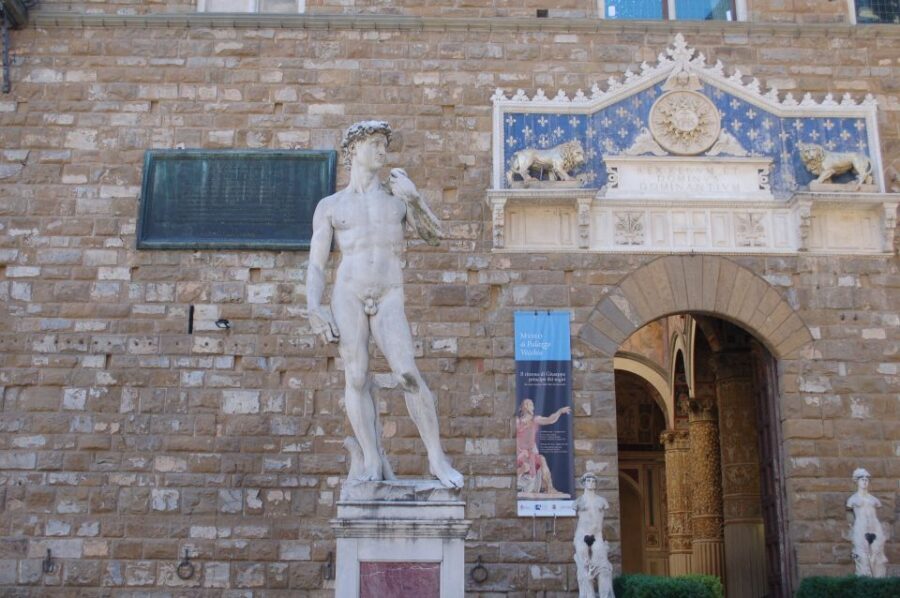
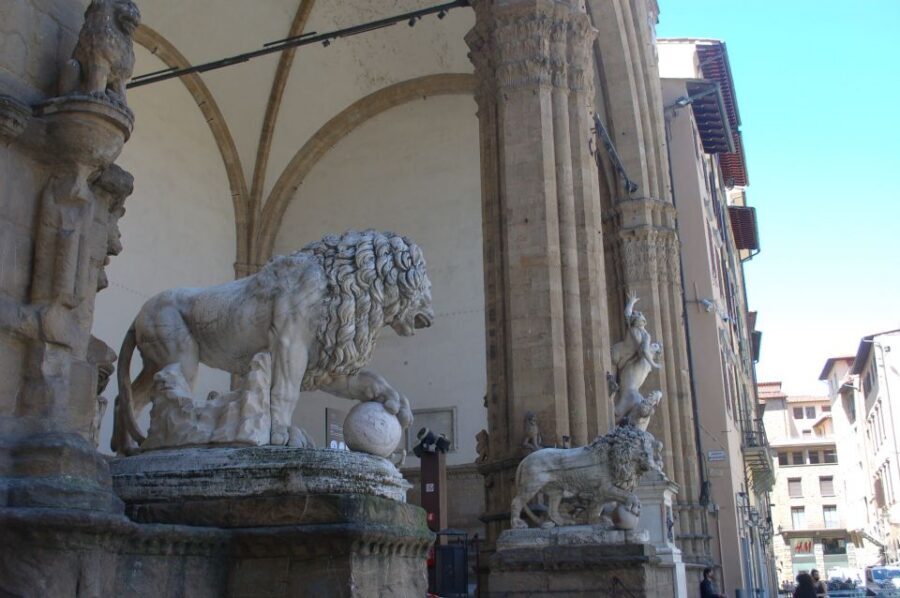
Next comes Piazza della Signoria, the political heart of the city. This is one of those places where the architecture and statues are not just decorative. You’ll hear the stories behind the Medici family, the Florentine Republic, and Palazzo Vecchio—and the guide will help you connect those names to what you’re actually seeing. The square is packed with sculpture, and the best payoff here is knowing what you’re looking at rather than just where to stand for a selfie.
Practical note: Piazza della Signoria is an outdoor museum in all directions. If your group spacing loosens (I’ve learned this can happen on walking tours), you’ll want to keep near the front half of the group so you don’t miss the guide’s key points.
You can also read our reviews of more tours and experiences in Florence.
- Tuscany Day Trip from Florence: Siena, San Gimignano, Pisa and Lunch at a Winery
★ 5.0 · 21,634 reviews
Ponte Vecchio and the Vasari Corridor: the jewelry bridge with a backstory
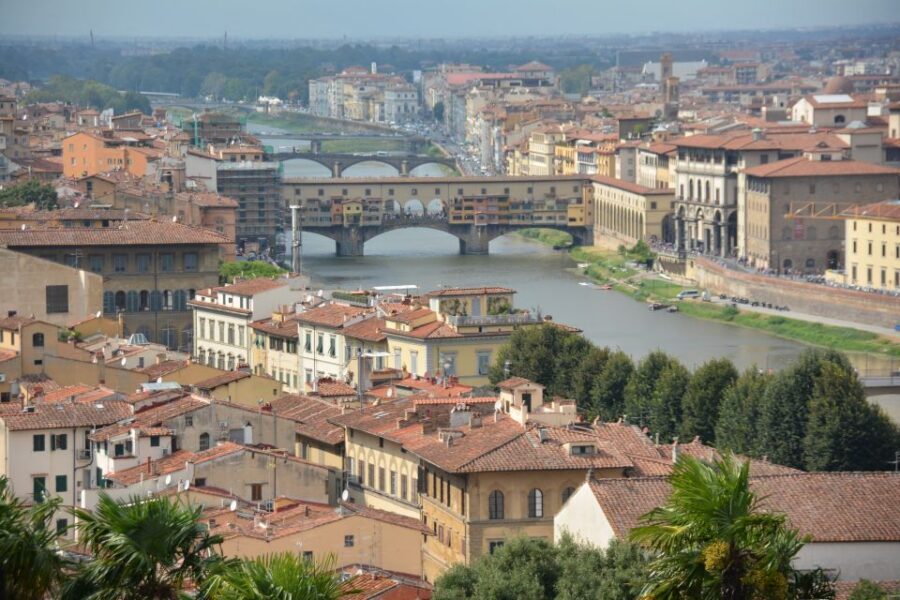
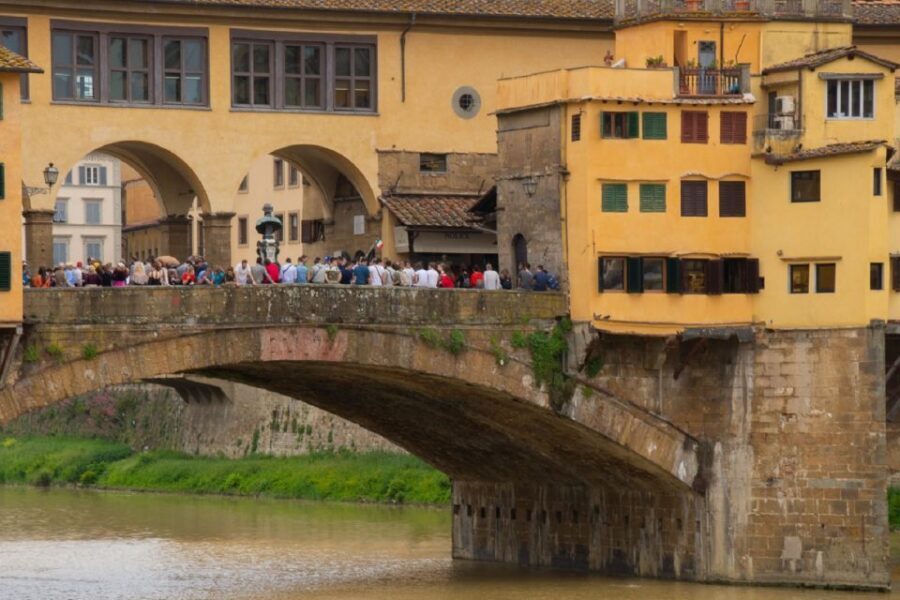
After the political square, you’ll head toward Ponte Vecchio, the bridge that always looks like it’s wearing its best outfit. The tour doesn’t just point at the shops. You’ll learn the unique history connected to the Vasari Corridor, the elevated passage above the bridge. That detail matters because it explains why Ponte Vecchio became what it is—tied to power, movement, and Medici-era control rather than only commerce.
You’ll also hear what makes Ponte Vecchio feel different from other bridges in Italy: it’s a working bridge, built around shops and a tightly defined viewpoint. If you’re the type who likes to take photos with understanding (not just from instinct), this stop pays off because you’ll know where to look and why the bridge was arranged the way it was.
Pitti Palace and Oltrarno: where Florence shows its private side
The walk continues to Pitti Palace, once the private residence of the grand dukes. Even if you don’t go inside, the exterior gives you a strong sense of authority. Pitti is a good contrast to the public, political vibe of Piazza Signoria. It’s the shift from Florence as government to Florence as personal rule.
Then you’ll pass into Oltrarno, the area associated with artists, workshops, and laid-back cafes. The tour uses Oltrarno to change the feel of the walk—less “official buildings, important speeches,” more “people making things” energy. Don’t expect this to be silent or empty; it’s still a central neighborhood. But compared with the museum-heavy center, it often feels easier to breathe in.
One nice touch: you’ll cross Ponte Santa Trinita and stop for a stunning photo setup looking back toward Ponte Vecchio from this side. It’s the kind of viewpoint that helps you see a landmark as a landmark, not just a background.
Via Tornabuoni and Palazzo Strozzi: Renaissance details you can actually notice
As you move along Via Tornabuoni, the mood shifts again. This is the fashion-designer street, and the tour highlights what you’ll see in the windows—small visual cues that help you read Florence as a living city, not a theme park of old stones.
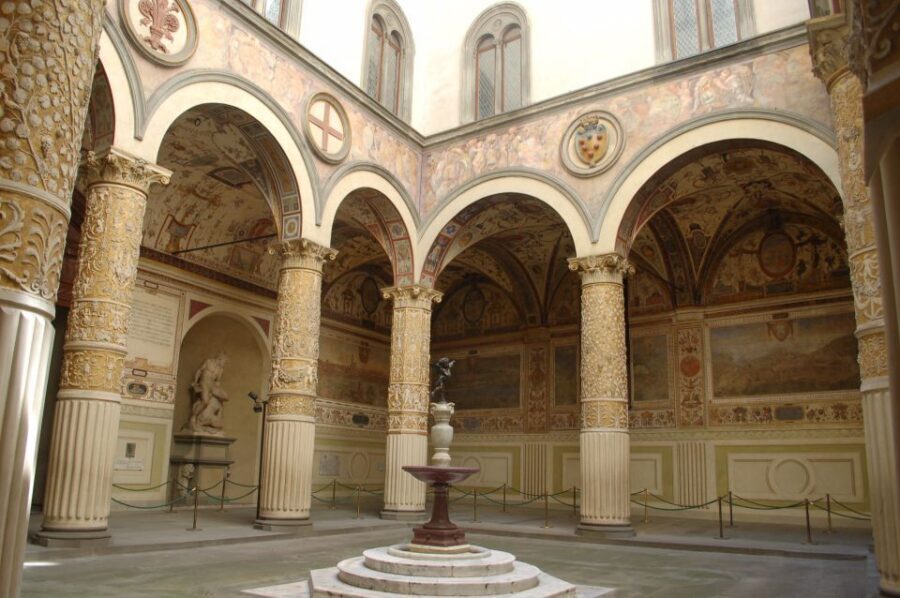
Next comes Palazzo Strozzi’s courtyard. Even without going deep into an interior visit, a courtyard stop is useful because it lets you see Renaissance architecture in a calmer setting. Courtyards strip away street noise and give you cleaner lines, so you can focus on proportion, openings, and how the building organizes space.
Tip: if you’re prone to losing track in long walks, this is a good point to slow down for a minute and look back at the route you already covered. Courtyards create an easy mental reset.
Duomo time: Brunelleschi’s dome, the Baptistery, and what to watch for
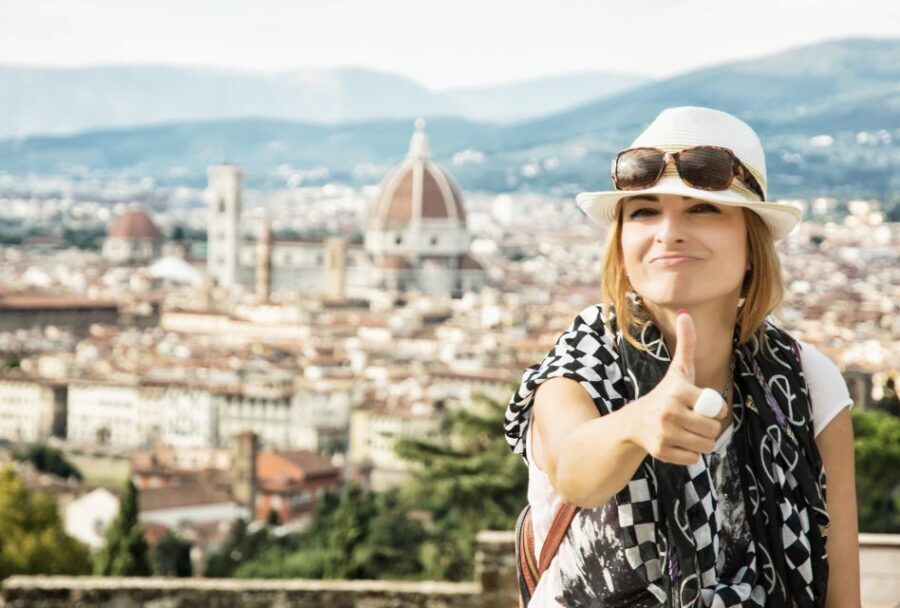
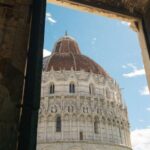
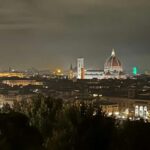
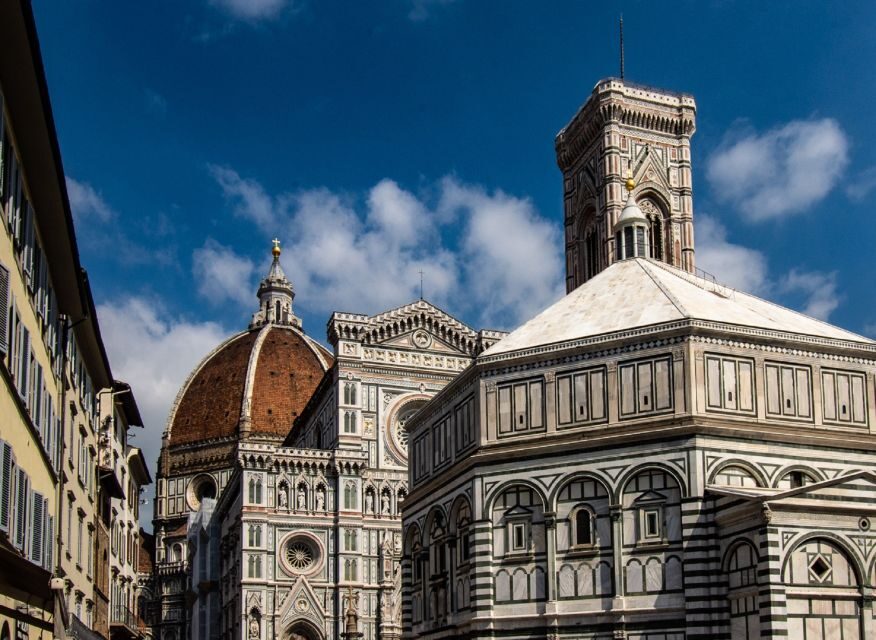
You’ll finish the scenic buildup at the Duomo complex, where the Cathedral, Brunelleschi’s Dome, and the Baptistery are the main attractions. This stop is all about recognition. From the outside, you’ll understand why Florence centers so much attention on this site. The dome is the headline, but the Baptistery is the supporting character that makes the whole area make sense.
If the timing works and the line situation allows, you may also see the inside of the Cathedral. Just know that access rules can vary, and the Cathedral is not accessible on Sunday morning. This is the kind of detail that can matter a lot depending on when you’re going.
Practical shoe note: this is one of the places where comfortable footwear pays you back fast. You’ll be walking, standing, and looking up.
- Tuscany Day Trip from Florence: Siena, San Gimignano, Pisa and Lunch at a Winery
★ 5.0 · 21,634 reviews

Accademia entrance and Michelangelo’s David: how the skip-the-line is really used
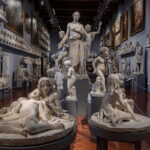
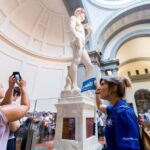
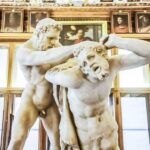
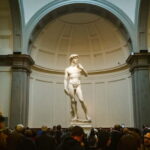
The tour’s biggest art payoff is the Accademia visit, with preferential entrance to see Michelangelo’s David plus the Prisoners. The skip-the-line part is valuable because it protects your time at the exact moment when crowds tend to be strongest. In other words, the tour doesn’t just promise access—it tries to protect the experience from slipping away.
Inside, the guide focuses on what makes these statues more than famous shapes. You’ll hear about the “secrets” of the works and Michelangelo’s life, with attention to what you’re noticing in front of you. That context is the difference between seeing David as a postcard and understanding David as a statement—about skill, body, power, and the Renaissance mind that made it.
The Accademia can feel compressed—high ceilings, many visitors, and the kind of room where your viewpoint depends on where you can stand. If you’ve got your camera ready, keep it secondary. Watch the guide’s cues first. The value is in knowing where to look and why.
Also, the group can get crowded inside even when you’ve used preferential entrance. If you’re sensitive to tight spaces, come with the mindset that you’ll do best if you follow the guide’s instructions on where to stand.
How long this takes and how to stay together

This is a 2.5 to 3 hour walking tour. That time includes multiple stops for stories and photos, plus moving between major areas on foot. Florence’s center is compact, but you’ll still cover real distance and climb in small ways without it feeling like a hike.
One practical lesson: small groups work best when everyone stays close. I like tours where the guide uses clear coordination, but even the best guides can’t teleport. If you tend to lag behind, pick a spot near the front at the start and keep that position during transitions. You’ll get more from each stop when you’re not hearing half the story through the gaps.
Another practical detail: no luggage or large bags. If you’re traveling light already, great. If you’re not, sort your bags before you head to the meeting point.
Price and value: is $117 a smart deal for Florence highlights?
At about $117 per person for a three-hour format, you’re paying for three things: a licensed guide, concentrated stops in the center, and skip-the-line / preferential access for the Accademia.
If you try to DIY this route, you’d spend time figuring out the order, then time waiting for museum entry when crowds hit. Here, the tour is designed to minimize that friction by routing you through the key squares and then using preferential entrance right when it matters most. That’s the value play.
It’s not a cheap museum sprint, either. You’re paying for guided interpretation at every major pause: Piazza della Repubblica → Piazza della Signoria → Ponte Vecchio → Pitti/Oltrarno → Duomo area → Accademia. If you want Florence as a connected story rather than a set of scattered checkmarks, this price can feel fair.
One caution: queue length can still affect the priority experience at the Accademia if lines are unusually long. So the value is strong when conditions cooperate.
Who should book this David-and-Duomo Florence tour?
This tour fits best if you want:
- The “first-time in Florence” orientation without getting lost
- A guided explanation at major landmarks like Piazza della Signoria and the Duomo
- A planned path to the Accademia focused on David and the Prisoners
- A walkable, centralized route that’s over in one half-day
It’s also a good choice if you like art history but don’t want to spend your whole day in one museum. Instead, you get the city’s political and architectural landmarks and a top-tier Renaissance art visit in the same outing.
You might want to skip it if you:
- Prefer long museum time with minimal walking
- Don’t do well in crowded indoor rooms
- Need a super slow pace with lots of breaks
A quick checklist before you go
Bring:
- Passport or ID card
- Comfortable shoes (this is real walking, not window shopping)
Expect:
- The meeting point at Piazza della Repubblica, by the central column with the lady statue
- A guide and an audio guide experience in multiple languages
- A no-large-bags rule
If you’re curious about audio: the tour includes an audio guide in multiple languages alongside the live guide, so you can follow along even when the room gets noisy.
Should you book it?
Yes—if your priorities include the Duomo area and the Accademia, and you want Florence organized into a single, guided storyline. The strongest reason to book is the planning: it sequences the city’s power squares, bridges, and architectural landmarks, then uses preferential entrance to protect your time for Michelangelo’s David.
Book with confidence if you can handle walking for about three hours and you’ll stay near your guide during transitions. If you hate crowds or need a quieter, slower pace, consider a more flexible sightseeing plan instead.
FAQ
Where is the meeting point?
You meet at Piazza della Repubblica, by the central column with the statue of a lady on top.
How long is the tour?
The tour runs about 2.5 to 3 hours.
What does the tour include for the Accademia?
It includes a skip-the-ticket line / preferential entrance to the Accademia to see Michelangelo’s David and the Prisoners.
What are the main Florence stops on this walk?
You’ll visit Piazza della Repubblica, Piazza della Signoria, Ponte Vecchio, Pitti Palace, Oltrarno, Ponte Santa Trinita (photo stop), Via Tornabuoni, Palazzo Strozzi’s courtyard, the Duomo complex (including Brunelleschi’s Dome and the Baptistery), and then the Accademia.
Which languages are available?
The live guide can be English, French, German, Italian, or Spanish. An audio guide is also included in those languages.
Is there food or drink provided?
No. Food or drink is not included.
What should I bring?
Bring a passport or ID card and wear comfortable shoes.
Is the tour wheelchair accessible?
Yes, the tour is wheelchair accessible.
Are there any days with special entry rules for the sites?
On the first Sunday of each month, entrance is free of charge, but tickets can’t be reserved ahead of time, so entry is not guaranteed.
You Might Also Enjoy

More Tours in Florence
- The Best tour in Florence: Renaissance & Medici Tales – guided by a STORYTELLER
★ 5.0 · 12,316 reviews

More Tour Reviews in Florence
- Tuscany Day Trip from Florence: Siena, San Gimignano, Pisa and Lunch at a Winery
★ 5.0 · 21,634 reviews - The Best tour in Florence: Renaissance & Medici Tales – guided by a STORYTELLER
★ 5.0 · 12,316 reviews