REVIEW · FLORENCE
Florence: Michelangelo’s David and Accademia Gallery Tour
Book on GetYourGuide →Operated by mario gesu · Bookable on GetYourGuide
David looks different after this.
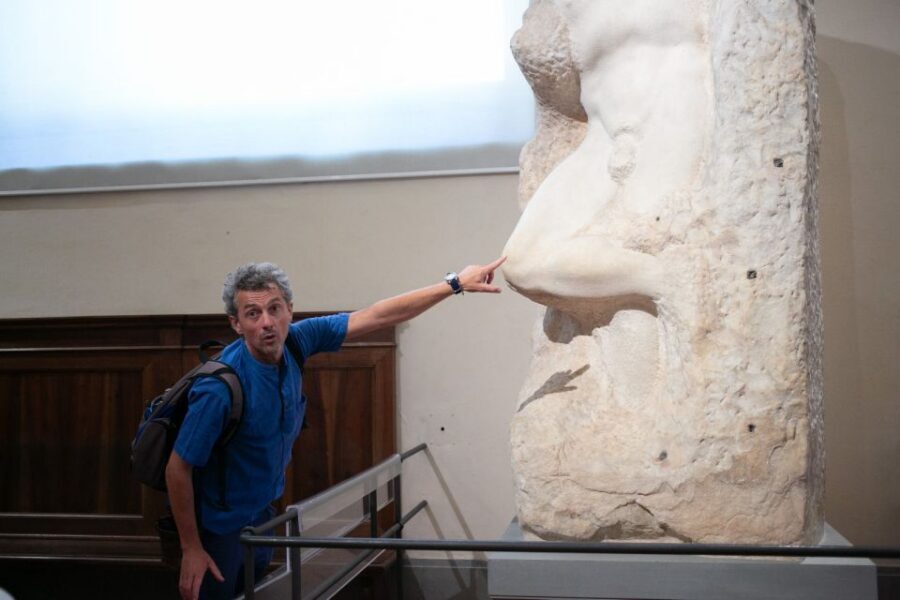
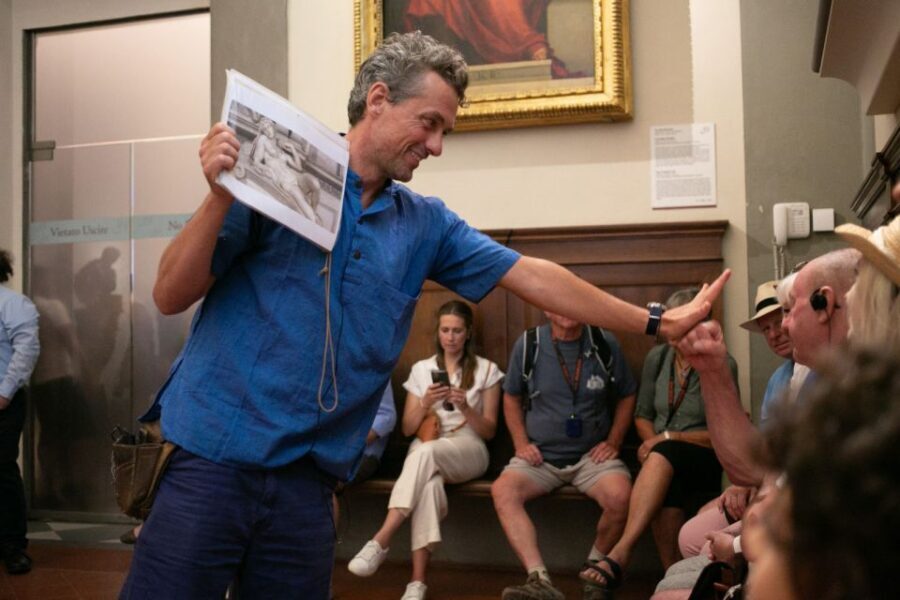
I love the interactive way Mario Gesu (a native Florentine and local actor) gets you asking questions instead of just staring at stone, and I love the red thread concept that links David to the Sistine Chapel. One possible drawback: if you only want a quick checklist of facts and photos, this can feel more philosophical than straightforward.
You’ll spend about 75 minutes inside the Accademia Gallery with an English guide, then you continue at your own pace. The best part is that you finish the guided section ready to look—really look—at the details Michelangelo built into David and the Prisoners.
In This Review
- Key things that make this Accademia tour different
- Skip the Accademia ticket line and meet Mario Gesu outside the museum
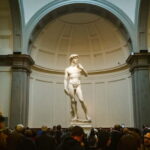
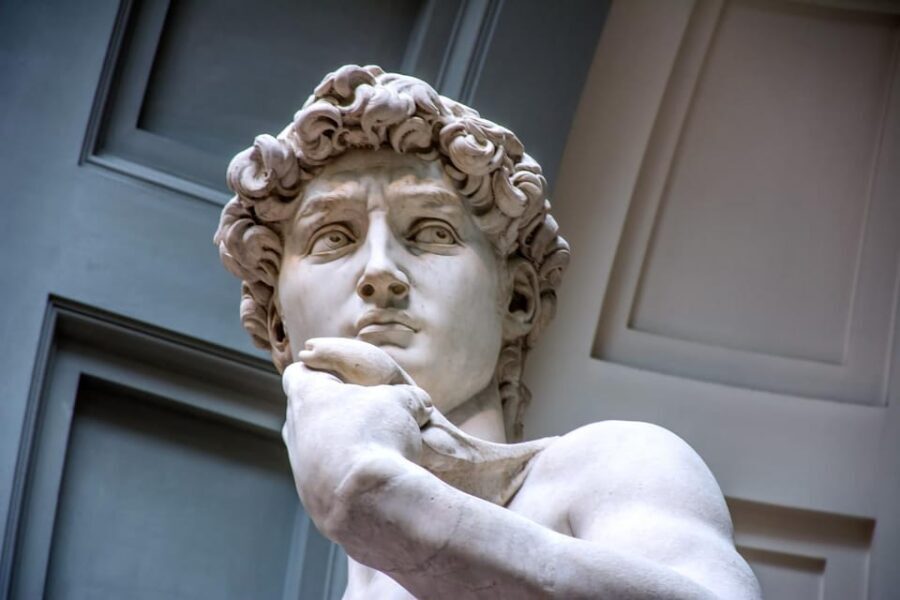
- David at the center: what the guide makes you see
- Prisoners and Michelangelo’s unfinished idea: why it’s not a mistake
- The red thread from David to the Sistine Chapel
- A Q&A tour built for curiosity, not passive listening
- Finish strong: time to explore Accademia on your own
- Price and value: what $57 gets you for David and the Accademia ticket
- Who should book this Florence David tour?
- Should you book Mario Gesu’s Accademia tour of David and the Prisoners?
- FAQ
- How long is the Florence Accademia Gallery tour?
- What is the price per person?
- Does the price include museum tickets?
- Where do I meet the guide?
- What time should I arrive before the tour?
- Is the tour offered in English?
- Is it wheelchair accessible?
- What should I bring with me?
- Can I cancel and get a refund?
Key things that make this Accademia tour different
- Skip-the-line entry plus headsets, so you don’t miss a word even in a busy museum moment
- Native Florence guide Mario Gesu, known locally for performing Dante, not just lecturing art history
- A “red thread” theme that connects David to the Sistine Chapel through a single idea you’ll remember
- David then the Prisoners, using the early-to-mature shift to explain Michelangelo’s growth
- Question-based approach, with metaphors designed to make the sculpture’s meaning feel graspable
- Guided first, self-guided second, so you can linger on what grabs you after the tour ends
Skip the Accademia ticket line and meet Mario Gesu outside the museum
This tour starts where it should: right at the entrance area, not far flung and not complicated. You meet at the ATM machine of Libreria evangelica, just in front of the Accademia museum entrance, and you arrive about 15 minutes early.
From there, the big practical win is skip-the-line access. You’ll still be in a ticketed flow, but the main ticket friction is handled for you, so you can get moving faster than a solo ticket line would allow. You’ll also get headsets, which matters in a gallery where sound bounces and groups shuffle.
A small but important note for families: the tour data says to bring passport or ID for children. Also bring headphones (even though headsets are provided, it doesn’t hurt to have your own in case anything is off with devices or sharing).
Mario is an English guide, and the tour is designed to be understandable for different ages. That’s not marketing fluff here—it shows up in the way he structures explanations.
You can also read our reviews of more museum experiences in Florence

David at the center: what the guide makes you see
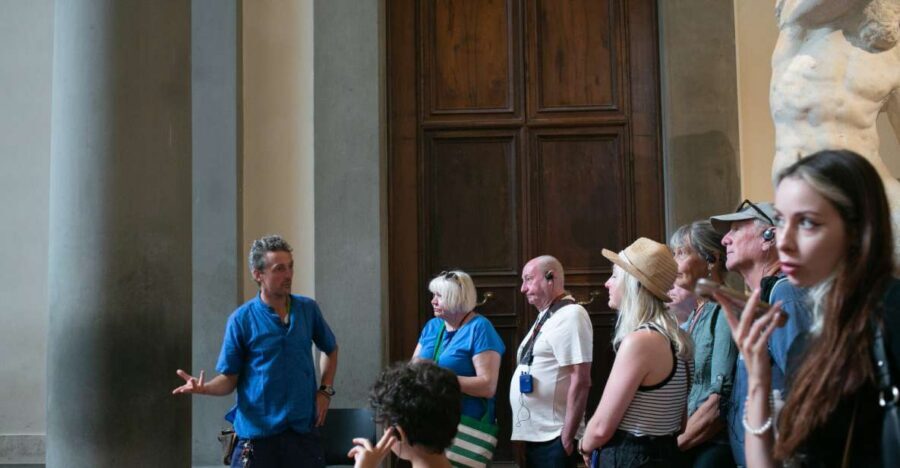
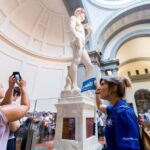
You start with Michelangelo’s David as the “peak” of his earlier work. That framing matters because it changes your viewing from “big famous statue” to “a turning point.” Mario leads you through what’s going on in the figure—his choices of body, expression, and the bigger idea behind the commission—without getting stuck in a dry recitation.
You’ll also learn the spiritual meaning behind David. The guide doesn’t present it like a puzzle that only adults can solve. Instead, the approach uses metaphors and discussion to help you connect what you see (posture, tension, expression) to the message Michelangelo is trying to send.
One thing I really like about this style: the tour is set up so you don’t just memorize points. You get a way to interpret what’s in front of you. That becomes useful later in the museum, after the guide steps away.
And because you have headsets, you can stay focused on the sculpture rather than craning to hear.
Prisoners and Michelangelo’s unfinished idea: why it’s not a mistake
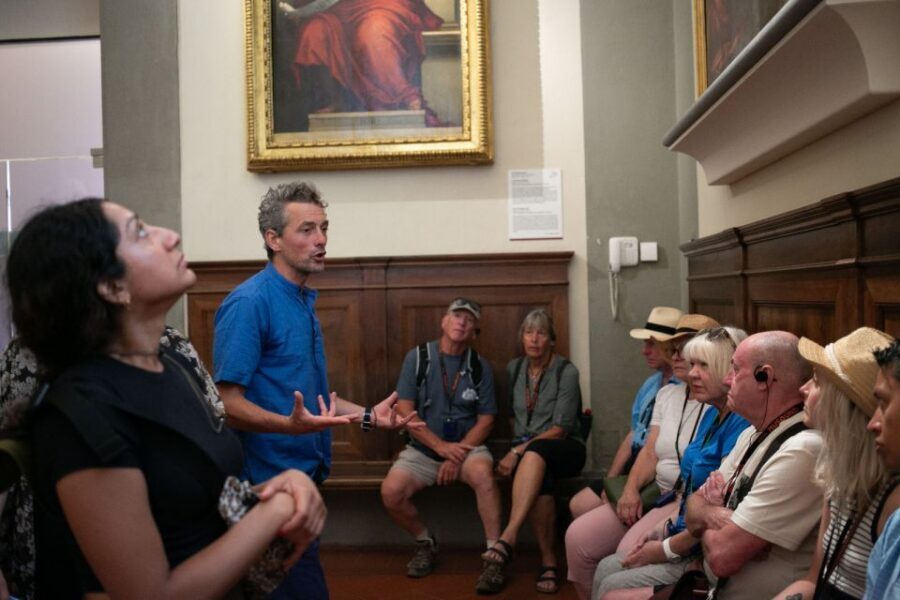
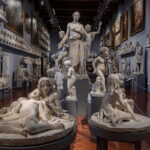
After David, you walk just a short distance in Michelangelo’s world to the Prisoners. The guide’s key move is explaining how Michelangelo “surpasses” David as he moves from a younger style into a more mature one.
Here’s the value: you learn to understand the Prisoners through the so-called unfinished approach. Instead of treating broken-off stone as incomplete, the tour frames it as part of the creative logic. You’re guided to notice how expression and form work even when you can see the process.
This is where many people either lose interest or suddenly pay attention. If you’ve ever felt “unfinished sculpture is just…unfinished,” this tour gives you tools to read it. You start seeing the struggle inside the stone—not just the final surface.
Expect a logical progression: early confidence (David) becomes deeper complexity (Prisoners). Even if you don’t leave quoting Michelangelo, you’ll leave with a better lens for why he worked the way he did.
The red thread from David to the Sistine Chapel
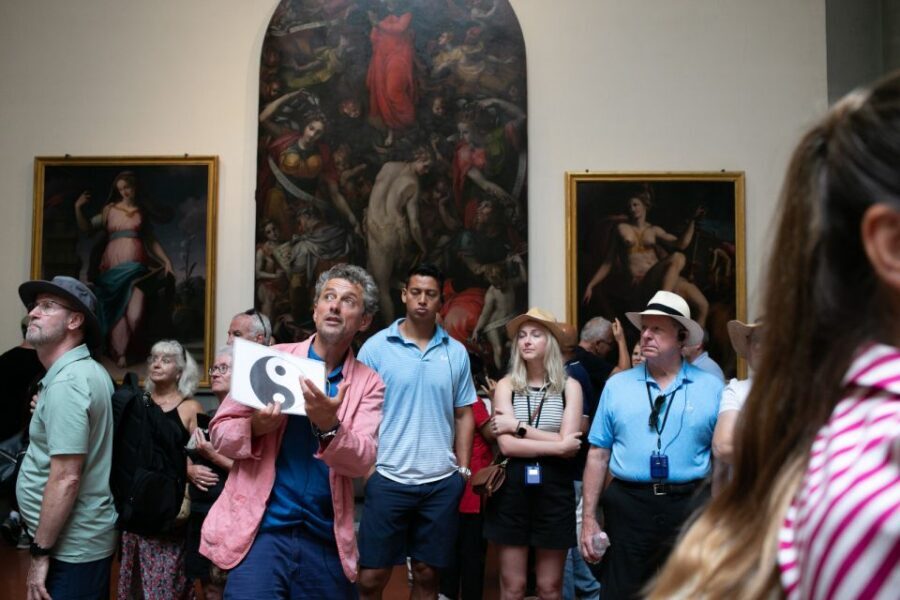
One of the most specific themes in this experience is the red thread that links David to the Sistine Chapel.
That matters because it turns the visit into more than a “statue moment.” You’re not only learning what David means; you’re also learning how that meaning connects to Michelangelo’s broader spiritual messaging. The guide ties the ideas together so the logic feels like a chain, not random trivia.
If you plan to visit the Sistine Chapel later, this thread becomes extra helpful. You’ll have a reference point ready when you see the ceiling scenes—especially the idea of creation and humanity’s role in it (without needing a scholar’s vocabulary).
And even if you never go to the Sistine Chapel, the theme still works. It gives David a larger purpose than “look how well he carved anatomy.”
A Q&A tour built for curiosity, not passive listening
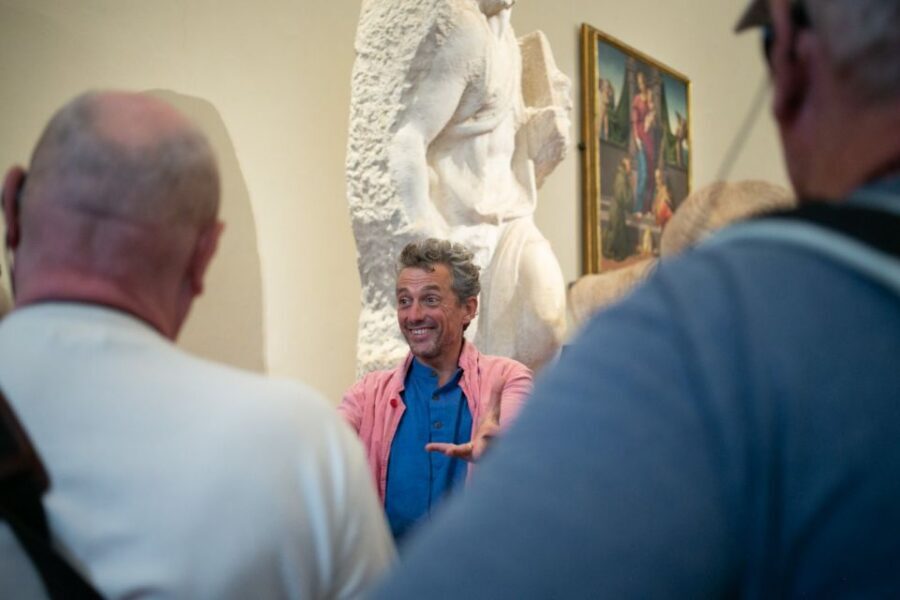
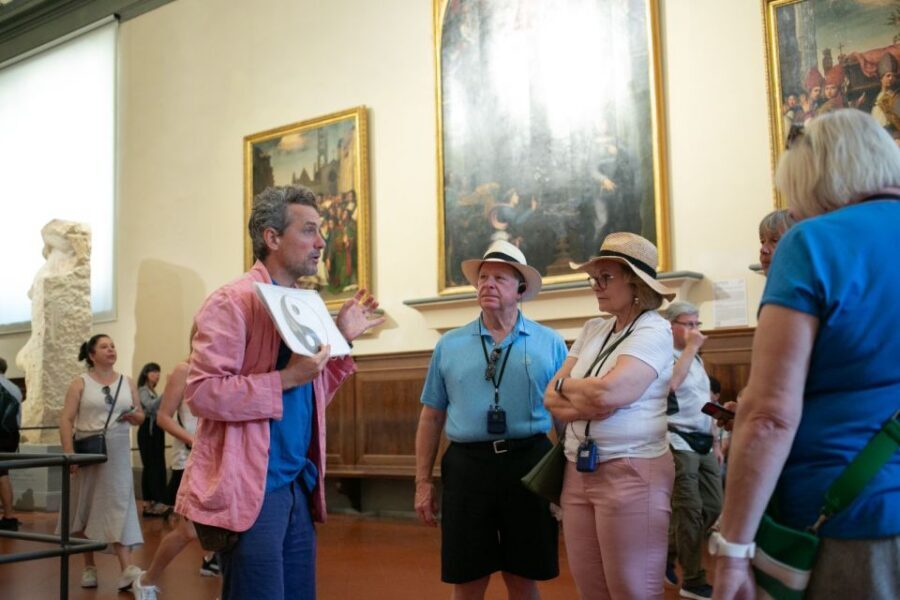
This is not the typical “here are dates, here is height, now take a photo” experience. Mario’s method is explicitly interactive. You’ll be invited into inquiry—asking questions and thinking through metaphors that connect your eye to the statue’s message.
The tour data also emphasizes that the content is understandable even for children. That’s a big deal. It suggests the explanations are built to be clear, not only impressive.
Mario is also described as a prominent Florence actor who performs Dante during restaurant and city events. That artistic background shows up in how the material is delivered: you’re not stuck in a monotone lecture. You’re being guided through ideas the way a performer holds attention.
One more practical benefit: because you’re involved, the time (about 75 minutes) doesn’t drag. You’re moving, thinking, and responding rather than waiting for the “next section.”
- Tuscany Day Trip from Florence: Siena, San Gimignano, Pisa and Lunch at a Winery
★ 5.0 · 21,634 reviews


Finish strong: time to explore Accademia on your own
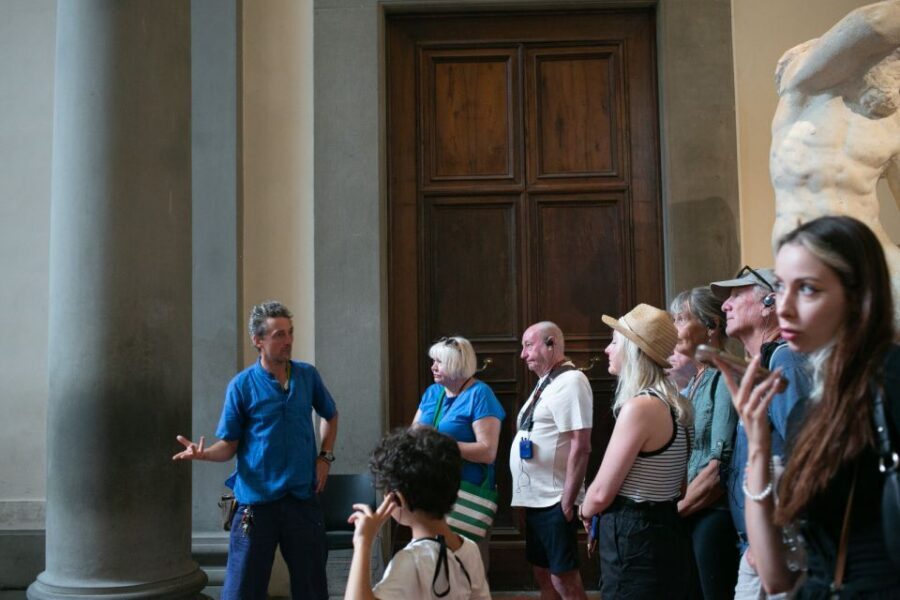
The guided portion ends, and then you continue visiting the museum independently. That’s a smart structure.
Why? The Accademia can overwhelm people fast. With a guide, you focus and get context. After, you take that context and decide what deserves your attention. You can linger where the meanings you learned click—like returning your eyes to David for a second look or doing a slower pass on the other works.
I like this “guided first, self-led second” pattern because it prevents a common museum problem: feeling like you rushed through the whole place without choosing what mattered to you. Here, you get to choose.
Price and value: what $57 gets you for David and the Accademia ticket
At $57 per person for a 75-minute tour, the real question is value, not just cost.
Here’s what’s included in the tour data:
- Accademia Gallery guided tour
- Museum tickets
- Local guide (English)
- Headsets
So you’re paying for more than entry. You’re paying for interpretation—especially the spiritual framing and the red-thread connection. If you’re the kind of person who likes museum visits that leave you with a new way to see things, this price can feel fair fast.
If, on the other hand, you prefer to read wall labels and move at your own pace with zero conversation, then a guided tour may feel like a “markup ticket.” In that case, you might be happiest buying entry and spending extra time wandering.
A useful note for planning: reviews included some confusion around skip-the-line behavior. The tour data clearly says skip the ticket line, and in practice that often means you may still enter through a controlled, time-grouped flow. Either way, you’re not stuck in the main ticket queue.
Who should book this Florence David tour?
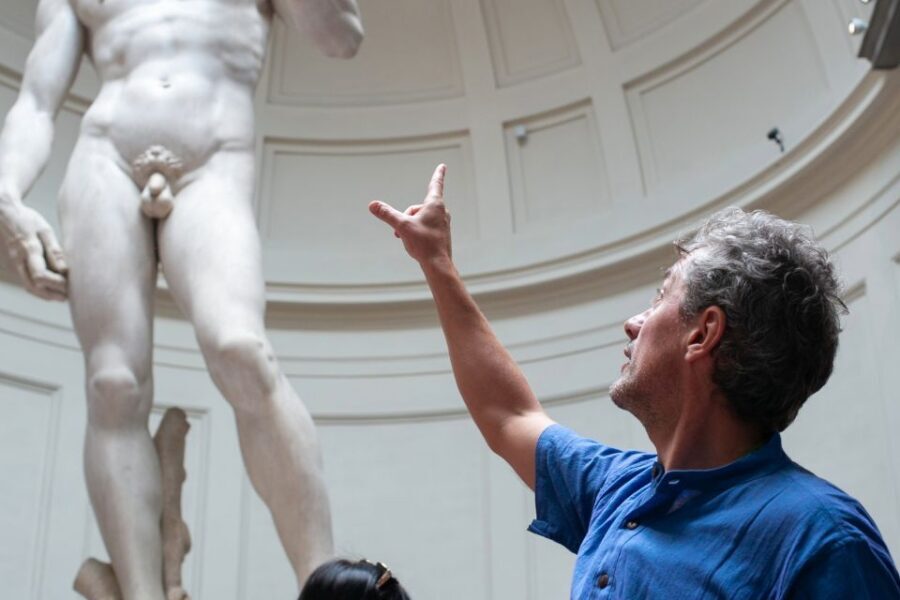
This fits best if you:
- want a meaningful explanation of David (not just a photo stop)
- like art history that connects to ideas about life, not only dates
- enjoy discussion and questions during a tour
- are traveling with couples, families, or mixed-age groups and need a guide who can keep everyone engaged
It’s also a good pick if you plan to see more Michelangelo afterward. The tour’s logic—David leading into the Prisoners, tied to the Sistine Chapel theme—helps your brain connect dots across sites instead of treating each museum as a separate event.
If you’re the type who needs a strict lecture or a purely factual route, you might find the metaphors feel too “interpretive.” That doesn’t mean it’s worse—just a mismatch in style.
Should you book Mario Gesu’s Accademia tour of David and the Prisoners?
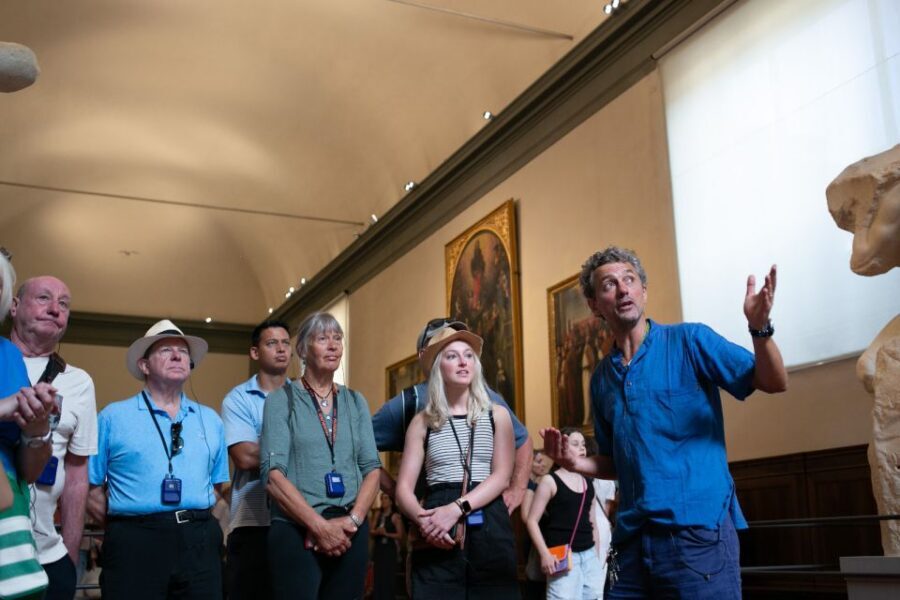
I’d book it if you want your Accademia visit to feel like an experience, not a checklist. The combination of skip-the-line access, headsets, and a guide with a distinctive, question-led style makes the 75 minutes feel purposeful.
I’d skip it only if you strongly prefer self-guided museum time and you’d rather spend your money on extra hours in Florence than on interpretation. If that’s you, a standard entry ticket plus a quick guidebook might suit better.
My practical advice: if you have even a little interest in understanding why Michelangelo’s choices matter—especially the spiritual side and that red-thread connection—this is the kind of tour that changes how you look when you stand in front of David. And once you’ve seen it with that lens, the rest of the gallery usually feels easier to read.
FAQ
How long is the Florence Accademia Gallery tour?
The tour lasts about 75 minutes.
What is the price per person?
It costs $57 per person.
Does the price include museum tickets?
Yes. The tour includes Accademia Gallery tour and museum tickets.
Where do I meet the guide?
Meet at the ATM machine of Libreria evangelica, just in front of the Accademia museum entrance.
What time should I arrive before the tour?
Arrive about 15 minutes before the scheduled time.
Is the tour offered in English?
Yes, the live tour guide speaks English.
Is it wheelchair accessible?
Yes, the tour is listed as wheelchair accessible.
What should I bring with me?
Bring passport or ID for children, headphones, and cash. If applicable, bring your disability card.
Can I cancel and get a refund?
Yes. Free cancellation is available up to 24 hours in advance for a full refund.
You Might Also Enjoy



More Museum Experiences in Florence
More Tours in Florence
- The Best tour in Florence: Renaissance & Medici Tales – guided by a STORYTELLER
★ 5.0 · 12,316 reviews


More Tour Reviews in Florence
- Tuscany Day Trip from Florence: Siena, San Gimignano, Pisa and Lunch at a Winery
★ 5.0 · 21,634 reviews - The Best tour in Florence: Renaissance & Medici Tales – guided by a STORYTELLER
★ 5.0 · 12,316 reviews