REVIEW · FLORENCE
Florence: Palazzo Vecchio Ticket & Visit with optional Lunch
Book on GetYourGuide →Operated by CAF Tour & Travel · Bookable on GetYourGuide
Medici power lives in stone and frescoes. This Palazzo Vecchio ticket puts you inside Florence’s medieval stronghold, then carries you into Medici-era Renaissance rooms with an official audioguide or a local guide. Along the way, you’ll see the kind of ceiling art that’s still clearly preserved centuries later.
What I like most is the scale and theater of the Salone dei Cinquecento, and the convenience of choosing an audioguide in your own language (or going with a local guide if you prefer someone steering the day). The option to add a Tuscan lunch also helps if you want to turn a short museum visit into a full, comfortable Florence half-day.
One thing to consider: a self-guided route can feel a bit confusing if room signage or audio cues are limited, and you might end up hunting for the exact fresco details while the clock keeps moving.
In This Review
- Key highlights you should care about
- Why Palazzo Vecchio feels central, not optional
- From Michelozzo’s courtyard to the palace’s big first impression
- Salone dei Cinquecento: where Florence’s power looks like theater
- Reading the Medici story in Francesco I’s study
- Private apartments: Eleonora of Toledo and Cosimo I
- The Camerino di Bianca Cappello and the palace’s secret side
- Audioguided vs guided: how to choose the right way to see art
- Audioguide option: great for flexibility, but watch the room matching
- Guided tour option: safer for following the story
- Optional Tuscan lunch: good value when you’re planning a full morning
- Price and timing: when it feels like a bargain
- Who this Palazzo Vecchio visit suits best
- Should you book this Palazzo Vecchio ticket with lunch?
- FAQ
- How long is the Palazzo Vecchio visit?
- What does the ticket include?
- What languages are available for the audioguide?
- Where do I meet for the tour?
- Is lunch included?
- Is the experience suitable for wheelchair users?
Key highlights you should care about
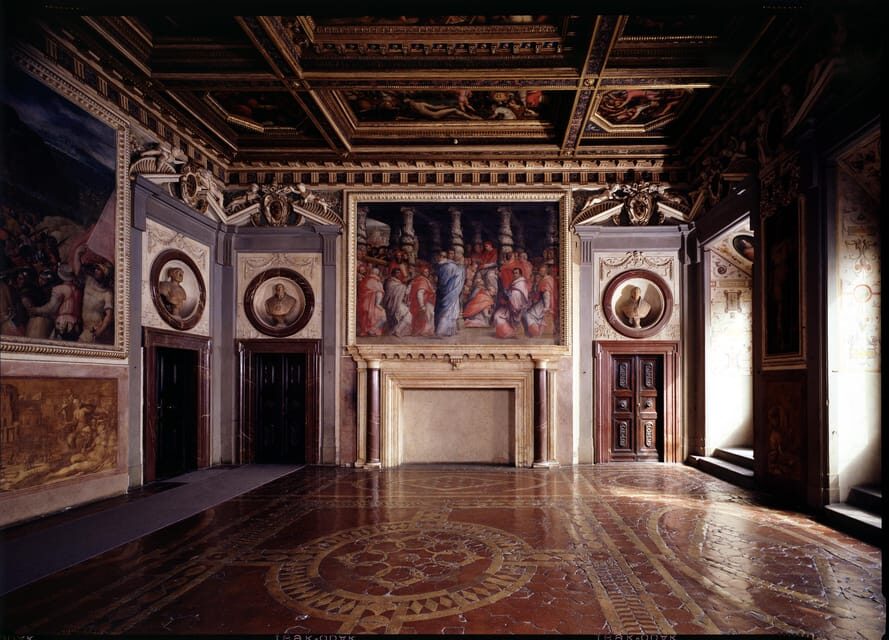
- Salone dei Cinquecento: Vasari and the famous Hall of the Five Hundred area, built for drama.
- Medici rooms close-up: spaces connected to Francesco I de’ Medici, plus private apartments associated with Eleonora of Toledo and Cosimo I.
- Camerino di Bianca Cappello: a small, personal Medici world you reach via a secret passage.
- Audioguide in multiple languages: English, Spanish, French, German, Italian, with official content.
- Optional Tuscan lunch: a 3-course set menu in a typical old-town restaurant.
- Fast start when it works: some visits run with little waiting, but busy security moments can slow entry.
Why Palazzo Vecchio feels central, not optional
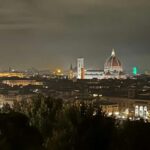
Palazzo Vecchio is one of those Florence landmarks that changes your sense of the city. From the outside, it towers over the skyline. Inside, it explains why powerful families needed walls like these: protection, control, and a stage for image-making.
You’re not just sightseeing a pile of pretty rooms. This palace is where medieval government muscle met Renaissance showmanship. The Medici family didn’t merely use it—they transformed it into an opulent residence, filling it with art and cultural artifacts that help you understand how status was performed in the 1500s.
If you’re the kind of traveler who likes architecture and art to come with context, this ticket works well. You start in the courtyard area associated with Michelozzo, then move into the palace’s core spaces that people still use as reference points for Renaissance Florence.
And yes, there’s also the practical side: the visit is short, about 1 to 2 hours, so you can pair it with other nearby stops without turning your day into a marathon.
You can also read our reviews of more tours and experiences in Florence

From Michelozzo’s courtyard to the palace’s big first impression
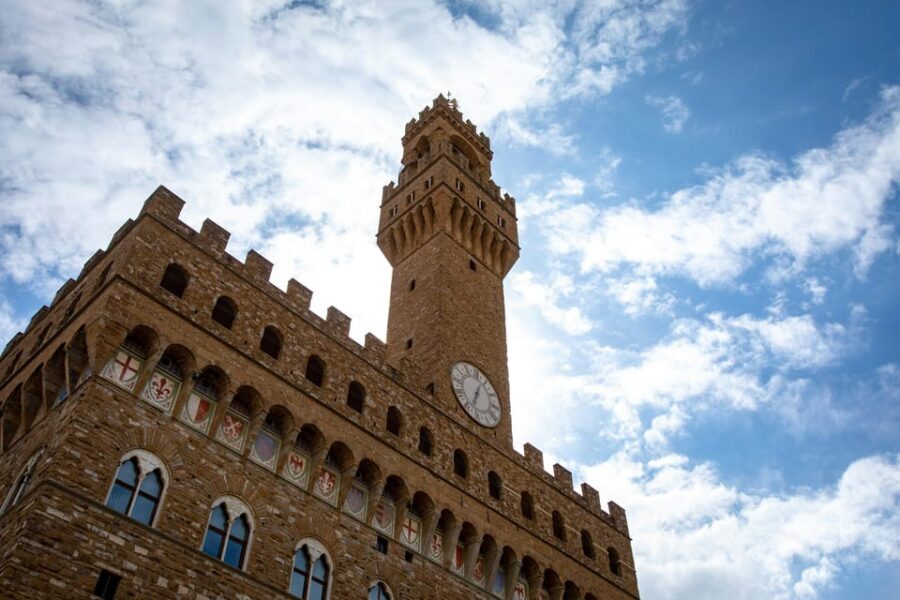
Your visit begins at the Info point – Ticket Office, inside Palazzo Vecchio, with the entrance from via dei Gondi. From there, the palace funnels you from open air into carved stone corridors, then toward the rooms that do the most work on your attention.
The courtyard area is a good mental warm-up. It sets a “palace scale” you’ll feel again indoors—thick walls, formal transitions, and that slightly echoing sense that you’re moving through a space designed for spectacle.
Then comes the payoff: you’re guided (or directed) into key Renaissance rooms tied to the Medici period. These rooms don’t just look important; they’re laid out so you can see why the Medici were so committed to controlling both politics and culture. Even in a short visit, you get a sense of how the palace shifted from medieval stronghold to Renaissance statement.
Practical tip: wear comfortable shoes and expect some walking up and down typical museum-level routes. Palazzo Vecchio is a palace, not a single-room exhibit, so your feet get a workout even when your time window stays short.
Salone dei Cinquecento: where Florence’s power looks like theater
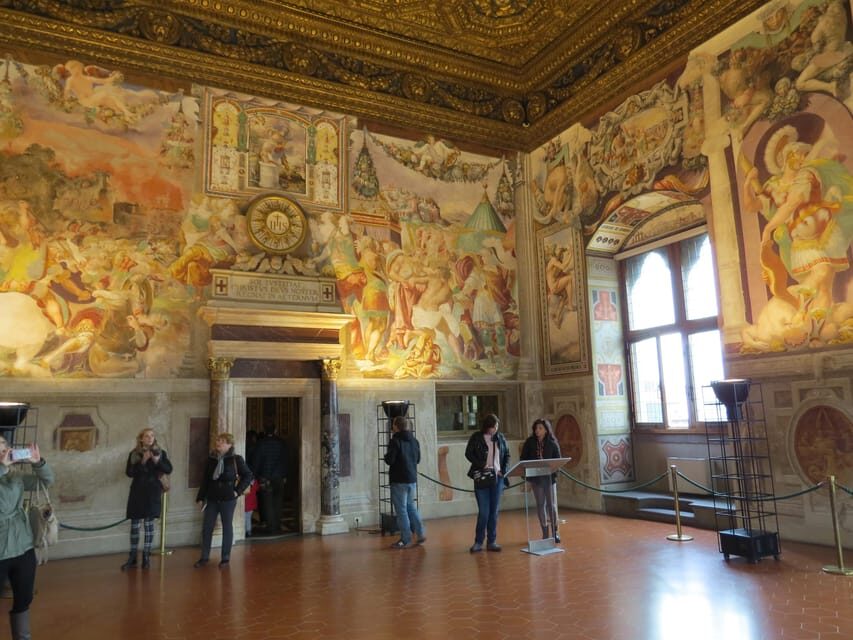
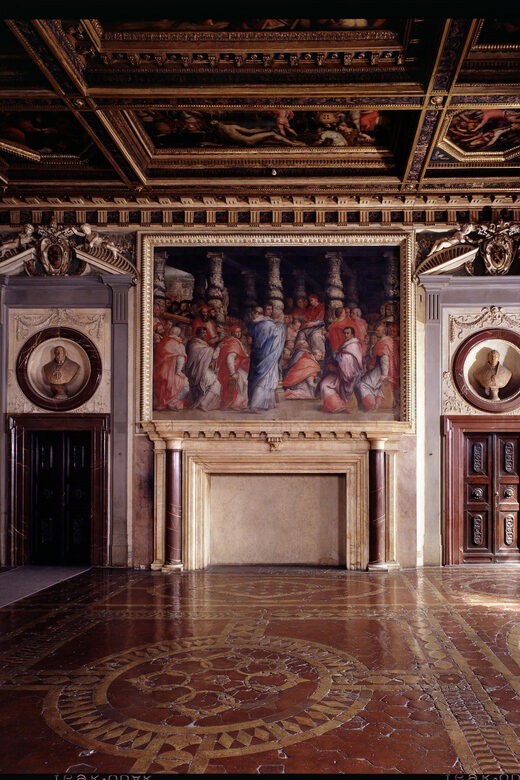
If you only had time for one stop inside Palazzo Vecchio, the Salone dei Cinquecento would be the one. This is where the palace turns into performance space. You get an immediate feel for the Renaissance love of grand scale and visual messaging.
This hall is known for works by Giorgio Vasari, and it’s also tied to the iconic idea of the Hall of the Five Hundred. Whether you’re looking at the ceiling details, wall art, or the overall sense of order, the room is built to make you look around and keep looking.
What I’d tell you to do here is slow down for just a few minutes. The Salone’s biggest trick is that it rewards second glances. At first you notice size. Then you start noticing composition, how figures and scenes fit together, and how the artwork is placed to be read from different angles.
Some visitors report that with audio, the experience can be very smooth—clear explanations and enough context to connect the artwork to the people who lived here. Other visitors report that the audio can be harder to match to what they were seeing. Either way, this is the room where you’ll benefit most from taking control of your pace. Pause, look up, then continue.
Reading the Medici story in Francesco I’s study
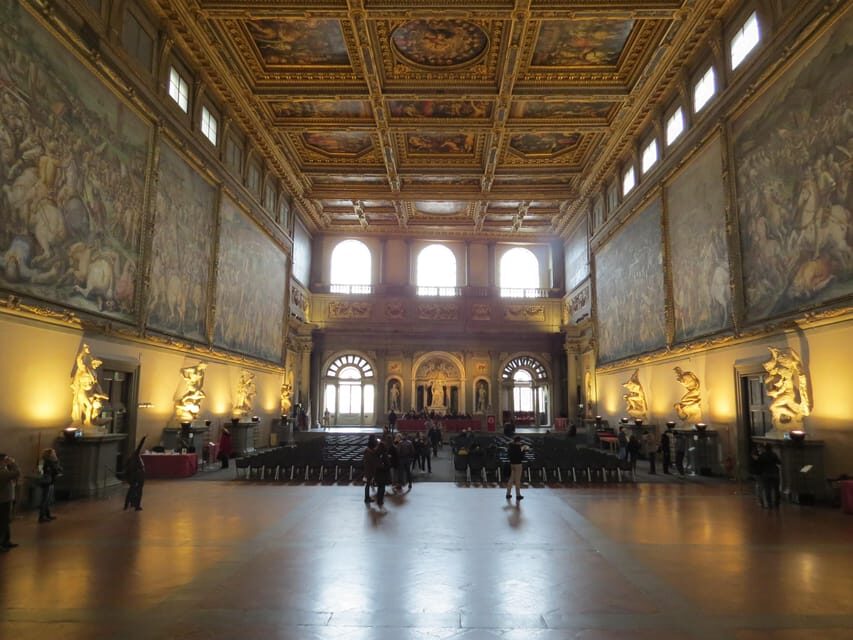
Next, you move into more intimate Medici-era spaces—smaller rooms that feel less like a stage and more like lived-in authority.
One of the highlights mentioned for this ticket is the study connected to Francesco I de’ Medici. This kind of room is important because it shifts the story from public image to personal power. You start to see the palace as something more than government architecture; it becomes a working environment where decisions, culture, and private life overlap.
In practical terms, you’ll get more from these rooms if you use your guide style thoughtfully:
- If you’re doing the audioguide, give each room 2 to 4 minutes of attention instead of trying to cover everything fast.
- If you’re doing a local guide, ask yourself a simple question: what kind of person would want to control their environment like this?
That small mindset change makes the study stops feel like more than background to the big hall.
Private apartments: Eleonora of Toledo and Cosimo I
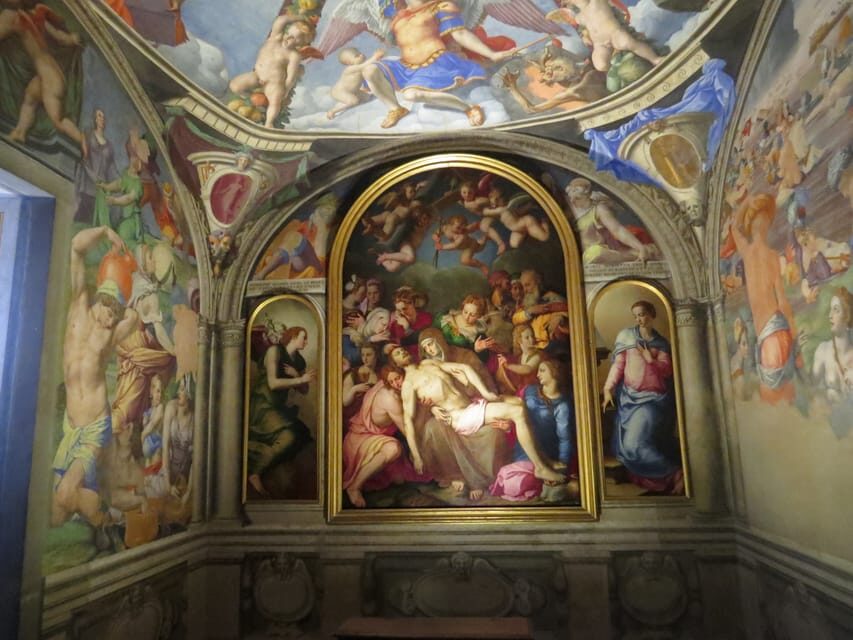
As you continue, the palace opens up the idea of private Medici life through rooms associated with Eleonora of Toledo and Cosimo I de’ Medici.
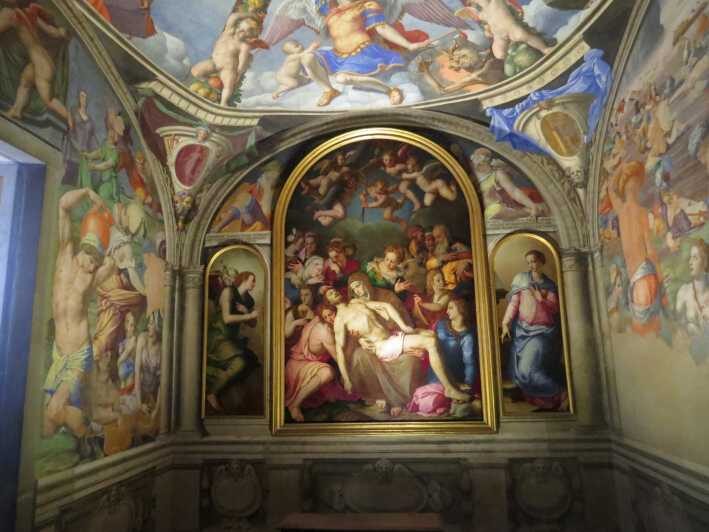
These apartments matter because they show the softer side of Renaissance power: taste, domestic display, and the way art turns a residence into a brand. If you loved museums that feel like “people lived here,” these rooms are a strong match. The art and layout suggest that beauty was part of daily life, not just decoration for visitors.
They also help you understand something the palace exterior can’t: the Medici weren’t merely rulers passing through a landmark. They treated the palace like an extension of their identity, and the interior program of rooms shows that intention.
One thing to watch: when you’re moving from hall to room, it’s easy to lose the thread of who’s who. The audioguide (or guide explanations) is what stitches that together. If your audio cues feel light or unclear, take a photo of any room name or main reference point you see, then use that to stay oriented for the next room.
You can also read our reviews of more tours and experiences in Florence
- Cooking Class and Lunch at a Tuscan Farmhouse with Local Market Tour from Florence
★ 5.0 · 4,831 reviews - San Gimignano, Siena, Monteriggioni, Chianti Day Trip with Lunch & Wine Tasting
★ 4.5 · 4,432 reviews



The Camerino di Bianca Cappello and the palace’s secret side
One of the most intriguing mentions connected to this visit is the Camerino di Bianca Cappello. It’s described as accessible through a clandestine passage, and that detail is exactly why this stop sticks.
A small room reached via a hidden route does something bigger than add drama. It puts a human-scale lens on the Medici story. Instead of only thinking about the palace as a political machine, you start thinking about personal relationships, secrets, and how even powerful families had private emotional worlds.
This is also where a good guide or a well-structured audioguide can make a difference. If the audio is well-timed, you’ll get context that helps you understand why a room like this exists. If you’re struggling to match audio instructions to what you’re seeing, lean on visual cues and don’t be afraid to ask staff for confirmation about where you should be next.
And if you’re someone who likes history as a series of clues, this is the kind of stop that makes the whole visit feel like a puzzle.
Audioguided vs guided: how to choose the right way to see art
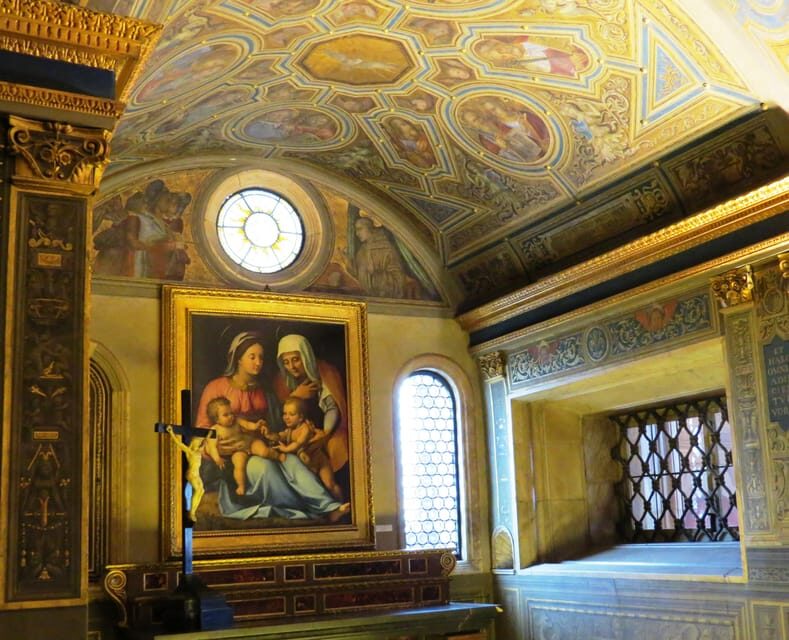
This ticket lets you choose either an official museum audioguide or an official local guide. Both options can be good. The best choice depends on how you like to travel through museums.
Audioguide option: great for flexibility, but watch the room matching
Audioguides are excellent when you want to go at your pace. They’re also a win if you’re tired of waiting for a group to catch up.
But the reviews hint at a real-world issue: some visitors found that certain spots lacked clear indications for the audio. Others found the format tricky—especially when using tablets—because it was harder to locate the exact fresco or painting the audio was describing.
If you go audioguided, I’d set yourself up to succeed:
- Plan to spend a little time reading any room labels you see.
- When you start a room, take 10 seconds to notice what the main reference point is (a ceiling section, a named chamber, a dominant figure).
- If audio is pushing you to look at something you can’t find, pause and reposition rather than rushing onward.
Guided tour option: safer for following the story
A local guide approach tends to reduce “where am I supposed to look” stress. You also get explanations that connect the art to the Medici and the palace’s transitions, which is especially useful in rooms that feel visually similar at first glance.
If you prefer a smooth narrative, pick the guided tour. You’ll give up a bit of flexibility, but you gain direction—especially helpful in a place where the art program spreads across many rooms.
Either way, this is a palace where your attention is the main currency.
Optional Tuscan lunch: good value when you’re planning a full morning
The lunch option adds a 3-course set menu Tuscan lunch at a typical restaurant in the old town. Drinks are not included, and children’s lunch is paid on the spot, according to the provided details.
From a value perspective, the lunch can make this ticket feel like a smarter use of time. Since the museum visit is relatively short, lunch turns it into a complete block where you won’t have to gamble on finding a quality meal with everyone’s schedule in sync.
The practical side: expect a classic midday rhythm. Eat before you’re starving, but don’t cram it so tightly that you feel rushed in the palace. If you’re visiting during hot months, plan for slower pacing—one review notes that warmth can make the experience feel tougher, especially during long indoor movement.
My advice: treat lunch as part of the rhythm. If you’re going audioguided and want to take your time, you’ll probably feel better doing lunch after rather than trying to rush into it immediately.
Price and timing: when it feels like a bargain
At about $52 per person for the ticket, this experience has solid value if you care about seeing the real palace spaces rather than only passing by. The ticket includes museum entrance and either an official audioguide or a local guide. If you choose the lunch add-on, you’re also effectively adding a full meal deal on top.
There’s also an important detail: the museum ticket includes temporary exhibitions that may be held at Palazzo Vecchio, and an additional charge may be applied for those temporary exhibitions. That means you should expect that some art-program variations could affect what’s free to enter versus what’s extra, depending on the day.
Timing is the other reality check. During busy periods, you can face admission delays due to security reasons. Some visitors still report clean, low-friction entry, so it’s not guaranteed chaos—but it’s smart to assume you may lose some minutes.
The good news is the overall visit length stays manageable at 1 to 2 hours, which helps you absorb delays and still keep your day on track.
Who this Palazzo Vecchio visit suits best
This experience is a strong fit if you want:
- A high-impact Palazzo Vecchio visit without spending your whole day inside.
- A Medici-focused route that includes both major rooms and a more personal stop like the Camerino di Bianca Cappello.
- The option to choose between an audioguide and a guided experience, depending on how you like to travel.
It’s less ideal if:
- You need wheelchair access. The provided details state it’s not suitable for wheelchair users.
- You hate any chance of searching for details. If you’re sensitive to “I can’t find what the audio refers to” moments, the guided option may feel more satisfying.
Should you book this Palazzo Vecchio ticket with lunch?
I’d book it if you want a structured, time-smart way to see Palazzo Vecchio’s most important Medici-era spaces, especially the Salone dei Cinquecento and the more intimate rooms tied to the family. The price makes sense because you’re not just paying for entry—you’re paying for an official interpretation tool, and the lunch option can turn the day into a full, low-stress plan.
Choose guided if you’d rather not risk audio-room mismatch. Choose audioguided if you like going at your own pace and you’re willing to spend a couple of extra minutes checking labels and room references.
If your goal is the Medici story told through real palace spaces, this is one of those Florence bookings that tends to repay your time.
FAQ
How long is the Palazzo Vecchio visit?
The visit is listed as lasting 1 to 2 hours, depending on the starting time and how you move through the museum.
What does the ticket include?
It includes museum entrance (with temporary exhibitions possibly included, though additional charges may apply), plus either an official museum audioguide or an official local guide depending on your selected option. If you choose the lunch option, it also includes a 3-course Tuscan set menu.
What languages are available for the audioguide?
The optional audioguide is offered in English, Spanish, French, German, and Italian.
Where do I meet for the tour?
Meet at the Info point – Ticket Office, inside Palazzo Vecchio, with the entrance from via dei Gondi.
Is lunch included?
Lunch is included only if you select that option. It’s a 3-course set menu Tuscan lunch. Drinks are not included and are paid on the spot.
Is the experience suitable for wheelchair users?
No. The provided information says it is not suitable for wheelchair users.
You Might Also Enjoy
More Lunch Experiences in Florence
- Tuscany Day Trip from Florence: Siena, San Gimignano, Pisa and Lunch at a Winery
★ 5.0 · 21,634 reviews - Cooking Class and Lunch at a Tuscan Farmhouse with Local Market Tour from Florence
★ 5.0 · 4,831 reviews - San Gimignano, Siena, Monteriggioni, Chianti Day Trip with Lunch & Wine Tasting
★ 4.5 · 4,432 reviews
More Tickets in Florence

More Tour Reviews in Florence
- Tuscany Day Trip from Florence: Siena, San Gimignano, Pisa and Lunch at a Winery
★ 5.0 · 21,634 reviews - The Best tour in Florence: Renaissance & Medici Tales – guided by a STORYTELLER
★ 5.0 · 12,316 reviews