REVIEW · FLORENCE
Florence: Guided Walking Tour with Entry to Santa Croce
Book on GetYourGuide →Operated by StarFlorence · Bookable on GetYourGuide
Santa Croce feels like Florence’s secret résumé of genius. You’ll get a guided walk inside one of the city’s most important basilicas, with reserved entry, plus time on a Renaissance-focused street route through Duomo Square, Palazzo Vecchio, Ponte Vecchio, and Palazzo Pitti. I especially like how the guide connects big names like Michelangelo, Donatello, and Dante to what you’re actually seeing, not just dates on a sign. One thing to plan for: the dress code is strict, and you’ll want comfy shoes for a real walking pace.
This experience is built around understanding the art as you move. The Santa Croce portion is about 1 hour in the church and its key spaces, including the 16 chapels, and it finishes with a tour-friendly look at exterior details like the polychrome marble façade. Then the city walk helps you get your bearings—fast—through central Florence’s landmarks, so you’re not just collecting photos.
In This Review
- Key points to know before you go
- Santa Croce with reserved entry: the church is the whole point
- Michelangelo, Dante, and the art you’ll recognize in real life
- Giotto and Gaddi frescoes: how to read a chapel in 60 minutes
- Donatello, Brunelleschi, and the chapel architecture details that matter
- The exterior, the 1966 flood marks, and what restoration really looks like
- The Calcio Storico setup and the square role in your arrival
- The afternoon city walk: from Piazza della Repubblica to Duomo Square
- Palazzo Vecchio and Michelangelo’s David: seeing the point in the place
- Ponte Vecchio and Pitti Palace: finishing with classic Florence edges
- Price and value: what $66.84 buys you in Florence time
- Logistics that can make or break your day: meeting points and dress code
- Who this tour suits (and who should choose another plan)
- Should you book the Santa Croce guided experience?
- FAQ
- How long is the Santa Croce guided visit?
- What’s the meeting point for the Santa Croce start?
- Where do we meet for the city walking tour?
- What time does the city walking tour start?
- Is Santa Croce entry included?
- What’s included besides the entrance ticket?
- Are there dress requirements?
- What languages are available for the tour?
- Is the tour wheelchair accessible?
Key points to know before you go
- Reserved entry to Santa Croce means less waiting and more time for the art and chapels
- 16 chapels, bell tower, and crypt are included, so you see more than the main nave
- A guide can really connect the dots between Michelangelo, Donatello, Giotto, and Brunelleschi
- Fresco stories are built in through specific chapel walkthroughs (Giotto and Gaddi are called out)
- Strict dress code matters for entry—plan ahead to avoid a last-minute problem
- Two daily Santa Croce starts and a separate 17:00 city walk help you match your schedule
Santa Croce with reserved entry: the church is the whole point
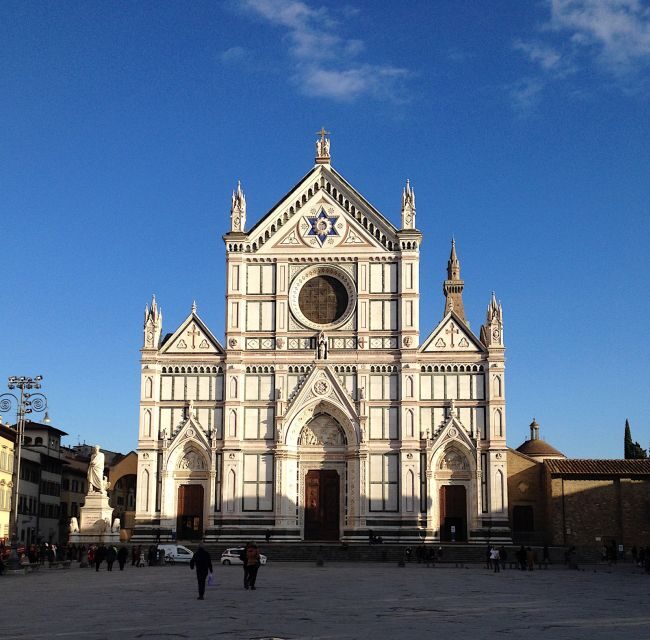
Santa Croce is one of those places where Florence’s creative power feels physical. This tour starts at the Monument to Dante Alighieri in Piazza di Santa Croce, so you’re grounding the visit immediately in the city’s literary and artistic identity.
Then you step inside and you stay inside long enough to actually understand the place. The guided portion runs about 1 hour through the basilica, with time that focuses on the chapels and the artistic highlights—not just a quick pass through the nave. You’ll also have a radio system, which is a big deal in a crowded church. It helps you hear the guide clearly without constantly craning your neck.
If you end up with a guide like Anna (mentioned in an excellent rating), expect a warm, question-friendly style. The best part of a church tour isn’t volume—it’s clarity. And this format is built to keep you following the story as you walk from point to point.
You can also read our reviews of more walking tours in Florence

Michelangelo, Dante, and the art you’ll recognize in real life
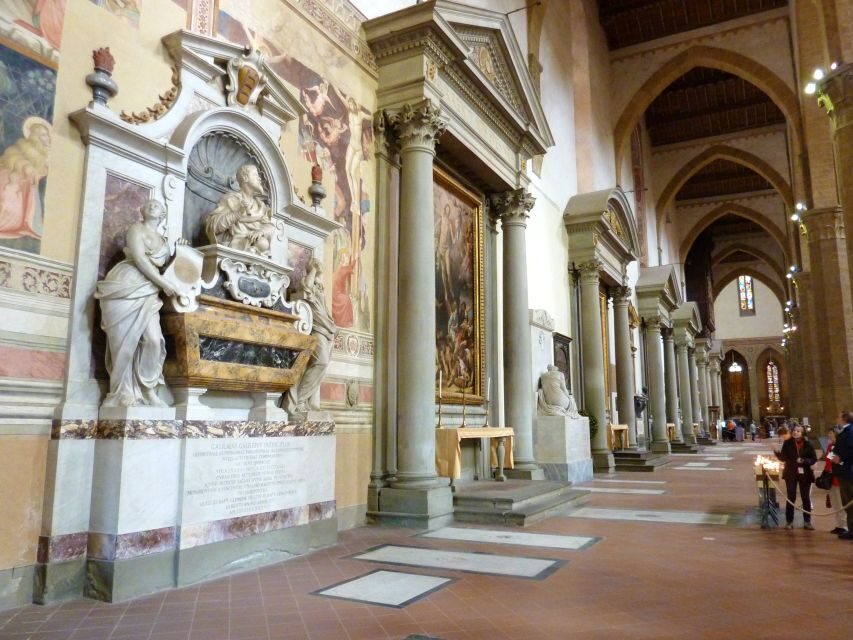
Santa Croce is famous for its connections, and this tour points you toward the people behind the fame. You’ll learn that it’s a burial place for several Florentine and Italian masters, including Michelangelo. Standing where the guide places the significance of those names makes the building feel less like a museum and more like a cultural memory.
You also get Dante in the lead-in, since the meeting point is by the Dante Alighieri statue outside the basilica. During the walk, the guide connects you to the monument dedicated to Dante Alighieri, so you don’t treat him as a random literary postcard. It’s part of the same “who Florence worships” story.
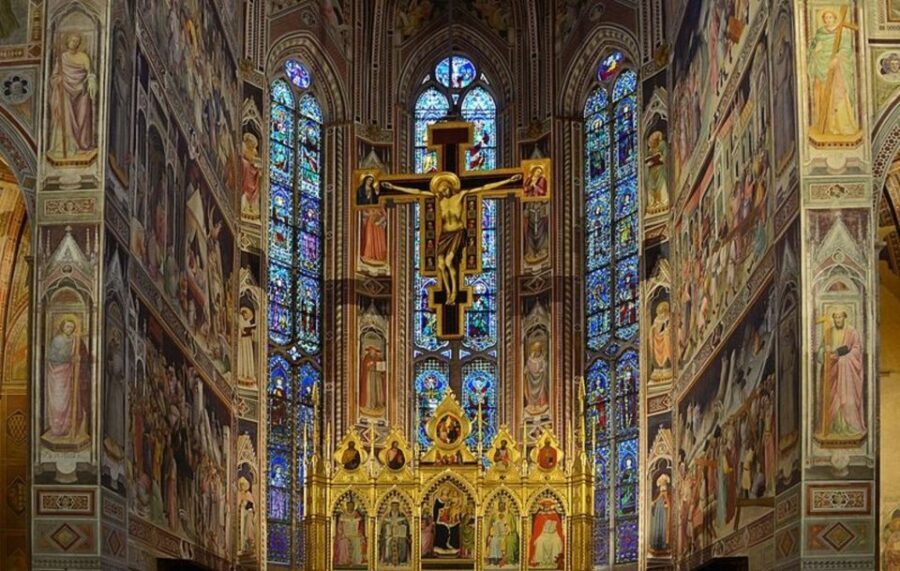
Inside, you’ll spend time on key Renaissance works tied to specific artists. The tour specifically highlights Donatello and his crucifix—one of the Renaissance jewels the guide points out. It also brings in Brunelleschi’s Chapel of Fools, where the architectural idea matters as much as the decoration. The result is that you start recognizing the names before you even see the details.
Giotto and Gaddi frescoes: how to read a chapel in 60 minutes
If frescoes make you feel like you need a degree to enjoy them, this tour is practical. It doesn’t just tell you that Santa Croce has great painting—it guides you through which chapels to watch, and what story each place is telling.
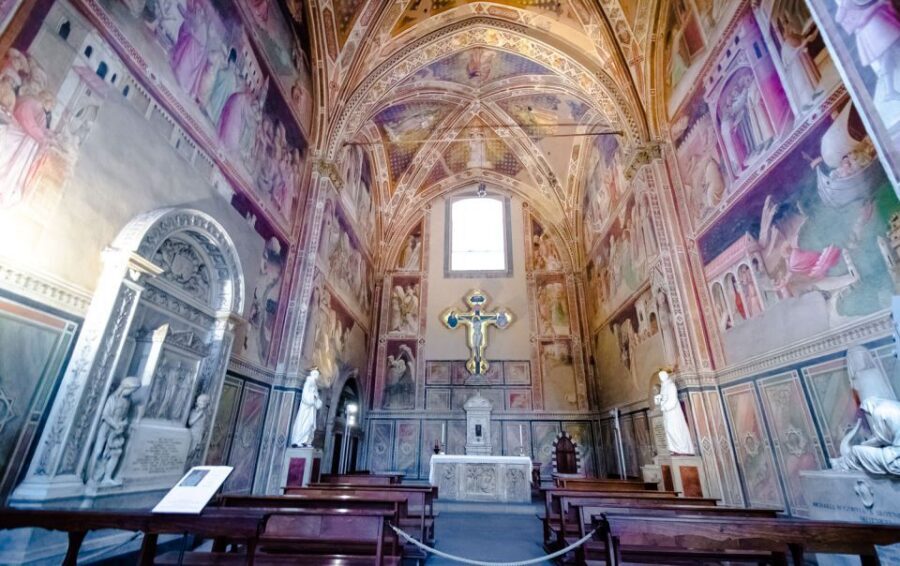
In the Cappella Maggiore, the guide points out frescoes by Gaddi (dating from 1380) that tell the story connected to Santa Croce. That matters because it gives you a framework: you’re not staring at walls and hoping for a caption. You’re learning how to follow the narrative.
Then you move to chapels with Giotto frescoes—specifically the Bardi and Peruzzi Chapels. The tour calls out the scenes from the life of St. Francis and St. John the Evangelist. Again, the value isn’t just seeing Giotto—it’s knowing what scenes you’re looking at and what the guide wants you to notice.
The payoff? You leave with a mental map. Even if you come back later on your own, you’ll remember where the major storytelling moments were, not only which paintings existed.
Donatello, Brunelleschi, and the chapel architecture details that matter
A lot of Florence tours love the surface: big names, big photos, quick stops. This one gives you a stronger sense of craft—especially where sculpture and design meet.
Donatello’s work is treated as a Renaissance milestone, not a trivia fact. When you see the crucifix the guide highlights, it’s easier to understand why Florentines cared so much about form and meaning in religious art.
Brunelleschi gets the same respect, particularly through the Chapel of Fools. The guide explains the architectural harmony you’re standing in, which is useful because Brunelleschi isn’t only about engineering. He shaped the way people thought buildings should balance and behave visually. In other words: the chapel becomes an example of Renaissance thinking, not just a room you walk through.
The exterior, the 1966 flood marks, and what restoration really looks like
Santa Croce isn’t only about art made for the present. It also carries visible reminders that history includes damage and rebuilding.
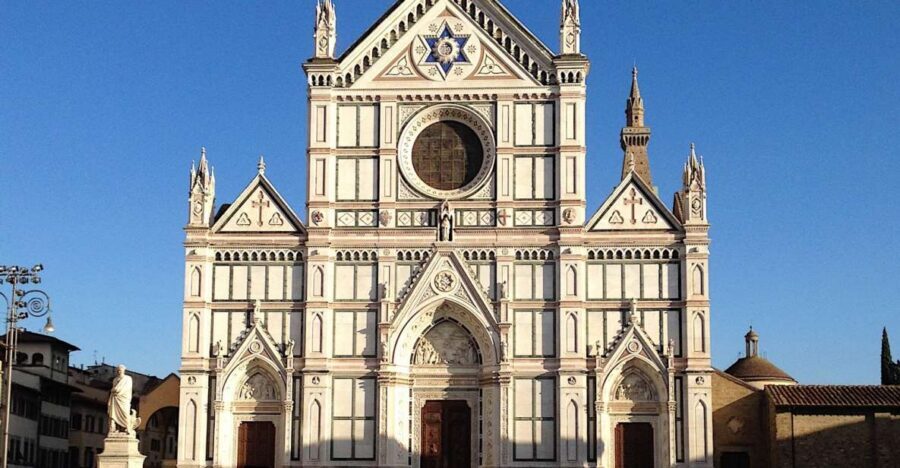
Part of the tour explains the exterior, including the polychrome marble façade. That detail is worth paying attention to because it’s not just pretty; it’s part of how Santa Croce reads in a city of stone and sculpture. You start noticing how the church’s surface gives it presence even from outside.
You’ll also hear about the tragic flood of 1966, which damaged several paintings and destroyed the monumental cemetery. The tour includes the restored cemetery area as part of what you see, so restoration isn’t some distant museum concept—it’s woven into the walking plan.
Finally, the guide doesn’t leave you only with the main church spaces. The tour also includes the bell tower and crypt as part of the broader Santa Croce visit. That helps the basilica feel like a complex, living site rather than one room with masterpieces.
You can also read our reviews of more guided tours in Florence
- The Best tour in Florence: Renaissance & Medici Tales – guided by a STORYTELLER
★ 5.0 · 12,316 reviews
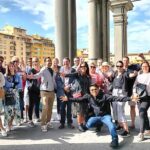
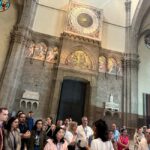
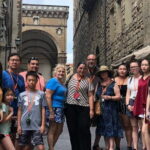

The Calcio Storico setup and the square role in your arrival
Your Santa Croce experience starts in a square that’s famous for a very specific kind of Florentine tradition. The tour begins in the main square where the Calcio Storico Florentino takes place each year in June, with medieval costumes and a public atmosphere that’s unique to Florence.
Even if you’re not there in June, you’ll understand the setting faster when the guide frames it. It also helps you connect why this area matters socially, not only artistically. Florence isn’t just Renaissance art. It’s traditions that keep showing up in public space.
The guide ties the square into the church story as a way to get your bearings quickly. That’s genuinely useful on a first visit because it keeps the day from feeling like separate disconnected stops.
The afternoon city walk: from Piazza della Repubblica to Duomo Square
After the Santa Croce visit, the walking tour shifts you into “Florence orientation mode.” The meeting point for this part is in front of the Hard Rock Cafe Firenze at Piazza della Repubblica. The start time listed for this walking tour is 17:00, and the tour ends back at the same meeting point.
You begin in Piazza della Repubblica, then head toward Piazza della Duomo. Along the way, the guide brings you through old buildings and historical landmarks. That’s the key advantage here: you don’t only see monuments. You move through the city fabric that makes them make sense.
Duomo Square is a natural pinch point for photos, but this tour uses it as a navigational chapter. You learn how Renaissance thinking shows up in the city’s layout and how the major sights relate to each other when you walk the streets.
Palazzo Vecchio and Michelangelo’s David: seeing the point in the place
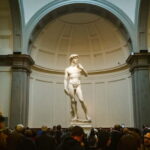
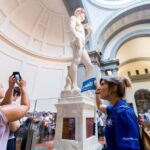
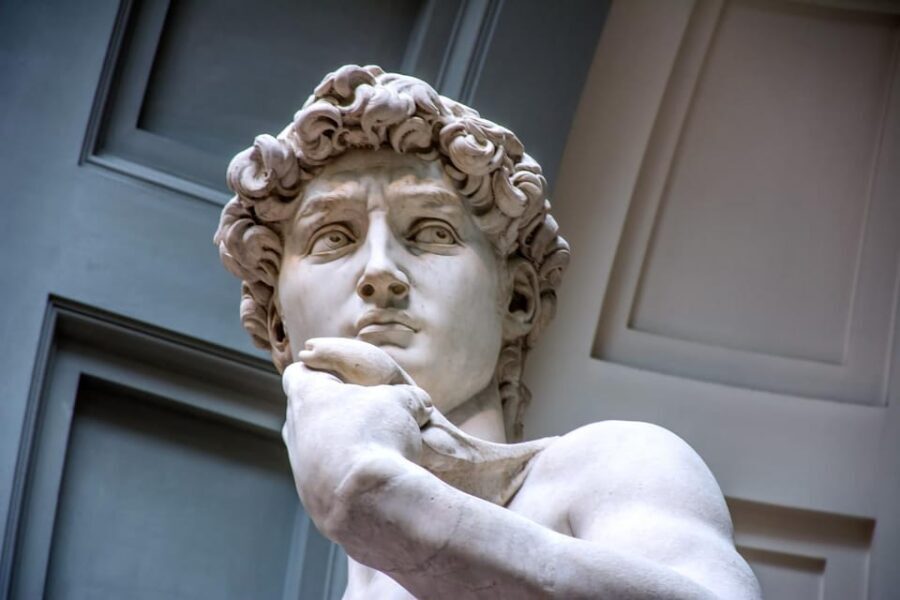
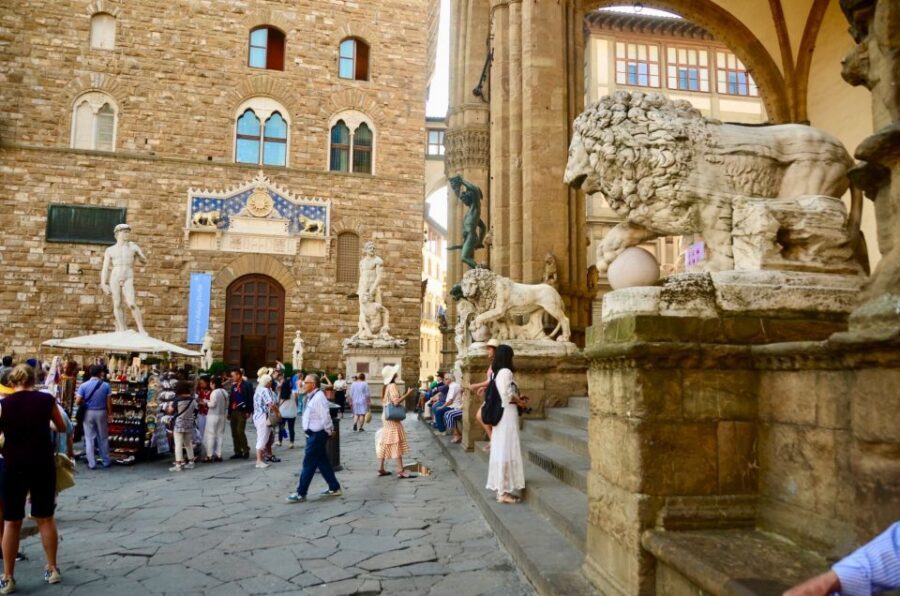
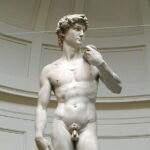
In Piazza della Signoria, you’ll pass by and learn more around the political and artistic center of Florence. The guide then takes you through to Palazzo Vecchio and points out the sculpture of David by Michelangelo.
Even if you’ve seen David in photos, this kind of stop works best in person. You understand why it’s placed where it is and how it functions as a public statement. It’s not “a sculpture.” It’s a message the city chose to keep visible.
As you move on, you’ll also get talk tied to Uffizi Gallery. The tour doesn’t position it as an extra ticket you must buy. It treats the Uffizi as part of the same Renaissance art ecosystem you’re walking through.
Ponte Vecchio and Pitti Palace: finishing with classic Florence edges
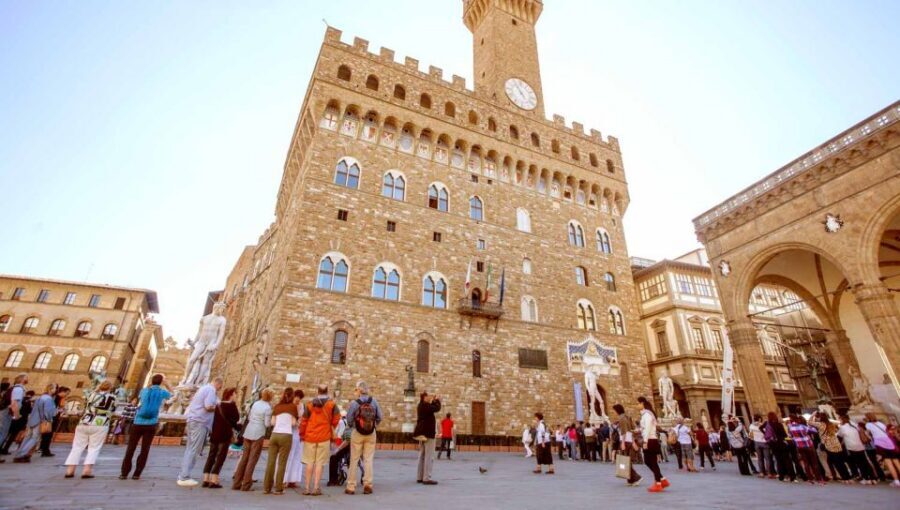
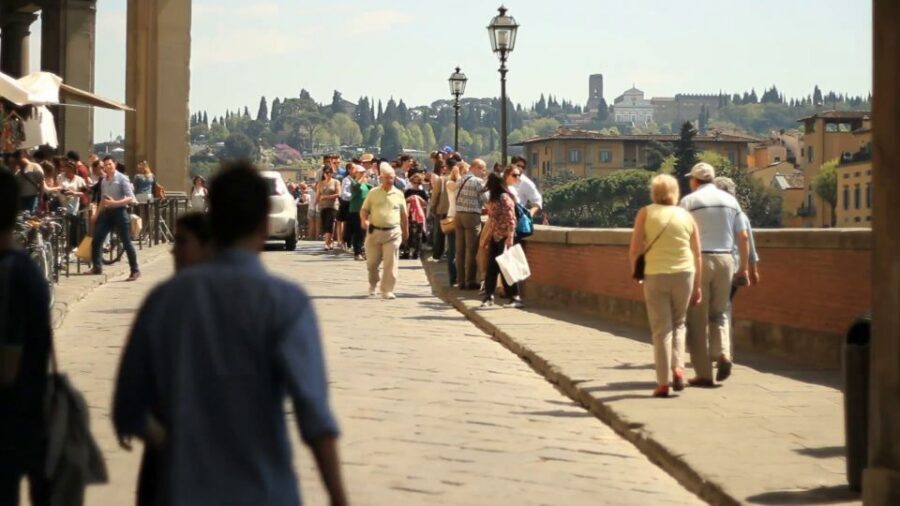
Next comes Ponte Vecchio, often the iconic crossing everyone wants to see. Here, it works because you’ve already been learning how Renaissance Florence projects itself outward—through art, power, and architecture. When you reach Ponte Vecchio, the guide’s context helps you read it as more than a postcard bridge.
Then you reach Palazzo Pitti, described as an enormous palace and one of Florence’s biggest architectural statements associated with Filippo Brunelleschi. The tour also focuses on how the city feels when you walk its narrow roads. You’ll be encouraged to watch for hidden treasures tucked into small streets, not only the big, obvious monuments.
This final stretch is where the whole day clicks. Santa Croce taught you how Florence tells stories through art inside a church. The city walk shows how those same Renaissance values show up in public squares, bridges, and major palaces you can’t miss.
Price and value: what $66.84 buys you in Florence time
At $66.84 per person for a total duration of about 2.5 hours (check available start times), you’re paying for three practical things:
- An official certified guide for both the Santa Croce visit and the guided city walk
- A radio system so you can hear explanations clearly
- An entry ticket with reservation to Santa Croce
That’s the value piece. If you tried to do Santa Croce on your own with last-minute timing, you’d likely spend time sorting out entry and risk not getting the exact access you want. This tour is designed to protect your time and focus it on the art.
Also, the pace is built for a short Florence stay. You get a structured Santa Croce experience plus a central walking route, so you don’t need to build your own itinerary from scratch.
Logistics that can make or break your day: meeting points and dress code
Plan to arrive early. For the Santa Croce start, the meeting point is at the Dante Alighieri statue in front of the church at Piazza di Santa Croce, 16. You’re advised to be there at least 15 minutes before departure.
The tour is wheelchair accessible, which is a plus for groups with mobility needs. Still, you should bring comfortable shoes and plan for walking.
And please take the dress code seriously. You can’t enter with shorts, short skirts, or sleeveless shirts. Knees and shoulders need to be covered. If you fail, you can be refused entry. The tour notes that if that happens, it won’t be rescheduled or refunded—so pack a light layer just in case.
You’ll also want to bring a passport or ID card, since it’s listed as required. Weather matters too. The walking portion is subject to favorable conditions, and if it’s canceled for poor weather you get an alternative date option.
Who this tour suits (and who should choose another plan)
This works best if you want Florence explained through art you can actually see, without spending hours hunting for it. If Santa Croce is a priority for you, the reserved entry plus structured chapel walkthrough makes it efficient.
It’s also ideal if you like having a guide help connect big names—Michelangelo, Donatello, Dante—and you want the reasons behind why Florence is famous.
If your main goal is total free time with no rules, this might feel a little structured. Between the dress requirements and the fixed start times (10:30 and 15:00 for Santa Croce, plus a 17:00 city walk), you’ll get the most if you like a plan.
Should you book the Santa Croce guided experience?
I’d book this if you care about seeing Santa Croce in a way that makes sense quickly. The best part is the combination: reserved entry, a guide who walks you through key chapels, and a city route that helps you connect the basilica to the rest of Florence.
Choose it if:
- You want Santa Croce’s 16 chapels explained, not just photographed
- You value a guide who answers questions and keeps the story moving
- You’re short on time and want a central walk that hits major sights
Skip it if:
- Your outfit isn’t ready for the church dress code (and you don’t want to scramble last minute)
- You want a fully self-paced day with no guided structure
If you’re in the middle—curious, time-limited, and wanting the real Florence connections—this is a strong way to spend a few hours.
FAQ
How long is the Santa Croce guided visit?
The overall experience is listed as 2.5 hours, and the Santa Croce visit itself is about 1 hour on the guided portion.
What’s the meeting point for the Santa Croce start?
You meet next to the Dante Alighieri Statue in front of Santa Croce, Piazza di Santa Croce, 16, 50122 Firenze FI, at least 15 minutes before departure.
Where do we meet for the city walking tour?
The walking tour meeting point is in front of the Hard Rock Cafe Firenze, Via dei Brunelleschi, Piazza della Repubblica, 1, 50123 Firenze FI.
What time does the city walking tour start?
The walking tour start time is listed as 17:00.
Is Santa Croce entry included?
Yes. You get an entrance ticket with reservation to Santa Croce included in the experience.
What’s included besides the entrance ticket?
Included items are an officially certified guide, a radio system to hear the guide, and a guided city walking tour.
Are there dress requirements?
Yes. Shorts, short skirts, and sleeveless shirts are not allowed. Knees and shoulders must be covered for places of worship and selected museums.
What languages are available for the tour?
The live guide is available in French, Spanish, Italian, German, and English.
Is the tour wheelchair accessible?
Yes, the experience is listed as wheelchair accessible.
You Might Also Enjoy

More Walking Tours in Florence

More Tours in Florence
- The Best tour in Florence: Renaissance & Medici Tales – guided by a STORYTELLER
★ 5.0 · 12,316 reviews

More Tour Reviews in Florence
- Tuscany Day Trip from Florence: Siena, San Gimignano, Pisa and Lunch at a Winery
★ 5.0 · 21,634 reviews - The Best tour in Florence: Renaissance & Medici Tales – guided by a STORYTELLER
★ 5.0 · 12,316 reviews