REVIEW · FLORENCE
The Best of Florence Private Walking Tour with a Local Guide
Book on Viator →Operated by FlorencePass · Bookable on Viator
Florence makes sense on foot, fast. This private walking tour with a local guide ties together the city’s Renaissance story, the Medici, and Michelangelo, while keeping the pace flexible. You’ll also get practical guidance on where to eat and shop so you can plan the rest of your visit without second-guessing.
I love how quickly you get an organized view of the old town, starting at the big religious and artistic center. The Piazza del Duomo area is explained in plain language, so even if you have only a day in Florence, you’re not just collecting photos.
One thing to plan for: 2 hours goes by fast. Each stop is brief, so if your goal is to linger for long interiors or long museum time, you’ll want to pair this with a separate ticketed visit.
In This Review
- Key Highlights You’ll Notice Right Away
- Getting Oriented at Piazza di San Giovanni and Moving Through the Old Town
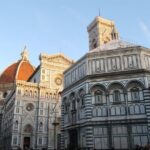
- Piazza del Duomo: San Giovanni, Santa Maria del Fiore, and Giotto’s Bell Tower
- Between Squares: Medieval Towers, Narrow Streets, and How Florence Used to Work
- Piazza della Repubblica: Roman Roots Under a More Modern Face
- Orsanmichele: A Marketplace Past and a Worker-Sculpture Legacy
- Piazza della Signoria and Palazzo Vecchio: Politics, Medici Pride, and 16th-Century Statues
- Ponte Vecchio and the Arno: Goldsmiths, 1340s Construction, and the Vasari Corridor
- Palazzo Pitti: Ending at the Medici Residence That Changed the Scale
- Price and What You Really Get for $161.34
- How to Plan Your Day Around This Walk
- Who This Private Walk Is Best For
- Should You Book This FlorencePass Private Walking Tour?
- FAQ
- How long is the Florence private walking tour?
- What’s the price per person?
- Is this a private tour or a group tour?
- Where does the tour start and end?
- Do I get a mobile ticket?
- Is confirmation provided after booking?
- What is the cancellation policy?
- Is public transportation nearby, and can most people join?
Key Highlights You’ll Notice Right Away
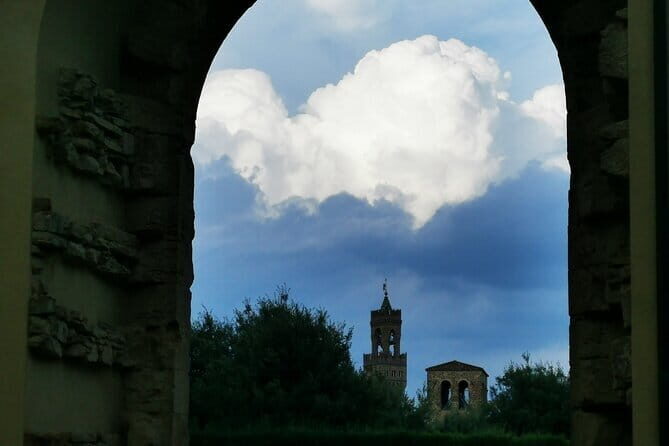
- A local guide who connects buildings to people, from the Medici to Michelangelo
- Duomo complex orientation that helps you read the marble, dome, and belltower at a glance
- Quick medieval-to-Roman-to-Renaissance timeline, walking the places where power and trade shifted
- Orsanmichele’s worker-stats angle, which reframes what you’re seeing outside
- Piazza della Signoria to the Arno in a clean route that moves from politics to art
- Ponte Vecchio with Medici-era context, including the Vasari Corridor story
Getting Oriented at Piazza di San Giovanni and Moving Through the Old Town
Most Florence walking tours either dump you into the center and hope you figure it out, or they feel like a museum line. This one is the opposite. You start at Piazza di San Giovanni, 14R (near San Giovanni), and the walk ends around Ponte Vecchio, 46R. That matters because you’re building a route that naturally trends toward the river, instead of backtracking all afternoon.
In practice, the tour is timed for a fast, coherent “first pass” through Florence’s highlights. Total time is about 2 hours, and the pace is described as flexible and customizable. That usually means you can slow down for photos or ask a couple of extra questions without the whole schedule collapsing.
You’ll also see why private can be more efficient here than group travel. A local guide can point out what to look at immediately, then help you connect it to the bigger story so you don’t waste time standing in front of something impressive but unexplained.
And if you’re the type who likes planning while you’re on vacation, you’ll appreciate the built-in intel about dining and shopping along the route. Florence is full of options, so getting targeted suggestions early helps you spend less time wandering and more time enjoying.
One extra confidence boost: this tour is run by FlorencePass, and the strongest praise in past experiences tends to focus on guides who tell stories well and explain architecture and history with clarity. Names that have shown up in past guest feedback include Maurizio, Roberta Fiorentina DOC, and Claudio—all praised for a strong grasp of Florence’s buildings and what they meant.
You can also read our reviews of more walking tours in Florence

Piazza del Duomo: San Giovanni, Santa Maria del Fiore, and Giotto’s Bell Tower
Your walk kicks off at Piazza del Duomo, and it’s the right place to start. In Florence, the fastest way to understand the city is to see how religion, art, and public life overlap in one square.
Here’s what you’ll focus on during the stop:
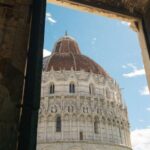
- St. John’s Baptistery, including its famous bronze doors
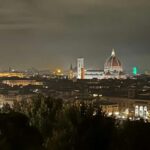
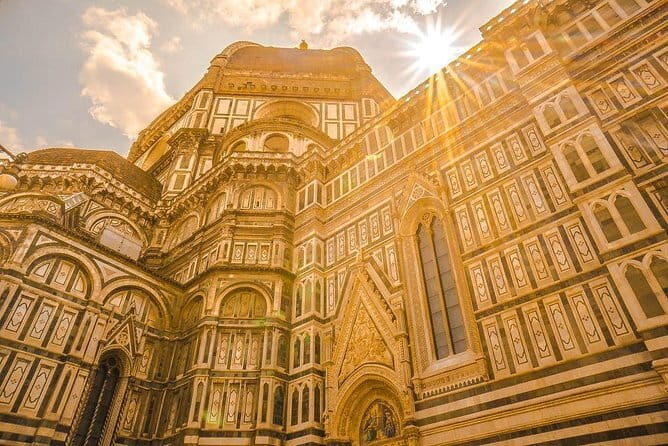
- Santa Maria del Fiore Cathedral with its marble decoration and the dome, described as the highest building in town
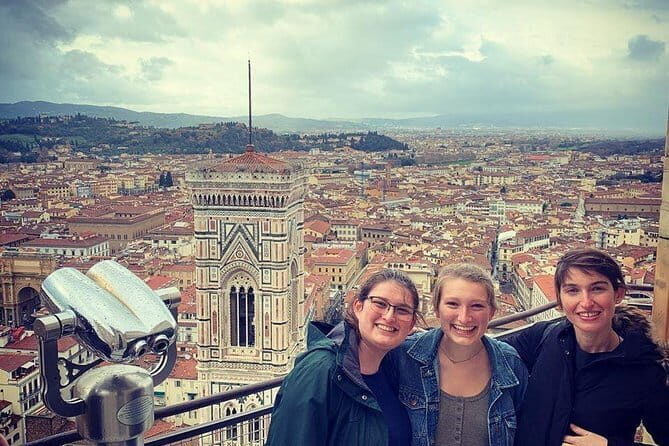
- Giotto’s belltower, framed as an open-air museum of sculpture
The value isn’t just that these are famous. It’s that the guide helps you see relationships between them. The baptistery isn’t just a pretty building. It’s part of the city’s religious identity. The cathedral’s marble patterning isn’t random decoration. And that dome becomes less abstract once someone explains why it’s such a statement piece.
Timing is short, but it’s purposeful: you get about 15 minutes in this area. That’s enough to get oriented, understand what you’re looking at, and still move on without burning your day in one spot.
Also, the stop is listed as admission free for the tour segment. That’s helpful if your goal is to keep costs predictable and avoid piling on extra tickets early.
Between Squares: Medieval Towers, Narrow Streets, and How Florence Used to Work
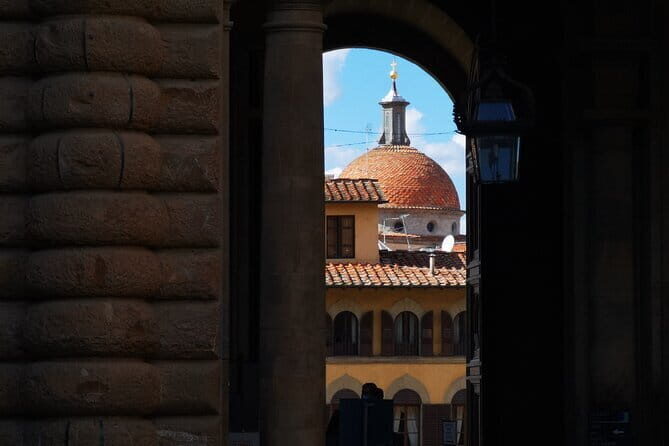
After the big focal point at the Duomo, you’ll step into the maze that makes Florence feel like Florence. There’s a stop simply described as walking through the narrow streets with old towers that act as a memory of medieval life.
This is the part I appreciate most on a first walk. Florence is famous for art, but its street layout and vertical skyline also tell the story. When you see tower remnants and compact lanes, you start to understand why the city developed the way it did—and why Renaissance patrons and rulers loved to build in such a dramatic setting.
This segment is quick—around 10 minutes—so you won’t feel stuck. You’ll get enough time to soak in the feel, then return to the “big idea” of the tour as you head toward the next square.
Piazza della Repubblica: Roman Roots Under a More Modern Face
Next comes Piazza della Repubblica, and it’s a good reality check. Florence has layers. You can stand in a square with cafés, shops, and a carousel and still be walking on ground that traces back to the Roman period.
The stop focuses on the square’s triumphal arch, tied to the idea that this area served as the ancient center of Florence, founded by Romans about two thousand years ago. The point of the explanation isn’t to turn Florence into a history lecture. It’s to give you a map for what you’re seeing.
A major benefit of stopping here is that it sets you up for the next stretch of “power locations.” Squares in Florence weren’t just places to hang out. They were places where identity, politics, and economics showed up in stone.
This is a short stop—about 5 minutes—so treat it like a quick waypoint. If you love architecture but don’t want to lose momentum, this timing works well.
Orsanmichele: A Marketplace Past and a Worker-Sculpture Legacy
The tour then heads to Orsanmichele, described as both a church and museum. What makes this stop interesting is the framing: the building began as a huge marketplace, then shifted into a church for Florentine workers.
That worker angle is the kind of detail that changes how you look. When you understand the original purpose, you don’t treat the building like a random stop. You start to see how trade and civic identity were tied together.
The stop also mentions the exterior’s uniqueness and highlights that Orsanmichele once held the richest collection of Renaissance statues at one time. Even if you’re not focusing on interior museum time, the guide’s context helps you connect what you see outside to the building’s role in the Renaissance art world.
Time here is about 10 minutes. It’s enough to appreciate the exterior and get the story, without turning the tour into a museum marathon.
You can also read our reviews of more guided tours in Florence
- The Best tour in Florence: Renaissance & Medici Tales – guided by a STORYTELLER
★ 5.0 · 12,316 reviews
Piazza della Signoria and Palazzo Vecchio: Politics, Medici Pride, and 16th-Century Statues
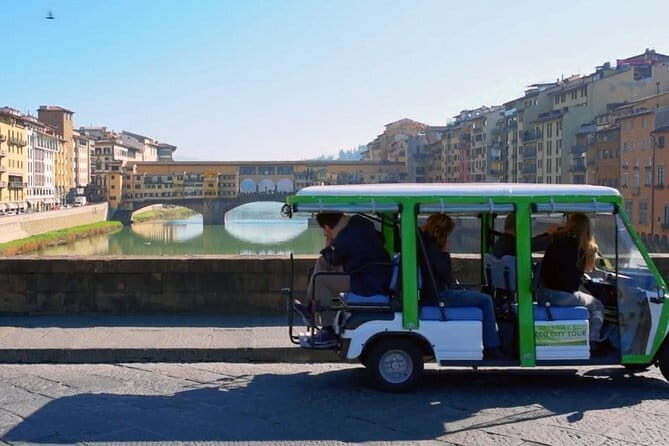
Now you reach one of the most meaningful places in Florence: Piazza della Signoria. This is presented as the political center of Florence, with Palazzo Vecchio continuing that role in the past through city council meetings.
You’ll also get the “why it looks like a fortress” feeling. The palace is described as castle-looking, and the tour connects that vibe to the presence of important 16th-century statues displayed around the square.
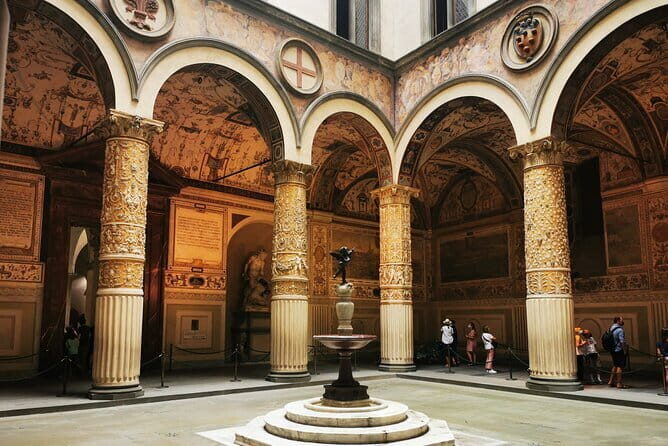
But the Medici thread is the real glue in this stop. The tour notes how the courtyard reflects the period when the Medici family lived there, and it then transitions you toward the Arno River via Piazzale degli Uffizi—linked to the Medici grand-dukes and described as their bureaucracy seat, later transformed into the important Italian painting gallery.
You’ll probably understand this stop best if you think of Florence as three layers moving at once:
- Public power (what rulers did)
- Art as propaganda (how they wanted it to look)
- Architecture as messaging (how the city communicated authority)
This whole stretch is given about 20 minutes, which is longer than most stops. That makes sense because the “explain this square” job is harder. Piazza della Signoria is full of statues and details, and the guide helps you decide what to notice first.
Ponte Vecchio and the Arno: Goldsmiths, 1340s Construction, and the Vasari Corridor
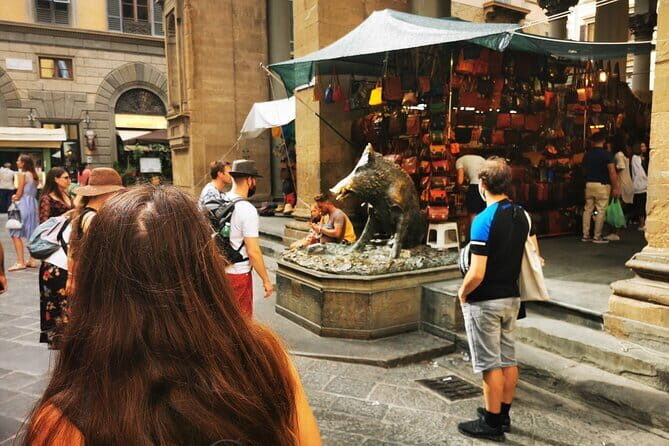
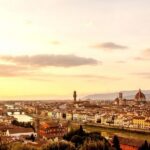
The route then moves to the river with a stop at Ponte Vecchio, described as the famous medieval bridge constructed in the 1340s. The guide frames it with the images most people come for: the glittering shop windows of goldsmiths.
But the most useful part is the Medici-era story tied to Giorgio Vasari. The tour mentions the Vasari Corridor, an overhead passageway built in 1565 for Cosimo de’ Medici. When you hear this context, Ponte Vecchio stops being just a photo spot. It becomes a piece of political choreography—how rulers moved, watched, and controlled access.
This stop is about 8 minutes, so it’s not long enough to do deep shopping along the bridge. But it is long enough to appreciate the structure and understand why it’s still such a magnet.
Also, it’s a good mental reward. After a couple of squares and a few key buildings, the river view gives you a reset. And since the tour ends near Ponte Vecchio, you can keep the momentum and explore nearby streets on your own right after.
Palazzo Pitti: Ending at the Medici Residence That Changed the Scale
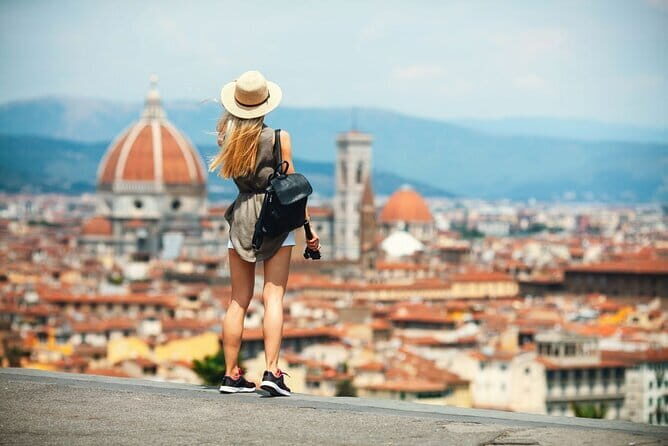
The final stop takes you to Palazzo Pitti, ending at the Piazza Pitti area with a view of the palace. This is where the tour gives you the “big house” perspective.
The explanation here is clear: Palazzo Pitti became the residence of the Medici family until the family became extinct in 1737. For many visitors, the Medici story can feel like a parade of names. This ending makes it physical. You finish with a sense of how much space power needed.
It’s a short finish, about 8 minutes, but it works as a bookend. You started with Florence’s religious centerpiece. You moved through politics, art, and worker life. Now you end at the place tied directly to the Medici household.
Price and What You Really Get for $161.34
At $161.34 per person for an approximately 2-hour private walk, this is not a budget “wander with a map” activity. It’s priced for what you’re buying: a guide who can point, explain, and keep you moving through a dense city without you having to decode everything yourself.
Where the value shows up:
- Private format means you can match the pace to your group.
- You get a tight sequence of major sites in the old town without needing to plan the route from scratch.
- The tour includes practical side guidance, especially tips about where to eat and shop, which can save you hours later.
- The route is structured around big Florence anchors: Duomo, Orsanmichele, Signoria, Ponte Vecchio, and Palazzo Pitti.
One realistic consideration: because the time is short, you’re not getting a slow, deep museum day. You’re getting a strong orientation and storytelling pass, so you can choose what to revisit afterward. If your priority is deep interior time at multiple museums, you’ll likely want other ticketed stops after this.
If you’re traveling in peak season, note that this experience is booked far in advance on average—around 97 days. That’s a sign it’s a popular way to tackle Florence early.
How to Plan Your Day Around This Walk
Here’s how I’d use this tour to make the rest of your trip better.
Wear comfortable shoes and accept that Florence is a stone-city. The tour involves walking across multiple squares and through older streets. Also, be ready for quick stops. You’ll get time to look and listen, then you’ll move.
Before you start, decide what you want most afterward:
- If you want more cathedral-scale awe, plan a return visit to the Duomo area later with more time.
- If you want more statues and palace power, head back toward Signoria and Palazzo Vecchio.
- If you want a more relaxed evening, use the river finish to build your dinner area around Ponte Vecchio and nearby streets.
The dining and shopping tips built into the guide experience can help you steer away from the most generic tourist traps. Even better, you’re getting the advice while you’re still in Florence mode, not after you’ve already made choices earlier in the day.
Who This Private Walk Is Best For
This tour is a strong fit if you want:
- A high-impact introduction to Florence’s major Renaissance and Medici storylines
- A route that moves logically from Duomo to river to Medici residence
- Clear explanations of famous places without spending your day reading your phone like it’s a textbook
- A little flexibility, rather than feeling locked into a rigid group pace
It’s also a good choice if you like architecture and storytelling and want to understand what buildings meant when they were built and used. Past guest praise consistently points toward guides who explain history and architecture with strong story momentum, including the locals named Maurizio, Roberta Fiorentina DOC, and Claudio.
If you’re the kind of traveler who needs quiet time to sit and read every plaque for an hour, this may feel fast. But if you want a first pass that sets up smarter return visits, it’s perfect.
Should You Book This FlorencePass Private Walking Tour?
Book it if you want a guided, first-day-friendly walk that links Florence’s big sights into one coherent Renaissance narrative. The route makes sense, the time is efficient, and the local tips about food and shopping can pay off quickly.
Skip it or add time elsewhere if you want long museum sessions or you plan to spend major chunks of your day inside churches or galleries. This is built for orientation, not for a slow deep dive into interiors.
Given the short duration and the private format, I’d treat this as your “set the map in your head” experience. Then you can go back on your own and choose what deserves extra time.
FAQ
How long is the Florence private walking tour?
The tour is about 2 hours.
What’s the price per person?
The price is $161.34 per person.
Is this a private tour or a group tour?
It’s private, so only your group participates.
Where does the tour start and end?
It starts at Piazza di San Giovanni, 14R, 50129 Firenze FI and ends near Ponte Vecchio, 46R, 50125 Firenze FI.
Do I get a mobile ticket?
Yes, the experience includes a mobile ticket.
Is confirmation provided after booking?
Yes, confirmation will be received at time of booking.
What is the cancellation policy?
You can cancel for free up to 24 hours in advance for a full refund.
Is public transportation nearby, and can most people join?
The meeting area is near public transportation, and most travelers can participate.
You Might Also Enjoy
More Walking Tours in Florence
More Tours in Florence
- The Best tour in Florence: Renaissance & Medici Tales – guided by a STORYTELLER
★ 5.0 · 12,316 reviews
More Tour Reviews in Florence
- Tuscany Day Trip from Florence: Siena, San Gimignano, Pisa and Lunch at a Winery
★ 5.0 · 21,634 reviews - The Best tour in Florence: Renaissance & Medici Tales – guided by a STORYTELLER
★ 5.0 · 12,316 reviews