REVIEW · FLORENCE
Florence Renaissance walking tour
Book on Viator →Operated by Slow Tour Tuscany · Bookable on Viator
Florence hits hard when you see it in the right order. This Florence Renaissance walking tour uses an art historian to connect the city’s art and power to what you’re actually standing in, with guided time at the Duomo and the Duomo-area sights up close. You also get a tight, walkable loop through major squares and neighborhoods so you’re not stuck doing isolated photo stops.
What I especially like is the focus on interpretation: you’re not just shown monuments, you’re taught how the Renaissance mindset and the cathedral’s Gothic structure fit together. The other big win is the small party size (private group up to 12 adults, with an overall cap), which makes questions easier to answer with your earphones. One consideration: the route packs plenty in about two hours, so some stops are brief, and if your guide is a bit quiet, you’ll want to stay attentive with the audio system.
In This Review
- Key things to know before you go
- A Renaissance route that starts with the city’s big visual anchors
- Your art historian guide and why the earphones matter
- First sights: Ponte Vecchio vibes and the Medici world around you
- Piazza della Signoria: where Michelangelo’s shadow is loud
- Toward Pitti Palace: walking the route of power and money
- Oltrarno craft stops and the quieter side of Florence
- The Michelangelo bridge view, Ponte Vecchio energy, and fashion-street walking
- Piazza della Repubblica: ancient layers and a lived-in center
- Piazza del Duomo: seeing Brunelleschi and the Baptistery door as a system
- Price and value: what you’re paying for at about $40.33
- Timing, pace, and logistics you should plan around
- Who should book this Florence Renaissance walking tour
- Should you book it?
- FAQ
- How long is the Florence Renaissance walking tour?
- What’s the price per person?
- Where does the tour start and end?
- What time does the tour begin?
- Is the tour private?
- Are earphones included?
- Are tickets to the Uffizi and Palazzo Pitti included?
- Is the Duomo entry included?
- Is this tour suitable for children?
- What’s the cancellation policy?
Key things to know before you go
- Art historian-led commentary that ties Florence’s art to the families and ideas behind it
- Duomo-area access in a guided format that explains what you’re looking at
- Earphones included, helpful for keeping up in busy piazzas
- Oltrarno artisan stops that add everyday craft flavor to the big sights
- Medici power themes from square to palace area, not just names on plaques
- A fast, varied circuit, meaning you’ll cover more than you’ll linger
A Renaissance route that starts with the city’s big visual anchors
This is the kind of Florence walk that helps you build real “map memory.” Instead of bouncing randomly between landmarks, you move through the same visual sequence locals recognize: bridge, palace power, artisan quarters, and finally the cathedral complex. That order matters because Florence’s Renaissance look is not one thing. It’s politics, religion, money, and architecture all talking at once.
You’ll also notice the tour’s balance between the monumental and the human scale. Squares like Piazza della Signoria and Piazza della Repubblica feel like stages, while Oltrarno’s small workshops bring you closer to how the city actually made things. The goal isn’t to overwhelm you with trivia. It’s to help you read Florence like an art book you can walk through.
The group stays small, and the format is private-party style, so it’s easier to ask questions and get answers that match what you’re seeing in that exact minute. Even if you only know a little Renaissance art, you’ll leave with a clearer sense of why Florence became Florence.
You can also read our reviews of more walking tours in Florence

Your art historian guide and why the earphones matter
This tour is led by a professional art historian, not a generic “stand here and look” guide. That’s huge for the Duomo portion, where details like materials, design choices, and symbolism can feel like alphabet soup if someone doesn’t translate them. An art historian also tends to explain the connections: who funded what, why a structure looks the way it does, and how later thinkers built on earlier Gothic foundations.
You’ll receive earphones to follow the guide clearly. In a city full of street noise, this changes the experience. You can focus on the words instead of shouting across your group. If your guide speaks softly, the audio system becomes the difference between hearing the story and missing it.
One more practical note: this is a single-language tour, so you’ll want to confirm the language before you show up. When everyone hears the same narration, the whole walk feels smoother.
First sights: Ponte Vecchio vibes and the Medici world around you
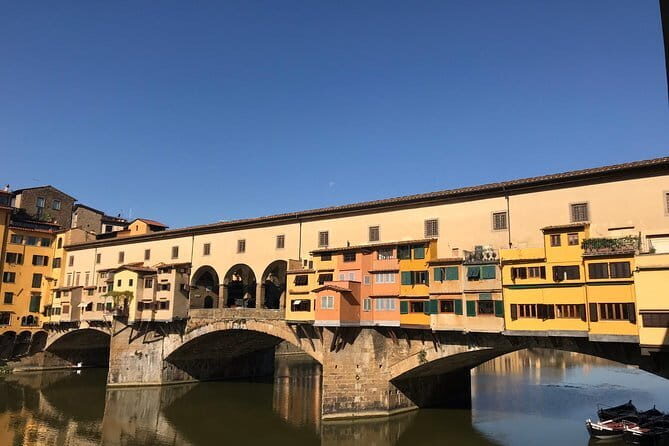
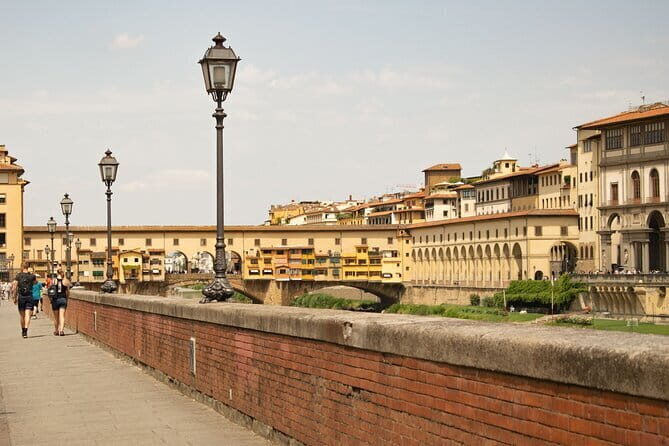
The walk begins at Lungarno degli Acciaiuoli, then quickly steers you toward one of Florence’s most recognizable images: the oldest bridge in Florence. From there, you’re primed for the rest of the route because bridges, rivers, and crossing points are always where Florence’s daily life overlaps with power and commerce.
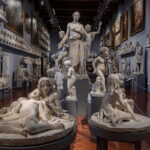
Next comes the area connected with the Medici’s artistic legacy: you’ll pass by the Galleria Degli Uffizi zone for a short stop to learn about the Medici family and their art collections. The time is brief (about 10 minutes) and admission isn’t included here, so think of this as orientation. If you want to go inside the Uffizi galleries afterward, you’ll have a much better sense of what to look for and why the Medici mattered.
Even in a short pause, this stops you from treating Florence like random famous buildings. You start seeing it as a system. Florence’s art collections weren’t only about taste. They were about influence.
Piazza della Signoria: where Michelangelo’s shadow is loud
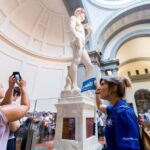
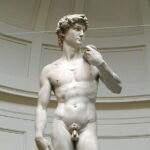
Piazza della Signoria is one of those places where you can practically feel the city talking back. Here you’ll admire a famous Renaissance reference point: an impressive replica of Michelangelo’s David. The tour doesn’t send you chasing a distant museum piece. Instead, it places the idea of Michelangelo’s style right where the political life of the city unfolded.
This is also where you’ll get a “square reading” lesson in real time. Piazzas in Florence weren’t just for strolling. They functioned like open forums—art, politics, and civic identity in one camera-ready space.
Your stop is short (around 10 minutes), but that can be a feature, not a bug. You get the emotional impact of the square and the context from your guide without losing your whole morning in one location.
Toward Pitti Palace: walking the route of power and money
After the main square, the walk leads you along a renewed passage toward Palazzo Pitti, once home to the Medici family and the King of Italy. That detail matters because Pitti isn’t just a pretty façade. It represents the shift in how wealth displayed itself and how Florence moved from Renaissance court life to later royal identity.
This stop is again about 10 minutes, and admission isn’t included, so you won’t be doing a full palace interior visit on this tour. Instead, you’ll learn what to notice from the outside and in the surrounding streets. That’s a smart move if you plan your days carefully, because Palazzo Pitti and the related spaces can swallow hours and cost extra.
If you’re the type who likes to understand the “why” before you commit to expensive museum time, this kind of external orientation is excellent value. You’re essentially getting a mini lecture that tells you which rooms, museums, or sections you’ll want to prioritize later.
- Tuscany Day Trip from Florence: Siena, San Gimignano, Pisa and Lunch at a Winery
★ 5.0 · 21,634 reviews


Oltrarno craft stops and the quieter side of Florence
Then the tour changes gears. Oltrarno is where Florence feels more local, and your walk includes time for a few craft-focused stops to meet or at least see work happening in artisan labs. Expect that hands-on feel, with the emphasis on typical Tuscan artisans and crafts rather than marble-only romance.
This part is about 15 minutes, so it’s not a long market-style wander. But it gives your day texture. Big sights can make Florence feel like a stage set. Oltrarno helps you remember it’s also a working city with skills passed down and visible in everyday spaces.
If you love art but also care about how art becomes objects you can hold—leather, metalwork, paper goods, or other craft outputs—this is where the tour earns its keep. It adds meaning beyond the famous monuments.
The Michelangelo bridge view, Ponte Vecchio energy, and fashion-street walking
The route then heads back toward one of Florence’s signature moments: the bridge designed by Michelangelo with a stunning view on Ponte Vecchio. This is one of those spots where your guide can explain what you’re looking at while you enjoy the visual payoff. Even if you’re not a structural nerd, a guided moment like this helps you notice patterns and design intentions you might otherwise skip.
From there, you’ll walk along the road of fashion. This isn’t just shopping scenery. It’s a reminder that Florence’s identity keeps evolving. Styles change, but the city still attracts people because it knows how to make places feel like culture.
If your feet are getting tired, this segment still works because it’s scenic and connected to landmarks, not random wandering. You’ll feel like the tour is moving with purpose.
Piazza della Repubblica: ancient layers and a lived-in center
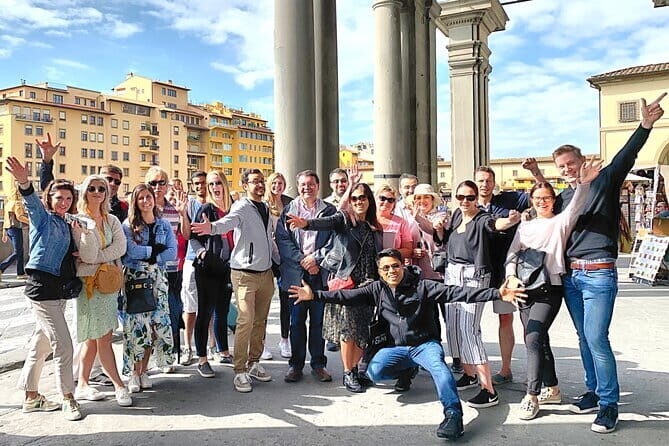
Next comes Piazza della Repubblica, described as the ancient Roman city center where a community used to live (the tour description notes the juice community). Even if your brain doesn’t instantly map Roman Florence onto modern streets, your guide’s narration gives you a framework.
Roman layers in Florence can be easy to miss because the Renaissance and medieval buildings often take over the visual storyline. A guided stop here helps you notice how Florence grew forward on top of older foundations instead of starting from scratch every few centuries.
This stop is short (about 10 minutes) and ticketed as included in the tour description, so you’ll likely get a quick but useful explanation for what you’re seeing. You’ll leave with a better sense of the city as a long-running project, not a single art period.
Piazza del Duomo: seeing Brunelleschi and the Baptistery door as a system
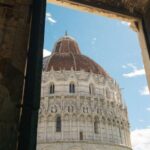
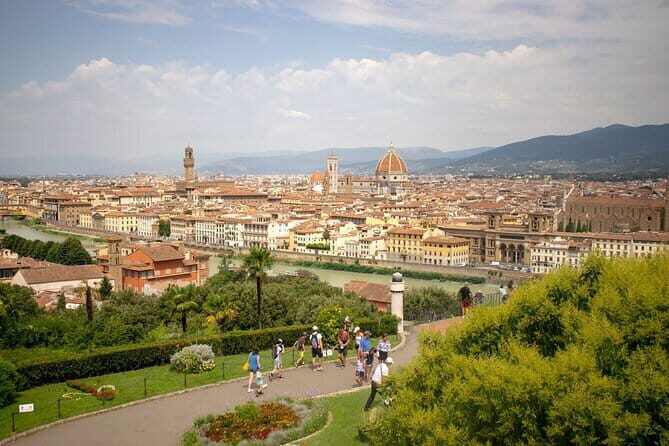
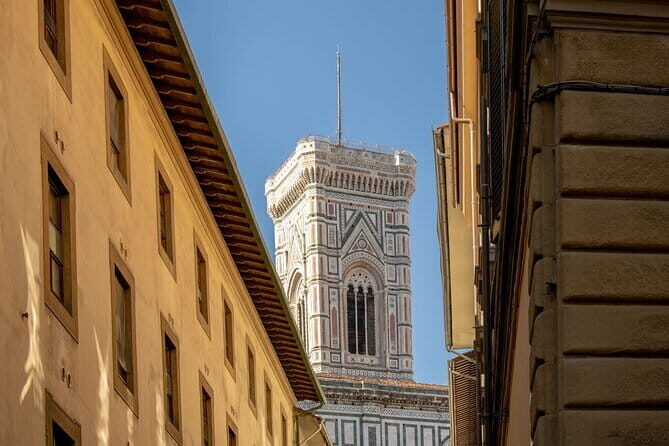
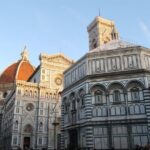
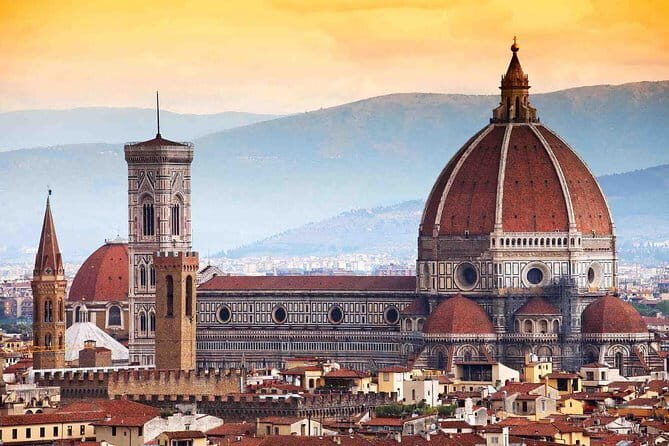
Finally, you reach the star of the practical and visual show: Piazza del Duomo. This is where the tour’s Renaissance framing really clicks. You’ll admire the cathedral and learn about the Cupola by Brunelleschi, plus you’ll look at the precious golden door of the Baptistery. The idea is that the Duomo complex isn’t one monument. It’s a whole civic-religious machine.
The UNESCO-listed Florence Cathedral is known formally as the Cattedrale di Santa Maria del Fiore, and the guide’s focus on Gothic structure paired with Renaissance design helps you stop treating the Duomo as one style. It’s not purely one era. It’s a conversation across time, which is exactly what makes it fascinating when explained well.
Your Duomo-area stop is about 15 minutes. And while that’s not enough for deep museum-level exploration, it’s a strong “first encounter” if you want to later return for a longer visit or climb if that’s on your plan. The best part is that you’ll know what to look at when you return—where to focus, what details matter, and why certain elements were included.
Price and value: what you’re paying for at about $40.33
At $40.33 per person for about two hours, the value mostly comes from three things: the art historian, the earphones, and the guided pacing that gets you through big-ticket sights without you piecing it together yourself.
You’ll also want to notice what’s not included in the surrounding stops. Uffizi and Palazzo Pitti are not included for entry in the tour descriptions, so if you want full museum visits, you’ll need separate tickets. But that’s normal—and honestly, it’s smart. Doing a full Uffizi day plus a full Duomo day would crush your time. This tour is designed as the connector.
Also consider timing. The tour is typically booked around 73 days in advance, so if your travel dates are fixed, planning ahead helps you avoid sold-out slots. This doesn’t mean you must book immediately. It means the most convenient times can disappear.
Timing, pace, and logistics you should plan around
The tour runs about two hours and ends at Piazza del Duomo. It starts at 11:00 am from Lungarno degli Acciaiuoli, 10, and the meeting area is near public transportation. That’s good news if you’re using buses or trains during your Florence stay.
Pace-wise, you should expect lots of micro-stops: some are around 10 minutes, one craft segment is about 15, and the Duomo-area moment is about 15. That means you’ll get a meaningful overview, but you won’t have long quiet time in any single museum space on this particular outing.
Bring comfortable walking shoes. Florence is a place where your day can change based on cobblestones and crowds. The tour’s small-group size helps, but it won’t remove the city’s real-world energy.
Who should book this Florence Renaissance walking tour
This tour fits you best if:
- You want a guided art explanation rather than a generic photo-walk
- You like a tight circuit that connects Medici influence, Renaissance design, and the Duomo complex
- You want to learn enough to make your later self-guided visits more rewarding (instead of starting from zero)
- You care about both famous monuments and the craft-forward feel of Oltrarno
It may be less ideal if you’re hoping for long museum time inside the Uffizi or Palazzo Pitti, because entries are not included for those stops in the tour details. It’s also better for adults who enjoy narration; if you prefer silent sightseeing, you’ll likely want a different format.
Should you book it?
Yes—if your goal is to understand Florence’s Renaissance logic quickly, this tour is a strong use of two hours. The standout advantages are the art historian-led commentary and the way the route links major squares to the cathedral area, so the Duomo doesn’t feel like a random stop. Add the earphones, and you can keep up even in the noise.
Book it if you’re the type who returns to big sights with better questions later. If you just want a prolonged deep-dive inside multiple museums, you’ll probably be happier adding separate museum tickets and making this tour your connective tissue instead.
FAQ
How long is the Florence Renaissance walking tour?
It’s about 2 hours.
What’s the price per person?
The price is listed at $40.33 per person.
Where does the tour start and end?
It starts at Lungarno degli Acciaiuoli, 10, 50123 Firenze, and ends at Piazza del Duomo, 50122 Firenze.
What time does the tour begin?
The start time is 11:00 am.
Is the tour private?
It’s described as a private-party format with a maximum of 12 adults in your party, and the overall maximum is capped at 15 travelers.
Are earphones included?
Yes. A set of earphones is included so you can follow the guide’s explanations clearly.
Are tickets to the Uffizi and Palazzo Pitti included?
No. The tour details note admission tickets are not included for Galleria Degli Uffizi and Palazzo Pitti.
Is the Duomo entry included?
The tour is described as including a guided visit with entry to the UNESCO-listed Duomo complex.
Is this tour suitable for children?
Children must be accompanied by an adult.
What’s the cancellation policy?
You can cancel for a full refund up to 24 hours in advance of the experience start time. If you cancel less than 24 hours before, you won’t be refunded.
You Might Also Enjoy


More Walking Tours in Florence

More Tours in Florence
- The Best tour in Florence: Renaissance & Medici Tales – guided by a STORYTELLER
★ 5.0 · 12,316 reviews

More Tour Reviews in Florence
- Tuscany Day Trip from Florence: Siena, San Gimignano, Pisa and Lunch at a Winery
★ 5.0 · 21,634 reviews - The Best tour in Florence: Renaissance & Medici Tales – guided by a STORYTELLER
★ 5.0 · 12,316 reviews