REVIEW · FLORENCE
Private Tour of Florence on a Golf Cart Tour
Book on Viator →Operated by Florencyatour · Bookable on Viator
A one-hour spin still feels like a win. This private Florence golf cart tour is built for fast orientation, with short stops at big-picture highlights like Ponte Vecchio and the Duomo area, without the grind of long walks. You ride through the most photogenic bits of central Florence, then hop off for brief look-and-snap moments.
One thing I really like is how the tour’s short pacing helps you settle in fast on arrival day. Another standout: the guides (often named Simone, Moin, Farina, Freddy, Joseph, and Johnny) tend to add personal narration and practical photo timing, and some will even try to work in extra viewpoints like Piazza Michelangelo if you ask.
The main drawback to weigh is that a lot of the experience leans on recorded audio narration, and cart comfort or guide delivery can vary. On a few departures, people reported late pickups, shorter-than-expected time, or an English playback that didn’t always land smoothly—so go in expecting a quick drive-by tour, not a deep museum lecture.
In This Review
- Key takeaways before you book
- Why a Florence golf cart tour works when time is tight
- Price and duration: what $60.34 actually buys you
- Meeting point and route logic from Piazza del Mercato Centrale
- Santa Maria Novella and Piazza Ognissanti: the “start here” Florentine feel
- Santa Trìnita and Ponte Vecchio: where the Arno becomes the star
- Santo Spirito in Oltrarno: a quieter Florence moment
- Palazzo Pitti and the Medici power shift
- San Niccolò: the medieval atmosphere detour
- Biblioteca Nazionale Centrale and Piazza Santa Croce
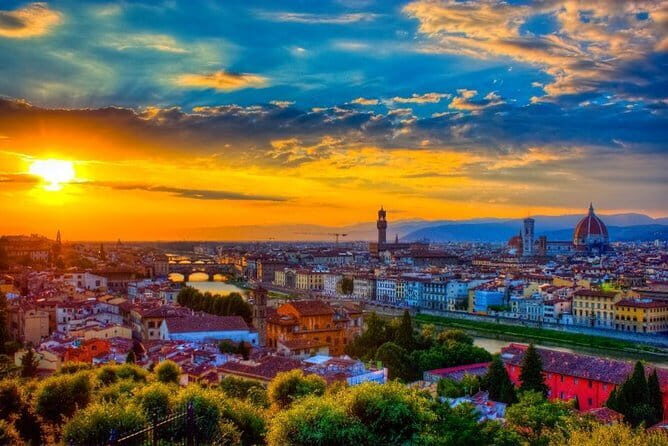
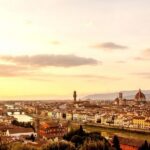
- Duomo area and the Cupola: seeing the skyline picture
- Uffizi and Cappelle Medicee: culture heavyweights, but entry can cost extra
- San Lorenzo and the market energy nearby
- How the narration works: audio support versus real guide talk
- What to do next after your golf cart loop
- Should you book this Florence golf cart tour?
- FAQ
- How long is the private Florence golf cart tour?
- What is the meeting point for the tour?
- Is the tour private or shared?
- What language is the tour offered in?
- Are attraction tickets included?
- Can I cancel for free?
Key takeaways before you book
- A private ride through the center: only your group, so you can move at a relaxed pace
- Photo stops built in at major squares and river crossings, including quick time for pictures
- Mix of free and included admissions plus several sights where entry is not included
- Guide-led add-ons happen (Piazza Michelangelo came up as a request that sometimes gets fit)
- Expect short moments, not long visits: it’s designed to be about highlights, not lingering
Why a Florence golf cart tour works when time is tight
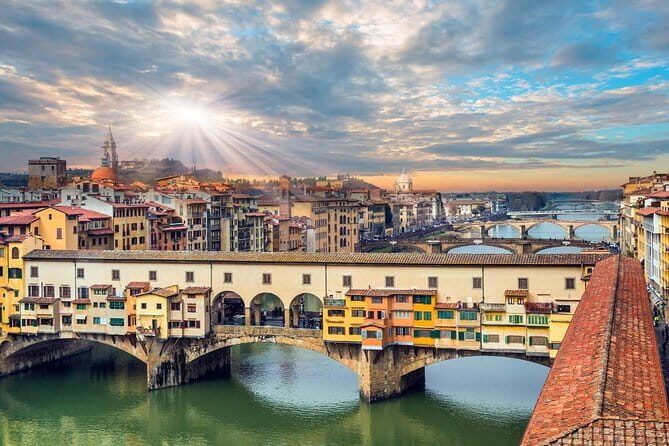
Florence can feel like a giant open-air museum. The problem? It’s also hilly, crowded, and not always fun when your legs are already tired from museums or a train delay. This golf cart format solves that in a very practical way: you get wheels when walking would be a slog.
What you’re really buying here is orientation. In about an hour, you’ll see where the landmarks sit relative to each other—Santa Maria Novella on one end, the Arno river crossings in the middle, and the Duomo/Santa Croce side of the historic center. That alone helps you decide what to tackle later on foot.
It’s also a smart fit if you’re traveling with limited mobility or if you’re visiting in hot weather. One of the best uses of a cart tour is the “first afternoon” plan: arrive, get grounded, then start your real sightseeing the next day with a map in your head.
You can also read our reviews of more private tours in Florence

Price and duration: what $60.34 actually buys you
At $60.34 per person for about 1 hour, this isn’t priced like a multi-hour guided deep dive. It’s priced like a high-impact highlights tour. You’re paying for the convenience of a private vehicle, compact routing, and a guide/narration that points out what matters.
Here’s the value math that matters most: the itinerary includes several stops where admissions are free and a couple where they’re included, but others are not included (examples include Palazzo Pitti, Cupola/Brunelleschi dome, and several major museum/chapel areas). So the tour works best if you treat it as:
- a quick “see it, understand it, photograph it” overview
- a way to decide which sights you want to pay for in more depth later
If you go in hoping to walk into every big-ticket place during the cart loop, you may feel rushed. If you go in knowing it’s a guided circuit, it feels like good value for what you’ll actually cover.
Also, this is an English tour with a mobile ticket. That matters because it cuts friction on arrival—less time hunting tickets, more time seeing Florence.
Meeting point and route logic from Piazza del Mercato Centrale
You meet at Piazza del Mercato Centrale, 39 R, 50123 Firenze. That’s a solid location because you’re starting on the edge of the historic center where you can easily orient yourself, grab a coffee, and then begin the loop.
From there, the route makes sense: it sweeps through key squares (Santa Maria Novella and Ognissanti), crosses into the Arno river zone (Santa Trìnita and Ponte Vecchio), then continues toward the Oltrarno side (Santo Spirito), and finally works your way toward major central landmarks like Santa Croce and the Duomo area.
Why this matters: Florence landmarks can feel disconnected if you’re only walking random routes. A loop like this gives you a connected mental picture, so later you’re not second-guessing directions every five minutes.
Santa Maria Novella and Piazza Ognissanti: the “start here” Florentine feel

The tour begins at Santa Maria Novella, a square dominated by the Basilica of Santa Maria Novella. This is one of Florence’s main “arrive-and-orient” zones. Even if you don’t go inside on this tour, the square gives you scale and context: you’re seeing Florence at street level, not just from a museum brochure.
A few minutes later you’ll be at Piazza Ognissanti, a square along the Arno’s right bank. It’s not the loudest headline on most itineraries, but it’s useful. You’ll notice how the river shapes the city layout, and it helps the later river-crossing stops feel less sudden.
At these early stops, the big benefit is momentum. You’re not wasting your first hour hunting for the right streets—you’re being shown the main structures that anchor Florence.
Santa Trìnita and Ponte Vecchio: where the Arno becomes the star

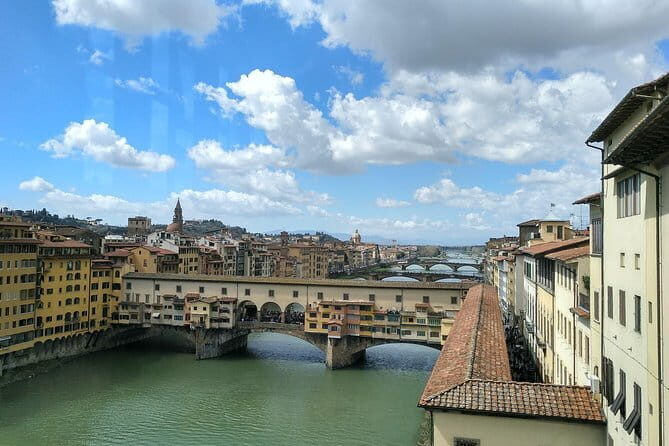
Then comes the river story. You’ll pass by the Santa Trìnita bridge, described as one of the most beautiful bridges in Italy. Even if you don’t linger long, the bridge area sets the mood: Florence is all about angles, stone, and that “everything looks like a painting” feeling.
Next is Ponte Vecchio, the iconic bridge that crosses the Arno about 150 meters. This is the stop most people picture before they even arrive. And for good reason—Ponte Vecchio isn’t just a crossing. It’s a landmark in how it’s shaped and how the city built itself around it.
Practical tip: if the crowd is heavy, use your off-cart minutes strategically. Take one wide shot first, then move for the best river angle when you’re ready. This tour is short, so don’t burn your best photos by fiddling too long.
- Tuscany Day Trip from Florence: Siena, San Gimignano, Pisa and Lunch at a Winery
★ 5.0 · 21,634 reviews

Santo Spirito in Oltrarno: a quieter Florence moment
Santo Spirito brings you into the Oltrarno district, the southern part of the historic center known for a slower, more local vibe than some of the central corridors. The church’s simple facade dominates its square, which makes the stop feel grounded rather than showy.
Here’s the historical detail that makes the visit click: Santo Spirito was built on the remains of a 13th-century Augustinian convent destroyed by fire in 1371. In a one-hour tour, you might only have a few minutes inside or right by the exterior, but that kind of timeline helps you see the building as a survivor, not just a backdrop.
This stop is also a good mental reset. You’ve seen the big-name squares and the river hits; now you get a church stop that feels more human-scale.
Palazzo Pitti and the Medici power shift
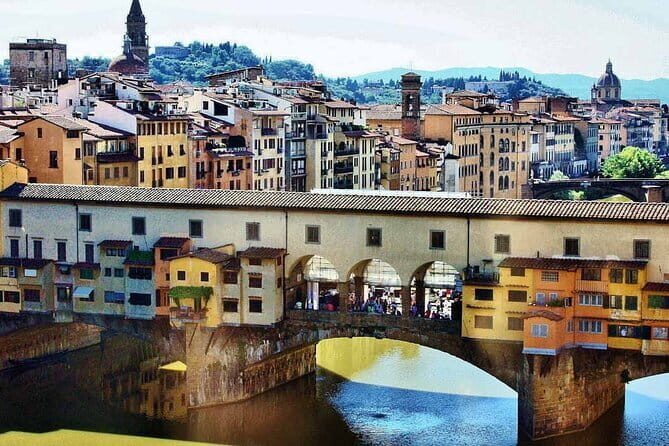
You’ll then head toward Palazzo Pitti, a major landmark tied to the Medici. The palace was purchased in 1550 by Cosimo I de’ Medici and his wife Eleonora of Toledo to transform it into the new Grand Ducal residence.
Even without a deep interior visit, Pitti’s presence matters. It tells you something about the city: power wasn’t just in churches and public squares. It was also in monumental private spaces that shaped Florence’s politics and culture.
One note for planning: entry to Palazzo Pitti is not included on this tour. So if you want to see the palace rooms properly (rather than just admire from outside), you’ll need to budget separately and plan a longer visit on another day.
San Niccolò: the medieval atmosphere detour
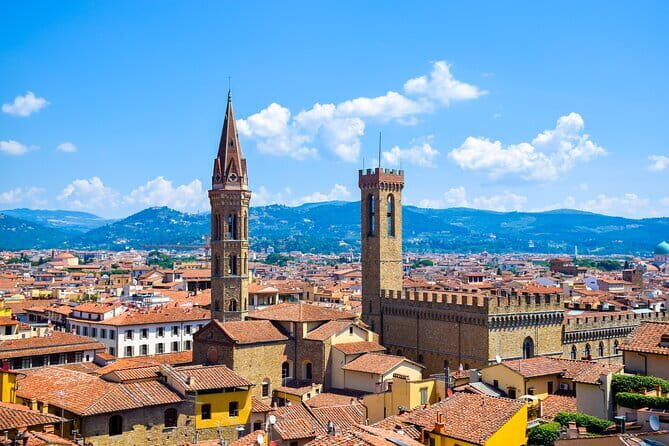
You’ll also pass by San Niccolò, a Florence area that preserves a medieval atmosphere. This kind of stop is valuable because it breaks the “everything is one monument after another” feeling.
What you’re looking for here is texture: narrower lanes, the sense that parts of Florence didn’t just get replaced by bigger and louder styles. Even a short look-and-photos moment helps you understand why local neighborhoods feel different from the headline squares.
Biblioteca Nazionale Centrale and Piazza Santa Croce
Next up: Biblioteca Nazionale Centrale (the National Central Library of Florence). This is one of those stops that can surprise you, because a library doesn’t sound as thrilling as the Duomo. But it fits the way Florence was built—culture and learning are part of the architecture, not just the content.
From there you reach Piazza Santa Croce, dominated by the Basilica of Santa Croce. This is another “big square, big mood” stop. It’s a great place to orient your next steps because Santa Croce sits near several classic Florence walking routes.
In your time here, focus on two things:
- the square’s open space (it changes how you feel compared to tighter streets)
- the way the basilica anchors the whole area
This is also a helpful pause if your cart ride already got you a bit photo-saturated.
Duomo area and the Cupola: seeing the skyline picture
The tour includes Duomo (Santa Maria del Fiore), the main cathedral of Florence. Admission is listed as free here, so at minimum you’ll be close to the city’s symbol.
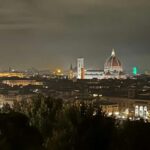
After that, you’ll be in the orbit of Brunelleschi’s dome—the famous cupola that was once the largest dome in the world. This is one of the easiest “why Florence is Florence” moments: the city’s skyline doesn’t just show a building. It shows a major engineering story.
Planning note: Cupola Del Brunelleschi entry is listed as not included. So you may see the dome as a visual highlight, but climbing into it (or getting specific interior access) would require a separate decision.
If you want that dome experience, you’ll need to plan it for a different time block.
Uffizi and Cappelle Medicee: culture heavyweights, but entry can cost extra
The itinerary mentions the Uffizi Gallery as a museum complex, but admission is not included. Same idea for Cappelle Medicee (Medici Chapels): it’s an important site, accessed from the back of the basilica area, and it’s marked as not included.
This is where the cart tour’s purpose shows. You’re getting the cultural landmarks in view, plus the location awareness so you can book the right museum/chapel entry later without playing phone-a-friend with your map.
If art museums are your priority, I’d use the cart tour to answer a simple question: which interiors do you care about enough to stand in line and pay for? This tour helps you narrow that down fast.
San Lorenzo and the market energy nearby
Finally, you’ll be at Basilica di San Lorenzo. It’s one of Florence’s major Catholic worship sites, located in the square of the same name. It’s also near the tourist market of San Lorenzo, which means you’ll feel the city’s everyday commerce right next to a major church stop.
Entry here is listed as not included, so think of San Lorenzo as a “sense the place” moment rather than a guaranteed interior experience during this specific loop.
How the narration works: audio support versus real guide talk
The experience can run in a mixed format. Many carts include a mix of personal guide narration and recorded audio. When that works well, it’s great: you get consistent facts plus a human voice when you ask questions or want a better photo spot.
But here’s the real-world caution: a few people noted issues like English playback problems, the speaker being a bit much, or the driver splitting attention while driving. Others said the opposite—that their guide, like Simone or Joseph, made the information feel personal and fun.
So how do you protect yourself?
- Choose a time when you’re not desperate for a perfectly quiet ride (it’s Florence)
- If you want specific viewpoints, ask early and clearly
- Keep expectations matched to the one-hour structure: this is for highlights and positioning
If you’re the type who wants museum-depth explanations, plan to do those sites after the cart tour with a separate guided visit.
What to do next after your golf cart loop
Once you’re back at the starting area, you’ll have a simple advantage: you’ll know what’s near what. That makes it much easier to plan the rest of your Florence days.
A good strategy is:
- pick 1-2 “pay and enter” priorities (like major museums or dome access)
- then use free time for walking loops around the squares you just saw
Also, many guides (in the stories you’ll hear from this tour style) give practical shopping suggestions. If you’re looking for leather or small craft items, ask your guide where they’d go. It often beats wandering with no plan.
And don’t underestimate the power of an immediate follow-up stroll. Seeing Ponte Vecchio from the cart is one thing. Walking a riverside segment after you’ve learned the layout is when Florence starts to feel like your city.
Should you book this Florence golf cart tour?
Book it if:
- you’re in Florence for a short time and want a fast overview
- you’d rather ride than suffer through hills and crowds right away
- you like the idea of Ponte Vecchio, Santa Croce, and the Duomo area in one compact circuit
- you want a private group experience for easier pacing and photo stops
Skip it (or upgrade your expectations) if:
- you want long museum time during this same ticket
- you’re very sensitive to recorded audio quality or narration volume
- you’re counting on perfect punctuality with no buffer (a few people reported late/no-show problems with the operator)
If you’re flexible and use the cart tour as a planning tool, it’s a strong way to get your bearings fast and then spend your money and energy on the sights that truly matter to you.
FAQ
How long is the private Florence golf cart tour?
It runs for about 1 hour.
What is the meeting point for the tour?
The tour starts at Piazza del Mercato Centrale, 39 R, 50123 Firenze FI, Italy, and ends back at the meeting point.
Is the tour private or shared?
It’s private, meaning only your group participates.
What language is the tour offered in?
The tour is offered in English.
Are attraction tickets included?
Some stops are listed as free or included, while several others are not included (such as Palazzo Pitti, Cupola del Brunelleschi, Uffizi Gallery, and others). Plan on paying separately if you want entry to those.
Can I cancel for free?
Yes. You can cancel up to 24 hours in advance for a full refund.
You Might Also Enjoy
More Private Tours in Florence

More Tours in Florence
- The Best tour in Florence: Renaissance & Medici Tales – guided by a STORYTELLER
★ 5.0 · 12,316 reviews
More Tour Reviews in Florence
- Tuscany Day Trip from Florence: Siena, San Gimignano, Pisa and Lunch at a Winery
★ 5.0 · 21,634 reviews - The Best tour in Florence: Renaissance & Medici Tales – guided by a STORYTELLER
★ 5.0 · 12,316 reviews