REVIEW · FLORENCE
Florence & the Medici: “Walk Through Power and Patronage”
Book on Viator →Operated by Star Florence · Bookable on Viator
Medici Florence makes power feel walkable. This 90-minute guided stroll connects family politics to real buildings, from the Palazzo Medici Riccardi to views over the Arno. I especially love how the tour explains the Medici as a social network, not just a name on a wall, and I like the radio system, which keeps the story clear on busy streets. One thing to consider: the most famous Medici interior sight, the Cappelle Medici, is not included, so you may want a separate plan if that matters most to you.
You’ll cover key stops at a comfortable pace, with a route that mixes big architecture moments and quick city transitions. If you prefer long museum time, this one is more of a focused walk-and-understand session than a deep interior visit.
In This Review
- Key takeaways before you go
- Price and Logistics: What $53.92 Buys You
- The Medici Story You’ll Actually Use: Power Through People
- Stop 1: Palazzo Medici Riccardi and the Power Web
- Stop 2: San Lorenzo and the Renaissance Rebuild
- The Arno Crossing and Ponte Vecchio: Moving the Story Across Town
- Oltrarno Views: Palazzo Pitti as the Medici Finale
- Why the Radio System Matters More Than You Think
- Guide Quality: What Strong Storytelling Looks Like Here
- Timing: When This Walk Fits Best in Your Florence Trip
- Getting Value: What’s Included vs. What You Might Add
- Who Should Book This Medici Walk (and Who Might Not)
- Should You Book Florence & the Medici: Walk Through Power and Patronage?
- FAQ
- How long is the Florence & the Medici tour?
- Where does the tour start?
- Does the tour include entrance tickets?
- Is Michelangelo’s New Sacristy included?
- Is the tour in English?
- What’s included in the tour package besides the guide?
- How big is the group?
- Does the tour run in bad weather?
- What if I arrive late to the start time?
Key takeaways before you go
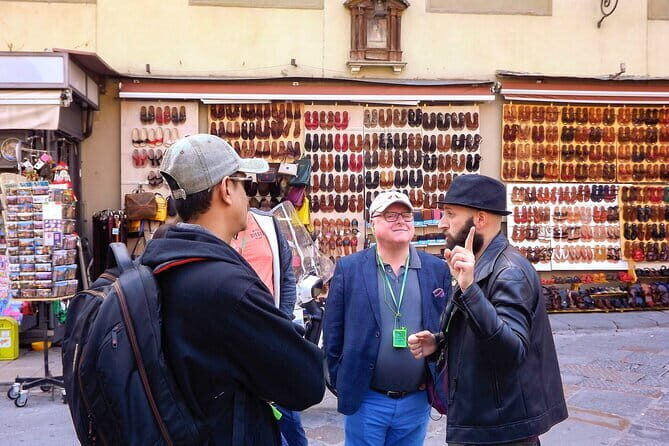
- Small group, big clarity. Max 20 people, plus a radio system so you don’t miss details.
- Medici power, explained simply. You’ll connect rulers (Giovanni through Lorenzo) to marriages, partnerships, and jobs.
- Start at the right anchor point. The walk begins at the Hard Rock Cafe on Via dei Brunelleschi.
- Outside views of the Medici chapels. You’ll see where Michelangelo’s New Sacristy and Medici tombs are, but interiors aren’t part of the included tickets.
- A classic bridge moment. Crossing Ponte Vecchio gives you a clean visual shift toward Oltrarno.
- Comfortable shoes matter. This is a walking tour, and the route runs in all weather—dress for it.
Price and Logistics: What $53.92 Buys You
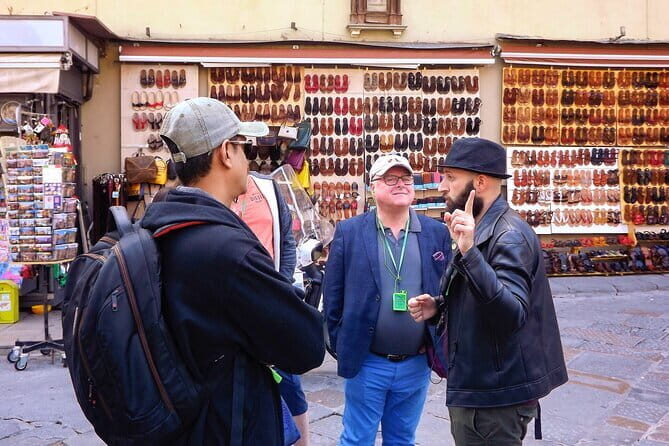
For $53.92 per person, this tour feels priced for value because you’re not just paying for landmarks. You’re paying for a certified guide plus a radio system that keeps the narration consistent for the whole group. At this length—about 1 hour 30 minutes—you’re also not stuck on a half-day obligation. It’s a tight, efficient way to get your Florence bearings fast, especially if you want Medici context without building an itinerary from scratch.
The group size is capped at 20, which matters in Florence. Bigger groups mean louder logistics and more missed sentences. Here, the cap and the radio system work together so the story stays coherent while you move between stops.
A practical note: it starts and ends back at the Hard Rock Cafe (Via dei Brunelleschi, 1). If you’re even slightly late, you won’t be able to join and you won’t get a refund or rescheduling. So build in a little buffer time before the start.
You can also read our reviews of more walking tours in Florence
The Medici Story You’ll Actually Use: Power Through People
Most Florence tours name-drop art and move on. This one tries something better: it frames the Medici as operators—people who built influence through relationships, not only through wealth or taste.
At the start, you begin at Palazzo Medici Riccardi, the main residence of the first branch of the family. From there, the guide brings the Medici story to life by explaining how the family stayed connected to elite circles through marriages of convenience, partnerships, and employment. In other words, it wasn’t just that the Medici were rich. They were positioned like a hub in a social network, which helped other important families gain access to the rest of the elite world.
You also get concrete examples of those linked families: the Bardi, Altoviti, Ridolfi, Cavalcanti, and Tornabuoni. Hearing those names in context changes how you read Florence. Streets and buildings stop feeling random. They start feeling like evidence.
One of my favorite parts of the whole experience is that it moves through the family arc—thinking from Giovanni de Medici to Lorenzo de Medici—so you understand that Medici influence wasn’t a single moment. It was a long, evolving project, played out in stone.
Stop 1: Palazzo Medici Riccardi and the Power Web
Your first stop is the Palazzo Medici Riccardi, and the timing makes it feel like the “anchor” of the walk. About one hour is spent here and the surrounding area, so you’re not rushing right past the key idea.
Why this works: a palace like this is more than decoration. It’s a statement about legitimacy and access. When you learn that the Medici were connected to other elite families through interlocking ties, you start noticing something else: Florence’s political life wasn’t remote. It was personal. It happened through networks—marriages, deals, jobs—and the palace is where that power becomes visible.
The tour also helps you connect the architecture to the story. Even if you only see the exterior details (and you will, since entrance tickets aren’t part of this included stop), the building still functions like a textbook. You can look at the way it sits in its setting and understand how a family like the Medici could project authority without needing a grand stage.
Admission is free for this segment, which is a nice bonus for value. It keeps the tour streamlined and reduces the chance you’ll get delayed by ticket lines or extra costs right at the start.
Stop 2: San Lorenzo and the Renaissance Rebuild
From Palazzo territory, the tour shifts toward the San Lorenzo area and the church square. You’re walking to Florence’s cathedral area that dates back toward the 8th century, but the emphasis here is on what the Medici changed from the early 15th century onward.
The key idea you’ll hear: the Medici didn’t just control people and money. They also shaped what the city looked like. The church was rebuilt in a new Renaissance style during the Medici period, which means their influence shows up in visual transformation, not only policy.
You’ll also get a focused explanation of the Medici Chapels from the outside. This is important because the tour is designed to make you understand what you’re looking at, even if you don’t go inside. From street level and the church square, the guide points out where the private mausoleum of the Medici Grand Dukes is located, and where Michelangelo’s New Sacristy and his Medici tombs sit within the complex.
Here’s the trade-off: the tour does not include the entrance ticket to the Cappelle Medici. That means you can follow the story and see where the major works are, but you’ll need a separate plan if you want the interior experience. If you’re the type who prioritizes tombs and chapel interiors, decide early whether you’ll add that visit on another day.
Still, even with the interior ticket not included, this stop is valuable because it gives you context. Many people walk by this area without fully grasping what makes it Medici-specific. This tour stitches the meaning together for you.
The Arno Crossing and Ponte Vecchio: Moving the Story Across Town
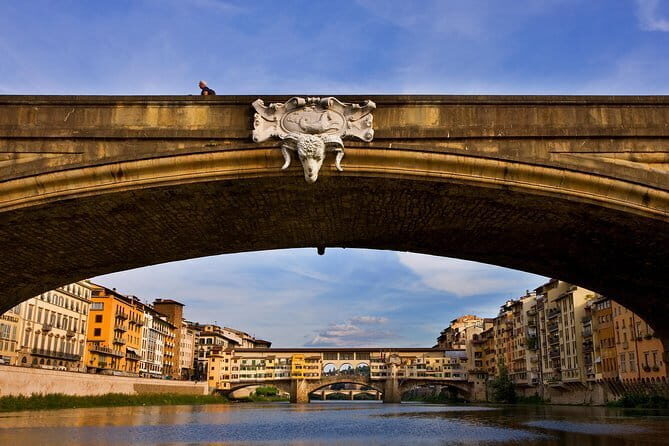
After San Lorenzo, you continue across the city center to the river Arno, then cross Ponte Vecchio and head into the Oltrarno district.
This isn’t random sightseeing. The route is built to help you feel the city’s structure while the guide continues the Medici narrative. Ponte Vecchio is the kind of bridge that turns a walk into a scene. When you cross, you get a visible change in perspective, and it helps you remember that Florence isn’t just a list of monuments. It’s a set of neighborhoods with their own identity.
Also, crossing the Arno is practical. It’s a clean, memorable moment in the middle of a short tour. When your attention starts to lag (and with any 90-minute walk, it can), the bridge becomes a natural reset.
And then you arrive at the next big visual marker.
- Tuscany Day Trip from Florence: Siena, San Gimignano, Pisa and Lunch at a Winery
★ 5.0 · 21,634 reviews

Oltrarno Views: Palazzo Pitti as the Medici Finale
In Oltrarno, the tour brings you to Palazzo Pitti, described as the imposing last residence of the Medici family.
Even without an interior visit, Pitti lands with impact. The sheer scale helps you understand a shift: the Medici didn’t only build up earlier influence—they eventually claimed a bigger stage. By framing Pitti as the last residence, the guide turns architecture into an ending point. You’re not just seeing a palace. You’re seeing a conclusion to a family project.
This stop also fits the tour’s overall rhythm. Stop 1 sets up the Medici network. Stop 2 explains religious and architectural imprint. Then the route moves into a final visual statement. By the time you’re looking toward Pitti, the family story feels complete enough to carry forward into your next Florence plans.
Why the Radio System Matters More Than You Think
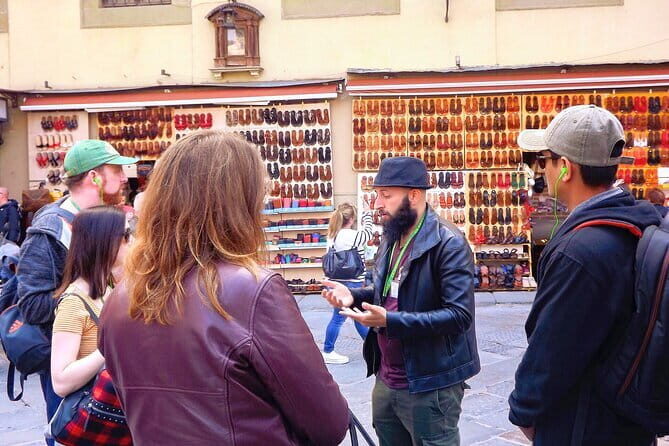
It’s easy to dismiss a radio system as a small tech detail. But it changes how you experience a walking tour in a city like Florence.
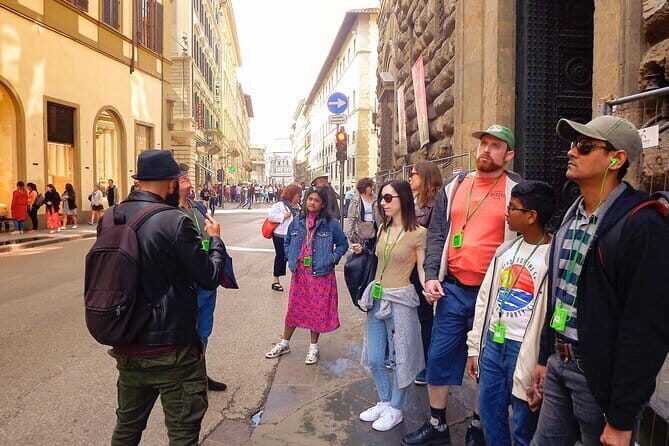
Narrow streets, restaurant noise, groups chatting, and traffic sounds can swallow quiet explanations. With the radio system included, you’re more likely to catch the guide’s key points about Medici strategy and how the family connected to major Florentine circles.
This matters especially because the tour includes a lot of “why” and “how,” not just “what.” The Medici aren’t presented as superheroes. They’re presented as people doing specific things that shaped Florence over time. Clear audio helps you keep that logic straight.
Guide Quality: What Strong Storytelling Looks Like Here
The guides are a major reason this tour earns such strong marks. Names that show up in different experiences include Giacomo, Gabriella, Elena, Pam, Thomas, and Silvia—and the common thread is a steady ability to turn Medici influence into something you can picture.
One specific plus: many guides seem willing to answer questions and slow down when someone wants more detail. That flexibility makes a difference. If you’re curious about the politics of rulership or how the church fit into their power, you’ll likely feel supported in asking.
Also, the tour’s design helps guides teach without overwhelming you. It’s short enough that you can stay focused, but structured enough that the Medici story doesn’t feel like it’s being tossed at you in fragments. If you like history that moves with a purpose, you’ll probably enjoy the way the tour builds from one stop to the next.
Timing: When This Walk Fits Best in Your Florence Trip
If you want Medici context to improve the rest of your day, do this earlier rather than later. The tour is essentially a map for understanding what you’ll see next: Medici palaces, church spaces tied to the family, and major Florence landmarks connected to their rise.
Because it’s only about 90 minutes, it’s also easy to slot into a schedule that includes museums with timed entry. You can use this as your “orienting” walk and then choose deeper stops afterward—especially if you’re interested in Michelangelo’s work and Medici tombs, even though those interiors aren’t included here.
Weather is another factor. The tour runs in all weather conditions, so dress appropriately. If rain hits, you’ll still be walking; if sun hits, you’ll still want comfortable shoes and water plans.
Getting Value: What’s Included vs. What You Might Add
Here’s the practical checklist for value:
Included:
- Officially certified guide
- Radio system to hear the guide
- Stops where the tour focuses on Medici-linked sites from outside (with free admission for those segments)
- Tour ends back at the starting meeting point
Not included:
- Transportation to or from attractions
- Hotel pickup/drop-off
- Food and drinks
- Entrance tickets to attractions
- Entrance ticket to Cappelle Medici
So the tour is designed to keep costs predictable: you’re paying for the walking + interpretation, not for a stack of entrance fees. If Cappelle Medici is your top priority, you’ll likely want to budget separately for that one interior visit.
Who Should Book This Medici Walk (and Who Might Not)
This tour is a strong fit if:
- you want a focused introduction to Medici power and patronage without building a detailed museum route
- you like stories tied to real streets and architecture
- you want to understand the family’s influence on Florence’s development, not just admire buildings
- you appreciate a small-group pace and clear audio
You might reconsider if:
- you specifically want long interior time at major Medici sites, since the key chapels are explained from the outside and Cappelle Medici tickets aren’t included
- you’re expecting a full art-history lecture with lots of named artworks inside rooms (this is more about the family’s influence shaping the city)
The sweet spot is people who want to understand Florence, then go see more with better eyes.
Should You Book Florence & the Medici: Walk Through Power and Patronage?
I’d book it if you’re in Florence for a limited time and want a clear Medici storyline that improves everything you see afterward. The price-to-time ratio is fair, the group size is small, and the radio system keeps the experience accessible and calm enough to follow. Plus, you get a clean route with two major “anchor” areas: the Palazzo Medici Riccardi start and the San Lorenzo-to-Arno-to-Ponte Vecchio movement.
Add one decision point before you go: if you truly care about going inside the Medici Chapels, plan that separately. If you’re okay with seeing where the big works and tombs are from the outside while you learn the story, this tour will do its job and then some.
If you want a short, structured walk that turns Medici names into a real understanding of how Florence worked, this is an easy yes.
FAQ
How long is the Florence & the Medici tour?
It lasts about 1 hour 30 minutes.
Where does the tour start?
The meeting point is the Hard Rock Cafe on Via dei Brunelleschi, 1, 50123 Firenze FI, Italy.
Does the tour include entrance tickets?
Entrance tickets are not included. Some stops are described as admission ticket free, but entrance ticket to Cappelle Medici is specifically not included.
Is Michelangelo’s New Sacristy included?
The tour explains from the outside the location of Michelangelo’s New Sacristy and the Medici tombs within the Medici Chapels area. Entrance to the Cappelle Medici is not included.
Is the tour in English?
Yes, it’s offered in English.
What’s included in the tour package besides the guide?
You get an official certified guide and a radio system so you can hear the guide clearly.
How big is the group?
The group size is capped at a maximum of 20 travelers, with a minimum of two guests required for the tour to run.
Does the tour run in bad weather?
It operates in all weather conditions, but the provider notes that if it’s canceled due to poor weather, you’ll be offered a different date or a full refund.
What if I arrive late to the start time?
If you arrive after the tour start time, you will not be able to join and will not be refunded or rescheduled.
You Might Also Enjoy


More Walking Tours in Florence
More Tour Reviews in Florence
- Tuscany Day Trip from Florence: Siena, San Gimignano, Pisa and Lunch at a Winery
★ 5.0 · 21,634 reviews - The Best tour in Florence: Renaissance & Medici Tales – guided by a STORYTELLER
★ 5.0 · 12,316 reviews