REVIEW · FLORENCE
Florence: Accademia Gallery Skip the Line Small Group Tour
Book on GetYourGuide →Operated by Inside Out Italy · Bookable on GetYourGuide
Michelangelo’s David is worth the fuss. This one-hour, small-group Accademia tour is built to get you inside fast, then help you see the museum in the right order. You’ll move through Renaissance highlights with a real local guide, using radio headsets so the details land clearly.
I love the timed entry angle. You avoid the usual slow shuffle at a top draw, and you spend your energy where it matters: at David. I also like how the tour blends art and context, moving from the big sculpture moments to Florentine Gothic painting and then over to the Museum of Musical Instruments.
One consideration: it’s still a museum visit. Expect standing and walking, and the pace can feel tight if you want lots of time to read everything on your own.
In This Review
- Key things that make this tour work
- Fast-Track Access Gets You to the Right Room Faster
- Meeting at Via Camillo Cavour 19 and What to Do Before You Go
- Hall of Colossus: Where Scale Becomes a Lesson
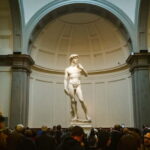
- Michelangelo’s David Under the Domed Skylight: What to Look For
- Florentine Gothic to Early Renaissance Paintings: The Art Transition You’ll Feel
- Museum of Musical Instruments: The Unexpected Florence Moment
- How Radio Headsets Make the Tour Feel Personal
- Guides Named for Their Storytelling (and Why That Matters)
- Price and One-Hour Value: $58 That Actually Spends Wisely
- Who This Tour Is For (and Who Should Rethink It)
- Should You Book the Accademia Gallery Skip-the-Line Tour?
- FAQ
- How long is the Florence Accademia Gallery tour?
- What’s the group size limit?
- Does this tour include skip-the-line access?
- Where do I meet the guide?
- What’s included in the price?
- What languages are available?
- What should I bring or know before going?
- Is food included?
- What are the cancellation and pay-later options?
- Is the tour wheelchair accessible?
Key things that make this tour work
- Skip-the-line access and timed entry to the Accademia Gallery
- Small group size (max 19) so questions actually get answered
- Guided focus on David, including the Hall of Colossus and key sightlines
- Radio headsets for clear audio even in crowded rooms
- Accademia’s extra layers: Florentine Gothic art plus the Museum of Musical Instruments
Fast-Track Access Gets You to the Right Room Faster
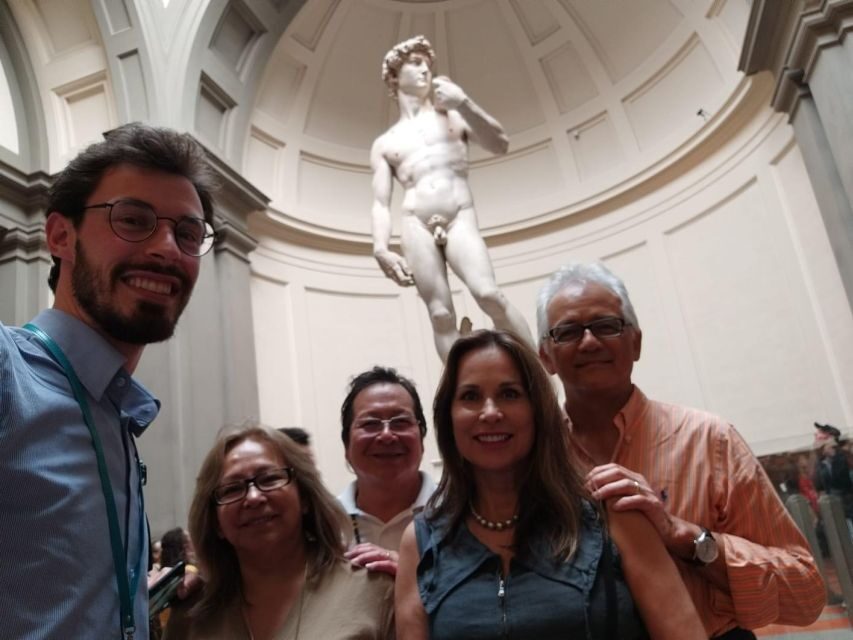
Accademia is one of those Florence stops where timing changes your whole mood. With this tour, you’re set up for fast-track entrance and a smoother route through security, which matters because lines can chew up your morning or afternoon.
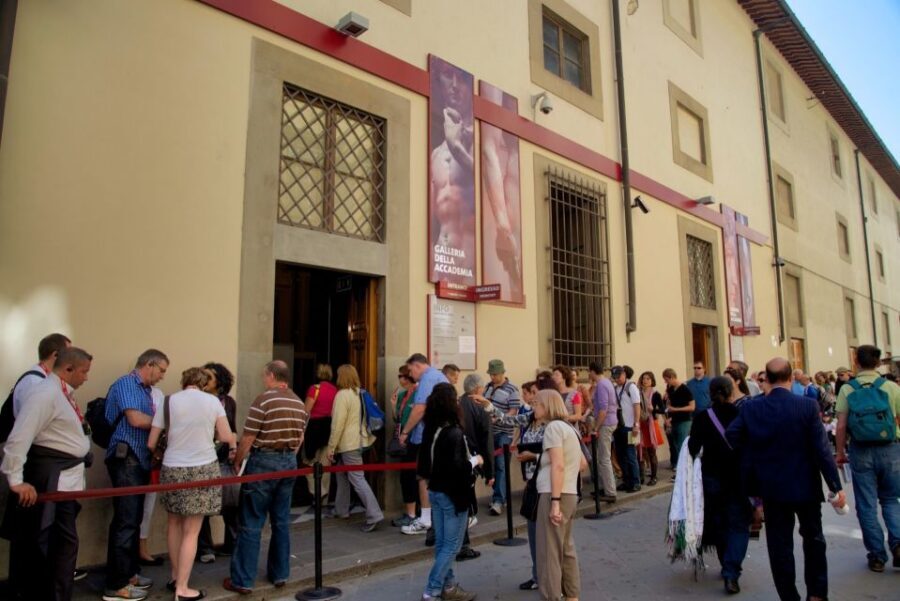
Once inside, you’re not wandering. You’re guided through the museum in a chronological, story-first way. That’s a big deal with Renaissance art, because the paintings and sculptures don’t feel like random masterpieces. They start to connect: medieval style gives way to Renaissance realism, and Michelangelo’s approach lands with more impact when you’ve already seen the artistic bridge leading to him.
If you like structure without feeling rushed, this is a good fit. It’s also a smart option if you only have a short window in Florence and want the headline work plus a few smart bonuses.
You can also read our reviews of more museum experiences in Florence
Meeting at Via Camillo Cavour 19 and What to Do Before You Go
The meeting point is straightforward: the tourist office at Via Camillo Cavour 19. Arrive 15 minutes early so you can check in and get lined up without stress.
You’ll want to plan your day so you don’t arrive late. The tour is only one hour, and that hour is carefully used for both getting inside and seeing the key rooms. Wear comfortable footwear. The museum isn’t a quick stroll on level ground the whole time, and you’ll be standing for long moments at David.
One small practical thing: the Accademia has a cloakroom where you must store large bags and backpacks. If you can travel light, do it. You’ll move easier and you won’t spend your tour hunting for your belongings.
Hall of Colossus: Where Scale Becomes a Lesson
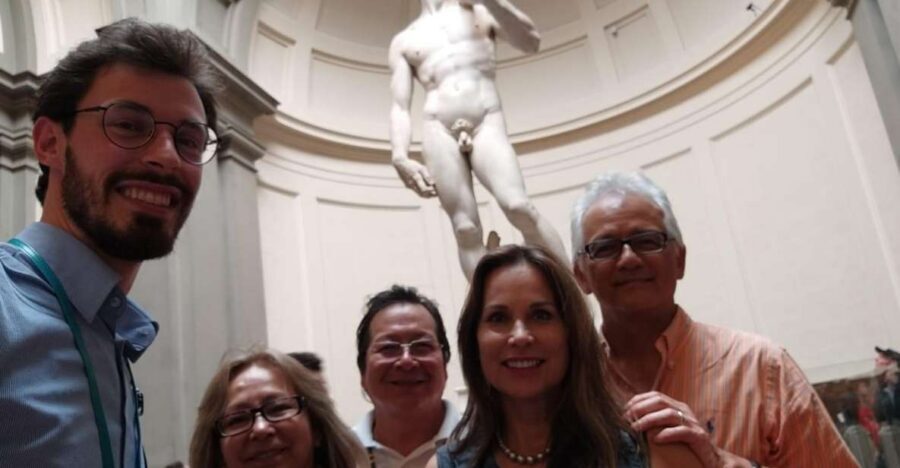
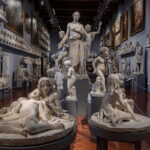
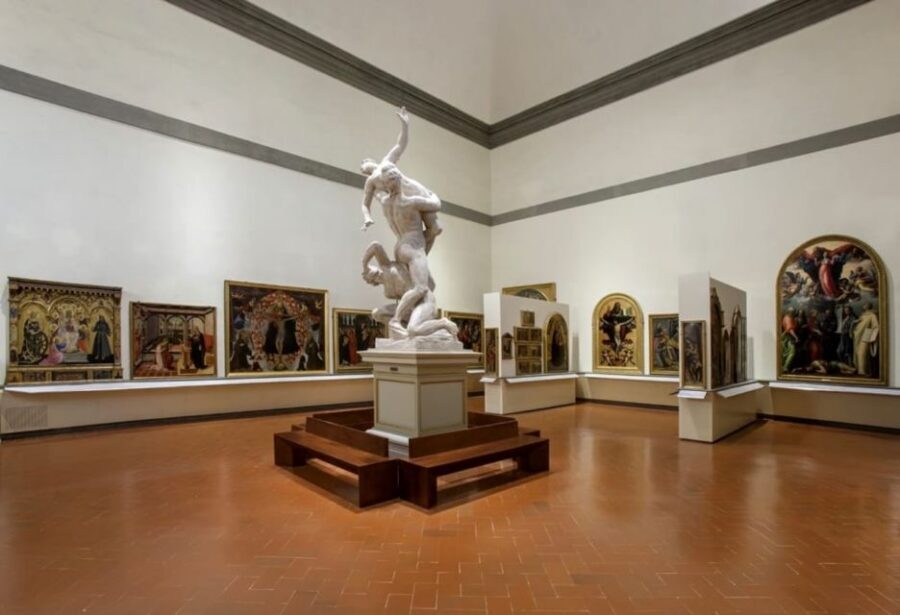
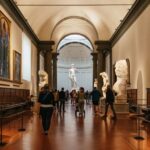
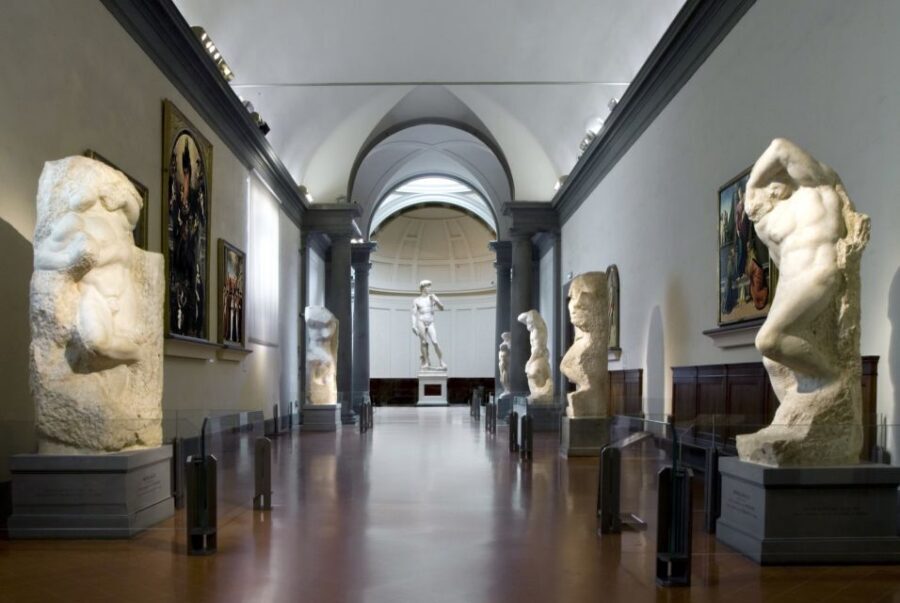
Right away, the tour sets you up for the Accademia vibe. You enter the Hall of Colossus, named for the large-scale sculptures you’ll encounter. This is the section that helps your brain calibrate before you reach Michelangelo’s most famous work.
A key stop here is Giambologna’s Rape of the Sabines. Even if you’ve seen a picture before, seeing it in person helps you understand what Renaissance sculpture cared about: anatomy, movement, and drama. The guide’s job is to point out what to watch for—how bodies twist, how posture sells the moment, and how scale changes your sense of space in a room.
This is also where having a small group helps. You’re less likely to get stuck behind tall shoulders while you try to look. With a guide moving you through the space, you get better sightlines for the next room too.
Michelangelo’s David Under the Domed Skylight: What to Look For
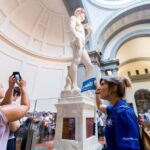
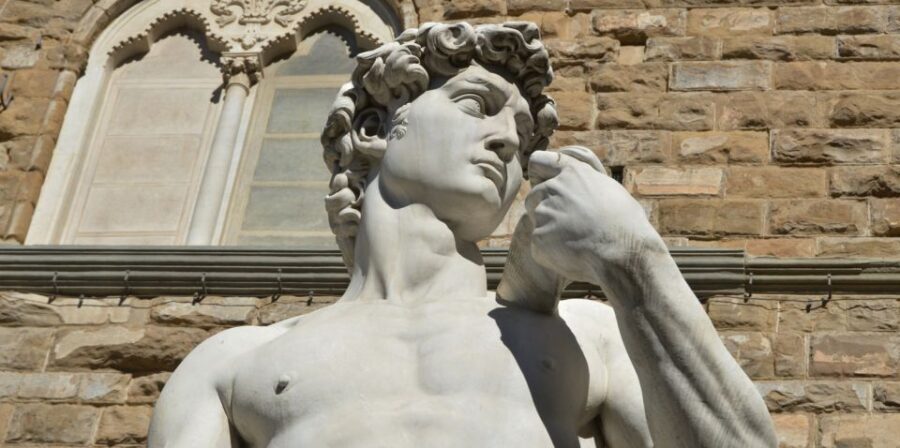
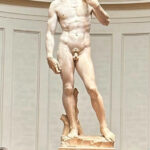
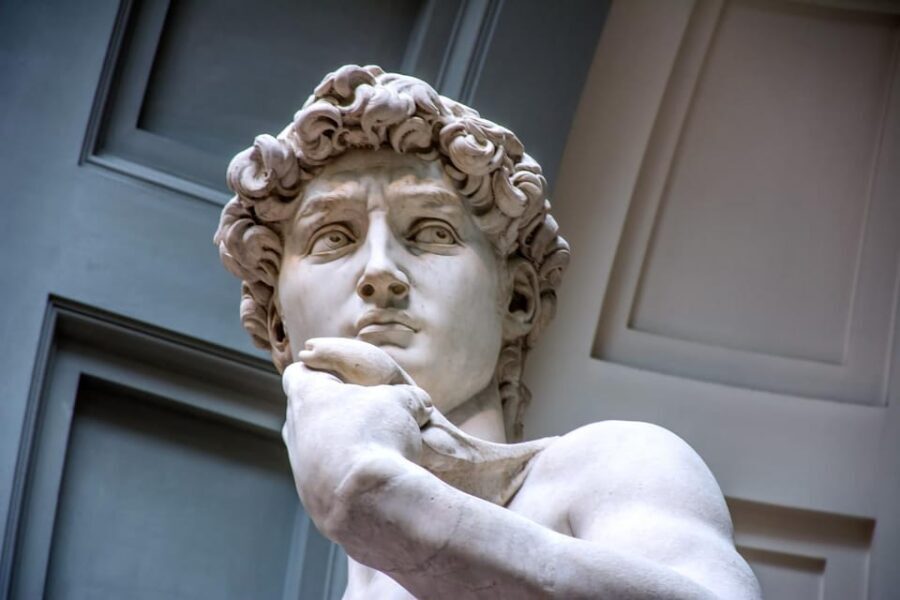
Yes, you’re going to see David. But the real value is learning how to look at him. This tour is timed so you’re guided to David during the main viewing moments, and your guide can explain what you’re seeing from different angles.
David is set under a domed skylight, which gives the statue a dramatic light feel. Stand there for a minute and look at what Michelangelo emphasized: the tension in the body, the realism of the surface, and the sense of action captured in stone. Even at five metres tall, the statue doesn’t feel cartoonish. It feels studied—muscles, veins, and a lifelike posture that make the marble look almost moveable.
What really clicks when someone explains it is the influence around it. David isn’t just an artwork; it’s an artistic benchmark. It shows what Renaissance artists were capable of and why Michelangelo became such a turning point. One reason people love guided David tours is that you stop treating the statue like a postcard and start treating it like a crafted argument.
And you’ll appreciate the pacing. In a top museum crowd, people rush to say they saw the thing. Here, the guide helps you slow down just enough to actually read the sculpture.
Florentine Gothic to Early Renaissance Paintings: The Art Transition You’ll Feel
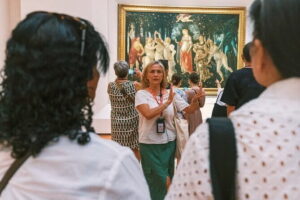
After David, you shift into paintings—specifically the Florentine Gothic section. This part is easy to overlook if you’re only chasing the big name, but it’s one of the best ways to understand why Renaissance art looked the way it did.
You’ll see works by major figures tied to that medieval-to-Renaissance shift, including Giotto, Lorenzo Monaco, and Bernardo Daddi. These artists aren’t random names; they mark stages in how figures were drawn, how emotion was expressed, and how artists moved toward greater naturalism.
If you come from a modern-eye background, this room helps you catch the changes your brain might otherwise miss. Gothic art can feel different in mood—more stylized, more symbolic—while Renaissance work leans more toward believable space and human anatomy. A good guide connects those dots without turning it into a lecture you’d regret.
It also makes the entire museum feel less like a checklist. You end the tour having seen both the headline icon and the creative DNA around it.
You can also read our reviews of more tours and experiences in Florence
Museum of Musical Instruments: The Unexpected Florence Moment
Then comes the twist: the Museum of Musical Instruments. This is the section that many visitors don’t expect, and it’s exactly why it’s such a strong add-on.
Two standout items you’ll get to see include the oldest surviving upright piano and a Stradivarius violin. Those objects don’t just sit there as antiques. They connect to the larger theme of Florence culture—art is not only visual. It also sounds, performs, and evolves.
A good guide will give you quick context so you don’t stand in front of instruments like a confused tourist. You’ll leave understanding the basic story: how instruments mattered, why certain makers matter, and how music connects to status and skill in the city’s history.
This portion is also a nice mental break. After David’s intensity and the focus of sculpture and painting, instruments feel lighter and more surprising, which keeps the hour from feeling one-note.
How Radio Headsets Make the Tour Feel Personal
The tour includes radio headsets, which sounds like a small thing until you experience museum crowds. In rooms where people cluster and noise bounces around, headsets mean you actually hear the guide. That matters for two reasons.
First, you miss fewer details. David looks impressive on its own, but the guide’s explanations give it meaning. Second, the tour becomes less frustrating. You’re not constantly moving your head to hear the person behind you.
This is one of the reasons the experience earns high marks. People often mention the guide’s storytelling style and clarity, and headsets are a huge part of why that storytelling lands well.
Guides Named for Their Storytelling (and Why That Matters)
Since this is a guided experience, the guide matters. You’ll see several guide names highlighted in past tours—Galya, Francesco, Pam, Maria Christina, Martina, Mirella, Marco, Ivano, and Giacomo. The common thread is how they connect art to Florence and explain what you’re seeing without drowning you in facts.
One practical example from a small-group tour situation: a guide accommodated seniors by giving seating breaks during the visit. That’s not a guarantee for every group, but it’s a sign that the better guides adapt to what the group needs rather than running on autopilot.
If you’re the kind of person who likes asking questions, you’ll likely enjoy the small group format. With max 19 participants, your curiosity has room to breathe.
Price and One-Hour Value: $58 That Actually Spends Wisely
At about $58 per person for a one-hour tour, this isn’t a bargain on paper. But the pricing makes sense when you factor what’s included: fast-track entrance tickets, a professional guide, reservation fees, and radio headsets.
Most of the cost goes toward two things you feel immediately:
- you get into the museum more smoothly, and
- you get an expert translating what you’re looking at.
If you tried to do Accademia on your own, you’d likely pay for tickets anyway, then lose time to lines and spend more time figuring out what to prioritize. This tour buys you a guided route that hits the highest-impact stops: David, key sculpture context in the Hall of Colossus, Florentine Gothic paintings, and musical instruments.
For a short visit to Florence, it’s strong value. For travelers who want a long, independent museum day, you might feel the hour is too focused.
Who This Tour Is For (and Who Should Rethink It)
This tour is best for you if:
- you want Michelangelo’s David with context, not just photos
- you like small groups and clear explanations
- you’re short on time in Florence and want the main hits plus a smart extra
It may not be for you if:
- you’re sensitive to standing and walking, since the tour involves moving through rooms
- you want lots of unstructured time for reading every label
The tour notes wheelchair accessibility, but it also says it’s not suitable for people with mobility impairments. If mobility is a concern for you, treat that as a warning sign and plan carefully. Ask questions before you commit, especially about how the group moves and where you’ll pause.
Should You Book the Accademia Gallery Skip-the-Line Tour?
I’d book it if your goal is a focused, high-value Accademia visit with David at the center. The skip-the-line setup, timed entry, and headsets are exactly what you want in a busy museum. The icing on the cake is the pairing: David plus Florentine Gothic painting plus the Museum of Musical Instruments.
I’d skip it if you have the time and temperament for slow solo wandering. If you want to linger, chase every side chapel detail, and spend extra time reading labels, you might prefer a self-guided plan with longer ticket time.
Overall, for one hour and around $58, this tour feels like a practical way to see the best of Accademia without wasting your Florence time in queues or confusion.
FAQ
How long is the Florence Accademia Gallery tour?
The tour lasts 1 hour.
What’s the group size limit?
This is a small group tour with a maximum of 19 participants.
Does this tour include skip-the-line access?
Yes. It includes fast-track entrance tickets and skip the line through express security check, along with timed entry to the Accademia Gallery.
Where do I meet the guide?
Meet the tour guide at the tourist office at Via Camillo Cavour 19 in Florence. Plan to arrive 15 minutes before the scheduled time.
What’s included in the price?
Included are fast-track entrance tickets, reservation fees, a professional tour guide, and radio headsets to hear clearly.
What languages are available?
The live tour guide is available in Italian, English, German, Spanish, and French.
What should I bring or know before going?
Bring a passport or ID card. Wear comfortable footwear because the tour involves standing and walking. Large bags and backpacks must be stored in the cloakroom.
Is food included?
No. Food and drinks are not included.
What are the cancellation and pay-later options?
You can cancel up to 24 hours in advance for a full refund, and there’s an option to reserve now & pay later.
Is the tour wheelchair accessible?
It states wheelchair accessible, but it also notes the tour involves standing and walking and says it is not suitable for people with mobility impairments.
You Might Also Enjoy

More Museum Experiences in Florence
More Tours in Florence
- The Best tour in Florence: Renaissance & Medici Tales – guided by a STORYTELLER
★ 5.0 · 12,316 reviews

More Tour Reviews in Florence
- Tuscany Day Trip from Florence: Siena, San Gimignano, Pisa and Lunch at a Winery
★ 5.0 · 21,634 reviews - The Best tour in Florence: Renaissance & Medici Tales – guided by a STORYTELLER
★ 5.0 · 12,316 reviews