REVIEW · FLORENCE
Florence: Accademia Gallery & David Skip-the-Line Ticket
Book on GetYourGuide →Operated by Florence with Elvis · Bookable on GetYourGuide
A perfect Florence art stop starts with a saved line. With priority entrance to the Accademia Gallery, you trade that hot, slow queue outside for straight access inside, plus a smooth, timed visit that fits real sightseeing days. The two biggest wins for me are the chance to really see Michelangelo’s David up close and the way the museum connects the statue to Renaissance politics and the Medici story.
Once you’re in, you’re not rushed through a single room and out the door. You can linger around David’s 17-foot marble presence and then move through the surrounding collections at an easy pace, ending with the Accademia’s old musical instruments. One thing to plan for: this is mostly a ticket-and-entry experience, not a full guided tour inside the galleries.
In This Review
- Key highlights worth your attention
- Priority Access to the Accademia: Why $41 can be worth it
- Getting there: Piazza delle Belle Arti and the Florence with Elvis meeting point
- Michelangelo’s David: how to pace your first 10 minutes
- Beyond David: the Accademia rooms, former convent spaces, and the Medici lens
- Old Musical Instruments from the Cherubini Conservatory: the surprise ending
- Timing, crowds, and how to use your 2 hours well
- Who this ticket suits best (and who should reconsider)
- Should you book this Accademia Gallery skip-the-line ticket?
- FAQ
- Is this Accademia ticket reserved-entry or general admission?
- How long does the visit take?
- Where do I meet for ticket pickup?
- Do I need ID?
- Is there a tour guide included?
- Can I bring luggage or large bags?
- Is the ticket wheelchair accessible?
Key highlights worth your attention
- Separate entrance for faster entry so you spend less time waiting outside the museum.
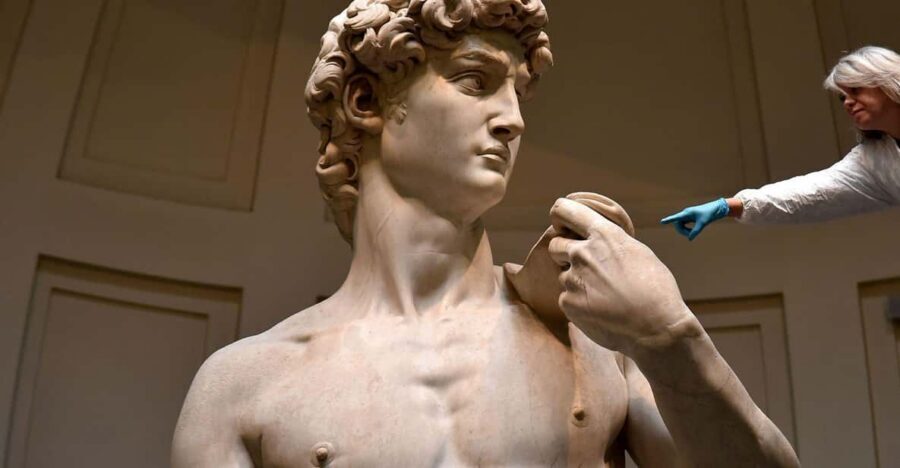
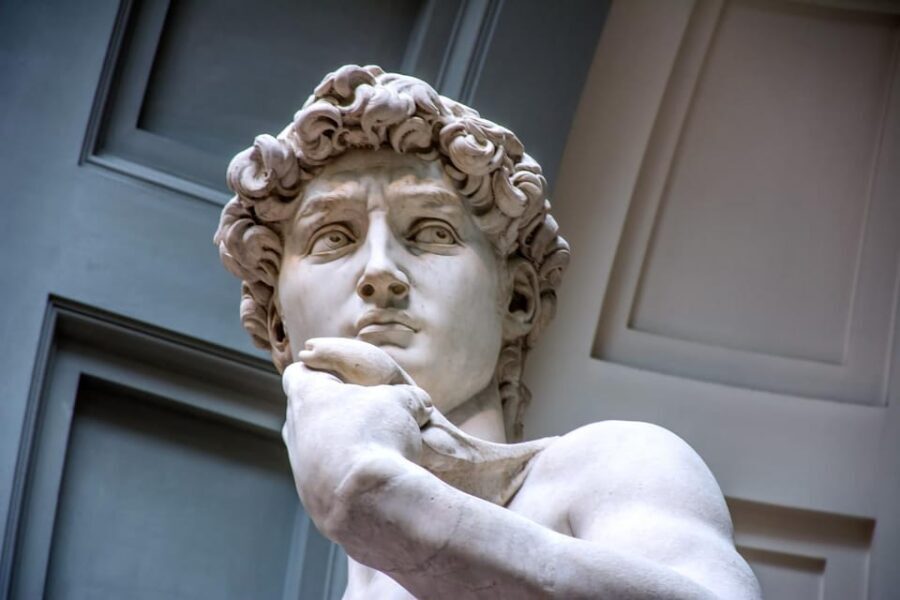
- Michelangelo’s David from multiple angles, including the full wow-factor of a 17-foot marble figure.
- Renaissance context tied to Florentine civic identity and the Medici family, not just art-for-art’s-sake.
- Former convent rooms that help explain why the Accademia houses both art and institutional history.
- Cherubini Conservatory musical instruments like old violins, early keyboard history, and wind instruments.
- A manageable 2-hour visit that still feels like you used your time well.
Priority Access to the Accademia: Why $41 can be worth it
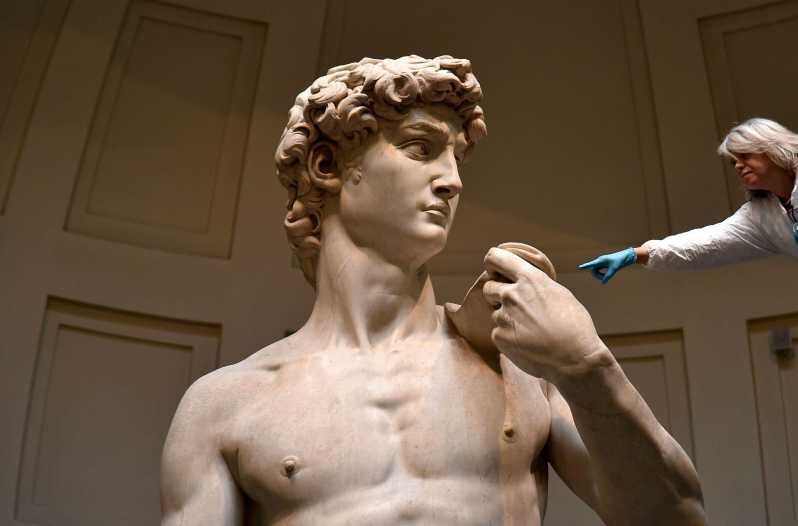
Accademia Gallery tickets aren’t cheap, but $41 for reserved entry can make sense if you hate lines (and in Florence, who doesn’t?). The value is simple: you’re buying time. Instead of losing your morning in a general admission queue, you get skip-the-line access through a separate entrance and a more controlled arrival flow.
Also, the museum itself is easy to spend time in. You’ve got enough to justify a full visit—David, the surrounding art rooms, and then the instruments—yet the whole experience is designed around a tight 2-hour window. That combination matters when your Florence day is packed with other sights like the Duomo area, Ponte Vecchio, and evening aperitivo plans.
If you’re the type who enjoys museums without constant commentary, this setup works well. If you’re expecting a museum lecture from the moment you walk in, read closely: the ticket focuses on entry and access, not a full guide-led tour.
You can also read our reviews of more tours and experiences in Florence

Getting there: Piazza delle Belle Arti and the Florence with Elvis meeting point
The meeting point is Piazza delle Belle Arti, in the main square of the Galleria dell’Accademia. Look for a sign with the name Florence with Elvis Guided Experience.
Here’s the practical part: show up with a little buffer. Some people mention it can be easy to miss the greeter if the signage is small or if the crowd is thick. On the other hand, when issues happen—like arriving late or not seeing the contact—people report the team can still help you get sorted quickly, including using phone or text to locate the group.
Plan to travel light. Luggage or large bags aren’t allowed, so if you’re touring with backpacks, keep it reasonable. Having an ID/passport ready also helps; a copy is accepted, and you don’t want to scramble at the last second.
Michelangelo’s David: how to pace your first 10 minutes
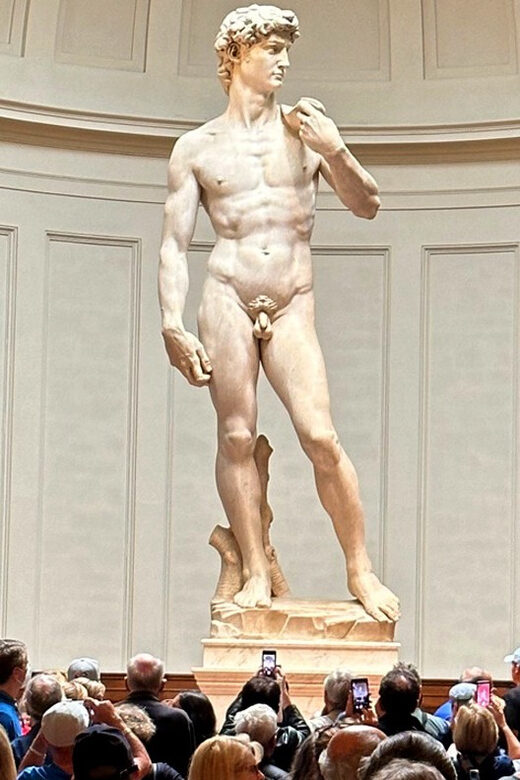
When you enter, David is the moment. The statue is famous for a reason, but what hits you in person is scale. You’re looking at a 17-foot marble figure, and even if you’ve seen photos a hundred times, the real thing lands differently—face, posture, the tension in the body, and that almost impossible feeling that the marble is alive.
Take a minute to reset your expectations. David is not just a statue you glance at—it’s a full visual experience that you’ll appreciate more if you change your viewing angle. People often find that the first rush to get pictures is followed by a second look that’s slower and more personal.
If you like the story behind the art, pay attention to how the museum frames David. The statue is presented as a symbol of civil liberties tied to the Republic of Florence, an independent city-state facing pressures from stronger rival powers and the Medici family’s influence. That political context doesn’t turn the work into a history lecture—it adds weight to what you’re seeing.
Practical tip: don’t let your whole time evaporate in the David room. Give yourself a structured pace—enjoy David first, then move onward so you don’t miss the rest of the collection.
Beyond David: the Accademia rooms, former convent spaces, and the Medici lens
After David, you head through adjacent rooms that used to be convent spaces and other institutional areas connected to the Academy’s development. You’ll see collections associated with the Academy of Design and the Academy of Fine Arts, plus works linked to suppressed convents.
This section is where the Accademia becomes more than a one-statue museum. The building layout helps you understand why the collection feels mixed: it’s part art gallery, part institutional archive. Even if you’re mainly there for David, it’s worth walking these rooms with a little curiosity.
Here’s what I’d watch for as you go:
- How the art reflects Renaissance priorities—human figures, technique, and meaning tied to Florentine identity.
- How the Medici story is used to interpret the statue’s symbolism, giving you a reason to remember David as more than a masterpiece.
- How the former convent spaces change your sense of scale and mood compared with a modern museum.
You don’t need to “study” every room to get value. Just keep your eyes open and let the connections form. The payoff is that you leave feeling like you understood why the Accademia holds what it holds.
Also, the galleries tend to feel manageable if you use timed entry. Once you’re inside, you’re not stuck in a chaotic crush the same way you can be outside on a general admission line day.
Old Musical Instruments from the Cherubini Conservatory: the surprise ending
The closing act is the Collection of Old Musical Instruments from the Cherubini Conservatory. This is one of those Florence curveballs that many people don’t expect, and that’s exactly why it works.
What you’ll encounter includes centuries-old violins, plus examples from early keyboard history—one of the first keyboards in existence—and old wind instruments. It’s a completely different kind of craftsmanship than sculpture and painting, and it helps reset your brain after you’ve spent time with marble and fresco-like works.
This portion is also practical if you travel with mixed interests. If your group includes someone who’s “museum-tired” after 45 minutes of paintings, the instrument collection gives them something tactile to focus on—shapes, materials, and the visual design of instruments meant to last.
Time it right: don’t treat it like a quick checkbox. Even if you’re not a music person, you can still appreciate how these objects survived, how they represent earlier musical worlds, and how the conservatory connection ties art to daily life.
You can also read our reviews of more museum experiences in Florence



Timing, crowds, and how to use your 2 hours well
The experience is designed around a 2-hour duration, and that pacing fits the Accademia’s layout. Here’s a realistic way to structure your visit so you don’t feel rushed.
1) Start with David and give yourself at least a few minutes to look from different angles.
2) Then continue through the adjacent rooms without trying to “finish everything.” Focus on what you’re most drawn to, and keep moving.
3) Leave time for the musical instruments at the end so you don’t end up speed-walking through the last room.
One reason priority access feels so good is that your energy stays intact. If you’re not stuck outside for ages, you walk in calmer and ready to enjoy the art rather than negotiating your patience.
And yes, people do report spending enough time to enjoy David and the rest without feeling like they were shoved through. You’ll still have the classic museum crowd level—Florence is Florence—but the timed, reserved entry helps.
Who this ticket suits best (and who should reconsider)
This experience fits best if:
- You care most about seeing David without losing hours to a line.
- You like self-paced museum time after a smooth entry process.
- Your group might appreciate an unexpected stop like the Cherubini instrument collection.
It may not be the best choice if:
- You want a full, in-depth, guided tour for the entire visit. The ticket is for entry and skip-the-line access, and a full tour guide isn’t listed as included.
- You’re very sensitive to meeting-point logistics. You’ll want to locate the greeter at Piazza delle Belle Arti and keep an eye out for the Florence with Elvis sign.
If you enjoy a mix of art and storytelling, the best outcome is when your greeter helps you get oriented quickly. Some people mention specific hosts who made the experience feel more informative during the handoff, including guides named Elisa. That kind of help can make David hit even harder.
Should you book this Accademia Gallery skip-the-line ticket?
I’d book it if you’re planning a Florence day with limited time and you really want to see David without gambling on how fast the general line moves. For many people, the skip-the-line part is the difference between a relaxed visit and a frustrating one, especially if you’re traveling in peak season or you hate the heat and crowds outside.
Choose it confidently if you like museums where you can set your own pace: enjoy David, walk the surrounding rooms, and then finish with the musical instruments. It’s also a strong fit for mixed-interest groups because the instrument collection gives everyone a new angle on Renaissance culture—art made to be seen and art made to be heard.
If you’re only interested in David and nothing else, you might still enjoy it, but you’ll want to pace yourself so the rest of the museum doesn’t become a frantic sprint.
FAQ
Is this Accademia ticket reserved-entry or general admission?
It’s a reserved entrance ticket with skip-the-line access through a separate entrance.
How long does the visit take?
The duration listed is 2 hours.
Where do I meet for ticket pickup?
Meet in Piazza delle Belle Arti in the main square of the Galleria dell’Accademia. Look for a sign with the name Florence with Elvis Guided Experience.
Do I need ID?
Yes—bring a passport or ID card. A copy is accepted.
Is there a tour guide included?
A tour guide is not included. The host/greeter is listed for English support and entry help.
Can I bring luggage or large bags?
No—luggage or large bags are not allowed.
Is the ticket wheelchair accessible?
Yes, wheelchair accessibility is listed as available.
If you want, tell me your travel month and whether you’re going morning or afternoon. I can suggest a simple pacing plan for fitting the Accademia into your day without stress.
You Might Also Enjoy




More Museum Experiences in Florence
More Tickets in Florence


More Tour Reviews in Florence
- Tuscany Day Trip from Florence: Siena, San Gimignano, Pisa and Lunch at a Winery
★ 5.0 · 21,634 reviews - The Best tour in Florence: Renaissance & Medici Tales – guided by a STORYTELLER
★ 5.0 · 12,316 reviews