REVIEW · FLORENCE
Florence : Best of Florence Walking Tour
Book on GetYourGuide →Operated by Guydeez Tours · Bookable on GetYourGuide
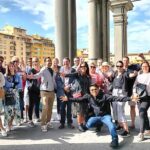
Florence makes sense on foot. I liked how this private, customizable 2-hour walk connects the city’s Renaissance main characters with a real local guide, so your day stops feeling random. You’re also walking with purpose, with photo stops and quick explanations that help you recognize what you’re seeing instead of just snapping pictures.
Two things I really enjoyed: the English-speaking guides with great storytelling and the way they help you spot major sights while also steering you toward a few less-obvious corners. The only real catch is time: two hours is great for orientation, but it’s not built for long, slow inside visits at every stop.
In This Review
- Key Highlights Worth Booking For
- Starting at Borgo Santa Croce: A Smart Launch Point
- Santo Spirito: The Photo Stop That Sets Your Pace
- Basilica di Santa Croce: Michelangelo and Galileo Up Close
- Palazzo Bargello and Piazza della Repubblica: Renaissance Art in City Mode
- Ponte Vecchio: The River Crossing That Changes Your View
- Piazza della Signoria: Palazzo Vecchio and the Fountain of Neptune
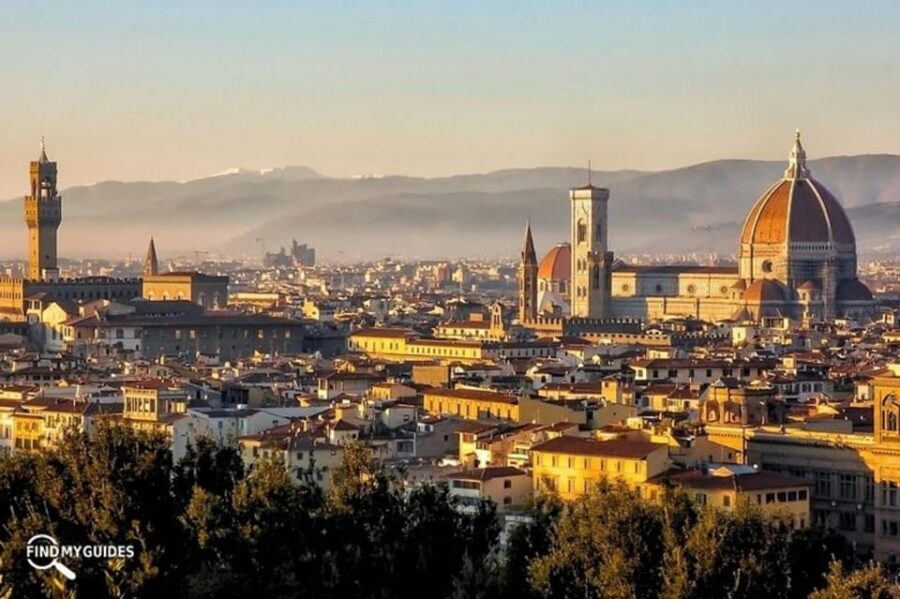
- Piazza del Duomo: Brunelleschi’s Dome Dominates the Skyline
- Basilica di San Lorenzo: Filippo Brunelleschi’s Renaissance Touch
- How the Custom Walk Makes You Feel Like You’re “Doing” Florence
- Price and Value: Is $41 for Two Hours Worth It?
- Who This Tour Suits Best (and Who Might Want Something Else)
- Should You Book the Florence Best of Florence Walking Tour?
- FAQ
- Where does the tour start?
- How long is the walking tour?
- What languages are offered for the live guide?
- Is this tour private and customizable?
- What’s included, and what’s not included?
- Is the tour wheelchair accessible?
Key Highlights Worth Booking For
- A private, customizable route that lets you shape what you focus on during the walk
- Multiple iconic stops in one loop, from Basilica di Santa Croce to Ponte Vecchio and the Duomo area
- A guide-led crowd strategy, so you spend less time lost and more time looking right
- Real Renaissance anchors, including Michelangelo and Galileo at Santa Croce plus Brunelleschi’s dome at Piazza del Duomo
- Piazza del Duomo + San Lorenzo in the same tour, covering two key Renaissance moods
Starting at Borgo Santa Croce: A Smart Launch Point
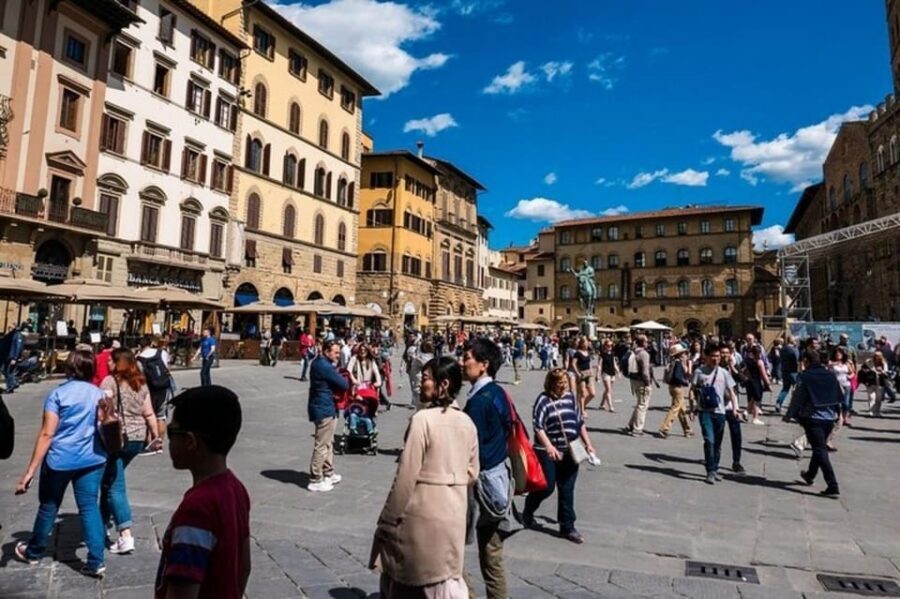
The tour kicks off at Borgo Santa Croce, 6, right in Florence’s historic center. It’s an easy neighborhood to be in because you’re close to major sights, but you’re not dropped at some far-out museum entrance where you have to figure out everything on your own. The meeting point is also described as being next to Palazzo Roselli Cecconi, which makes it easier to match the address with what you see on the street.
I like starting here because it sets the tone: Florence isn’t just a list of monuments. You’re walking through real streets, with cafes and artisan storefronts around you, so the Renaissance comes alive as something that’s part of everyday city life. It also helps with timing—by the time you reach the bigger squares, you already feel oriented.
If you’re the type who likes to understand where you are and why each landmark matters, this start will feel practical right away.
You can also read our reviews of more walking tours in Florence

Santo Spirito: The Photo Stop That Sets Your Pace
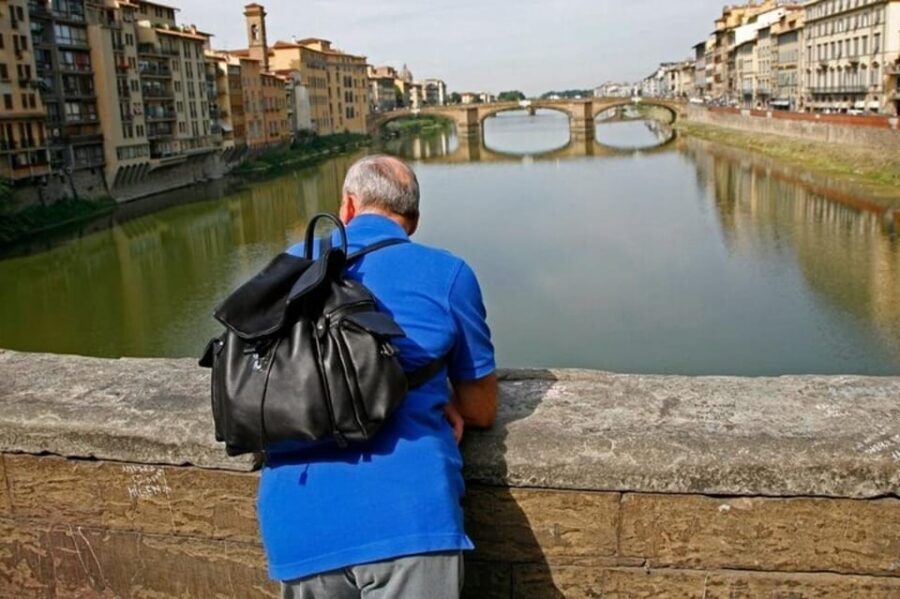
The first named stop is Santo Spirito (about 20 minutes total with photo time, a guided look, and a short walk). Think of it as a warm-up: you get an early sense of what Florence looks like from street level before you hit the heavyweights.
This is the kind of moment where a guide can make a difference. Instead of treating it like a random church detour, you get quick context that helps you read the city’s layout. You’ll be looking for vantage points, sightlines, and the way streets funnel you toward bigger public spaces.
If you come in tired or jet-lagged, a photo-stop start can be a relief. You’re not immediately committed to a long, intense sequence of viewpoints. You get moving, but you also get breathing room.
Basilica di Santa Croce: Michelangelo and Galileo Up Close
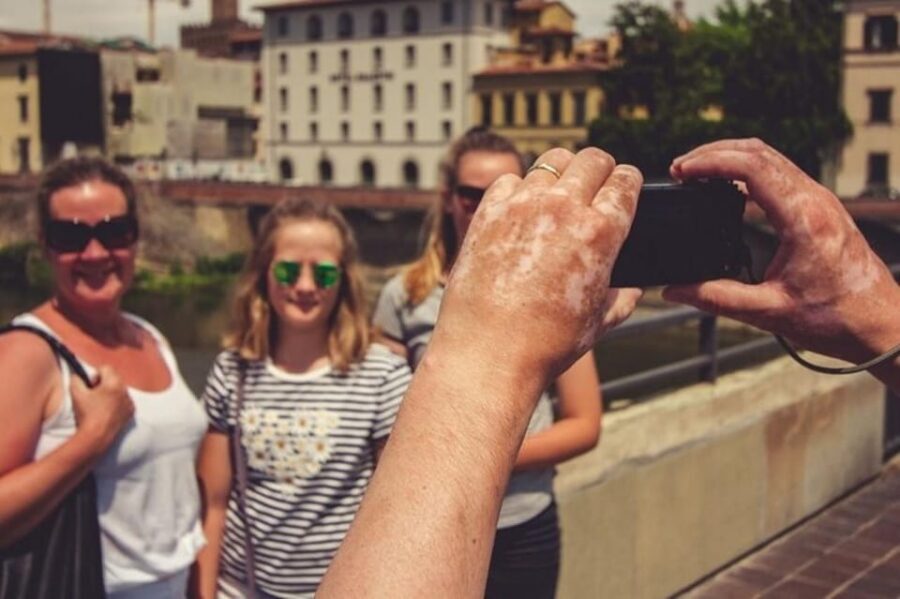
Basilica di Santa Croce is one of Florence’s most meaningful stops, and this tour gives it real attention. You’ll spend about 20 minutes here with photo time and a guided visit.
What makes Santa Croce especially powerful is that it connects famous names to a place you can actually walk inside and stand in front of. The tour highlights the tombs of Michelangelo and Galileo Galilei, which is a big deal for understanding why Santa Croce has become a kind of cultural anchor for Florence.
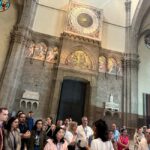
This is where the guide’s approach matters. In the best moments, a good guide helps you shift from tourist mode to observer mode. You start noticing symbols, the feeling of the space, and why these burials matter culturally. And if you’ve ever felt like churches are “just churches,” this stop is a strong argument against that.
One practical consideration: churches can have areas with crowds. If you’re sensitive to tight spaces, plan to move slowly once you’re inside and let the guide show you the route through busy moments.
Palazzo Bargello and Piazza della Repubblica: Renaissance Art in City Mode

After Santa Croce, the tour route includes Palazzo Bargello and Piazza della Repubblica. These stops are valuable because they break up the experience between the most famous squares.
Palazzo Bargello is presented as a palace with a collection of Renaissance art and sculpture. Even if you’re not spending hours inside a museum-style setting, the guided context can help you understand what you’re looking at and why this palace matters in the Renaissance story.
Then you move toward Piazza della Repubblica, described as a bustling focal point with Florence’s lively street energy. This is a nice contrast. Instead of being trapped in one architectural pocket, you get a sense of the city’s rhythm—where people meet, walk through, and keep moving.
If you’ve only been seeing Florence from the postcard angle, these stops can reset your expectations. They show how Renaissance Florence sits inside an active modern city.
Ponte Vecchio: The River Crossing That Changes Your View
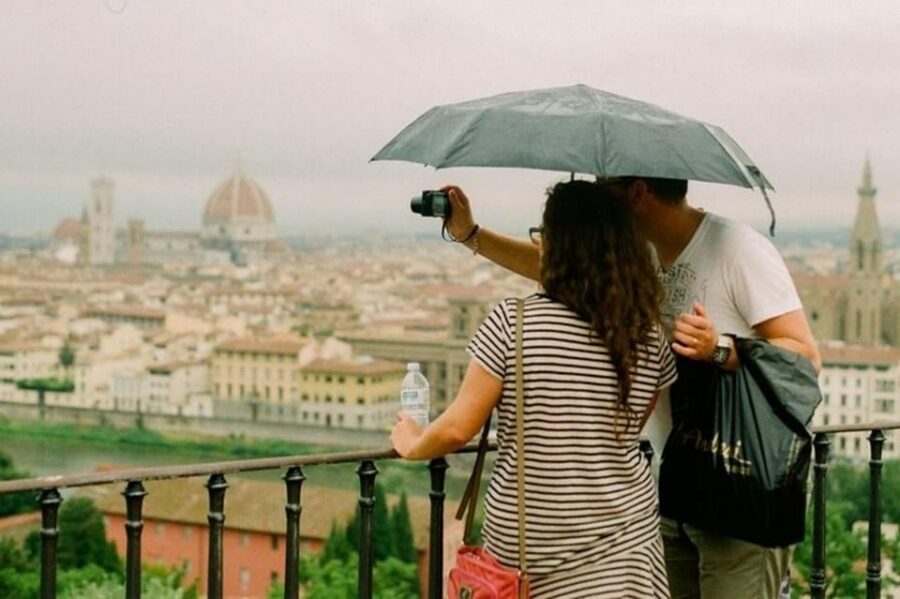
Ponte Vecchio is the classic Florence crossing, and this tour takes you over it with time for photos and guided sightseeing (again, about a 20-minute block for that segment).
What makes Ponte Vecchio more than a picture stop is the way it reframes the city. The Arno changes your perspective. You start seeing Florence not just as buildings, but as a planned scene where rivers, bridges, and streets line up to shape movement and views.
A guide can also help you understand what you’re seeing along the bridge. You’ll get context that makes it easier to recognize why this bridge has endured as a symbol of Florence’s charm.
If you want the best photos, the trick is timing. Since the tour is planned, you’re more likely to hit the bridge at a manageable moment instead of arriving randomly and wrestling crowds on your own.
- Tuscany Day Trip from Florence: Siena, San Gimignano, Pisa and Lunch at a Winery
★ 5.0 · 21,634 reviews

Piazza della Signoria: Palazzo Vecchio and the Fountain of Neptune
Next up is Piazza della Signoria, with time for photo stops, guided viewing, and a short walk (about 20 minutes in that segment). This is one of Florence’s power squares: you feel it the second you arrive.
The tour calls out Palazzo Vecchio and the Fountain of Neptune, both of which are key anchors for understanding the square’s identity. You’re not just looking at statues and stone. You’re standing in a public stage—exactly the kind of place where Renaissance civic life played out.
This stop is also one of the best opportunities to learn how to “read” Florence quickly. After the guide explains what matters in the space—major buildings, symbolic art, and the square’s role—you’ll be able to look at other piazzas later and understand what you’re seeing without needing a second tour.
If you’re short on time in Florence, Piazza della Signoria is the kind of stop that earns its spot fast.
Piazza del Duomo: Brunelleschi’s Dome Dominates the Skyline
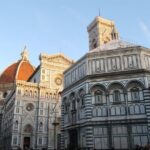
The tour concludes its central landmark run at Piazza del Duomo, where the Florence Cathedral dominates the scene. You’ll spend about 20 minutes here with photos and guided sightseeing, focusing on the iconic cathedral area.
What the tour emphasizes is Brunelleschi’s magnificent dome, the feature that literally defines the skyline. This is the moment when Florence goes from “cool buildings” to “Renaissance engineering you can feel.”
Even if you’re not going inside during the tour window, having a guide point out why the dome matters can make your photos look smarter. You’ll know what angle gives you the best sense of scale, and you’ll understand the dome as a statement—not just a big church roof.
This stop is also where you’ll likely pick up practical ideas for what to do next in the city center. Once you see the whole space as one composition, you can plan your later wandering with much less guesswork.
Basilica di San Lorenzo: Filippo Brunelleschi’s Renaissance Touch
After the Duomo square, the tour finishes with Basilica di San Lorenzo, with guided time and sightseeing (again, about 20 minutes). The tour highlights it as a Renaissance architecture masterpiece designed by Filippo Brunelleschi.
This is a strong final note because it connects the dome story to another piece of Brunelleschi’s influence. The emotional vibe changes a bit here: it’s less “everyone’s in the biggest square” and more “you’re inside a focused architectural statement.”
This stop also helps you understand Renaissance Florence as a system of ideas. You start seeing how architectural choices echo across different buildings, rather than treating each landmark as a standalone souvenir.
How the Custom Walk Makes You Feel Like You’re “Doing” Florence
What sets this tour apart is the way it’s customizable while still hitting the big-ticket sights. That balance matters. If a tour is too rigid, you feel like you’re being dragged. If it’s too loose, you never get the context that makes Florence click.
During this walk, the guide gives you more than facts. You get practical recommendations for how to enjoy the rest of your time in the city, plus a smart route that helps you move through crowded areas without losing your bearings.
I also appreciated the human tone the guides bring. For example, Chiara was praised for sharing Florence’s story in excellent French and for guiding people so they can slip through the tourist crowd and still spot the key monuments. Luigi was also highlighted for being simple, friendly, and genuinely passionate—exactly what I want in a first-time orientation tour.
If you’re someone who likes to ask questions, a private format makes that easier. You can steer the conversation toward what you care about: architecture, major names, or just how to plan the rest of your day.
Price and Value: Is $41 for Two Hours Worth It?
At $41 per person for a 2-hour private walking tour with an English-speaking guide, I think the value comes down to what you want from Florence on day one.
You’re paying for:
- A planned sequence of major Renaissance landmarks
- A guide to explain what you’re seeing and why it matters
- Customization and pace control, so you aren’t stuck in a one-size-fits-all group schedule
You’re not paying for:
- Food and drinks (so you’ll plan those yourself)
- A long museum-style experience (this is a walking orientation tour)
For me, that’s a fair trade. Florence is huge. If you try to do everything solo, you spend more time figuring out what’s worth your attention. This tour is designed to make your time efficient without turning your experience into a sprint.
Also, it includes free cancellation up to 24 hours in advance and a reserve now & pay later option. That’s useful if you’re still juggling museum tickets or deciding your schedule.
Who This Tour Suits Best (and Who Might Want Something Else)
This tour is a great match if you:
- Want a first-time Florence orientation with Renaissance highlights
- Prefer walking with a guide over reading guidebooks
- Enjoy hearing stories that connect famous names to specific places
- Want a manageable 2-hour chunk that won’t swallow your whole day
You might want a different format if you:
- Need lots of time inside multiple churches and museums
- Are hoping for a full deep dive into one site (this route spreads attention across several key landmarks)
Because the tour is wheelchair accessible and offers private group options, it also works well for people who need a more controlled, comfortable pace.
Should You Book the Florence Best of Florence Walking Tour?
If you want to get oriented fast and see the most important Renaissance landmarks in a smart loop, I’d book this. For $41 and two hours, you get a guided plan that hits major sites like Santa Croce, Ponte Vecchio, Piazza della Signoria, Piazza del Duomo, and San Lorenzo, with enough context to make the places feel connected rather than random.
One final tip: wear comfortable walking shoes and keep your phone charged. You’ll be taking photos, yes—but more importantly, you’ll come away with a clear mental map of central Florence.
FAQ
Where does the tour start?
The meeting point is Borgo Santa Croce, 6, 50122 Florence FI, Italy.
How long is the walking tour?
The tour lasts 2 hours.
What languages are offered for the live guide?
The live guide is available in English, Italian, Spanish, and French.
Is this tour private and customizable?
Yes. It’s a private, customizable walking tour with a private group available.
What’s included, and what’s not included?
Included: a private, customizable walking tour and an English-speaking guide. Not included: food and drinks.
Is the tour wheelchair accessible?
Yes, it is wheelchair accessible.
You Might Also Enjoy
More Walking Tours in Florence
More Tours in Florence
- The Best tour in Florence: Renaissance & Medici Tales – guided by a STORYTELLER
★ 5.0 · 12,316 reviews

More Tour Reviews in Florence
- Tuscany Day Trip from Florence: Siena, San Gimignano, Pisa and Lunch at a Winery
★ 5.0 · 21,634 reviews - The Best tour in Florence: Renaissance & Medici Tales – guided by a STORYTELLER
★ 5.0 · 12,316 reviews