
REVIEW · FLORENCE
Florence: Boboli Gardens Reserved Entry Ticket & eBook
Book on GetYourGuide →Operated by ACCORD Italy Smart Tours · Bookable on GetYourGuide
Two gardens, one timed ticket. Boboli is the kind of Florence stop that rewards slow walking. This package pairs reserved Boboli Gardens entry with a full-day visit to the Garden of Villa Bardini, then adds a multilingual PDF eBook built for art lovers.
I especially like that you get a real structure to your visit: a scheduled entry for Boboli (so you’re not stuck in long lines) and then a flexible slotless visit for Villa Bardini. I also like the included multilingual eBook, which is meant to connect what you’re seeing—statues, grottos, fountains, and courtly garden design—to the bigger story.
The main thing to watch is timing and construction. Boboli can have restoration or partial closures, and because your Boboli ticket is time-specific, you’ll want to plan a day that still works if you hit scaffolding or detours.
In This Review
- Key highlights worth planning around
- Boboli Gardens timed entry: where your day starts
- A practical arrival strategy
- Why Boboli feels different from other Florence gardens
- The must-see route: grottos and fountains that change the mood
- Bernardo Buontalenti’s grotto
- Neptune and the Ocean fountains
- A note on walking pace
- Statues, dynasties, and the feeling of a museum outside
- Kaffeehaus and Lemon House: the stops with real personality
- The Kaffeehaus
- The Lemon House
- The eBook PDF: your on-site cheat code
- Villa Bardini after Boboli: your viewpoint reward
- Price and value: what $29 buys you (and what it doesn’t)
- The included tasting boost
- Timing and ticket realities: how to avoid a bad half hour
- Your entry time is not optional
- Last admission is strict
- Plan for restoration
- What to bring (and what will slow you down)
- Who this experience suits best
- Should you book Boboli Gardens Reserved Entry Ticket & eBook?
- FAQ
- How long do I have for Boboli Gardens and Villa Bardini?
- Is this a skip-the-line ticket?
- What do I receive after booking?
- Is there a tour guide included?
- Are there audio guides included?
- What food is included?
- Are there rules about bags, pets, or smoking?
Key highlights worth planning around
- Skip-the-line style entry with a separate entrance for Boboli Gardens
- Villa Bardini is flexible: you can visit anytime during the same day
- Art historian eBook in PDF format, available via WhatsApp or email
- Iconic sights in one loop: Medici garden layout, grottos, fountains, Kaffeehaus, Lemon House
- Bonus Tuscan food tastings included with the package
Boboli Gardens timed entry: where your day starts
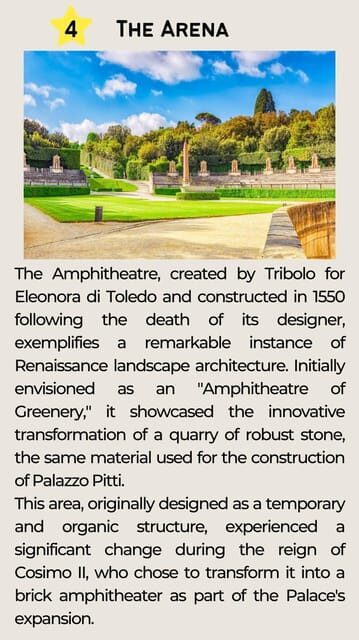
Boboli Gardens sit directly behind Florence’s Pitti Palace, basically the palace’s green backyard turned into an outdoor showpiece. The gardens were developed under the Medici family, and they’re considered one of the earliest royal-garden models in Italy. That matters because this isn’t just pretty greenery; it’s a designed stage for status—paths, vistas, statues, and waterworks laid out to impress.
With this ticket, you choose a date and a time for Boboli. That’s the big logistics win: you’re not gambling on the line outside the gates. It’s also why I recommend arriving with a buffer. If you’re even a bit late, you can end up losing the momentum of the whole afternoon, especially because the gardens have a last admission rule (more on that below).
You can also read our reviews of more tours and experiences in Florence


A practical arrival strategy
You’ll receive instructions to collect your ticket voucher and download the eBook PDF in a WhatsApp or email message before you go. Once you have that, your goal is simple: get to the correct entrance area for your chosen time and walk in with fewer pauses.
One useful tip from how the site works: access isn’t limited to just one side. You can enter (and possibly exit) not only from the Pitti Palace and the Annalena entrance in Via Romana, but also from the gates of Forte di Belvedere and Porta Romana. That gives you options if one route is crowded or if you want to tailor your walk.
Why Boboli feels different from other Florence gardens
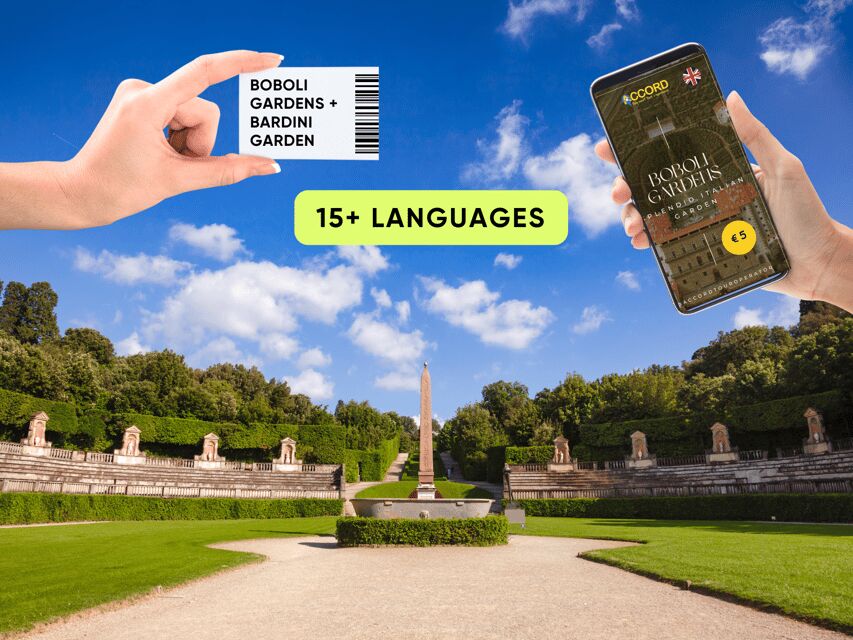
Boboli is set up like an open-air museum. The formal layout is the backbone, and then the gardens keep switching scenes: statues in planned clearings, grottos that feel like secret rooms, and fountains that act like landmarks rather than decoration.
Here’s what that means for you in real terms:
- You can make it a slow, scenic walk, but it still feels purposeful.
- You can skim if you want, but you’ll miss some of the garden’s “wow” moments.
- You can treat it like a self-guided route where each stop adds a new layer.
The Medici story helps explain why the gardens look the way they do. Courtly power wasn’t only in palaces and ceremonies—it was also in controlling nature and staging viewpoints. Boboli’s reputation comes from that balance: it’s highly designed, yet the experience still feels like wandering through another era.
The must-see route: grottos and fountains that change the mood
If you like garden design that turns corners into reveals, Boboli delivers. Two elements are especially signature here: the grottos and the big fountains.
Bernardo Buontalenti’s grotto
One standout is the famous grotto by Bernardo Buontalenti. Grottos in Italian gardens aren’t just water features. They’re dramatic, theatrical spaces that create contrast—cool stone darkness against open sunlit paths. On a warm day, that contrast alone can feel like a mini escape.
- Tuscany Day Trip from Florence: Siena, San Gimignano, Pisa and Lunch at a Winery
★ 5.0 · 21,634 reviews


Neptune and the Ocean fountains
Then you’ve got grand fountain moments like the Fountain of Neptune and the Fountain of the Ocean. These aren’t subtle. They’re designed to be seen from a distance and to anchor the walk around them. If you stop for a moment at each fountain, you’ll start noticing how the gardens guide you visually—each attraction is part of a larger navigation system.
A note on walking pace
Even without a guided tour, you can still make the visit feel curated by choosing your rhythm. I’d plan enough time to stop at viewpoints and waterworks, then keep moving. One recent visitor found the gardens were still enjoyable even with interruptions, but the best experience came from treating it like a leisurely walk rather than a sprint.
Statues, dynasties, and the feeling of a museum outside
Boboli’s collection includes ancient and Renaissance statues spread throughout the gardens. That transforms the walk from “nice scenery” into something you can learn from—especially if you use the included eBook.
The garden also changed over time. Later, the Habsburg-Lorraine and Savoy dynasties expanded it, extending the garden boundaries along ancient city walls toward Porta Romana. This kind of layered development is one reason Boboli can feel bigger than you expect. You’re not just visiting a single-era garden—you’re seeing a timeline in stone, water, and layout.
Kaffeehaus and Lemon House: the stops with real personality
If you’re the type who likes architecture details, two Boboli highlights are worth building your route around.
The Kaffeehaus
The Kaffeehaus is an 18th-century Rococo pavilion. It’s a rare architectural treat in Tuscany, and it adds a different vibe to the garden. Instead of only classical statue energy, you get a lighter, decorative pavilion that feels almost out of place—in the best way. It also makes for a great photo stop and a breather before you continue.
The Lemon House
The Lemon House, designed by Zanobi del Rosso in the late 1770s, adds another layer of “why this garden matters.” It’s a reminder that these gardens served multiple purposes: aesthetics, climate handling, and planned spaces for living like nobility.
If you’re deciding how long to spend, I’d use these two buildings as your check-in points. If you can reach them calmly and still have energy for fountains and viewpoints, you’re doing the day right.
The eBook PDF: your on-site cheat code
The package includes multilingual eBooks crafted by art historians, delivered as a PDF you download. This is the closest thing you get to a guided tour here, since a tour guide and any multilingual audioapp/physical audioguide aren’t included.
So how do you use the eBook well?
- Use it before you start walking to pick a loose route (grottos and fountains first, then pavilions like the Kaffeehaus and Lemon House).
- Use it in short bursts. Read a page at the next “anchor” stop, then walk.
- Keep your phone accessible so you don’t have to “hunt” for the PDF mid-visit.
One review noted the guide helped trace the history clearly. That’s exactly what you want: you should be able to connect the sight you’re seeing to the story behind it without guessing.
Villa Bardini after Boboli: your viewpoint reward
After Boboli, don’t rush into your next museum. Take advantage of the Garden of Villa Bardini, which is included and—crucially—has no specific time slot. You can visit anytime during the same day.
Villa Bardini is a strong contrast to Boboli. It’s another garden experience, but with the payoff of Florence viewpoints from above. If Boboli is a designed world full of statues and water, Villa Bardini feels more like a chance to breathe, look out, and slow down.
Because Boboli already has timed entry, this flexible second garden is a smart way to make the day feel less stressful. You can pace yourself based on how your Boboli portion goes.
Price and value: what $29 buys you (and what it doesn’t)
This package is priced at $29 per person, and that price is best understood as a mix of three things:
1) Reserved Boboli entry so you’re not line-stuck
2) Entry to Villa Bardini
3) The multilingual PDF eBook, plus a bonus selection of Tuscan food tastings
You’re not paying for a live guide here. You’re paying for time savings, access to two gardens, and interpretation via the eBook. If you’re comfortable self-guiding, it’s a good fit.
If you’re expecting a full guided experience with a person leading you, you may feel shorted. The info is there, but it’s on your device, not delivered by a guide. On the plus side, self-paced visiting is often the best way to actually enjoy a garden—you can stop whenever the view hits.
The included tasting boost
The bonus tastings include local items such as extra-virgin olive oil, truffle specialties, and traditional baked goods like schiacciata and cantuccini. Even if the tasting isn’t a huge meal, it gives you a taste of Tuscany that pairs nicely with walking through Medici-era gardens.
Timing and ticket realities: how to avoid a bad half hour
Boboli isn’t an all-day free-for-all in the same way Villa Bardini is. There are two timing facts you should respect.
Your entry time is not optional
You picked a time for Boboli, and you must adhere to it. In practice, that means you’ll want your visit to feel like a “scheduled outing,” not a last-minute wander.
Last admission is strict
Last admission to Boboli Gardens is always one hour before closing time. One review highlighted a mismatch where entry was offered at 15:00 and the gardens were closing at 16:30. That kind of schedule leaves you with a thin window to do the full experience. Even if your closing time differs, the rule is the same: protect at least one full hour after your first entry stop if you want a complete circuit.
Plan for restoration
Another consideration: Boboli can have temporary closures or changes of opening hours due to weather emergencies, and there can also be restoration work affecting access. One visitor reported scaffolding and partial closures during February, which reduced the sense of uninterrupted walking. The key takeaway: bring flexibility. If you hit detours, you can still get views and atmosphere, but it helps to build the day around a leisurely pace rather than a tight timeline.
What to bring (and what will slow you down)
You’ll want a valid ID (passport or ID card) for you and children if relevant. Also, bring the downloaded PDF eBook access on your device, since you’ll likely want it once you’re inside.
Just as important: don’t bring things that get you stopped at security. Luggage or large bags aren’t allowed. Smoking is prohibited. Pets aren’t allowed (assistance dogs are allowed). And you can’t touch plants—standard in historic gardens, but worth remembering.
The good news: wheelchair access is supported. That doesn’t guarantee every path is equally smooth, but it signals that the experience is designed with accessibility in mind.
Who this experience suits best
This package is ideal if:
- You want reserved entry without paying for a live guide.
- You like learning while you walk, using a PDF eBook in multiple languages.
- You want two different garden moods in one day: Boboli’s courtly museum feel and Villa Bardini’s Florence-overview vibe.
- You can handle self-guiding and you don’t mind that some areas might be under restoration.
It’s not the best choice if you:
- Need a strict, timed guided itinerary with a person leading every step.
- Are the type who gets stressed by construction detours or schedule constraints.
- Are trying to compress Florence into the tightest possible schedule.
Should you book Boboli Gardens Reserved Entry Ticket & eBook?
If you’re weighing whether to book, I’d use this simple test: do you want to spend your Florence day walking gardens at a human pace, with enough structure to make it meaningful? If yes, then this is a solid value because you combine timed access to Boboli, entry to Villa Bardini, and an art historian eBook plus tastings.
Book it if you’re the kind of traveler who enjoys statues, grottos, fountains, and architecture details—then uses the eBook to connect those stops to the Medici and later dynastic expansions. Skip it if you only have a few hours to spare and you’re worried about restoration, or if you want an audio guide or a live guide that handles everything for you.
In short: for $29, you’re buying access, interpretation, and a second garden day. Just plan your timing so you don’t end up rushing at the end.
FAQ
How long do I have for Boboli Gardens and Villa Bardini?
Boboli Gardens is part of a 1-day activity with a specific date and a chosen entry time. The Garden of Villa Bardini is included and you can visit it anytime during the whole day without a specific time constraint.
Is this a skip-the-line ticket?
Yes. You get reserved timed entry to Boboli Gardens with skip-the-line style access via a separate entrance.
What do I receive after booking?
You’ll receive trip details including a voucher to collect your tickets. You’ll also get instructions to download an exclusive multilingual Boboli Gardens eBook in PDF format via WhatsApp or email.
Is there a tour guide included?
No. A tour guide is not included.
Are there audio guides included?
No. Multilingual audioapp/physical audioguide is not included.
What food is included?
A bonus selection of Tuscan food tastings is included, including items like extra-virgin olive oil, truffle specialties, and traditional baked goods such as schiacciata and cantuccini.
Are there rules about bags, pets, or smoking?
Yes. Smoking is not allowed. Luggage or large bags are not allowed. Pets are not allowed (assistance dogs are allowed). You also can’t touch plants.
You Might Also Enjoy




More Tickets in Florence


More Tour Reviews in Florence
- Tuscany Day Trip from Florence: Siena, San Gimignano, Pisa and Lunch at a Winery
★ 5.0 · 21,634 reviews - The Best tour in Florence: Renaissance & Medici Tales – guided by a STORYTELLER
★ 5.0 · 12,316 reviews