REVIEW · FLORENCE
Florence, Guided Bike Tour to Discover the Secrets
Book on Viator →Operated by Secrets of Florence, Bike Tour with AL · Bookable on Viator
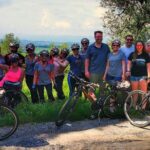
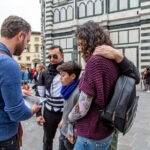
A bike tour is the fastest way to feel Florence. I love how the route strings together Duomo and Ponte Vecchio with stops that keep you moving, and I like that the guide, Altin, turns big sights into bite-size stories you can actually use while you wander on your own later.
The main catch to plan for: a couple of the major buildings along the way use tickets that are not included (like the Baptistery and Palazzo Strozzi), and some stops are brief. If you want long museum time, this isn’t that kind of tour.
In This Review
- Key things to know before you pedal off
- Why Florence by bike fits perfectly into a first visit
- Getting your bearings: Duomo complex and the flower symbolism
- Baptistery stop: short look, ticket planning matters
- Piazza della Repubblica: where ancient axes still shape the grid
- Palazzo Strozzi: Renaissance power and what’s not included
- Via de’ Tornabuoni: luxury street lessons in style and scale
- Finestra delle Belle Donne: the tiny detail that changes how you look
- Museo Salvatore Ferragamo: fashion as Italian craft
- Ponte Vecchio: a bridge with a memory
- Fontana del Porcellino: the nose-touch tradition and the coin ritual
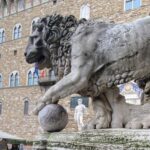
- Piazza della Signoria: city hall, museum energy, and Medici-era power
- Price and value for a 2-hour guided bike loop
- Who this tour is best for (and who should skip it)
- Should you book this Florence secrets bike tour?
- FAQ
- How long is the bike tour in Florence?
- How much does the tour cost?
- Where is the meeting point, and where do we end?
- How many people are in the group?
- Is the ticket mobile, or do I need something printed?
- Are admissions included at every stop?
- Is this tour okay for people with service animals?
- Can I cancel for a full refund?
Key things to know before you pedal off
- Max 8 people keeps the pace friendly and questions easy.
- You start at Via della Pergola, 19 and ride a loop that returns you to the same spot.
- Free admissions for some stops help your budget, but Battistero di San Giovanni and Palazzo Strozzi require separate tickets.
- The route mixes famous landmarks with small Florence moments, including the Buchette del vino area and the Porcellino luck ritual.
- Expect a quick-hit format: about 2 hours total, so the goal is perspective, not deep study.
- You’ll use a mobile ticket, so you’re not hunting for paper.
Why Florence by bike fits perfectly into a first visit
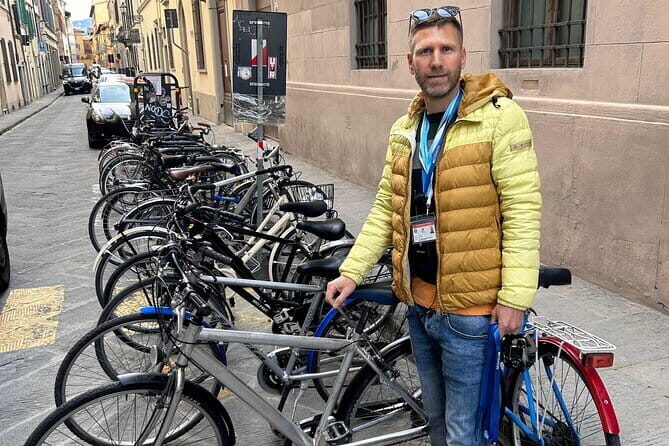
Florence can feel like a choice between two extremes: either you see everything from the sidewalk at walking speed, or you miss the tiny details that make the city special. This bike tour lands in the sweet spot. In about two hours, you cover a concentrated stretch of the center where the Renaissance energy is visible in street layouts, façades, and the way people still gather in public squares.
It’s also practical. Florence’s streets are pretty, but they can be slow to navigate when you’re trying to cover big monuments in one day. A bike route lets you change your angle on sights like the Duomo complex and the Arno crossings without treating your legs like a tour guide.
Most importantly, this is small-group touring. With a maximum of eight, you get more than a “go here, look there” script. You can ask follow-ups and get answers in real time—exactly the kind of help that makes your later self-guided wandering feel smarter.
You can also read our reviews of more cycling tours in Florence
Getting your bearings: Duomo complex and the flower symbolism
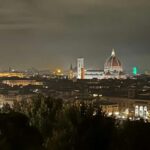
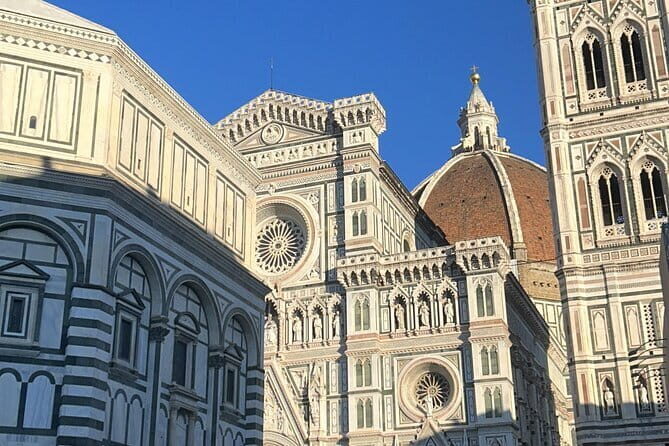
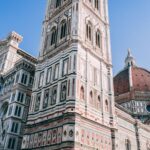
Your tour starts at Via della Pergola, 19, and the first big moment is the cathedral area: Santa Maria del Fiore, the Duomo. This is one of the largest churches in the world, and the name itself matters. Santa Maria del Fiore connects back to Florentia, the city of flowers, and even the emblem—a Florentine lily. That wordplay is more than trivia. It gives you a lens for why locals talk about this place like it’s part of the city’s identity, not just a building.
You’ll have around twenty minutes at this stop, with admission ticket marked as free. In a two-hour tour, the goal isn’t to read every plaque. It’s to get your bearings fast so the rest of the day makes sense: what you’re looking at, where it sits, and why Florence built something this ambitious.
A quick note: even if you don’t go inside for a long sit-down, the surrounding space is where you’ll feel the scale and the confidence of the city’s planning.
Baptistery stop: short look, ticket planning matters
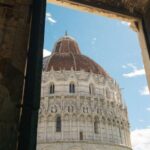
Next comes the Baptistery of San Giovanni. Dante called it My St. John, and the monument you see today was consecrated in 1059. The timeline is part of the fascination: there’s an earlier baptistery idea in the story, plus the Middle Ages-to-modern belief that it may have had roots as a pagan temple before Christian use.
This stop is only about five minutes. Admission ticket is not included. So here’s how to think about it: you’re getting orientation and context, not a full entry experience. If you want extra time there, you’ll likely need to plan that on a separate visit.
If you’re the type who hates rushing, pair this tour with a later self-guided return to the Baptistery when you have more time and can slow down.
Piazza della Repubblica: where ancient axes still shape the grid
When the tour hits Piazza della Repubblica, you’re in the kind of Florence square that helps explain the city’s geometry. The description ties the modern intersection to the Roman axes: the cardo and decumanus plan that structured Roman city life.
This stop runs about fifteen minutes and is listed as free. Even if you don’t care about ancient city planning, you should care about what it does for your navigation. Once you understand that the streets and lines of Florence trace older routes, the city stops feeling chaotic. You start spotting patterns.
I like this sort of stop because it trains your eye. After this, when you walk through the center on your own, you’ll naturally orient yourself faster—without constantly checking your phone.
Palazzo Strozzi: Renaissance power and what’s not included
Palazzo Strozzi is next. This place represents the aristocratic Renaissance palazzi meant to house a family’s status for generations. The layout was so regular that it sometimes meant demolishing earlier buildings. That detail gives you a sense of what “power” meant in Renaissance Florence: changing the built environment to match your family’s vision.
Stop time is around ten minutes, but admission ticket is not included. That means you’ll get the exterior and context, and you can decide later whether to pay for deeper access.
If you like architecture and families like the Medici-era elite, you’ll probably want to see more inside later. If you don’t, the quick stop still gives you enough to connect the dots between different palaces you’ll see across town.
You can also read our reviews of more guided tours in Florence
- The Best tour in Florence: Renaissance & Medici Tales – guided by a STORYTELLER
★ 5.0 · 12,316 reviews
Via de’ Tornabuoni: luxury street lessons in style and scale
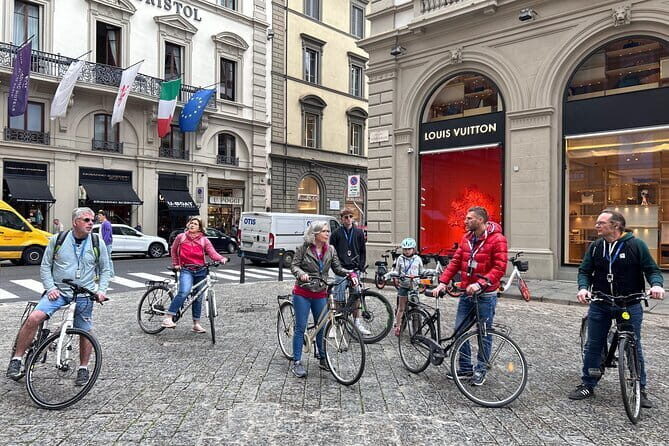
Then you’ll ride through Via de’ Tornabuoni, often described as the fanciest street in Florence. Wide sidewalks, world-famous brands, and beautiful buildings make it feel like Florence’s fashion-forward face.
This stop is about ten minutes and is marked free. Here’s why I think it’s worth including even on a secrets-and-stories tour: it shows you that Florence wasn’t only about churches and scholars. The city also developed a lifestyle culture where display, shopping, and social life mattered.
If you’re a photography person, this stretch can help you frame the city. You get cleaner lines than in the narrowest lanes, and you can compare how the city’s “public stage” shifts from squares to streets.
Finestra delle Belle Donne: the tiny detail that changes how you look
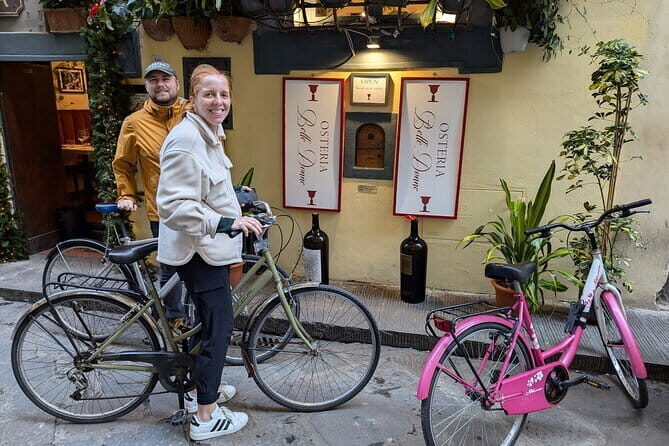
Now comes one of those Florence moments that can be easy to miss while you’re busy chasing the big names: the Finestra delle Belle Donne. The stop ties into the Buchette del vino area—tiny holes made for serving wine without fully opening the window to the street.
This is about fifteen minutes and marked free. The value here isn’t the window itself. It’s learning how Florence hid daily-life culture in plain sight. Once you notice one of these details, suddenly the whole city becomes more “legible.” You stop seeing only façades and start seeing how people used the city like a working system.
And that’s the real payoff of a guided route: you train your senses.
Museo Salvatore Ferragamo: fashion as Italian craft
At Museo Salvatore Ferragamo, the tour shifts from architecture into objects and craft. The Ferragamo family founded the museum in May 1995 to share the artistic qualities of Salvatore Ferragamo and his role in international fashion—especially through footwear design.
This stop is about ten minutes and is listed as free for admission. For a two-hour tour, that’s smart. It gives you a taste of museum life without locking you into a long schedule.
If you’re the kind of person who loves design details—materials, shapes, the way function becomes style—you’ll likely enjoy this stop. Even if you don’t, it’s a useful reminder that Renaissance creativity wasn’t the only creative engine Florence runs on.
Ponte Vecchio: a bridge with a memory
Ponte Vecchio is one of Florence’s most recognizable scenes, and you’ll have about five minutes here. It was built near a Roman crossing, and until 1218 it was the only bridge across the Arno in Florence. The current bridge was rebuilt after a flood in 1345.
Then there’s the World War II detail: it was the only bridge across the Arno that fleeing Germans did not destroy. That kind of survival story sticks, and it helps you see Ponte Vecchio as more than a postcard view. It’s a link between eras.
This stop is marked free. The short timing is intentional. You’re meant to connect the history to the present: the layout of the bridge, the way people naturally gather around it, and how the Arno shapes movement in the city.
Fontana del Porcellino: the nose-touch tradition and the coin ritual
At the Fontana del Porcellino, you’ll get one of Florence’s most famous luck traditions. The idea is simple: touch the statue’s nose, and good fortune follows.
The tour info also includes a more specific ritual: while rubbing the nose with one hand, hold a coin in the boar’s open mouth and let it drop through the grating. If the coin falls through, it’s good luck guaranteed—if not, you try again.
This stop is about five minutes and free. I love stops like this because they’re interactive. You’re not just looking at art or reading history. You’re participating in local folklore that has been repeated for so long it’s become part of the city’s rhythm.
Even if you don’t believe in the luck part, it’s a fun way to slow down for a moment and actually be in Florence instead of just passing through it.
Piazza della Signoria: city hall, museum energy, and Medici-era power
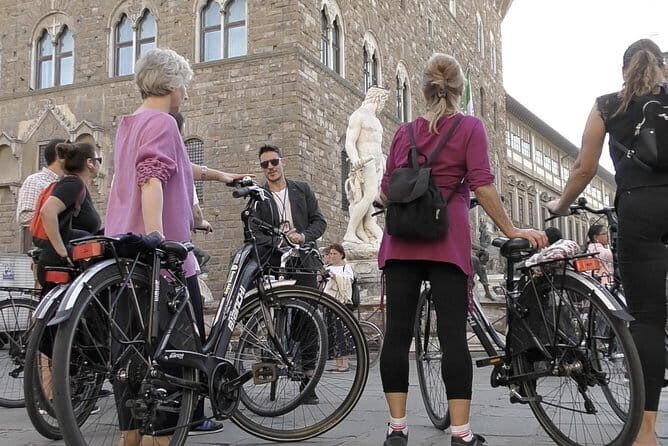
The tour ends at Piazza della Signoria, where you’ll visit Palazzo della Signoria—also known as the Old Palace. It functions as the Florence city hall, and it’s also a museum-like monument and one of the most visited landmarks in the Renaissance core.
Stop time is about fifteen minutes and free. This is a good final anchor because the square is the crossroads of politics, art, and public life. By the time you arrive, you’ll already have seen the Duomo symbolism, palace logic, and bridge history. Now the city makes sense as a system: power shows up in buildings, people show up in squares, and stories travel along the streets that connect everything.
After this, the tour ends back at the meeting point at Via della Pergola, 19.
Price and value for a 2-hour guided bike loop
The price is $33.42 per person for about two hours. That works out to a practical value if your goal is orientation and story context. You’re not paying for a half-day museum plan. You’re paying for a guide who helps you understand what you’re seeing and how to stitch it into your own day.
Also, several stops list free admission tickets—Santa Maria del Fiore (Duomo) is marked free, and the museum stop (Ferragamo) is marked free. Meanwhile, two notable stops are not included (Battistero di San Giovanni and Palazzo Strozzi). So the smartest way to judge value is this: you get a guided path through many headline sites, plus some admissions covered, and you pay separately only if you want deeper access at the two specific buildings.
Given the small group size (max 8), the price feels reasonable. If you hate overcrowded tours and want a route that helps you move efficiently through central Florence, this is the kind of structure that usually justifies itself.
Who this tour is best for (and who should skip it)
This is a strong fit if you:
- want to cover a lot of central Florence without spending your whole day walking
- enjoy short, guided context at multiple stops
- like asking questions and getting answers on the fly
- prefer a small group over big buses
It may be less ideal if you:
- want long, ticket-included time in major sites like the Baptistery or Palazzo Strozzi
- get stressed by quick stops and prefer slow pacing
- plan to spend the entire afternoon inside museums (you’ll need another plan for that)
Because the format is about secrets and stories in a compact route, you’ll get more satisfaction if you treat it as the start of your Florence day, not the only thing you do.
Should you book this Florence secrets bike tour?
I’d book it if you’re trying to make your first visit feel organized fast. The mix of major landmarks (Duomo, Ponte Vecchio, Piazza della Signoria) with smaller Florence details (Buchette del vino area and the Porcellino ritual) is a smart use of two hours. Add in the small group size and the guide style described as welcoming, helpful with questions, and punctual, and you get a tour that’s both efficient and genuinely enjoyable.
If you’re a “one-stop, one-building” traveler who wants hours inside places, you might want to pair this with a separate museum plan and pay extra for the not-included stops you care about most.
FAQ
How long is the bike tour in Florence?
It lasts about 2 hours.
How much does the tour cost?
The price is $33.42 per person.
Where is the meeting point, and where do we end?
The start is Via della Pergola, 19, 50121 Firenze FI, Italy, and the tour ends back at the same meeting point.
How many people are in the group?
The tour has a maximum of 8 travelers.
Is the ticket mobile, or do I need something printed?
It uses a mobile ticket.
Are admissions included at every stop?
Not all. Santa Maria del Fiore (Duomo) is marked free. Battistero di San Giovanni and Palazzo Strozzi are marked as not included. Other listed stops are marked free.
Is this tour okay for people with service animals?
Yes, service animals are allowed.
Can I cancel for a full refund?
Yes, you can cancel for free up to 24 hours in advance for a full refund.
You Might Also Enjoy


More Cycling Tours in Florence
More Tours in Florence
- The Best tour in Florence: Renaissance & Medici Tales – guided by a STORYTELLER
★ 5.0 · 12,316 reviews
More Tour Reviews in Florence
- Tuscany Day Trip from Florence: Siena, San Gimignano, Pisa and Lunch at a Winery
★ 5.0 · 21,634 reviews - The Best tour in Florence: Renaissance & Medici Tales – guided by a STORYTELLER
★ 5.0 · 12,316 reviews