REVIEW · FLORENCE
Florence: Walking Tour of Dante’s Florence with a Guide
Book on GetYourGuide →Operated by My Tour in Italy · Bookable on GetYourGuide
Dante’s Florence turns stone into a story. This 2-hour walk connects the Divine Comedy to the streets where Dante lived, and the guide’s storytelling in Italian or English makes the era feel close. I love how the tour starts at Duomo Square and builds from there, and I also love that you finish at a memorable Dante statue in Piazza Santa Croce. The only real drawback is the pace: two hours of walking plus plenty of explanations means you’ll want comfortable shoes.
What makes this one especially good is the way the route jumps between big-name sights and Dante-specific stop points. You’ll move from Duomo Square to the Dante Studies Center and over toward Ponte Vecchio, then get into the political heart of medieval Florence at Piazza della Signoria and Palazzo Vecchio. Guides like Oksana are a big reason this tour reads less like a lecture and more like a guided walk through cause-and-effect, with Dante at the center.
For comfort, you also get built-in listening support: there’s an audio guide in English, Italian, and Spanish, and earphones are provided only for groups over 15. The tour is listed as wheelchair accessible, and it runs from the meeting point in front of the Loggia Bigallo Museum back to the same spot.
In This Review
- Key highlights I’d prioritize
- Why Dante’s Florence feels like more than sightseeing
- Duomo Square and San Giovanni: the start of Dante’s district
- Walking from Dante’s life scenes to the city’s medieval mood
- From the Divine Comedy to the Dante Studies Center
- Ponte Vecchio and the Guelph–Ghibelline legend
- Piazza della Signoria and Palazzo Vecchio: Dante’s funerary mask
- Piazza Santa Croce: the Dante statue holding the Divine Comedy
- Price and value for a 2-hour Dante-focused tour
- Who this tour suits best (and who should consider skipping)
- Should you book this Dante walking tour?
- FAQ
- How long is the Dante’s Florence walking tour?
- What does the tour include?
- Where does the tour start and end?
- What languages are offered for the live guide?
- Is the tour wheelchair accessible?
- How much does it cost?
- What’s the cancellation policy?
Key highlights I’d prioritize
- Duomo Square as your anchor point: you start at San Giovanni’s area, where the tour frames Dante’s Florence as you look around
- Scenes tied to Dante’s life: you visit places thought to connect to his birth and his first sight of Beatrice
- Ponte Vecchio with a political legend: the Guelphs and Ghibellines story is part of what you hear as you cross/approach the bridge area
- Piazza della Signoria and Palazzo Vecchio: the tour brings you to the square’s medieval power center, with Dante’s funerary mask kept inside Palazzo Vecchio
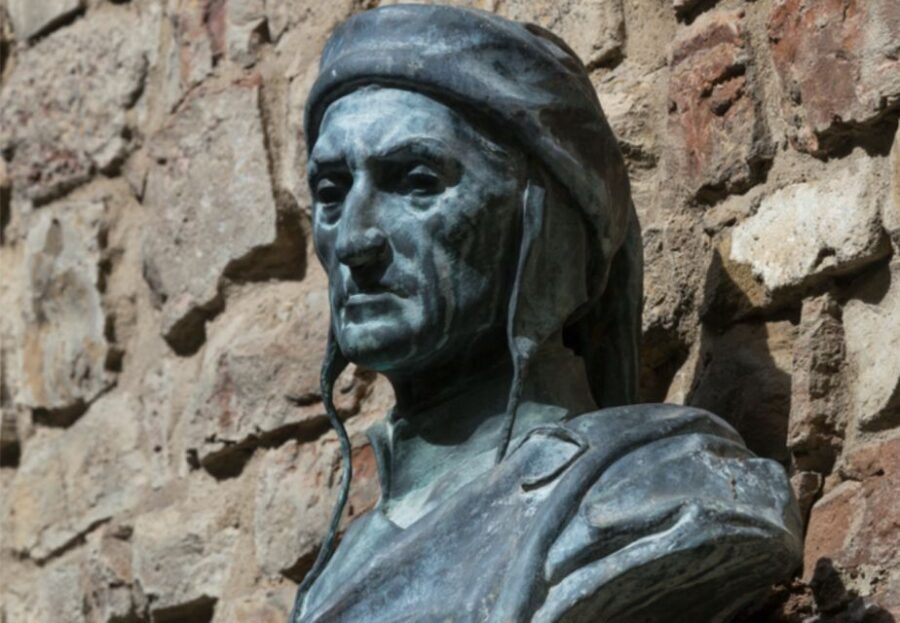
- A final visual that sticks: Piazza Santa Croce’s Dante statue, holding the Divine Comedy, is a strong closing image
Why Dante’s Florence feels like more than sightseeing
Florence is famous for art, but Dante fans get a different kind of payoff here: you’re not just looking at famous buildings. You’re building a mental map of medieval Florence as Dante would have understood it, with the city described as a web of narrow streets, stone houses and wooden houses, towers, small churches, and even workshops mixed into daily life.
The guide also leans into the idea that Florence, to Dante, was Fiorenza. The tour’s narrative makes a point of reminding you what wasn’t there yet during his lifetime. Giotto’s Bell Tower and Brunelleschi’s Dome came later, and Palazzo Vecchio didn’t exist as we know it today in Dante’s early years. That one detail changes how you experience the same streets: you start seeing layers instead of a single picture postcard.
I also appreciate that the tour keeps connecting the literature to physical places. The promised highlight is that you walk through the steps of the Divine Comedy, not just hear facts about it. Even if you don’t consider yourself a Dante scholar, you’ll understand better what the work is doing emotionally and symbolically once you hear how the guide frames it through Dante’s life and the city around him.
You can also read our reviews of more walking tours in Florence

Duomo Square and San Giovanni: the start of Dante’s district
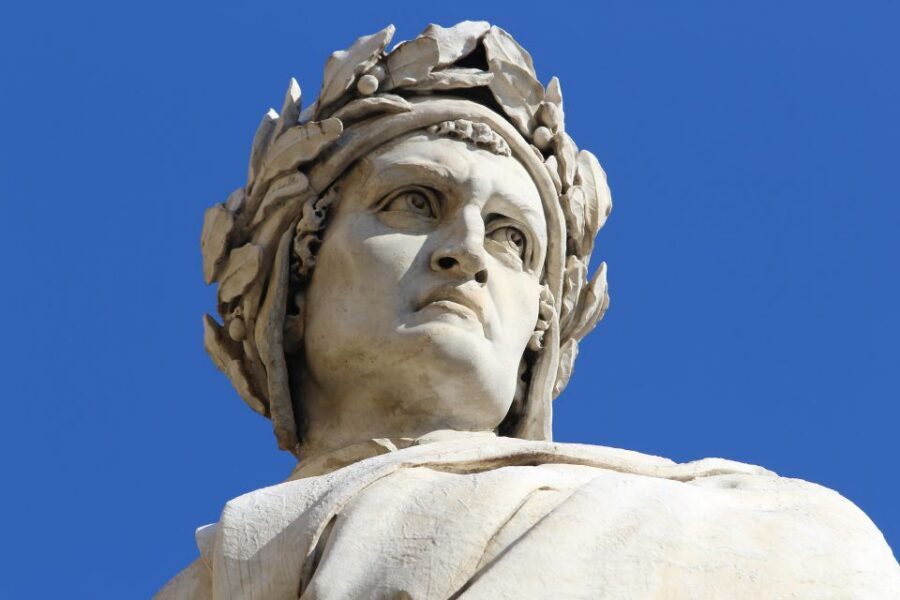
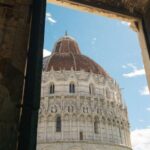
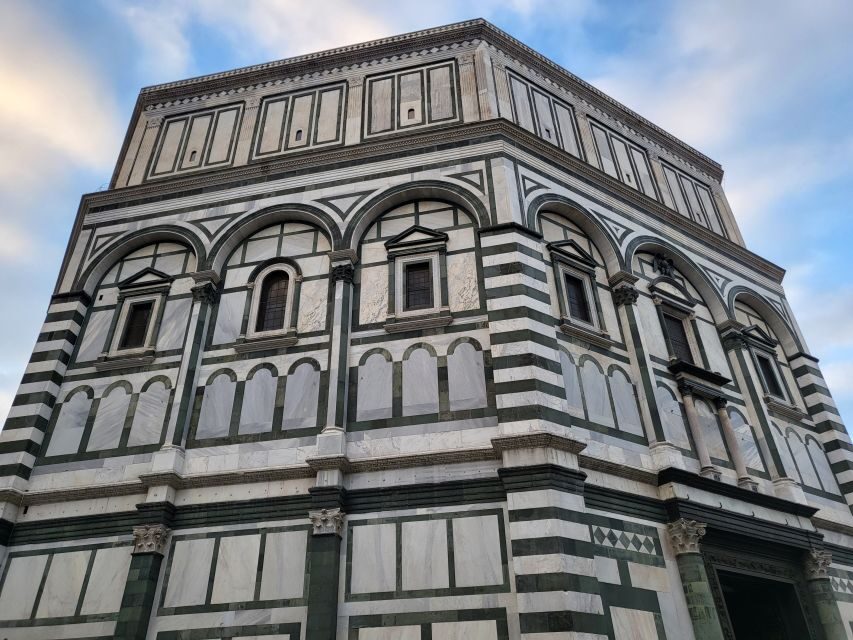
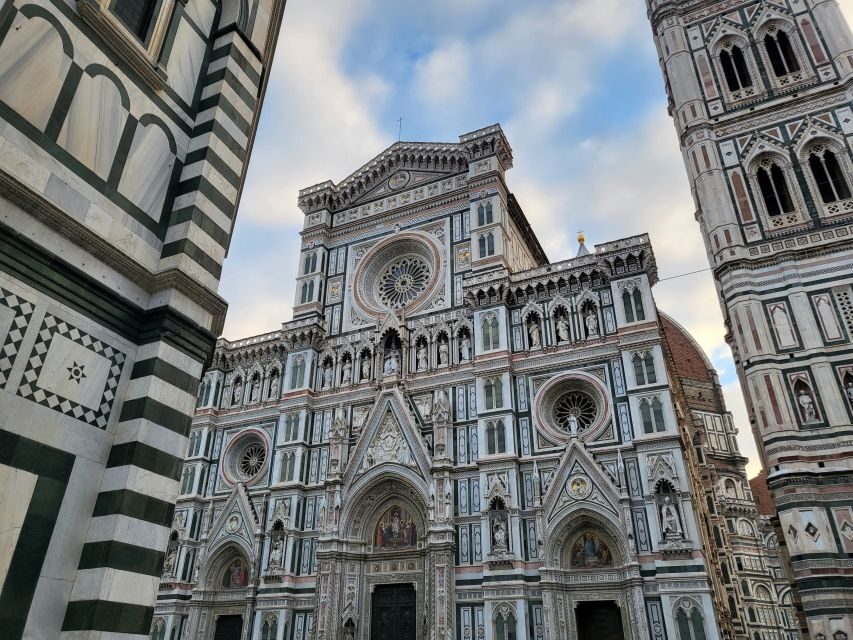
Your tour begins at the meeting point in front of the Loggia Bigallo Museum, and the first big orientation moment is Duomo Square and the Baptistery of San Giovanni area.
In medieval times, this square wasn’t just a pretty center. It functioned as a gateway into the city. The guide uses that to set the stage for the tour’s central theme: Dante’s Florence as you move from entrance to neighborhoods, from monuments to the streets that shaped daily life.
Here’s one of the more fun details to watch for. If you look upward, you can see words attributed to Dante carved on the walls of ancient Florentine towers. That’s the kind of visual clue that turns “historic city tour” into “wait, this is connected.” It also explains why the guide keeps calling this area the start of so-called Dante’s district.
Practical note: Duomo Square can be busy, and this is a walking tour where listening matters. If your group is smaller you might hear clearly; if it’s larger, the audio support and earphones for over-15 groups become especially useful.
Walking from Dante’s life scenes to the city’s medieval mood
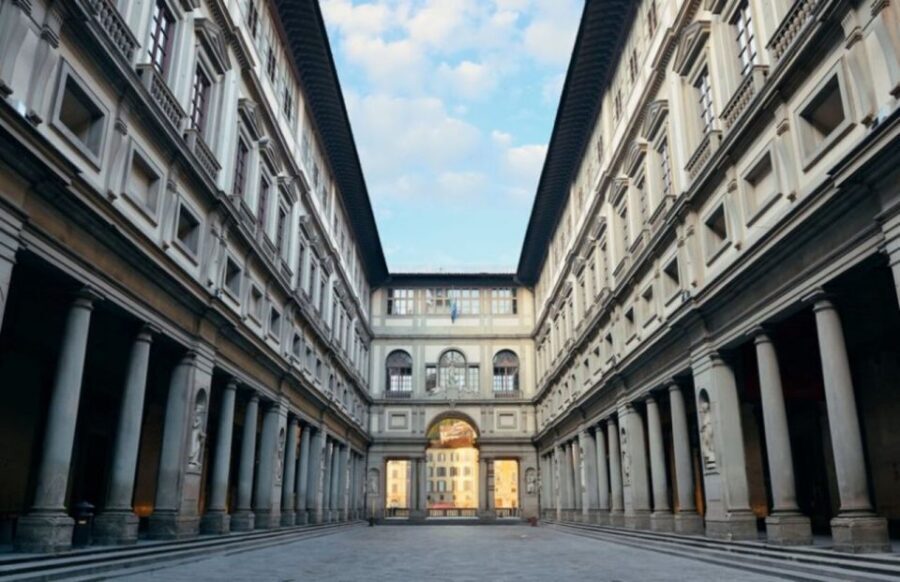
The tour is designed to move chronologically through Dante’s life from his birth in 1265 to his exile in 1302. That timeline isn’t thrown at you as a dry list. It’s tied to what you’re seeing.
Two specific life-linked stops are part of the route: you visit a place thought to connect to where Dante was born, and another place tied to the moment he first saw Beatrice. Those are the kind of details that give the city emotional weight. Streets don’t just lead somewhere here; they mark turning points in Dante’s story.
The guide also describes the Florence around him: narrow streets packed with stone and wood structures, towers rising above everything, small churches and studios tucked in among daily activity. The effect is that you stop thinking of Florence as a finished museum. You start imagining it as a working city with real neighborhoods and visible rivalries.
If you love literature, this is where the tour clicks. If you’re more of a “show me the view” traveler, you may still enjoy it, but you’ll likely want to keep your expectations calibrated. This is still a walk, not a bus tour, and the storytelling is a core part of the experience.
From the Divine Comedy to the Dante Studies Center
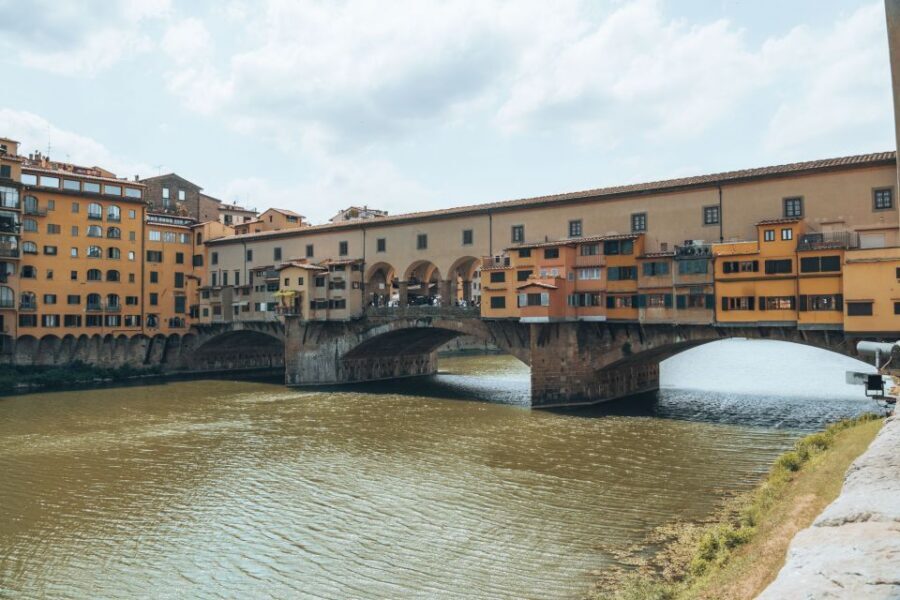
One of the key moments of the tour is what happens after the opening Florence orientation and Dante-life stops: you move to the Dante Studies Center.
This is where the tour’s promise—walking through the steps of the Divine Comedy—starts to feel less like a highlight line and more like a guiding thread. The guide uses the center and its surroundings as a way to connect Dante’s literary journey to the physical geography of the city. You don’t need to have read every canto to follow along. You’ll get the shape of the story and why Dante’s work mattered enough to keep shaping how we talk about Florence centuries later.
One nice advantage of the center stop is that it gives you a break from pure outdoor walking while still keeping you in Dante’s world. You’re not just rushing from plaza to plaza; you have a pivot point where the tour can slow down and make meaning.
Ponte Vecchio and the Guelph–Ghibelline legend
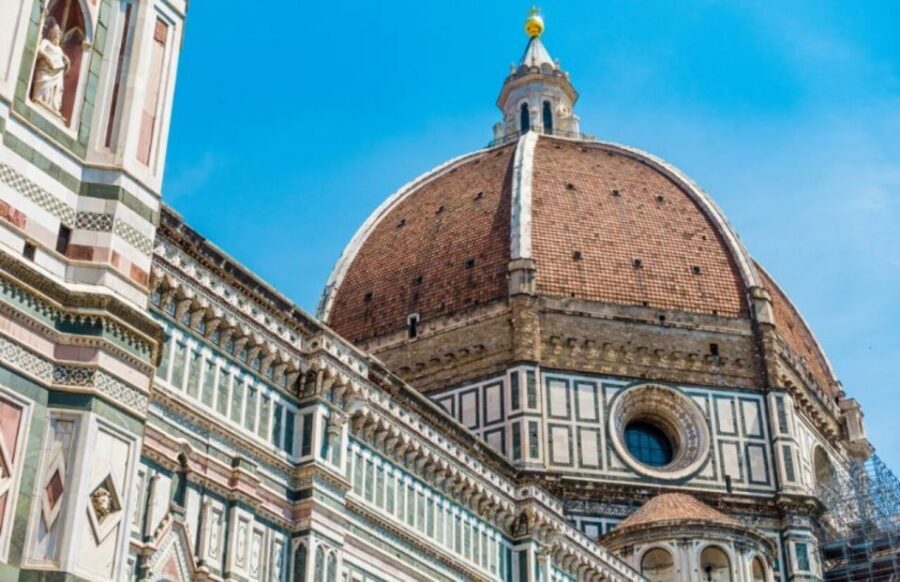
Next, you head toward Ponte Vecchio. This is one of the most famous images of Florence, but the tour approach is different: you’re not only admiring the bridge. You’re hearing the legend that ties it to the start of the struggle between Guelphs and Ghibellines, and the way the city split into two parts.
That political framing matters because Dante’s life unfolded in a Florence where power wasn’t abstract. Rival factions shaped which neighborhoods mattered, who had influence, and how people lived and moved. When you hear that story while standing near the bridge, the bridge becomes more than a tourist icon. It becomes part of a map of conflict and identity.
Drawback to keep in mind: because this is a walking tour focused on narrative, your experience on Ponte Vecchio will depend on your guide’s pacing and your ability to keep up with directions. If you hate group logistics and prefer slow wandering, you might feel slightly compressed here.
You can also read our reviews of more guided tours in Florence
- The Best tour in Florence: Renaissance & Medici Tales – guided by a STORYTELLER
★ 5.0 · 12,316 reviews

Piazza della Signoria and Palazzo Vecchio: Dante’s funerary mask
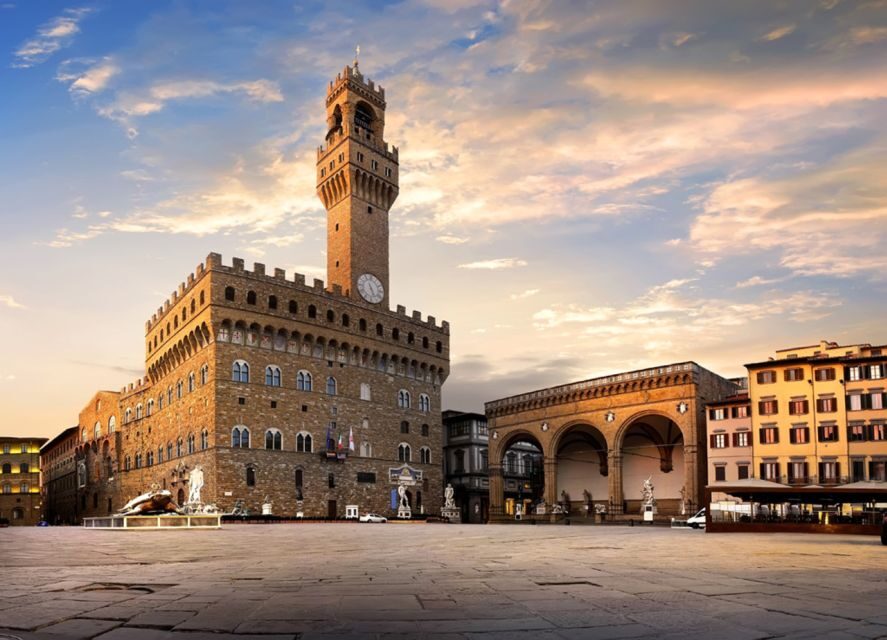
The tour then reaches what it calls the heart of Florence during medieval times: Piazza della Signoria and Palazzo Vecchio.
This is where the tour becomes very tangible for anyone curious about Dante’s afterlife and legacy in Florence. The guide points you toward Palazzo Vecchio, where Dante’s funerary mask is kept inside. Even if you don’t know much about the mask itself, the idea is powerful: Dante is not just remembered in books; he’s physically present in the civic center of the city that shaped him.
Piazza della Signoria also helps you understand what medieval power looked like. The guide’s narration makes the square feel like a stage where politics, reputation, and public identity were on display. It’s not just pretty architecture. It’s the sort of place where words mattered and decisions echoed.
If you’re someone who likes photos, this is also one of your best zones for pictures, because you can tie your photos to what you’re hearing (rather than shooting at random landmarks).
Piazza Santa Croce: the Dante statue holding the Divine Comedy
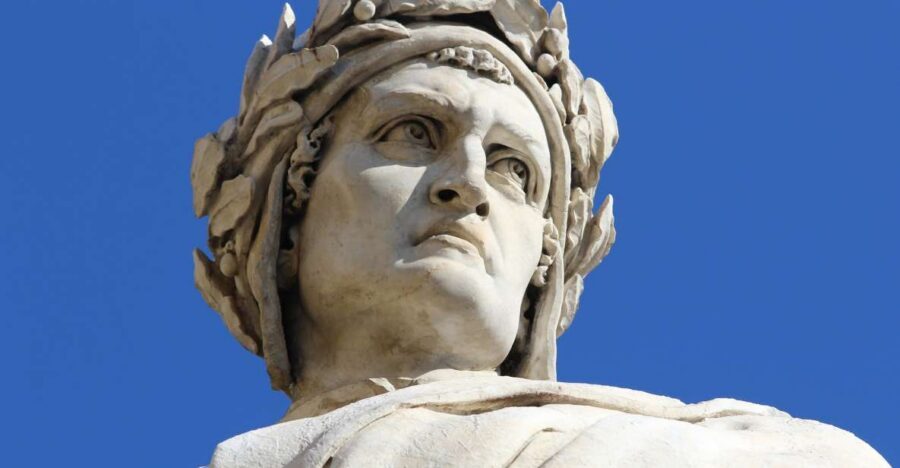
To wrap things up, you’ll visit Piazza Santa Croce. This is where the tour places one of its strongest closing visuals: a marble statue of Dante Alighieri holding the Divine Comedy in his right hand.
I like how the tour ends with an image you can remember. After hearing about places connected to his birth, Beatrice, exile-era context, and the city’s factions, you leave with a single, recognizable form of Dante. It’s not just a final stop; it’s a way to turn the story back into something concrete.
Also, because the tour ends back at the meeting point, you don’t have that annoying problem of figuring out transportation afterward. You can keep exploring Florence on your own with a clearer sense of where you are and how these neighborhoods relate.
Price and value for a 2-hour Dante-focused tour
This costs $34 per person for a 2-hour walking tour with a live guide. For Florence, that price is in a reasonable zone for a specialty tour that includes multiple key areas (Duomo Square, Dante-related stops, Dante Studies Center, Ponte Vecchio area, Piazza della Signoria/Palazzo Vecchio area, and Piazza Santa Croce).
What makes the value feel fair is the way the guide ties together literature, politics, and place. If you’re only looking for major sights with no story, you can find cheaper general walking tours. But if you want a structured Dante lens, this is the kind of tour where your ticket helps you connect the dots instead of just seeing a list of names.
Two small listening-related details also add value. Audio support is included (English, Italian, Spanish), and earphones are provided for groups over 15, which helps you stay with the guide instead of fighting for audio in a crowd.
Who this tour suits best (and who should consider skipping)
This is best for you if:
- You’re a Dante fan or you want a quick, guided way to understand his Divine Comedy through real places
- You like medieval Florence as a theme, not just as background scenery
- You want a tight route that still includes major anchors like Duomo Square and Piazza Santa Croce
You might think twice if:
- You prefer silent “wander and absorb” touring with minimal talking
- You don’t want a story-heavy walk (this tour uses narrative as the main driver)
- You have very limited stamina for about two hours of moving and stopping
If you’re a first-time visitor, it can also work because it gives you a usable map of Dante’s Florence. Still, don’t expect it to replace a broader art-and-architecture orientation tour. It’s focused.
Should you book this Dante walking tour?
I’d book it if you want a smart, story-led introduction to Florence’s medieval side and Dante’s life. The strongest reasons are simple: the guide-led connection between the Divine Comedy and the places you stand in, and the way the route links Dante to both civic power (Palazzo Vecchio and Piazza della Signoria) and iconic city geography (Duomo Square and Ponte Vecchio).
If you’re excited by literature tied to real streets, this tour gives you that fast. If you’re just after a quick highlights loop, you might find it more satisfying to pick a general Florence walking tour instead.
FAQ
How long is the Dante’s Florence walking tour?
The tour lasts about 2 hours.
What does the tour include?
You get a live tour guide. An audio guide is included (English, Italian, Spanish). Earphones are provided only for groups with over 15 participants.
Where does the tour start and end?
The tour starts in front of the Loggia Bigallo Museum and ends back at the same meeting point.
What languages are offered for the live guide?
The live tour guide is available in Italian and English.
Is the tour wheelchair accessible?
Yes, the activity is listed as wheelchair accessible.
How much does it cost?
The price is listed as $34 per person.
What’s the cancellation policy?
Free cancellation is available up to 24 hours in advance for a full refund.
You Might Also Enjoy


More Walking Tours in Florence

More Tours in Florence
- The Best tour in Florence: Renaissance & Medici Tales – guided by a STORYTELLER
★ 5.0 · 12,316 reviews

More Tour Reviews in Florence
- Tuscany Day Trip from Florence: Siena, San Gimignano, Pisa and Lunch at a Winery
★ 5.0 · 21,634 reviews - The Best tour in Florence: Renaissance & Medici Tales – guided by a STORYTELLER
★ 5.0 · 12,316 reviews