REVIEW · FLORENCE
Florence: Leonardo Drawings
Book on GetYourGuide →Operated by Geko Art Studio · Bookable on GetYourGuide
Leonardo didn’t sketch with magic; you will. In this 3-hour Florence studio lesson, you copy a famous Leonardo da Vinci drawing step by step, and you get practical coaching as you build the image. One thing to consider: the atelier is a bit outside the main center, so plan on a walk or a short ride.
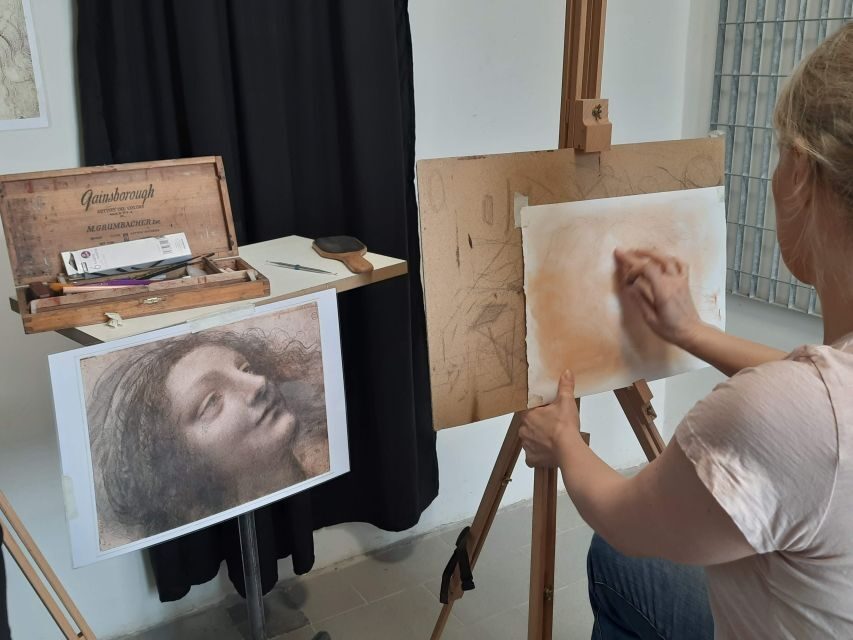
I like that the class hands you the real tools, with sanguine, sepia, and charcoal ready to use, plus paper supports and the basics (eraser, pencil, easel). You also get a coffee break with cookies, water, and juice, which makes the time feel less like school and more like a creative reset.
This is a private group lesson with instruction in English, Italian, and Spanish, and it’s wheelchair accessible. After booking, you’ll coordinate your start time with the office (usually 10am–1pm or 2pm–5pm, and sometimes an evening slot), so you can fit it around museums and aperitivo.
In This Review
- Key highlights you should care about
- What this Florence class actually teaches you
- Materials and why sanguine, sepia, and charcoal matter
- The 3-hour flow at Geko Art Studio
- Coffee break and group pace: when art feels comfortable
- Meeting point: finding the glass door Geko Art Studio
- Price and value: what $182 gets you
- Who should book this Leonardo drawing workshop
- Tips to get great results fast (without stressing)
- Before you go: timing, languages, and accessibility
- Should you book Florence: Leonardo Drawings?
- FAQ
- How long is the Florence Leonardo Drawings experience?
- What’s included in the class?
- What languages are offered?
- Do I need to be an experienced artist?
- Where do I meet the group?
- Is the studio wheelchair accessible, and are there different time slots?
Key highlights you should care about
- You draw a real Leonardo sketch (one famous study) instead of just watching techniques on a demo table
- Period-style materials included: sanguine, sepia, and charcoal, plus paper and drawing tools
- Step-by-step guidance for all levels means no experience is required, but you can still learn new control
- Renaissance context is built in with cultural and historical info during the work
- Private group setting keeps the pace comfortable and the feedback direct
- On-site coffee break with cookies, water, and juice keeps energy steady for 3 hours
What this Florence class actually teaches you
This is not a lecture. You’re there to make a drawing, with instruction that follows the way Leonardo worked: observations first, then shape and tone, then refinement. The goal is to reproduce one of his best-known sketches using the same kind of materials and method style, so you come away understanding why certain marks matter.
What you’ll learn is less about fancy art vocabulary and more about control. You’ll practice the sequence of traditional drawing on paper, guided through each stage as you go. That’s the part that feels most useful when you’re traveling: you leave with a finished result and a clearer sense of how an Old Master builds an image.
You can also read our reviews of more tours and experiences in Florence.
- Tuscany Day Trip from Florence: Siena, San Gimignano, Pisa and Lunch at a Winery
★ 5.0 · 21,634 reviews
Materials and why sanguine, sepia, and charcoal matter
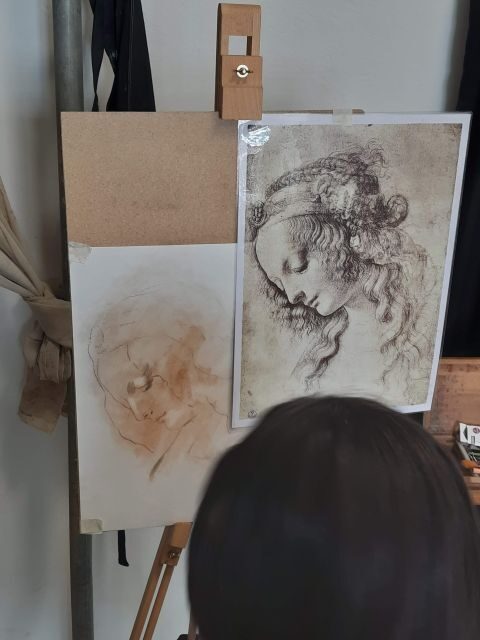
The class supplies everything you need, including an easel, paper support, pencil, sanguine pencil, charcoal, and an eraser. Using those specific mediums is the point. Each one behaves differently, so you can feel how line and shading change when you switch tools.
Here’s what that means for you:
- Sanguine and sepia help you map the drawing and place values with a warm, study-like quality.
- Charcoal is great for shaping darker areas and working the contrast that gives drawings their punch.
- The eraser becomes part of the process, not an afterthought, because highlights and corrections matter in sketching.
Because the materials are included, you don’t waste time in Florence shopping for supplies or figuring out what “the right paper” even means. You show up, get set up, and start learning immediately.
The 3-hour flow at Geko Art Studio
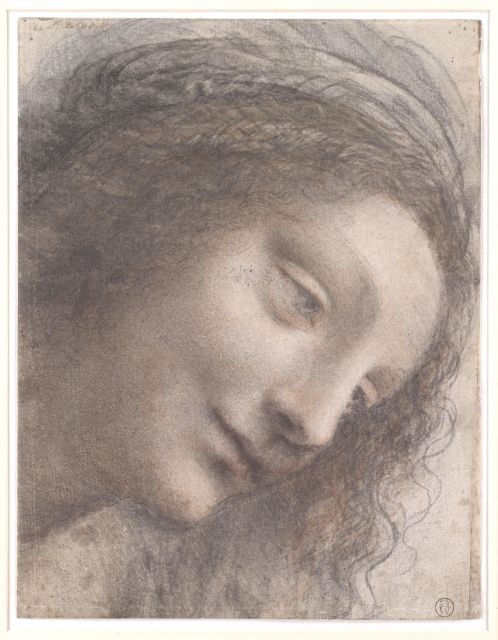
The lesson is three hours long, and it’s designed to keep you moving forward without rushing. You’ll start with the setup and the basics of the materials, then work through the sketch step by step under teacher guidance.
A typical rhythm looks like this:
- Start with understanding the sketch: the teacher gives context and helps you see what you’re actually building on the page.
- Build the drawing in stages: you reproduce the famous Leonardo study using the traditional process, switching tools as the image calls for different kinds of marks.
- Work on tone and edges: you refine darker passages and soften or clarify lighter areas, guided in real time.
- Context while you draw: you’ll receive historical and cultural information about the Renaissance and Leonardo’s life as the lesson progresses.
- Finish with a polished result: you end with a drawing you can actually take home (shipping isn’t included, but you won’t be left without a tangible output).
One of the best parts is that you don’t need previous drawing experience. Teachers guide you through the execution, so you’re learning a process, not just copying lines. If you do have experience, you’ll still get new ways of controlling charcoal and value placement because the lesson is focused on materials and technique, not only style.
Coffee break and group pace: when art feels comfortable
You get a coffee break during the session, with cookies, water, and juice. It’s simple, but it changes the feel of a class that could otherwise run hot and intense. You get to reset your eyes, shake out your shoulders, and come back to the drawing with fresher focus.
Because it’s a private group, the pace is easier to manage. You can ask questions, get adjustments, and move at the speed that makes you feel productive rather than behind. People also tend to feel more relaxed when there’s less noise and less competition for attention—useful when you’re learning how to handle charcoal without turning your sheet into modern art by accident.
Meeting point: finding the glass door Geko Art Studio
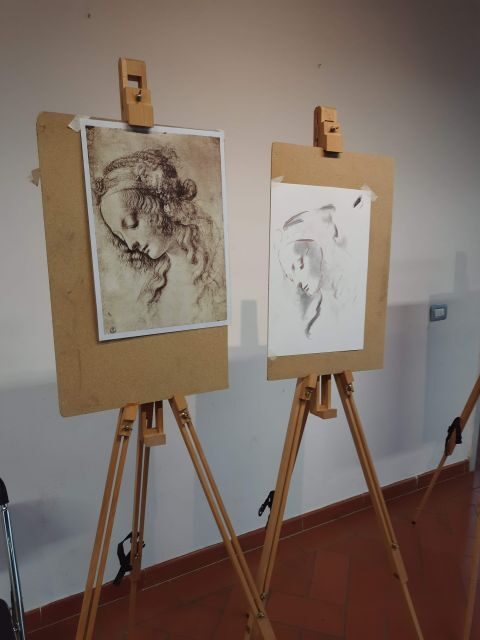
You meet at the glass door of Geko Art Studio. That sounds straightforward, but Florence can be a maze if you’re arriving on foot and juggling other plans.
One practical tip: build in a little extra time to locate the studio entrance. The atelier is a bit outside the very center, and it can be an easy walk if you’re comfortable with it. If you prefer not to walk, plan for a short ride so you arrive calm and ready to work.
If your schedule is tight, coordinate your exact time early after booking, since the start slots are agreed personally with the office.
- Tuscany Day Trip from Florence: Siena, San Gimignano, Pisa and Lunch at a Winery
★ 5.0 · 21,634 reviews


Price and value: what $182 gets you
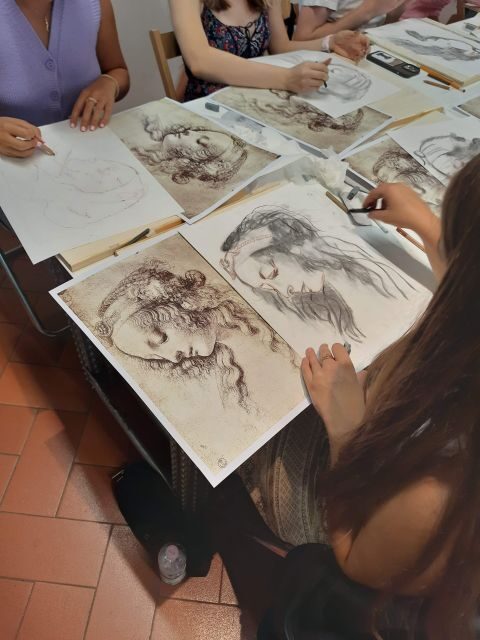
At $182 per person for a 3-hour drawing class, you’re paying for more than a nice activity. You’re paying for a structured, instructor-led session that includes the actual art materials and a workspace setup (easel, paper supports, and tools), plus a coffee break.
Here’s how to think about value:
- Materials are included, so you avoid extra costs and decision fatigue.
- Instruction is hands-on and step-by-step, which is where most drawing workshops justify their price.
- You leave with a finished Leonardo-style sketch, not just notes or photos.
Transport from and to the atelier isn’t included, and shipping costs also aren’t included. So if you’re planning to ship anything home, you’ll need to budget separately. But if you’re carrying your work back yourself, the base experience is fully set up for you.
Overall, this price makes sense when you want an active art lesson with real technique and real tools, in a setting designed for learning.
Who should book this Leonardo drawing workshop
This is a strong fit if you fall into any of these categories:
- You like hands-on experiences more than museum-style passive viewing.
- You want to learn how Old Masters think using traditional materials.
- You’re a beginner who wants guidance, or an intermediate artist who wants more structured practice with charcoal and value.
- You enjoy small, focused settings where the teacher can help you right when you need it.
It’s also a good choice if you’ve taken art classes before and feel like you’ve learned theory but not enough technique with specific media. This lesson is built around the materials and process, so you’re more likely to walk away with practical control you can reuse later.
If you’re only looking for a quick souvenir sketch or you hate being in a studio for three hours, then this may feel more intense than you want. But if you’re the type who enjoys slowing down and making marks, you’ll probably have a great time.
Tips to get great results fast (without stressing)
You’ll probably get the best results if you treat the session like a guided practice, not a test. A few simple approaches help a lot:
- Focus on process, not perfection. Leonardo studies are meant to be worked, corrected, and refined.
- Use each medium for a reason. When you switch to charcoal, think about tone and contrast, not just dark lines.
- Pay attention to teacher feedback immediately. If something feels off, ask right away so you adjust while it’s still early in the image.
- Take the coffee break seriously. Your eyes and hands both need a reset halfway through.
And don’t worry if you haven’t drawn in a long time. The class is set up so you can start from scratch and build confidence as you go. By the end, you’ll likely feel surprised at what your sketch can look like with the right materials and guidance.
Before you go: timing, languages, and accessibility
Instruction is offered in English, Italian, and Spanish, so you can choose the language that matches your comfort level. The group is private, and the atelier is wheelchair accessible, which matters if you want a straightforward, non-complicated experience.
Timing is flexible. After you book, the office contacts you via WhatsApp or email message as the date approaches so you can agree on a start time. Common windows are 10am–1pm and 2pm–5pm, and sometimes there’s availability in the evening (around 5:30pm–8:30pm). If you need urgent help picking the best time, you can write to the studio at [email protected].
Should you book Florence: Leonardo Drawings?
If you want a Florence experience that’s creative and actually productive, I’d book it. You get a focused 3-hour session with traditional sketch materials included, teacher guidance at every step, and a real output you can take home. It’s also beginner-friendly without feeling watered down.
I’d skip it only if you strongly prefer free-form wandering over structured learning, or if the studio’s location outside the busiest central streets is a dealbreaker for you. Otherwise, this is a smart way to connect with Renaissance art beyond photos and ticket lines—by doing the work yourself.
FAQ
How long is the Florence Leonardo Drawings experience?
It lasts 3 hours.
What’s included in the class?
Included are the drawing materials (easel, paper, pencil, sanguigne pencil, charcoal, eraser) and a coffee break with cookies, water, and juice.
What languages are offered?
Instruction is available in English, Italian, and Spanish.
Do I need to be an experienced artist?
No. The experience is suitable for all skill levels, and teachers guide you step by step. No previous drawing experience is required.
Where do I meet the group?
Meet at the glass door of Geko Art Studio.
Is the studio wheelchair accessible, and are there different time slots?
Yes, the studio is wheelchair accessible. After booking, you’ll coordinate your time with the office, with options commonly including 10am–1pm and 2pm–5pm, and sometimes an evening slot.
You Might Also Enjoy

More Tour Reviews in Florence
- Tuscany Day Trip from Florence: Siena, San Gimignano, Pisa and Lunch at a Winery
★ 5.0 · 21,634 reviews - The Best tour in Florence: Renaissance & Medici Tales – guided by a STORYTELLER
★ 5.0 · 12,316 reviews