REVIEW · FLORENCE
Express Florence and Medici Chapel and Michelangelo Tour
Book on GetYourGuide →Operated by LetzGo City Tours Europe · Bookable on GetYourGuide
Michelangelo in Florence starts with a statue and a lesson. This tour is a smart way to connect the dots between Medici power (the Medici family), the art they commissioned, and the landmarks you’ll see every postcard in town. I especially love how the route pairs big icons like Michelangelo’s David replica with “why it matters” context, and I like that you’ll get guided access to San Lorenzo and the Medici Chapel. The main drawback is simple: you walk a fair bit on uneven streets, so you’ll want comfortable shoes and a realistic pace.
You’ll also get a tight sweep of Florence’s top squares and bridges—Piazza della Signoria, Ponte Vecchio, and the Duomo area—without feeling lost. The optional upgrade adds priority timed entry so your visit to the most in-demand interiors feels less like a waiting game and more like time spent looking closely. If you’re expecting zero walking and lots of sitting, this isn’t that kind of tour.
In This Review
- Key highlights worth planning for
- Piazza della Signoria to Palazzo Vecchio: start where Florence flexes
- Orsanmichele, Piazza Repubblica, and the streets that connect the big sights
- Loggia dei Lanzi, the market energy, and the Fountain of the Boar
- Ponte Vecchio at walking pace: the 14th-century crossing
- Basilica of San Lorenzo: where 4th-century roots meet Renaissance art
- Medici Chapel: priority timed entry and what to watch for
- Duomo Cathedral area and the Baptistry Doors of Paradise
- Michelangelo’s Florence story: techniques, Medici patronage, and the David effect
- Practicalities: walking comfort, weather, and who this tour suits
- Price and value: what $58 buys you, plus when to upgrade
- Should you book this Michelangelo and Medici tour?
- FAQ
- How long is the tour?
- Where do I meet the guide?
- Is the tour guided in English?
- What does the optional upgrade include?
- What should I wear or bring?
- Is it suitable for wheelchair users or mobility issues?
Key highlights worth planning for
- Medici Chapel and San Lorenzo together: You see how political power turned into art you can still study today.
- Piazza della Signoria with David (replica): A fast reality check on how Michelangelo’s work shaped Florentine pride.
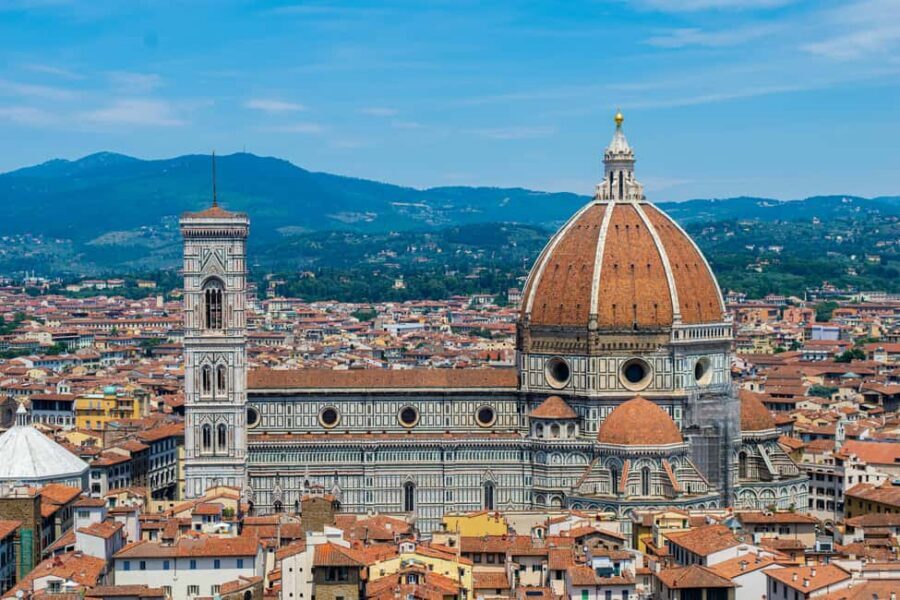
- Duomo Cathedral sights plus the Baptistry Doors of Paradise: Brunelleschi’s Dome/lantern angles and the bronze work tied to Michelangelo’s praise.
- Ponte Vecchio plus Il Porcellino: The bridge views are classic, and the Porcellino stop gives you a moment to slow down.
- Orsanmichele and the Gothic Loggia dei Lanzi area: Sculpture in stone, not just inside museums.
Piazza della Signoria to Palazzo Vecchio: start where Florence flexes
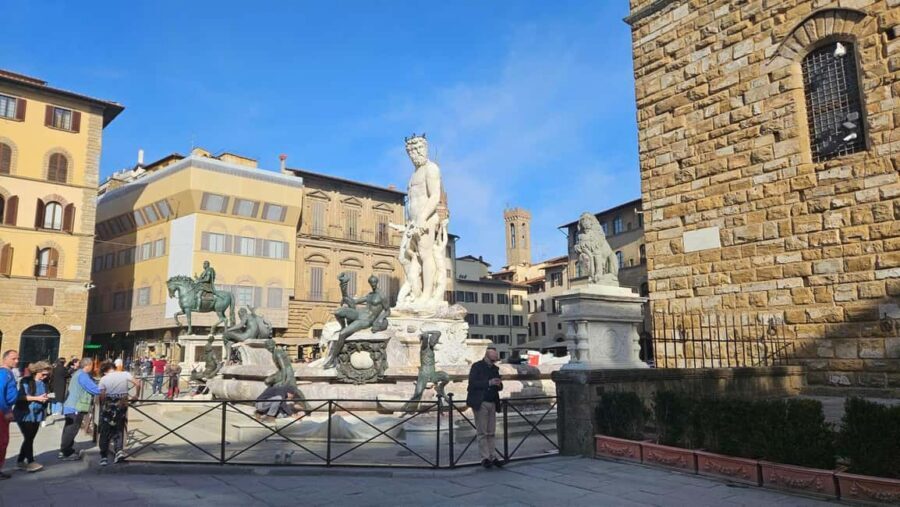
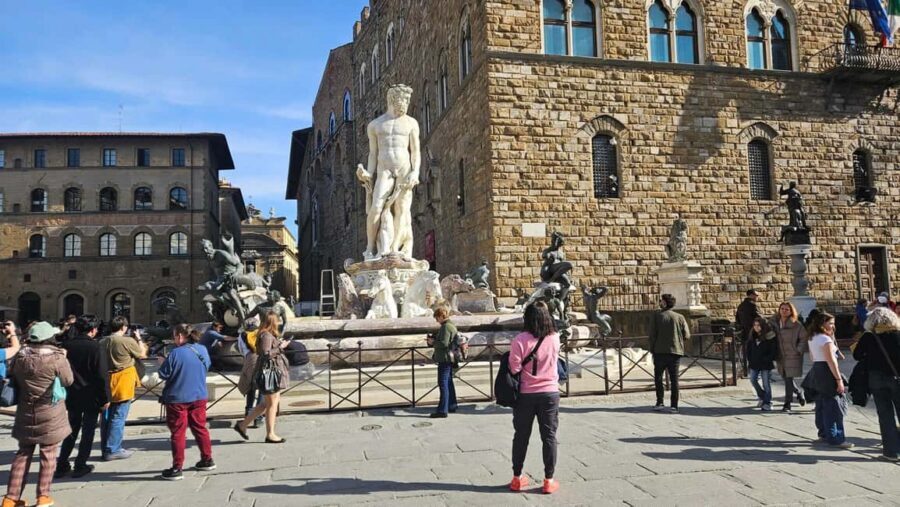
The tour begins at Piazza della Signoria, meeting the guide in front of the Fountain of Neptune, on the same side as the Statue of David. Show up 15 minutes early. Late arrivals can’t be accommodated, and you won’t be able to join once the group has moved into the sights.
From there, you’re in the thick of the old political heart of Florence. The first part is built around quick stops and short guided segments, so you get a focused orientation fast. You’ll look at the big-name spaces first, then use the stories your guide tells to make the buildings feel more understandable than just scenic.
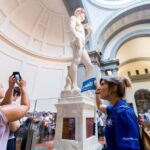
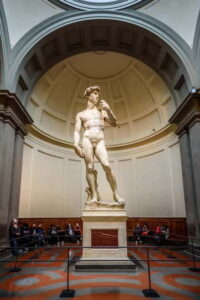
One of my favorite parts here is how the tour uses the David replica as a teaching tool. Even though it’s not the original, it’s placed where Michelangelo’s reputation was meant to be seen. When you know what to look for—pose, anatomy, and the way the figure communicates authority—the statue stop becomes more than a photo moment.
Right after that, you’ll spend time at Palazzo Vecchio (mainly outside). This matters because the palace isn’t a museum display you can take in from one angle. It’s the kind of building you notice in fragments as you walk through the center: windows, stonework, and the sheer presence of a seat of power. You’ll get just enough context to see it as part of Florence’s Renaissance engine, not only a backdrop.
You can also read our reviews of more tours and experiences in Florence.
- Tuscany Day Trip from Florence: Siena, San Gimignano, Pisa and Lunch at a Winery
★ 5.0 · 21,634 reviews
Orsanmichele, Piazza Repubblica, and the streets that connect the big sights
You’ll continue toward Orsanmichele, built in 1290. This is a stop I like because it’s a reminder that Florence’s Renaissance wasn’t invented from nothing. You’re seeing a medieval structure that still feels relevant because it’s tied to what the city kept valuing: craftsmanship, public space, and religious-art display.
The tour also works in Piazza della Repubblica for a quick look and guided note. Short stop or not, it helps you understand how Florence’s center shifts from plaza to street to plaza. Those transitions are where you start to feel the city’s geography, and that’s what makes the rest of your self-guided exploring easier later.
At several points, your guide points out Florence’s towers, including the D’Arnolfo Tower. Even if you don’t stare at towers for long, learning which skyline features belong to what buildings gives your brain a map. Once you’ve got the map, you stop feeling like you’re wandering and start feeling like you’re moving with purpose.
Loggia dei Lanzi, the market energy, and the Fountain of the Boar
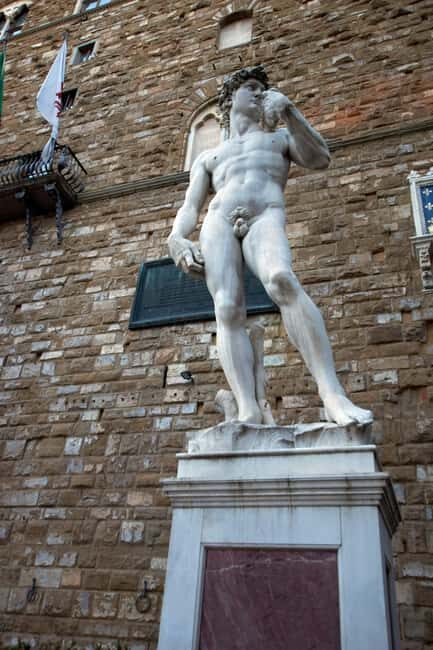
Another smart move in this tour is how it blends sculpture with street-level life. You’ll see the Loggia dei Lanzi—a Gothic-style building designed for public sculpture display. This is where you get to see artworks as part of the city’s daily routine, not locked behind museum rules.
Then the route connects to the craft and commerce side with Loge del Mercato and the Fountain of the Boar. These aren’t the kind of stops that sound exciting until you’re standing there. In practice, they break up the heavy-hitters and give you small “breathing-room” moments. You also pick up on the fact that Renaissance Florence wasn’t only churches and palaces. It was also workshops, markets, and a constant exchange of money, materials, and ideas.
There’s a particular benefit to this pacing: by the time you get to the big religious interiors, you’re not overloaded by monuments. Your eyes have just enough practice noticing details in sculpture and stone work, so your later interior visits land harder.
Ponte Vecchio at walking pace: the 14th-century crossing
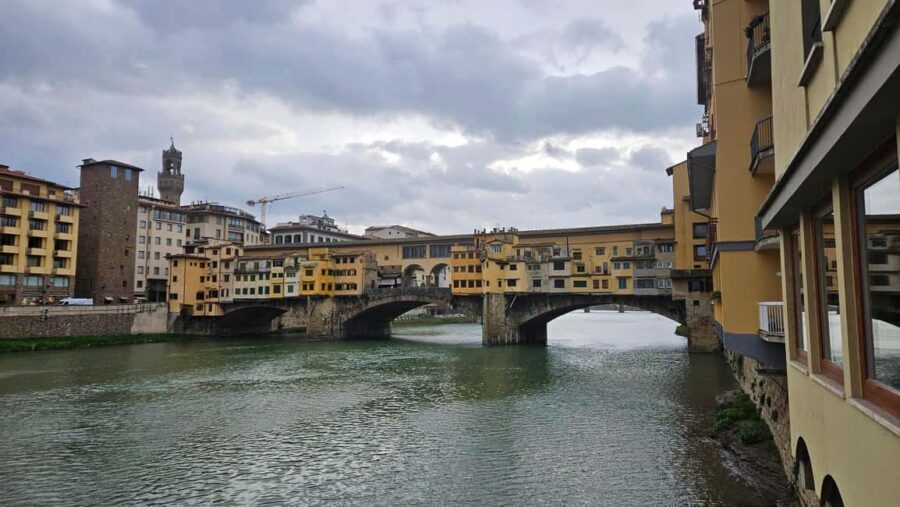
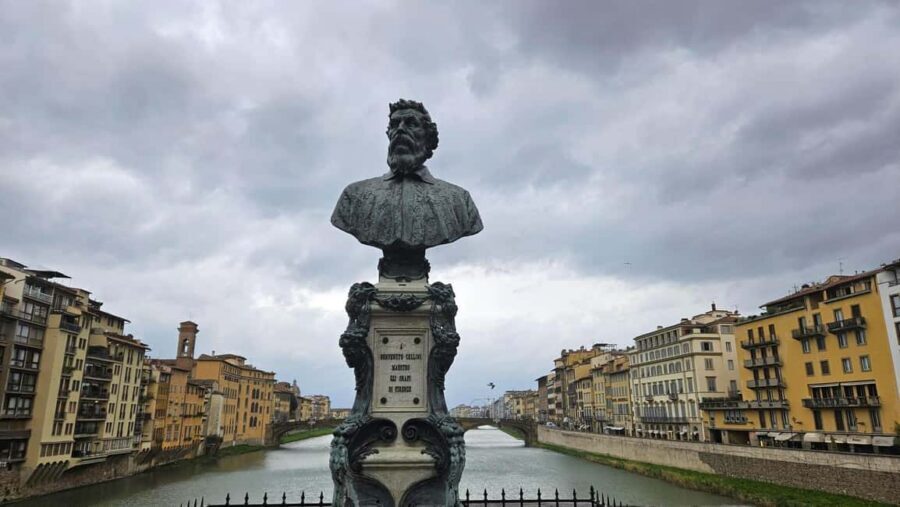
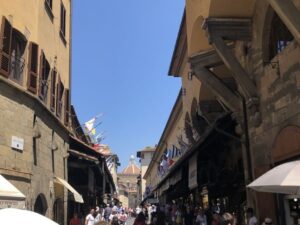
Then comes Ponte Vecchio, built in the 14th century. It’s the kind of place you think you already know from photos. But seeing it as part of a walking route changes things. You notice how the bridge sits in the center of life, not off to the side like a “look but don’t touch” attraction.
The tour also gives you time to watch the bridge from the angles you naturally reach while walking. That’s a big deal because Ponte Vecchio photographs best when you understand where you’re standing and what lines lead you toward the next view. A guide helps here because you don’t just get a photo stop—you get a route that makes the views make sense.
Right around this area, you’ll also stop for Il Porcellino Statue. It’s listed as a photo stop with guided time, which is perfect. You can take your picture, then your guide’s commentary gives you a reason to care beyond the surface. Small moments like this are exactly what make a short tour feel memorable.
And you’ll pass through Via Capaccio, described as a charming Roman street. This kind of street walk helps you reset your pace before you step into the major interiors.
Basilica of San Lorenzo: where 4th-century roots meet Renaissance art
When you reach the Basilica of San Lorenzo, you’re entering a complex that carries time layers. The tour highlights the San Lorenzo Chapel’s 4th-century origins, then shifts into the Renaissance collection you can actually study inside. That contrast is key. Renaissance Florence loved new styles, but it also loved building on what was already sacred and established.
Inside, you’ll get a guided visit focused on what the Medici project changed and why that mattered. You’re not just looking at pretty rooms. You’re learning how patrons used architecture and chapel spaces to communicate status and belief.
Even the timing helps. The tour keeps the San Lorenzo portion long enough for you to notice key visual cues, but short enough that you don’t feel dragged through every corner. That balance is worth paying for, because Florence can chew up time fast when you’re deciding on your own where to spend it.
- Tuscany Day Trip from Florence: Siena, San Gimignano, Pisa and Lunch at a Winery
★ 5.0 · 21,634 reviews

Medici Chapel: priority timed entry and what to watch for
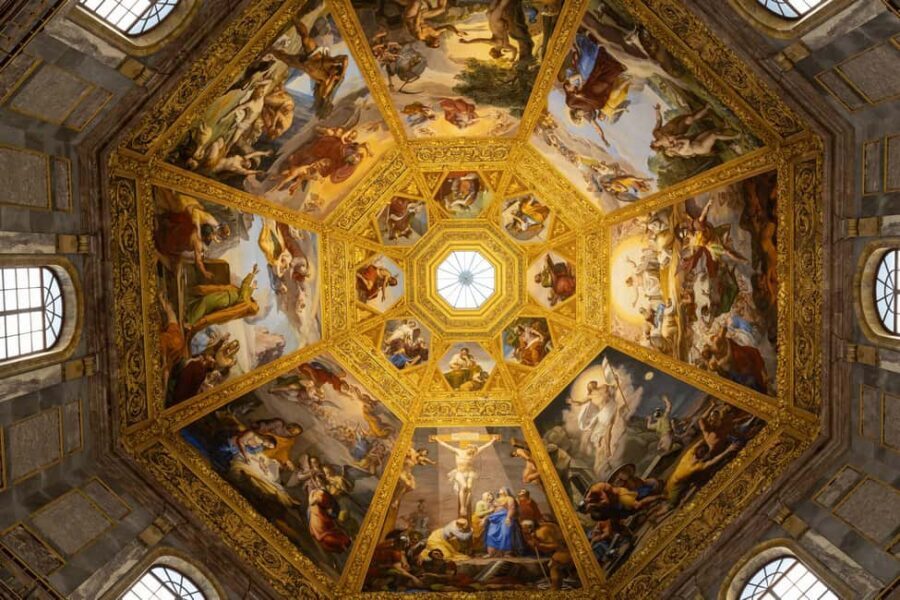
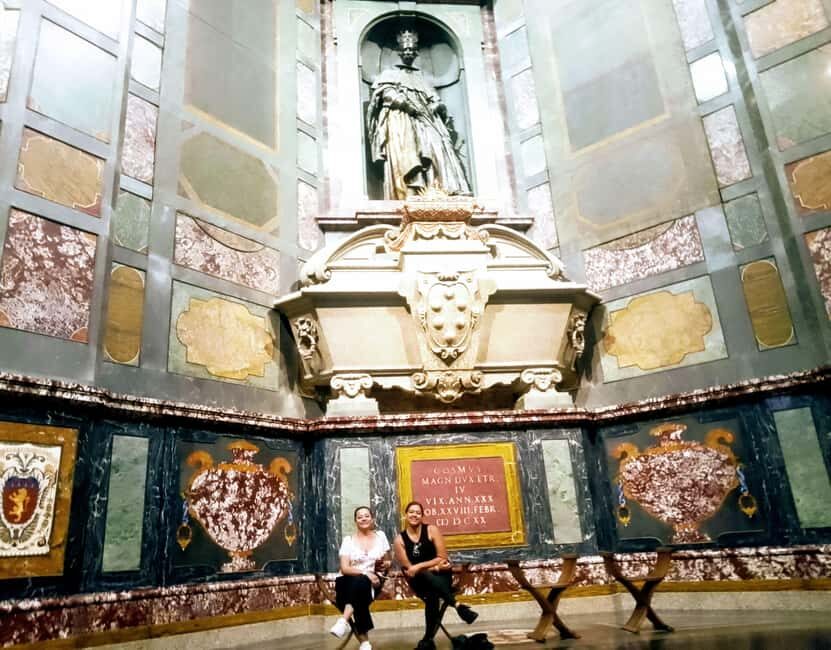
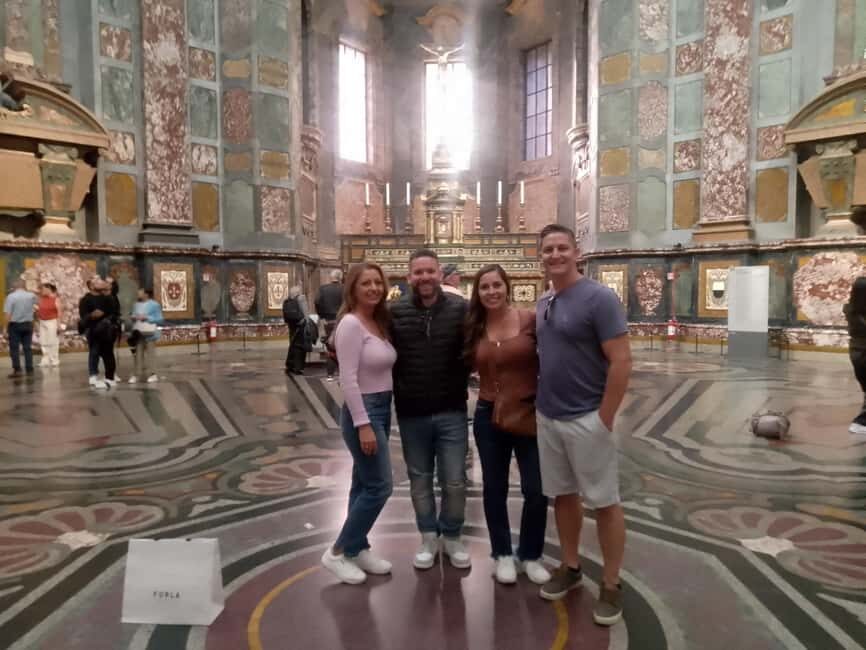
The optional upgrade is the part that can make a big difference: priority timed entry to the Medici Chapel and the Church of San Lorenzo. If you choose it, your visit is planned with timed entrances, and the Medici Chapel entry is included for upgraded guests.
This is where you really feel the story of power meeting craft. The Medici weren’t only collectors. They were system-builders—figuring out how art and space could strengthen their political role and influence. Your guide’s job here is to point out the connections so the chapel doesn’t become just another ornate interior.
In the time you have (the Medici Chapel stop is listed as guided time), focus on what changes your understanding: how forms repeat, how memorial and religious space overlap, and how the overall effect is designed. When someone explains the patronage angle clearly, you start seeing the chapel as a statement, not a shrine you happen to walk past.
If you’re someone who likes to understand the “why” behind what you see, this is the strongest segment of the tour. It’s also the segment most worth prioritizing on your schedule, because these interiors can be harder to manage on your own.
Duomo Cathedral area and the Baptistry Doors of Paradise
You’ll also see the Duomo Cathedral area, including the 13th-century church and the famous Brunelleschi Dome and Lantern. Even if you don’t spend all day in the cathedral zone, this tour gives you the right context for what makes the Dome so important. It’s not only architecture; it’s a symbol of technical ambition and a new kind of confidence in design.
You’ll also view the Baptistry Doors of Paradise, noted as named by Michelangelo. This detail is easy to miss if you’re just scanning for the next “major photo.” Having the Doors paired with Michelangelo’s name helps you understand why certain art objects became reputation-machines in Renaissance Florence.
The value here is that your guide ties these sights back to Michelangelo’s world. You start to see Florence as a connected network of patronage, craftsmanship, and artistic fame rather than a collection of unrelated landmarks.
Michelangelo’s Florence story: techniques, Medici patronage, and the David effect
A major reason this tour works is that it doesn’t treat Michelangelo like a standalone brand. You’ll learn about Michelangelo’s early years in Florence and how his career developed under the patronage of the powerful Medici family.
That patronage angle matters because Michelangelo’s breakthroughs didn’t happen in a vacuum. When you understand the Medici influence, you notice that the city’s biggest art moves are tied to people who funded, commissioned, and protected artists.
Your guide also talks about how Michelangelo’s techniques changed how artists and sculptors approached their work. Even if you already know the basics, you’ll likely pick up a fresh way to look at sculpture: not only the final statue, but the mental approach behind the figure—how form, proportion, and expression are engineered.
And yes, the David replica in Piazza della Signoria helps reinforce that. The tour uses it like a checkpoint: if you can connect that statue to what Michelangelo did to redefine sculpture, you’re absorbing the real lesson.
Practicalities: walking comfort, weather, and who this tour suits
This is a walking tour with uneven surfaces, cobblestones, hills, inclines, declines, and stairs. Bring comfortable shoes. I’d rather you wear something that feels a little boring on the day than something stylish that hurts by stop two.
The tour operates in all weather, so bring weather-appropriate clothing. Also note the common rules: no oversize luggage, no baby strollers, and no large bags. Mobility scooters and wheelchairs aren’t recommended, and the tour is described as not suitable for wheelchair users and for people with back problems.
In terms of timing, you’re looking at 1.5 to 2.5 hours. The itinerary has a short guided rhythm—photo stops and guided segments that keep the tour moving, especially in the central areas around the major landmarks.
If this is your first day in Florence, this tour is a strong way to get your bearings fast. You get a compact map of the historic core and a story framework that makes later wandering much easier. If you already know Florence well and want deep museum time, you might prefer a longer, more museum-heavy plan. But for most people, the balance here is just right.
Price and value: what $58 buys you, plus when to upgrade
At $58 per person for a 1.5 to 2.5 hour guided walk, you’re paying for two things: a local English-speaking guide and access to time-saving built-in structure around high-demand sites. In Florence, guide time is often the difference between seeing a lot and understanding what you’re actually looking at.
You also have an optional upgrade with priority timed entry tied to the San Lorenzo and Medici Chapel experience. That upgrade is worth thinking about if:
- you want the Medici Chapel portion handled with planned timing, not random luck
- you care a lot about patronage and Renaissance art in a focused interior setting
If you skip the upgrade, you still get a meaningful guided circuit across major squares and iconic landmarks. But if you’re the type who hates waiting in lines and wants the chapel visit to feel smooth, the upgrade directly targets that.
Should you book this Michelangelo and Medici tour?
Book it if you want a short, well-paced Florence walking experience that connects Michelangelo, the Medici family, and key landmarks like Piazza della Signoria, Ponte Vecchio, and San Lorenzo. It’s also a good choice when it’s your first time in Florence and you want to feel oriented quickly, not just photographed at.
Skip it if you need lots of seated time, have significant mobility limits, or you’re hoping for a museum marathon. This is about smart walking plus guided interpretation, with the Medici Chapel interior as the emotional and educational peak.
FAQ
How long is the tour?
The duration is 1.5 to 2.5 hours. If you choose the timed-entry upgrade, the tour is listed as 2.5 hours.
Where do I meet the guide?
You meet in Piazza della Signoria, 50122, Florence, specifically in front of the Fountain of Neptune, on the same side as the Statue of David. Arrive 15 minutes before departure.
Is the tour guided in English?
Yes. It includes a live tour guide who speaks English.
What does the optional upgrade include?
The optional upgrade provides priority timed entrance tickets to the Church of San Lorenzo and the Medici Chapel. Entry tickets to the Medici Chapel are included for guests who opted for the upgrade.
What should I wear or bring?
Wear comfortable shoes and bring weather-appropriate clothing. The tour involves uneven surfaces, cobblestones, and stairs.
Is it suitable for wheelchair users or mobility issues?
No. The tour is described as not suitable for wheelchair users and wheelchairs or mobility scooters are not recommended.
You Might Also Enjoy

More Tours in Florence
- The Best tour in Florence: Renaissance & Medici Tales – guided by a STORYTELLER
★ 5.0 · 12,316 reviews
More Tour Reviews in Florence
- Tuscany Day Trip from Florence: Siena, San Gimignano, Pisa and Lunch at a Winery
★ 5.0 · 21,634 reviews - The Best tour in Florence: Renaissance & Medici Tales – guided by a STORYTELLER
★ 5.0 · 12,316 reviews