REVIEW · FLORENCE
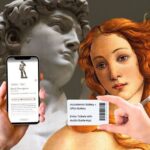
Florence: Smartphone self guided Tour
Book on GetYourGuide →Operated by ITGUIDES · Bookable on GetYourGuide
Florence, in your pocket and on your schedule. I love the independence this gives you—no tour guide herding you along. I also love the geo-routing in the app, which helps you keep moving through Florence without constantly checking your map. One consideration: the audio is intentionally short, and a big share of it is aimed at the Cathedral area, so if you want long, story-driven narration (or lots of exterior-focused talking), you may find it less satisfying.
This is a 6-hour walk built around major sights: the Duomo complex, Baptistery, Giotto’s bell tower, and then a chain of Renaissance landmarks across town. The experience runs through the Itguides smartphone app, and you can download the content ahead so you are not stuck hunting for signal in the middle of the historic center.
I like that there is no meeting point—you can start where you want, in the order that works for your day. That said, tickets are not included, so you will want to handle access on your own when a church or museum requires it.
In This Review
- Key points to know before you go
- Smartphone Geo-Routing: How This 6-Hour Florence Walk Works
- Itguides Audio Style: Short Lessons That Move at City Speed
- Duomo, Battistery, and Giotto Tower: Following Florence’s Visual Center
- Piazza della Signoria and Loggia della Signoria: Power and Art at Street Level
- Palazzo Strozzi: Renaissance Craft You Notice When You Slow Down
- Santa Maria Novella to San Lorenzo and the New Sagresty: A Church-to-Church Thread
- Santa Croce and the Cappelle Medicee: Florence’s Memory in Stone
- Nuovo Teatro dell’Opera delle Cascine: Where the Route Turns Toward Modern Florence
- Price and Real Value at $4.70
- Who Should Choose This Tour—and Who Might Be Frustrated
- Practical Tips to Make the App Work Smoothly
- Should You Book This Florence Smartphone Audio Tour?
- FAQ
- Is there a meeting point for this Florence smartphone tour?
- How long is the Florence smartphone self-guided tour?
- What does the ticket situation look like?
- What languages are available in the app?
- Do I need Wi‑Fi or signal to use the audio?
- Is the tour wheelchair accessible?
Key points to know before you go
- Start anywhere, no meeting point: self-guided means you set the pace and your starting spot.
- Geo-routing in the app helps you follow the walking flow without constant map juggling.
- 35+ short audio stops (each under about 2 minutes) keep the tour moving.
- Cathedral of Santa Maria del Fiore is the centerpiece with more than half the audio.
- Big-hit sights on one loop: Duomo, Battistero, Piazza della Signoria, Palazzo Strozzi, San Lorenzo, Santa Croce, Medici Chapels.
Smartphone Geo-Routing: How This 6-Hour Florence Walk Works
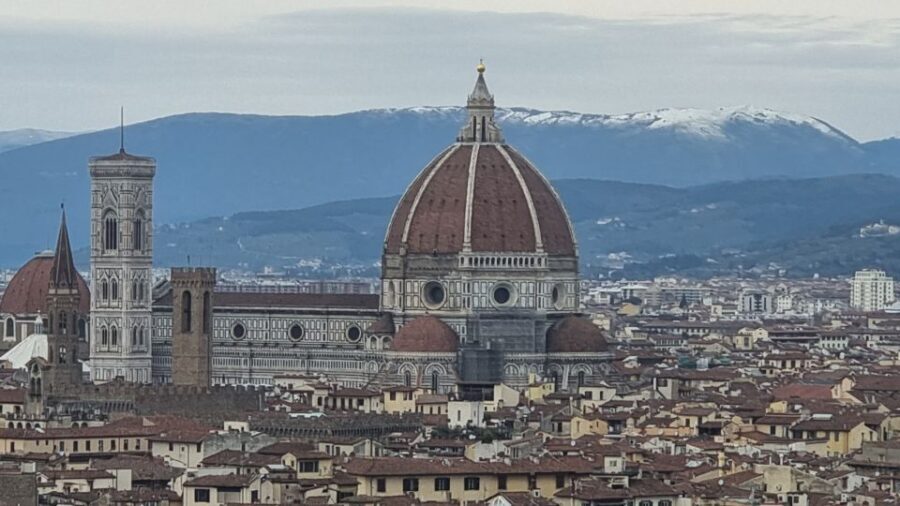
The best way to think about this tour is as a self-guided “audio checklist” that also helps you physically find your next step. You are not booking a bus, not standing in a group, and not waiting for someone else to finish reading captions. You are simply walking, pressing play, and letting the app guide your timing.
The tour is designed for a practical 6-hour window. That does not mean you must finish everything in exactly six hours, but it does shape the structure: lots of key stops, lots of fast explanations, and a route that follows Florence’s main “geometry”—starting at the Dome area and moving outward across the Renaissance core.
The app (Itguides) also includes a digital map. Between the map and geo-routing, you usually know what direction you should be walking next. For me, that matters in Florence because streets can feel like a puzzle when you are carrying bags, dodging scooters, and trying to keep your bearings. This kind of routing turns that puzzle into a stroll.
One more practical note: you can listen in multiple languages—Italian, English, French, and German. That is useful if your group has mixed language needs, or if you just want the audio tone that best fits you.
You can also read our reviews of more guided tours in Florence
- The Best tour in Florence: Renaissance & Medici Tales – guided by a STORYTELLER
★ 5.0 · 12,316 reviews
Itguides Audio Style: Short Lessons That Move at City Speed
This is not a deep lecture tour. It is a fast one. Your audio consists of more than 35 descriptions, and they are kept under about 2 minutes each. The idea is simple: give you the useful facts for each stop without forcing you to sit still for a long time.
Here’s why that can be great value. Florence has a lot of “look, then move” moments. You want enough context to understand what you are seeing—why the building matters, who designed what, and what makes it special—then you want to keep walking while the city is still in front of you.
But here is where expectations must match reality. A portion of the audio focuses on interiors of churches, especially in the Cathedral zone. If your plan is mostly outside-only sightseeing—quick looks from the piazzas and street corners—you might find some tracks less relevant to the angles you can access. In other words, this tour works best when you are willing to step inside at least some stops, or at minimum stand in the right place to appreciate the descriptions.
Also, the Cathedral of Santa Maria del Fiore gets special attention. More than half of the audios are connected to it. That means your listening time is front-loaded and concentrated in the Duomo complex. If you are the kind of traveler who wants a balanced mix—equal attention to everything—it can feel tilted. If you are Duomo-obsessed, it will feel like the app was built for you.
Duomo, Battistery, and Giotto Tower: Following Florence’s Visual Center
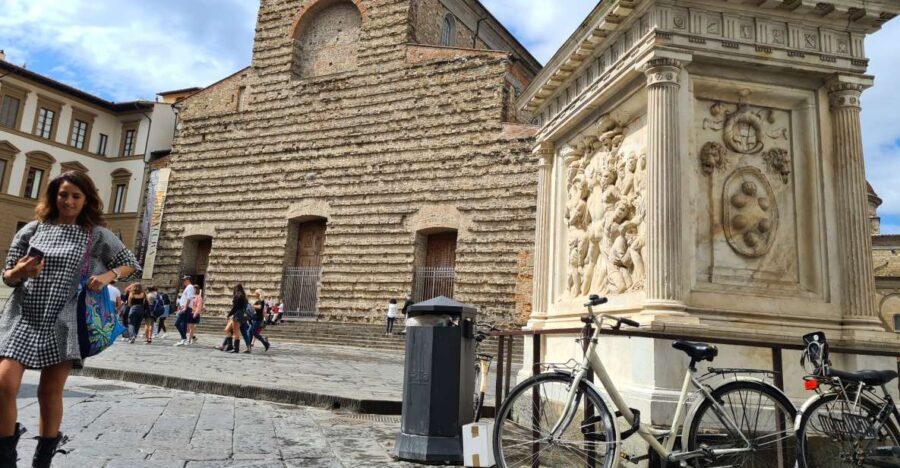
The heart of the route is the Cathedral complex sequence: the Basilica of Santa Maria del Fiore, the Battistero (Battistero), and then the Belfry of Giotto. The tour describes it as following the city’s “geometrical soul,” and you can feel that once you are in the area.
Why this works as a walking audio experience: these spaces connect in ways that make it easy to understand scale and design. When you listen while you move, you start seeing patterns—how the Dome anchors the skyline, how the Baptistery complements the civic-religious center, and how Giotto’s bell tower adds vertical drama.
At the same time, this is exactly where ticketing comes into play. The audio is included, but the access to specific interiors is not. So you will need to decide what you want to do in the moment:
- If you plan to go inside the big spaces, bring your time and keep your feet ready.
- If you are limited to exterior viewing, pick your listening spots carefully so the audio is still meaningful from where you stand.
One more “set yourself up for success” detail: download your audio content before you start. Churches and central streets can be patchy for signal. The tour explicitly encourages downloading the contents with a solid cellular connection or Wi‑Fi, so do that first. Then you are free to roam without worrying about buffering in the most important area of your day.
Piazza della Signoria and Loggia della Signoria: Power and Art at Street Level
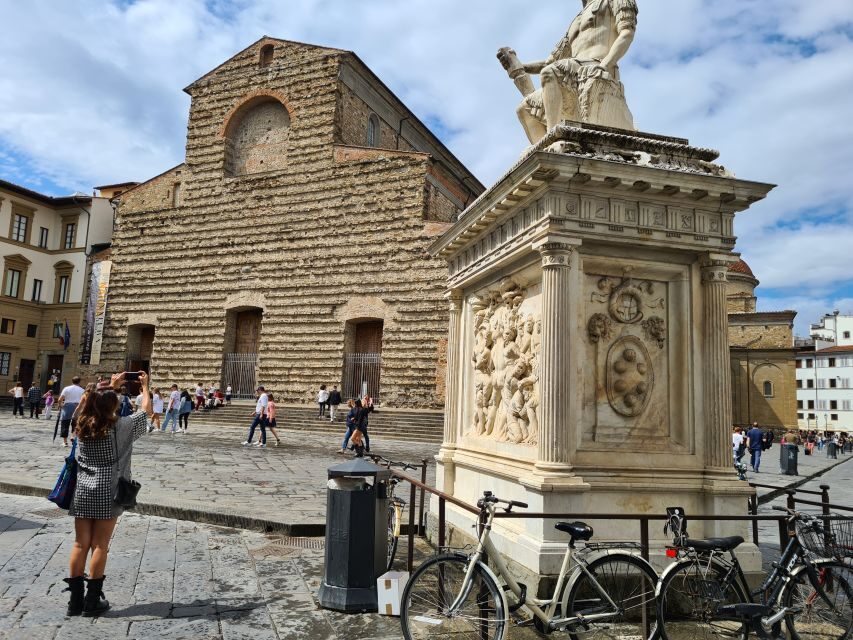
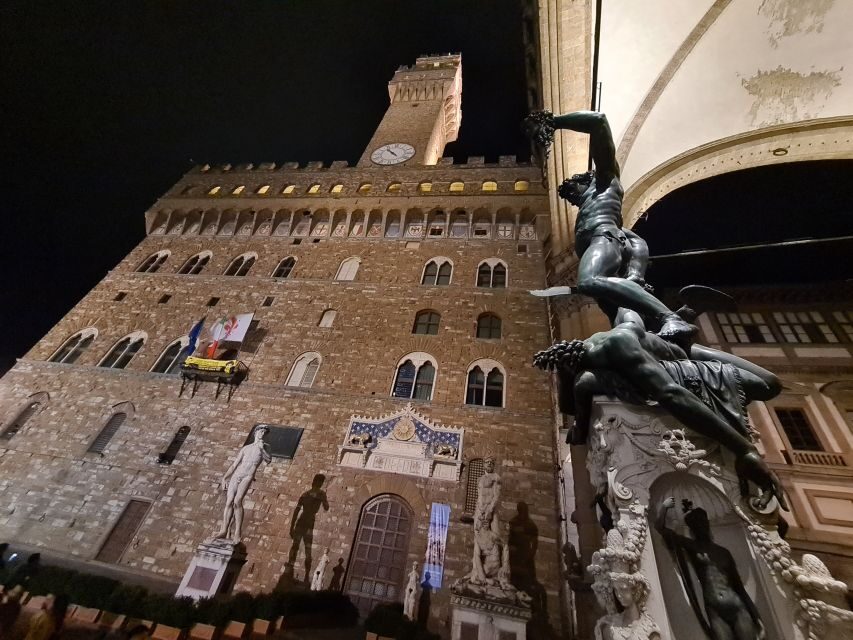
After the Duomo core, the route moves you toward Florence’s civic “headline” square: Piazza della Signoria and the Loggia della Signoria. This is where the city shifts from spiritual gravity to civic swagger.
This stop is valuable because it changes the kind of learning you are doing. At the Cathedral, you are often thinking about sacred design and landmark engineering. At Piazza della Signoria, you are thinking about public space—how Renaissance Florence expressed power in stone, how art and politics mixed in everyday life.
Even if you do not go inside museums at every stop, this kind of plaza is made for audio. You can stand, listen, and look around at the surrounding landmarks. Then you move again before the crowd energy gets too thick.
One practical tip: take a slower lap here. The tour is time-efficient, but you do not have to be. If you rush through this square, you miss the point of switching gears. Give yourself a minute or two to watch how people use the space—meeting, photographing, lingering. That helps the audio make more sense as you walk onward.
Palazzo Strozzi: Renaissance Craft You Notice When You Slow Down
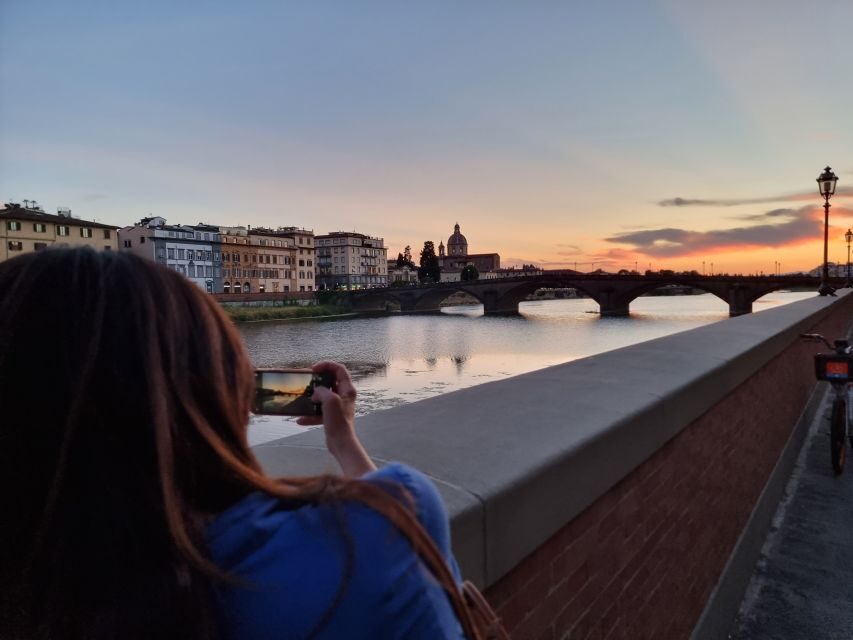
From the Signoria area, you reach Palazzo Strozzi. This is one of those Florence buildings you tend to remember even if you do not know everything about it on day one, because it visually holds its ground.
The value of having audio at a stop like Palazzo Strozzi is that it gives you a framework. You learn what you are looking at instead of just collecting photos. And since the tour is designed for a walking pace, you can enjoy the facade and then continue when your feet say it’s time.
A small caution, based on the tour’s overall format: because many audio tracks are short and focused, you may want to spend extra time at the stops that genuinely grab you. If a building is speaking to you visually, let it earn longer attention than the app’s typical “under 2 minutes” rhythm.
You can also read our reviews of more tours and experiences in Florence


Santa Maria Novella to San Lorenzo and the New Sagresty: A Church-to-Church Thread
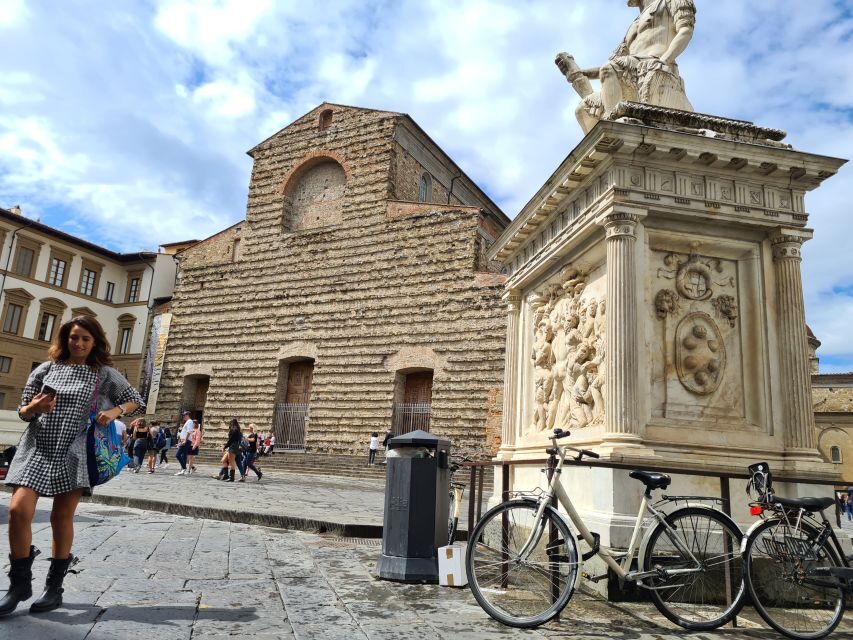
Next on the route are major church landmarks: Santa Maria Novella, then Basilica di San Lorenzo and the new Sagresty. This part of the loop matters because it builds a continuous theme: Renaissance Florence as a city of religious architecture, artistic patronage, and famous names.
If you enjoy history through architecture (not just through dates), this section can feel satisfying. The audio is structured to keep you moving, but the content is aimed at giving you the key takeaways as you pass from one landmark to the next.
Here’s a reality check: church areas can be crowded, and interior access can vary. Since tickets are not included in the tour, you should treat each interior as a choice you make based on what is practical that day. You might not be able to do every interior fully, but you can still use the audio tracks to understand what you are seeing from wherever access allows.
Also, if you strongly prefer exterior-only viewing, this is the area where you may feel the audio is most “interior-oriented.” That does not make the tour bad—it just changes how well it matches your style of sightseeing.
Santa Croce and the Cappelle Medicee: Florence’s Memory in Stone
Then you move to Santa Croce and the Cappelle medicee. This is where Florence shifts again—from architectural focus to cultural memory.
Santa Croce is a famous name for a reason, and the Medici Chapels connect directly to the people who shaped Florence’s power and artistic direction. Even with short audio tracks, these stops can give you a sense of how art and identity got woven together in this city.
Because the tour is designed for a short overall timeline, it will not turn into an hour-long museum visit. Instead, it gives you a set of clear reference points. That’s often exactly what you want on a first trip: enough information to understand what you are looking at, so you can decide what deserves a second pass later.
Nuovo Teatro dell’Opera delle Cascine: Where the Route Turns Toward Modern Florence
One of the more interesting elements of the itinerary is where it ends up: Nuovo Teatro dell’Opera delle Cascine. The tour frames this as a sign of openness to the world and modernity.
That matters more than it might sound. Many Florence tours treat the city like it is frozen in the Renaissance. Ending with a modern cultural venue is a subtle reminder that Florence still makes art now—not just centuries ago.
If you find yourself a bit “overwhelmed by churches,” this section can feel like relief. It also offers a nice finishing point: you stop walking your past entirely and start feeling the city as a living place again.
Price and Real Value at $4.70
At $4.70 per person for a 6-hour self-guided experience, the value is genuinely hard to ignore—especially because you get more than 35 audio descriptions and a digital map. You are essentially paying for guidance and context, not for paid entry tickets.
Two things to keep in mind so this number stays meaningful:
- Tickets are not included. If you expect the price to cover entry to every interior, adjust that assumption now.
- Audio depth is intentionally short. You are not buying long-form storytelling. You are buying fast orientation and key facts.
When this is a good deal: if you are the type who likes to walk between sights anyway, and you want audio that helps you understand what you are seeing without extra cost. This is also a strong option if your schedule is flexible, because it is self-start and self-paced.
When it is not a deal: if you want a guided interpretation that you cannot miss, or if you expect detailed narration for every single stop, longer than the app’s short format.
Who Should Choose This Tour—and Who Might Be Frustrated
This tour fits best when you want independence plus quick context.
You will probably like it if:
- you want to walk Florence at your pace and not match a group schedule
- you value geo-routing so navigation feels easier
- you like concise audio that keeps you moving
- you are especially interested in the Cathedral complex area
You might want to skip or think twice if:
- you expect long, multi-paragraph storytelling at every stop
- you prefer listening primarily for exterior views and have limited interior access
- you want a perfectly balanced audio split across all landmarks (the Duomo gets more than half)
Also, the tour’s overall rating is on the mixed side—around 3.3 with 55 ratings. That usually means the experience lands well for some travelers and frustrates others, mostly because of audio depth and how interior-focused the content can feel.
Practical Tips to Make the App Work Smoothly
A self-guided phone tour can be brilliant—or annoying—depending on setup. Do these and you will get a better day:
- Download the audio content before you start. The tour explicitly recommends downloading with good cellular signal or Wi‑Fi.
- Charge your phone fully and carry a power bank if you rely heavily on GPS.
- Use the app’s route like a skeleton, not like a ruler. If you see something you want to linger at, pause the audio and enjoy the stop.
- Plan for ticket reality. Since tickets are not included, decide on your interior priorities early, especially around the Cathedral area.
One more mindset shift: this is not a “sit and listen” tour. It works best when you treat the audio as commentary while you walk, not as a replacement for looking closely yourself.
Should You Book This Florence Smartphone Audio Tour?
Yes, with the right expectations.
Book it if you want a low-cost way to get oriented fast, walk between Florence’s top landmarks, and get short, useful explanations—especially around the Duomo complex. The lack of a meeting point and the ability to start wherever you want are real perks in a city where your best route depends on crowds and weather.
Hold off if you need long narrative and deep interior commentary at every stop, or if your plan is mostly exterior viewing. In that case, you may feel the audio moves too quickly and focuses too much on specific interiors.
If you match the format—short audio, lots of walking, key Florence sights—this $4.70 experience can be an excellent way to turn your own pace into something smarter.
FAQ
Is there a meeting point for this Florence smartphone tour?
No. It is a self audio tour that does not require a meeting point. You start where you want.
How long is the Florence smartphone self-guided tour?
The duration is 6 hours.
What does the ticket situation look like?
Tickets are not included, so you will need to arrange entry yourself if a stop requires it.
What languages are available in the app?
The audio guide is available in Italian, English, French, and German.
Do I need Wi‑Fi or signal to use the audio?
The guidance is to download all contents before you go using good cellular signal or Wi‑Fi, so you can rely on the audio once you start the walk.
Is the tour wheelchair accessible?
Yes, the experience is described as wheelchair accessible.
You Might Also Enjoy


More Guided Tours in Florence
- The Best tour in Florence: Renaissance & Medici Tales – guided by a STORYTELLER
★ 5.0 · 12,316 reviews

More Tours in Florence
- The Best tour in Florence: Renaissance & Medici Tales – guided by a STORYTELLER
★ 5.0 · 12,316 reviews



More Tour Reviews in Florence
- Tuscany Day Trip from Florence: Siena, San Gimignano, Pisa and Lunch at a Winery
★ 5.0 · 21,634 reviews - The Best tour in Florence: Renaissance & Medici Tales – guided by a STORYTELLER
★ 5.0 · 12,316 reviews