REVIEW · FLORENCE
Florence: Uffizi Gallery Private Treasure Hunt for Families
Book on GetYourGuide →Operated by Florence Tours by Made of Tuscany · Bookable on GetYourGuide
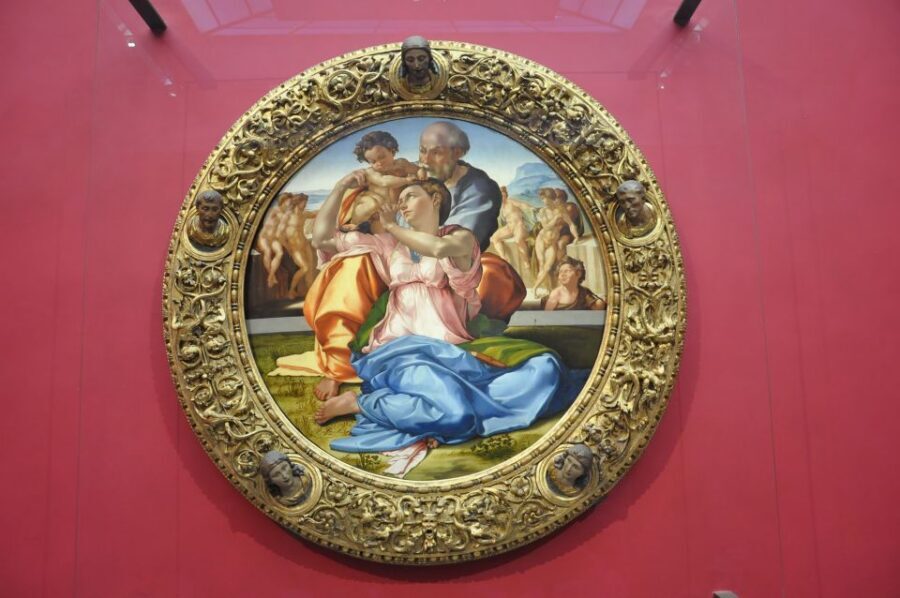
Florence’s Uffizi turns into a game. This private treasure hunt brings you face-to-face with big Renaissance names like Leonardo, Botticelli, and Michelangelo, but through clues and symbol spotting instead of a lecture. I love the family-focused guidance that keeps kids engaged, and I love the hands-on hunt for details like hidden sculptures connected to Michelangelo’s Tondo Doni.
One thing to plan around: the first Sunday of each month has free entry, but because tickets can’t be reserved ahead of time, entry isn’t guaranteed.
In This Review
- Key highlights worth planning for
- A Uffizi tour built for families, not just museum fans
- Starting at Fontana del Nettuno: a lively meet point with instant Florence vibes
- Piazza della Signoria: where the art world starts to make sense
- Loggia dei Lanzi: sculpture lessons in an easier setting
- Entering the Uffizi Gallery with a treasure hunt in hand
- The Michelangelo Tondo Doni hunt: what you’re really practicing
- Caravaggio’s Medusa and the power of noticing the scary parts
- Botticelli Annunciation: one pillow, a whole conversation
- Dogs, cats, flowers, chairs: symbolism you can spot
- Medici commissions up close: why the context matters
- Earphones, private group flow, and why it helps with kids
- The family booklet and the portrait: turning learning into a souvenir
- Time on your side: how a 3-hour format works in reality
- Price and value: what $286.04 per person is paying for
- Who should book this Uffizi family treasure hunt
- Should you book this Uffizi family treasure hunt?
- FAQ
- How long is the Uffizi Gallery private treasure hunt for families?
- How much does it cost per person?
- Where does the tour start and end?
- What’s included in the tour price?
- Is this a private group tour?
- What languages are available for the live guide?
- Is the tour wheelchair accessible?
- Is the Uffizi free on the first Sunday of the month?
- What do I need to bring?
Key highlights worth planning for
- Treasure hunt mechanics: you’re actively searching for symbols and details, not just watching.
- Michelangelo’s Tondo Doni: a specific puzzle hunt tied to hidden sculptures.
- Medici commissions up close: you’ll be nudged to notice what the Medici family commissioned and how that shows up in the works.
- Caravaggio’s Medusa clue: you’ll look for what lurks inside Medusa’s mouth.
- Botticelli’s Annunciation detail: the guide prompts you to think about why Mary’s bed has only one pillow.
- End-of-tour family portrait: a keepsake to match the booklet you fill out during the hunt.
A Uffizi tour built for families, not just museum fans
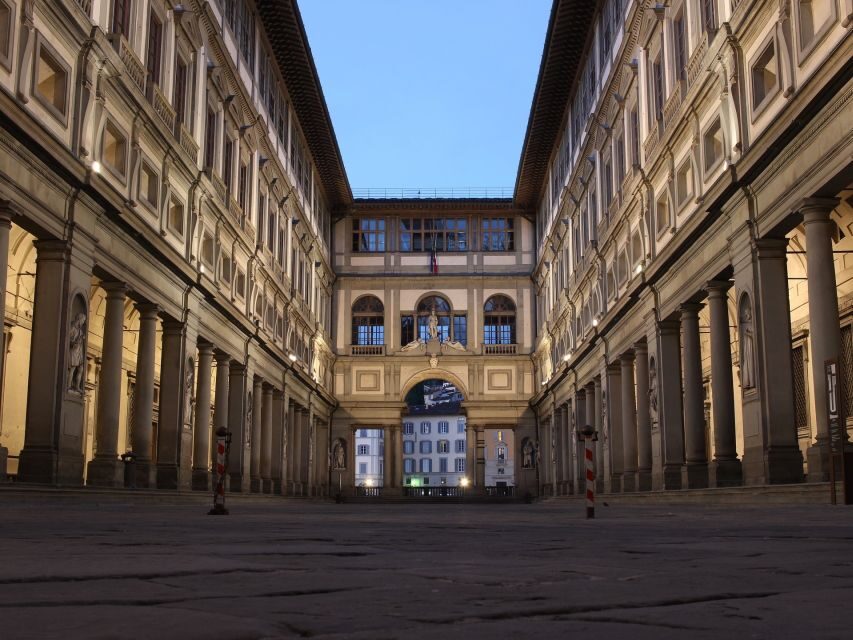
The Uffizi can be intense. This experience takes that same collection and turns it into something your kids can actually follow. The format is simple: you get a guide, a mission booklet, and a set of art prompts that turn famous paintings into a puzzle.
I also like that the guide isn’t just teaching facts. The tour leans into myths and legends, so the stories behind the paintings feel less like homework and more like Florence gossip from the Renaissance.
And yes, it still covers the heavy hitters: Leonardo, Botticelli, Michelangelo, plus works connected to the Medici family. You get the big names without the usual feeling that everyone is waiting for the adults to finish reading.
You can also read our reviews of more private tours in Florence


Starting at Fontana del Nettuno: a lively meet point with instant Florence vibes
Your tour starts at the Neptune Fountain (Fontana del Nettuno). It’s a practical meeting point, and it also gives you a quick visual anchor for the day. Before you even enter the Uffizi, you’re already in Florence’s public-art world, where sculptures and symbols sit in the open.
From there, the plan nudges you toward the political and artistic heart of the city. That matters because the Uffizi isn’t floating in isolation. It sits within a web of Medici power, civic pride, and Renaissance storytelling.
Piazza della Signoria: where the art world starts to make sense
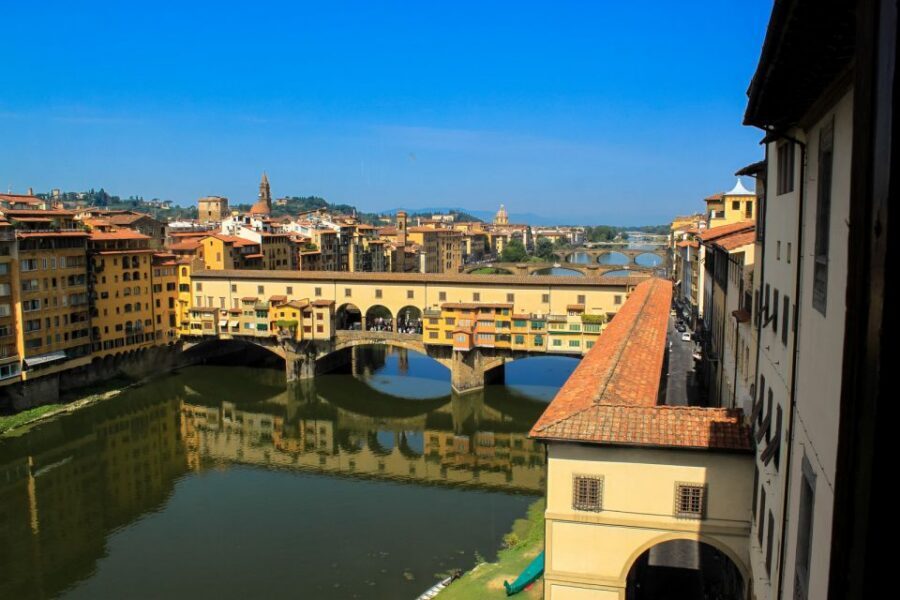
Next stop is Piazza della Signoria, with a guided walk and context. This square is one of those places where you can see how art, politics, and public identity overlap. You’re not just passing time outside the museum; you’re building the mental map for what you’ll face indoors.
For families, the benefit is momentum. Kids often do better when the day includes short, moving segments. Piazza della Signoria works well for that, since the guide can point out details while you’re still in “walk-and-watch” mode.
Loggia dei Lanzi: sculpture lessons in an easier setting
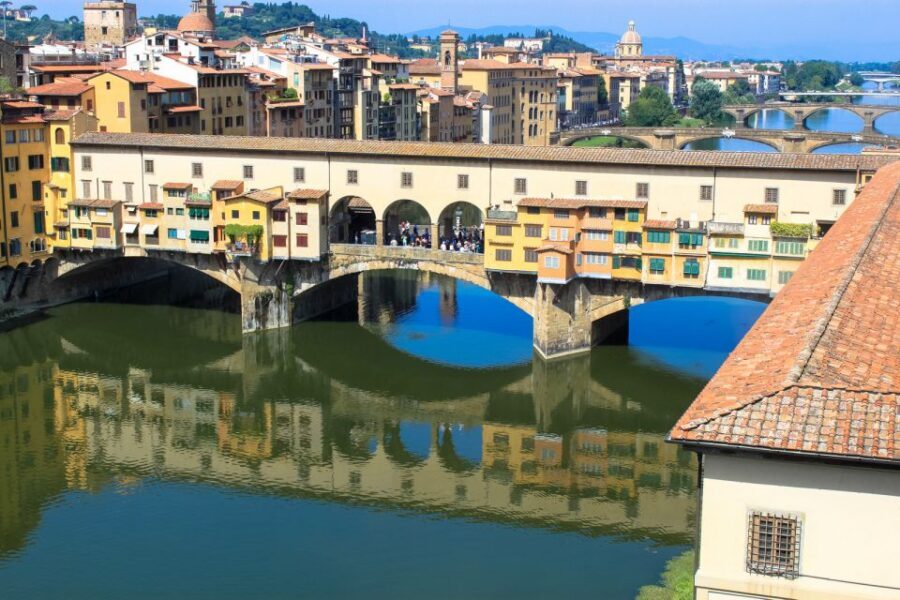
Then you head to the Loggia dei Lanzi for another guided stop. This is a smart bridge between the square and the museum because you’re still looking at sculpture and symbolism, but in a calmer, more structured setting.
Think of it like warm-up rounds. The guide can prime you to notice things that become important later: figures, objects, and the small choices artists made to communicate meaning. It’s also a good moment to reset if your kids need a quick break from focusing straight on paintings.
Entering the Uffizi Gallery with a treasure hunt in hand
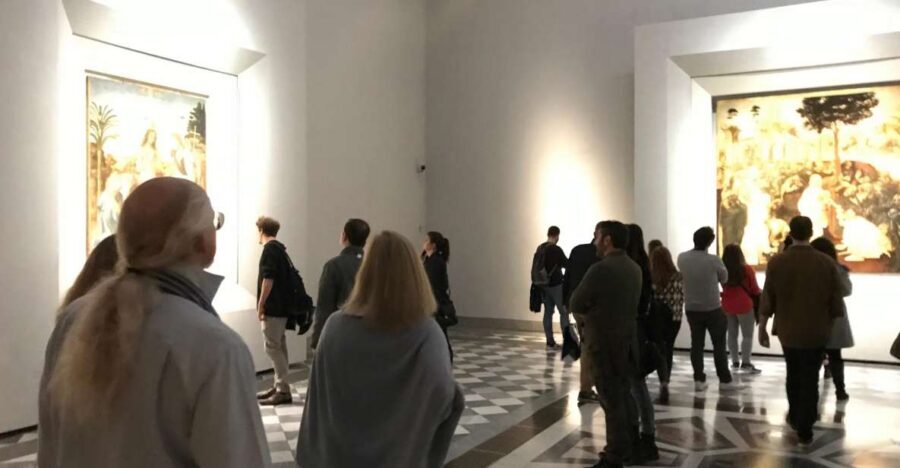
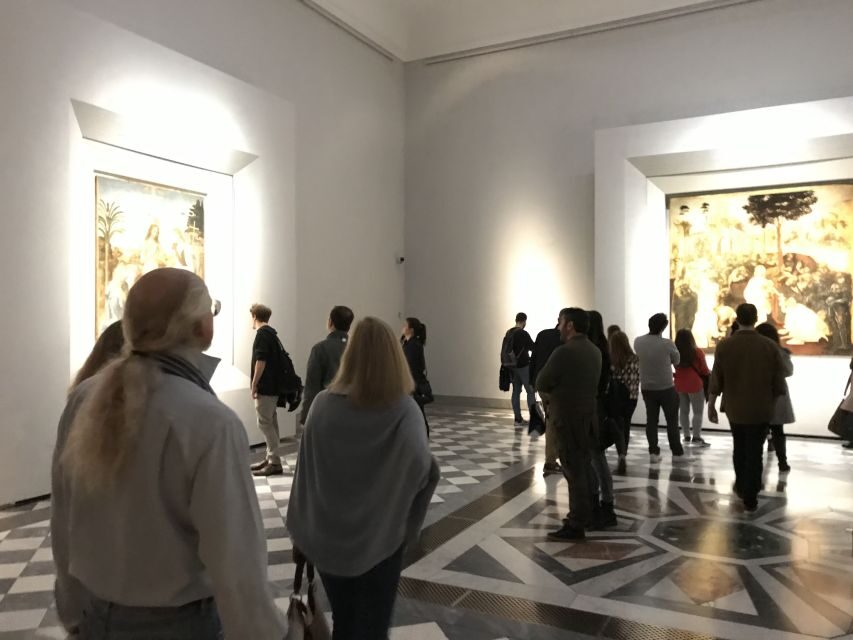
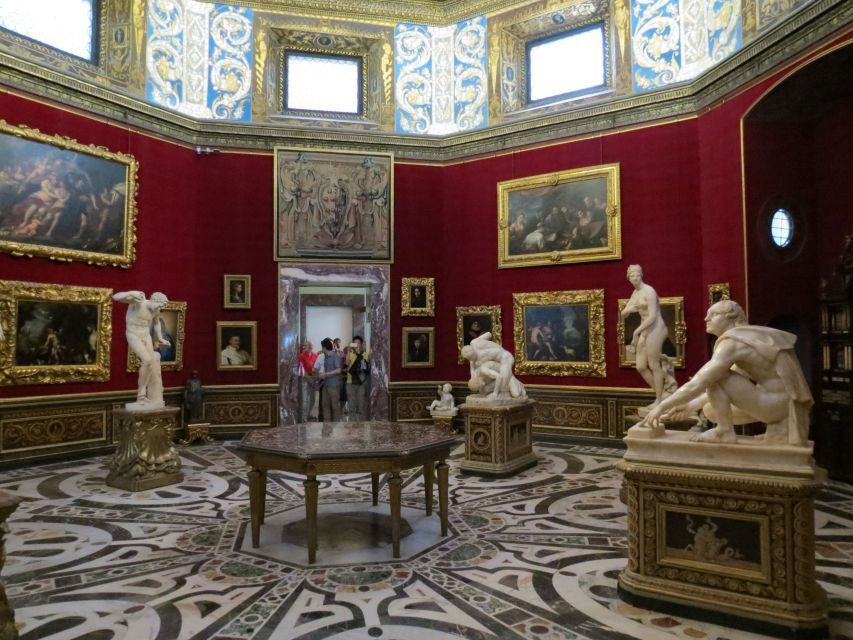
Inside the Uffizi Gallery, the experience becomes a guided visit with a built-in challenge. You’ll spend time in the gallery following the hunt prompts, searching for significant details and symbols in Renaissance works.
This is the best part for families who want their kids to feel involved. Instead of asking children to sit still and absorb, the tour turns attention into a game. You’re expected to look closely, compare visual clues, and track answers in the booklet.
You’ll also be hearing myths and legends as you go. That helps the art feel like a story you’re following, not a museum display you’re trying to finish.
You can also read our reviews of more museum experiences in Florence


The Michelangelo Tondo Doni hunt: what you’re really practicing
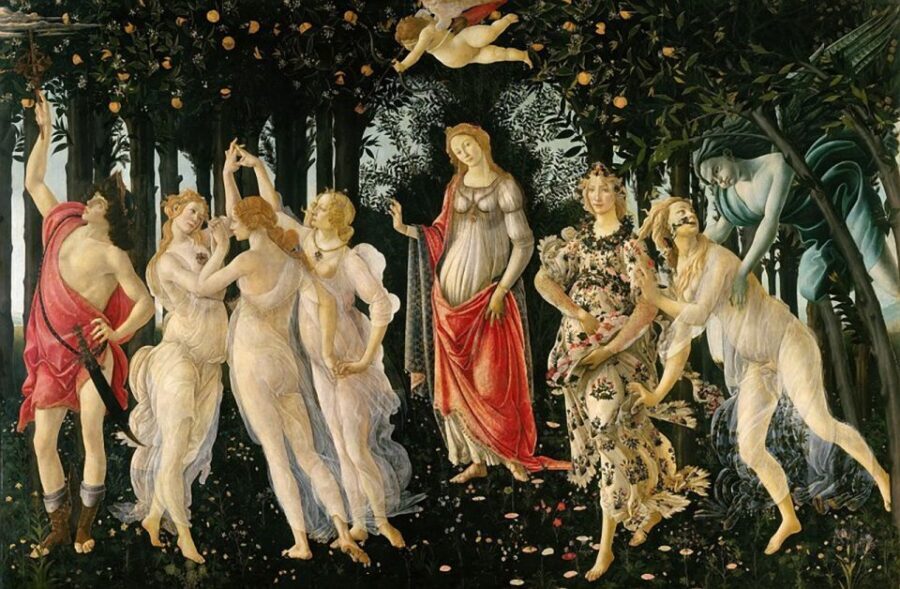
One of the tour’s standout tasks is searching for hidden sculptures connected to Michelangelo’s Tondo Doni. Even if you don’t know every name or term, this kind of clue encourages careful looking.
That’s a practical win. Kids learn faster when the guide gives them an objective. Adults benefit too, because a scavenger approach can pull you out of “I’m seeing it for the first time” mode and into “Wait, how is this composed?” mode.
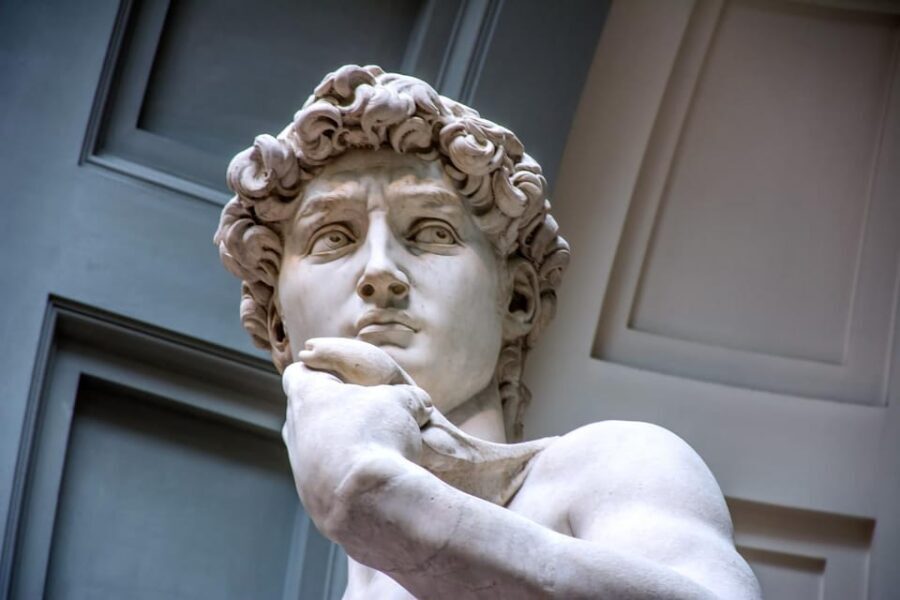
It’s also a fun way to meet Michelangelo in a different format. You’re not only being told why he matters. You’re actively training your eye on what’s there.
Caravaggio’s Medusa and the power of noticing the scary parts
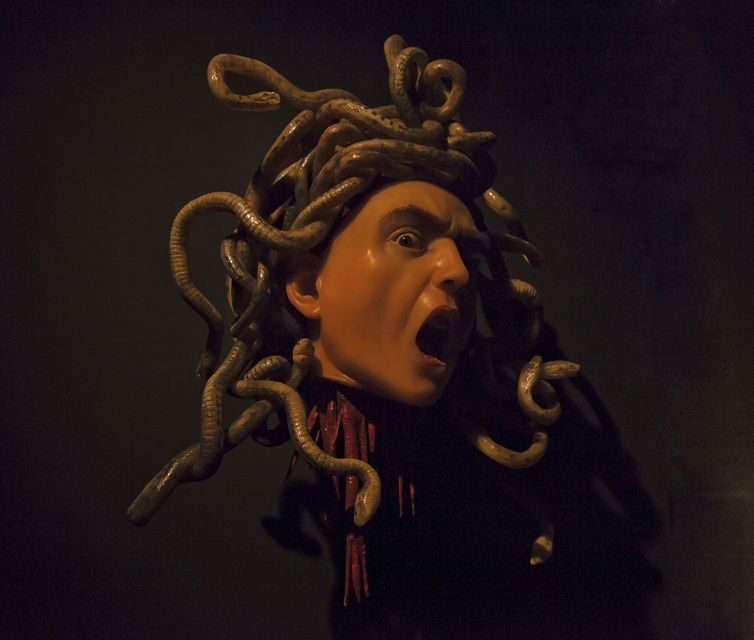
The tour includes a prompt tied to Caravaggio’s Medusa. You’ll look for what lurks inside Medusa’s mouth.
That’s not random. It’s a reminder that Renaissance art and especially Baroque tension often lives in details. The guide’s job is to point your attention to the part of the image you might otherwise miss because it’s too easy to focus only on faces or overall composition.
For families, this can be a useful way to talk about fear, drama, and storytelling without the conversation feeling heavy. The artwork provides the scene; the guide provides the meaning.
Botticelli Annunciation: one pillow, a whole conversation
Another specific clue is the Botticelli Annunciation, focusing on Mary’s bed and why it has only one pillow. It’s the kind of detail that sounds small until someone points out you should ask why it’s there.
That’s what this tour does well: it turns tiny visual quirks into discussion. For kids, it’s a question they can answer from the image itself. For adults, it’s a reminder that symbolism isn’t always loud. Sometimes it’s built into staging.
This kind of prompt also slows you down in a good way. The Uffizi can be fast if you let it. With this treasure hunt, you’re forced to pause and look closer, which is where the museum starts to feel personal.
Dogs, cats, flowers, chairs: symbolism you can spot
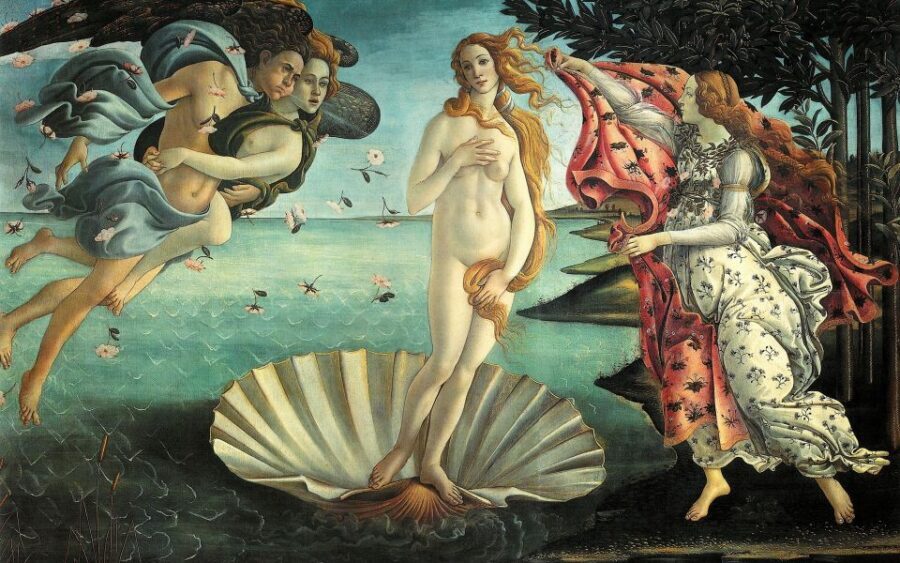
One of the hunt elements includes searching for dogs, cats, flowers, and chairs in Renaissance paintings. The tour encourages you to ponder what those objects might mean.
This is smart for families because it gives kids familiar categories to look for. They’re not scanning for abstract concepts right away. They’re spotting objects first, then letting the guide explain the symbolism tied to the story or message behind the work.
It’s also a neat way to appreciate how Renaissance artists used everyday items as visual language. A dog or flower in the right context can become more than decor. It becomes a clue, a reference, or a narrative tool.
Medici commissions up close: why the context matters
The tour also includes prompts about the Medici family’s commissions. You’ll be encouraged to see what’s behind the paintings, not just what’s in front of you.
For me, that’s where the Uffizi becomes more than a list of famous artworks. Medici patronage shaped what artists made and what the public was meant to notice. When the guide connects a piece to its commission, the art starts behaving like part of Florence’s power story.
Even if you’re not hunting scholarly details, you’ll come away with a clearer sense of why these works exist and why certain themes show up again and again.
Earphones, private group flow, and why it helps with kids
This is a private group experience, and you also get earphones for up to 8 people. That’s a practical benefit in the Uffizi, where group control can get tricky with kids. It helps the guide’s instructions stay clear without forcing everyone to crowd around one spot.
The tour is also offered in multiple languages: English, French, German, Spanish, Italian, and Russian. So if your family wants a specific language, you can match the guide to the group.
Add the fact that it’s wheelchair accessible, and you get an approach that’s built to work for more than one kind of family routine.
The family booklet and the portrait: turning learning into a souvenir
You receive a booklet to note your answers and add a family picture. At the end, you also get a family portrait taken to commemorate your time in Florence.
This is more than a cute extra. It creates a reason to remember what you looked at. When kids can point to the page and say what they hunted for, it keeps the visit from vanishing the moment you walk out.
For parents, it’s a way to translate a museum day into something tangible. You’re not just hoping your kids remember a painting title. You’re giving them a record of the hunt.
Time on your side: how a 3-hour format works in reality
The experience runs about 3 hours. That’s a sweet spot for many families because you can get meaningful gallery time without the day dragging into exhaustion.
Still, there’s a timing reality. The Uffizi is huge, and a treasure hunt is designed around specific prompts. If your family has a top-10 list of artworks you want to linger on for long stretches, this hunt format might feel tighter than a free-form visit.
The upside is that you’ll likely see key works and learn how to look at them. The downside is that you won’t have unlimited time to wander at your own pace.
Price and value: what $286.04 per person is paying for
This tour costs $286.04 per person for a 3-hour private family experience. On the surface, that’s not cheap.
But value comes from what’s included: entrance ticket, a guided hunt, earphones (helpful for group clarity), and a booklet plus a family portrait at the end. If you’ve ever tried to manage a museum visit with kids by yourself, you know the real cost isn’t just money. It’s attention, decision-making, and keeping everyone from melting down.
For this price, you’re buying structure. That structure is what turns a tough museum into an interactive family mission.
Also, it helps that this tour is private, which means the guide can pace the hunt and explanations for your group instead of rushing through lines of pre-booked visitors.
Who should book this Uffizi family treasure hunt
Book this if you want:
- a family-oriented guide who keeps kids engaged through tasks
- a Uffizi visit focused on specific details (Tondo Doni, Medusa, Annunciation, and symbol hunting)
- a tour that connects Renaissance art to Florence myths, legends, and Medici context
- a keepsake plan, not just photos on your phone
It’s especially appealing for mixed-age families where adults want art context but children need a reason to stay interested. If your group is mostly art specialists who want long, quiet study of one or two masterpieces, you might prefer a different style of tour.
Should you book this Uffizi family treasure hunt?
I’d book it if your priority is making the Uffizi feel understandable and fun for kids without losing the serious art. The treasure hunt structure does the heavy lifting: it tells you what to look for, why it matters, and how to connect objects and details to story.
If you’re visiting on the first Sunday, I’d be cautious and treat free entry as a bonus rather than a guarantee, since tickets can’t be reserved in advance.
Overall, this tour is a good fit for families who want a guided, interactive Uffizi day with clear learning goals and a nice souvenir at the end.
FAQ
How long is the Uffizi Gallery private treasure hunt for families?
The tour lasts 3 hours.
How much does it cost per person?
It’s priced at $286.04 per person.
Where does the tour start and end?
The tour starts at Fontana del Nettuno (Neptune Fountain) and ends back at the same meeting point.
What’s included in the tour price?
Included items are an entrance ticket, a booklet to note answers and add a family picture, and earphones for up to 8 people.
Is this a private group tour?
Yes. It’s listed as a private group experience.
What languages are available for the live guide?
The guide is available in English, French, German, Spanish, Italian, and Russian.
Is the tour wheelchair accessible?
Yes, it’s wheelchair accessible.
Is the Uffizi free on the first Sunday of the month?
On the first Sunday of each month, entrance is free of charge, but tickets can’t be reserved ahead of time, so entry isn’t guaranteed.
What do I need to bring?
Bring a passport or ID card.
You Might Also Enjoy



More Museum Experiences in Florence
More Private Tours in Florence


More Tour Reviews in Florence
- Tuscany Day Trip from Florence: Siena, San Gimignano, Pisa and Lunch at a Winery
★ 5.0 · 21,634 reviews - The Best tour in Florence: Renaissance & Medici Tales – guided by a STORYTELLER
★ 5.0 · 12,316 reviews