REVIEW · FLORENCE
Florence: Walking Tour and Accademia Gallery Tour
Book on GetYourGuide →Operated by Ciaoflorence Tours & Travel · Bookable on GetYourGuide
David waits nearby. You get in fast.
This Florence experience pairs skip-the-line Accademia access with a guided walk through the city’s most important sights, so you get art and atmosphere in one smooth 3.5-hour block. I like the way the guide connects what you’re looking at—starting with Michelangelo’s David—to real locations you’ll recognize right after. The main consideration: the pace can feel a touch tight, so if you’re the slow-and-savor type, plan for shorter photo moments.
I also like that you’re not stuck inside one building. You’ll move through Florence’s center, with stops tied to Dante and the famous squares that power the city’s public life—Piazza della Signoria included. One more practical note: it’s a walking tour, so wear shoes you can actually walk in for a few hours.
You’ll meet your guide at the Sales Office at Via Cavour 18 (black number). Tours run in English and Spanish, and larger groups use earphones to keep everything clear while you’re on the move.
In This Review
- Key highlights at a glance
- Entering the Accademia: Faster Start, Better Use of Your Time
- David and the Accademia: More Than a Single Statue
- The Walking Part of Florence: Dante, Beatrice, and Street-Level Stories
- Piazza della Repubblica: Cafés, Arcades, and a Place to Reset
- Piazza della Signoria: Where Florence’s Civic Heart Shows Up
- How Group Size, Earphones, and Guide Energy Affect Your Experience
- Timing, Photo Strategy, and Planning Your Day Around It
- Price and Value: What You’re Really Paying $79 For
- Who Should Book This Florence David and Walking Tour?
- Should you book? My take on the David + Streets combo
- FAQ
- Where do I meet the guide?
- How long is the tour?
- Does this tour include skip-the-line entry to the Accademia Gallery?
- What will I see inside the Accademia Gallery?
- Is the Cathedral, Bell Tower, or Baptistery included?
- What languages are available?
- Are pets or large bags allowed?
Key highlights at a glance
- Skip-the-line Accademia entry so you can spend more time inside
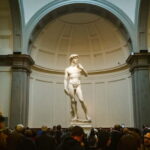
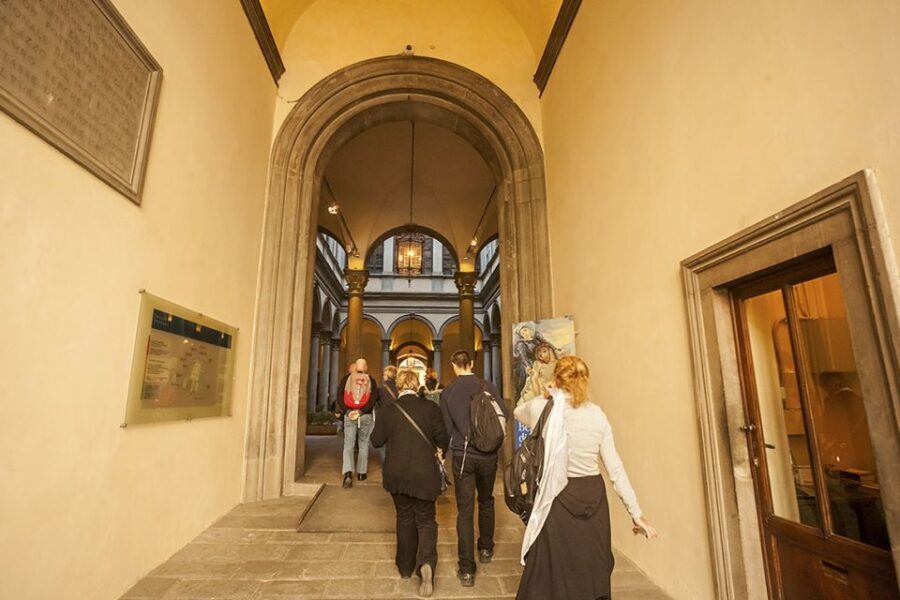
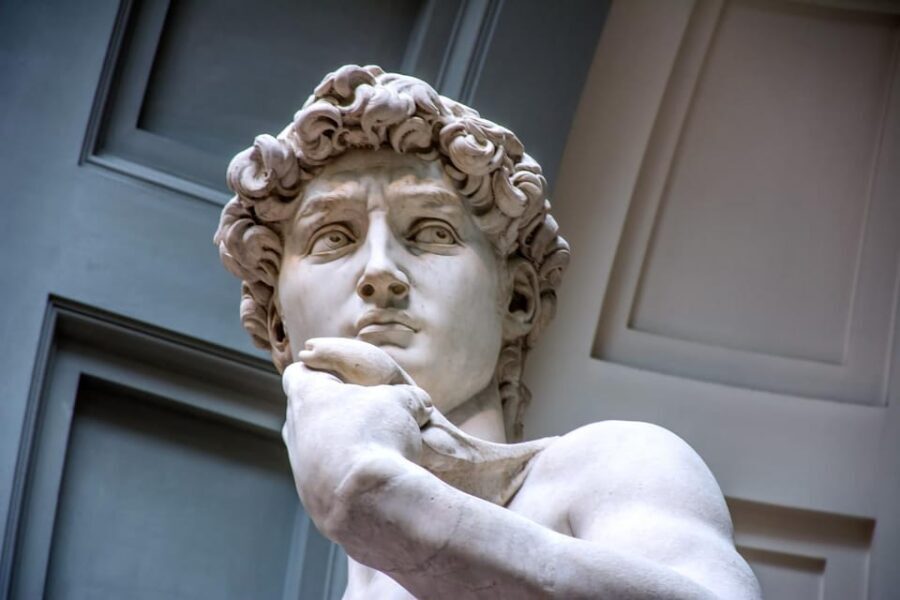
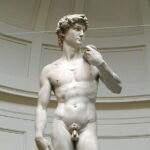
- Michelangelo’s David as the first, major stop
- Dante-focused moments, including the legend around Beatrice
- Piazza della Repubblica with its café arcades and elegant urban feel
- Piazza della Signoria as the political and cultural heartbeat of Florence
- Earphones for bigger groups so you can hear the guide on the streets
Entering the Accademia: Faster Start, Better Use of Your Time
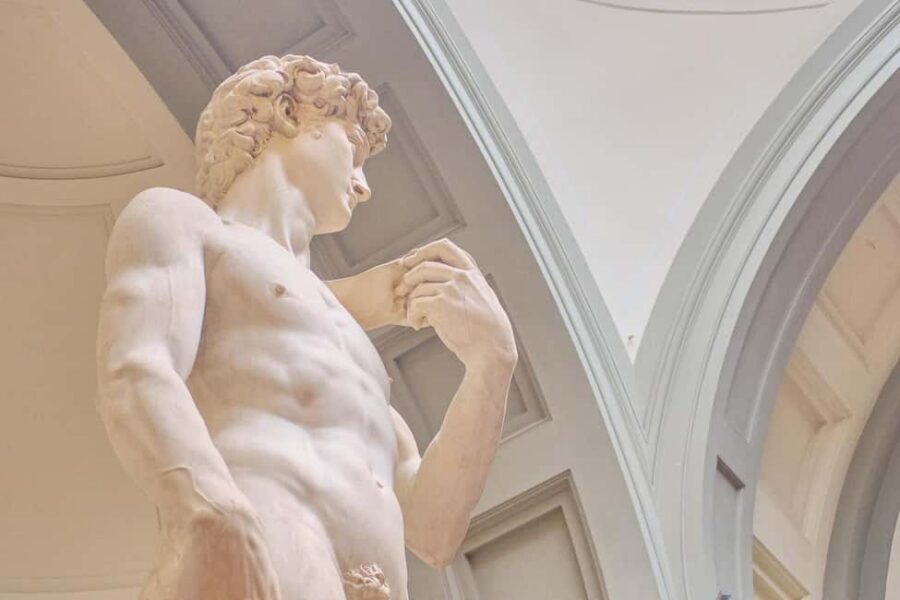
Starting at Via Cavour 18, you’ll begin with a guided walk, but the momentum really kicks in when you reach the Accademia Gallery. The big practical win here is the skip-the-line entrance, which means you’re not spending your prime vacation minutes staring at a queue. In a place like this, time matters—Florence is too good for letting your day get swallowed by lines.
When you walk through the doors, you’re not just in a museum. You’re in the space where David is the star attraction, and it changes how the rest of the art hits you. Without the stress of waiting, you can settle in, look slowly at faces and posture, and then let the guide connect the dots with context as you move through rooms.
One thing to keep in mind: even with skip-the-line access, very busy days can still mean a brief wait for group flow before you fully enter. It should still be shorter than the public ticket queue, but don’t plan your day assuming you’ll never pause.
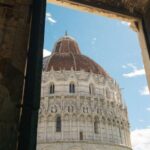
Also, check what you’re getting and what you’re not. This tour focuses on the Accademia and the streets, not the Cathedral complex. If you’re hoping to see the Cathedral, Bell Tower, and Baptistery on this same outing, you’ll need separate plans.
You can also read our reviews of more walking tours in Florence

David and the Accademia: More Than a Single Statue
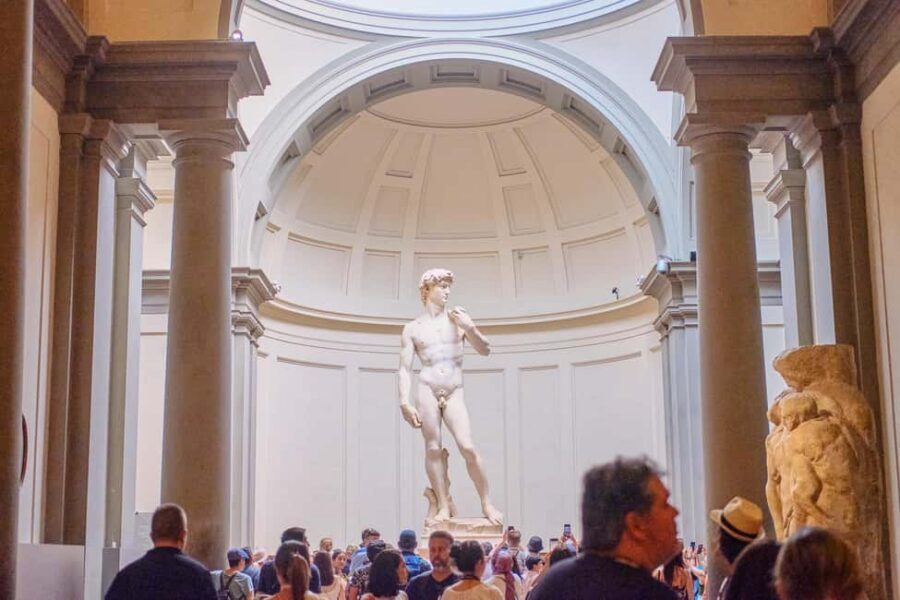
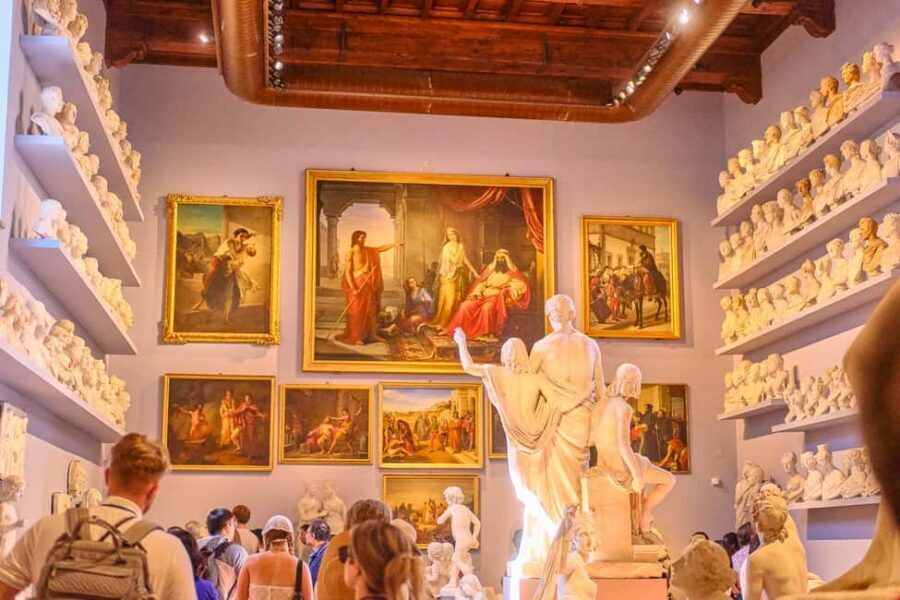
Michelangelo’s David is the reason most people book, and for good reason. Seeing him in person is one of those “photos don’t fully explain it” moments. The scale and the intensity feel direct, and you’ll probably find yourself doing what you can’t easily do in a selfie—stepping back, then forward, then around to catch the details.
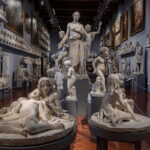
What makes the Accademia portion feel worth it is the guided structure. You’re there long enough to go beyond the headline statue. You’ll also have time to look at other masterpieces by famous artists housed in the gallery’s collection. That matters because otherwise the museum can feel like a quick stop: one famous thing, then out.
I especially appreciate how the guide approach can change your perspective. In past groups, names like Monica and Marco have come up as examples of guides who bring real passion for art and explain the story behind what you’re seeing. That kind of delivery is why a guided visit can outperform wandering alone—especially if you want to understand why certain artworks were made, and what they meant in their time.
You’ll move through the gallery with the group, so the experience stays active instead of turning into a long, lonely drift. That’s ideal if you like learning while you look, but still want the freedom to notice details in between explanations.
The Walking Part of Florence: Dante, Beatrice, and Street-Level Stories
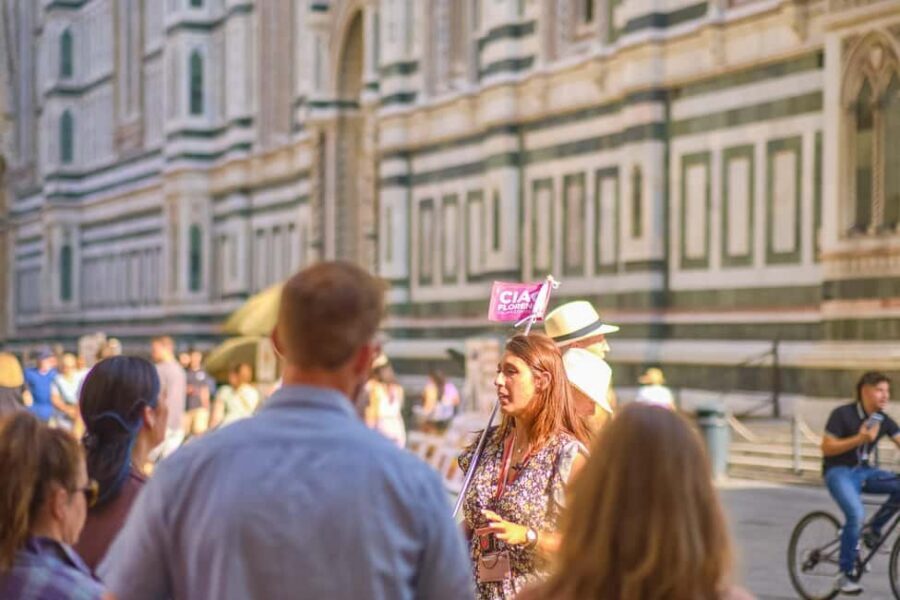
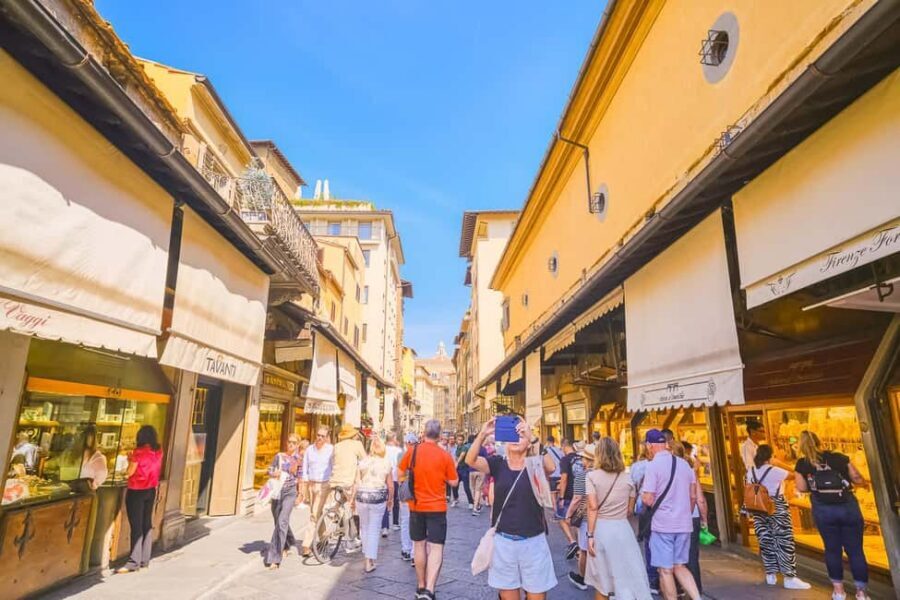
After the gallery, you shift from marble and paint to actual Florence street corners. This is where the tour earns its keep: you get a guided walk that helps you see the city like a map you can feel under your feet.
A standout stop is tied to Dante’s House, along with a tiny church connected to a legend about Dante falling in love with Beatrice at first sight. Even if you already know Dante’s name, hearing the story while standing near the location gives the whole thing a sharper edge. This is the kind of literary Florence that feels personal, not academic.
Your guide will point out major monuments as you go. That’s a big deal because Florence can be visually overwhelming at first—beautiful stone, perfect sightlines, and a thousand cues that all look important. With a guide, you’re not just “seeing stuff.” You’re getting the key relationships: which places are central to civic life, where the city’s power shows up in architecture, and why the layout makes sense.
One more practical thought: a walking tour like this works best when you keep your energy steady. If you spend the gallery aggressively sprinting for photos, you’ll feel it later when the pace shifts to street-level storytelling. Pace yourself so you can actually absorb the Dante and city-center moments instead of just rushing through them.
Piazza della Repubblica: Cafés, Arcades, and a Place to Reset

Florence’s squares aren’t just pretty backdrops. They’re how the city organizes daily life. Piazza della Repubblica is a good example—elegant cafés and arcades frame the space, and it feels like a social hub as much as a landmark.
This stop is a useful “breather” in the middle of an art-and-walk day. If you’ve been leaning forward during museum time, you’ll appreciate a more open space where you can stand, look around, and understand how streets feed into a central gathering point. Even if you don’t stop for a coffee, you can take a moment to orient yourself.
What I like here is that it doesn’t turn into a vague sightseeing loop. Your guide’s storytelling helps you connect the square to the city’s character—so the plaza becomes a reference point you’ll remember later when you’re walking on your own.
Piazza della Signoria: Where Florence’s Civic Heart Shows Up
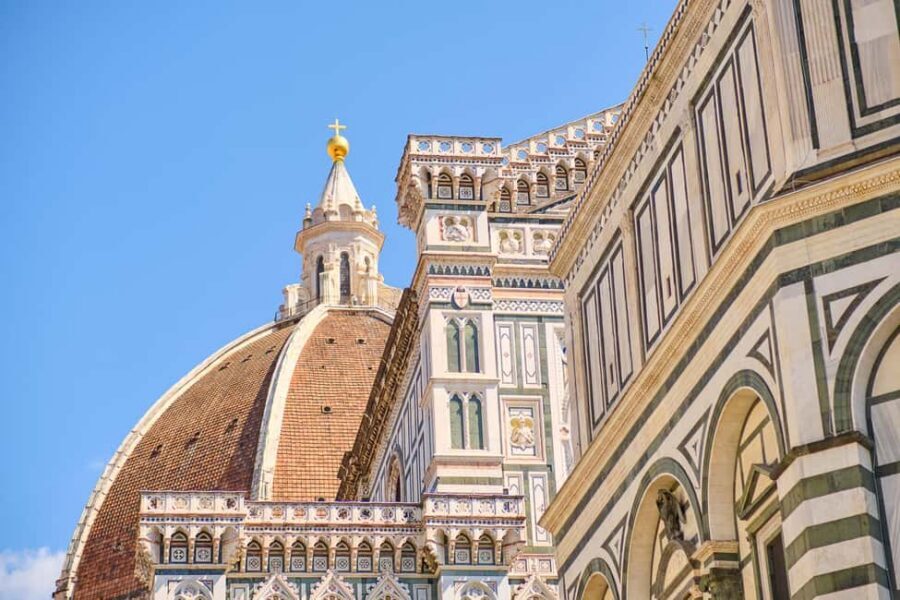
If Piazza della Repubblica is the social stage, Piazza della Signoria is the civic engine room. This is described as the heart of the city, and standing there with a guide helps you understand why it matters.
You’ll experience it as a key point in the route, not as a quick drive-by. The square’s importance isn’t only visual—it’s about what the space represents in Florence’s public life. Your guide can tie together what you’re seeing and what it meant historically, which is exactly what you want from a guided walking component.
It also sets you up for the rest of your Florence day. Once you know what you’re looking at in the city center, everything around it clicks faster—signs, facades, and the way one street leads to the next.
You can also read our reviews of more museum experiences in Florence



How Group Size, Earphones, and Guide Energy Affect Your Experience
This tour includes earphones for bigger groups, which is a smart touch. In Florence, street sound can swallow voices fast—traffic, footsteps, and chatter all stack up. Earphones help you stay present with the guide instead of constantly asking people to repeat themselves.
Guide delivery matters too. When a guide is focused on making art and place feel understandable, the whole experience becomes easier. In the feedback, guides like Marco have been singled out for organized pacing and friendly, detailed explanations. That kind of approach makes the city walk feel less like a script and more like a conversation with landmarks.
Still, there’s one recurring caution. Some visitors found the pacing rushed and photo time limited. That doesn’t mean you won’t get good views—it means you should be ready to move when the group moves. If you’re the kind of person who wants long stops for every angle, you’ll likely enjoy this more if you treat photos as “capture and continue,” not “stand and perfect.”
Timing, Photo Strategy, and Planning Your Day Around It
With a total duration of about 3.5 hours, you’re getting two different modes: museum focus and street wandering. That’s a great combo because it keeps your day from feeling like two separate tours stitched together.
Here’s how I’d plan around it:
- For the Accademia, decide in advance what you want from David: front profile, face detail, overall stance. Then grab a quick set and use the remaining time to look with the guide’s direction.
- During the walk, keep an eye on where the story is landing. If the guide is explaining a landmark tied to Dante, that’s your cue to slow down for a proper look.
Also remember what this tour doesn’t cover. It’s not designed to replace Cathedral complex visits. If you want those famous sights too, schedule them on a different day or later in the same day if timing allows.
If you’re visiting on the first Sunday of the month, entrance to the Accademia is free, but entry can’t be reserved ahead of time, so admission isn’t guaranteed. If you’re counting on that day for David, have a backup plan.
Price and Value: What You’re Really Paying $79 For
At $79 per person, this tour isn’t the cheapest way to see Florence. But you’re not only paying for entry. You’re paying for time management and interpretation.
Here’s what that money buys you:
- Skip-the-line access to the Accademia, which can save you the most annoying part of a museum visit
- A live guide for the gallery portion and the walking portion
- Earphones for clearer guide audio if the group is larger
If you tried to do this alone, you’d still need to figure out timing, entry flow, and what matters inside the gallery beyond the obvious photo subject. A guided visit helps you get more meaning out of the same building. And the walking component makes the city feel less like a blur of streets and more like a story you can follow from place to place.
So the value depends on your travel style. If you love museums and city context, $79 can feel fair. If you prefer to freestyle every step, you might find you’d rather build your own David + streets route. For most people who want art plus city understanding without research headaches, this price is easier to justify.
Who Should Book This Florence David and Walking Tour?
This tour is a strong match if you want:
- A guided Accademia visit centered on David
- A city-center walking route tied to Dante and the key squares
- English or Spanish guidance rather than figuring it out alone
You might want to skip it—or consider a different style—if you:
- Need wheelchair-friendly routing (this one is not suitable for wheelchair users)
- Hate moving with a group on a set schedule
- Are traveling with pets or large luggage, since these aren’t allowed
And one more personality fit: if you love guides who make art stories feel practical and human, you’ll likely click with this format. If you’re ultra-precise about spending lots of time photographing in one spot, arrive with a “quick look, then move” mindset.
Should you book? My take on the David + Streets combo
I’d book this tour if your top priorities are seeing David efficiently and getting a guided walk that helps you understand why Florence’s squares matter. The Accademia portion gives you that iconic Florence hit without wasting time in lines, and the walking segment keeps you grounded in real places instead of turning the day into a checklist.
Just go in ready for movement. Bring comfortable shoes, keep your photo expectations realistic, and let the guide’s stories do some of the heavy lifting. If you do, you’ll leave with more than memories—you’ll have context you can actually use as you keep exploring Florence on your own after the tour ends.
FAQ
Where do I meet the guide?
You meet your guide at the Sales Office at Via Cavour 18, the black number.
How long is the tour?
The duration is 3.5 hours.
Does this tour include skip-the-line entry to the Accademia Gallery?
Yes. Your ticket includes skip-the-line entrance to the Accademia Gallery.
What will I see inside the Accademia Gallery?
You’ll see Michelangelo’s David and also other masterpieces and collections in the gallery.
Is the Cathedral, Bell Tower, or Baptistery included?
No. Entrance to the Cathedral, Bell Tower, and Baptistery is not included.
What languages are available?
The live tour guide is available in English and Spanish.
Are pets or large bags allowed?
No. Pets are not allowed, and luggage or large bags are not allowed.
You Might Also Enjoy




More Walking Tours in Florence

More Tours in Florence
- The Best tour in Florence: Renaissance & Medici Tales – guided by a STORYTELLER
★ 5.0 · 12,316 reviews


More Tour Reviews in Florence
- Tuscany Day Trip from Florence: Siena, San Gimignano, Pisa and Lunch at a Winery
★ 5.0 · 21,634 reviews - The Best tour in Florence: Renaissance & Medici Tales – guided by a STORYTELLER
★ 5.0 · 12,316 reviews