REVIEW · FLORENCE
Florence Walking Tour with Audioguide on Your Smartphone
Book on Viator →Operated by TouringBee · Bookable on Viator
Florence gets easier when you can wander. This self-guided loop gives you historian-recorded audio and an offline GPS map, so you can enjoy the Duomo area, Medici sights, and big churches without being stuck with a group. Best part: you can pause for photos and read every stop at your speed. One thing to watch: the experience is app-based, so you’ll want to plan a little setup time and bring your own headphones.
I like that the route is built for spotting landmarks fast, with included illustrations and step-by-step guidance on your phone. It also keeps the experience low-stress because there’s no human guide to coordinate. If you want a hands-on museum day with staff answering questions, this is not that kind of tour.
In This Review
- Key highlights to know before you go
- Why this audio walk is such good value in Florence
- Your phone is the tour guide (so set it up early)
- The route starts at Santa Maria Novella (and it makes a smart loop)
- Santa Maria Novella: the Gothic façade you’ll actually notice
- San Lorenzo and the Medici story in one stretch
- Palazzo Medici: where power shows up in stone and fresco
- The Duomo and Giotto’s Bell Tower: two views for one ticket day
- Cathedral of Santa Maria del Fiore
- Giotto’s Bell Tower
- Piazza della Repubblica and the city’s shifting center
- Palazzo Strozzi and Parte Guelfa: Renaissance taste and medieval politics
- Mercato Nuovo: quick bites and a real sensory break
- Palazzo Vecchio and Loggia dei Lanzi: Florence’s power on display
- Casa Museo di Dante and Santa Croce: literature and the Italian Glories
- Museo Galileo and the Uffizi area: science and art in the same day
- Ponte Vecchio and the Vasari Corridor: the Arno views and Medici secrecy
- La Casa di Galileo, Villa Bardini, and Forte Belvedere: quieter Florence angles
- Timing and pacing: how to make 2.5 hours feel worth it
- Who this audio tour fits best
- Should you book this Florence walking tour?
- FAQ
- How long is the Florence walking tour with smartphone audio?
- Where does the tour start and end?
- How much does it cost?
- Is there a human guide with the tour?
- Do I need to bring headphones?
- Is the map available offline?
- Are museum or church entrance fees included?
- FAQ
- Can I cancel for a full refund?
- Is the audio available on iPhone and Android?
Key highlights to know before you go

- 30 historian audio recordings that explain what you’re actually looking at, not just names
- Offline map with GPS navigation, which helps you stay on route even when you don’t have signal
- Illustrations for every stop, so you can visually match the story to the building
- 2.5 hours on foot with a lot of major Florence landmarks packed in via short listening moments
- No guide at the start point, so the app is your tour conductor
- Free cancellation up to 24 hours in advance (local time)
Why this audio walk is such good value in Florence
At $7.14 per person for about 2 hours 30 minutes, you’re paying for context more than for access. That matters in Florence, where the city itself is the main attraction and the biggest cost is usually time (standing in lines, waiting for groups, or getting turned around). This tour is designed to solve that: you use your phone as a smart companion while you walk.
You also get a lot of content for the money. The route includes 30 audio recordings, narrated by a professional historian, and you have 1 year access to the tour in your preferred language setting during checkout. For many travelers, that means you can replay the stories later while you sit down for gelato or plan a second day.
My favorite part of the value equation is the combination of audio + navigation. The tour isn’t just “press play and hope.” You get an offline map with GPS, plus illustrations that help you recognize what the narration is pointing to. If you’ve ever tried to follow directions through Florence’s maze of streets, you’ll appreciate how much easier this makes the day.
You can also read our reviews of more walking tours in Florence

Your phone is the tour guide (so set it up early)
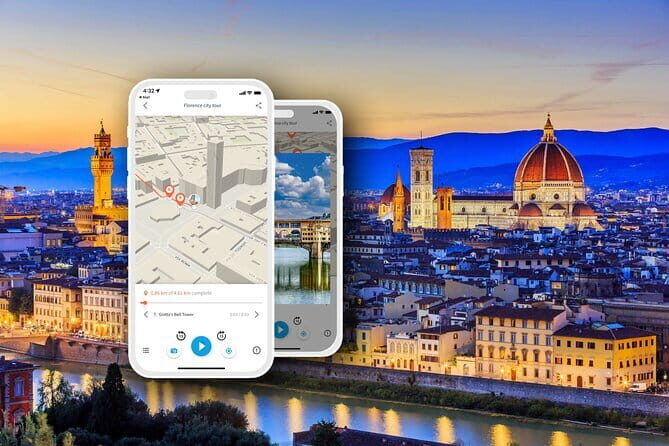
This is a self-guided audio tour run through a mobile app for iPhone and Android. There’s no human guide waiting at the start, and you’ll need to download the app, activate your purchase, and then follow the route using the map inside the app.
You should also plan for one small practical reality: you must bring your own headphones. The tour does not include headphones, and that can be the difference between enjoying the walk and cutting your day short.
One more tip based on real-world use: give yourself a cushion to figure out the app. One reviewer said it took time to download and find the right setup, but a detailed email with instructions helped. So do the boring part at the hotel: get the app installed and logged in before you start walking.
The route starts at Santa Maria Novella (and it makes a smart loop)

The tour begins at Basilica of Santa Maria Novella, Piazza di Santa Maria Novella 18 and ends back at the meeting point. That loop design is practical. It puts you near major sights early, then carries you toward the Duomo area, the political center, and the Arno river, before lifting you to the viewpoints and finishing where you started.
The route also mixes big architectural stars with “meaning” stops. In other words, you’re not only looking at famous facades—you’re getting the why behind them, like Renaissance patronage, Medici power, and the political split tied to medieval Florence.
And because it’s on a smartphone, you control the pace. You’ll get the core story even if you spend more time in one church and less in another.
Santa Maria Novella: the Gothic façade you’ll actually notice

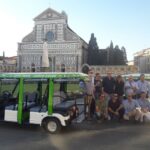
The first anchor stop is Basilica of Santa Maria Novella. You start outside with its striking Gothic-style façade, known for intricate frescoes and a rose window. Then the audio nudges you toward what’s inside, including artworks attributed to well-known artists like Masaccio and Ghirlandaio.
If you only do quick exterior sightseeing on first days, you might miss how much personality this church has. The narration helps you see details you might otherwise glide past—especially when the street noise and foot traffic try to pull your attention away.
What to do with your time here:
- Walk up close to the façade so the rose window and fresco details register.
- Step inside even if you don’t plan a long stop. The audio gives you a way to look for the right things.
San Lorenzo and the Medici story in one stretch
Next up: Basilica di San Lorenzo. The tour frames it as a major church in Florence, with roots going back to the 4th century and major Renaissance redesign by Filippo Brunelleschi in the 15th century.
The big reason this stop works on an audio tour is that it has layers. You get architecture lessons without needing a guide. You’re also directed toward the Medici connection—especially the Medici Chapels, which are presented in the route as the final resting place for the Medici family.
This is also where you can decide how “serious” you want your day to be. If you like big-name art and family dynasties, you’ll want to slow down. If you prefer a lighter walk, you can keep moving and let the audio be your highlights reel.
You can also read our reviews of more tours and experiences in Florence

Palazzo Medici: where power shows up in stone and fresco
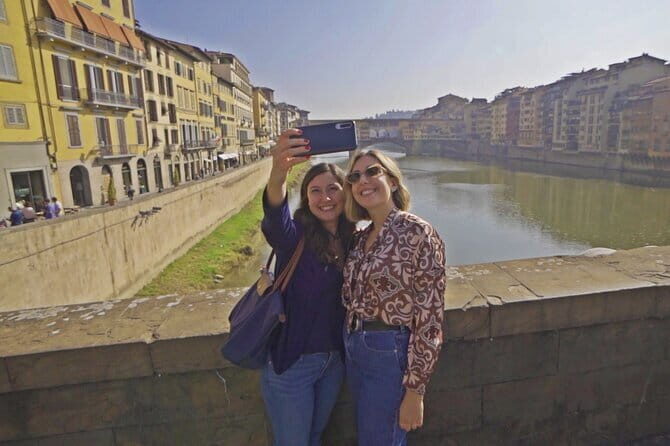
Then comes Palazzo Medici, described as an opulent residence of the Medici family. The façade is called out for rusticated stonework and grand arches, which is exactly the kind of visual shorthand that helps when you’re walking quickly.
Inside, you’ll hear about decorated rooms reflecting wealth and patronage. A standout note in the route is the Chapel of the Magi, highlighted as a hidden gem worth catching.
If you’re short on time, don’t try to absorb every wall painting as if you’re studying for an art exam. Instead, listen, look for the points the audio brings up, and enjoy the fact that Florence was built for people who loved showing off their taste.
The Duomo and Giotto’s Bell Tower: two views for one ticket day

The itinerary then zeroes in on Florence’s most recognizable symbols:
Cathedral of Santa Maria del Fiore
You’ll hear about the Cathedral of Santa Maria del Fiore, including Brunelleschi’s dome, described as the largest brick dome in the world. The façade is noted for colorful marble and sculptures, and inside you’re pointed toward stained glass and frescoes.
The route says the stop is about 10 minutes and marked as admission ticket free in the tour notes, which usually means your time here can focus on views and first impressions without needing to budget extra.
Giotto’s Bell Tower
A short climb follows: Giotto’s Bell Tower, with details given as 82 meters tall and 414 steps. The narration also points you toward the campanile’s colored marble and sculpture program, plus Giotto’s reliefs.
If you’re even mildly interested in architecture, this bell tower is worth the effort. You get a Florence panorama that makes the rest of the day easier to understand. You’ll see why the city’s layout feels like it’s built around art, politics, and river trade.
Piazza della Repubblica and the city’s shifting center
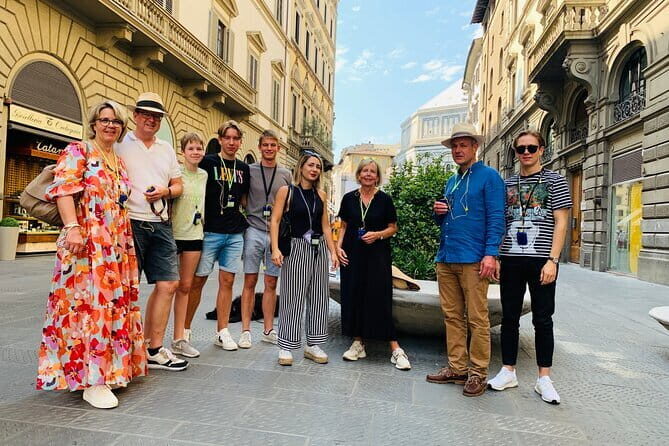
Next is Piazza della Repubblica, framed as the lively heart of Florence with a Roman forum past. The tour notes the surrounding cafés and shops and points out the Arch of Triumph, described as marking the square’s modern shape.
This is a good “reset” stop on an audio tour. You’re not trying to read every stone. You’re taking a breath and getting your bearings for what’s ahead—especially because the political and civic sights are close by.
Palazzo Strozzi and Parte Guelfa: Renaissance taste and medieval politics
Two stops here show how Florence combined art style with power structures:
- Palazzo Strozzi: presented as Renaissance architecture built in the 15th century for the Strozzi family, with a harmonious façade and a courtyard. Today, it’s described as a cultural center with rotating art exhibitions.
- Palazzo di Parte Guelfa: tied to the Guelf faction, a powerful medieval political group. The route describes it as housing offices and showcasing architectural features like a courtyard and frescoes.
On an audio route, these are useful because they explain what you’re looking at beyond aesthetics. You get a sense for why wealthy families and political factions cared so much about buildings—these weren’t just homes or offices. They were visible statements.
Mercato Nuovo: quick bites and a real sensory break
The route stops at Mercato Nuovo (Nuovo Mercato), described as a lively food market in the San Lorenzo district. The narration focuses on fresh produce, local delicacies, cheeses, and gourmet specialties.
This stop is practical for one reason: it gives you a timed break in a walk that otherwise leans heavy on churches and palaces. Even if you don’t buy much, it helps you recharge and avoid the mid-day fatigue that ruins good sightdays.
Palazzo Vecchio and Loggia dei Lanzi: Florence’s power on display
Then you move to the civic showpiece: Palazzo Vecchio. The tour calls it a fortress-like palace completed in the 14th century, seat of the Florentine government, with an imposing tower and a façade worth lingering on.
Inside, you’ll hear about the Salone dei Cinquecento, decorated with frescoes, and you’ll get the option to climb the tower for panoramic views.
Right nearby is Loggia dei Lanzi, described as an open-air gallery in Piazza della Signoria. The audio highlights the arches and colonnade and points you to major works such as Cellini’s Perseus and Giambologna’s Rape of the Sabine Women.
If you’re thinking, Wait, how can an audio tour do sculpture well? Here’s the answer: the best part is that you’re told what to look for—so you’re not guessing while trying to squeeze in a photo.
Casa Museo di Dante and Santa Croce: literature and the Italian Glories
Next, you’ll hear about Casa Museo di Dante, dedicated to Dante Alighieri. It’s presented as a museum in a medieval setting with exhibits tied to manuscripts, drawings, and artifacts connected to Dante’s life and influence.
After that: Basilica di Santa Croce, called out as Gothic and described as the Temple of the Italian Glories. The narration points to it as the final resting place of major figures including Michelangelo, Galileo, and Machiavelli, plus frescoes by artists like Giotto.
If you want a more human day—less about dynasties, more about ideas—this is where the tour shifts tone. And because Dante and Santa Croce are both about legacy, the stories connect well as you keep walking.
Museo Galileo and the Uffizi area: science and art in the same day
The route then swings into two big “brainy” stops:
- Museo Galileo, focusing on science and history with scientific instruments and artifacts spanning from the Renaissance to modern times. The narration includes Galileo’s impact on astronomy and physics, plus mentions interactive exhibits.
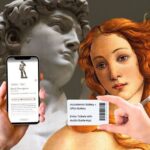
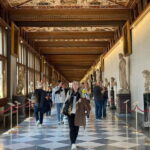
- Uffizi Gallery, presented as one of the world’s most celebrated art museums, with major works and artists including Botticelli, Michelangelo, Leonardo da Vinci, and Caravaggio. The route calls out iconic works like The Birth of Venus and Primavera.
Two practical notes for this part of your day:
- The walking tour format and about 2.5-hour duration suggest you may not have time for a full museum marathon. Use the audio as your orientation and decide where you want to slow down.
- Museum entrance fees are not included in the tour purchase, even though some specific segments are marked free in the tour notes.
This is still a great pairing. You’re moving from art to science while Florence’s Renaissance worldview is fresh in your head.
Ponte Vecchio and the Vasari Corridor: the Arno views and Medici secrecy
Now you hit the classic postcard: Ponte Vecchio, Florence’s oldest bridge, described as a 14th-century stone bridge with goldsmith shops along the sides. The tour also points you toward the Vasari Corridor, described as an elevated passage connecting Palazzo Vecchio to Palazzo Pitti so the Medici family could move discreetly.
Even if you don’t go far into the corridor itself, the narration makes the bridge more than a photo stop. It becomes part of the Medici logistics story.
La Casa di Galileo, Villa Bardini, and Forte Belvedere: quieter Florence angles
The back half of the route focuses on Galileo and viewpoints:
- La Casa di Galileo Galilei: Galileo’s birthplace, described as featuring interactive exhibits and personal artifacts, including references to a telescope and celestial maps.
- Villa Bardini: described as a historic villa with gardens, flowerbeds, and terraces with city views. It also notes art exhibitions in the villa’s spaces.
- Forte di Belvedere (or di San Giorgio Firenze): a hillside fortress with panoramic views, built in the late 16th century under Francesco I de’ Medici. The route notes courtyard wandering and that it often hosts art exhibitions and cultural events.
This is a smart ending shape for an audio walk. You’ve done the grand architectural hits earlier. Now you get views and calmer pacing, which helps your day feel like more than a checklist.
Timing and pacing: how to make 2.5 hours feel worth it
Because the route lists many major sites, you’ll get the best results if you treat this as a guided walk by narration, not a full-day museum schedule.
Here’s a practical way to think about it:
- For the big churches and palaces, plan on short listening moments and selective stopping.
- If climbing Giotto’s Bell Tower is on your must-do list, treat it like the workout anchor of the day.
- Use Mercato Nuovo for a quick reset rather than a full meal plan.
- Save any deep museum time (Uffizi, Museo Galileo) for a different day if you love slow wandering.
Also, the app experience can affect pace. One reviewer found direction worked poorly because of GPS accuracy in the city. If that happens, you can still keep listening by selecting stops manually (the tour provider notes that the audio content remains accessible via stop selection).
Who this audio tour fits best
This is a good match if you:
- Want art, architecture, and historical context without paying for a human guide
- Like the idea of pacing yourself and stopping for photos
- Enjoy seeing a city through stories instead of facts read off a sign
- Are comfortable working with an app during travel
It may be less ideal if you:
- Want a live guide to answer questions on the spot
- Need perfectly reliable GPS direction every minute
- Prefer a ticketed, timed museum plan with staff
Group size is capped at 20, but since it’s self-guided, that limit mainly affects the overall availability and booking flow—not your experience while walking.
Should you book this Florence walking tour?
Yes, if you want a cost-friendly way to see a lot of Florence with real context. For $7.14, the combination of historian audio, illustrations, and an offline route makes it easy to get oriented, especially on a first or second day.
Skip it (or pair it with a different plan) if you’re trying to do full-on museum time inside major institutions within 2.5 hours. This tour shines as a structured walk that helps you understand what you’re seeing while you move.
If you do book, I’d recommend one simple prep step: install the app and test it before you hit the first stop at Santa Maria Novella, and bring your headphones so you can start listening right away.
FAQ
How long is the Florence walking tour with smartphone audio?
The tour is listed as about 2 hours 30 minutes.
Where does the tour start and end?
It starts at Basilica of Santa Maria Novella, Piazza di Santa Maria Novella 18, and ends back at the same meeting point.
How much does it cost?
It costs $7.14 per person.
Is there a human guide with the tour?
No. It’s self-guided, and no human guide will be at the meeting point.
Do I need to bring headphones?
Yes. Smartphones and headphones are not included, so you’ll need your own headphones to listen.
Is the map available offline?
Yes. The tour includes an offline map with route and GPS navigation.
Are museum or church entrance fees included?
Entrance fee/tickets are not included in the tour price. Some stops are marked free in the route notes, but you should plan to pay any required tickets on your own.
FAQ
Can I cancel for a full refund?
You can cancel up to 24 hours before the experience’s start time for a full refund.
Is the audio available on iPhone and Android?
Yes. The audio guide app is available for iOS and Android.
You Might Also Enjoy



More Walking Tours in Florence


More Tours in Florence
- The Best tour in Florence: Renaissance & Medici Tales – guided by a STORYTELLER
★ 5.0 · 12,316 reviews



More Tour Reviews in Florence
- Tuscany Day Trip from Florence: Siena, San Gimignano, Pisa and Lunch at a Winery
★ 5.0 · 21,634 reviews - The Best tour in Florence: Renaissance & Medici Tales – guided by a STORYTELLER
★ 5.0 · 12,316 reviews