REVIEW · FLORENCE
Experience Florence’s Art and Architecture on a Walking Tour
Book on Viator →Operated by Free Tour Florence – Another Florence · Bookable on Viator
Florence looks complicated until someone walks you through it. This 2 hours 15 minutes English-language walking tour ties together the city’s art and architecture with a simple route that hits big landmarks and important neighborhoods fast.
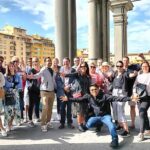
I like how it gives you free stops where you can still learn a lot, and it keeps the pace manageable in a city that loves to slow people down with crowds. I also love the small group feel—maximum 20 people—so you’re not stuck yelling over a sea of strangers.
One thing to watch: hearing can be an issue in busy squares, especially if you’re standing farther from the guide or the group’s audio setup isn’t working well that day. I’d plan to stay close and angle your body toward the leader.
In This Review
- Key things to know before you go
- Why this 2-hour Florence walking loop works for first-timers
- Start at Santa Maria Novella and end near Santa Croce
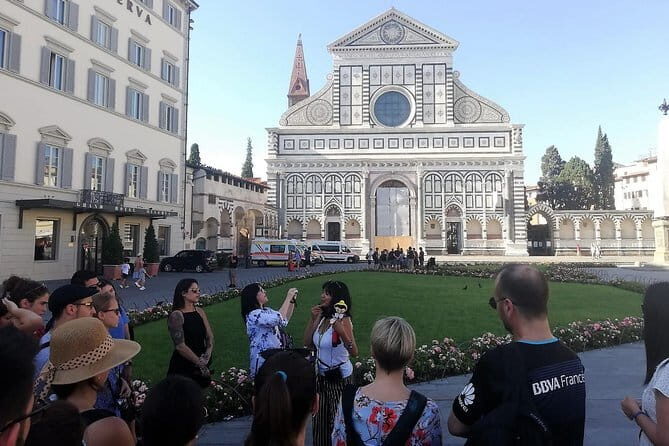
- Stop 1: Santa Maria Novella—where the tour begins with a real landmark
- Possible drawback here
- Stop 2: Via de’ Tornabuoni and Palazzo Strozzi-area views
- What to watch for
- Stop 3: Piazza della Repubblica—Roman echoes in plain sight
- A small reality check
- Stop 4: Santa Maria del Fiore complex—when “not included” matters
- Why this stop is still worth it
- Practical tip
- Stop 5: Orsanmichele—Renaissance sculpture in church-museum form
- Why you’ll like it
- A small consideration
- Stop 6: Piazza della Signoria to Ponte Vecchio—Medici power in public space
- The best part of this section
- Practical note
- Stop 7: Santa Croce and Dante’s monument—ending with meaning
- Price and value: how $3.63 makes sense in Florence
- What you should do to get full value
- Guide quality: the names you might meet and the vibe you’ll feel
- Listening tip (based on real-world feedback)
- Should you book this Florence art and architecture walking tour?
Key things to know before you go
- Small group size (up to 20) keeps the walk from feeling like a freight train
- Mobile ticket makes check-in quick
- Mostly free viewing for multiple major stops, so your money goes to the parts that truly cost
- A tight loop that links church façades, Renaissance sculpture, and Medici power spots
- A morning start (10:30 am) helps you beat some of the worst heat and peak crowds
- English-led with guides who often share practical city hints, not just dates and names
Why this 2-hour Florence walking loop works for first-timers
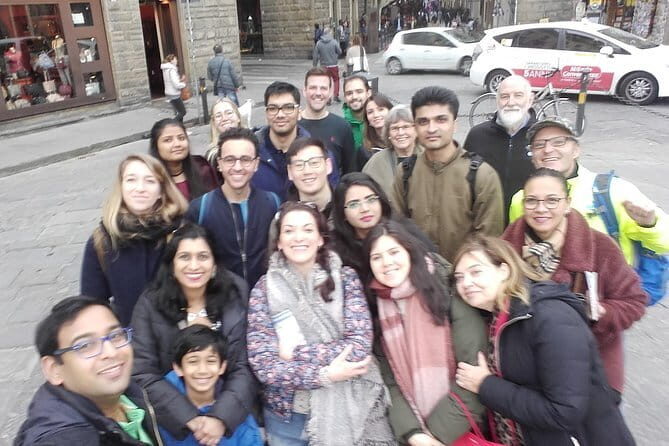
This tour is built for orientation. You get a guided path through the old center that connects “what you’re looking at” with “why it matters.” Florence can feel like a giant outdoor museum, and it’s easy to walk past genius without realizing it. On this route, you’re not just taking photos. You’re learning the logic of the city.
The timing helps, too. In about two hours, you cover enough territory that you can later explore on your own with better instincts. After the walk, you’ll know where you want to return—whether that’s the cathedral complex, the sculpture-packed museum stop, or the Medici heart of town around Piazza della Signoria.
You also get a classic Florence benefit: you see buildings in context, not as isolated postcard views. A church façade reads very differently when you’ve just been pointed at nearby streets, squares, and the kind of patronage that shaped what got built.
You can also read our reviews of more walking tours in Florence
Start at Santa Maria Novella and end near Santa Croce
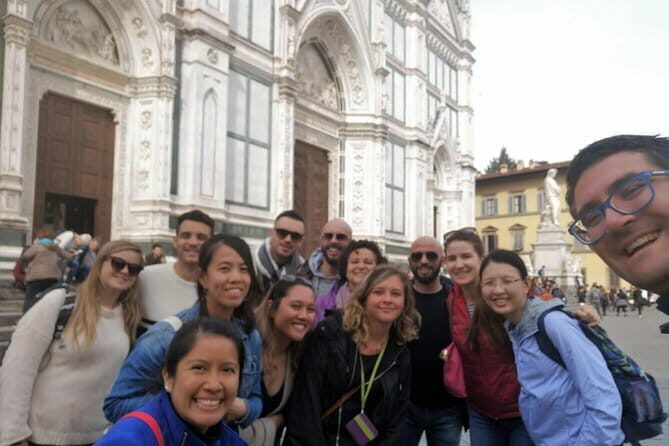
The meeting point is Piazza di Santa Maria Novella 4n, right by the Basilica area. That matters because it puts you close to major transit and a natural “hub” for beginning a walking day.
The tour ends at Piazza di Santa Croce 18R (in front of the Basilica di Santa Croce). That’s a smart finish. Santa Croce is a strong emotional landing spot: it’s not just another church. It’s tied to Florence’s literary legacy, and it gives you an ending that feels earned after walking through the city’s art centers.
If you’re planning your day, I’d schedule a flexible block after the tour. You’ll likely want time for a second look—especially at viewpoints and sculpture details you notice once you’ve been told what to hunt for.
Stop 1: Santa Maria Novella—where the tour begins with a real landmark
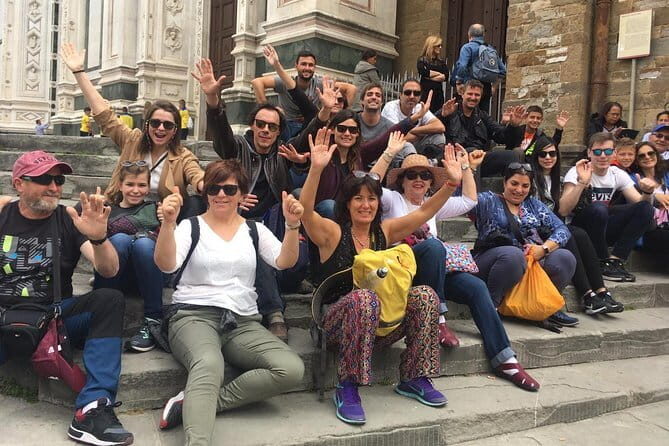
You start at the Basilica of Santa Maria Novella. This is a big introductory choice because it’s a recognizable anchor on the north side of the historic center, and it sets the tone: Florence art isn’t only in museums. It’s on the street, on the façade, in the way the city presents itself.
This stop is short—around 10 minutes—so it’s not about going deep into interiors. It’s about getting your bearings and learning the basics of how to read the building from the outside. You’ll also get a starter story for Florence’s church culture, which helps later when the route shifts toward sculpture and civic power.
Possible drawback here
If you arrive late or drift to the back of the group, you can miss the key points. This tour is built on quick, high-impact orientation, not lingering.
Stop 2: Via de’ Tornabuoni and Palazzo Strozzi-area views
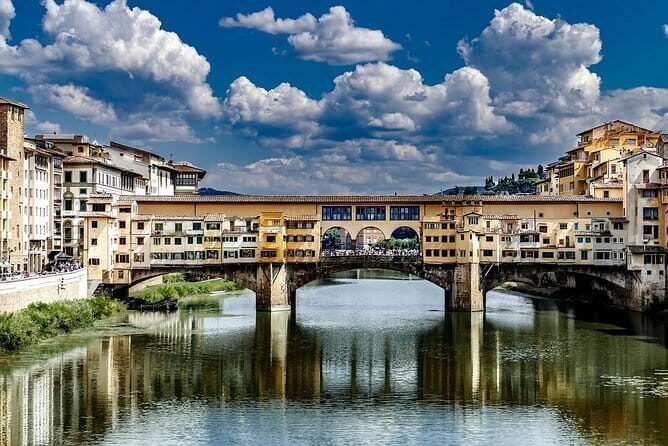
Next you move along Via de’ Tornabuoni, passing squares like Piazza Antinori and heading through the shopping lanes toward Palazzo Strozzi and Piazza Santa Trinita.
Why I like this section: it’s the bridge between “major monument time” and “real Florence streets.” Even if you don’t buy anything, this walk teaches you how the city’s wealthy visual culture sits next to everyday movement. Palazzo Strozzi is a key visual marker here, and it helps you understand the architectural language of Florentine power.
Also, this is where you start picking up the practical side of the guide. Many leaders include small local pointers—good corners for photos, where the pace naturally slows, and what kind of side streets are worth a second walk later.
- Tuscany Day Trip from Florence: Siena, San Gimignano, Pisa and Lunch at a Winery
★ 5.0 · 21,634 reviews

What to watch for
This segment is a street-and-square stitch. If it’s hot (and Florence often is), you’ll want to keep an eye on shaded spots the guide may try to use to keep the group comfortable.
Stop 3: Piazza della Repubblica—Roman echoes in plain sight
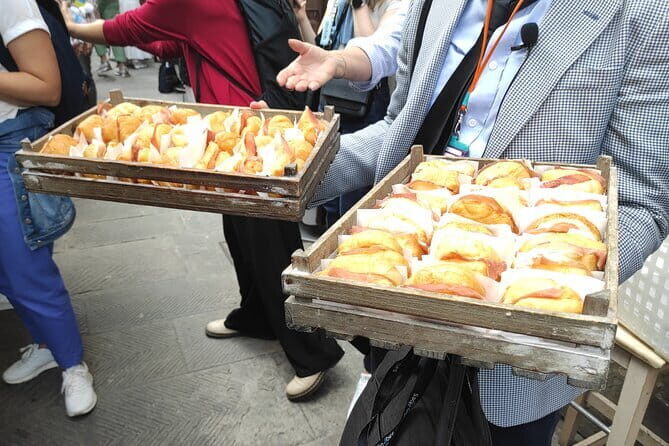
Piazza della Repubblica is one of those places that can feel like a “pass-through” unless you know what you’re looking for. This short stop, about 5 minutes, helps you connect the modern square to Florence’s older layers—Roman Florence, specifically.
Even in a quick visit, the value is mental. You’re training your eye to notice continuity: where old routes and old city rhythms shaped later development. That kind of context pays off for the rest of the day, because it makes each next stop feel less random.
A small reality check
It’s a busy square. You won’t be studying details at arm’s length. You’ll be getting the story and a sense of direction.
Stop 4: Santa Maria del Fiore complex—when “not included” matters
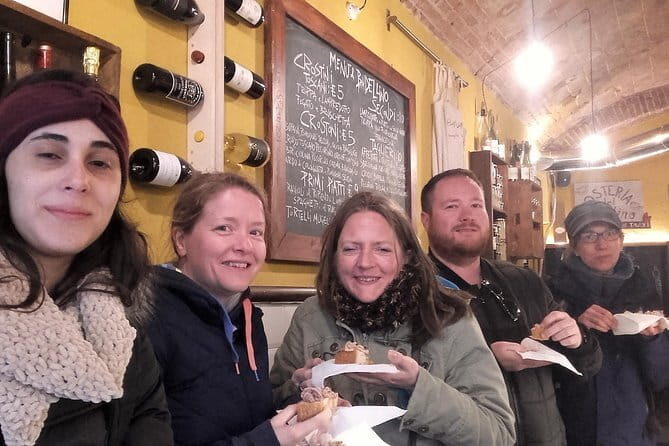
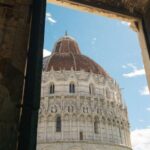
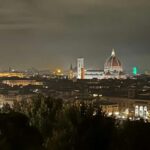
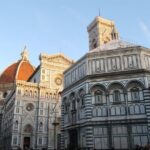
Now you reach the Cathedral of Santa Maria del Fiore area, including the Baptistery, the Campanile of Giotto, and the Cupola of Brunelleschi. You’ll spend about 10 minutes here, but the key detail is in the pricing note: admission is not included at this stop.
That means you get the outside-and-explainer experience, and any inside access is your choice and likely needs extra tickets. If your plan includes climbing for views or entering specific spaces, budget time and money for that separately.
Why this stop is still worth it
Even without tickets, the architecture is the point. This complex is one of the places where Florence’s ambition becomes obvious at a glance. You’ll be able to connect the exterior forms to what the guide explains about patronage and Renaissance identity.
Practical tip
If you do want to add paid entry, make sure you’re clear on your priorities before you arrive at this square. The tour itself is timed to move on, so treat paid options as an add-on after the walk, not something you try to squeeze in mid-tour.
Stop 5: Orsanmichele—Renaissance sculpture in church-museum form
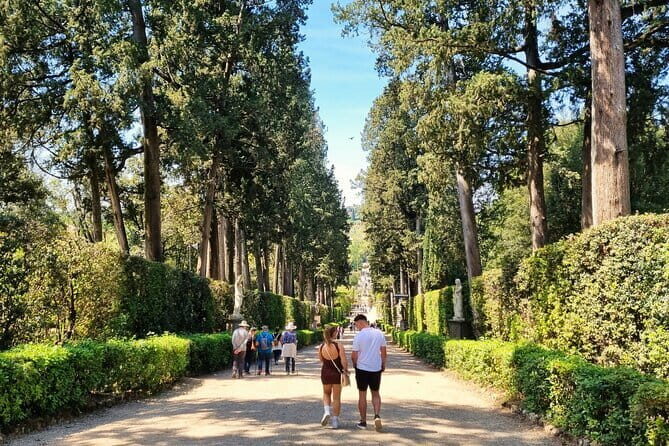
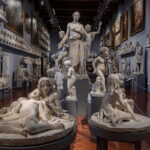
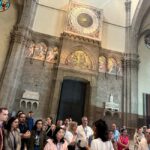
This is one of the most “Florence-specific” stops on the whole route: the Church and Museum of Orsanmichele. You’re looking at major sculptural work and learning how public art was meant to function in civic life.
This stop runs around 10 minutes, but it’s packed with names—think Donatello, Ghiberti, Giambologna, and also Brunelleschi, Verrocchio, Sangallo, Orcagna. That lineup alone gives you an idea of why the place matters: you’re not just seeing pretty objects. You’re seeing a concentrated slice of the people who shaped Renaissance sculpture.
Why you’ll like it
Orsanmichele helps you connect dots between Florence’s churches and its sculptors. Many people spend too much time thinking Florence is only about painting and frescos. Sculpture here reminds you that stone, bronze, and public display had real power.
A small consideration
Because it’s short, you’ll have to accept that you can’t “read everything.” But the guide’s job is to point you to the most meaningful pieces so your next independent visit feels more focused.
Stop 6: Piazza della Signoria to Ponte Vecchio—Medici power in public space
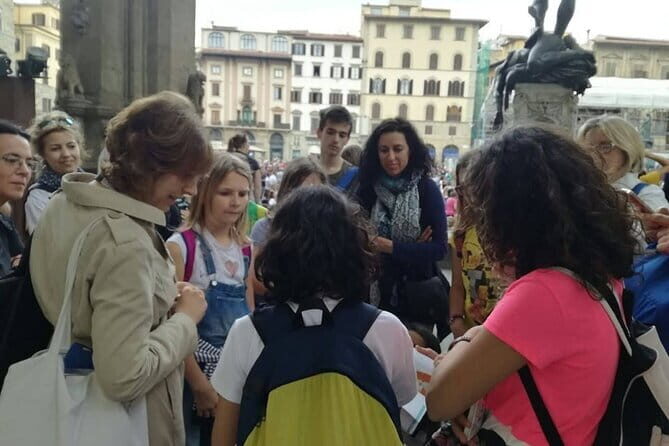
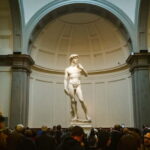
Piazza della Signoria is the civic heart many travelers imagine. Here, the tour expands into the big open area around Palazzo Vecchio and the Uffizi surroundings, then heads toward Ponte Vecchio and the Loggia de’ Lanzi. You also encounter landmarks like Torre d’Arnolfo and several famous sculpture installations: David, Marzocco, Perseo, and works associated with Cellini.
This is where the tour does something smart: it ties art to politics. Florence didn’t just decorate. It argued through art—who deserved authority, who protected citizens, and how prestige should look.
The best part of this section
You’ll be standing in the kind of place where history is visible even if you don’t read Italian. A statue tells one story, but the whole square tells another: the relationship between ruling families, public space, and artistic output.
Practical note
This is also where noise and crowds rise. If you care about hearing every detail, try to stay near the guide and don’t let yourself drift to the edge.
Stop 7: Santa Croce and Dante’s monument—ending with meaning
The finale is Basilica of Santa Croce, with a focus on the basilica’s story and the monumento a Dante. You spend about 10 minutes here.
I like the ending because it changes the “tone” slightly. After church façades, sculpture halls, and civic squares, Santa Croce brings literary Florence into the picture. Dante’s name gives you a strong emotional hook, and it makes the walk feel complete.
This stop is also a nice way to end a morning on foot. It’s easy to keep exploring right after, because Santa Croce sits in a lively historic zone with plenty of nearby reasons to wander.
Price and value: how $3.63 makes sense in Florence
At $3.63 per person, this is the type of tour that feels almost too good to be true—until you look at how it operates. This is a budget-friendly orientation-style walk with a guided story and mostly free viewing points. You’re paying for time with the leader and for the context that helps you see more than you would on your own.
The value isn’t just the low price. It’s the efficiency. In a single morning, you get a structured pathway through major art and architecture zones. That saves the most expensive resource in travel: your decision-making time and your walking energy.
What you should do to get full value
Go in with one mindset: use the tour to decide what deserves your next hour or two on your own. If you treat it like a “skip and move on” photo sprint, the value shrinks fast. If you treat it like a guided scouting trip, the value grows.
Guide quality: the names you might meet and the vibe you’ll feel
One fun thing about this tour is that different leaders bring slightly different emphasis, while keeping the structure consistent. Guides you may see leading include Ludi, Natalia, Ludovica, and Ryan.
What I’d expect from strong guiding here is exactly what you want in Florence: clear explanations, a sense of pacing, and practical city hints. In some cases, guides even manage comfort on hot days by finding shade spots along the route. That kind of “small mercy” is not guaranteed, but it’s been part of successful tours.
Listening tip (based on real-world feedback)
If you’re sensitive to hearing, stand closer to the guide. Some groups can be loud, and audio setups vary by crowd and conditions. Bringing your own focus helps more than you’d think.
Should you book this Florence art and architecture walking tour?
You should book if you want:
- A budget-friendly way to get your Florence bearings quickly
- A guided route that links churches, squares, and sculpture into one storyline
- A morning activity that helps you plan what to do next
You might skip it (or be more cautious) if:
- You strongly need reliable audio no matter what the crowd looks like
- You prefer long museum time over outside architecture and short stops
- You’re hoping the tour itself includes major paid entry everywhere (the cathedral-area stop notes that admission is not included)
If your goal is a smart first pass—something that leaves you with direction and better questions—this is a very good match. Bring a curious eye, stay close to the guide for key moments, and then use what you learned to return to the places that actually call your name.
You Might Also Enjoy


More Walking Tours in Florence
More Tours in Florence
- The Best tour in Florence: Renaissance & Medici Tales – guided by a STORYTELLER
★ 5.0 · 12,316 reviews
More Tour Reviews in Florence
- Tuscany Day Trip from Florence: Siena, San Gimignano, Pisa and Lunch at a Winery
★ 5.0 · 21,634 reviews - The Best tour in Florence: Renaissance & Medici Tales – guided by a STORYTELLER
★ 5.0 · 12,316 reviews