REVIEW · FLORENCE
Uffizi Gallery private tour with skip the line ticket
Book on Viator →Operated by Ciao Florence Tours Srl · Bookable on Viator
Art, chaos, and a fast entrance. The Uffizi private tour with a skip-the-line ticket gets you moving through one of the world’s top collections without wasting your limited Florence time. You’ll follow an English-speaking guide at a pace that fits your group, with the added benefit of a private setup where you can ask questions as you go.
Two things I really like: first, you start at the exact museum entrance area (Piazzale degli Uffizi) and meet your guide holding a sign with your name. That small detail helps a lot when crowds form outside. Second, the tour is built around Renaissance highlights in chronological order, from the thirteenth century foundations through later giants like Botticelli, Michelangelo, Leonardo, Raphael, Titan, and Caravaggio.
One possible drawback to plan for: the tour is about 2 hours (approx.), so if you want to stand and stare for a long time in each room, you may feel a little time pressure. Also, there are no headsets included, which can matter in noisy group areas.
In This Review
- Key things that make this Uffizi tour a smart use of time
- Why a private Uffizi tour is especially useful in Florence
- Where you meet your guide on Piazzale degli Uffizi (and why it matters)
- Your first stop: entering the Uffizi and getting the big-picture timeline
- 13th- to 15th-century turning points: gothic to storytelling in paint
- 15th- to 16th-century masterpieces: Botticelli, Leonardo, and Michelangelo in real time
- The big-name halls: Raphael, Titan, and Caravaggio—and how to get the pace right
- Price and value: what $189.27 per person buys you here
- What to watch for: headsets, crowded rooms, and how you’ll want to pace it
- Who this tour suits best (and who might want a different format)
- Should you book this Uffizi private skip-the-line tour?
- FAQ
- How long is the Uffizi Gallery private tour?
- Does this tour include skip-the-line entry?
- Is the tour private?
- What language is the guide?
- Where do we meet the guide?
- Is a mobile ticket provided?
- Are headsets included?
- Is the price refundable if I cancel?
Key things that make this Uffizi tour a smart use of time
- Skip-the-line entry with a named guide right outside the Uffizi entrance area on Piazzale degli Uffizi
- Private, group-only experience with an English guide for 2 hours
- A chronological route that helps you understand how Renaissance art changes over time
- Clear focus on famous works rather than trying to “do everything” alone
- Time to ask questions as your guide explains artists and imagery
- Built-in freedom afterward to keep exploring the museum on your own
Why a private Uffizi tour is especially useful in Florence
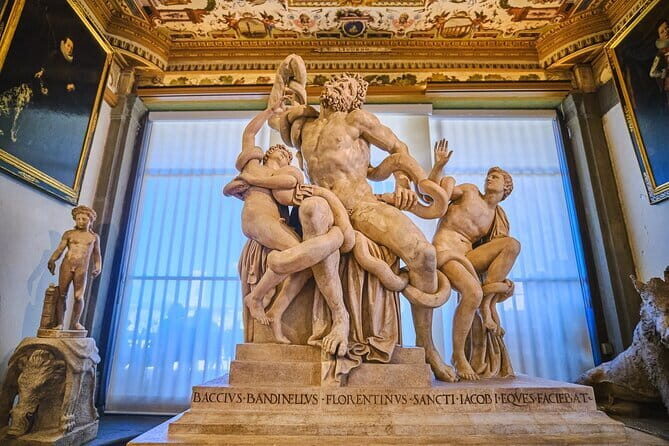
The Uffizi can feel like an art-history marathon. Even if you’re obsessed with Renaissance painting, the museum’s size and popularity make it hard to choose what to see first. A private format fixes that problem by giving you a guide who decides the “greatest hits” route for your timing and interests.
I like how this tour is positioned as a strong introduction for first-time visitors. You don’t just get a list of masterpieces. You get a guided story arc that moves through the centuries, so you start recognizing themes and artistic changes as you walk.
Another practical win: the guide doesn’t just point things out from afar. You’re meant to go through the entrance smoothly by following your guide as you skip long lines. That matters because Uffizi lines are often the difference between seeing one wing and seeing a good chunk of the collection.
If you’re in Florence for a short trip, this is a good match. You can pair it with other priorities the same day, without feeling like you’re committing an entire afternoon to figuring out where to go next.
You can also read our reviews of more tours and experiences in Florence


Where you meet your guide on Piazzale degli Uffizi (and why it matters)
This tour starts at Piazzale degli Uffizi, 2059, 50122 Firenze FI. Your guide meets you right outside the Uffizi Gallery area, holding a sign with your name. That’s a big deal because the meeting point is near public transportation and the area can get busy as opening time approaches.
The tour ends back at the meeting point, so you’re not left hunting your way across the city after. It also keeps the whole experience simple: arrive, get in, see the key works, then keep exploring nearby if you want.
A useful tip from real-world timing: one visitor noted arriving about 15–20 minutes early helped them find the guide and avoid getting stuck at the back of the skip-the-line group. You don’t need to overthink it, but arriving a bit early is smart here.
The tour is offered in English, and the exact departure time can depend on museum availability. You’ll be confirmed at booking, and if the selected time can’t be honored, you’ll be contacted to agree on an alternative time.
Your first stop: entering the Uffizi and getting the big-picture timeline
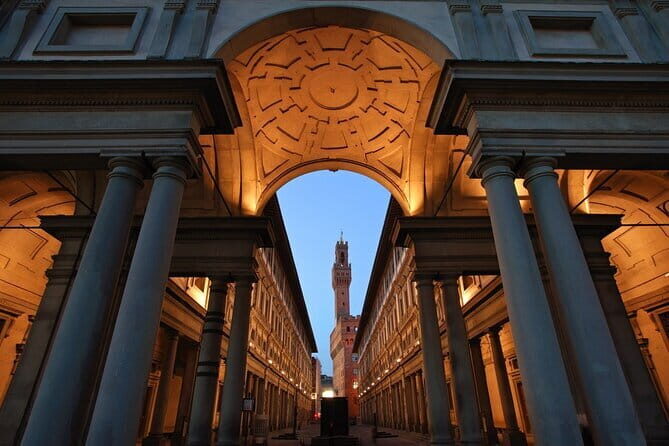
Your tour begins with an easy entry moment: meet your guide outside, follow them through the entrance, and use the skip-the-line ticket to save time. Once you’re inside, the guide’s job is to help you focus on the most important works and why they matter.
From there, you get a chronological route. Instead of jumping randomly from famous painting to famous sculpture, you start with earlier Renaissance groundwork, specifically the evolution that leads into what people call the Renaissance period. This helps you understand why the Uffizi feels so different room to room: style changes as you move through time.
Early on, you’ll be guided to major painting examples, including gothic works like Madonna and the Child with their bright colors and golden accents. Then you’ll reach works tied to the shift toward more realistic space, including attention to Giotto, often described here as an early artist who broke barriers with a sense of three-dimensionality.
This is a good “first touch” approach for anyone who feels lost inside big museums. You still see masterpieces, but you’re not forced to figure out the museum’s logic alone.
And because it’s private, your guide can adjust pacing. If you want more explanation for certain artists or less for others, you can steer the conversation.
13th- to 15th-century turning points: gothic to storytelling in paint
One of the most valuable parts of a guided Uffizi visit is learning what to look for beyond the famous artist names. In this tour, you see the changes in style step-by-step.
During the earlier stretch, you move through international gothic art and the sense that paintings become more narrative, telling stories instead of just presenting figures. A clear example in this route is Adoration of the Magi by Gentile da Fabriano, where you can start noticing how composition and storytelling work together.
Then the tour shifts into a period where art experiments more with spatial depth. You’ll see works that reflect that shift, including Battle of San Romano—a painting that tells a specific battle story from 1432. It’s not just dramatic subject matter; it’s also a window into how artists handled action, figures, and setting.
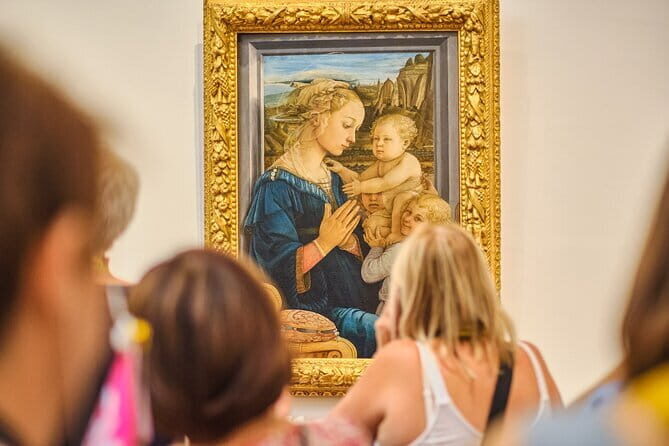
You’ll also spend time on works connected to figures like Filippo Lippi and Piero della Francesca, including Madonna with Child and Two Angels and Dukes of Urbino. These are helpful because they show how “idealized” features and refined forms became important in the way later artists built portraits and figures.
If you like to connect art to the world around it, this part of the tour gives you that. The guide explains cultural factors behind style changes, so the paintings feel less like isolated images and more like a growing visual language.
15th- to 16th-century masterpieces: Botticelli, Leonardo, and Michelangelo in real time
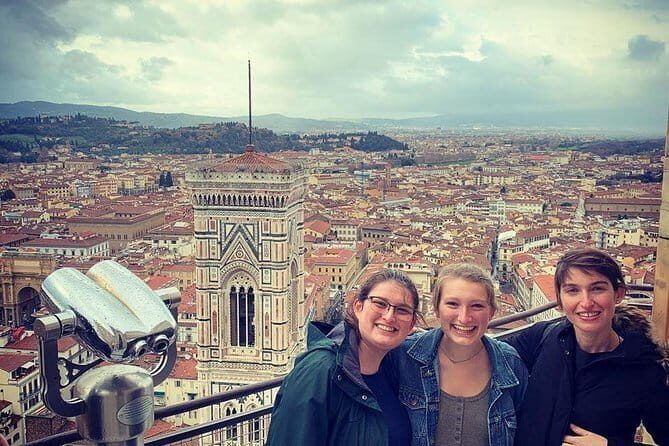
At some point in any Uffizi plan, you hit the wall of sheer fame. The tour smartly guides you into the moments where the museum becomes a magnet for art lovers: Botticelli, then the powerhouse generation of Michelangelo and Leonardo, and later the giant rooms filled with major names.
Botticelli is a focal point here. You’ll have time to explore the halls dedicated to his distinctive work, including Primavera and Birth of Venus. A private guide helps because these pieces come with lots of symbolic layers, and you don’t want to spend the whole time guessing what you’re looking at.
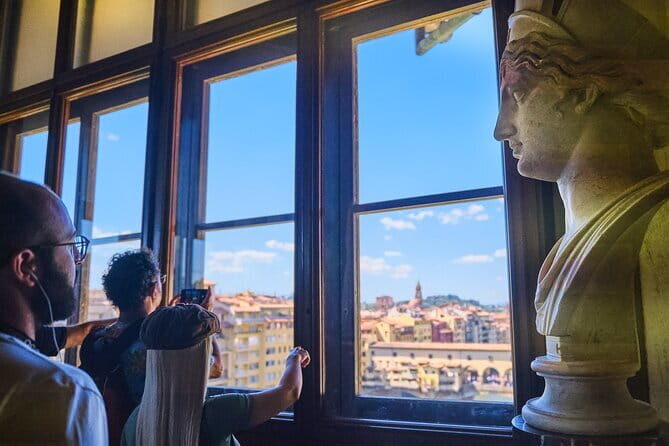
As you move through the galleries, you’ll also notice practical architectural details, like views of Florence through tall windows. It’s one of those reminders that Renaissance artists lived with the same city scenery you see today—same light, same geography, different era.
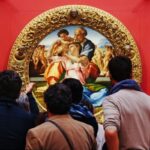
Later, you’ll spend time around major works like Michelangelo’s Rondo Tondi and Leonardo da Vinci’s Annunciation and Baptism of Christ. A guided explanation is useful with Leonardo because the images reward close looking, especially when you understand what the guide points out in the scene.
You can also read our reviews of more private tours in Florence





The big-name halls: Raphael, Titan, and Caravaggio—and how to get the pace right

The tour wraps its guided portion by heading through three giant halls with important works by Raphael, Titan, and Caravaggio. This is where the Uffizi shifts from “timeline lesson” into “festival of styles,” because each artist’s approach feels noticeably different.
This is also where you can make the most of a private guide. If there’s an artist you care about more than the rest, this is the moment to ask for emphasis. Since you’re not stuck with a rigid group script for a whole day, your guide can spend more time where you actually want it.
That said, pacing is the biggest variable in a museum this crowded. One common complaint about some guided museum experiences is that the guide talks while you don’t get enough time to stand close and study the painting. With a Uffizi private tour, you can reduce that risk by being direct. If you want a closer look, tell your guide early that you want a few quiet minutes per room, not just narration while you keep moving.
Also note: no headsets are included. In a large indoor space, sound can be a little tricky, especially if multiple groups are active. If you’re near the front, it’s usually workable, but if you’re sensitive to noise or distance, plan to ask your guide to keep the conversation at a comfortable volume and position.
At the end of the 2 hours, the experience shifts back to you. You can explore the Uffizi independently, which is the best way to turn highlights into a personal “top 10” list.
Price and value: what $189.27 per person buys you here
At $189.27 per person for a roughly 2-hour private tour, you’re paying for three things at once: a private guide, a guided route focused on major works, and a skip-the-line ticket included in the package.
That combo can be good value if you fall into one of these buckets:
- You want a guided introduction rather than wandering and hoping you pick the right rooms.
- You’re short on time and want the most recognizable masterpieces efficiently.
- You don’t want to manage the museum’s crowd flow while also trying to understand art history.
It’s also a smart purchase for groups, because the experience description includes group discounts. Even if you’re a small group, private means you’re not sharing the guide’s attention with strangers, which is part of what makes “time spent” feel efficient.
Is it the cheapest way to do the Uffizi? Probably not. But it’s often one of the best ways to get a high-impact first visit without burning an entire half-day getting oriented.
What to watch for: headsets, crowded rooms, and how you’ll want to pace it
This tour has a helpful structure, but there are two practical things you should plan around.
First, no headsets are included. If your guide’s voice doesn’t carry well where you’re standing, you may need to reposition closer. If you’re traveling with anyone who needs clearer audio, it’s worth arriving a touch early and staying flexible.
Second, the Uffizi interior can be crowded and some rooms can feel like people merge in shared bottlenecks. A private tour helps because you’re not stuck waiting your turn in line with the whole world. Still, once inside, you’ll be moving through popular spaces.
If you’re sensitive to pacing, make one simple request at the start: that you want time to actually look at each painting, not just listen while walking. A good guide will respond. Some guides can be faster and more narration-heavy, like one experience where a guide spent about 8–10 minutes per painting and then moved on quickly, leading the group to return afterward for a second look. You can avoid that by stating your preference early.
Who this tour suits best (and who might want a different format)
This private Uffizi tour is ideal if you want:
- A first-timer-friendly route with a clear narrative
- An English guide to explain major works, artists, and why the styles change
- The efficiency of skip-the-line entry
- A private pace you can adjust through questions
It might be less ideal if you:
- Want to spend a very long time with fewer paintings (you might feel rushed in 2 hours)
- Prefer a more independent museum experience where you set every pace yourself
- Need audio support beyond what the group environment provides (since headsets aren’t included)
One more note: you’ll have time at the end to explore on your own. That works well if you enjoy a guided overview first, then slow down for your favorites once you’ve been oriented.
Should you book this Uffizi private skip-the-line tour?
I’d book it if you’re coming to Florence for a limited window and you want the Uffizi to make sense fast. The skip-the-line ticket plus a private, English-speaking guide is a clean way to transform a famous museum into a guided story you can actually remember.
I’d pause if you’re the type who needs long quiet study time in front of each major work, because 2 hours can fly. In that case, you might either ask for slower pacing early or consider a longer-guided option.
If you do book, come ready to communicate what you want. Good experiences often hinge on one thing: whether your guide gives you time to look. With this format, you can usually steer that outcome.
FAQ
How long is the Uffizi Gallery private tour?
The tour is about 2 hours (approx.).
Does this tour include skip-the-line entry?
Yes. A Uffizi Gallery skip-the-line ticket is included, and the guide meets you at Piazzale degli Uffizi to take you in.
Is the tour private?
Yes. It’s a private tour/activity, and only your group participates.
What language is the guide?
The tour is offered in English.
Where do we meet the guide?
The meeting point is Piazzale degli Uffizi, 2059, 50122 Firenze FI, Italy.
Is a mobile ticket provided?
Yes. The tour includes a mobile ticket.
Are headsets included?
No. Headsets are not included.
Is the price refundable if I cancel?
No. The experience is non-refundable and cannot be changed for any reason.
You Might Also Enjoy



More Tickets in Florence


More Tours in Florence
- The Best tour in Florence: Renaissance & Medici Tales – guided by a STORYTELLER
★ 5.0 · 12,316 reviews



More Tour Reviews in Florence
- Tuscany Day Trip from Florence: Siena, San Gimignano, Pisa and Lunch at a Winery
★ 5.0 · 21,634 reviews - The Best tour in Florence: Renaissance & Medici Tales – guided by a STORYTELLER
★ 5.0 · 12,316 reviews