REVIEW · FLORENCE
Accademia Gallery with David Guided Tour
Book on GetYourGuide →Operated by Enjoy Rome · Bookable on GetYourGuide
Michelangelo deserves a guide, and fast. I like how this skip-the-line Accademia visit uses priority access, so you spend your time looking, not waiting. I also love the way a certified guide connects the dots behind Michelangelo’s David and the unfinished Prisoners, so you don’t just see sculpture—you understand what you’re seeing. The only real catch: it’s a tight 1-hour tour, and the museum rules mean you’ll want to travel light (small backpack and a 500ml max water bottle).
You’ll meet your guide at the street level, take the separate entrance, and then follow a clear, museum-friendly route with radios/headsets to keep the commentary easy to hear in a busy building. The guide speaks Spanish and English, and the tour is wheelchair accessible—good news if you want a smooth, guided experience without lots of guessing.
In This Review
- Key highlights at a glance
- Accademia in 1 hour: what this tour gets right
- Meeting point and getting inside without the stress
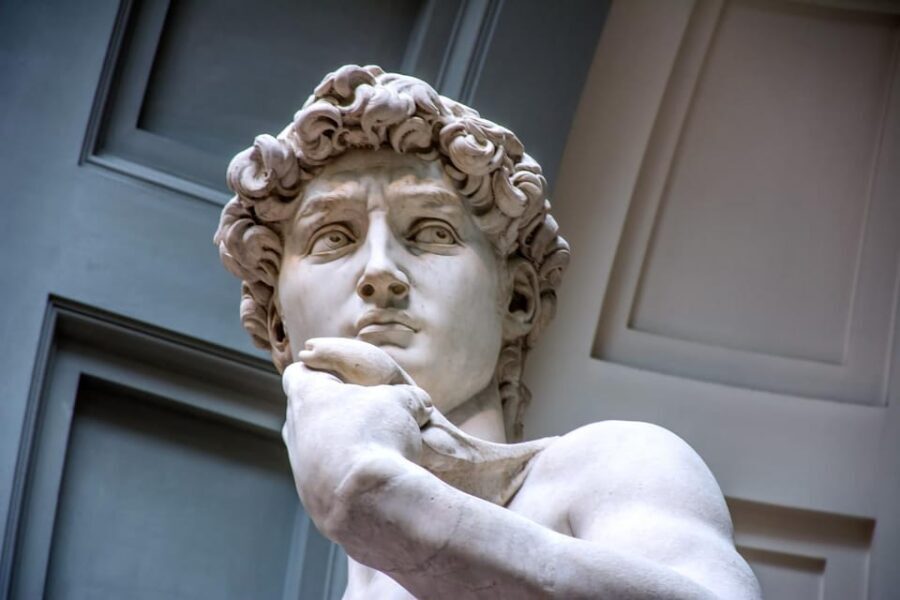
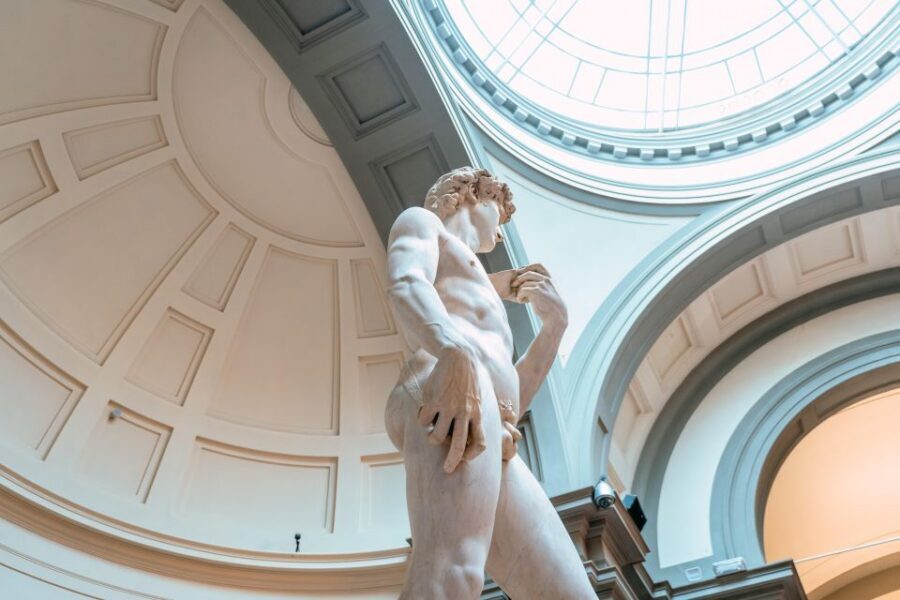
- Michelangelo’s David: more than a famous statue
- The four unfinished Prisoners and the sculptor’s process
- Florentine art from the Middle Ages to the Renaissance
- Museum of Musical Instruments and the Stradivarius moment
- Price and value: is $53 for 1 hour a fair deal?
- Small rules that matter: backpacks, water bottle, and ID
- Who this Accademia Gallery guided tour is best for
- Should you book this Accademia Gallery guided tour?
- FAQ
- Where is the meeting point for the Accademia Gallery guided tour?
- How long is the guided tour inside the Accademia Gallery?
- What’s included in the price?
- What languages is the live tour guide available in?
- What can I bring into the museum?
- Are pets allowed, and is the tour wheelchair accessible?
Key highlights at a glance
- Priority access gets you through the long museum queues faster
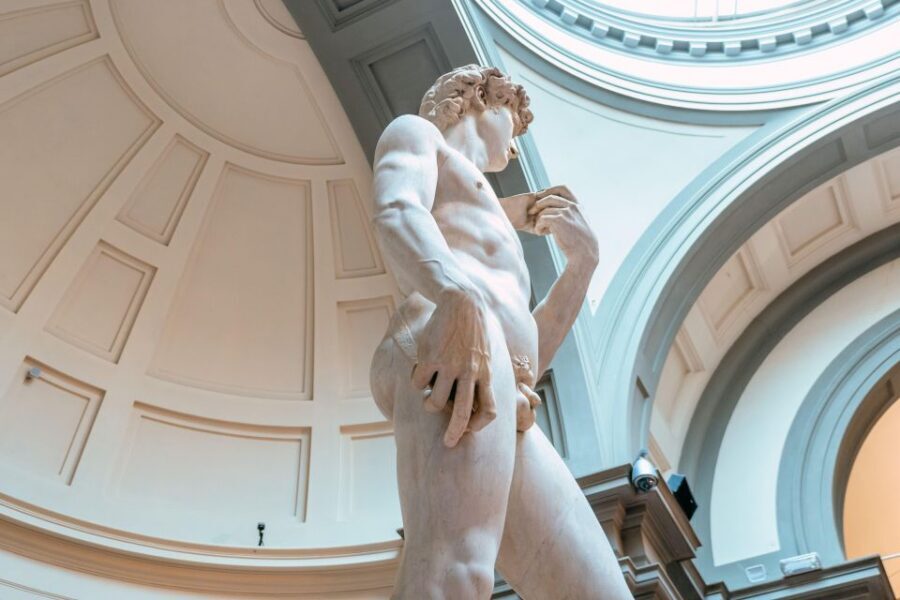
- Certified live guide explains what matters about David’s story and meaning
- Michelangelo’s David plus the four unfinished Prisoners for the full sculptor view
- Florentine art from the Middle Ages through the Renaissance, guided room by room
- Museum of Musical Instruments adds a Stradivarius-related stop for variety
- Radios/headsets help you hear clearly even when galleries get crowded
Accademia in 1 hour: what this tour gets right
This is a smart format for first-timers. The Accademia Gallery can feel like a lot of rooms and a lot of marble, especially if you’re trying to self-navigate. A guided hour keeps you focused on the museum’s heaviest hitters and the connections between them.
I also appreciate that the tour isn’t only about David. Yes, it’s the star (everyone knows the silhouette), but the guide’s job is to show you what Michelangelo was thinking and how this museum’s collection fits into broader Florentine art—from medieval foundations to Renaissance momentum.
The trade-off is time. In 60 minutes, you can’t become a deep specialist on every room. You’re choosing a “best of with context” approach, which is perfect if you want value and clarity.
You can also read our reviews of more guided tours in Florence
- The Best tour in Florence: Renaissance & Medici Tales – guided by a STORYTELLER
★ 5.0 · 12,316 reviews

Meeting point and getting inside without the stress
Your day starts at a clear, street-level spot: meet your guide in front of the Carrefour Express Supermarket, VIA RICASOLI 115 – RED NUMBER. Look for a guide holding a white flag that says ENJOY ROME.
Why this matters: you avoid the common Florence problem of arriving, wandering, and then losing your group. With a set meeting location and a separate entrance for skip-the-line access, you can get inside and start absorbing the art sooner.
Once you’re in, you’ll have radios with headsets. That’s a practical win in a museum setting, where people stop abruptly, photos happen, and sound carries weirdly between rooms.
Michelangelo’s David: more than a famous statue
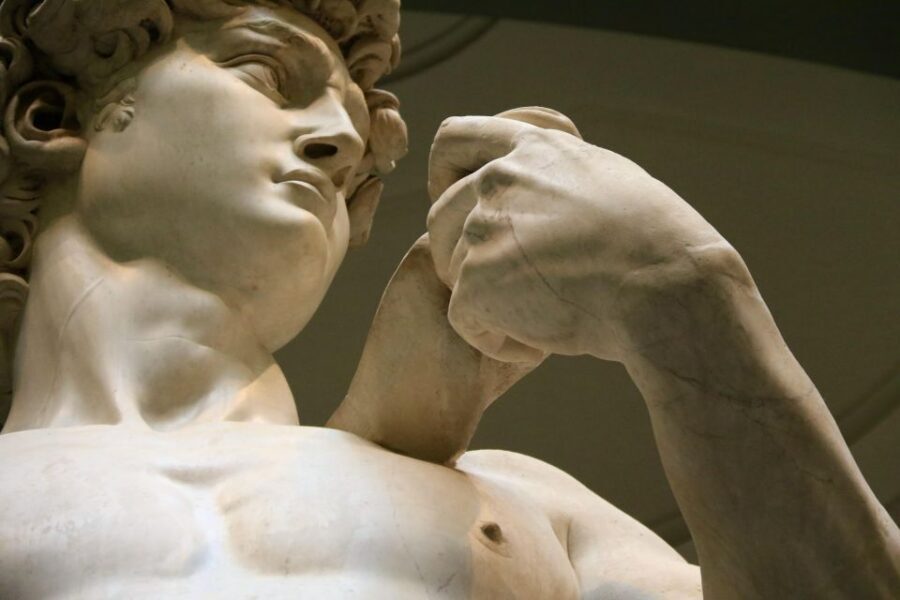
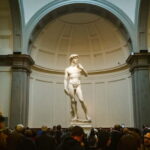
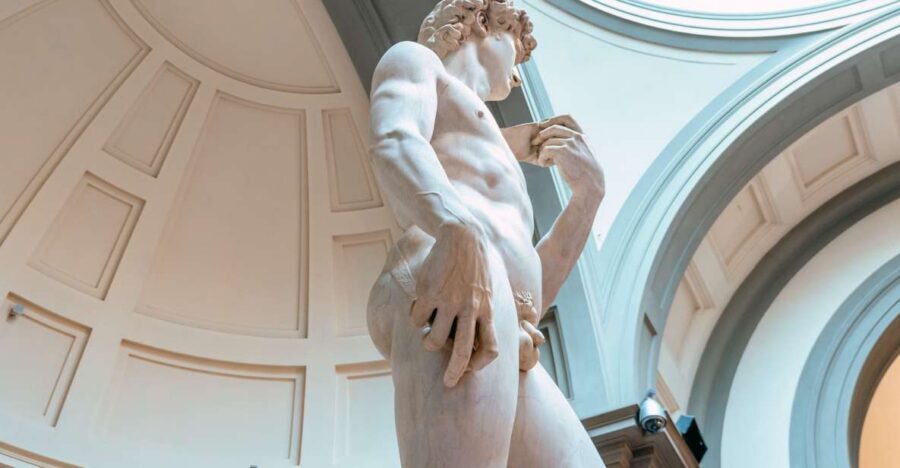
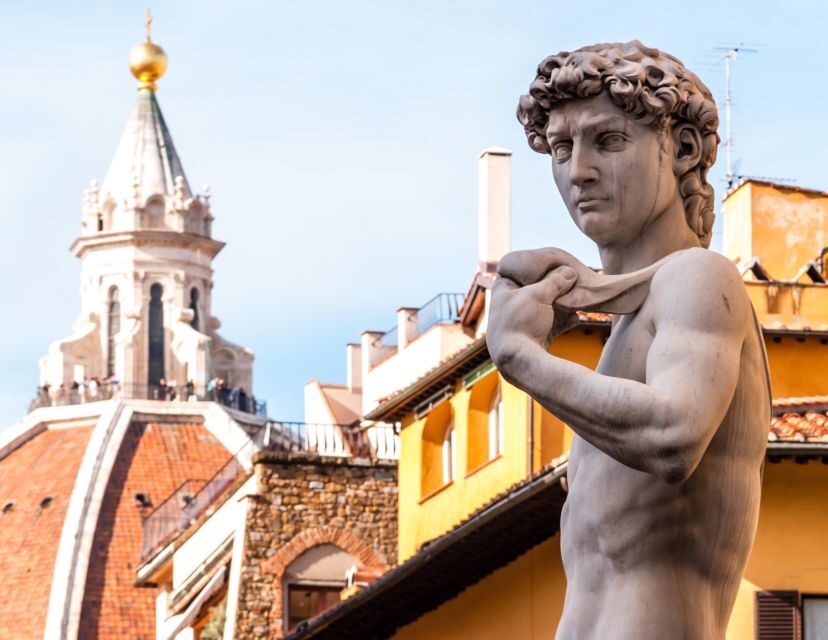
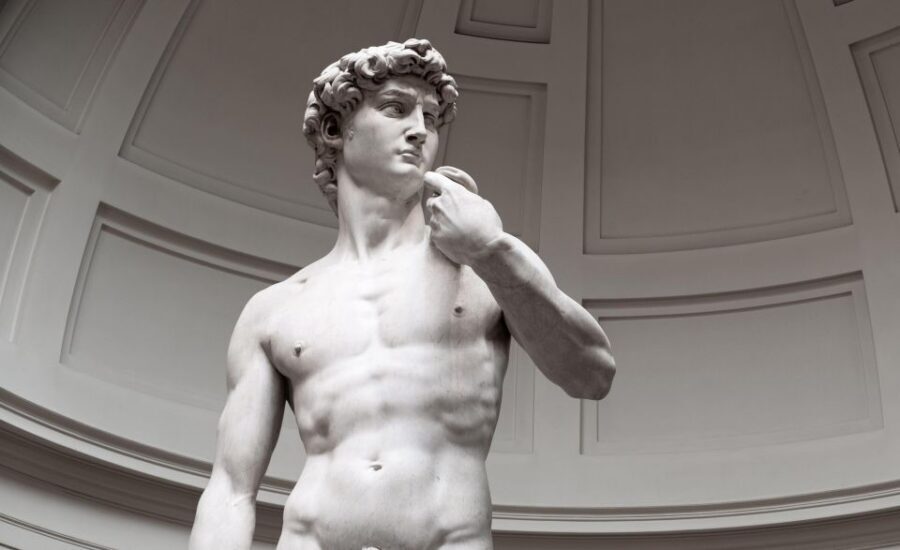
When you get to David, you’re not just looking at a landmark. You’re meeting a turning point in art and civic identity, and the guide helps you see why the statue has lasted so long in people’s imagination.
What you’ll focus on is the sculpture itself and the reason it became Florentine shorthand. The tour explanation covers the history behind David and what makes it such a Florentine icon—meaning you’ll get more out of the viewing than simple awe.
Also, David’s presence changes how you look at everything around it. After you understand what Michelangelo is doing, other works in the Accademia make more sense as part of a bigger story: artists learning, cities commissioning, styles shifting, and patrons paying attention.
This is one of the most highly praised parts of the experience because it’s not just being in the same room—it’s being guided through the meaning.
The four unfinished Prisoners and the sculptor’s process
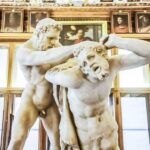
One of the best things you can do in the Accademia is look for the evidence of work-in-progress. The tour takes you to Michelangelo’s four unfinished Prisoners, where the idea is simple but powerful: you get to see how the sculpture feels while it’s still becoming itself.
These figures are basically the sculptor’s method made visible. Instead of presenting a finished “product photo,” you see the raw relationship between marble and form—how muscle, drapery, and tension are suggested before they’re fully committed.
For me, this is the moment when the museum stops being only impressive and starts being instructive. You start noticing how hands, eyes, and body angles communicate energy even when details aren’t fully finished.
If you’re the type who likes art to explain itself, you’ll probably enjoy this part the most—because it answers the question you might not even think to ask: how does the work happen?
Florentine art from the Middle Ages to the Renaissance
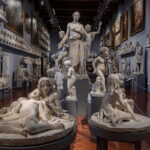
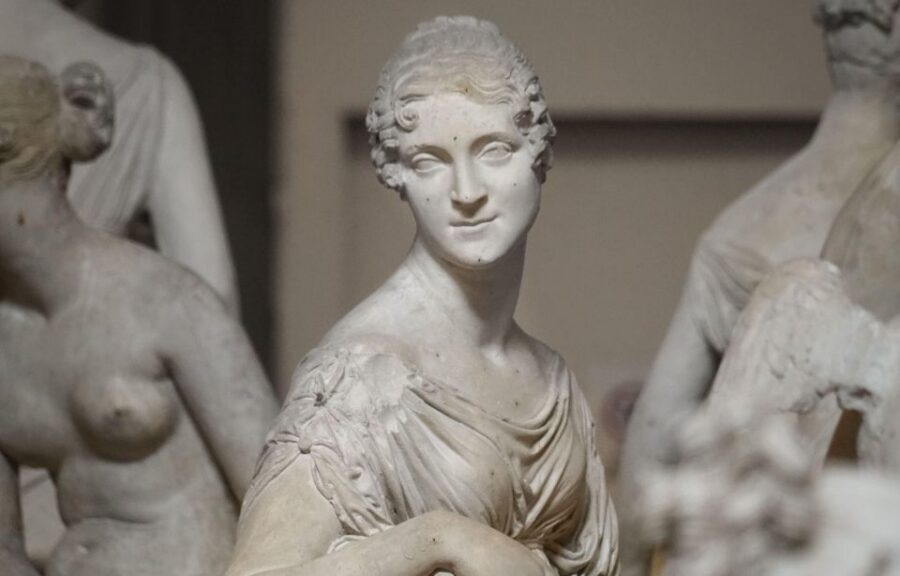
After the headline moments, the tour shifts toward the broader collection. The Accademia houses Florentine art spanning the Middle Ages and the Renaissance, and your guide helps you navigate it so it doesn’t become a blur of paintings and statuary.
This section is valuable because it gives you context. David is a later Renaissance triumph, but the collection around it helps you understand what came before—how styles developed, how religious and civic themes evolved, and how Florentine taste shaped what artists made.
A good guide here makes the difference between “I saw a lot” and “I can explain what I saw.” The radio headsets and the structured pace help, too, because you’re not stopping and starting to read every label yourself.
If you like galleries where the guide points out what to look for (materials, posture, symbolism, period cues), this part will feel like a shortcut to real understanding.
You can also read our reviews of more museum experiences in Florence


Museum of Musical Instruments and the Stradivarius moment
One of the pleasant surprises in this tour is that it doesn’t stay locked on stone. You get a chance to visit the Museum of Musical Instruments, including exceptional creations associated with Stradivarius.
Why this works: it breaks the “marble marathon.” After time spent with sculpture, you shift to craftsmanship of a different kind, still rooted in Italian excellence—precision, materials, and an obsession with sound.
This added stop also makes the hour feel less like a checklist and more like a mini-museum day. If you’re traveling with someone who gets bored during long art lectures, this is often the section that keeps things lively.
Just remember: it’s still part of a one-hour experience. You’ll get highlights, not a slow, stand-and-read session.
Price and value: is $53 for 1 hour a fair deal?
At $53 per person for a 1-hour guided visit, this isn’t the cheapest way into the Accademia. But it is a value play if your priorities are time saved and clear interpretation.
Here’s why the price can feel fair:
- You get skip-the-line access via a separate entrance, which can be a big deal at the Accademia.
- The tour includes a live professional guide, and the guide is doing real work—connecting David, the Prisoners, and the surrounding Florentine works into something you can remember.
- You also get radios with headsets, which reduces the frustration of trying to hear commentary in a loud crowd.
If you’re the type who would otherwise spend 60 minutes wandering between rooms trying to figure out what to prioritize, paying for the structure often wins. You’re essentially buying a focused route with interpretation baked in.
Small rules that matter: backpacks, water bottle, and ID
Museums in Italy run on small rules that can either be easy or mildly annoying. Here’s what you should plan for with this one:
- You can only carry small backpacks.
- You can bring in a water bottle up to 500ml into the museum premises.
- Pets aren’t allowed.
- If you’re traveling with children, bring passport or ID.
My practical advice: pack like you’re going to a museum for a few hours, not a day trip. If your bag looks bulky, you’ll likely waste time dealing with it at the start.
Also, since this tour moves, a “nothing in your hands” strategy helps. You’ll enjoy the art more if you’re not juggling stuff while trying to hear the guide.
Who this Accademia Gallery guided tour is best for

This tour is especially good for:
- First-time Florence visitors who want the Accademia’s key works without stress
- People who get more out of art when someone explains the why, not just the what
- Anyone who wants a tight schedule that still covers David, the Prisoners, and more
- Travelers who appreciate practical tools like headsets/radios
If you’re an art superfan who wants to sit for a long time and study every label, you might feel the hour goes fast. But if you want a high-impact, guided “greatest hits with context,” you’ll likely find it hits the mark.
The languages offered—Spanish and English—also make it a solid option if you’re traveling as a mixed-language group and want the guide’s narration without friction.
Should you book this Accademia Gallery guided tour?
I’d book it if your top goals are saving time, getting expert narration, and seeing not only David but also the unfinished Prisoners and the Museum of Musical Instruments in a compact format. The mix of sculpture + instruments gives you variety, and the radios/headsets support a smoother experience in a crowded space.
Skip it only if you’re the type who wants to linger for hours, read everything in-depth, and build your own pace. For most visitors, though, this is a well-aimed hour that helps you actually remember what you saw.
FAQ
Where is the meeting point for the Accademia Gallery guided tour?
Meet your guide in front of the Carrefour Express Supermarket at VIA RICASOLI 115 – RED NUMBER. Look for your guide holding a white flag with ENJOY ROME written on it.
How long is the guided tour inside the Accademia Gallery?
The tour lasts 1 hour.
What’s included in the price?
Included are the Accademia Gallery entry ticket, a 1-hour guided tour with a professional tour guide, and radios with headsets.
What languages is the live tour guide available in?
The live tour guide is available in Spanish and English.
What can I bring into the museum?
You can carry only small backpacks. You can bring in a water bottle with a maximum capacity of 500ml. Also, if traveling with children, bring a passport or ID card.
Are pets allowed, and is the tour wheelchair accessible?
Pets are not allowed. The tour is wheelchair accessible.
You Might Also Enjoy

More Guided Tours in Florence
- The Best tour in Florence: Renaissance & Medici Tales – guided by a STORYTELLER
★ 5.0 · 12,316 reviews


More Tours in Florence
- The Best tour in Florence: Renaissance & Medici Tales – guided by a STORYTELLER
★ 5.0 · 12,316 reviews



More Tour Reviews in Florence
- Tuscany Day Trip from Florence: Siena, San Gimignano, Pisa and Lunch at a Winery
★ 5.0 · 21,634 reviews - The Best tour in Florence: Renaissance & Medici Tales – guided by a STORYTELLER
★ 5.0 · 12,316 reviews