REVIEW · FLORENCE
Florence: 2-Hour Esoteric Guided Walking Tour
Book on GetYourGuide →Operated by Florence Tours by Made of Tuscany · Bookable on GetYourGuide
Florence gets weird when you read its symbols. This 2-hour esoteric walking tour turns famous landmarks into a kind of puzzle book, with a local guide pointing out secret signs and symbols you would normally miss. I especially like the way it spotlights specific facades around the city, including the Basilicas of Santa Croce and Santa Maria Novella, and it also teaches you how to spot details like the palindrome connected to the Florence Baptistery.
I also appreciate the balance between clever symbolism and genuinely dark Florentine stories. You’ll hear about the legendary knight Pazzino dei Pazzi, an arsenic poisoning linked to Lorenzo the Magnificent, and the shock of Friar Girolamo Savonarola’s execution in Piazza della Signoria. One possible drawback: if you want a light, art-only Florence stroll, this one goes straight into the darker side—necromancy talk, political intrigue, and grim deaths are part of the package.
The good news is the format stays manageable. You’re in a small group (up to 8), and the guide works in English, French, Italian, German, or Spanish, so you’re not stuck translating your way through Florence’s mysteries. The walk starts at Piazza San Marco and builds toward the finale near Ponte Vecchio, with a playful moment at Piazza Santissima where you’re asked to count the bees for good luck.
In This Review
- Key Highlights You’ll Actually Notice
- Why This 2-Hour Esoteric Tour Works in Florence
- Meeting at Piazza di San Marco: Small Group, Real Interaction
- Piazza Santissima Annunziata: Learning to See Symbols in Plain Sight
- Piazza del Duomo: Baptistery Palindromes and Church-Era Mind Games
- Santa Maria Novella and Santa Croce Facades: Necromancy and Necrology Energy
- Piazza della Signoria: Savonarola’s Execution in the Middle of Power
- Ponte Vecchio and the Web of Intrigue Around Pazzino dei Pazzi
- Piazza del Limbo and the Bees-for-Good-Luck Finale
- What You Learn, and Who This Tour Is Best For
- Practical Tips for a Comfortable Walk (And Better Symbol Spotting)
- Should You Book This Esoteric Florence Walk?
- FAQ
- How long is the Florence esoteric guided walking tour?
- Where does the tour start?
- What is the tour’s small group size?
- What languages are available?
- Is the tour wheelchair accessible?
- Where does the tour end?
- What kind of stories or themes are included?
- Does the tour include specific stops like churches and squares?
- Is free cancellation available?
- Is there a reserve and pay later option?
Key Highlights You’ll Actually Notice
- Facades as clues: You’ll focus on the Basilicas of Santa Croce and Santa Maria Novella and learn how their design can be read like coded messaging.
- Palindromes and other mind-benders: The tour includes deciphering a palindrome connected to the Florence Baptistery.
- History with teeth: Expect stories that include necromancy, arsenic poisoning, and famous deaths tied to major Florentine figures.
- Savonarola in Piazza della Signoria: You’ll revisit the moment of Friar Girolamo Savonarola’s execution, right where the power plays happened.
- Knightly intrigue: Pazzino dei Pazzi is part of the route’s storyline, not just a name dropped in passing.
- A funny closer: The bees-for-good-luck bit at Piazza Santissima gives the whole dark theme a little human reset before you finish near Ponte Vecchio.
Why This 2-Hour Esoteric Tour Works in Florence
Florence can feel like one long museum. Statues, churches, paintings, then more churches. This tour flips the usual order. Instead of treating buildings only as art objects, it treats them as communication devices—stone-and-shadow ways of saying things that weren’t safe to say out loud.
What makes it work is that it stays specific. You’re not asked to accept vague “mysticism” as atmosphere. You’re guided to look at actual places and interpret concrete details: facades, symbolic geometry, and a palindrome connected to the Baptistery. That turns the walking time into something you can replay later when you’re back on your own.
The second reason it clicks is the storytelling. Florence’s Renaissance world wasn’t just geniuses and masterpieces; it was rivalry, fear, propaganda, and punishment. This tour leans into that darker layer—necromancy talk, poisoning allegations, and the public execution of Friar Girolamo Savonarola in Piazza della Signoria. If you enjoy history that feels like it had consequences instead of just footnotes, you’ll like the tone.
You can also read our reviews of more walking tours in Florence
Meeting at Piazza di San Marco: Small Group, Real Interaction
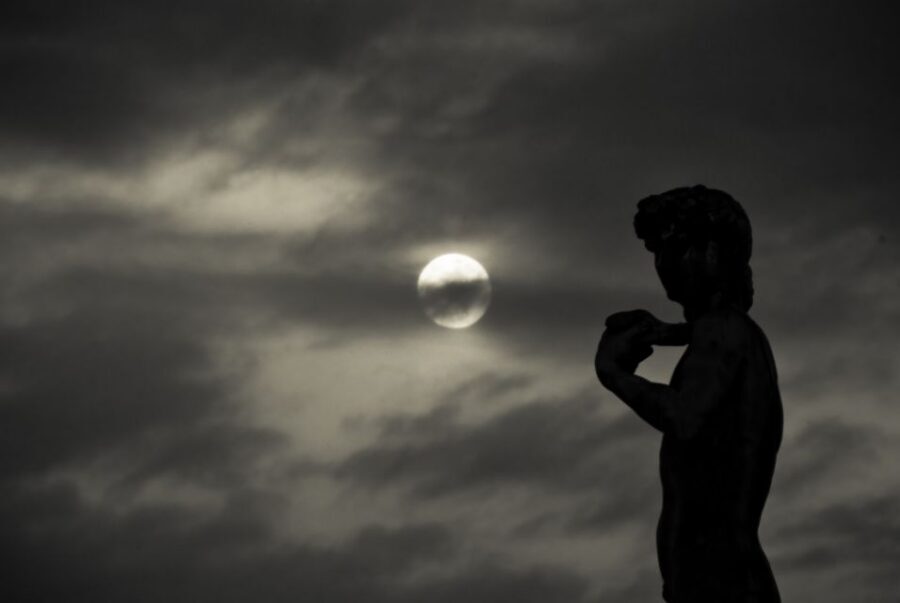
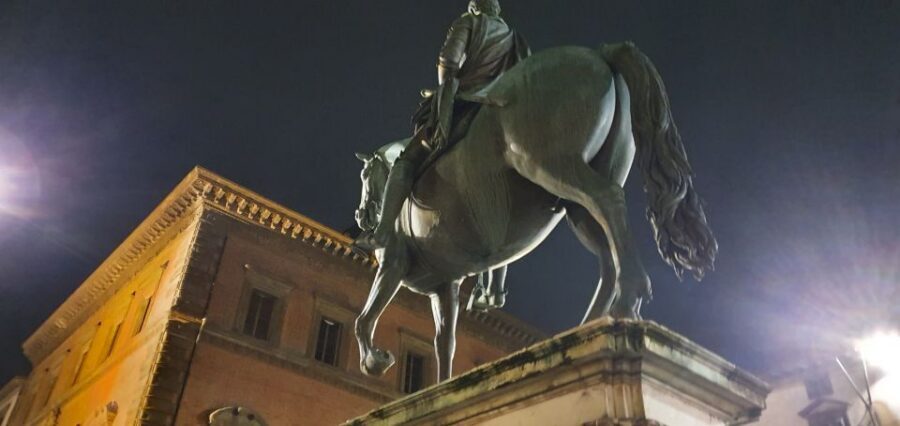
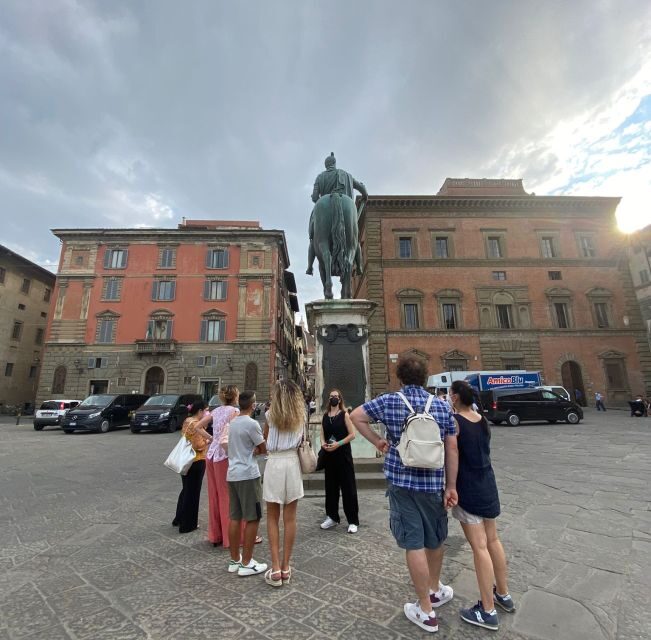
You meet at the Manfredo Fanti statue in the middle of San Marco Square, at P.za di San Marco 14 (coordinates are 43.778079986572266, 11.258722305297852). That starting point matters because it gets you into the city’s flow early, rather than beginning far from where the key symbols start clustering.
The small group size—limited to 8—changes how the guide can teach. In a bigger crowd, you usually just watch and listen. Here, you’re more likely to get personal prompts, quick checks for understanding, and time to actually look at what the guide is pointing at. When the tour is about reading facades and decoding details, that kind of interaction is a big deal.
You also get flexibility on language. The tour runs in English, French, Italian, German, and Spanish. If English isn’t your strongest, it’s a relief to know you can choose a language that keeps the symbolism clear. And if you use a wheelchair, the experience is described as wheelchair accessible—important for a route where you’ll be on foot for a full two hours.
Piazza Santissima Annunziata: Learning to See Symbols in Plain Sight
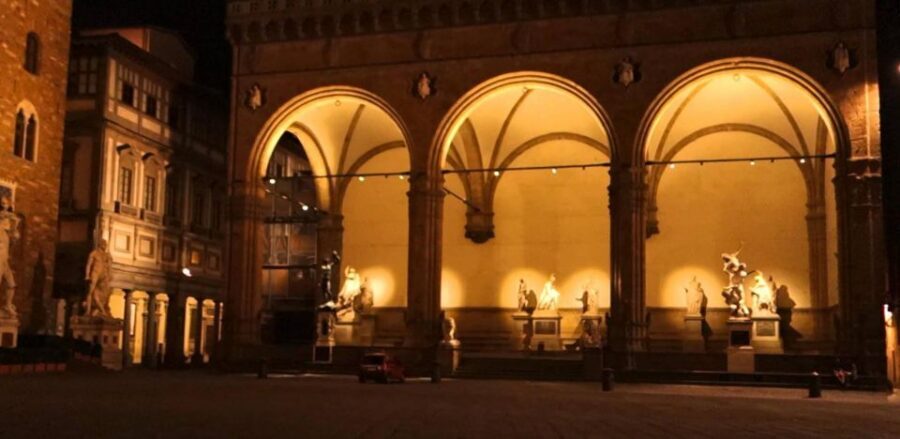
Early on, you spend time in Piazza della Santissima Annunziata. This stop works like a warm-up lesson: you learn how to pay attention. Not just to the obvious sights, but to the kinds of details that function as cultural shorthand—where a shape, placement, or motif can be treated as a meaning carrier.
For many people, this is the moment where the tour’s promise becomes real. Florence’s churches look dramatic from far away, but the “esoteric” angle only becomes interesting once you train your eyes for what’s repetitive and intentional. That’s why a short guided stop here matters: it helps you avoid the common travel mistake of walking past clues without realizing they’re clues.
Also, you start building narrative momentum. The tour is about Florence’s “magical past,” but it’s not all fantasy. It’s tied to real historical tension—people using art, architecture, and public spaces to signal beliefs, loyalties, and fears. That sets you up for the darker, more specific stories that come later.
Piazza del Duomo: Baptistery Palindromes and Church-Era Mind Games
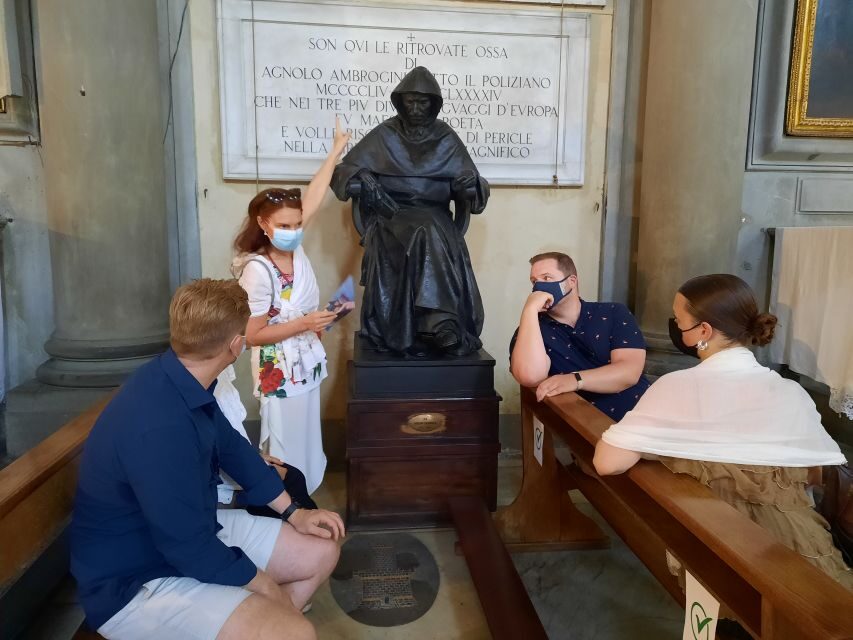
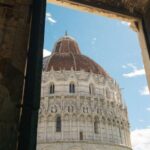
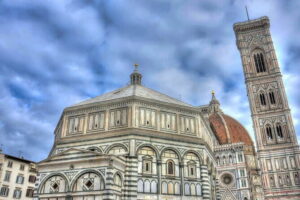
Next you move into Piazza del Duomo for a longer guided segment. The big draw here is the connection to the Florence Baptistery and the palindrome the guide helps you decipher. Palindromes sound like trivia, but on this tour they’re treated as a sign of how Renaissance culture loved patterns—wordplay, repetition, order, and encoded meaning.
This part of the walk also clarifies how symbolism can sit right next to religious function. A baptistery is not a secret meeting room, but messages can still be layered into design and language. You start seeing the city as a place where different audiences could notice different levels of meaning. The church communicates publicly, while other signals travel more quietly.
You’ll probably feel two things during this stop. First, you’ll want to look harder at the details. Second, you’ll realize that Florence’s history isn’t just about what happened—it’s about how people tried to control what others could understand. That theme connects directly to later stops, like the public power struggle in Piazza della Signoria.
Santa Maria Novella and Santa Croce Facades: Necromancy and Necrology Energy
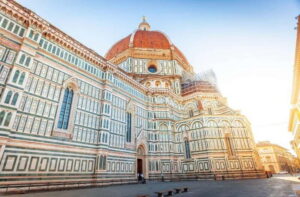
One of the most compelling parts of this experience is the way it centers the Basilicas of Santa Maria Novella and Santa Croce. You’re not just told they matter—you’re taught to interpret the facades as if they’re communicating on multiple levels.
Santa Croce is specifically linked to the tour’s darker material, including necromancy in Piazza Santa Croce. That’s not “ghost-story” entertainment. It’s positioned as a window into how fear and fascination with death circulated in Florence. Even if you’re skeptical, it’s still useful. You get an angle on how people in that era thought, what they feared, and what they did when power and belief got entangled.
Meanwhile, Santa Maria Novella adds a different flavor: the tour leans into how a religious site can also be a stage for meaning. The point isn’t that you’ll suddenly decode Florence like a video game. The point is that the guide teaches you a method—look closely, treat details as purposeful, and accept that symbolism could be both spiritual and political.
If you’re a fan of architecture, you’ll enjoy how this section encourages active viewing. If you only tolerate “dark topics” in small doses, this is where you should mentally prepare. The tour doesn’t hide the mood—it warns you with the subject choices before you get there.
You can also read our reviews of more guided tours in Florence
- The Best tour in Florence: Renaissance & Medici Tales – guided by a STORYTELLER
★ 5.0 · 12,316 reviews
Piazza della Signoria: Savonarola’s Execution in the Middle of Power
Piazza della Signoria is where Florence’s drama stops being abstract. This is the stop tied to Friar Girolamo Savonarola, the Dominican who was hanged and burned at the stake in 1498 in Piazza della Signoria. Standing in that public square with the story framed around secrecy and punishment changes the way you see the space.
This segment also connects to the tour’s theme of the dark side of history. Savonarola wasn’t only a religious figure; he was a lightning rod in a city where politics, belief, and reputation could collide violently. When your guide ties that to the tour’s esoteric thread, it feels less like random mythology and more like a case study in how people used public life to manage control.
You’ll also hear about mysterious deaths of famous Florentines, including a thread involving arsenic poisoning and a relationship between Lorenzo the Magnificent and intellectual circles. The tour mentions Pico della Mirandola in 1494 as part of the arsenic poisoning reconstruction, focusing on an associate. That’s heavy subject matter, but it stays grounded in real historical names and dates.
One reason this stop lands is pacing. The guide gives you enough context that the square stops being a backdrop. You’re not just seeing a landmark—you’re standing in the kind of place where stories got amplified and sometimes weaponized.
Ponte Vecchio and the Web of Intrigue Around Pazzino dei Pazzi
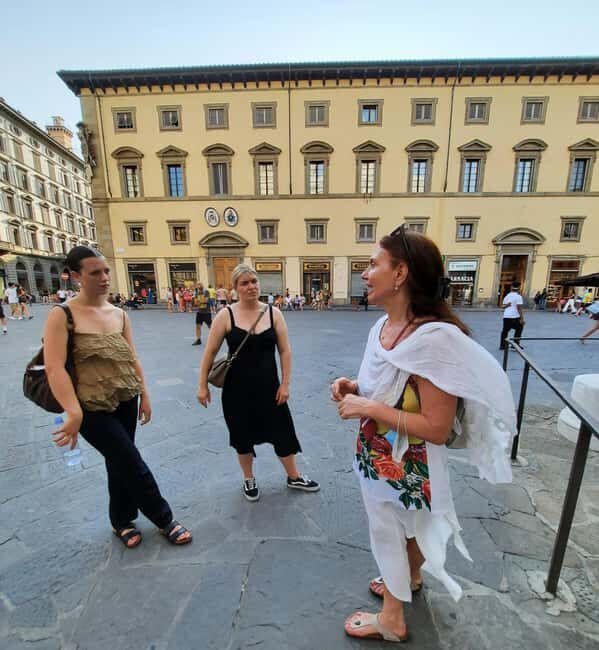
Ponte Vecchio is famous for its shops and postcards. Here, it becomes something else: a moving frame for Florence’s intrigue. You get a guided segment at Ponte Vecchio, and the tour includes the legend of knight Pazzino dei Pazzi.
Pazzino dei Pazzi is one of those names that sits at the intersection of factional conflict and reputations. On a tour like this, he’s not there just for flavor. He’s used to illustrate how Florence could nurture myths alongside facts. If you enjoy piecing together how legend and history feed each other, you’ll probably find this section especially fun.
This is also a good moment to appreciate why the tour is only two hours. Florence can swallow your time. Instead of exhausting you with constant stops, the guide uses fewer anchor points and loads them with meaning. Ponte Vecchio becomes one of those anchors—an easy-to-recognize place where the guide’s storytelling sticks.
Just keep your expectations honest: Ponte Vecchio is still Ponte Vecchio. There will be crowds and a busy atmosphere. The value here is not the scenery alone—it’s the guide’s focus, linking the location to the tour’s darker narrative thread.
Piazza del Limbo and the Bees-for-Good-Luck Finale
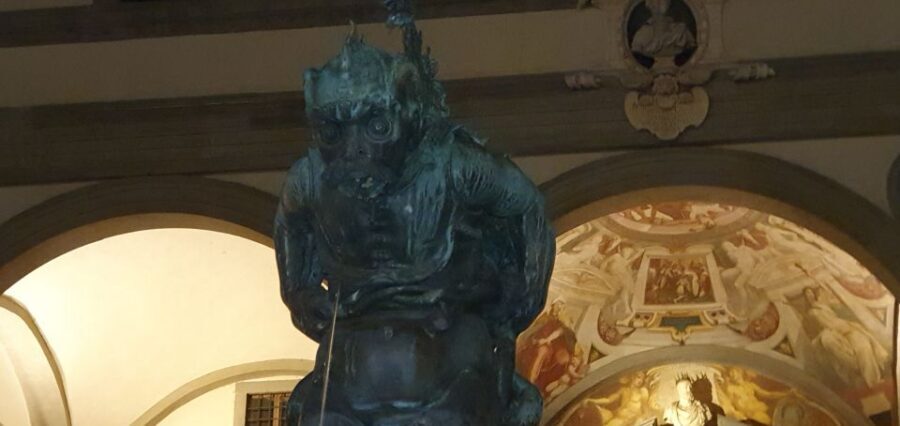
After Ponte Vecchio, the tour continues to Piazza del Limbo for a shorter guided stop. The name itself signals the tour’s tone: a place for in-between ideas. In this section, you’re likely to notice how the guide uses mood and metaphor, not just hard facts. It’s a reminder that Florence’s history can be read as a system of beliefs, not only a timeline.
The finishing movement connects to Piazza Santissima and the statue of Ferdinand I. You’re also asked to count the bees for good luck. That sounds whimsical, and it is. But the practical value is that it gives you a clean landing after heavy themes. When the stories are about death, executions, and poisoning, you need a moment that re-centers your senses.
Finally, you finish near Ponte Vecchio. That works well for two reasons. First, it lets you end close to an iconic area where you’ll naturally want to keep exploring. Second, it keeps you from feeling like you’re dropped far away from everything interesting, which can be a common problem with walking tours that try to cover too much territory.
What You Learn, and Who This Tour Is Best For
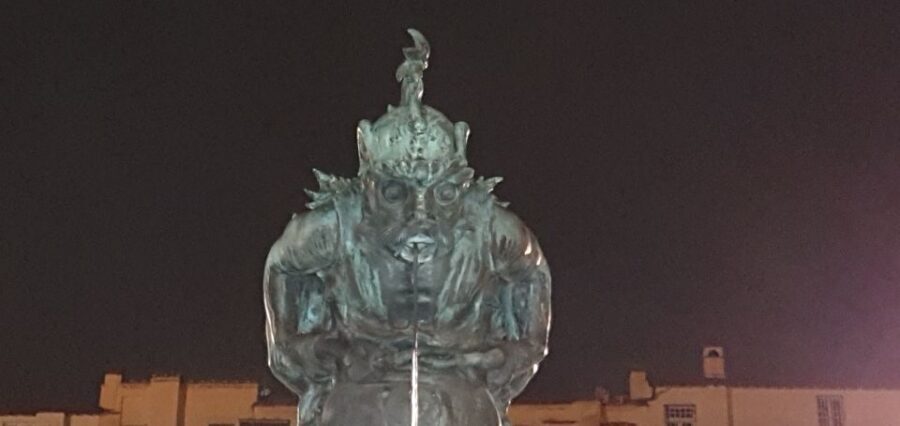
This experience isn’t for people who want only museum facts. It’s for people who like Florence with edge—symbol-minded, story-driven, and open to the idea that buildings could carry coded messages.
You’ll likely come away with three kinds of takeaways:
- A better ability to read church facades as more than decoration
- A handful of specific, dramatic historical threads (Pazzino dei Pazzi, Savonarola, arsenic poisoning tied to major names)
- A sense of how fear, power, and belief shaped public life
If you’re traveling with family, this tour can work for older teens who enjoy history and don’t mind dark subjects. If you’re traveling with someone sensitive to execution or poisoning themes, it might feel too intense.
I also think this tour suits two travel styles:
1) You like walking tours where the guide points out details you would miss.
2) You enjoy stories that explain how people in the past thought, not just what they built.
And if you’re the type who can’t stop at one Florence layer—art plus politics plus symbolism—you’ll probably love how this tour gives you multiple lenses in just two hours.
Practical Tips for a Comfortable Walk (And Better Symbol Spotting)
Wear comfortable shoes. You’re on foot across several major squares and streets, and this is a city built on uneven, old surfaces. The tour is only two hours, but Florence is still Florence—your feet will notice.
Bring your attention, not just your camera. The key moments here involve facades and specific details like palindromes and symbol meanings. If you keep your phone out the whole time, you’ll miss what makes this tour special.
Decide how you feel about dark-history storytelling before you start. The tour includes themes like necromancy, poisoning, and public execution. You don’t have to be morbid to enjoy it, but you should be mentally ready for a heavier tone than a typical highlights tour.
Finally, use the small-group setup. If something isn’t clear—why a detail matters or how the guide connects it to a story—ask. This format is designed for back-and-forth, not just a one-way lecture.
Should You Book This Esoteric Florence Walk?
Book it if you want Florence beyond postcard art. This is a strong choice when you like guides who teach you how to look—especially at the facades of major churches and the symbolic details that turn a familiar city into a readable code.
Skip it if your ideal Florence is mostly light, broad, and purely aesthetic. This tour leans into necromancy talk, mysterious deaths, arsenic poisoning reconstruction, and Savonarola’s execution. If dark history makes you shut down, you’ll probably feel better choosing a more straightforward architecture or Renaissance art route.
One more decision helper: if you thrive on stories that connect places to people with real names (Pazzino dei Pazzi, Savonarola, Lorenzo the Magnificent, Pico della Mirandola), you’ll get your money’s worth in those two hours. If you want less narrative and more free time for wandering, this may feel tightly guided.
FAQ
How long is the Florence esoteric guided walking tour?
It lasts 2 hours.
Where does the tour start?
You meet at the Manfredo Fanti statue in the middle of San Marco Square (P.za di San Marco 14).
What is the tour’s small group size?
The tour is limited to 8 participants.
What languages are available?
The guide offers live tours in English, French, Italian, German, and Spanish.
Is the tour wheelchair accessible?
Yes, it is described as wheelchair accessible.
Where does the tour end?
The tour finishes near Ponte Vecchio, with a stop that includes the statue of Ferdinand I in Piazza Santissima.
What kind of stories or themes are included?
The tour focuses on the esoteric and darker side of Florence’s past, including secret signs and symbols, necromancy in Piazza Santa Croce, arsenic poisoning stories, and Friar Girolamo Savonarola’s execution in Piazza della Signoria.
Does the tour include specific stops like churches and squares?
Yes. It includes guided time at Piazza Santissima Annunziata, Piazza del Duomo, Piazza della Signoria, Ponte Vecchio, and Piazza del Limbo, plus it points out esoteric meanings connected to Santa Croce, Santa Maria Novella, and the Florence Baptistery.
Is free cancellation available?
Yes. You can cancel up to 24 hours in advance for a full refund.
Is there a reserve and pay later option?
Yes. You can reserve now and pay later.
You Might Also Enjoy

More Walking Tours in Florence
More Tours in Florence
- The Best tour in Florence: Renaissance & Medici Tales – guided by a STORYTELLER
★ 5.0 · 12,316 reviews

More Tour Reviews in Florence
- Tuscany Day Trip from Florence: Siena, San Gimignano, Pisa and Lunch at a Winery
★ 5.0 · 21,634 reviews - The Best tour in Florence: Renaissance & Medici Tales – guided by a STORYTELLER
★ 5.0 · 12,316 reviews