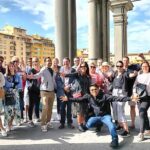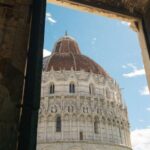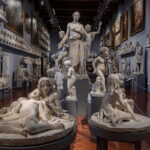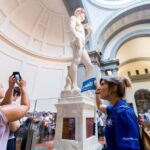
Florence has a lot of art claims. Bargello earns the quieter nod, with big names and sculptural detail in a setting that feels built for looking. I really liked two things: the skip-the-line entry that keeps your time tight, and the headset radio system so you don’t miss the guide’s explanations.
The main thing to consider is that the museum can have partial closures during renovation—one guide had to shift focus because a chunk of the second floor was closed, including works tied to the tour’s spotlight themes.
In This Review
- Quick Take: What This Bargello Tour Is Really Like
- Key Points to Know Before You Go
- Bargello’s Odd Backstory: A Palace That Became a Prison
- The 1-Hour Game Plan: How the Tour Moves Through the Museum
- Stop 1: Ground Floor Sculpture and Michelangelo’s Standouts
- What this stop feels like
- One possible drawback to watch for
- Stop 2: Donatello Meets Verrocchio and the Early Renaissance Mood
- Why this section is worth your hour
- Second Floor Focus: Della Robbia Glazed Terracotta
- Guides Make or Break It: What You Can Expect From the Human Part
- Headsets and Small-Group Size: The Practical Comfort Factor
- Price and Value: Is $58.87 Worth It?
- Who This Tour Suits Best (and Who Should Consider Alternatives)
- My Booking Recommendation: Should You Book This One?
- FAQ
- How long is the Bargello Museum tour?
- Is skip-the-line entry included?
- Does the tour price include museum admission?
- Will I be able to hear the guide during the tour?
- Where do I meet for the tour?
- How many people are in the group?
Quick Take: What This Bargello Tour Is Really Like
This is a focused, 1-hour tour of the Museo Nazionale del Bargello that’s designed to help you see the most important sculpture without getting lost in a lot of rooms. It’s small-group by museum standards (up to 25 people), and it’s offered in English with a certified guide.
If you love Renaissance sculpture and want the big stories tied to the big artists, this format works well. It’s also a smart choice if you’re trying to balance the heavy hitters like Accademia or Uffizi with something more relaxed and less jammed.
Key Points to Know Before You Go
- Skip-the-line access is guaranteed (with the usual caveats for delays or strikes)
- Headsets are included, so you can hear every word in a busy room
- Michelangelo and Donatello highlights are built into the route
- The ground floor concentrates on 16th-century Tuscan sculpture
- The second floor spotlights glazed terracotta by the Della Robbia family
- Tours run about 1 hour, so it’s easy to fit into a packed Florence day
You can also read our reviews of more museum experiences in Florence
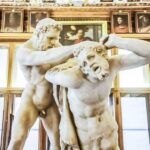
Bargello’s Odd Backstory: A Palace That Became a Prison
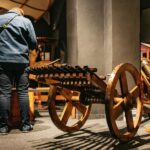
Before you even hit the sculpture, the Bargello itself adds flavor. Your guide starts with the building’s shifting roles: it used to be tied to city power, serving as headquarters for the Capitano del Popolo, later for the Podestà, and it eventually became the police’s residence and a prison.
That history matters because it changes how you read the collection. You’re not just walking past statues; you’re inside a Florentine structure that lived through real authority, punishment, and public life. It gives the museum an edge you don’t always get in more neutral-feeling gallery spaces.
The location also helps. You’ll meet at Museo Nazionale del Bargello, Via del Proconsolo 4, 50122 Firenze. From there, the tour keeps you moving through the collection in the most logical order—no wandering.
The 1-Hour Game Plan: How the Tour Moves Through the Museum
This tour is built for pace. About an hour is enough time to get oriented and hit the museum’s key works without turning it into a marathon. The guide doesn’t just point; they connect pieces to why Florentines cared, how workshops worked, and what each artist was trying to solve.
Because you’re using a radio system, you can stay focused instead of constantly craning your neck or losing the thread when another group talks nearby. That’s a real quality-of-life upgrade in a museum with lots of echo.
Here’s what the itinerary looks like in practice.
Stop 1: Ground Floor Sculpture and Michelangelo’s Standouts
On the ground floor, you’ll see the museum’s strong concentration of 16th-century Tuscan works. This is the part that helps you understand the Bargello’s identity: it’s not only about a single artist or a single school. It’s a place where sculpture culture in Florence shows up in many styles and many hands.
Your guide focuses on four Michelangelo pieces, including:
- Bacchus
- The relief Madonna with Child (Tondo Pitti)
- Brutus
- The David-Apollo
These works are easier to enjoy with guidance, because they reward close looking. Even in a crowded museum environment, you’ll get help noticing things you might skip on your own—like how expression and texture work together, and how the forms feel designed to hold up from multiple viewing angles.
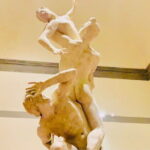
From there, the guide widens the lens to include other major names you’ll likely hear about elsewhere, but maybe not in this same grouping. You can expect stops tied to Bartolomeo Ammannati, Benvenuto Cellini, and Giambologna—including Flying Mercury.
The guide also brings in collection highlights like the Carrand collection, including precious ivories and bronzes, with several examples identified as Roman and Byzantine. That’s useful even if you’re a “sculpture only” person, because these objects help show how older craft traditions fed Renaissance taste.
What this stop feels like
You’ll walk through a curated path of sculpture that tells you: who mattered, what styles were in play, and how craftsmanship earned status. It’s the kind of tour where you keep thinking, okay, now I see why this piece was important to Florence.
- Tuscany Day Trip from Florence: Siena, San Gimignano, Pisa and Lunch at a Winery
★ 5.0 · 21,634 reviews

One possible drawback to watch for
If you’re expecting a lot of technical workshop talk—methods, materials, and technical history—you might find the focus leans more toward context and interpretation than technique. That’s not wrong; it’s just a mismatch for some visitors.
Stop 2: Donatello Meets Verrocchio and the Early Renaissance Mood
After the ground floor, the tour shifts into the early Renaissance spirit. This is where the title promise shows up in a big way: you get explanations around Donatello and major companion influences like Verrocchio.
The Donatello works called out include:
- Saint George
- the Lion
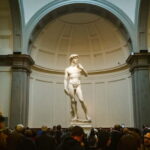
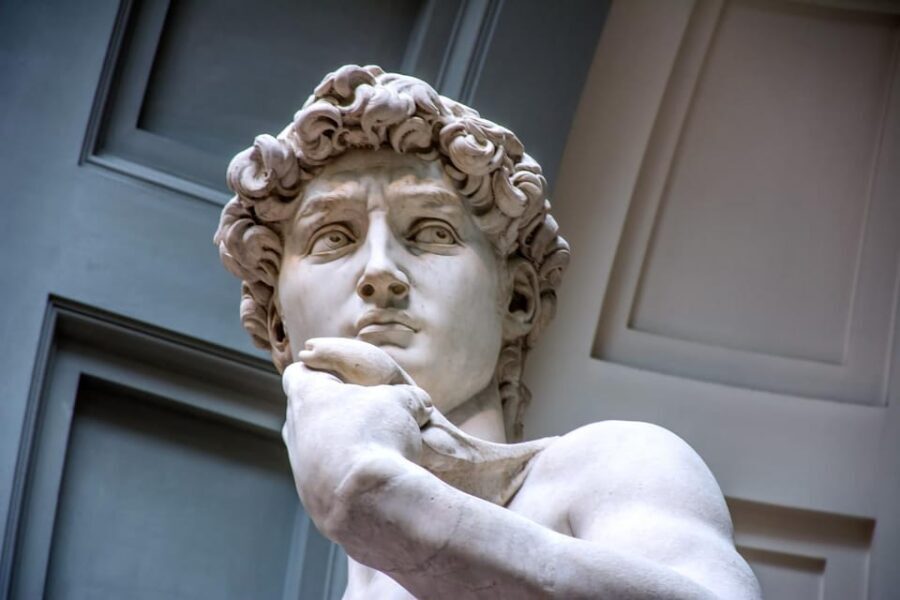
- the David
This trio is a strong mix. Saint George and the Lion tend to pull you in with drama and physical presence, while the David invites you to think about how the body can carry meaning—expression, posture, and the feeling of motion even in a still object. With a guide on your side, you’re not just staring at a famous silhouette; you’re learning what each sculpture was communicating.
Verrocchio’s presence matters too. Even if you don’t know the name yet, you’ll get the sense of why Donatello’s work didn’t pop out of nowhere. Florence’s talent ecosystem was connected: styles influenced other styles, patrons encouraged competition, and workshops trained artists into shared approaches before they started breaking away.
Why this section is worth your hour
If you love Florence’s visual stories, this is where your brain starts linking art to ideas. It’s not only beauty; it’s ambition and meaning, expressed through stone, bronze, and human form.
Second Floor Focus: Della Robbia Glazed Terracotta
Next comes the second floor, and this part is specifically dedicated to glazed terracotta by Andrea and Giovanni Della Robbia. If you’ve only seen Renaissance sculpture as marble and bronze, this section adds a different texture to your mental map.
Glazed terracotta changes how light behaves. It also gives sculpture a slightly different emotional register—often more immediate, more vivid, and sometimes more “story-like” than you expect from museum sculpture.
One real-world consideration: the museum can have partial closures. In one case, a guide had to adapt because about half of the second floor was closed for renovation. If a terracotta highlight is a top reason you booked, keep your expectations flexible and be ready for a pivot in what you see.
Guides Make or Break It: What You Can Expect From the Human Part
Most of the praise here lands on the people in the guide role. Names that show up across the experience include:
- Matteo, praised for being witty and energetic, and for tying Bargello sculpture to what you already know about Florence
- Guido, noted for being informative and engaging
- Lara, for art-history depth that changes how you look
- Martina, for balancing context with pacing and pointing you toward things to explore after the tour
- Francesca, for making learning fun while keeping it interesting
- Helena, for being kind and accommodating even with younger visitors
- Ivano, in one case where the group became nearly private for the time slot
- Tomato, for a detailed look at sculptural masterpieces
- Hilary, praised for being kind and very knowledgeable
That variety matters. It suggests the route is strong, but the delivery style can vary from guide to guide. If you’re the type who wants lots of clear backstory, you’re likely to be happy. If you’re chasing deep technique and workshop how-it-was-made details, you may want to compare approaches and choose carefully.
Headsets and Small-Group Size: The Practical Comfort Factor
Two features make this tour easier to enjoy:
- Radio system headsets
- Group size capped at 25
Headsets sound small on paper, but in a stone gallery they change your entire experience. You stay in the flow. You hear what matters without constantly hunting for the guide’s voice.
The cap at 25 also keeps things from turning into a stampede line. That matters because sculpture rewards slow looking. When groups are too large, you’re mostly watching other people’s backs. Here, you should be able to get your eyes on the work without feeling crushed.
Price and Value: Is $58.87 Worth It?
At $58.87 per person for about an hour, this isn’t the cheapest way to see Bargello. The value comes from what’s included:
- Official certified guide
- Skip-the-line entry with reservation
- Headsets so you don’t lose the explanation
If you were doing Bargello on your own, you could buy admission and walk the rooms. The question is what you’d miss. With this tour, you’re paying for guided selection—help getting from room to room efficiently—and for the meaning behind the works, including the tour’s named highlights from Michelangelo and Donatello.
Also, the tour is often booked about 41 days in advance. That doesn’t guarantee sell-out, but it’s a sign that people find it easy to fit into their Florence schedule and like the guided format.
For art lovers who want their time to count, the price feels fair. For people who only want quick selfies and don’t care about interpretation, it may feel like paying extra for a walk-through. Choose based on how you like to travel.
Who This Tour Suits Best (and Who Should Consider Alternatives)
This tour fits best if you:
- love Renaissance sculpture and want help reading famous works
- want the museum highlights without spending your whole day inside
- appreciate a guided plan that keeps you from missing the important rooms
- like the idea of finishing with time to go back and re-check favorites
It’s also a solid option when you want a calmer museum mood. One guide-led experience was noted as more pleasant partly because it wasn’t very busy, and Bargello can feel like a breath of fresh air compared with Florence’s biggest crowd magnets.
Consider another style of tour if you:
- crave detailed technique and “how it was made” talk
- are mainly shopping for the museum’s full encyclopedic experience rather than a concentrated highlight route
My Booking Recommendation: Should You Book This One?
Yes, with one simple caveat.
Book it if your goal is to see the Bargello’s core sculpture highlights—especially the Michelangelo and Donatello moments—without wasting time. The combination of skip-the-line entry and headsets makes it feel smooth and respectful of your attention span.
Hold a little flexibility in your plans if you’re traveling during renovation season or if the second-floor terracotta wing matters most to you. When parts of that area are closed, the guide can adapt, but you may not see every intended spotlight piece.
FAQ
How long is the Bargello Museum tour?
It runs for about 1 hour.
Is skip-the-line entry included?
Yes, skip-the-line access is guaranteed, except in cases of delays or strikes by the museum management.
Does the tour price include museum admission?
Yes. The entrance ticket with reservation is included, and your guide or representative delivers the tickets at the meeting point before the start.
Will I be able to hear the guide during the tour?
Yes. A radio system is provided so you can hear the guide clearly.
Where do I meet for the tour?
You start at Museo Nazionale del Bargello, Via del Proconsolo 4, 50122 Firenze FI, Italy, and the tour ends back at the same meeting point.
How many people are in the group?
The tour has a maximum of 25 travelers, and it requires a minimum number of guests to run (minimum is two).
You Might Also Enjoy

More Museum Experiences in Florence
More Tour Reviews in Florence
- Tuscany Day Trip from Florence: Siena, San Gimignano, Pisa and Lunch at a Winery
★ 5.0 · 21,634 reviews - The Best tour in Florence: Renaissance & Medici Tales – guided by a STORYTELLER
★ 5.0 · 12,316 reviews