REVIEW · FLORENCE
Florence: Italian Opera
Book on GetYourGuide →Operated by Agenzia Musica Internazionale · Bookable on GetYourGuide
Florence opera sounds better in person. This one-day concert puts you in two historic spaces, the Zeffirelli Concert Hall and the Auditorium of Santo Stefano, for an evening built around big-name Italian arias and duets. I especially love the power of the voices in a close, piano-accompanied format, and the standout acoustics of Santo Stefano near Ponte Vecchio.
If you’re picky about pacing, there’s one thing to consider: the program includes an intermission and even a piano solo intermezzo, so it’s not a nonstop flow of music the whole time. Still, the set list is packed with recognizable moments that work well for first-timers and opera lovers alike.
In This Review
- Quick reasons to choose this Florence opera concert
- Where the music lands: Zeffirelli + Santo Stefano in one unforgettable evening
- The program you’ll hear: Puccini, Verdi, Mozart, and Rossini highlights
- The performers behind the magic: Alessia Battini, David Ciarrocchi, and Gianni Cigna
- Why Santo Stefano near Ponte Vecchio feels different
- Choosing seats: three categories and how to think about value
- The pre-show mood: garden time and the tea room
- Price and value: what you’re really paying for at $41
- Who should book this, and who might want a different style of opera night
- Practical tips for planning your Florence opera evening
- Should you book Florence: Italian Opera?
- FAQ
- Where does the concert take place?
- How long is the experience?
- How much does it cost?
- What is included with the ticket?
- Is hotel pickup and drop-off included?
- Are food and drinks included?
- What music is included in the program?
- Is there an intermission?
- Who performs?
- Is the experience wheelchair accessible?
Quick reasons to choose this Florence opera concert
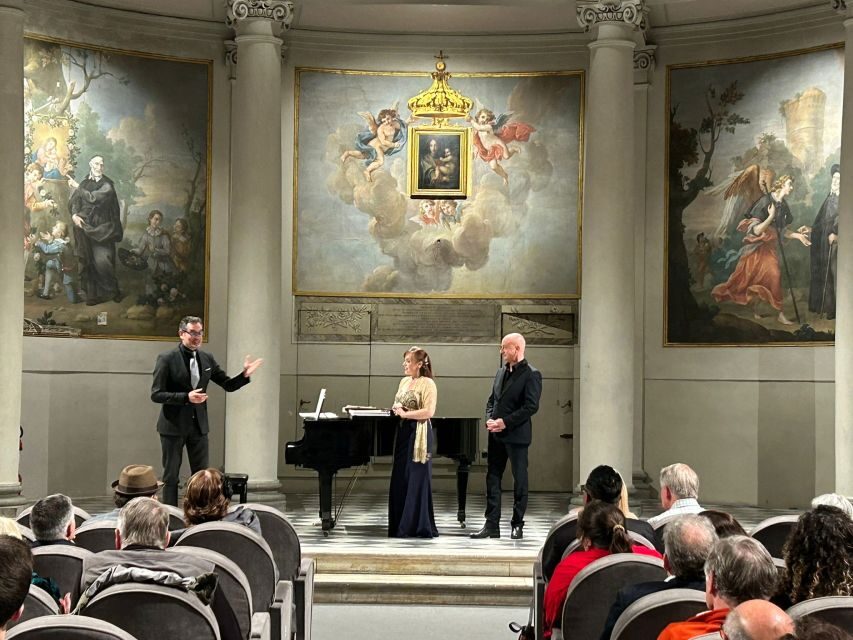
- Historic Santo Stefano acoustics: Romanesque roots with later Gothic and Baroque changes, restored after major 20th-century damage.
- Singer + piano focus: no huge orchestral distraction, so the text and emotion land fast.
- Four composers in one night: Rossini, Puccini, Verdi, and Mozart give you a strong taste of Italian (and beyond).
- Two-part program with intermission: you get a clean break so the second half hits with fresh energy.
- Garden and tea room time: a calm place to wait before the lights go down.
- Three seating categories: you can pick what matters most for you, from value to closer views (if offered).
Where the music lands: Zeffirelli + Santo Stefano in one unforgettable evening
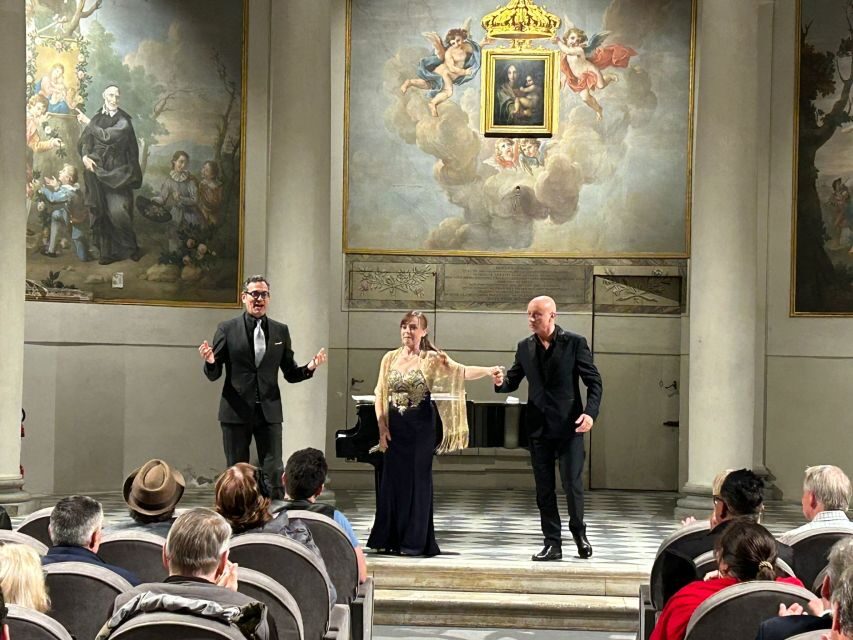
This concert is designed around atmosphere. You’re not just buying a ticket to a playlist of famous arias; you’re walking into Florence spaces that were built to carry sound. The evening takes place in two venues: the renowned Zeffirelli Concert Hall and the Auditorium of Santo Stefano in central Florence.
The Auditorium of Santo Stefano is the star setting for many people, and it makes sense. It sits right by Ponte Vecchio, and the building story is a reminder that Florence keeps going. It began in a Romanesque style, later took on Gothic and Baroque transformations, and survived serious hits: World War II damage, the 1966 flood, and the 1993 Georgofili bombing. After restoration work in the late 1990s, the interiors and sound were re-established in a way that supports exactly this kind of performance.
In plain terms: if you care about how music feels in your chest, this is the kind of place that helps.
You can also read our reviews of more tours and experiences in Florence.
- Tuscany Day Trip from Florence: Siena, San Gimignano, Pisa and Lunch at a Winery
★ 5.0 · 21,634 reviews
The program you’ll hear: Puccini, Verdi, Mozart, and Rossini highlights
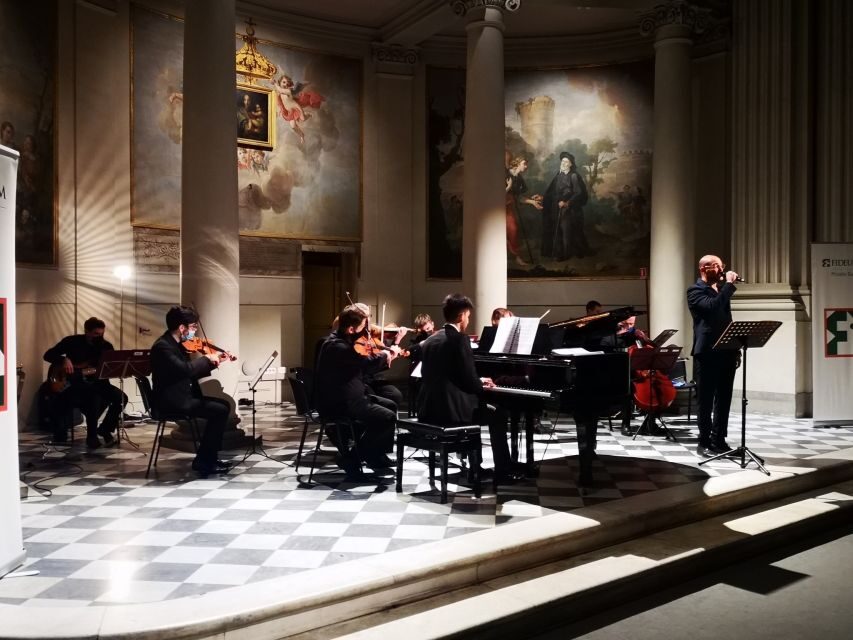
The set list is built for recognition without being boring. You get a run through some of the most famous moments from major composers, presented as separate arias and duets, with a structured two-part format.
First part typically includes:
- Rossini: Largo al factotum from The Barber of Seville
- Puccini: Tre sbirri una carrozza from Tosca
- A piano solo intermezzo
- Puccini: Quando me’n vo from La Bohème
- Verdi: È strano… Sempre libera from La Traviata
- Mozart: Cinque, dieci, venti from The Marriage of Figaro
Then there’s intermission, and the second half continues:
- Puccini: O mio babbino caro from Gianni Schicchi
- Verdi: È sogno o realtà from Falstaff
- Mozart: La ci darem la mano from Don Giovanni
- Rossini: Dunque io son from The Barber of Seville
Why this matters: opera can feel intimidating if you expect one long, full-length story. Here, the evening is stitched from character moments—so you can follow emotion and drama even if you don’t know every plot detail.
The one pacing note: because the program is segmented, you’ll hear clear breaks. If you’re hoping for zero pause between arias, this format might feel a bit stop-and-start. The upside is that those breaks keep the night from turning into a single blur.
The performers behind the magic: Alessia Battini, David Ciarrocchi, and Gianni Cigna
A big part of why this concert works is the pairing: vocalists doing the heavy emotional work, supported by pianist Gianni Cigna, who also serves as a vocal coach. That combination tends to produce the kind of clarity you want in a concert like this—singers can shape phrasing, and the piano doesn’t just fill space, it guides.
The cast listed for the performance includes:
- Soprano: Alessia Battini
- Baritone: David Ciarrocchi
- Pianist/Vocal coach: Gianni Cigna
Many opera fans talk about how the voice should sit on the words, not just on the notes. In this concert format, you get plenty of that vocal-text connection, because the accompaniment stays focused and intimate rather than hiding behind a large orchestra.
If you’re new to opera, this is also helpful. You’re not guessing what matters; the sound is direct, and the vocal performances carry the attention.
Why Santo Stefano near Ponte Vecchio feels different
Location affects how you experience the show, even if you don’t realize it at first. Santo Stefano is close to one of Florence’s most photogenic stretches, Ponte Vecchio, so the evening starts with a sense of place. You’re in the center of the city’s classic geometry while the building itself does its part with sound.
The best detail here isn’t just the building’s age. It’s the fact that the hall has been restored and kept functional after multiple disasters. The venue’s exceptional acoustics are specifically credited to its restored interiors, which tells you the performance experience was considered seriously, not just the setting.
Practical takeaway: this kind of acoustic reputation usually means even subtle moments—soft entrances, controlled endings—can be heard cleanly. That’s a big deal in any concert, and it’s especially important for opera excerpts, where diction and timing do a lot of the emotional heavy lifting.
Choosing seats: three categories and how to think about value
You can select among three seating categories, which is great because it lets you match your budget to what you care about most. One clear theme from real-world expectations: you don’t want to buy a ticket assuming you’ll get the same experience in every tier.
If you’re worried about crowding, consider aiming for the better category on your booking option (some tickets may be labeled VIP, depending on how your provider organizes the tiers). At the same time, you don’t necessarily need the top option to enjoy the night, because this is not presented as a massive stadium-style event.
My advice for seat choices:
- If you want the closest feel to the singers, pick the higher category that gives you better proximity.
- If you’re on a tighter budget, the middle range can still make sense—opera is designed to project, and this hall is built for acoustics.
Also plan for simple reality: seating can affect whether you see more of the performers’ faces versus mostly focusing on sound. Since this concert is voice-forward, acoustics matter more than tiny visuals.
- Tuscany Day Trip from Florence: Siena, San Gimignano, Pisa and Lunch at a Winery
★ 5.0 · 21,634 reviews

The pre-show mood: garden time and the tea room
This is one of those experiences where waiting can be pleasant. The setup includes extra areas so you don’t feel rushed or stuck right at your seat. There’s a beautiful garden where you can relax, plus a tea room if you want something calming before the performance begins.
That matters more than it sounds. Opera nights can feel intense once the singing starts. Having a quiet buffer beforehand helps you settle into the evening instead of arriving already keyed up.
One more practical point: since the ticket includes the concert and a printed program, you’ll likely want a few minutes to scan what’s coming next. The program helps you keep track of composers and pieces while you’re listening.
Price and value: what you’re really paying for at $41
At about $41 per person for a 1-day experience, this is positioned as a value-friendly opera night. On paper, the ticket price might seem too modest for opera in a major city like Florence. In practice, the format explains why.
You’re not paying for a full-scale production with full orchestra and staged sets. You are paying for:
- a curated evening of major arias and duets
- in historic venues known for sound
- with named vocal talent and a professional pianist who understands how to support singers
And you also get a small but meaningful extra: the printed program, which helps you follow the arc of the show instead of just catching a few moments.
If you’ve been hesitating because opera feels expensive or complicated, this is one of the more approachable ways to test the waters. If you’re already an opera fan, think of it as a concentrated sampler in two beautiful halls—fast, focused, and still emotionally serious.
Who should book this, and who might want a different style of opera night
This concert makes the most sense if you:
- want a first opera experience without needing prior knowledge
- like hearing famous arias that carry instantly recognizable drama
- care about sound quality and historic atmosphere
- want a night that feels special but doesn’t require hours of scheduling for a full production
It might feel less perfect if you:
- need a nonstop program with no pauses (there’s intermission, and there’s a piano intermezzo too)
- prefer a larger, fully staged operatic spectacle rather than excerpts and concert-style presentation
- want extremely detailed clarity about which singer performs every single piece. If you like that level of detail, your printed program will be your best friend during the night.
Practical tips for planning your Florence opera evening
Here are the things that make your night smoother, based on how the experience is set up.
- Do not assume hotel pickup: pickup and drop-off aren’t included, so plan to reach the meeting point on your own.
- Expect the meeting point to vary: the meeting location may change depending on the option you book, so double-check your specific confirmation.
- Skip expecting included food: food and drinks aren’t part of the ticket, so plan any pre- or post-show meal separately.
- Use the printed program: it’s the simplest way to track composers and pieces while you listen.
- Arrive early enough to reset: the garden and tea room are there for a reason—use them so you don’t walk in already rushing.
One last tip: if this is your first time at an opera concert, give yourself permission to enjoy the sounds even if you don’t catch every word. Opera works on emotion and vocal color first; understanding comes along fast.
Should you book Florence: Italian Opera?
Book it if you want a high-impact opera night in Florence that balances value, strong performers, and real acoustic character. The mix of Puccini, Verdi, Mozart, and Rossini gives you a wide taste of what people love about this tradition, and the Santo Stefano setting near Ponte Vecchio is the kind of place that turns a concert into a memory.
Skip or reconsider if you strongly prefer full-length staged operas, hate any breaks in the music, or you need the program to clearly spell out performer-by-performer details. In that case, you might want a different style of opera evening with a more immersive structure.
FAQ
Where does the concert take place?
The concert is held in Florence at the Zeffirelli Concert Hall and the Auditorium of Santo Stefano.
How long is the experience?
It’s a 1-day experience.
How much does it cost?
The price is $41 per person.
What is included with the ticket?
Your booking includes the concert ticket and a printed program.
Is hotel pickup and drop-off included?
No. Hotel pickup and drop-off are not included.
Are food and drinks included?
No. Food and drinks are not included.
What music is included in the program?
The program features excerpts from works by Rossini, Puccini, Verdi, and Mozart, including pieces such as Largo al factotum, Sempre libera, Quando me’n vo, and La ci darem la mano.
Is there an intermission?
Yes. The program is split into two parts with an intermission.
Who performs?
The listed performers are soprano Alessia Battini, baritone David Ciarrocchi, and pianist Gianni Cigna.
Is the experience wheelchair accessible?
Yes, it is wheelchair accessible.
If you want, tell me your travel month and whether you’re a total opera beginner or already know Verdi/Puccini—then I can suggest how to choose your seating category.
You Might Also Enjoy


More Tour Reviews in Florence
- Tuscany Day Trip from Florence: Siena, San Gimignano, Pisa and Lunch at a Winery
★ 5.0 · 21,634 reviews - The Best tour in Florence: Renaissance & Medici Tales – guided by a STORYTELLER
★ 5.0 · 12,316 reviews